Slicker Brush vs Undercoat Rake for Double Coats: Which One Does Your Dog Actually Need?
Quick Answer
A slicker brush and an undercoat rake solve two different problems on a double-coated dog. The slicker handles surface detangling, removes loose topcoat hair, and smooths the finish. The rake reaches through the topcoat to pull out dead undercoat before it mats against the skin or ends up on your furniture. Most double-coated breeds need both, and the American Kennel Club’s shedding guide backs that up.
Key differences at a glance
- Slicker brush: fine wire pins on a flat or curved pad — detangles, removes surface debris, fluffs the coat
- Undercoat rake: longer, wider-spaced metal teeth — penetrates the topcoat to lift loose undercoat
- Daily use: the slicker is safe for frequent, gentle sessions; the rake is a targeted tool for weekly or seasonal deep cleaning
- Best for double coats: both tools, used in sequence — slicker first to clear tangles, rake second to pull undercoat
- Never shave: a double coat insulates against heat and cold, and shaving can damage regrowth
Quick tip before you buy
- Match pin or teeth length to your dog’s coat depth — too short won’t reach the undercoat, too long can scratch skin
I’ve brushed a German Shepherd through six shedding seasons, and I still remember the spring I tried to handle it with one slicker brush. Three hours later, my living room looked like a fur explosion.
Here’s what nobody told me back then: a slicker brush and an undercoat rake aren’t rivals. They’re teammates.
This guide breaks down what each tool really does, when to reach for which one, and how to build a routine that finally gets the shedding under control.


What Is a Double Coat and Why Does It Matter for Grooming?
A double coat is exactly what it sounds like — two distinct layers of fur covering the same dog. The topcoat is made of longer, coarser guard hairs that repel dirt and moisture. The undercoat is a dense, soft layer of shorter hairs that sits close to the skin.
That undercoat works like insulation. It traps air to keep your dog warm in winter and cool in summer. It also shields the skin from sunburn and minor scrapes.
Breeds with double coats include Siberian Huskies, German Shepherds, Golden Retrievers, Labrador Retrievers, Collies, Pomeranians, Newfoundlands, Australian Shepherds, and Corgis. If your dog’s fur feels thick and plush near the skin with longer hairs on top, you’re dealing with a double coat.
Double coats shed in cycles. Most double-coated dogs “blow coat” twice a year — once in spring and once in fall. During those weeks, the undercoat releases in clumps, and a slicker brush alone can’t keep up with the volume.
Veterinary schools like Cornell University’s College of Veterinary Medicine consistently note that regular brushing for double-coated dogs prevents painful matting and supports healthy skin by spreading natural oils through the coat.
What Does a Slicker Brush Actually Do?
 Save
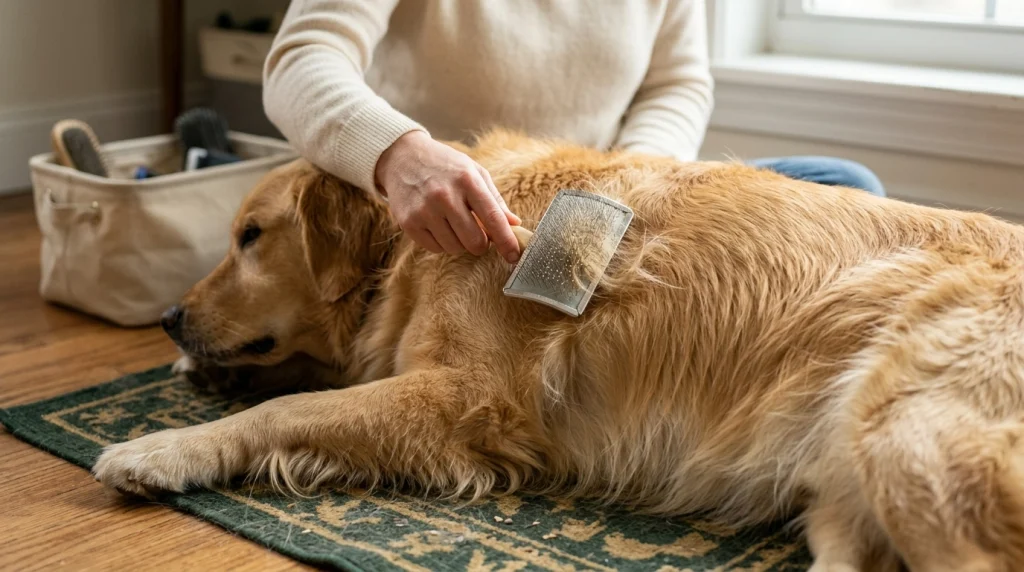
SaveA slicker brush has a flat or slightly curved pad packed with fine, bent wire pins. The pins sit close together and are usually angled so they glide through the coat instead of digging in.
Its main job is surface work. The pins catch loose hair, tease apart small tangles, and lift out debris like grass, dirt, or dried mud. On double-coated breeds, a slicker also lifts the topcoat so you can see what’s happening underneath.
Slickers were never designed to pull dense undercoat. The pins are too short and too fine for that. If you use a slicker as your only tool during shedding season, you’ll brush for an hour and still find fur on your couch the next morning.
That said, every double-coated dog benefits from a slicker. It’s the tool you grab two or three times a week for maintenance. It also smooths the coat after a rake session and keeps the surface looking tidy.
Pin length matters more than brand name. Chris Christensen and Hertzko both make slickers with longer pins that reach through medium-to-long double coats, while budget options often have pins that barely touch the topcoat.
What Does an Undercoat Rake Actually Do?
An undercoat rake looks like one or two rows of longer, rounded metal teeth mounted on a handle. The teeth are spaced wider than slicker pins, which lets them pass through the topcoat and reach the undercoat layer underneath.
This is the tool that does the heavy lifting. The rake grabs dead, loose undercoat fur and pulls it out before it mats against the skin or sheds across your house.
FURminator, JW Pet, and Safari all make popular rakes. The JW Pet GripSoft Double Row Undercoat Rake is a steady favorite among owners of thick-coated breeds because the double row covers more surface area per stroke.
A rake is not an everyday brush. Overuse can irritate skin and thin the topcoat. It’s also not a detangler — if your dog has mats, work those out with a slicker or a steel comb first.
One safety note worth repeating: never run a rake through a mat. The teeth can catch the knot and pull skin. If you hit resistance, stop and switch tools.
Slicker Brush vs Undercoat Rake: Head-to-Head Comparison
| Feature | Slicker Brush | Undercoat Rake |
|---|---|---|
| Primary purpose | Detangle, smooth, remove surface hair | Remove loose undercoat |
| How it works | Fine wire pins catch tangles and lift the topcoat | Longer teeth pass through the topcoat to reach the undercoat |
| Best coat types | Curly, wavy, long, and double coats | Thick double coats only |
| Frequency | 2–3 times per week | Weekly, or every other day during shedding season |
| Safe for daily use? | Yes, with light pressure | No — overuse can irritate skin |
| Removes undercoat | Some, but not deeply | Yes — this is its main job |
| Detangles mats | Yes | No — never use on mats |
| Typical price | $15–$60 | $12–$35 |
Which Tool Should You Use for Your Double-Coated Dog?
Most double-coated dogs need both tools, and the real question is sequencing. Get the order right and each session takes ten minutes instead of forty.
Start with the slicker brush. Go over the coat in the direction of hair growth, then against it, to lift loose hair and work out small tangles.
Follow with the undercoat rake on the heaviest shedding zones. Think hindquarters, chest, neck, and the area behind the ears.
Finish with the slicker again to smooth the topcoat and spot anything you missed.
During peak shedding season in spring and fall, rake every other day. The rest of the year, once a week is plenty.
If your dog has an especially dense undercoat — a Husky, a Chow Chow, or a Keeshond — look for a rake with rotating teeth. They glide instead of snagging, which matters on sensitive skin.
How to Use Both Tools Correctly (Step-by-Step)
 Save
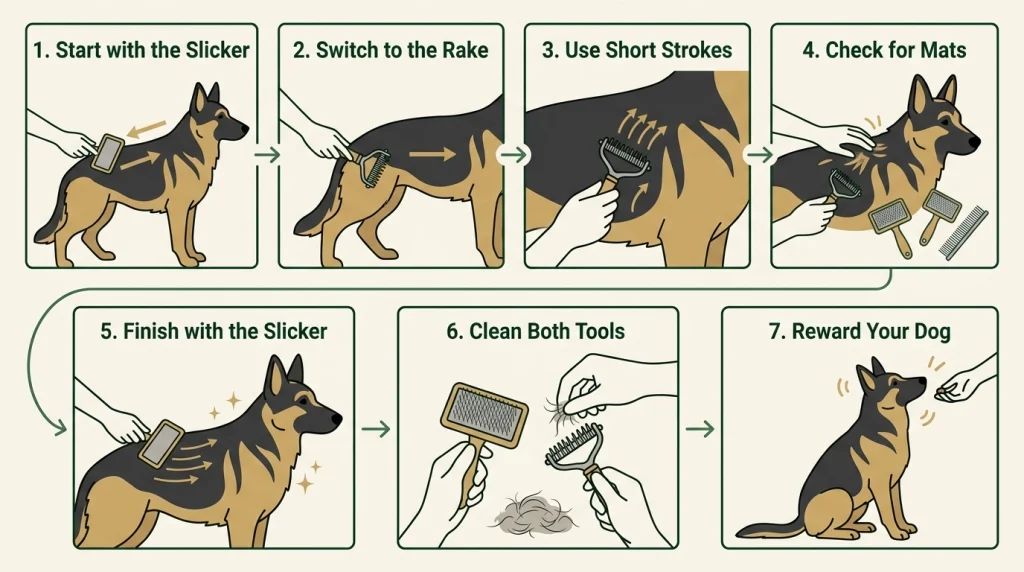
SaveHere’s the routine I’ve settled into after years of trial and error. It works on short double coats and long ones alike.
- Start with the slicker. Brush in the direction of hair growth, then against it, to lift loose hair and detangle the surface.
- Switch to the rake. Work in small sections, starting at the hindquarters and moving forward toward the head.
- Use short strokes. Pull the rake through the coat, then lift up and away instead of dragging it across the skin.
- Check for mats. If the rake catches on a knot, stop immediately and switch back to the slicker or a steel comb.
- Finish with the slicker. Smooth the topcoat and check for any remaining loose hair.
- Clean both tools. Pull collected fur off the pins and teeth after every session. Clean tools work better and last longer.
- Reward your dog. A treat between sections keeps the session positive and makes the next one easier.
Common Mistakes to Avoid with Double-Coated Dogs
 Save
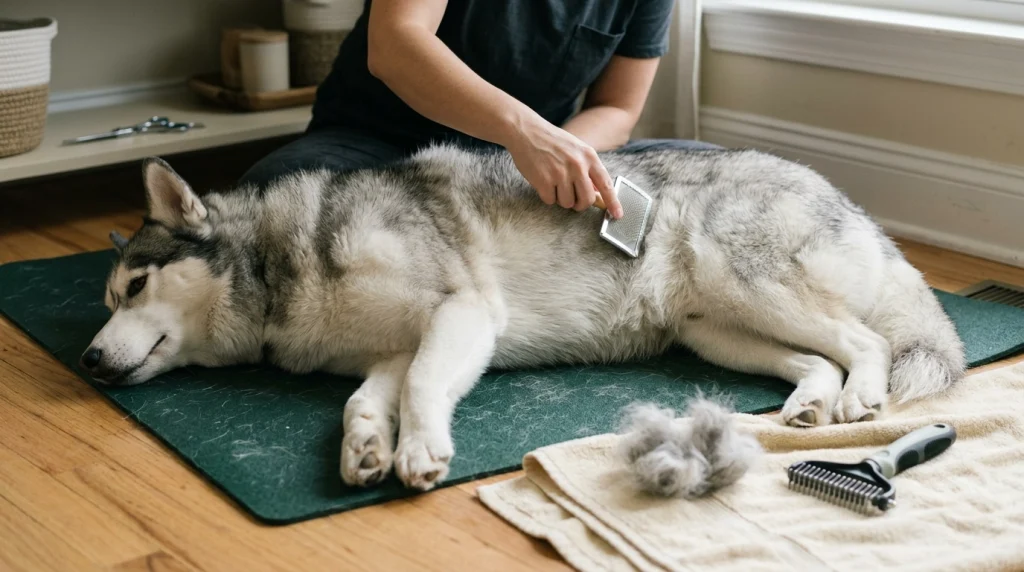
SaveThe biggest mistake is shaving. A double coat regulates temperature in both directions, so removing it can leave your dog hotter in summer and colder in winter. It can also disrupt regrowth and expose skin to sunburn.
Using a rake as a daily brush is another common error. The teeth can scratch skin and thin the topcoat when used too often or with too much pressure. Save it for weekly deep sessions and shedding season.
Pressing too hard with either tool causes problems too. You’re removing dead hair, not scraping the skin, so light pressure always wins.
Skipping the slicker is the last one. Some owners jump straight to the rake and then wonder why the coat looks rough afterward. The slicker is what gives the coat its finished appearance.
If your dog has sensitive skin or an active skin condition, check with your vet before changing your grooming routine. The ASPCA dog care library is a solid starting point for general grooming safety.
As of 2026, the tool lineup hasn’t changed much — slickers and rakes still do the job better than any single gadget. The AVMA pet care resources echo the same advice: consistency beats fancy equipment every time.
If you’re ready to pick one, here’s what I’d actually recommend:
🏆 Best Overall Slicker
Chris Christensen Big G Slicker Brush
★★★★★
Extra-long angled pins that reach through thick double coats without scraping skin. I’ve used mine for three years on a German Shepherd and it still looks new. The ergonomic handle makes long sessions much easier on your wrist.
💰 Best Value Undercoat Rake
JW Pet GripSoft Double Row Undercoat Rake
★★★★☆
A double row of round-tipped teeth that covers more surface area per stroke. The non-slip handle stays comfortable during long sessions. At under $20, it’s the rake I recommend to friends who are new to double-coated breeds.
🚛 Best for Heavy Shedders
FURminator Grooming Rake
★★★★☆
Rotating metal teeth that glide through dense undercoat without pulling. I pull this out every spring when my Shepherd starts blowing coat, and it removes more fur per pass than any other rake I’ve tried.
Frequently Asked Questions
Can I use just one tool on a double-coated dog?
You can, but you won’t get great results. A slicker alone leaves undercoat trapped near the skin, which leads to matting. A rake alone leaves the topcoat looking rough and can’t handle tangles. Most groomers and breed experts recommend using both.
How often should I rake my double-coated dog?
Once a week for maintenance is enough. During spring and fall shedding seasons, step that up to every other day. Daily raking isn’t necessary and can irritate the skin, so pair it with slicker brushing two to three times a week instead.
Is an undercoat rake safe for all dogs?
No. Rakes are built for double coats. On single-coated breeds like Poodles, Boxers, and Greyhounds, there’s no undercoat to remove, and the teeth can damage the topcoat. Never use a rake on mats, sores, or irritated skin either.
What’s the difference between an undercoat rake and a deshedding blade?
A rake has rounded teeth that pull loose undercoat. A deshedding blade uses a metal edge that works similarly but more aggressively. Blades remove more fur per stroke, though they carry a higher risk of cutting the topcoat if you press too hard.
Can I shave my double-coated dog in summer?
No. The double coat insulates against heat as well as cold, so shaving removes that protection. It can lead to sunburn, overheating, and patchy coat regrowth. Stick with regular brushing and raking instead — that’s what actually keeps your dog cool.
Which tool should I buy first if I can only afford one?
Buy the undercoat rake first if your dog is actively blowing coat, since that’s the urgent problem. Buy the slicker first if you’re dealing with tangles and a rough-looking topcoat. Ideally, add the second tool within a month.
The Bottom Line
If you own a double-coated dog, you need a slicker brush and an undercoat rake. They do different jobs, and your dog’s coat needs both to stay healthy and mat-free.
Start with the slicker to detangle and smooth. Follow with the rake to pull the dead undercoat. Finish with the slicker again to tidy everything up.
That three-step routine keeps your dog comfortable and your floors cleaner. Your back will thank you, your lint roller will thank you, and your dog will look like they just came back from the groomer — every single week.

Thomas Cutter is a lifelong dog owner and the founder of FindOutAboutDogs.com. With over 10 years of hands-on experience owning multiple breeds, Thomas created this site to provide honest, research-based dog advice that real owners can actually trust.
