Which Brush Is Best for Thick Dog Fur? 2026 Guide
Quick Answer
For most dogs with thick fur, a long-pin slicker brush is the best everyday starting tool because it can separate dense hair and collect loose coat without only skimming the surface. If your dog has a dense double coat, pair it with an undercoat rake during heavy shedding. My dense-fur brushing guide explains the section-by-section technique in more detail.
Best tools for thick coats
- Long-pin slicker: My first choice for routine brushing on many thick, long, curly, or dense coats.
- Undercoat rake: Best for loose undercoat on suitable double-coated dogs, especially during seasonal shedding.
- Metal comb: Use it after brushing to find hidden tangles the brush may have missed.
- Pin length matters: The pins need enough reach for your dog’s actual coat depth.
- Light pressure wins: A deeper coat does not justify pressing a metal brush harder against the skin.
Simple rule
- Use the slicker for regular coat maintenance, add the rake for released undercoat, then finish with a comb check.
Thick dog fur can look beautifully smooth on top while loose hair and tiny tangles build underneath. That is why choosing a brush by appearance alone often leads to disappointing results.
I focus on coat structure first. Once you know whether the thickness comes from long hair, curls, or a true undercoat, choosing the right brush becomes much easier.


What Does “Thick Dog Fur” Actually Mean?
Thick dog fur means a high density of hair packed closely together, but not every thick coat has the same structure. Some dogs have long single coats, while others have two distinct layers.
A double coat has a softer undercoat beneath a more protective outer layer of guard hairs. That undercoat is what makes breeds such as Huskies, German Shepherds, Keeshonds, and Newfoundlands especially demanding during shedding periods.
- Short, dense coat: Hair may be short but tightly packed, as on many retriever-type dogs.
- Long, dense coat: Longer outer hair adds both depth and tangle risk.
- Dense double coat: A softer undercoat sits beneath protective outer hairs.
- Dense curly coat: Loose or broken hairs can remain trapped among curls instead of falling freely.
Dense does not automatically mean double-coated. That distinction matters because an undercoat rake makes sense for some dogs and is unnecessary for others.
If you want a broader starting point, my guide to how breed and coat type affect grooming frequency shows how different coat structures change the routine.
Which Brush Is Best for Thick Dog Fur?
A long-pin slicker brush is the most versatile choice for many thick coats. Its fine wire pins separate dense hair, collect loose fur, and help work through small tangles when used gently.
The American Kennel Club’s dog brush guidance recommends choosing the tool according to coat type. It identifies slicker brushes as useful for medium, long, wire, and curly coats.
For me, the important phrase is long-pin. A short slicker can polish the top of a deep coat while barely reaching the hair underneath.
- Choose longer pins: They need enough reach to enter the coat without forcing your hand downward.
- Look for smooth construction: Rough or damaged pins can scratch sensitive skin.
- Use a comfortable handle: Dense coats often require longer, section-by-section sessions.
- Match head size to the dog: A large brush covers the torso quickly, while a smaller head offers control around legs and tight areas.
The goal is not to drag the brush from the shoulders to the tail in a few huge strokes. You want controlled access to each layer.
Is a Slicker Brush or Undercoat Rake Better for Thick Fur?
 Save
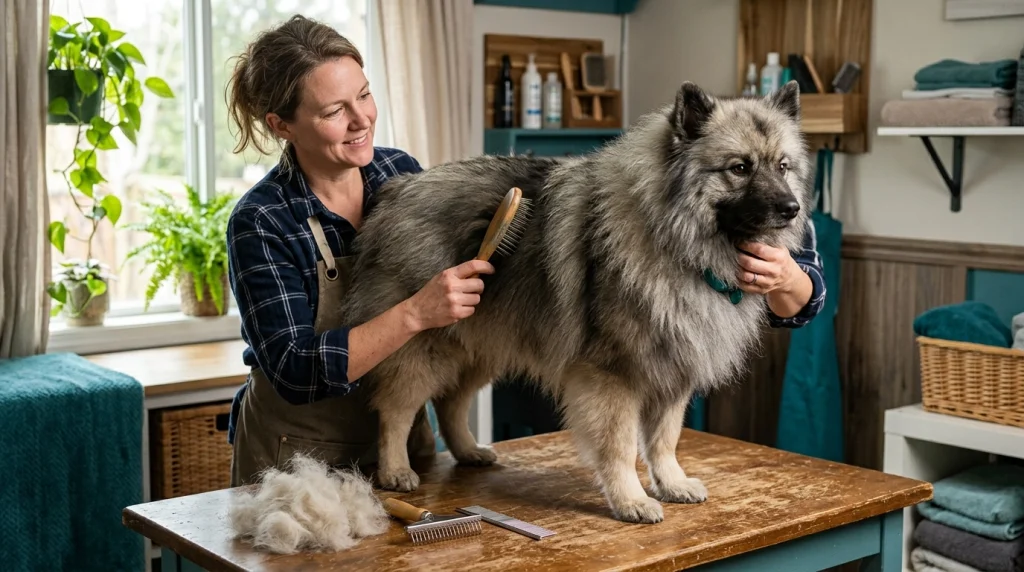
SaveA slicker brush is better for general thick-coat maintenance, while an undercoat rake is better for released undercoat in double-coated dogs. They are complementary tools rather than direct substitutes.
I usually think of the slicker as the everyday worker and the rake as the specialist. The rake becomes especially useful when soft seasonal undercoat begins collecting beneath the outer coat.
| Tool | Best Job | Reach in Thick Fur | Main Limitation |
|---|---|---|---|
| Long-pin slicker | Routine brushing, loose hair, light tangles | Medium to high | Too much pressure can irritate skin |
| Undercoat rake | Loose undercoat during shedding | High on suitable double coats | Not every thick coat needs one |
| Metal comb | Checking for missed tangles | High when used section by section | Slow for whole-body shedding removal |
| Pin brush | Long outer hair and finishing | Medium | May miss packed undercoat |
| Rubber brush | Loose surface hair on shorter coats | Low | Usually cannot penetrate deep fur |
The AKC also recommends undercoat rakes for double-coated breeds because their pins can penetrate to loose undercoat. Pin length still needs to match the individual dog’s fur.
You can see this two-tool approach in my guide to choosing a brush for a Husky, where coat depth makes surface-only brushing especially ineffective.
How Do You Brush Thick Dog Fur Without Hurting the Skin?
Brush thick fur in narrow sections with light, controlled strokes. Do not compensate for coat depth by pushing the pins harder against the dog.
The ASPCA’s dog grooming guidance likewise emphasizes matching brushing to coat type and using grooming to remove loose hair and prevent tangles.
- Check the coat first. Feel for knots, sores, burrs, damp areas, or tender skin.
- Separate a narrow section. Lift the surrounding fur so you can work closer to the base.
- Brush with light strokes. Move through the hair instead of pressing pins into the skin.
- Clean the brush often. A slicker packed with hair stops reaching the coat effectively.
- Use the rake only where needed. Work loose undercoat gently in the direction of hair growth.
- Finish with a metal comb. Stop when the comb encounters resistance instead of pulling through it.
My practical stopping rule is simple: I want the comb to pass comfortably through the finished section. I do not keep scraping one area merely because another few hairs appear on the brush.
That habit is especially important during shedding season. A healthy double coat can keep releasing hair even after a productive grooming session.
Where should you check for hidden tangles?
Thick coats often hide trouble in friction areas. The body can look beautifully groomed while a small mat remains close to the skin.
- Behind the ears
- Under the collar or harness
- Behind the front legs
- Around the groin and belly
- Behind the rear legs
- At the base of the tail
If you are unsure whether the deeper coat is clear, follow my hidden-mat coat check. The finger-and-comb method is more reliable than judging the coat from the surface.
What Is the Best Brush for a Thick Double Coat?
For a thick double coat, I prefer an undercoat rake followed by a long-pin slicker brush. The rake works on released undercoat, while the slicker separates and tidies the surrounding coat.
This is especially useful during a seasonal coat blow. The AKC’s shedding guidance also recommends slickers for dense coats and a rake or de-shedding tool when shedding becomes heavy.
- First pass: Use a suitable rake gently through loose undercoat.
- Second pass: Use the slicker to collect loosened hair and separate the coat.
- Final pass: Check dense sections with a metal comb.
Do not try to remove every strand of undercoat. Your goal is loose, dead coat that is ready to release, not healthy attached hair.
For another dense double-coat example, my guide to managing German Shepherd shedding shows how brush choice and technique change during heavier shedding.
How Often Should You Brush a Dog With Thick Fur?
 Save
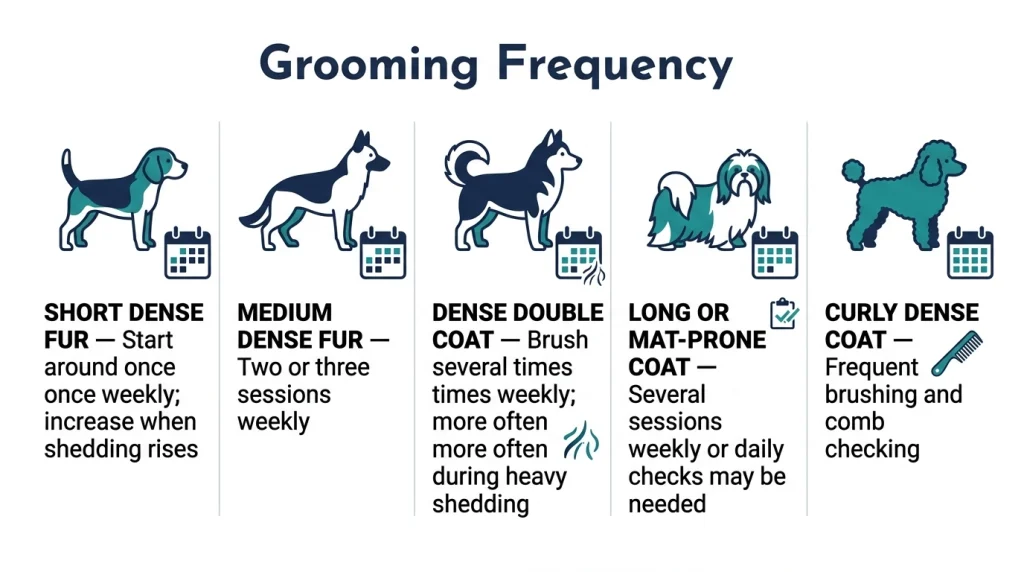
SaveMany thick-coated dogs benefit from brushing several times weekly, but the correct schedule depends on coat structure and matting risk. Dogs that shed heavily or tangle quickly may need more frequent attention.
As of 2026, I still prefer adjusting the schedule to the coat rather than forcing every dog into the same routine.
- Short dense fur: Start around once weekly and increase when shedding rises.
- Medium dense fur: Two or three sessions weekly is a useful starting point.
- Dense double coat: Brush several times weekly and more often during heavy shedding.
- Long or mat-prone coat: Several sessions weekly or daily checks may be needed.
- Curly dense coat: Frequent brushing and comb checking helps prevent trapped hairs from forming mats.
Short, calm sessions are often more effective than waiting until the coat becomes difficult. They also make it easier to notice skin changes early.
Can You Brush Thick Fur Too Much?
Yes. Overbrushing with too much pressure or the wrong tool can irritate the skin and damage coat. More strokes do not automatically produce better grooming.
VCA Animal Hospitals’ coat-care guidance also recommends paying attention to overall skin and coat condition and seeking veterinary advice when changes appear abnormal.
- Stop for redness: Pink or irritated skin means you have done enough in that area.
- Stop for pain: Flinching, snapping, sitting, or repeatedly turning toward the brush deserves attention.
- Investigate resistance: A brush suddenly stopping may indicate a tangle or mat.
- Avoid repeated scraping: Do not keep working one patch just to produce a larger pile of fur.
- Get help for tight mats: Severe matting close to the skin is safer in experienced hands.
Bald patches, sores, strong odor, persistent itching, or an abrupt change in shedding are not reasons to groom harder. Those changes deserve veterinary attention.
What Should You Look for When Buying a Brush for Thick Fur?
Prioritize pin reach, smooth construction, control, and coat compatibility. Marketing phrases such as “professional” or “heavy duty” matter less than whether the tool fits your dog’s actual fur.
- Pin length: Longer coats generally need enough pin length to reach through the coat.
- Pin finish: Look for well-finished metal that moves smoothly through hair.
- Flexible cushion: A little flexibility can improve control on dense coats.
- Handle comfort: Thick coats can involve many repeated strokes.
- Brush size: Choose enough width for efficient body grooming without losing control.
- Correct rake design: Understand whether you are buying rounded pins, rotating teeth, or a cutting-style edge.
I would rather own two tools that perform different jobs than five brushes that all skim the same layer. A good slicker, appropriate rake, and metal comb cover most thick-coat situations.
Brushes I Would Consider for Thick Dog Fur
 Save
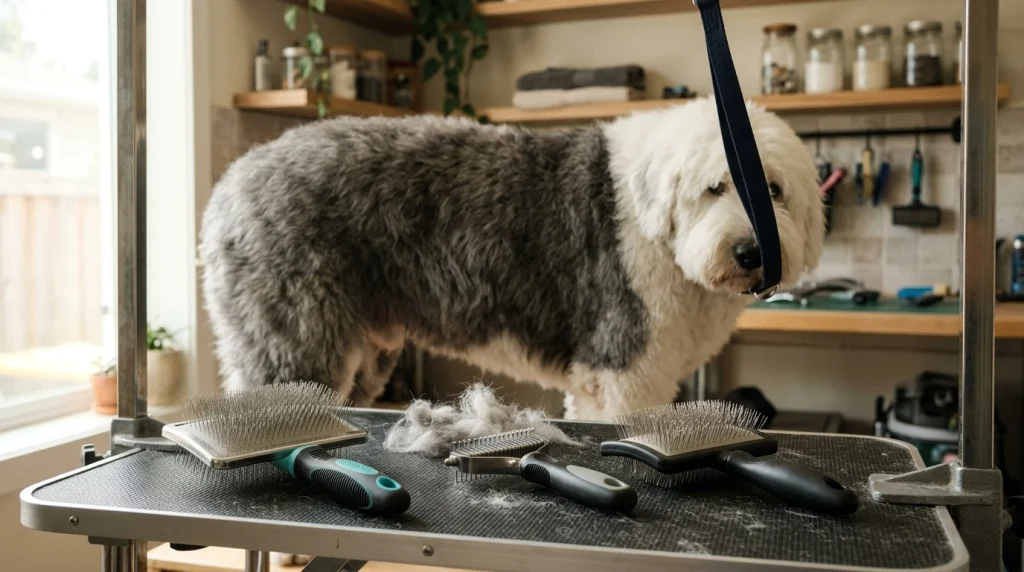
SaveIf you’re ready to choose a tool, these are the three options I would compare first. The star marks below are editorial coat-fit ratings, not customer-review scores.
🏆 Best Overall Slicker
Chris Christensen Big G Slicker Brush
★★★★★
The Big G uses 27 mm stainless-steel pins designed to reach into longer, dense coats. I like this format when a normal short slicker keeps polishing the surface instead of reaching deeper hair.
🐕 Best for Loose Undercoat
Maxpower Planet Double-Sided Undercoat Rake
★★★★½
The dual-sided design has a 9-tooth side and a finer 17-tooth side for working through dense coat. I would use it as a specialist undercoat tool rather than trying to make it replace a routine slicker.
✨ Best for Long Dense Coats
Chris Christensen Big K Slicker Brush
★★★★½
The Big K also uses 27 mm pins, with a design aimed at long, dense, difficult coats. I would consider it when deep penetration and detangling matter more than having a densely packed finishing slicker.
Frequently Asked Questions
Is a slicker brush good for thick dog fur?
Yes. A slicker brush is one of the most useful tools for many thick, long, curly, and dense coats. Choose pins long enough for the coat depth, use light pressure, and work in small sections rather than quickly brushing only the top layer.
What brush removes thick dog undercoat?
An undercoat rake is designed to reach loose undercoat beneath the outer coat on suitable double-coated dogs. Use it gently and select the correct pin length. Follow with a slicker brush and metal comb rather than repeatedly raking the same area.
Can I use a human hairbrush on thick dog fur?
A human hairbrush usually lacks the design and reach needed for a dense canine coat. It may smooth the surface, but a dog-specific slicker, undercoat rake, pin brush, or grooming comb will normally give you much better control.
How do I know if my dog’s brush reaches the undercoat?
Part the fur and watch how the pins move through a small section. After brushing, pass a metal comb gently from near the skin toward the ends. If the comb repeatedly catches or loose undercoat remains packed beneath the surface, your brush may lack reach.
Should I brush a thick-coated dog every day?
Some thick-coated dogs benefit from daily brushing during heavy shedding or when their fur mats easily. Others need only several sessions each week. Match the schedule to coat condition, and reduce pressure or frequency if the skin becomes irritated.
Final Takeaway: Match the Brush to the Layers
If you want one starting brush for thick dog fur, choose a good long-pin slicker. It handles routine loose hair, coat separation, and small tangles across a wide range of dense coats.
If your dog also has a heavy undercoat, add a suitable undercoat rake. Finish with a metal comb so you know the deeper coat is clear instead of simply looking smooth.
Most importantly, let the tool do the work. Gentle, regular brushing beats hard pressure and marathon grooming sessions every time.

Thomas Cutter is a lifelong dog owner and the founder of FindOutAboutDogs.com. With over 10 years of hands-on experience owning multiple breeds, Thomas created this site to provide honest, research-based dog advice that real owners can actually trust.
