What Is a Dog Grooming Glove Used For?
Quick Answer
A dog grooming glove is mainly used to remove loose hair, lift surface dirt, massage the skin, and make routine grooming feel more like petting. It works especially well on short and smooth coats, although dogs with thick double coats usually need a deeper-reaching tool too. If your dog sheds heavily, compare it with the tools in this guide to brushes for dense double coats.
What a grooming glove can do
- Remove loose hair: Flexible rubber or silicone tips catch hair that is ready to fall from the coat.
- Lift surface dirt: The textured palm helps loosen dust, dander, and light debris.
- Massage the skin: Soft nubs provide gentle contact while you move your hand across the coat.
- Reduce grooming stress: Nervous dogs may tolerate a glove better because the motion resembles normal petting.
- Help during baths: Some waterproof gloves can work shampoo through a wet coat.
- Reach awkward areas: Your hand can follow the chest, legs, shoulders, and body contours more naturally than a rigid brush.
Best fit
- Use a grooming glove mainly for loose surface hair and routine coat maintenance, not for removing tight mats or packed undercoat.
I like grooming gloves because they solve one of the most common dog-grooming problems: some dogs simply dislike traditional brushes.
A glove lets you groom while using almost the same motion as petting. That can make regular coat care easier for both you and your dog.


What Is a Dog Grooming Glove?
A dog grooming glove is a wearable grooming tool with flexible rubber or silicone tips on the palm and fingers. Those textured tips grab loose hair and massage the coat as your hand moves over the dog.
Some products are called grooming mitts instead of gloves. Mitts usually have less finger separation, while gloves give your hand more individual control.
- Rubber or silicone tips: Catch loose surface hair without rigid metal pins.
- Flexible palm: Follows the shape of the dog’s body.
- Adjustable wrist strap: Helps keep the glove secure while grooming.
- Washable construction: Many models can be rinsed after use.
- Five-finger design: Makes it easier to work around legs and curved areas.
As of 2026, I still see grooming gloves as a simple maintenance tool rather than a replacement for every brush.
The best tool always depends on coat type.
What Is a Dog Grooming Glove Used For Most Often?
A dog grooming glove is used most often to collect loose hair while gently massaging a dog’s coat. It is especially practical for short-haired dogs that shed small hairs throughout the home.
The American Kennel Club notes that grooming gloves can help remove dead hair and dirt from a dog’s coat. Rubber grooming tools are particularly useful on shorter coats.
1. Removing Loose and Shedding Hair
The textured surface catches hairs that have already loosened from the coat. You often see them collect into a layer on the glove after several passes.
I find this most useful before loose hairs reach clothing, furniture, or bedding.
- Work over the back and sides first.
- Use gentle circular motions to loosen hair.
- Finish by stroking in the direction of coat growth.
- Peel collected fur from the glove as needed.
For a dog with a thick seasonal undercoat, however, a glove may only collect the hair near the surface.
A deeper-reaching rake or slicker is usually better for packed undercoat. You can see that difference in my guide on managing shedding in a Siberian Husky.
2. Massaging the Skin
Flexible grooming tips gently move across the skin as you groom. This makes the experience feel closer to a massage than traditional brushing.
Pressure should still stay light. More force does not make the glove collect hair better.
3. Removing Light Dirt and Dander
A grooming glove can lift light dirt, dried debris, and flakes from the outer coat. The rubber surface creates enough friction to loosen material sitting near the hair surface.
It is not a substitute for bathing when your dog is muddy, greasy, or strongly soiled.
4. Helping Dogs That Dislike Brushes
This is one of my favorite uses for a grooming glove. Some dogs react to a rigid brush but remain comfortable when the grooming motion feels like ordinary stroking.
The AKC also suggests grooming gloves for dogs that dislike being brushed because the experience can feel more like petting.
- Let the dog sniff the glove first.
- Start on an easy area such as the shoulder or side.
- Make only a few slow strokes.
- Reward calm behavior.
- Gradually extend the session over several days.
Do not force a full-body session if your dog becomes tense. Short positive sessions usually work better.
5. Working Shampoo Through the Coat
Many waterproof rubber grooming gloves can also be used during bathing. Their flexible tips help move shampoo through short coats and loosen surface hair.
Check the manufacturer’s instructions before using a specific glove in water.
Which Dogs Benefit Most From a Grooming Glove?
Grooming gloves usually perform best on dogs with short, smooth, or moderately dense coats. Their short flexible tips can reach the surface hair without scratching like a poorly used rigid tool might.
They are less effective when the main grooming problem is deep matting or dense undercoat.
| Coat Type | How Well a Glove Works | Main Job | Other Tool You May Need |
|---|---|---|---|
| Short, smooth coat | Excellent | Loose hair and surface dirt | Soft bristle brush |
| Medium coat | Good | Surface shedding and finishing | Pin or slicker brush |
| Long coat | Limited | Surface hair and massage | Pin brush and comb |
| Dense double coat | Limited alone | Finishing and loose topcoat | Undercoat rake or long-pin slicker |
| Matted coat | Poor choice | Not designed for mat removal | Appropriate comb, slicker, or professional help |
I would choose a glove first for breeds with coats similar to a Boxer, Beagle, Labrador Retriever, or many short-coated mixed breeds.
Coat density still matters, so breed name alone should not decide your grooming tool.
How Do You Use a Dog Grooming Glove Correctly?
 Save
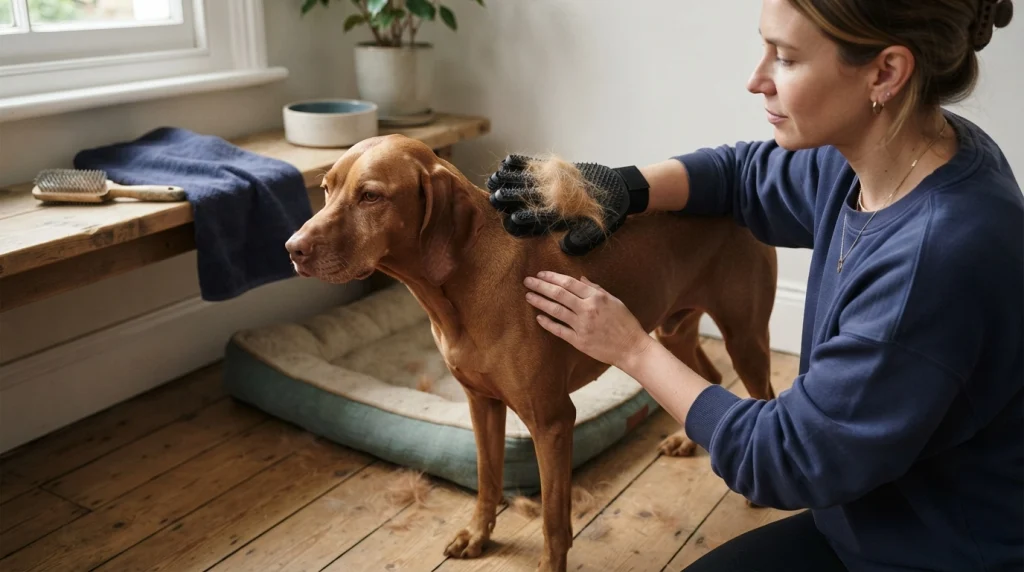
SaveUse a dog grooming glove with gentle strokes over a dry, comfortable coat, removing collected hair as the glove fills. Start slowly if your dog has never experienced the tool before.
Here is the routine I use.
- Inspect the coat first. Look for wounds, redness, lumps, ticks, mats, or painful areas.
- Put the glove on securely. Tighten the wrist strap enough to prevent slipping.
- Begin with normal petting motions. Start on the shoulders, back, or sides.
- Massage gently. Small circular movements can help loosen dead surface hair.
- Follow the coat direction. Smooth your hand from front to back to collect loosened fur.
- Clean the glove frequently. Peel away the layer of collected hair before continuing.
- Finish with a coat check. Look again for irritation or areas needing another grooming tool.
I avoid repeatedly rubbing one small area. Friction can irritate sensitive skin even when the grooming tips feel soft.
Can a Grooming Glove Replace a Dog Brush?
 Save
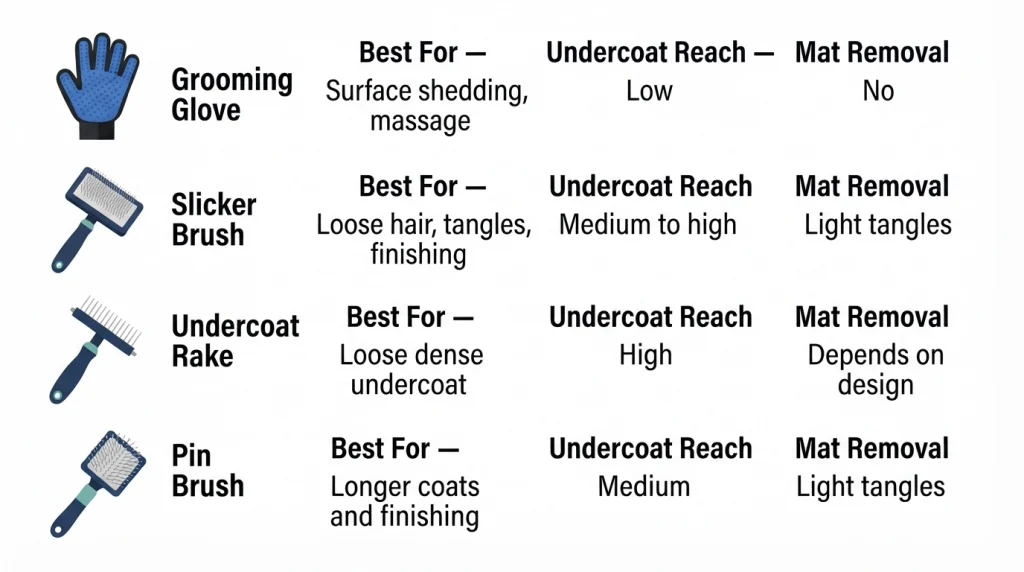
SaveSometimes, but not for every coat. A grooming glove may be enough for routine loose-hair removal on a short-coated dog, but it usually cannot replace deep-reaching brushes on long or double coats.
The key difference is reach.
| Tool | Best For | Undercoat Reach | Mat Removal |
|---|---|---|---|
| Grooming glove | Surface shedding, massage | Low | No |
| Slicker brush | Loose hair, tangles, finishing | Medium to high | Light tangles |
| Undercoat rake | Loose dense undercoat | High | Depends on design |
| Pin brush | Longer coats and finishing | Medium | Light tangles |
A glove and brush can also work together. I often prefer the glove for the first relaxing pass, followed by the tool the coat actually needs.
Is a Grooming Glove Good for Shedding Dogs?
Yes, a grooming glove can help control shedding by collecting hair that has already loosened. It works best when that loose hair sits near the coat surface.
The AKC recommends grooming gloves or hound mitts as useful options for loosening dead hair on shorter coats.
- Light shedding: A glove may be all you need for routine maintenance.
- Moderate shedding: Use the glove regularly and add a coat-appropriate brush.
- Heavy double-coat shedding: Use a rake or suitable slicker for deeper loose undercoat.
- Sudden abnormal hair loss: Check with your veterinarian rather than simply grooming more.
A grooming glove manages loose hair. It does not stop the natural shedding cycle.
Can You Use a Grooming Glove on a Wet Dog?
You can use some grooming gloves on a wet dog if the product is designed for bathing. Rubber and silicone tips can help distribute shampoo and loosen hair during washing.
Never assume every glove is waterproof. Check its care instructions first.
- Wet the coat thoroughly.
- Apply a dog-specific shampoo.
- Massage gently with the glove.
- Avoid the eyes, ears, and irritated skin.
- Rinse shampoo completely from the coat.
- Wash and dry the glove afterward.
The American Kennel Club’s broader home dog grooming guidance also stresses matching grooming methods to coat type.
What Should You Avoid When Using a Grooming Glove?
The biggest mistake is expecting a grooming glove to perform jobs it was not designed to handle. It is a gentle surface-grooming tool, not a solution for every coat problem.
- Do not scrub aggressively: Excess friction can irritate the skin.
- Do not pull at mats: Tight mats can tug painfully on skin.
- Do not groom over wounds: Avoid cuts, sores, rashes, or inflamed areas.
- Do not force nervous dogs: Build tolerance through brief positive sessions.
- Do not ignore unusual hair loss: Bald patches or severe itching need more than a grooming tool.
- Do not assume one tool fits every coat: Dense undercoats often need another brush.
If I feel resistance that a soft glove cannot handle, I stop rather than pressing harder.
That usually means another tool or professional grooming help is the safer option.
How Often Should You Use a Dog Grooming Glove?
You can use a gentle grooming glove several times per week when your dog’s skin remains comfortable. Short-coated dogs often tolerate brief glove sessions well because little pulling is involved.
Frequency should follow the individual dog’s coat, shedding level, and skin condition.
- Normal maintenance: One to several short sessions per week may work well.
- Seasonal shedding: More frequent gentle sessions can collect loose hair.
- Brush-sensitive dogs: Start with only a few strokes at a time.
- Sensitive skin: Use less pressure and stop if redness develops.
I pay more attention to the dog’s response than to a rigid calendar.
What Should You Look for When Buying a Dog Grooming Glove?
 Save
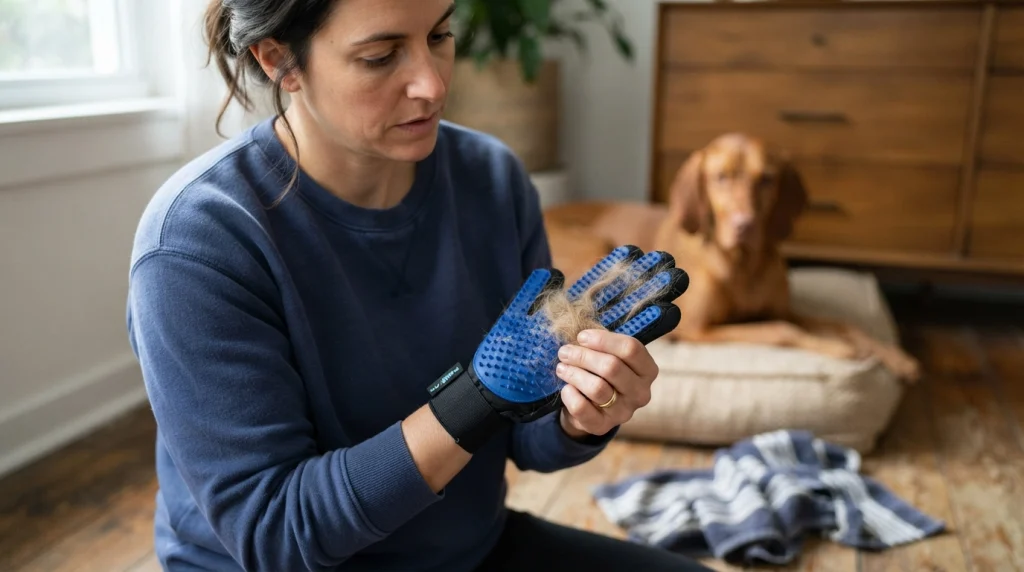
SaveLook for a glove that fits securely, bends easily with your hand, and has soft grooming tips. Comfort matters because poor fit makes controlling pressure more difficult.
- Soft tips: Flexible rubber or silicone should bend instead of scratching.
- Secure wrist closure: The glove should not rotate during grooming.
- Useful sizing: An oversized glove reduces finger control.
- Easy cleaning: Hair should peel away without a struggle.
- Washable materials: Important if you plan to use the glove during baths.
- Right or left-hand fit: Check this before buying a single-handed model.
My practical test is simple: I want to be able to pet the dog naturally while the glove stays in place.
If it twists around my hand, grooming becomes awkward fast.
Dog Grooming Gloves I Would Consider
If you’re ready to try one, these are three recognizable options I would compare based on fit, flexibility, and the grooming job you need.
🏆 Best All-Round Option
DELOMO Pet Grooming Glove
★★★★½
This style uses flexible grooming tips across a five-finger glove for loose-hair collection and massage. I like the full-hand design when I want more control around the shoulders and sides.
🐕 Best for Short Coats
KONG ZoomGroom
★★★★½
The ZoomGroom is a handheld rubber grooming tool rather than a wearable glove, but it performs a similar massage-and-loose-hair job. I would compare it if you want rubber grooming action without wearing a mitt.
💰 Best Simple Mitt Style
HandsOn Pet Grooming Gloves
★★★★☆
These gloves are designed to combine hand contact with textured grooming surfaces. I would consider them when finger movement and a natural petting motion matter more than using a rigid brush.
Frequently Asked Questions
Do dog grooming gloves really work?
Yes. Grooming gloves can collect loose surface hair, lift light dirt, and massage the coat, especially on short-haired dogs. They are less effective at reaching deep undercoat or removing mats, so long-haired and double-coated dogs may still need a slicker, rake, or comb.
Are grooming gloves good for dogs that hate brushing?
They can be. Because you move your hand much like normal petting, some brush-sensitive dogs tolerate grooming gloves better than rigid tools. Start with short sessions, gentle pressure, and rewards instead of forcing your dog to accept a long grooming session immediately.
Can a grooming glove remove mats?
No. A grooming glove is designed mainly for loose surface hair and massage, not for breaking apart tight mats. Pulling at a mat with the glove can tug the skin, so use an appropriate detangling method or seek professional grooming help for severe matting.
Should I use a grooming glove before or after a bath?
You can use one before bathing to remove loose hair and, if the glove is waterproof, during the bath to massage shampoo through the coat. A final gentle pass after the coat is fully dry can also collect hairs loosened during washing.
Is a grooming glove good for double-coated dogs?
It can help with loose hair near the surface, but it usually cannot reach enough undercoat during heavy shedding. For breeds such as Huskies, a coat-appropriate undercoat rake, long-pin slicker, or comb normally handles the deeper grooming work more effectively.
Final Takeaway
A dog grooming glove is best used for loose hair, light dirt, gentle massage, and low-stress routine grooming. It is especially handy for short coats and dogs that dislike the feel of conventional brushes.
Use light pressure and let the coat tell you when the glove has reached its limit. If you encounter dense undercoat, tangles, or mats, switch to a tool designed for that job instead of pressing harder.
Start with a few calm strokes today. A simple routine your dog accepts is far more useful than a complicated grooming kit you rarely use.
Thomas Cutter is a lifelong dog owner and the founder of FindOutAboutDogs.com. With over 10 years of hands-on experience owning multiple breeds, Thomas created this site to provide honest, research-based dog advice that real owners can actually trust.
