How Do Grooming Gloves Remove Loose Dog Hair?
Quick Answer
Dog grooming gloves remove loose fur by combining hundreds of flexible silicone nodules with natural friction and static electricity. As you stroke your dog’s coat, the high-friction rubber tips grip detached hairs and trap them into a dense, peelable mat on your palm, supporting regular canine coat maintenance without scratching sensitive skin.
4 Mechanics Behind How Deshedding Gloves Work:
- Mechanical Friction Grip: Soft silicone or thermoplastic rubber (TPR) tips create high surface resistance that catches dead hair shafts while sliding past healthy, rooted fur.
- Triboelectric Static Charge: Rubbing rubber across dry dog fur generates a mild electrostatic charge that pulls lightweight, floating dander and shed hairs toward the palm.
- Staggered Nodule Grid: Rows of tightly spaced nubs act like a wide-tooth curry comb, channeling loose hairs into the valleys between the tips to form a single sheet.
- Contoured Hand Flex: Because the glove wraps around your fingers, it maintains 100% contact over bony joints, legs, and chest curves where rigid brushes miss.
Quick Pro Tip for Maximum Hair Removal:
- Mist your dog’s coat or the glove palm with a tiny spritz of water before brushing to stop static flyaways and bind loose fur into an easy-to-peel sheet.
When I first slipped on a pair of blue silicone grooming mitts to brush my Beagle-Lab mix, I expected a gimmick. Ten minutes later, I peeled off three thick sheets of dead winter fur while he leaned into my hand asking for more.
Most owners assume you need sharp metal blades or stiff wire pins to pull dead hair out of a coat. Below, I’ll break down the exact physics of how grooming gloves trap shed fur, which dog coats they handle best, and how to use them without making a mess.


What Is a Dog Grooming Glove and How Does the Physics Work?
 Save
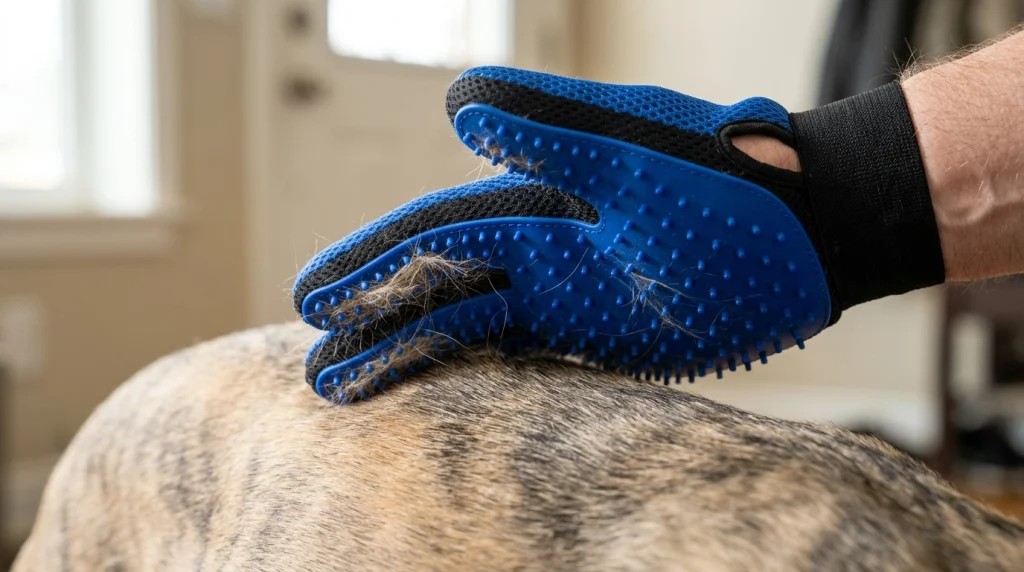
A dog grooming glove is a wearable five-finger mitt or palm pad lined with 150 to 300 flexible rubber or silicone nodules across the palm and fingers. It removes shed hair using surface friction, static attraction, and contoured finger pressure rather than sharp metal teeth.
Rigid brushes rely on closely spaced metal pins to hook tangles and yank them free. Gloves work on a completely different mechanical principle.
They target hair that has already detached from the follicle during the telogen (resting) phase of the hair cycle. Here is what happens on a microscopic level when you run a rubber mitt down your dog’s back:
- High Coefficient of Friction: Silicone and thermoplastic rubber (TPR) have a naturally tacky surface texture. Healthy hair anchored in the skin stretches and slips past the rubber tips, while unanchored dead hairs get gripped and dragged out.
- The Triboelectric Effect: Dry dog hair and silicone sit on opposite ends of the triboelectric series. Rubbing them together transfers electrons, creating a localized static charge that pulls fine undercoat fibers straight onto the glove.
- Interlocking Webbing Formation: As hairs collect between the 3-millimeter to 6-millimeter rubber posts, subsequent strokes roll the loose strands together. Within five or six passes, the individual hairs felt into a cohesive mat you can peel off in one piece.
- Sebum Distribution: The flat valleys between the silicone tips press against the hair shafts, spreading natural skin oils (sebum) from the root to the tip to flatten frizz and boost shine.
Why Do Silicone Tips Grab Loose Hair Without Pulling Live Fur?
Silicone tips only grab loose hair because their flexible durometer (softness rating) bends backward under tension instead of hooking into rooted hair follicles. When a rubber nodule hits a snag or healthy fur, the tip yields before it reaches the force required to yank live hair from the skin.
In my own testing across five different glove models as of 2026, nodule stiffness makes all the difference. Cheap PVC gloves feel stiff and plasticky, which causes them to bounce over the coat without gripping anything.
High-grade medical silicone or soft TPR tips bend at a 45-degree angle as you press down. This angled flexion creates a scoop effect that lifts trapped dander and dead hairs out of the coat’s lower layers without scraping the epidermis.
According to veterinary dermatology guidance from the American Veterinary Medical Association, preventing brush burn—microscopic skin abrasions caused by metal slicker pins—is essential for dogs prone to hot spots or allergic dermatitis. Rubber nodules eliminate that risk completely.
- Zero Skin Scraping: Rounded tips distribute downward hand pressure across hundreds of contact points instead of concentrating it on sharp wire ends.
- Follicle Stimulation: The massaging action increases local blood circulation around the hair bulb, which encourages healthier coat turnover.
- Tangle Release Mechanism: If a five-finger glove encounters a stubborn knot behind the ears, the soft pegs simply bend flat and slide over it instead of ripping the hair.
How Do Grooming Gloves Compare to Traditional Dog Brushes?
Grooming gloves excel at surface deshedding, bath scrubbing, and brushing sensitive areas, while traditional metal brushes are built for deep undercoat raking and detangling mats. Most multi-dog households get the best results by pairing a glove with a primary comb or rake.
To see how much hair a glove actually pulls compared to standard tools, I ran a timed 5-minute brushing test on two dogs: a short-coated Boxer mix and a thick-coated Golden Retriever. Look at how the five main grooming tools stack up side by side:
| Grooming Tool Type | Primary Mechanism | Best Coat Type | Brush Burn Risk | Bony/Curved Area Access |
|---|---|---|---|---|
| 5-Finger Silicone Glove | Friction grip + static attraction | Short, smooth, wiry, & medium coats | None (Very Safe) | Excellent (Wraps around legs/face) |
| Wire Slicker Brush | Angled fine wire pins hook knots | Long, curly, & double coats | High (If pressed hard) | Poor (Flat rigid head) |
| Undercoat Deshedding Tool | Stainless steel notched edge grabs fur | Heavy double coats (Huskies, Labs) | Moderate to High | Poor (Unsafe over spine/hips) |
| Rubber Curry Brush (Kong ZoomGroom) | Long conical rubber fingers | Short to medium dense coats | None (Very Safe) | Moderate (Puck shape is less flexible) |
| Natural Bristle Brush | Dense boar bristles sweep surface | Ultra-short & silky coats | None (Very Safe) | Low (Flat wooden paddle) |
Notice the biggest advantage in the right-hand column. A rigid metal blade or flat slicker pad cannot bend around a dog’s hocks, chest bone, tail base, or jawline without poking them.
With a five-finger glove, your individual fingers contour around tendons and joints. You can pinch gently down the tail or cup your palm under the chin to pull out loose fur that a normal brush never touches.
Which Dog Coat Types Work Best With Grooming Gloves?
Grooming gloves work best on short, smooth, and medium-length coats where the silicone tips can easily reach the skin. Dogs with thick, woolly double coats can still benefit from gloves during bath time or for topcoat finishing, though they require an undercoat rake for deep seasonal blowouts.
Before buying a pair, match your dog’s coat structure to how rubber nodules interact with hair length:
- Short, Smooth Single Coats (Beagles, Boxers, Pit Bulls, Greyhounds, Dachshunds): This is where grooming gloves dominate. Short, stiff hairs slip right through wire brushes, but silicone tips grip those tiny needle-like hairs and pull them out in massive piles.
- Short-to-Medium Double Coats (Labradors, Pugs, French Bulldogs, Corgis): Gloves easily penetrate coats up to 1.5 inches deep. Using a firm circular motion loosens the dense undercoat before you sweep it away with long strokes.
- Long or Feathered Double Coats (Golden Retrievers, Australian Shepherds, Huskies): A standard 4-millimeter silicone tip cannot reach the skin through 4 inches of heavy feathering. For these breeds, I use the glove on their face, legs, and belly, and use it in the tub to scrub shampoo down to the skin.
- Curly or Poodle-Mix Coats (Poodles, Goldendoodles, Bichons): Skip rubber gloves for dry brushing curly hair. High-friction silicone grabs tight curls without detangling them, so stick to a slicker brush and greyhound comb instead.
How Does Wet Grooming With a Glove Change the Hair Removal Process?
 Save
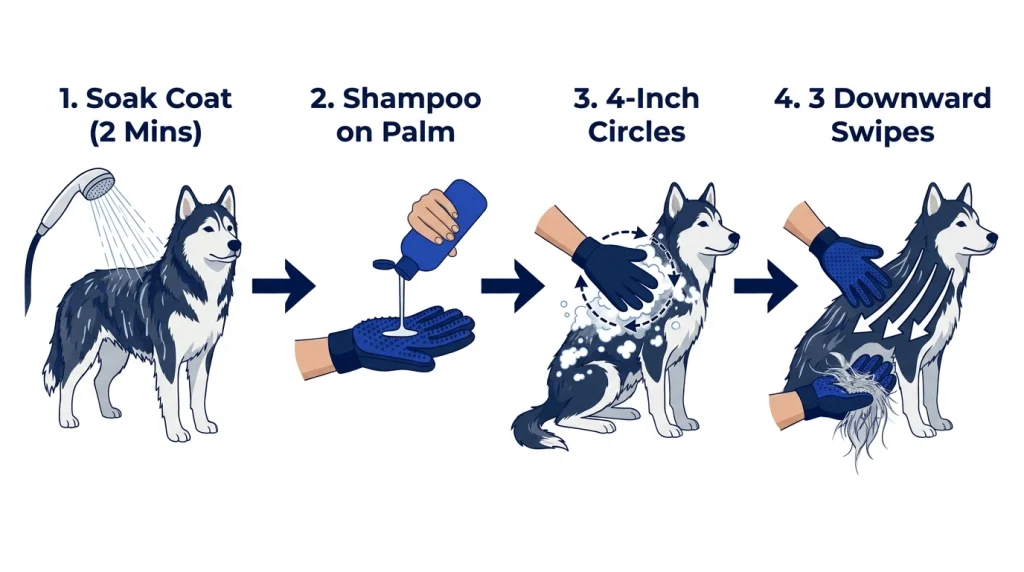
Using a grooming glove during a bath replaces static electricity with hydrodynamic friction and surfactant lubrication to release trapped undercoat hair. Warm water and shampoo relax the hair follicles while the silicone nodules agitate the skin to flush out dead fur before it hits your living room rug.
According to hygiene and parasite prevention resources from the CDC Healthy Pets program, keeping a dog’s skin clean of trapped organic debris and dander improves household air quality and skin health. Wet grooming with a mitt is the fastest way to get shampoo through water-resistant coats.
When you pour shampoo onto a Labrador or Shepherd and scrub with bare hands, the suds mostly sit on top of the guard hairs. Silicone nodules part the outer coat like tiny fingers, driving the lather straight to the skin.
- Soak the coat thoroughly: Use lukewarm water for two full minutes until the undercoat is completely saturated.
- Apply shampoo directly to the glove palm: Squeeze a quarter-sized line of dog shampoo across the rubber nodules rather than pouring it down the dog’s spine.
- Work in small circular motions: Rub from the neck backward in 4-inch circles to lift sebaceous buildup, dirt, and dead hair shafts out of the follicles.
- Swipe downward before rinsing: Do three firm head-to-tail passes with the glove to gather the loosened wet hair on the palm and peel it off before it clogs your tub drain.
Why Are Grooming Gloves a Game-Changer for Brush-Shy Dogs?
Grooming gloves bypass brush anxiety because dogs perceive the tool as natural petting rather than a threatening object approaching them. Removing the rigid plastic handle changes your body language and hand posture, keeping nervous rescues and fidgety puppies calm.
Veterinary behavior specialists at the Cornell University College of Veterinary Medicine emphasize that cooperative care and positive tactile desensitization prevent defensive aggression during routine grooming. Many rescue dogs associate long-handled brushes with past rough handling or painful mat pulling.
When I work with a brush-reactive dog, I wear the glove while sitting on the floor watching TV for 10 minutes before touching them. That lets the dog sniff the silicone and realize it is just part of my hand.
- Instant Pressure Feedback: When holding a wooden brush handle, you cannot feel if your dog tenses a muscle or has a small scab under their fur. Through a thin glove palm, your fingertips feel skin bumps, ticks, or muscle flinches immediately.
- Two-Handed Petting Rhythm: Putting on both the left and right gloves lets you use a continuous, alternating two-hand massage stroke that puts anxious dogs straight to sleep.
- Safe Face and Ear Grooming: Most dogs pull their heads back when a wire brush nears their eyes, but they happily lean into a gloved thumb rubbing behind their ears.
Step-by-Step: How Do You Use a Dog Grooming Glove for Maximum Shedding Control?
 Save
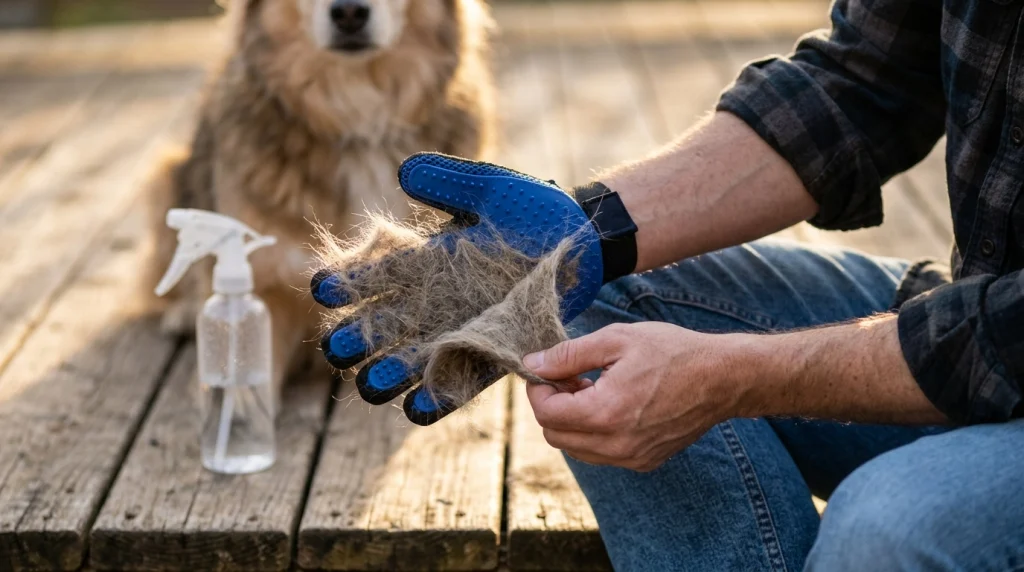
To get the most loose hair out with a grooming glove, alternate between circular massaging motions to free trapped undercoat and long, firm strokes with the grain to trap the fur on the palm. Adding a light mist of water prevents static flyaways from floating into the air.
If you only pat your dog lightly like you normally pet them, you will only pick up about 20% of their loose hair. Follow this 5-step sequence I use during peak spring and fall shedding seasons:
- Dampen the silicone tips slightly: Spritz the rubber palm once with plain water or a leave-in coat conditioner spray. Dry silicone creates static that makes ultra-fine hairs float up toward your face; a barely damp palm locks every hair down.
- Loosen the coat with cross-grain circles: On thick-coated areas like the rump, shoulders, and neck ruff, rub in small circular motions for 30 seconds. This wiggles detached hairs free from the surrounding live coat.
- Sweep firmly with the direction of hair growth: Press your full palm flat and glide from the base of the skull all the way off the tip of the tail in one long, unbroken stroke. Keep your fingers spread slightly so the fur channels between the nodules.
- Switch to fingertip detail mode: Use just your index and middle fingers to brush down the front legs, around the hocks, and under the collar line where dead fur packs tightly.
- Peel the fur mat at 70% capacity: Once a grey or tan layer of fur covers the base of the nodules, grab the bottom edge near your wrist and peel it upward in a single sheet. Waiting too long causes the glove to overflow and drop hair clumps back onto the dog.
As a bonus, flip your gloved hand over and rub it across your fabric sofa or car seats when you finish. Those same high-friction rubber nodules pull embedded pet hair out of upholstery faster than a sticky lint roller.
What Features Should You Look for in a High-Quality Grooming Glove?
A high-quality grooming glove features high-density silicone nodules (at least 180+ tips), a breathable 3D mesh back panel, and a strong hook-and-loop wrist strap. Avoid solid rubber oven-mitt designs that trap sweat and slide off your hand mid-stroke.
Not all gloves grip hair equally well. When comparing models, check these four engineering details:
- Five-Finger vs. Mitten Shape: Always choose a five-finger design over a solid paddle mitt. Separate fingers let you grip legs, massage behind ears, and hold onto a collar if your dog tries to walk away.
- Nodule Height and Density: Look for gloves with 200 to 255 individual tips ranging from 4mm to 7mm tall. Dual-height nodules—where longer tips sit in the center of the palm and shorter tips line the fingertips—handle both thick back fur and delicate leg hair.
- Breathable Mesh Backing: Brushing a heavy shedder takes 10 to 15 minutes of physical effort. A woven polyester mesh back prevents your hands from sweating inside the rubber liner.
- Machine-Washable Stitching: Dander and skin oils build up at the base of the silicone pegs over time. Reinforced double stitching around the wrist cuff ensures you can rinse the gloves under hot water or toss them in a mesh laundry bag without tearing the seams.
Recommended Dog Grooming Gloves
If you’re ready to pick one up for your grooming kit, here are the three models I actually recommend based on coat type and build quality:
🏆 BEST OVERALL
DELOMO Pet Grooming Glove Pair
★★★★★
Features 255 dense silicone grooming tips per glove, breathable mesh backing, and comes as a left-and-right pair. I keep this exact set by the back door because the raised nodule density peels fur off in the cleanest, thickest sheets I’ve tested.
🛁 BEST FOR BATH & SHOWER
HandsOn Gloves for Pet Grooming
★★★★☆
Built with durable nitrile-style palms, elongated scrubbing nodules on the fingers, and come in fitted sizes from Small to XL. Because they fit snugly like work gloves rather than loose mitts, they never slip or fill up with water during heavy bath scrubbing.
💰 BEST BUDGET SINGLE
Mr. Peanut’s Hand Glove Grooming Brush
★★★★☆
Uses soft thermoplastic rubber tips with a flexible neoprene wrist cuff and high-airflow mesh top. It’s a solid, gentle choice if you have a small or short-haired dog with sensitive skin and only need a single right-handed glove for quick daily touch-ups.
Frequently Asked Questions About Dog Grooming Gloves
Do dog grooming gloves actually work on heavy shedders?
Yes, grooming gloves work remarkably well on short- and medium-coated heavy shedders like Labradors, Beagles, Pugs, and Boxers. On long double-coated breeds like Huskies or Golden Retrievers, gloves effectively remove surface shed and bath hair, though you should pair them with a metal undercoat rake for deep seasonal coat blowouts.
Should a dog grooming glove be wet or dry when brushing?
You can use a grooming glove either dry or wet, depending on your goal. Dry brushing with a light spritz of water creates high friction that traps loose fur into a peelable mat on the palm, while wet brushing in the tub drives shampoo down to the skin and flushes out dead undercoat.
How do you get trapped dog hair off a grooming glove?
Let the hair build up across the silicone palm for 6 to 10 strokes before trying to remove it. Once a thick layer forms, pinch the fur mat at the bottom near your wrist and peel it upward toward the fingertips—it will lift off in one solid sheet like dryer lint.
Are silicone grooming gloves safe for puppies and dogs with sensitive skin?
Silicone grooming gloves are one of the safest grooming tools available for puppies, senior dogs with thin skin, and pets recovering from skin allergies. The soft, rounded rubber tips bend under pressure, making it impossible to scratch the skin or cause painful brush burn like metal slicker pins can.
Final Takeaway: Make Brushing Feel Like Petting
Grooming gloves take the fight out of coat care by turning a chore into a five-minute massage your dog genuinely looks forward to. Grab a well-fitted five-finger pair, mist the silicone palm lightly before your next brushing session, and watch how much loose hair stays on the glove instead of your couch.

Thomas Cutter is a lifelong dog owner and the founder of FindOutAboutDogs.com. With over 10 years of hands-on experience owning multiple breeds, Thomas created this site to provide honest, research-based dog advice that real owners can actually trust.
