Wooden vs Plastic Dog Brush Handles: Which Is Better?
Quick Answer
Wooden dog brush handles suit owners who prefer a natural feel and a traditional design, while plastic handles are often lighter, easier to clean, and more practical for frequent grooming. Neither material is automatically better for every dog owner. Choose based on grip, weight, moisture exposure, construction quality, and how long you typically brush your dog.
What matters most when choosing?
- Comfort: Compare the handle shape and grip rather than judging material alone.
- Easy cleaning: Plastic usually handles routine wiping and brief rinsing more conveniently.
- Moisture protection: Keep wooden handles dry to reduce the risk of swelling, cracking, or finish damage.
- Long sessions: Choose a balanced brush that feels comfortable during repeated strokes.
- Coat care: Match the brush head and pins to your dog’s coat; the handle material does not determine grooming effectiveness.
Choosing between wooden and plastic dog brush handles might seem like a small decision, but it can affect how comfortable grooming feels in your hand. I would look beyond appearance and consider grip, cleaning, durability, and the type of grooming routine you follow.
In this guide, I’ll explain the practical differences, what to look for before buying, and which handle makes more sense for different owners. I’ll also cover why the brush head deserves just as much attention as the handle.


What Is the Difference Between Wooden and Plastic Dog Brush Handles?
A wooden dog brush handle is made from timber, such as beech or another suitable wood, while a plastic handle is molded from a synthetic polymer. Both designs hold the brush comfortably when properly shaped, but they differ in moisture tolerance, surface feel, maintenance, and manufacturing options.
The important distinction is that handle material affects how you hold and maintain the tool, not how effectively its pins remove loose fur. Brush-head design, pin spacing, flexibility, and your technique have a more direct effect on grooming performance.
- Wood: Offers a natural appearance and a warm, solid feel.
- Plastic: Allows lightweight construction, molded contours, and textured grip surfaces.
- Either material: Can work well when the handle is comfortable, securely attached, and appropriately finished.
Wooden vs Plastic Dog Brush Handles: Side-by-Side Comparison
 Save
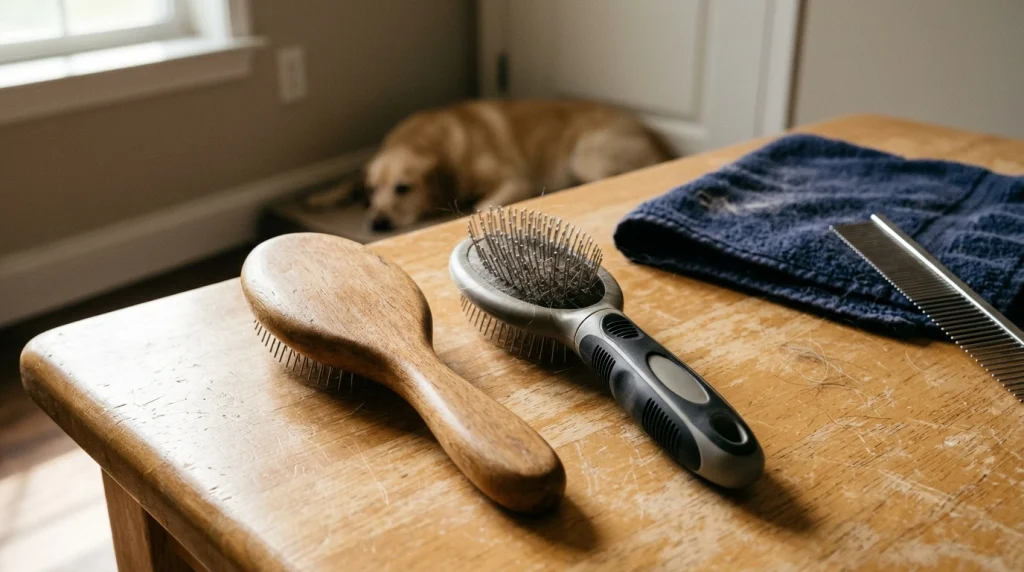
Plastic is generally the practical choice for easy maintenance, while wood appeals to owners who value natural materials and traditional styling. The best option depends on the individual brush’s construction rather than the material label alone.
| Feature | Wooden Handle | Plastic Handle |
|---|---|---|
| Hand feel | Often warm and natural | Varies with texture and shape |
| Weight | Depends on wood species and design | Often lightweight |
| Moisture resistance | Depends on wood, finish, and exposure | Usually better for routine moisture exposure |
| Cleaning | Wipe carefully; avoid soaking | Usually easier to wipe clean |
| Grip | Depends on finish and contour | Can include molded non-slip textures |
| Durability | Can last well with appropriate care | Depends on polymer quality and construction |
| Appearance | Natural grain and traditional styling | Wide choice of colors and shapes |
| Best fit | Owners who prefer natural materials | Frequent grooming and easy-care routines |
These are general material characteristics, not guarantees for every brush. A well-finished wooden handle may outlast a poorly made plastic one, and a textured plastic handle may offer better control than smooth, polished wood.
Are Wooden Dog Brush Handles More Comfortable?
Wooden handles can feel comfortable because they offer a natural surface and a familiar, solid grip. However, comfort depends more on the handle’s contour, thickness, balance, and finish than on wood alone.
For example, a smoothly rounded wooden handle may suit an owner who dislikes sharp edges or overly narrow grips. A poorly shaped wooden handle can still cause hand fatigue during a long grooming session.
When does a wooden handle make sense?
- Traditional feel: You prefer natural materials over molded plastic.
- Regular dry grooming: You brush indoors and can keep your tools away from standing water.
- Simple styling: You want a classic-looking brush that fits your grooming kit.
- Comfortable contour: The handle fits your hand without forcing your fingers into an awkward position.
Before buying, check whether the handle has rough patches, splinters, sharp corners, or a finish that feels slippery. These details matter more to everyday comfort than the wood’s color or grain pattern.
Are Plastic Dog Brush Handles Better for Everyday Grooming?
Plastic handles are often more convenient for daily use because many are lightweight, easy to wipe clean, and resistant to ordinary splashes. Molded plastic also allows manufacturers to build finger grooves, curved grips, and textured surfaces into the handle.
That convenience makes plastic a sensible starting point for owners who groom frequently or want a brush that needs little maintenance. Still, plastic is not automatically slip-resistant, and some smooth handles become difficult to control with wet hands.
When is plastic the practical choice?
- Frequent brushing: You want a tool that is easy to clean between sessions.
- Lightweight handling: You prefer a brush that feels easy to move around your dog’s body.
- Grip features: You want molded contours or rubberized sections.
- Shared grooming areas: Several family members use the same brush and need straightforward care.
Check the plastic for cracks, loose joints, and sharp molding seams. A sturdy handle with a comfortable shape is preferable to a lightweight design that flexes excessively or feels flimsy.
Which Handle Is Better for Grooming a Wet Dog?
Plastic is usually the more convenient option when a brush may encounter splashes or frequent cleaning, but neither handle material should be assumed safe to use in every wet-grooming situation. A wooden handle can absorb moisture through exposed surfaces or damaged finishes, while plastic may still become slippery.
For routine brushing after a bath, first towel-dry your dog and choose a brush appropriate for the coat’s condition. If the coat tangles easily, avoid pulling a brush forcefully through wet knots.
For better control around a damp dog, prioritize these features:
- Textured grip: Look for a surface that stays easy to hold with slightly damp hands.
- Secure attachment: The handle must not loosen from the brush head.
- Easy cleaning: Choose a design that allows trapped fur and debris to be removed without soaking vulnerable parts.
- Safe technique: Use gentle strokes and stop if your dog reacts with pain or discomfort.
If you use a wooden brush, wipe away moisture promptly and let it dry completely in a ventilated place. Avoid leaving it in a wet bathroom, a closed damp bag, or a container where moisture can remain trapped.
Do Wooden or Plastic Handles Last Longer?
Neither material guarantees a longer lifespan because quality, design, storage, and use all affect durability. Wood can crack, split, or develop finish damage after repeated moisture exposure, while plastic can crack, deform, or become brittle depending on its composition and conditions.
Instead of choosing based on assumptions, inspect the handle and the points where it connects to the brush head. A secure connection and sound construction are better indicators of likely service life than the material alone.
What should you inspect before buying?
- Handle joints: Look for movement where the handle meets the head.
- Surface quality: Avoid splinters, cracks, sharp seams, and rough edges.
- Head stability: Check that the brush head does not wobble during ordinary handling.
- Pin retention: Make sure the pins or bristles appear securely fitted.
- Cleaning instructions: Follow the manufacturer’s guidance for washing and drying.
A brush that receives proper care can remain useful for years, although wear depends on its construction and how often you use it. Replace it when damage creates sharp edges, loose pins, or an unreliable grip.
Does Handle Material Affect Shedding or Detangling?
The handle material has little direct effect on how much loose fur a brush removes or how effectively it separates tangles. The working part of the brush does most of that job, so its design should guide your choice.
When comparing two brushes, evaluate the following features before paying extra for a wooden or plastic handle:
- Brush type: Slicker brushes, pin brushes, bristle brushes, and rubber grooming brushes serve different purposes.
- Pin length: Longer pins may help reach through a dense coat when the brush suits the dog’s coat type.
- Pin spacing: Spacing influences how the brush moves through different coat textures.
- Pin tips: Smooth, appropriately finished tips help reduce the risk of scratching.
- Head flexibility: Some flexible heads adapt more readily to body contours.
For example, a double-coated dog may need a suitable slicker, undercoat rake, or comb regardless of whether the handle is wood or plastic. A short-coated dog may benefit more from a rubber grooming brush than from either handle material on a pin brush.
If you’re unsure which tool fits your dog, this guide to brushing a dog with a thick undercoat explains how to choose and use grooming tools for dense fur.
How Should You Clean and Maintain Each Handle Type?
 Save
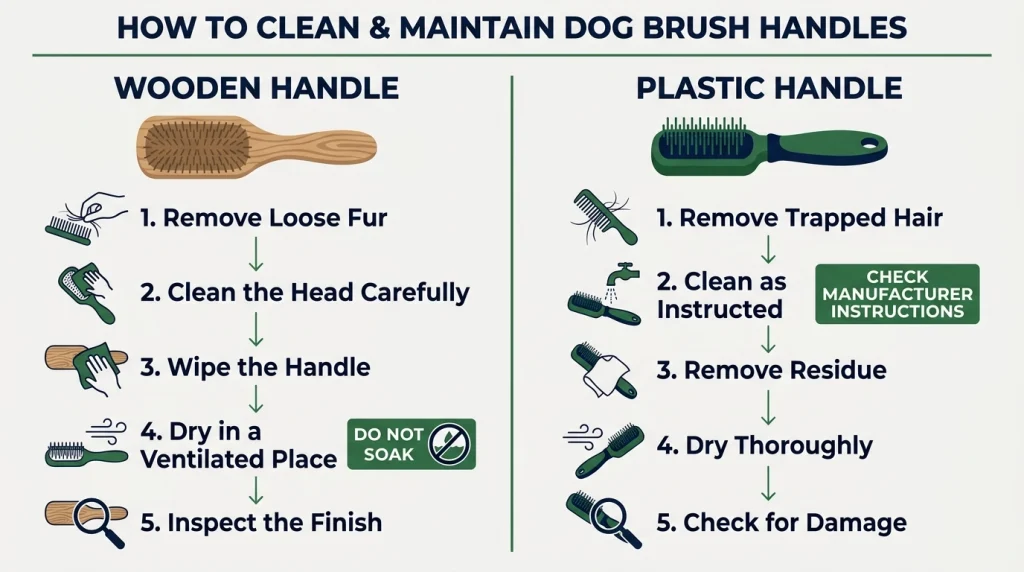
Both handle types need regular cleaning, but wooden handles generally require more care around moisture. Remove trapped fur after each session, and clean the brush head according to the manufacturer’s instructions.
How to care for a wooden dog brush
- Remove loose fur: Use your fingers or a suitable cleaning comb without damaging the pins.
- Clean the head carefully: Use a lightly damp cloth or the cleaning method recommended by the manufacturer.
- Wipe the handle: Remove dirt and residue without soaking the wood.
- Dry completely: Leave the brush in a ventilated location away from persistent dampness.
- Inspect the finish: Look for rough spots, splitting, or signs of moisture damage.
How to care for a plastic dog brush
- Remove trapped hair: Clear the pins and brush head after grooming.
- Clean the surface: Wipe it down or rinse it if the manufacturer’s instructions permit.
- Remove residue: Pay attention to grooves where oils and debris can collect.
- Dry the brush: Let the head and any cushioned parts dry thoroughly.
- Check for damage: Replace the brush if cracks, sharp edges, or loose pins appear.
Do not assume that a plastic handle makes the entire brush waterproof. Cushioned heads, adhesives, metal components, and joints may need special care even when the handle itself tolerates water.
Which Dog Brush Handle Should You Choose for Your Grooming Routine?
The right choice depends on how often you brush, where you groom, and what feels comfortable in your hand. In 2026, both wooden and plastic handles remain reasonable choices, so focus on construction and practical needs rather than trends.
| Your priority | Handle to consider | What to check |
|---|---|---|
| Easy cleaning | Plastic | Whether the whole brush can be rinsed safely |
| Natural appearance | Wood | Smooth finish and secure construction |
| Long grooming sessions | Either | Balance, grip, and hand fatigue |
| Damp grooming areas | Plastic, generally | Grip texture and moisture-safe construction |
| Lower environmental impact | Depends on the product | Material sourcing, lifespan, and disposal |
One useful way to compare brushes is to hold each one in your normal grooming position. Make several gentle brushing motions with your wrist relaxed and fingers comfortably wrapped around the handle.
Notice whether the handle twists, presses against your palm, or requires excessive gripping. This simple comparison can tell you more about comfort than the material name printed on the packaging.
Are Wooden Dog Brush Handles More Eco-Friendly?
Wood comes from a renewable resource when responsibly sourced, while conventional plastic is typically made from fossil-based raw materials. However, a wooden handle is not automatically the more sustainable choice because sourcing, manufacturing, durability, and disposal all matter.
When environmental impact is important to you, check for credible sourcing information and choose a brush that can withstand regular use. Replacing a poorly made brush repeatedly may undermine the benefit of selecting a particular material.
Consider these factors before making an environmentally focused purchase:
- Wood sourcing: Look for clear information about the wood and its origin.
- Plastic composition: Check whether the manufacturer identifies the polymer or recycled content.
- Expected lifespan: Choose sound construction over a material marketed as premium.
- Repairability: Consider whether the brush head or handle can be repaired or replaced.
- End-of-life options: Check local recycling rules rather than assuming every plastic or wooden brush is recyclable.
For general background on responsible purchasing and environmental choices, the U.S. Environmental Protection Agency provides information about waste prevention and recycling. Product-specific claims still need to be assessed individually.
What Should You Check Before Buying a Dog Brush?
Start with the brush head, then compare the handle’s comfort and construction. A premium-looking handle is not worth buying if the pins do not suit your dog’s coat or the grip feels awkward.
Use this checklist when comparing options online or in a pet shop:
- Coat suitability: Confirm that the brush type works for your dog’s coat length and texture.
- Handle shape: Look for a contour that fits your hand naturally.
- Grip security: Avoid smooth surfaces that feel slippery during handling.
- Build quality: Check for cracks, weak joints, loose pins, or rough edges.
- Cleaning instructions: Make sure the care routine fits your household.
- Return policy: Check the seller’s terms in case the handle feels uncomfortable after inspection.
For additional guidance on making grooming comfortable, see this article about recognizing when a dog brush causes discomfort. Your dog’s response matters just as much as the tool’s construction.
For general coat-care guidance, you can also consult the American Kennel Club and its dog grooming resources. Choose the brush based on your dog’s needs rather than the handle’s appearance alone.
Dog Brush Recommendations: What Should You Consider?
 Save
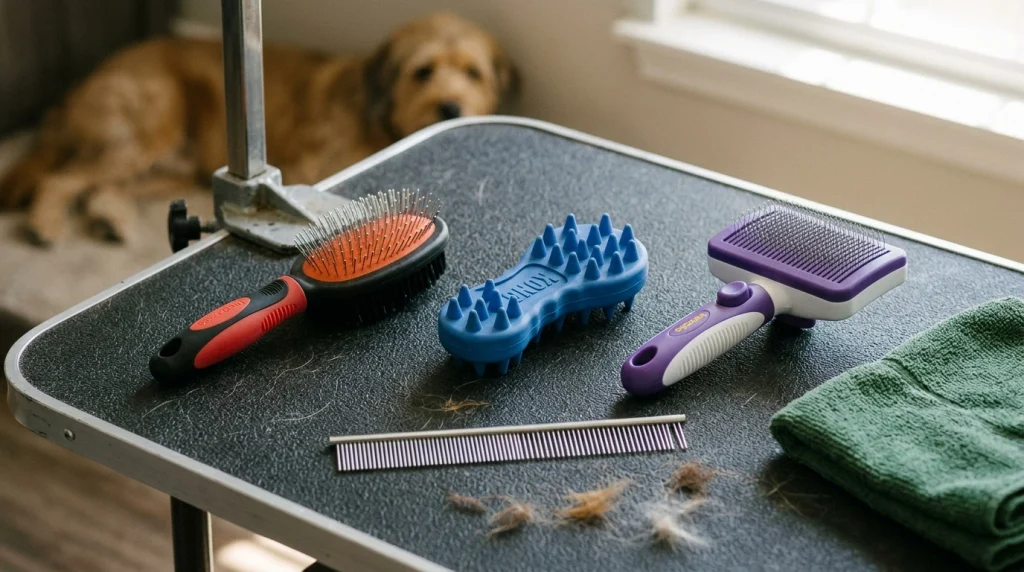
If you’re ready to choose a brush, I’d prioritize the grooming function first and the handle material second. These three established models offer different brush styles to compare, although their handle construction and current specifications should be checked on the product listings.
VERSATILE OPTION
Hartz Groomer’s Best Combo Dog Brush
A combination brush with two grooming surfaces to consider for different coat-care tasks. Check the handle shape, grip, and brush-head dimensions before choosing it for your dog.
SHORT-COAT OPTION
KONG ZoomGroom Dog Brush
A flexible rubber grooming brush worth considering for loose fur and routine coat care on suitable dogs. Its grip style differs from a conventional long-handled brush, so check whether the shape feels natural in your hand.
CLEANING CONVENIENCE
Hertzko Self Cleaning Slicker Brush
A slicker brush with a self-cleaning mechanism designed to help release collected fur. It is worth comparing if easy cleanup is a priority, but use gentle pressure and make sure the pins suit your dog’s coat and skin sensitivity.
These are product options to compare, not the result of hands-on testing or a verified current ranking. Confirm the exact model, handle material, seller information, and current listing details before purchasing.
Frequently Asked Questions
Are wooden dog brush handles better than plastic ones?
Wooden handles may suit owners who prefer a natural feel and traditional appearance, while plastic handles are often easier to clean and maintain. Neither material is universally better. Compare the handle’s shape, grip, construction, and moisture requirements before deciding which one suits your grooming routine.
Do wooden dog brush handles crack?
Wooden handles can crack or split if the wood dries unevenly, suffers impact damage, or experiences repeated moisture exposure. Proper care helps reduce these risks. Wipe the handle clean, avoid soaking it, and store the brush somewhere dry and ventilated.
Are plastic dog brush handles easier to clean?
Plastic handles are generally easier to wipe down and may tolerate brief rinsing better than unfinished wood. However, the entire brush may not be waterproof. Check the manufacturer’s cleaning instructions, particularly when the brush has a cushioned head, glued components, or exposed metal parts.
Which handle is best for long grooming sessions?
Either material can work well during long grooming sessions if the handle fits your hand and balances comfortably with the brush head. Look for a suitable thickness, secure grip, and smooth contours. If possible, hold the brush before buying and test how naturally your wrist moves.
Does a wooden handle remove more dog hair than a plastic handle?
No, handle material alone does not determine how much fur a brush removes. Brush type, pin arrangement, head size, and technique have a greater influence on grooming results. Select a brush suited to your dog’s coat, then choose whichever handle feels most comfortable to use.
Final Verdict: Wooden or Plastic Dog Brush Handles?
Choose a plastic dog brush handle if easy cleaning, low-maintenance care, and practical everyday use matter most. A well-shaped plastic grip is especially worth considering if you regularly groom your dog in areas where the brush may encounter moisture.
Choose wood if you prefer its natural feel and appearance and are willing to protect it from prolonged moisture exposure. A well-made wooden brush can be a practical grooming tool when properly maintained.
My main recommendation is simple: compare grip, balance, build quality, and brush-head suitability before deciding on the material. The best dog brush is the one that lets you groom your dog’s coat effectively, comfortably, and without causing unnecessary stress.
When comparing options, start with your dog’s coat type and grooming needs, then choose the handle that feels right for your hand. That approach is more useful than assuming wood or plastic is always the better material.

Thomas Cutter is a lifelong dog owner and the founder of FindOutAboutDogs.com. With over 10 years of hands-on experience owning multiple breeds, Thomas created this site to provide honest, research-based dog advice that real owners can actually trust.
