What Materials Are Dog Grooming Gloves Made From?
Quick Answer
Dog grooming gloves are usually made from silicone, thermoplastic rubber (TPR), or other flexible synthetic rubber materials, combined with breathable polyester or nylon fabric. Their soft grooming tips collect loose fur, while the fabric backing keeps your hand comfortable. Silicone is a practical choice for gentle grooming and bathing, but the best material also depends on your dog’s coat and regular brushing schedule.
Common Grooming Glove Materials
- Silicone tips: Flexible grooming surfaces that help collect loose fur and rinse clean.
- TPR rubber: A soft, molded material commonly used for massage and brushing.
- Polyester mesh: Lightweight backing that improves ventilation and flexibility.
- Nylon fabric: A durable material used in some fitted and reusable gloves.
- Synthetic rubber blends: Materials such as nitrile and PVC used in certain specialized designs.
Before Buying
- Check the label: Some products advertised as silicone actually specify TPR in their material descriptions.
- Check the tips: Flexible, rounded tips are preferable to hard or sharp projections.
- Check allergies: Confirm latex content if anyone handling the glove has a known latex allergy.
Dog grooming gloves look simple, but their materials make a noticeable difference. A glove that feels comfortable on your hand may behave differently against your dog’s coat.
I prefer comparing the actual grooming surface, fabric backing, and construction before considering brand claims. This guide explains those differences so you can choose confidently.


What Are Dog Grooming Gloves?
Dog grooming gloves are wearable grooming tools with textured palms or fingers designed to loosen and collect shedding hair. They allow owners to groom dogs using movements similar to ordinary petting.
Unlike traditional brushes, these gloves follow the movement of your fingers. That flexibility can help when grooming shoulders, legs, and other curved body areas.
Most designs combine several components rather than using one material throughout.
- Grooming surface: Flexible tips or raised nodules that contact the coat.
- Hand backing: Mesh or woven fabric that supports the glove.
- Finger panels: Flexible sections that allow natural hand movement.
- Wrist closure: Elastic or adjustable hook-and-loop fastening.
- Stitching: Seams that connect the textile and grooming sections.
The combination determines how the glove fits, handles moisture, and releases collected hair. Material quality matters just as much as appearance.
What Materials Are Commonly Used in Dog Grooming Gloves?
 Save
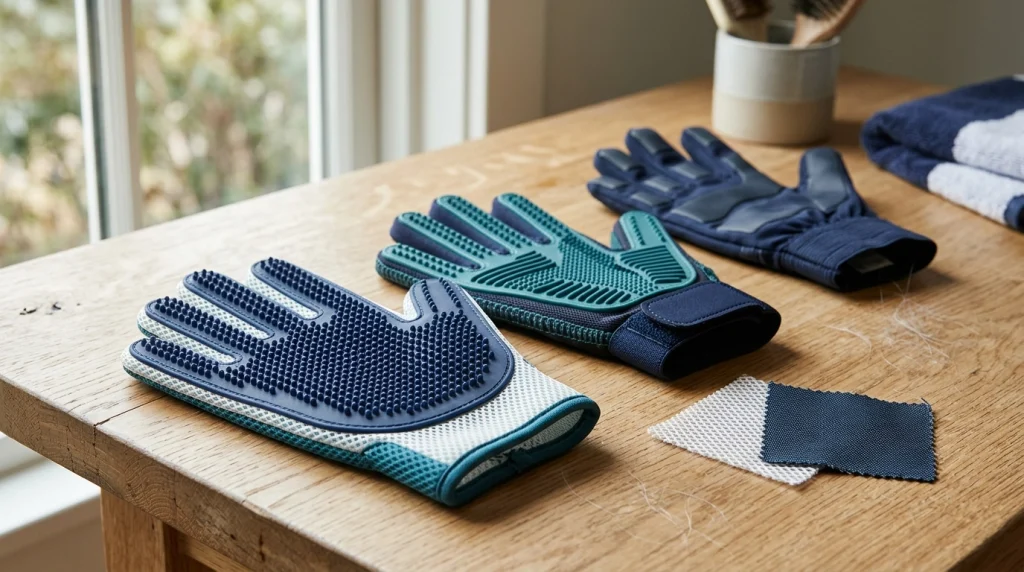
Manufacturers use several flexible polymers and synthetic fabrics. The most common options include silicone, TPR, polyester, nylon, and specialized synthetic rubber blends.
1. Silicone: Flexible and Easy to Rinse
Silicone is a flexible synthetic polymer used for grooming tips and sometimes the entire glove surface. Its smooth, water-resistant construction makes it suitable for many bathing products.
Silicone tips bend as they move across a dog’s coat. Their rounded shape can provide a comfortable grooming experience when used with gentle pressure.
Key advantages include:
- Flexible, rounded grooming projections.
- Good resistance to water exposure.
- Easy rinsing after removing loose fur.
- Suitability for many short-haired dogs.
- Availability in different tip shapes and densities.
However, silicone is not automatically the softest option. Tip thickness, spacing, and hardness influence how the glove feels.
For example, DELOMO Zoe uses 255 silicone grooming tips. This provides a useful real-world example of a textured silicone design.
2. Thermoplastic Rubber (TPR): Soft and Moldable
Thermoplastic rubber, or TPR, is a flexible material that manufacturers can mold into textured grooming surfaces. It combines rubber-like flexibility with thermoplastic processing characteristics.
TPR appears in many affordable grooming gloves and bath mitts. Products from TRIXIE and Flamingo list TPR among their materials.
Common advantages include:
- Soft, flexible grooming nodules.
- Good grip against loose surface fur.
- Versatility for washing and massaging.
- Compatibility with breathable mesh backing.
- Different textures for different grooming needs.
TPR formulations vary between manufacturers. One glove may feel softer or more flexible than another, even when both use TPR.
I wouldn’t judge material quality by the word “rubber” alone. The shape and flexibility of the individual tips deserve equal attention.
3. Polyester: Lightweight Fabric Backing
Polyester is a synthetic textile commonly used in grooming glove backing and mesh panels. Its lightweight construction can make a glove easier to wear.
Mesh openings allow air movement around the hand. This is helpful when you spend several minutes brushing a shedding dog.
Polyester also offers useful construction advantages:
- Lightweight textile structure.
- Compatibility with elastic wrist panels.
- Good shape retention in many designs.
- Relatively simple cleaning when care instructions permit.
However, polyester mesh is not necessarily waterproof. Water can pass through its openings during bathing.
4. Nylon: Durable and Flexible Construction
Nylon is another synthetic textile used in some dog grooming gloves. It can provide a strong yet flexible supporting structure.
HandsOn, for example, identifies nylon as one of its glove materials. Its construction also includes nitrile and PVC.
Look for these qualities in a nylon-backed glove:
- Secure stitching around the fingers.
- Comfortable movement when closing your hand.
- A fitted shape that does not slide excessively.
- Durable connections between fabric and grooming areas.
Nylon can be an excellent structural material without being the actual grooming surface. Always distinguish the palm material from the backing.
5. Nitrile and PVC: Specialized Synthetic Materials
Not every grooming glove uses silicone or TPR. Some designs incorporate nitrile rubber and polyvinyl chloride, commonly called PVC.
HandsOn lists nitrile, PVC, and nylon in its official material description. Its manufacturer also states that the gloves contain no natural latex rubber.
These materials can support fitted gloves with textured grooming areas. However, their performance depends on the specific construction.
One important distinction involves allergies. Synthetic nitrile does not contain the natural latex proteins responsible for classic latex allergy.
That doesn’t mean every synthetic glove is irritation-free. Dyes, manufacturing additives, friction, and other components can still cause reactions.
6. Natural Rubber and Other Components
Some pet grooming accessories use natural rubber, although many products described as rubber actually contain synthetic compounds. Always check the exact material specification.
Natural rubber latex can cause allergic reactions in susceptible people. Anyone with a known latex allergy should verify the complete product composition before purchase.
Other supporting materials may include:
- Elastic fibers: Help wrist openings stretch.
- Hook-and-loop fasteners: Keep adjustable straps secure.
- Synthetic stitching: Holds separate glove panels together.
- Fabric reinforcement: Supports high-wear areas around the fingers.
Dog Grooming Glove Materials Compared
Different materials solve different problems. This comparison focuses on their typical functions rather than claiming one material always performs better.
| Material | Typical Location | Main Advantage | Limitation |
|---|---|---|---|
| Silicone | Palm and tips | Flexible, easy-to-rinse surface | Short tips may miss deep undercoat |
| TPR | Grooming nodules | Moldable, flexible texture | Hardness varies by formulation |
| Polyester | Mesh backing | Lightweight ventilation | Usually allows water through |
| Nylon | Glove liner | Durable supporting fabric | May retain moisture after washing |
| Nitrile/PVC | Specialized glove surfaces | Durable synthetic construction | Properties depend on the formulation |
The table describes common material roles, not universal specifications. Product manufacturers may combine or process materials differently.
Is Silicone Better Than Rubber for Dog Grooming Gloves?
Silicone is not universally better than rubber. Both silicone and TPR can create comfortable grooming surfaces when their tips are properly designed.
Silicone is attractive when easy rinsing and a flexible grooming surface are priorities. TPR can offer comparable functionality in many affordable bath and grooming gloves.
Choose Silicone When:
- You want a flexible surface for routine grooming.
- You frequently use the glove during baths.
- You prefer grooming tips that rinse clean easily.
- Your dog has a relatively short, smooth coat.
Consider TPR When:
- You want a practical multipurpose grooming glove.
- You prefer a particular molded tip texture.
- You need an affordable everyday grooming option.
- The manufacturer confirms suitable softness and durability.
My priority would be the finished glove rather than the material name. A well-designed TPR glove can be preferable to a poorly constructed silicone model.
Which Grooming Glove Material Is Best for Different Dog Coats?
Coat type determines which grooming surface will work comfortably. Material alone cannot tell you whether a glove will reach the hair you want to remove.
Short-Haired Dogs
Dogs such as Boxers and Beagles often benefit from flexible rubber-style grooming tools. Silicone or TPR gloves can help collect loose surface hair.
For more options, see this guide to the best dog brushes for short hair.
Long-Haired Dogs
Long coats can develop tangles beneath the surface. Grooming gloves may help remove loose exterior hair but usually cannot replace appropriate combing.
For these dogs, combine gentle glove sessions with a brush or comb designed for the coat. Avoid pulling textured tips through established knots.
Double-Coated Dogs
Double-coated breeds have a protective outer coat and a softer undercoat. Short grooming nodules may not reach deeply enough during heavy seasonal shedding.
Use a suitable undercoat tool when necessary. Our guide to brushing dogs with thick undercoats explains that process.
Dogs With Sensitive Skin
Choose smooth, rounded, flexible grooming tips and start with very light pressure. Watch your dog’s reaction rather than assuming a material is automatically gentle.
If the skin is red, wounded, inflamed, or painful, stop grooming. Ask your veterinarian whether brushing is appropriate.
The VCA Animal Hospitals grooming guide also explains why coat type should determine grooming tool selection.
Are Dog Grooming Glove Materials Safe?
Most properly manufactured grooming gloves are intended for routine contact with pet coats. However, safety depends on the complete product, its condition, and how you use it.
Neither “silicone” nor “natural” guarantees that a product is completely safe. An appropriate design matters more than a vague marketing claim.
What Should You Check?
- Tip condition: Avoid cracked, sharp, or detached projections.
- Surface texture: Choose rounded tips that do not scrape.
- Material disclosure: Prefer clearly identified polymers and fabrics.
- Allergen information: Confirm natural latex content when relevant.
- Construction quality: Inspect loose seams and damaged straps.
- Cleaning instructions: Follow the manufacturer’s approved method.
People with latex allergies should review guidance from the American College of Allergy, Asthma & Immunology. Natural latex and synthetic rubber are not identical materials.
Keep grooming gloves away from unsupervised dogs that chew objects. Swallowed pieces of damaged material can create a serious hazard.
How Can You Identify a Grooming Glove’s Actual Material?
Start with the manufacturer’s material specification instead of the product title. Some listings describe a glove as silicone while identifying its actual surface as TPR.
I use this checklist when comparing products:
- Read the material field: Look for silicone, TPR, nitrile, PVC, or another specific material.
- Identify separate components: Check both the grooming palm and fabric backing.
- Confirm the manufacturer: Compare marketplace information with the official product description.
- Examine product photos: Look closely at tip shape, stitching, and straps.
- Check care instructions: Confirm whether the glove supports bathing, hand washing, or another cleaning method.
- Contact the seller: Request clarification when material details conflict.
Be cautious about unsupported claims such as “medical grade” or “completely hypoallergenic.” Such descriptions require reliable product-specific evidence.
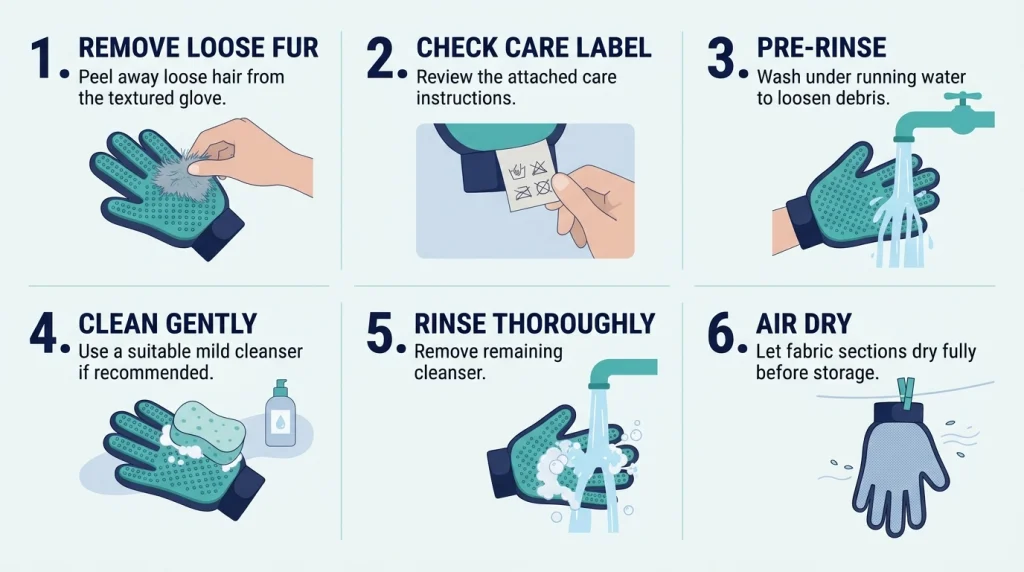
How Should You Clean and Maintain Different Grooming Glove Materials?
 Save
Proper cleaning helps remove trapped hair, dirt, and shampoo residue. It also gives you an opportunity to inspect the glove for wear.
Cleaning Steps
- Remove the fur: Peel collected hair away from the grooming tips.
- Check the label: Follow the manufacturer’s washing instructions.
- Rinse the surface: Use water to remove ordinary grooming debris when permitted.
- Clean gently: Use a suitable mild cleanser if recommended.
- Rinse thoroughly: Remove remaining cleanser from the glove.
- Air dry: Allow fabric sections to dry fully before storage.
Many silicone and TPR surfaces are easy to rinse. Mesh-backed gloves may need more drying time because moisture remains in their textile components.
Do not automatically place grooming gloves in a washing machine or dryer. Heat and aggressive cleaning can damage some polymers, seams, or adhesives.
How Often Should You Clean Them?
Remove loose hair after each grooming session. Wash the glove when it becomes dirty or after bathing, according to its care label.
If a glove smells unpleasant despite cleaning, inspect its fabric and seams. Persistent odor may indicate retained moisture or buildup.
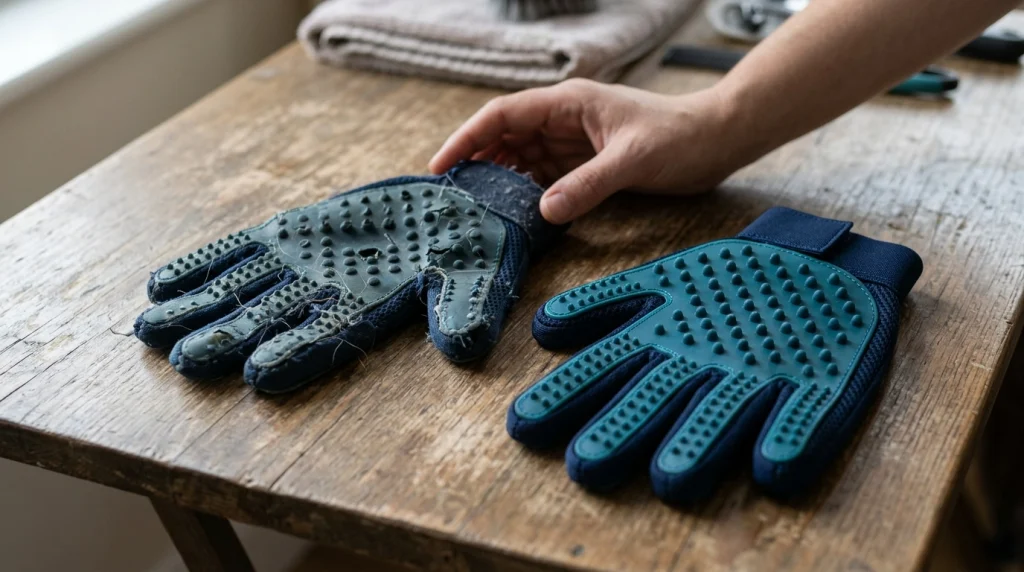
When Should You Replace Dog Grooming Gloves?
 Save
There is no universal replacement schedule. Glove lifespan varies with materials, construction, grooming frequency, and cleaning habits.
Replace the glove when you notice:
- Cracked or missing grooming tips.
- Torn mesh or exposed seams.
- Loss of elasticity around the wrist.
- Persistent unpleasant odors after appropriate cleaning.
- Hardening, stickiness, or unusual surface deterioration.
- Sharp edges or pieces that could detach.
A damaged glove is not worth continued use. If replacement is necessary, choose an appropriate construction rather than automatically buying the same model.
Common Mistakes When Choosing Grooming Glove Materials
Many purchasing mistakes come from focusing on marketing terms rather than the finished design. A glove should suit both the dog’s coat and the owner’s hand.
- Assuming all rubber is latex: TPR and nitrile are different materials from natural rubber latex.
- Confusing silicone with TPR: Product titles may not accurately identify the surface material.
- Ignoring the backing: A comfortable palm cannot compensate for poorly fitting fabric.
- Choosing hard tips: Excessively stiff projections can make grooming uncomfortable.
- Expecting deep dematting: Flexible grooming gloves are not substitutes for professional mat removal.
- Ignoring hand size: Loose gloves can reduce control during brushing.
For heavy shedding, compare gloves with dedicated brushes. This dog shedding brush guide covers additional tools.
Recommended Dog Grooming Gloves by Material
If you’re choosing a glove based on material, these three real products are useful starting points. They represent different combinations of grooming surfaces and supporting fabrics.
The scores below are editorial material-and-design assessments, not verified customer ratings or results from hands-on product testing. Check the manufacturer’s current specifications before ordering.
🏆 Best Silicone Option
DELOMO Zoe Pet Grooming Gloves
★★★★★ 4.6/5
The Zoe glove features 255 soft silicone grooming tips and an adjustable wrist design. I would shortlist it for owners who prioritize flexible grooming contact and easy rinsing over deep undercoat removal.
💰 Best TPR Option
TRIXIE Pet Grooming Glove 23393
★★★★☆ 4.3/5
TRIXIE lists TPR and breathable mesh as its materials, with a hook-and-loop closure and right-hand design. I like its straightforward construction for shoppers who prefer a flexible rubber-style grooming surface.
🧤 Best Fitted Design
HandsOn All-In-One Grooming Gloves
★★★★★ 4.5/5
HandsOn combines nitrile, PVC, and nylon in a fitted five-finger design. I would consider this option when secure sizing and a manufacturer-stated latex-free construction matter most.
Affiliate disclosure: As an Amazon Associate, we earn from qualifying purchases. Product specifications and availability may change.
Frequently Asked Questions
Are dog grooming gloves made from silicone or rubber?
Dog grooming gloves can contain silicone, thermoplastic rubber, or other synthetic rubber materials. Many combine these grooming surfaces with polyester or nylon backing. Check the manufacturer’s exact specifications because products advertised as silicone may actually list TPR as their primary material.
Are silicone dog grooming gloves safe for sensitive skin?
Soft silicone grooming tips can be suitable for many dogs with sensitive skin when used gently. However, safety also depends on tip design, pressure, and skin condition. Avoid grooming injured or inflamed areas without veterinary guidance, and stop whenever your dog shows discomfort.
Do dog grooming gloves contain latex?
Some grooming accessories may contain natural rubber, but many use synthetic materials instead. Silicone, TPR, and nitrile should not automatically be described as natural latex. If you have a latex allergy, check the complete manufacturer specification rather than relying on general material descriptions.
Which material is best for removing dog hair?
Silicone and TPR both work for collecting loose surface hair, especially on smooth coats. Their effectiveness depends on tip design and coat type. Dense double coats may require additional tools, while short-haired dogs often respond well to flexible grooming surfaces.
Are dog grooming gloves better than regular brushes?
Grooming gloves can make routine brushing comfortable and allow hand-shaped movement around the body. However, they don’t replace every brush or comb. Long, curly, tangled, and heavily shedding double coats often need specialized grooming tools alongside gloves.
Final Thoughts: Which Grooming Glove Material Should You Choose?
Dog grooming gloves generally combine silicone, TPR, or synthetic rubber grooming surfaces with supportive polyester or nylon fabrics. Each material has strengths, but construction and coat compatibility matter more than material names alone.
For ordinary short-coat grooming, I would start by comparing soft silicone and TPR designs. For a fitted, reusable option, a well-constructed nylon and nitrile glove may also be worth considering.
Choose flexible tips, inspect the seams, and verify the manufacturer’s specifications. Then introduce the glove gradually and let your dog’s comfort guide the session.
For additional grooming advice, explore the ASPCA dog grooming tips and the American Kennel Club grooming tools guide.
The best grooming glove is the one that fits comfortably, suits your dog’s coat, and makes regular grooming easier.

Thomas Cutter is a lifelong dog owner and the founder of FindOutAboutDogs.com. With over 10 years of hands-on experience owning multiple breeds, Thomas created this site to provide honest, research-based dog advice that real owners can actually trust.
