Best10 Dog Breeds for Alzheimer’s Patients — Calm, Gentle Companions That Help
Quick Answer
The best dog breeds for Alzheimer’s patients are calm, low-energy, and easy to handle. Top picks include the Cavalier King Charles Spaniel, Bichon Frise, Golden Retriever, Standard Poodle, and Shih Tzu. These breeds are affectionate, predictable, and gentle around confused or unsteady owners, which matters more than looks or breed fame.
What to look for in a dog for someone with Alzheimer’s:
- Low to moderate exercise needs
- Steady, non-reactive temperament
- Small to medium size that’s easy to walk safely
- Low tendency to jump, nip, or knock a person over
Before you choose a breed:
- Match the dog’s energy to the patient’s daily routine
- Ask if a family member can handle vet visits and grooming
- Consider an older, already-trained dog over a puppy
Watching a parent or spouse struggle to remember your name is one of the hardest things a family goes through. Some days feel calmer than others. On the hard days, a dog curled up next to them can do what words can’t. I’m a dog breed researcher and longtime volunteer with a therapy dog group, and I’ve seen firsthand how the right dog can steady a confused, anxious moment. This guide walks you through the breeds that actually work for this — and just as important, the ones that don’t.
- Calm temperament matters far more than breed popularity or looks.
- Small and medium dogs are usually safer around unsteady patients.
- An older, already-trained dog is often a better fit than a puppy.
- The right dog can lower anxiety and encourage routine and movement.
- A family caregiver should always be ready to help with full-time care.


What Makes a Dog Breed Good for Someone With Alzheimer’s?
A good breed for Alzheimer’s care is calm, predictable, and easy to manage physically. It shouldn’t need hours of exercise, shouldn’t jump or pull on a leash, and should stay relaxed around unfamiliar routines. Dogs bred for companionship, not work or guarding, tend to fit best. This isn’t about a single “smartest” or “best” dog — it’s about temperament that matches the patient’s daily reality.
Most experts agree that dogs used in dementia care settings share a few traits: low reactivity, a gentle build, and a strong bond-forming instinct. That’s why breeds like Cavaliers, Golden Retrievers, and Bichon Frises show up again and again in therapy dog programs across the country. Even the Alzheimer’s Association points to companionship and routine as two of the biggest supports for people living with dementia.
You might be thinking any friendly dog would work. Here’s why that’s not quite right — a high-energy, jumpy dog can actually increase fall risk and stress, even if it’s friendly. Temperament and physical calm matter more than affection alone.
What Most People Get Wrong About Dogs and Dementia Care
Many families assume the family’s current dog, or a popular breed like a German Shepherd or Border Collie, will automatically help. In reality, high-drive working breeds often add stress instead of calm. They need structured exercise and mental stimulation that a patient can’t reliably provide.
Another common mistake: choosing a puppy. Puppies are unpredictable, mouthy, and need consistent training — none of which fits a household already stretched thin by caregiving. An adult dog with a known, settled temperament is almost always the safer, kinder choice.
Avoid herding and guarding breeds (Border Collies, German Shepherds, Huskies) for dementia care. Their energy and alertness can overwhelm a patient and increase fall risk.
The 10 Best Dog Breeds for Alzheimer’s Patients — Ranked and Reviewed
Cavalier King Charles Spaniel — “The Velcro Lap Dog”
| Weight | 13–18 lbs |
| Height | 12–13 in |
| Lifespan | 12–15 years |
| Energy Level | Low to moderate |
| Grooming Need | Moderate — weekly brushing |
| Shedding | Moderate |
The Cavalier King Charles Spaniel is a small toy breed known for wanting to be near its owner at all times. Weighing 13 to 18 lbs, it’s light and easy to handle. Its temperament is gentle, quiet, and rarely reactive. That makes it one of the most recommended breeds for dementia and hospice care settings.
Their soft, feathered ears frame a round, expressive face that many caregivers find calming to look at.
Cavaliers are known lap dogs, but the surprise is how still they’ll stay for hours next to someone who is anxious or confused.
“Mom forgets my name some days, but she always knows Biscuit. He just climbs into her lap and she relaxes right away.”
— Karen T., Cavalier owner and family caregiver
- Very light — easy to lift or carry
- Rarely barks or startles easily
- Bonds deeply with one main person
- Prone to heart issues later in life
- Needs weekly ear cleaning
- Can get separation anxiety alone
Best for: One-on-one home care · Seniors who spend most of the day seated · Small apartments
Best lap dog breeds for seniors who want a constant companion
Golden Retriever — “The Patient Best Friend”
| Weight | 55–75 lbs |
| Height | 21.5–24 in |
| Lifespan | 10–12 years |
| Energy Level | Moderate to high |
| Grooming Need | Moderate — weekly brushing |
| Shedding | High |
The Golden Retriever is a large, steady breed famous for its patient, forgiving nature. It weighs 55 to 75 lbs and needs daily walks. Golden Retrievers rarely react badly to being repeated to, touched suddenly, or startled — a huge advantage in dementia care.
Their soft golden coat and warm brown eyes give off an instantly calming presence.
Everyone knows Goldens are friendly, but fewer people know they’re widely used as certified therapy and hospital-visit dogs for this exact reason.
“Dad forgets to eat some days, but he never forgets to feed the dog. That one job keeps him grounded.”
— Mike D., Golden Retriever owner for 9 years
- Extremely tolerant of repetition
- Widely trained as therapy dogs
- Loyal to the whole household
- Too big for a frail, unsteady person to walk alone
- Sheds heavily year-round
- Needs real daily exercise
Best for: Multi-person households · Homes with a yard · Family caregivers who share dog duties
Full guide to the best dog breeds for seniors
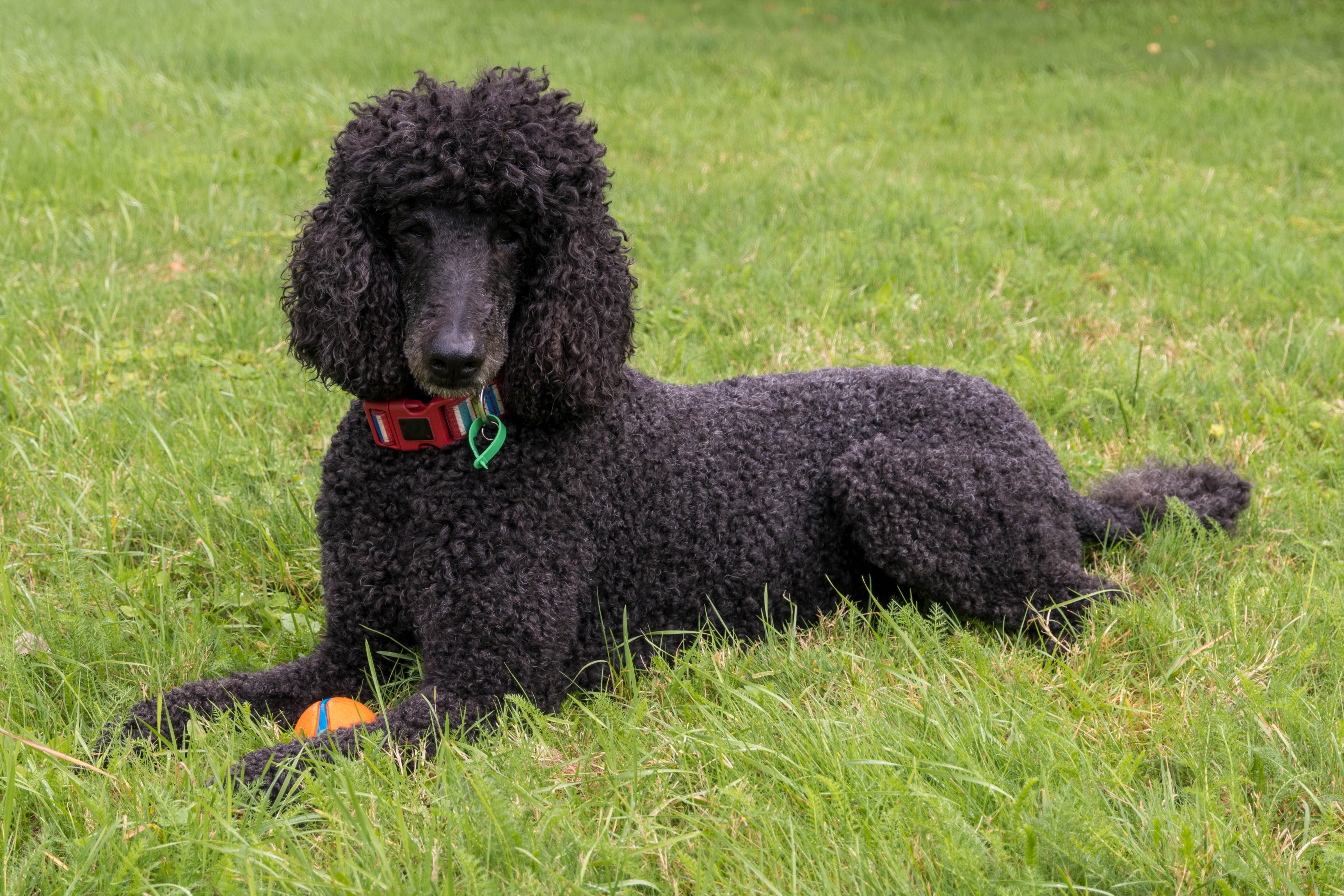
Standard Poodle — “The Smart, Low-Shed Companion”
 Save
Save| Weight | 45–70 lbs |
| Height | Over 15 in |
| Lifespan | 12–15 years |
| Energy Level | Moderate |
| Grooming Need | High — every 4–6 weeks |
| Shedding | Low |
The Standard Poodle is one of the smartest dog breeds, known for calm focus once past puppyhood. It sheds very little, which helps allergy-prone seniors. Poodles pick up routines fast and settle into a household’s rhythm with little fuss.
Beneath the curly coat is an athletic, upright frame that moves with quiet confidence.
People expect poodles to be prissy, but the real surprise is their steady, almost businesslike calm around unpredictable behavior.
“She doesn’t shed on my husband’s chair, which matters since he’s allergic. And she just lays by his feet all afternoon.”
— Linda P., Standard Poodle owner for 4 years
- Near hypoallergenic coat
- Learns routines quickly
- Rarely destructive or hyper indoors
- Grooming costs add up fast
- Large size, not ideal for frail owners
- Needs mental stimulation, not just walks
Best for: Allergy-sensitive households · Families who can budget for grooming · Homes with a caregiver present
Best hypoallergenic dog breeds for allergy-sensitive homes
Bichon Frise — “The Cheerful Cotton Ball”
| Weight | 12–18 lbs |
| Height | 9.5–11.5 in |
| Lifespan | 14–15 years |
| Energy Level | Moderate |
| Grooming Need | High — regular trims |
| Shedding | Low |
The Bichon Frise is a small, cheerful breed weighing 12 to 18 lbs, built for companionship over anything else. Its low-shed coat suits sensitive households, and its long lifespan of 14 to 15 years means fewer painful goodbyes for an aging owner.
Its soft, powder-puff coat and dark button eyes give it an almost stuffed-animal look.
People assume small dogs are yappy, but Bichons trained early are known for staying calm indoors, not barking on repeat.
“Grandma calls him her shadow. He follows her from room to room, all day, every day.”
— Denise R., Bichon Frise owner for 7 years
- Long lifespan for a lasting bond
- Low-shed, allergy-friendly coat
- Small enough to carry if needed
- Coat mats fast without brushing
- Can develop separation anxiety
- Prone to dental issues
Best for: Seniors living alone with home care support · Small apartments · Allergy-sensitive families
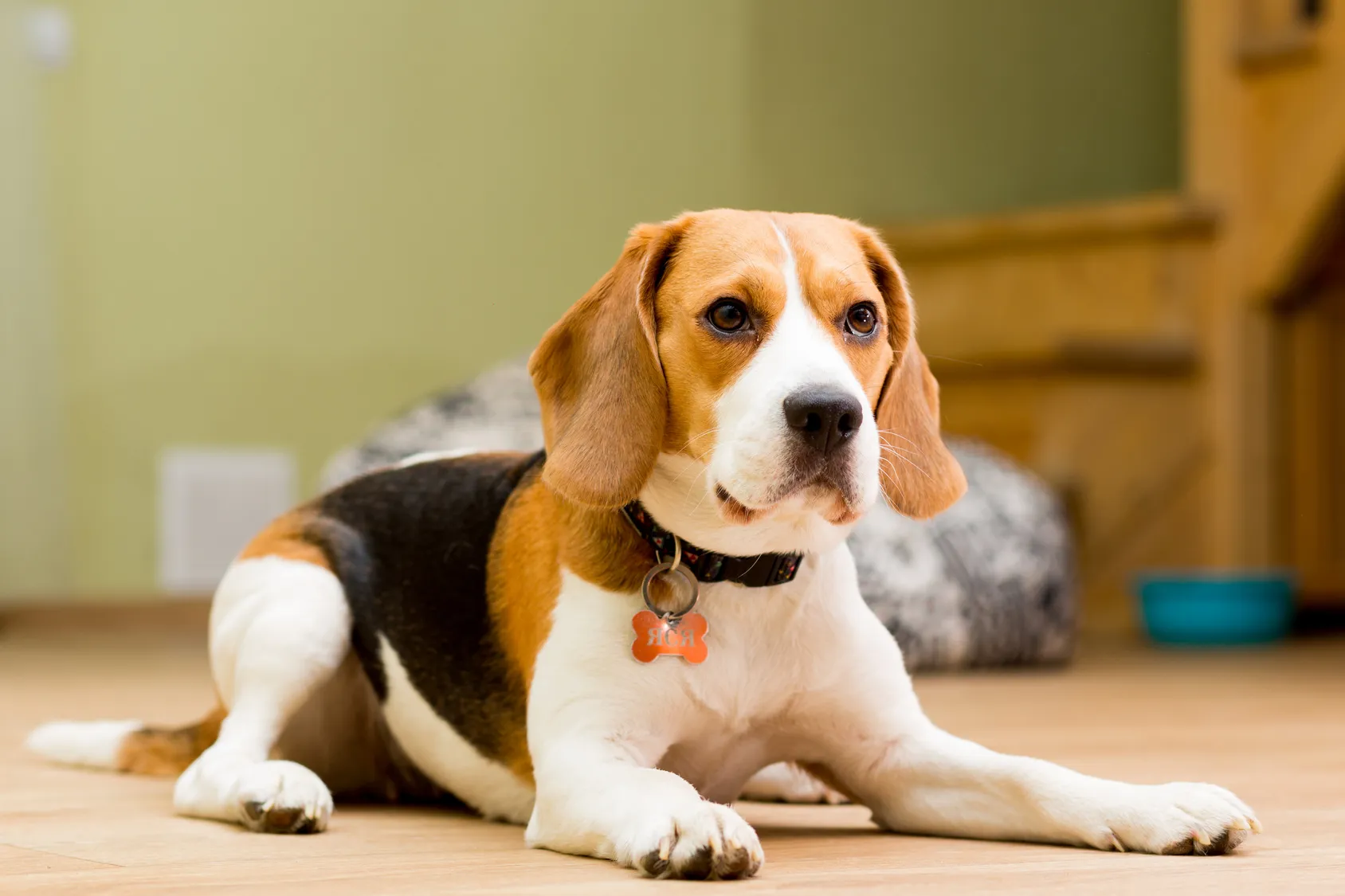
Beagle — “The Nose-Led Optimist”
 Save
Save| Weight | 20–30 lbs |
| Height | 13–15 in |
| Lifespan | 10–15 years |
| Energy Level | Moderate to high |
| Grooming Need | Low |
| Shedding | Moderate |
The Beagle is a medium-sized scent hound weighing 20 to 30 lbs, friendly toward nearly everyone it meets. Beagles are steady, food-motivated, and rarely aggressive, though their strong nose means they need a secure yard or leash at all times.
Their soft, floppy ears and soulful eyes give them one of the most approachable faces of any breed.
Beagles are known as sniffers, but fewer people know they’re also famously gentle with confused or slow-moving people.
“He never gets frustrated when Grandpa repeats the same command five times. He just wags and waits.”
— Tom H., Beagle owner for 5 years
- Low grooming cost and effort
- Friendly with visitors and caregivers
- Compact but sturdy build
- Will wander off if it catches a scent
- Can bay loudly when bored
- Prone to weight gain
Best for: Fenced-yard homes · Households with an active caregiver · Patients who enjoy short daily walks
Pug — “The Wrinkly Comedian”
| Weight | 14–18 lbs |
| Height | 10–13 in |
| Lifespan | 12–15 years |
| Energy Level | Low to moderate |
| Grooming Need | Low |
| Shedding | Moderate to high |
The Pug is a small, stocky companion breed weighing 14 to 18 lbs, bred for centuries to do one job: sit close and be loved. Pugs need very little exercise and rarely act out, which fits a slower-paced household well.
Their deeply wrinkled face and big, round eyes give them an almost human, expressive look.
People expect pugs to be lazy, but the real charm is how closely they read a person’s mood and match it.
“When Dad gets agitated, the pug just leans into his leg until he calms down. It’s uncanny.”
— Angela F., Pug owner for 3 years
- Minimal exercise needs
- Reads and mirrors human mood well
- Compact and easy to carry
- Struggles in heat due to flat face
- Prone to breathing issues
- Needs facial fold cleaning
Best for: Indoor-only households · Climate-controlled homes · Patients with very limited mobility
Shih Tzu — “The Gentle Shadow”
| Weight | 9–16 lbs |
| Height | 9–10.5 in |
| Lifespan | 10–16 years |
| Energy Level | Low |
| Grooming Need | High — daily brushing |
| Shedding | Low |
The Shih Tzu is a toy breed weighing 9 to 16 lbs, built purely for close companionship. It needs almost no exercise and rarely reacts to loud or repetitive behavior, making it one of the calmest small breeds for in-home dementia care.
Its long, flowing coat and short muzzle give it a dignified, almost lion-like look when groomed.
Shih Tzus look delicate, but the surprise is how sturdy and unbothered they are around unpredictable movement.
“She sleeps at the foot of the bed every night and hasn’t once startled when Mom wakes up confused.”
— Robert S., Shih Tzu owner for 6 years
- Very low exercise requirement
- Calm around loud or confused behavior
- Long lifespan for a lasting bond
- Daily brushing is non-negotiable
- Flat face means heat sensitivity
- Frequent professional grooming needed
Best for: Bedridden or low-mobility patients · Indoor-only lifestyles · Nighttime companionship
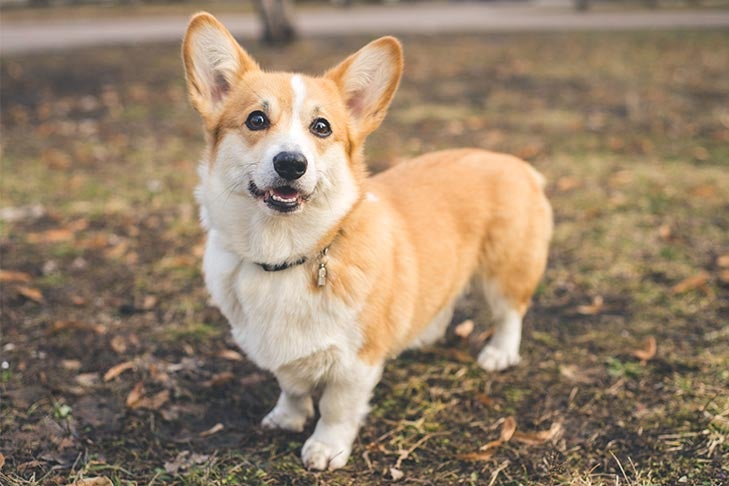
Pembroke Welsh Corgi — “The Cheerful Herder Without the Job”
 Save
Save| Weight | 24–30 lbs |
| Height | 10–12 in |
| Lifespan | 12–13 years |
| Energy Level | Moderate to high |
| Grooming Need | Moderate |
| Shedding | High |
The Pembroke Welsh Corgi is a short-legged herding breed weighing 24 to 30 lbs, known for its upbeat, people-focused personality. It’s smart, affectionate, and easy to train, though its herding instinct means early guidance around nipping at heels.
Its fox-like face and short legs under a sturdy body make it instantly recognizable and endearing.
Corgis are known for herding livestock, but the real surprise is how quickly they redirect that instinct into simply following their favorite person room to room.
“He herds Grandma gently back to her chair if she wanders toward the door. It’s like he knows.”
— Julie M., Corgi owner for 4 years
- Sturdy and hard to knock over
- Learns routines and cues fast
- Naturally watchful over its person
- Heavy shedder twice a year
- Can nip heels if untrained
- Prone to back problems
Best for: Households with a supervising caregiver · Patients who still enjoy short walks · Homes without stairs
Retired Racing Greyhound — “The Surprising Couch Potato”
| Weight | 60–70 lbs |
| Height | 27–30 in |
| Lifespan | 10–13 years |
| Energy Level | Low (indoors) |
| Grooming Need | Low |
| Shedding | Low |
The retired racing Greyhound is a tall, lean breed weighing 60 to 70 lbs, famous among adopters for sleeping up to 18 hours a day indoors. Despite their racing background, adult Greyhounds are calm, quiet, and rarely need more than one short walk daily.
Its sleek, short coat and long legs give it an elegant, statue-like stillness at rest.
People assume racing dogs stay hyper forever, but the surprise is how quickly they become the laziest dog in the house once retired.
“Everyone pictures a racing dog as wild, but ours hasn’t left the couch except to eat since we got her.”
— Carol N., Greyhound owner for 2 years
- Extremely low indoor energy
- Quiet — rarely barks
- Short coat, minimal grooming
- Large size can be hard to lift
- Thin coat feels the cold fast
- Needs a securely fenced yard
Best for: Quiet, calm households · Homes with a fenced yard · Caregivers wanting a low-maintenance large dog
Best large dog breeds for retirees with space to spare
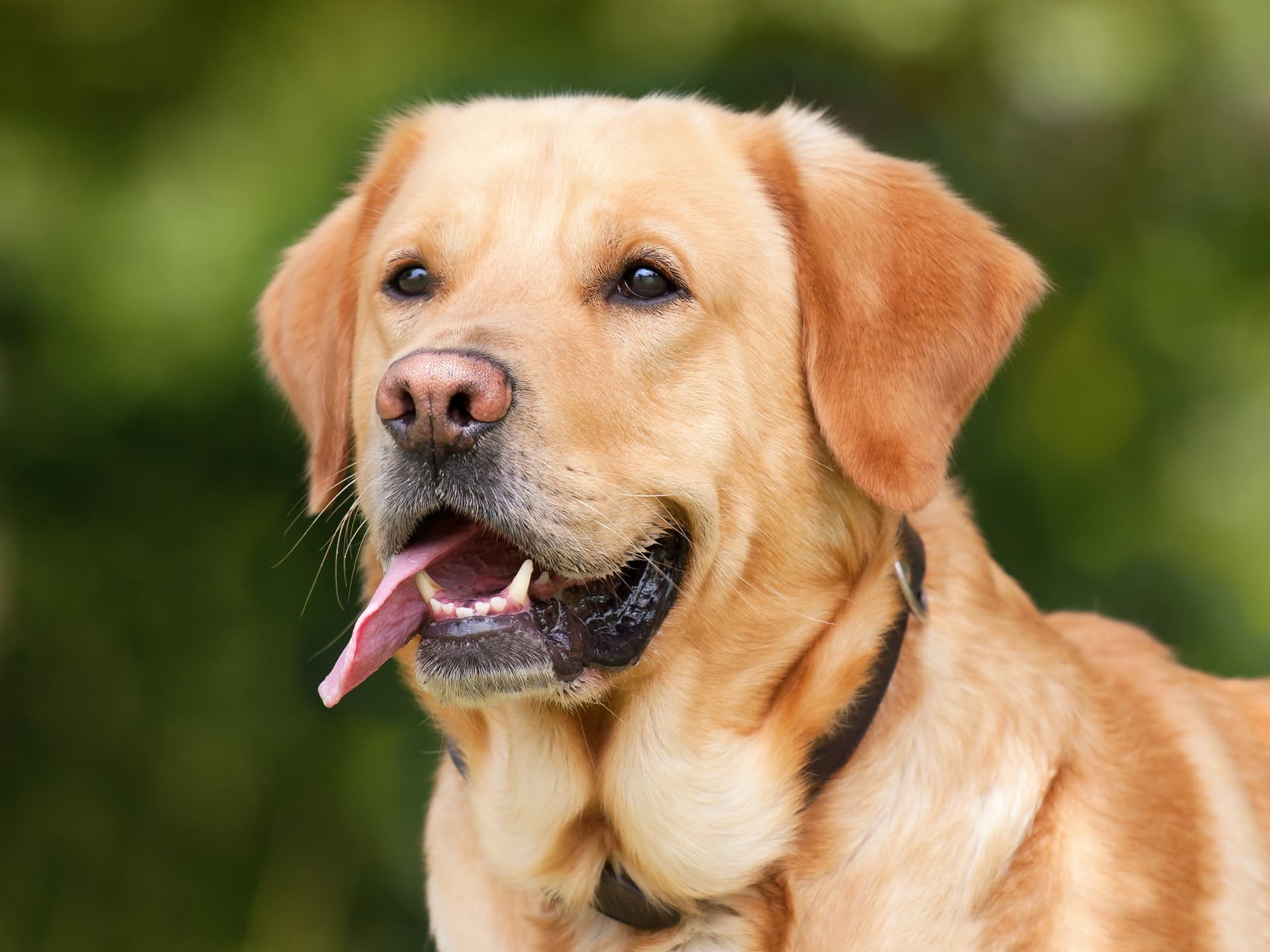
Labrador Retriever — “The Steady All-Rounder”
 Save
Save| Weight | 55–80 lbs |
| Height | 21.5–24.5 in |
| Lifespan | 10–12 years |
| Energy Level | High |
| Grooming Need | Low |
| Shedding | High |
The Labrador Retriever is a large, food-motivated breed weighing 55 to 80 lbs, chosen worldwide as a service and guide dog for its calm reliability. Labs handle repetitive routines well, which suits the structured schedules many dementia patients rely on.
Its short, dense coat and broad head give it a sturdy, approachable look in any color.
Labs are famous as family pets, but the lesser-known fact is how often they’re specifically trained as diabetic and dementia alert dogs.
“She waits by the door at 3pm every day because that’s walk time. Dad’s schedule stays on track because hers does.”
— James O., Labrador owner for 8 years
- Trainable for routine-based cues
- Rarely aggressive or reactive
- Low grooming cost
- Needs real daily exercise
- Too strong for a frail person to walk solo
- Prone to weight gain if under-exercised
Best for: Households with a strong secondary caregiver · Homes with yard access · Patients who still enjoy routine walks
Comparison Table: All 10 Breeds Side by Side
| Breed | Size | Energy | Grooming | Best Trait |
|---|---|---|---|---|
| Cavalier King Charles Spaniel | Small | Low | Moderate | Constant lap companion |
| Golden Retriever | Large | Mod–High | Moderate | Endlessly patient |
| Standard Poodle | Large | Moderate | High | Low-shed, smart |
| Bichon Frise | Small | Moderate | High | Long lifespan, cheerful |
| Beagle | Medium | Mod–High | Low | Friendly with everyone |
| Pug | Small | Low–Mod | Low | Mirrors owner’s mood |
| Shih Tzu | Small | Low | High | Sturdy and unbothered |
| Pembroke Welsh Corgi | Small | Mod–High | Moderate | Watchful and sturdy |
| Retired Racing Greyhound | Large | Low | Low | Naturally low-key |
| Labrador Retriever | Large | High | Low | Routine-driven, reliable |
Which Dog Breed Is Right for Your Family’s Situation?
The right choice depends less on the breed’s popularity and more on your household setup, mobility, and how much daily care support you have. Here’s a quick decision guide to cut through the noise.
- If the patient is mostly seated or bedridden → a Cavalier, Shih Tzu, or Pug fits best.
- If the patient still enjoys short daily walks with supervision → a Beagle, Corgi, or Bichon Frise works well.
- If there’s a strong secondary caregiver who can exercise a bigger dog → a Golden Retriever, Labrador, or Standard Poodle is a great fit.
- If allergies are a concern → lean toward a Standard Poodle or Bichon Frise.
Care Essentials Every New Owner in This Situation Should Know
Bringing a dog into a home with an Alzheimer’s patient works best with a plan already in place. The dog’s care shouldn’t fall entirely on the person with dementia — that’s a setup for stress on both sides.
Set a fixed feeding and walking schedule. Predictable routines lower anxiety for dogs and dementia patients alike.
A family member or paid caregiver should always be the backup for vet visits, grooming, and emergency care. So if no one can commit to that backup role, a lower-maintenance breed or a visiting therapy dog program may be the safer option instead.
Mistakes New Owners Make in This Situation (And How to Avoid Them)
- Choosing a puppy instead of a calm, already-trained adult dog.
- Picking a high-energy breed because it “seems fun” rather than checking temperament.
- Assuming the patient can handle full-time care alone.
- Skipping a trial visit before adopting or buying.
Is This Right for Your Family? A Decision Block
Choosing a dog for a loved one with Alzheimer’s is a real commitment, not just a comfort purchase.
- If you have daily support and space for a bigger dog → a Golden Retriever or Labrador brings real companionship.
- If the patient lives mostly indoors with limited mobility → a Shih Tzu, Pug, or Cavalier is the gentler fit.
- If you’re unsure the household can commit to full dog ownership → consider a scheduled therapy dog visit instead of adopting.
This article covers breed temperament and fit for dementia care. If your loved one has severe mobility limits, aggression triggers, or lives in a care facility with pet restrictions, talk to their care team before bringing a dog into the home.
Frequently Asked Questions
Can dogs really help someone with Alzheimer’s?
Yes, dogs can help. Research and clinical experience consistently show that pet companionship can ease anxiety and encourage routine in people with dementia. A calm dog offers comfort, structure, and a reason to stay active each day.
What breed is best for a person with dementia who lives alone?
A small, low-energy breed like a Shih Tzu or Cavalier King Charles Spaniel works best for someone living alone. These breeds need less physical care and rarely act unpredictably, which matters most for solo safety.
Should someone with Alzheimer’s get a puppy?
No, a puppy is not the safest choice. Puppies need consistent training and supervision that a person with dementia usually can’t provide. An adult, already-trained dog is the safer and kinder option in most cases.
Are there dog breeds to avoid for Alzheimer’s patients?
Yes, high-energy herding and guarding breeds like Border Collies, German Shepherds, and Huskies are usually best avoided. Their exercise needs and alertness can add stress instead of calm to the household.
Is a therapy dog visit a good alternative to owning a dog?
Yes, scheduled therapy dog visits are a strong alternative. Many care facilities and home health programs offer visits, giving patients the comfort of a dog without the full responsibility of ownership.
The Bottom Line
The right dog for an Alzheimer’s patient is calm, small to medium, and easy on the household’s routine. Breed matters, but so does having a caregiver ready to step in for the parts the patient can’t manage alone. One thing to do right now: write down your loved one’s daily routine and mobility level, then match it against the breeds above before you visit a shelter or breeder.

Thomas Cutter is a lifelong dog owner and the founder of FindOutAboutDogs.com. With over 10 years of hands-on experience owning multiple breeds, Thomas created this site to provide honest, research-based dog advice that real owners can actually trust.
