Best 10 Dog Breeds for Busy Owners — Chosen for Real Schedules, Not Ideal Ones
Quick Answer
The best dog breeds for busy owners in 2026 are the French Bulldog, Greyhound, Basset Hound, Cavalier King Charles Spaniel, Chihuahua, Boston Terrier, Whippet, Pug, Dachshund, and Bullmastiff. Each one needs low to moderate exercise, simple grooming, and stays calm alone for a workday. They fit real schedules, not just relaxed ones.
What you need to know about picking a low-upkeep breed:
- Coat type matters more than size for grooming time
- Sighthounds like Greyhounds nap most of the day
- Short-nosed breeds need heat and exercise caution
- Independent breeds handle alone-time better than clingy ones
How to use this list on a tight schedule:
- Match energy level to your actual free time, not your ideal week
- Budget for a dog walker if you work 9+ hour days
- Pick short coats if grooming time is your biggest limit
- Ask breeders or shelters about the dog’s real daily routine
You get home at 7 p.m., exhausted, and the guilt hits before you even open the door. Will the dog have destroyed the couch? Will it need a two-hour walk you don’t have in you tonight?
I’ve spent years helping busy readers match their real schedule to the right dog, not the fantasy schedule we all wish we had. Some breeds thrive on a packed calendar. Others fall apart without hours of daily attention.
This guide covers the 10 dog breeds for busy owners in 2026, based on real temperament data, AKC breed standards, and honest owner feedback. You’ll get exact stats, real pros and cons, and a decision guide that tells you which breed fits your specific week. No filler. No guesswork.
- Low energy and short grooming needs matter more than pure size
- Sighthounds like Greyhounds and Whippets are surprisingly lazy indoors
- Flat-faced breeds need heat caution, not more free time
- Every breed here still needs daily walks, vet care, and love
- Your actual weekly routine should drive your pick, not the breed’s looks


What Makes a Dog Breed Good for Busy Owners?
A dog breed works well for busy owners when it needs low daily exercise, simple grooming, and can settle alone for several hours without stress. The best matches also have calm temperaments and don’t demand constant mental stimulation. Independence, not low energy alone, is the real deciding factor.
Here’s the thing. Most people assume “low maintenance” means “lazy.” That’s not quite right. A Greyhound can sprint 40 miles per hour, yet it naps for 18 hours a day once its short walk is done.
What actually matters is a mix of four traits working together.
Grooming needs. Short, smooth coats need only weekly brushing. Long or curly coats can eat up an hour a week or more.
Exercise needs. A breed that’s happy with 20 to 30 minutes of daily activity fits a packed schedule far better than one that needs an hour of hard running.
Alone-time tolerance. Some breeds bond so tightly to their owner that being left alone triggers anxiety and destructive habits. Others settle in fine.
Trainability. A dog that learns house rules fast means less troubleshooting later, which saves busy owners real time.
You might be thinking a small dog is automatically the easiest option. Here’s why that’s not always true: some small breeds, like long-haired Chihuahuas, need more brushing than a Greyhound three times their size. So what does that mean for you? Judge each breed on its actual routine, not its size.
The 10 Best Dog Breeds for Busy Owners — Ranked and Reviewed
Below are the 10 dog breeds that consistently show up as easy fits for packed schedules, based on American Kennel Club research on breeds well suited to busy lifestyles and current owner experience. Each entry gives you real stats, an honest pros and cons list, and who the breed suits best.
French Bulldog — “The Couch Companion in a Tuxedo”
 Save
Save| Weight | Up to 28 lbs |
| Height | 11 to 13 in |
| Lifespan | 10 to 14 years |
| Energy Level | Low to moderate |
| Grooming Need | Weekly brushing |
| Shedding | Moderate, year-round |
The French Bulldog is a compact companion breed known for its bat ears and easygoing nature. It weighs under 28 lbs and rarely needs more than short walks. Frenchies are playful, affectionate, and content indoors, making them ideal for apartment dwellers with tight schedules.
Their square head and heavy bone give them a muscular, sturdy look. Bat ears frame an alert, curious face that seems to always be listening in.
Frenchies love their people, but they don’t demand hours of play. Even better, they rarely bark, which suits thin apartment walls just fine.
“Mine naps through my entire workday and only wakes up when my laptop closes. It’s like living with a tiny, snoring roommate.”
— Priya M., French Bulldog owner for 4 years
- Needs only short daily walks
- Rarely barks at neighbors
- Coat needs just weekly brushing
- Struggles badly in hot weather
- Facial folds need regular cleaning
- Prone to breathing issues long-term
Best for: Apartment dwellers · First-time owners · Owners in mild climates
→ Best low-energy dog breeds for busy families
Greyhound — “The 40 MPH Couch Potato”
| Weight | 60 to 70 lbs |
| Height | 27 to 30 in |
| Lifespan | 10 to 13 years |
| Energy Level | Low indoors |
| Grooming Need | Minimal, occasional brush |
| Shedding | Low |
The Greyhound is a tall sighthound built for speed, not stamina. Despite reaching 40 mph in a sprint, it needs only one or two short walks a day. Greyhounds are quiet, gentle, and spend most of their time asleep, making them a genuine option for busy professionals.
Their long legs and deep chest look built for racing. A short, sleek coat lies flat against lean, visible muscle.
You’d expect a racing breed to bounce off the walls at home. Instead, most Greyhounds are famously lazy once their short sprint is done. That’s the real surprise: this athlete would rather nap on your couch all afternoon.
“People assume he needs hours of running. He gets one 20-minute walk and sleeps for the other 23 hours.”
— Daniel R., retired-racer Greyhound owner for 5 years
- Sleeps most of the day quietly
- Barely sheds despite the size
- Gentle, calm around most people
- Thin coat means it feels cold fast
- Needs a fenced yard, not free roam
- Large size limits some small apartments
Best for: Working professionals · Owners with a fenced yard · Quiet households
Basset Hound — “The Low-Rider With No Rush”
| Weight | 40 to 65 lbs |
| Height | Up to 15 in |
| Lifespan | 12 to 13 years |
| Energy Level | Low |
| Grooming Need | Weekly brush, ear checks |
| Shedding | Moderate |
The Basset Hound is a low, heavy-boned scent hound bred for slow, steady tracking, not speed. It moves at an easy pace and needs only short daily walks. Bassets are calm, friendly, and content lounging most of the day, which suits owners with limited free time.
Long ears drag near the ground, framing a droopy, soulful face. Loose skin folds give the breed its signature mournful look.
You’d expect a hound bred for hunting to need hours of exercise. In reality, Bassets tire quickly on their short legs and prefer a slow stroll to a jog.
“He walks like he’s got somewhere to be, then flops down the second we’re back inside. Total drama in slow motion.”
— Marcus T., Basset Hound owner for 7 years
- Content with short, slow walks
- Rarely destructive when left alone
- Friendly with kids and other pets
- Long ears need regular cleaning
- Prone to weight gain fast
- Can be stubborn during training
Best for: Families with kids · Owners who prefer slow walks · First-time owners
→ Calm dog breeds that thrive in apartments
Cavalier King Charles Spaniel — “The Silky Shadow”
| Weight | 13 to 18 lbs |
| Height | 12 to 13 in |
| Lifespan | 12 to 15 years |
| Energy Level | Moderate |
| Grooming Need | 2 to 3 brushes weekly |
| Shedding | Moderate |
The Cavalier King Charles Spaniel is a small companion breed with a silky coat and gentle, affectionate nature. It adapts easily to apartments and needs only moderate daily activity. Cavaliers thrive on human company, making them ideal for owners who work from home or have a flexible routine.
Large, dark eyes sit above a soft, feathered coat that flows past the ears. The overall look is elegant, but never fussy.
Most people expect a lap dog to be lazy and clingy. Cavaliers add a surprising layer: they’re eager, quick learners who pick up house rules faster than most toy breeds.
“She follows me from room to room like a tiny shadow, then settles the second I sit down to work.”
— Elena V., Cavalier owner for 3 years
- Learns house rules quickly
- Gentle with kids and other pets
- Content with moderate daily play
- Dislikes being left alone for long
- Silky coat needs regular brushing
- Prone to heart issues later in life
Best for: Remote workers · Families · Owners wanting a devoted lap dog
→ Easy-going family dog breeds for calmer homes
Chihuahua — “Tiny Dog, Zero Time Commitment”
 Save
Save| Weight | Up to 6 lbs |
| Height | 5 to 8 in |
| Lifespan | 14 to 16 years |
| Energy Level | Moderate |
| Grooming Need | Weekly brush (smooth coat) |
| Shedding | Low to moderate |
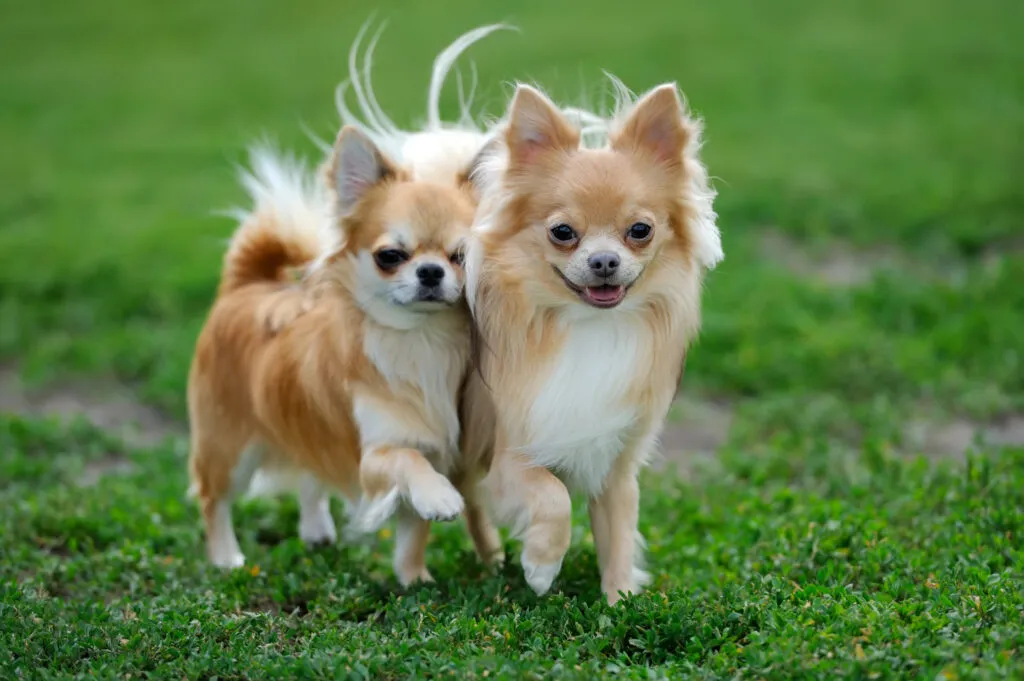
The Chihuahua is the smallest recognized dog breed, weighing under 6 lbs. It needs only short indoor play and brief walks to stay satisfied. Chihuahuas are alert, loyal, and adapt easily to apartments, making them one of the easiest breeds for a packed schedule.
A rounded “apple” head and large, upright ears give the Chihuahua a constant look of curiosity. Its tiny frame belies real muscle underneath.
You’d think a dog this small would be an easy pushover. Instead, Chihuahuas will alert-bark at strangers three times their size without a hint of hesitation.
“She once stood her ground against a Great Dane at the dog park. Four pounds of pure confidence.”
— Sarah K., Chihuahua owner for 6 years
- Tiny size fits any living space
- Needs only short daily walks
- Smooth coat is easy to maintain
- Fragile around toddlers and big dogs
- Gets cold fast in low temperatures
- Can develop small-dog stubbornness
Best for: Apartment dwellers · Single professionals · Owners without small children
→ Best small dog breeds for first-time owners
Boston Terrier — “The American Gentleman”
| Weight | 12 to 25 lbs |
| Height | 15 to 17 in |
| Lifespan | 11 to 13 years |
| Energy Level | Moderate |
| Grooming Need | Weekly brush |
| Shedding | Low to moderate |
The Boston Terrier is a compact, tuxedo-coated breed known for its cheerful, social nature. It needs a few short bursts of play rather than one long walk. Boston Terriers do well in apartments and cities, making them a solid pick for busy urban owners.
Its “tuxedo” coat pattern makes the Boston Terrier look dressed for a formal event at all times. Large, round eyes sit above a short, square muzzle.
You’d expect a “gentleman” breed to be reserved. Instead, Bostons are lively little comedians who insist on being part of whatever you’re doing.
“He greets every guest like they’re the most important person alive, then naps for the rest of the visit.”
— Jordan L., Boston Terrier owner for 5 years
- Short coat needs minimal grooming
- Adapts well to city living
- Friendly with strangers and pets
- Sensitive to heat and humidity
- Prone to eye and ear issues
- Can be gassy after certain foods
Best for: City dwellers · Social households · Owners with moderate free time
Whippet — “The Sprinter Who Loves to Loaf”
| Weight | 25 to 40 lbs |
| Height | 18 to 22 in |
| Lifespan | 12 to 15 years |
| Energy Level | Bursts, then calm |
| Grooming Need | Minimal |
| Shedding | Low |
The Whippet is a mid-sized sighthound built for short, fast sprints rather than endurance. One good run or brisk walk is enough to satisfy it for the day. Whippets are quiet and rarely bark, making them a comfortable fit for busy owners in shared housing.
A lean, aerodynamic body tapers into a deep chest and narrow waist. Its smooth coat lies close, showing every curve of muscle underneath.
You’d expect a sighthound to need constant exercise. Once its short sprint is done, a Whippet is just as happy to stretch out for hours on a soft blanket.
“Fifteen minutes of full-speed zoomies in the yard, then he’s a blanket burrito for the rest of the night.”
— Alicia F., Whippet owner for 4 years
- Rests calmly for most of the day
- Sheds very little year-round
- Quiet, rarely barks indoors
- Thin coat needs a jacket in winter
- Strong prey drive around small pets
- Needs a securely fenced space to run
Best for: Owners with a safe yard · Quiet apartment living · Households without small pets
Pug — “The Wrinkly Comedian”
| Weight | 14 to 18 lbs |
| Height | 10 to 13 in |
| Lifespan | 13 to 15 years |
| Energy Level | Low to moderate |
| Grooming Need | Weekly brush, fold care |
| Shedding | High |
The Pug is a small, wrinkly companion breed known for its playful, easygoing charm. It needs only short walks and light indoor play each day. Pugs adapt well to apartments and love being close to their people, though they shed more than their size suggests.
Deep facial wrinkles frame large, dark eyes that seem locked in constant curiosity. A tightly curled tail sits high above a compact, muscular body.
You’d think a small companion breed sheds lightly. Surprisingly, Pugs shed heavily year-round despite their short coat, so regular brushing really does matter here.
“He snores louder than my husband and somehow that’s become the soundtrack of our whole apartment.”
— Nina P., Pug owner for 8 years
- Content with short daily walks
- Friendly, rarely aggressive temperament
- Adapts well to small living spaces
- Sheds more than its size suggests
- Poor heat tolerance in summer
- Facial folds need daily wiping
Best for: Apartment living · Families with older kids · Owners in air-conditioned homes
Dachshund — “The Bold Little Detective”
| Weight | 16 to 32 lbs (standard) |
| Height | 8 to 9 in |
| Lifespan | 12 to 16 years |
| Energy Level | Moderate |
| Grooming Need | Low (smooth coat) |
| Shedding | Low to moderate |
The Dachshund is a long, low-bodied hunting breed with a bold and lively personality. It needs short daily walks plus a little mental play, like puzzle toys. Dachshunds adapt well to apartments and stay entertained with simple games, which suits owners short on time.
A long, low body and short legs give the Dachshund its unmistakable silhouette. Its expression stays alert, curious, and a little mischievous.
You might expect a hunting breed to demand hours outdoors. Instead, short bursts of scent games and backyard sniffing are usually enough to satisfy a Dachshund’s instincts.
“He treats every walk like a crime scene investigation. Ten minutes of sniffing wears him out faster than a run would.”
— Tom H., Dachshund owner for 6 years
- Smooth coat needs little grooming
- Entertained by simple puzzle toys
- Adapts well to apartments or houses
- Prone to back injuries from jumping
- Can be stubborn during house training
- Tends to bark at passersby
Best for: Apartment dwellers · Owners who enjoy independent-minded dogs · Single-pet homes
Bullmastiff — “The Gentle Giant Who’d Rather Nap”
 Save
Save| Weight | 100 to 130 lbs |
| Height | 24 to 27 in |
| Lifespan | 7 to 9 years |
| Energy Level | Low |
| Grooming Need | Weekly brush |
| Shedding | Moderate |
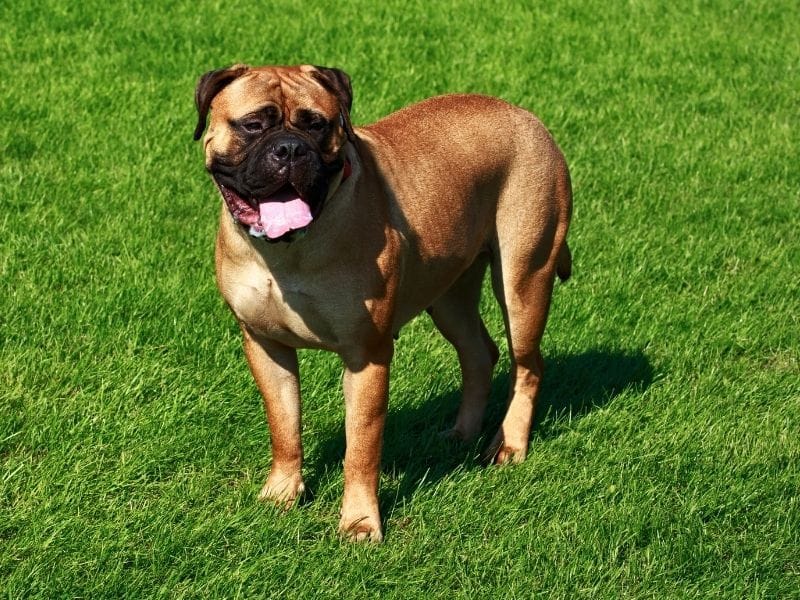
The Bullmastiff is a large, powerfully built guardian breed with a calm, low-energy temperament. A short daily walk and space to stretch are usually enough to keep it content. Bullmastiffs are affectionate and protective, making them a low-fuss option for owners who want a big dog without big demands.
A broad head and heavy jowls give the Bullmastiff a serious, watchful look. Its short coat sits close over a solid, muscular frame.
You’d expect a guard breed this size to need constant activity. Instead, most Bullmastiffs are natural couch potatoes who reserve their energy for short, focused bursts.
“People expect a guard dog to be intense. Mine’s biggest job all day is guarding the couch cushion.”
— Rachel D., Bullmastiff owner for 4 years
- Content with one short daily walk
- Naturally protective without training
- Short coat needs little upkeep
- Needs real space, not tiny apartments
- Shorter lifespan than smaller breeds
- Drools and snores heavily
Best for: Owners with houses and yards · Households wanting a natural guardian · Owners who want a calm giant breed
Compare All 10 Breeds Side by Side
The table below lines up every breed’s size, energy, and care needs in one place, so you can compare options fast. Smaller breeds generally need less space, while short-coated breeds across every size need the least grooming time.
| Breed | Weight | Energy | Grooming | Alone-Time Tolerance |
|---|---|---|---|---|
| French Bulldog | Up to 28 lbs | Low-moderate | Low | Good |
| Greyhound | 60-70 lbs | Low indoors | Minimal | Good |
| Basset Hound | 40-65 lbs | Low | Low-moderate | Good |
| Cavalier King Charles Spaniel | 13-18 lbs | Moderate | Moderate | Needs company |
| Chihuahua | Up to 6 lbs | Moderate | Low | Fair |
| Boston Terrier | 12-25 lbs | Moderate | Low | Good |
| Whippet | 25-40 lbs | Bursts, then calm | Minimal | Good |
| Pug | 14-18 lbs | Low-moderate | Moderate | Fair |
| Dachshund | 16-32 lbs | Moderate | Low | Good |
| Bullmastiff | 100-130 lbs | Low | Low | Good |
Which Dog Breed Is Right for Your Schedule?
The right breed depends on how much time you actually have each day, not how much you’d like to have. Owners with under 30 minutes free daily do best with a Greyhound, Whippet, or Bullmastiff. Owners working from home can handle a more people-focused breed like the Cavalier.
Here’s a simple way to sort it out.
- If you work long hours outside the home → a Greyhound, Whippet, or Bullmastiff fits best. These breeds settle down fast and don’t need constant company.
- If you work from home with a flexible schedule → a Cavalier King Charles Spaniel or Boston Terrier will thrive on the extra attention you can give.
- If your biggest limit is grooming time, not exercise time → a French Bulldog, Dachshund, or Chihuahua keeps brushing to a bare minimum.
- If you live in a small apartment with thin walls → a French Bulldog or Whippet rarely barks and settles quietly.
This article covers the 10 dog breeds that suit tight, unpredictable schedules best. If your situation involves serious allergies or very young children, you may need to check breed-specific hypoallergenic guides or kid-safety guides before deciding.
Book a daytime dog walker before you bring your dog home, not after. It’s much easier to build the routine from day one.
If your household leans quieter and slower-paced, it helps to see how these breeds compare with dogs picked specifically for low-key dog breeds for retirees and calmer homes, since many of the same low-energy traits apply.
What Most People Get Wrong About Low-Maintenance Dogs
The biggest misconception is that “low-maintenance” means “no maintenance.” Every breed on this list still needs daily walks, regular vet visits, and real attention. The difference is in degree, not in whether care is needed at all.
A lot of new owners read “low energy” and picture a dog that mostly ignores them. That’s not accurate. While no dog is completely maintenance-free, some breeds naturally require less exercise, simpler grooming routines, and fewer demands on their owners’ schedules. That’s a real difference, but it’s not zero effort.
So what does that mean for you? Even a Greyhound that naps 20 hours a day still needs a vet checkup twice a year, a balanced diet, and daily affection. Skipping those basics leads to behavior problems no matter the breed.
You might be thinking a smaller dog is always less work overall. Here’s why that’s only half true: smaller breeds often live longer, which means more years of ongoing care, not fewer.
Care Essentials Every Busy Owner Should Know
Even low-maintenance breeds need consistent routines to stay healthy and calm. A regular feeding schedule, brief daily exercise, and simple grooming habits go a long way. Most problems in busy households come from inconsistency, not from picking the wrong breed.
Set a fixed morning and evening walk time, even if each one is short. Dogs settle faster with routines they can predict.
Keep a grooming kit by the door: a slicker brush, nail clippers, and ear wipes. Ten minutes twice a week keeps most short-coated breeds looking sharp.
Use puzzle feeders for smart breeds like Dachshunds and Cavaliers. This gives them mental exercise without eating up your afternoon.
Line up a backup plan for long days. A neighbor, dog walker, or doggy daycare covers the gaps a naturally low-energy breed still needs filled.
Common Mistakes Busy Owners Make (And How to Avoid Them)
The most common mistake is picking a breed based on looks instead of real temperament. Busy owners also underestimate grooming time and skip professional training help. These small planning gaps cause most of the frustration people report later.
Flat-faced breeds like French Bulldogs and Pugs can overheat fast. Skip midday walks in hot weather entirely.
Another mistake: assuming a calm adult dog stays calm as a hyper puppy. Every breed on this list needs basic training in its first year, even the laziest adult versions.
Finally, many owners skip pet insurance, then get hit hard by an unexpected vet bill. Setting aside a small monthly amount for care costs less stress than a surprise expense later.
One Thing To Do Right Now
Pick the one breed from this list that matches your actual weekly schedule, not your ideal one. Then spend two minutes looking up a local breeder or shelter with that breed available. That’s it. That’s the whole first step, and it’s one you can take today.
Frequently Asked Questions
What is the easiest dog breed for a busy working person?
The Greyhound is one of the easiest breeds for busy working owners. It needs only one or two short walks a day and sleeps for most of the rest. Its short coat also keeps grooming time to a minimum.
Can a low-energy dog breed still get separation anxiety?
Yes, low energy does not guarantee comfort being alone. Cavaliers and Chihuahuas bond closely and can struggle without company. Independent breeds like Greyhounds and Whippets typically handle alone time better.
Do small dog breeds always need less grooming than big ones?
No, coat type matters more than size for grooming needs. A long-haired Chihuahua can need more brushing than a short-coated Bullmastiff. Always check the specific coat type before assuming.
How much daily exercise do low-maintenance dog breeds actually need?
Most breeds on this list do well with 20 to 40 minutes of daily activity. This can be split into two short walks plus some indoor play. Even low-energy dogs still need this minimum to stay healthy.
Is it fair to get a dog if I work a full 9-hour day?
It can work well with the right breed and planning. Choose an independent, low-energy breed and arrange a midday walk or dog walker. Most dogs on this list adapt fine to a 9-hour workday with that support.
Sources: American Kennel Club — Choosing the Right Breed for Your Lifestyle, American Kennel Club — French Bulldog Breed Profile

Thomas Cutter is a lifelong dog owner and the founder of FindOutAboutDogs.com. With over 10 years of hands-on experience owning multiple breeds, Thomas created this site to provide honest, research-based dog advice that real owners can actually trust.
