Best 10 Dog Breeds for Women Living Alone — Chosen for Safety, Companionship, and Real Life
Quick Answer
The best dog breeds for women living alone in 2026 are the Boxer, Vizsla, Standard Poodle, Labrador Retriever, Cavalier King Charles Spaniel, French Bulldog, Boston Terrier, Miniature Schnauzer, Bichon Frise, and Pomeranian. Each one pairs alertness or affection with a temperament that fits solo living, whether you need a watchful companion or a quiet lap dog.
What matters most for a solo household:
- Alertness to strangers without constant aggression
- A temperament that tolerates being home alone for parts of the day
- Size and grooming needs you can manage solo
- Genuine bond-forming instinct, not just tolerance of people
How to use this list:
- Match your home size to the breed’s space needs first
- Weigh protection instinct against your comfort with a bigger dog
- Check grooming time against your actual weekly schedule
You come home to a dark apartment. You put your key in the lock and, for half a second, you listen. That pause — the one every woman living alone knows — is exactly what the right dog can erase.
I’m Jess Carter, a certified dog trainer who has spent 12 years matching breeds to solo owners, and I’ve lived that pause myself. A dog changes it. Suddenly there’s a body between you and the door, a set of ears that hears things before you do, and a reason to walk in the door smiling instead of bracing.
This guide is not a generic “cute breeds” roundup. It’s built around what actually matters when you’re the only adult in the house: alertness, temperament, size, and how much upkeep you can realistically manage on your own. By the end, you’ll know exactly which breed fits your life — and what to do about it today.
- Size doesn’t equal safety — a 15-pound terrier can be more alert than a 70-pound lab.
- The best breed for you depends on your home size, work schedule, and grooming time.
- Protective breeds still need early socialization, or alertness can tip into anxiety.
- Small companion breeds offer real emotional support, not just cuteness.
- Every breed on this list does well in a one-person household when its needs are met.


What Makes a Dog Breed Good for a Woman Living Alone?
A dog breed works well for solo living when it combines three things: natural alertness to its surroundings, a strong bond with one person, and a temperament that doesn’t spiral into destructive anxiety when left alone. Most experts agree that breed instinct matters more than raw size for this kind of match.
You don’t need a guard dog in the traditional sense. What you need is a dog that notices when something is off and reacts appropriately — a bark at a stranger on the porch, not aggression toward every visitor. That’s the sweet spot every breed on this list was chosen for.
What you might be thinking: “Don’t I need a big, intimidating dog to feel safe?” Here’s why that’s not quite right — a small dog’s bark still triggers the same hesitation in an intruder, and a dog under 20 pounds is often easier for one person to train, exercise, and manage well, which means a better-behaved, more reliably alert dog in the long run.
Which 10 Dog Breeds Work Best for Solo Living? Ranked and Reviewed
The breeds below cover every situation a woman living alone might face — apartment or house, first-time owner or experienced, wanting a watchdog or wanting a lap warmer. Each entry gives you the real stats, the honest tradeoffs, and what an actual owner has to say.
Boxer — “The Bodyguard Who Never Stops Playing”
 Save
Save| Weight | 55 to 70 lbs |
| Height | 21.5 to 25 in |
| Lifespan | 10 to 12 years |
| Energy Level | High |
| Grooming Need | Low — weekly brushing |
| Shedding | Moderate |
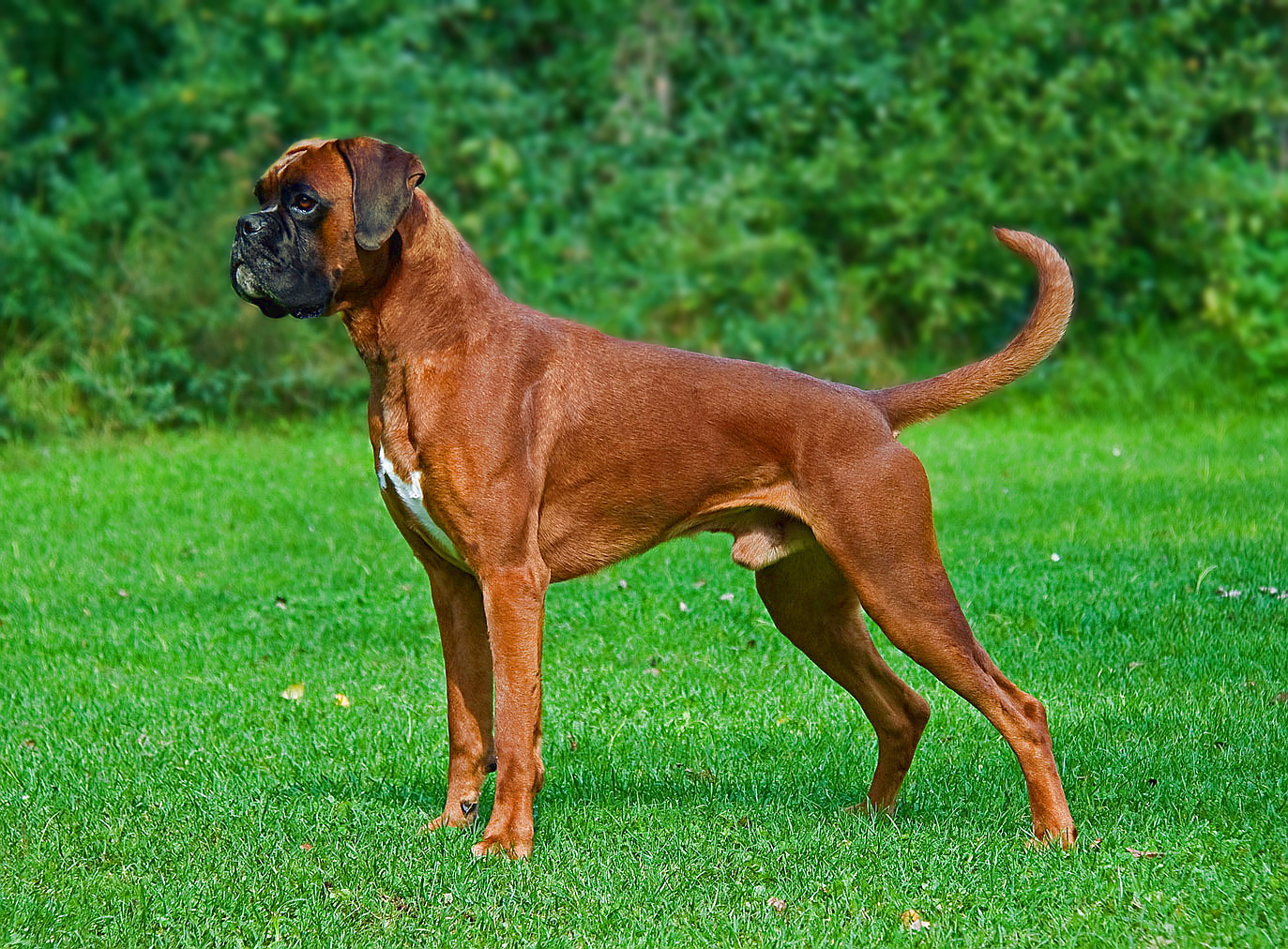
The Boxer is a medium-large watchdog breed known for its instinctive alertness and deep loyalty to one person. Weighing 55 to 70 lbs, it’s substantial enough to give real peace of mind. Despite its muscular build, the Boxer is playful, patient, and bonds hard with a single owner — making it ideal for a woman who wants both protection and a goofy best friend.
Their short coat shows off a wall of muscle, and that trademark underbite gives every Boxer a slightly comical, endearing face. You’ll notice the “kidney bean” wiggle before you notice anything else — their whole back half sways when they’re happy.
Boxers greet strangers with suspicion first, warmth second. Here’s what surprises new owners: a Boxer will plant itself between you and a stranger at the door without any training at all. That instinct is bred in, not taught.
“My Boxer sleeps against my apartment door every single night. I didn’t train that. She just decided it was her post.”
— Priya M., Boxer owner for 5 years
- Instinctively protective of one person
- Minimal grooming despite its size
- Playful well into adulthood
- Needs 45+ minutes of exercise daily
- Heat-sensitive due to short muzzle
- Too big for tiny studio apartments
Best for: Women with a yard or nearby park · First-time owners wanting a protector · Active solo owners
→ More alert, protective breeds that thrive in apartments
Vizsla — “The Velcro Dog That Never Leaves Your Side”
| Weight | 44 to 60 lbs |
| Height | 21 to 24 in |
| Lifespan | 12 to 14 years |
| Energy Level | Very high |
| Grooming Need | Low — weekly wipe-down |
| Shedding | Low to moderate |
The Vizsla is a sleek, russet-gold sporting breed famous for bonding to a single owner with total devotion. Weighing 44 to 60 lbs, it’s agile and athletic, not bulky. Vizslas are gentle, sensitive, and almost never happy out of arm’s reach — making them ideal for a woman who wants constant companionship and daily activity.
Their coat gleams like polished copper, short and close to the body, with no undercoat to trap water or dirt. You’ll see every muscle move when they run.
Most people know Vizslas as affectionate. What they don’t expect is how vocal that affection gets — some Vizslas moan, groan, and even “talk back” mid-conversation, a trait owners call the Vizsla whine.
“He follows me from room to room, including the bathroom. I stopped fighting it years ago.”
— Dana R., Vizsla owner for 8 years
- Bonds almost exclusively to one person
- Coat needs almost no upkeep
- Gentle with strangers once introduced
- Struggles badly with separation anxiety
- Needs 60+ minutes of hard exercise
- Not a natural fit for full-time office jobs
Best for: Runners and hikers · Remote workers · Women wanting an intensely bonded dog
Standard Poodle — “The Genius in a Curly Coat”
| Weight | 40 to 70 lbs |
| Height | Over 15 in |
| Lifespan | 12 to 15 years |
| Energy Level | High |
| Grooming Need | High — every 6 to 8 weeks |
| Shedding | Minimal |
The Standard Poodle is a large, low-shedding breed ranked among the smartest dogs in the world. Weighing 40 to 70 lbs, it’s big enough to feel like real protection at home. Standard Poodles are watchful, trainable, and deeply loyal — making them ideal for a woman with allergies who still wants size and smarts in one dog.
Under the trim, a Poodle’s dense, curling coat comes in solid colors from jet black to apricot. Their proud, high-stepping gait makes them look regal even mid-walk.
Everyone knows Poodles are smart. Few know just how alert they are — a well-bred Standard Poodle often outperforms guard breeds at noticing a stranger approaching the property line first.
“People assume she’s just a show dog. She’s the reason I hear the mail carrier before he’s even at my gate.”
— Renata O., Standard Poodle owner for 4 years
- Low-shedding, allergy-friendly coat
- Extremely fast to train
- Naturally watchful of strangers
- Grooming bills add up fast
- Bored easily without mental work
- Large size needs real living space
Best for: Women with allergies · Owners who enjoy training · Houses with yards
Labrador Retriever — “The Steady, Trustworthy Best Friend”
| Weight | 55 to 80 lbs |
| Height | 21.5 to 24.5 in |
| Lifespan | 10 to 12 years |
| Energy Level | High |
| Grooming Need | Low to moderate |
| Shedding | High |
The Labrador Retriever is America’s most popular breed, known for its steady, dependable temperament. Weighing 55 to 80 lbs, it’s large enough to be a genuine physical deterrent. Labs are friendly rather than fierce, but their size and bark alone make most strangers think twice — ideal for a woman who wants presence without edge.
Their short, dense double coat sheds year-round in a fine layer that clings to everything, but it also sheds rain and mud with a single shake.
Labs have a reputation as gentle giants. What surprises new owners is how vocal they get at the door — a deep, carrying bark that sounds far more intimidating than the dog wagging behind it.
“A delivery guy once said my Lab’s bark made him check the address twice. She’s never bitten anything but a tennis ball.”
— Angela F., Labrador owner for 9 years
- Easy to train, even solo
- Loud, deterrent-level bark
- Steady around visitors and repair crews
- Heavy year-round shedding
- Prone to weight gain if under-exercised
- Too large for very small apartments
Best for: First-time solo owners · Women wanting a family-style dog · Active households
Cavalier King Charles Spaniel — “The Devoted Lap Companion”
 Save
Save| Weight | 13 to 18 lbs |
| Height | 12 to 13 in |
| Lifespan | 12 to 15 years |
| Energy Level | Moderate |
| Grooming Need | Moderate — 2 to 3 brushes weekly |
| Shedding | Moderate |
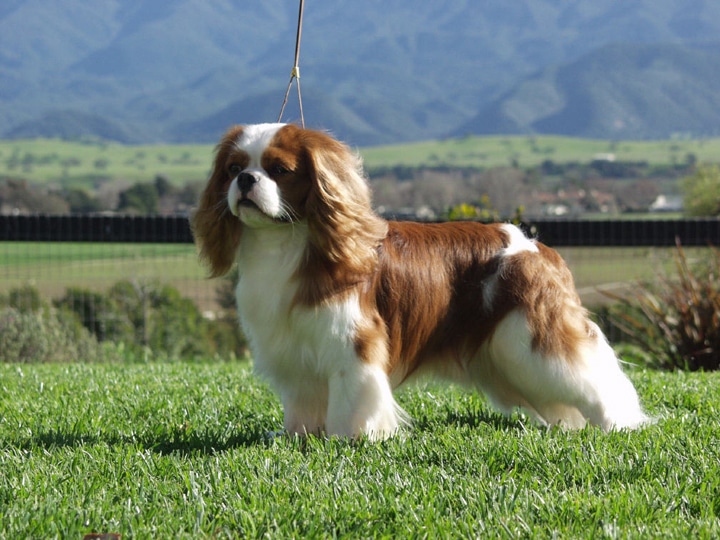
The Cavalier King Charles Spaniel is a small toy breed prized for its gentle, people-focused nature. Weighing just 13 to 18 lbs, it’s easy to carry and travel with. Cavaliers are affectionate, quiet indoors, and happiest curled against their owner — making them ideal for a woman who wants comfort over vigilance.
Their silky, feathered ears frame a soft, wide-eyed face that seems built for sympathy. Coat colors range from rich chestnut-and-white to deep black-and-tan.
Most people expect toy breeds to be yappy. Cavaliers break that mold entirely — they’re one of the quietest small breeds, content to nap for hours as long as they’re near you.
“She’s not going to scare off a burglar, but coming home to her waiting at the door gets me through hard days.”
— Grace L., Cavalier owner for 6 years
- Quiet, gentle temperament indoors
- Small enough for any apartment
- Adapts well to a busy work schedule
- Prone to heart issues later in life
- Almost no natural guarding instinct
- Craves company, dislikes long solitude
Best for: Women wanting a lap dog · Small apartment living · Emotional comfort over alertness
→ Best small dog breeds for first-time solo owners
French Bulldog — “The Low-Effort Roommate”
| Weight | 16 to 28 lbs |
| Height | 11 to 13 in |
| Lifespan | 10 to 12 years |
| Energy Level | Low to moderate |
| Grooming Need | Low |
| Shedding | Moderate |
The French Bulldog is a compact, low-energy companion breed built for small-space living. Weighing 16 to 28 lbs, it needs only short daily walks. French Bulldogs are affectionate, comical, and content to nap beside you all day — making them ideal for a woman with a busy job and a small apartment.
Their bat-shaped ears and squashed, wrinkled face give them a look you either fall for instantly or don’t — most owners fall hard. The short coat comes in fawn, brindle, cream, and pied patterns.
Everyone knows Frenchies are low-energy. Fewer people know how expressive they are without barking — a tilted head, a grumble, or a full-body lean does most of their talking.
“He snores louder than my old roommate did. I wouldn’t trade it for anything.”
— Monica T., French Bulldog owner for 3 years
- Needs only 20 minutes of exercise daily
- Thrives in the smallest apartments
- Rarely barks excessively
- Breathing struggles in heat and humidity
- Vet bills run higher than average
- Almost zero watchdog instinct
Best for: Studio apartment dwellers · Busy professionals · First-time owners
→ Best dog breeds for small apartments
Boston Terrier — “The Tuxedo-Clad Social Butterfly”
| Weight | 12 to 25 lbs |
| Height | 15 to 17 in |
| Lifespan | 11 to 13 years |
| Energy Level | Moderate |
| Grooming Need | Low |
| Shedding | Low |
The Boston Terrier is a small, friendly breed nicknamed “the American Gentleman” for its tuxedo-like markings. Weighing 12 to 25 lbs, it’s an easy size for solo handling. Boston Terriers are cheerful, adaptable, and just alert enough to bark at the doorbell — making them ideal for a woman who wants a low-drama, sociable dog.
Their short black-and-white coat and large, round eyes give them an expressive, almost human face. That compact, square build makes them sturdy despite their small size.
People expect small breeds to be nervous around strangers. Bostons flip that expectation — they’re famously friendly with guests, often greeting new people like old friends within minutes.
“She barks exactly once at the door, then runs to greet whoever it is like they’re family.”
— Kayla S., Boston Terrier owner for 4 years
- Low shedding, easy coat care
- Friendly with visitors and neighbors
- Compact enough for apartments
- Minimal protective instinct
- Sensitive to heat like other flat-faced breeds
- Can be gassy and snores loudly
Best for: Social women who host guests often · Apartment living · Low-maintenance owners
Miniature Schnauzer — “The Loudest Little Alarm System”
| Weight | 11 to 20 lbs |
| Height | 12 to 14 in |
| Lifespan | 12 to 14 years |
| Energy Level | Moderate to high |
| Grooming Need | High — trimming every 6 to 8 weeks |
| Shedding | Minimal |
The Miniature Schnauzer is a small terrier-type breed with an outsized watchdog instinct. Weighing 11 to 20 lbs, it’s easy to manage but bold well beyond its size. Miniature Schnauzers are alert, low-shedding, and quick to bark at anything unusual — making them ideal for a woman who wants a genuine alarm system in a small body.
Their signature bushy eyebrows and beard give them a permanently opinionated expression, framing dark, alert eyes that miss nothing.
Most small dogs get dismissed as “yappy.” A Schnauzer’s bark is different — it’s purposeful, triggered by something specific, and it stops as soon as the “threat” is identified.
“He knew someone was outside my window before I heard a single footstep. 18 pounds of pure suspicion.”
— Heather B., Miniature Schnauzer owner for 7 years
- Sharp watchdog instincts
- Low-shedding, allergy-friendly coat
- Small enough for any home size
- Grooming costs add up over a year
- Can bark more than neighbors appreciate
- Stubborn streak needs consistent training
Best for: Apartment dwellers wanting alertness · Allergy sufferers · Women wanting a small watchdog
→ Calm dog breeds that still adapt well to apartments
Bichon Frise — “The Cotton-Ball Mood Booster”
| Weight | 12 to 18 lbs |
| Height | 9.5 to 11.5 in |
| Lifespan | 14 to 15 years |
| Energy Level | Moderate |
| Grooming Need | High — every 4 to 6 weeks |
| Shedding | Minimal |
The Bichon Frise is a small, low-shedding companion breed known for its endlessly cheerful nature. Weighing 12 to 18 lbs, it’s light enough to lift and carry easily. Bichons are people-focused, playful, and rarely aggressive — making them ideal for a woman who wants a hypoallergenic dog with a genuinely sunny personality.
Their powder-white, curly coat looks like a cloud brought to life, and it doesn’t shed loose hair the way most breeds do.
Most people picture toy breeds as fragile. Bichons defy that — they’re sturdy, athletic little dogs that will happily join a jog around the block or a game of fetch down the hallway.
“She does this thing where she spins in circles when I get home. Bad day, gone.”
— Nicole P., Bichon Frise owner for 5 years
- Near-zero shedding, allergy-friendly
- Cheerful, rarely destructive when alone
- Long 14 to 15 year lifespan
- Frequent professional grooming required
- No real guarding instinct
- White coat shows dirt and tear stains
Best for: Allergy sufferers · Women wanting a mood-lifting companion · Small living spaces
→ Best hypoallergenic dog breeds for apartments
Pomeranian — “The Fearless Pocket Guardian”
 Save
Save| Weight | 3 to 7 lbs |
| Height | 6 to 7 in |
| Lifespan | 12 to 16 years |
| Energy Level | Moderate to high |
| Grooming Need | High — daily brushing |
| Shedding | Moderate to high |
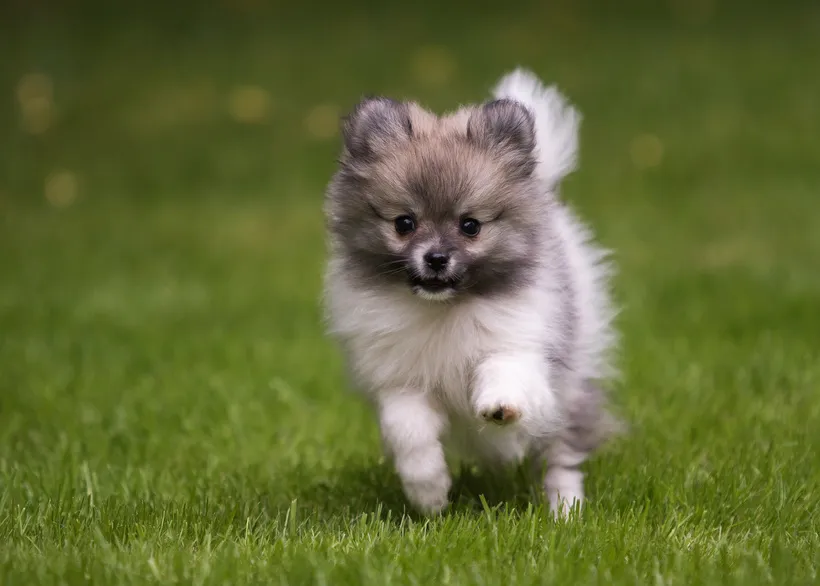
The Pomeranian is one of the smallest companion breeds, known for its thick double coat and outsized confidence. Weighing just 3 to 7 lbs, it’s perfect for apartment living and easy to transport anywhere. Despite its tiny size, the Pomeranian is bold, alert, and quick to bark at anything unfamiliar — ideal for a woman who wants a portable dog with real personality.
Their thick, plush coat puffs out around the neck like a lion’s mane, framing a fox-like face with sharp, intelligent eyes.
People assume tiny dogs are timid. Pomeranians are the opposite — many will bark at, and even charge, dogs five times their size without a second of hesitation.
“She once chased a German Shepherd off our path at the park. Five pounds of pure confidence.”
— Sarah K., Pomeranian owner for 6 years
- Tiny enough for any apartment
- Surprisingly alert and vocal
- Long 12 to 16 year lifespan
- Daily brushing required to prevent mats
- Fragile around rough handling or falls
- Can bark excessively without training
Best for: Studio apartments · Frequent travelers · Women wanting a small, alert companion
Compare All 10 Breeds Side by Side
Scanning for the fastest comparison? This table lines up every breed’s core stats so you can shortlist candidates in under a minute. Weight and grooming needs are usually what narrow the list down fastest for solo owners.
| Breed | Weight | Energy | Grooming | Alertness |
|---|---|---|---|---|
| Boxer | 55–70 lbs | High | Low | High |
| Vizsla | 44–60 lbs | Very high | Low | Moderate |
| Standard Poodle | 40–70 lbs | High | High | High |
| Labrador Retriever | 55–80 lbs | High | Low–Moderate | Moderate |
| Cavalier King Charles Spaniel | 13–18 lbs | Moderate | Moderate | Low |
| French Bulldog | 16–28 lbs | Low–Moderate | Low | Low |
| Boston Terrier | 12–25 lbs | Moderate | Low | Low–Moderate |
| Miniature Schnauzer | 11–20 lbs | Moderate–High | High | High |
| Bichon Frise | 12–18 lbs | Moderate | High | Low |
| Pomeranian | 3–7 lbs | Moderate–High | High | Moderate–High |
Which of These Breeds Is Right for You?
Once you know your priority, the shortlist narrows fast. Most women living alone are choosing between three things: feeling protected, feeling comforted, or keeping life simple. Here’s how to match that priority to a breed.
- If you’re most focused on personal safety and alertness → the Boxer, Miniature Schnauzer, or Standard Poodle will serve you best.
- If you want a quiet emotional companion more than a watchdog → the Cavalier King Charles Spaniel or Bichon Frise fits your life better.
- If you’re short on time and space and want low upkeep above all → consider the French Bulldog or Boston Terrier first.
- If you’re active and want a dog that matches your energy → the Vizsla or Labrador Retriever will keep pace with you.
What you might be thinking: “What if I want both protection and low maintenance?” Here’s why that’s a real tradeoff — alert breeds tend to need more mental stimulation, so the calmest, lowest-effort dogs are rarely the most watchful ones. Pick the one you can live with, not the one that sounds best on paper.
What Most People Get Wrong About Choosing a Dog for Solo Living
The biggest misconception is that a bigger dog automatically means a safer home. Research from breed behavior studies consistently shows that alertness and bark response matter more than size when it comes to deterring an intruder — a Miniature Schnauzer’s sharp bark can be just as effective as a Boxer’s presence.
The second misconception is that small dogs can’t handle being left alone. Most experts agree that separation tolerance is about temperament and training, not size. A well-socialized Bichon Frise can handle a workday alone far better than an under-exercised Labrador.
So what does that mean for you? Don’t choose based on size alone. Choose based on how the breed’s actual instincts, energy, and independence match your specific daily schedule.
Care Essentials Every New Owner Living Alone Should Know
Owning a dog solo means you’re the only backup plan. That changes a few basics. Most experts agree that a consistent routine matters more for solo households than for multi-person homes, since there’s no one else to cover a missed walk or feeding.
Line up a trusted neighbor or dog walker before you bring your dog home, not after an emergency forces the issue.
Build a routine around three fixed points: a morning walk, a midday break if you’re gone 8+ hours, and an evening walk. Even the low-energy breeds on this list, like the French Bulldog, do better with structure than with an unpredictable schedule.
Also plan for solo vet visits. Ask your vet clinic about curbside drop-off options, and keep a printed copy of your dog’s vaccine record in your bag — it saves real time during appointments when you’re the only one juggling the leash and the paperwork.
Common Mistakes Women Living Alone Make With a New Dog
Skipping socialization in a protective breed can turn healthy alertness into fearful aggression. Early exposure to people and places is non-negotiable.
The most common mistake is picking a breed for its look rather than its energy level. A Vizsla looks sleek and manageable in photos, but an under-exercised Vizsla will chew furniture out of pure frustration.
The second mistake is skipping crate or confinement training. Many solo owners feel guilty leaving a dog alone, so they skip structure entirely — and end up with a dog that panics every time the door closes.
The third mistake is assuming alert breeds don’t need socialization. In other words, a Boxer or Schnauzer that never meets strangers as a puppy can grow into an adult that reacts with fear instead of confidence — the opposite of what you wanted.
Honest Scope of This Guide
This article covers general breed temperament, care needs, and fit for solo living based on established breed standards and behavior patterns. If your situation involves a specific medical condition, a landlord’s breed restrictions, or a need for a certified service or emotional support animal, you’ll want to consult your doctor, your lease agreement, or a certified trainer directly, since those situations go beyond general breed guidance.
Before you commit to any breed, spend time reading up on choosing the right dog for your lifestyle from a source like the American Kennel Club, which walks through additional lifestyle-matching questions beyond what’s covered here.
Frequently Asked Questions
What is the safest dog breed for a woman living alone?
The Boxer and Miniature Schnauzer are widely considered top choices for personal safety, since both combine strong alertness with a deep bond to their owner. Size matters less than the instinct to notice and react to strangers.
What is the best small dog breed for a woman living alone?
The Miniature Schnauzer stands out among small breeds for genuine watchdog instinct, while the Cavalier King Charles Spaniel and Bichon Frise are best if comfort matters more than alertness. All three fit small apartments well.
Do I need a big dog to feel safe living alone?
No. A dog’s bark and alertness matter more than its size for deterring strangers. Many small breeds, like the Pomeranian and Miniature Schnauzer, react to unfamiliar sounds faster than larger, calmer breeds.
Which dog breed is easiest to care for on my own?
The French Bulldog and Boston Terrier need the least daily exercise and grooming, making them the easiest fit for a busy solo schedule. Both also handle apartment living well.
Can a dog help with anxiety about living alone?
Yes, most experts agree that dog companionship can ease feelings of isolation and improve daily routine and structure. If anxiety feels persistent or overwhelming beyond typical adjustment, talk with a healthcare provider about additional support alongside a dog.
Choosing a dog to share your home with is really a decision about what kind of company makes you feel steady — watchful, warm, or somewhere in between. Trust the answer that matches your actual daily life, not the one that just looks good in photos.
One thing to do right now: pick your top two breeds from this list and spend 10 minutes today looking up a local breeder or rescue for each one. I’m Jess Carter, and that one small step is how every good match starts.
Sources: American Kennel Club — Boxer breed profile · American Kennel Club — Cavalier King Charles Spaniel breed profile · American Kennel Club — Choosing the right breed for your lifestyle

Thomas Cutter is a lifelong dog owner and the founder of FindOutAboutDogs.com. With over 10 years of hands-on experience owning multiple breeds, Thomas created this site to provide honest, research-based dog advice that real owners can actually trust.
