Best 10 Hunting Dog Breeds for Families — Chosen by Thomas Cutter
Quick Answer
The best 10 hunting dog breeds for families are Labrador Retriever, Golden Retriever, Brittany, English Springer Spaniel, German Shorthaired Pointer, Vizsla, Beagle, Cocker Spaniel, Irish Setter, and Boykin Spaniel. The right choice depends on your kids, yard, time, training style, and daily exercise plan.
| Best Fit | Top Breed |
|---|---|
| First-time families | Labrador Retriever |
| Gentle child-friendly homes | Golden Retriever |
| Small active homes | Cocker Spaniel |
Choose a family hunting dog this way:
- Choose a Lab if you want the safest all-rounder.
- Choose a Brittany if your family runs daily.
- Choose a Beagle if you need a smaller scent hound.
You can hear the kids laughing in the yard.
Then your dog finds the ball, runs back, and waits for the next game.
That is the dream for many active families.
But here’s the thing. A hunting dog can be a gift or a poor fit.
I’m Thomas Cutter, and I study dog breeds for real family homes.
This guide covers family-friendly hunting breeds. If you need a low-energy lap dog, you may need a companion breed first.
- Most hunting dogs need daily exercise and clear rules.
- Retrievers are often the easiest family hunting dogs.
- Spaniels suit families that want medium-sized dogs.
- Pointers need more running than most busy homes expect.
- Breed matters, but training and fit matter more.


What Makes a Hunting Dog Breed Good for Families?
A good family hunting dog is calm indoors, active outdoors, and easy to train. The breed should enjoy people, recover fast from noise, and respond well to food, praise, or play. Most experts agree that breed alone never makes a dog safe. Training, exercise, health, and child supervision matter every day.
You already know hunting dogs love movement. But here’s the thing. The best ones also know how to switch off at home.
When a sporting dog gets enough work, it often becomes softer indoors. That taught me one key rule. A tired hunting dog is often a better family dog.
You might be thinking all hunting dogs are too intense. Here’s why that is not true. Retrievers and spaniels were bred to work near people.
So if your family hikes, camps, plays fetch, or trains daily, these dogs can fit well.
For breed groups and basic traits, the official AKC dog breed guide is a useful starting point.
Now let’s rank the breeds by real family fit.
What Are the Best 10 Hunting Dog Breeds for Families?
The best 10 hunting dog breeds for families are Labrador Retriever, Golden Retriever, Brittany, English Springer Spaniel, German Shorthaired Pointer, Vizsla, Beagle, Cocker Spaniel, Irish Setter, and Boykin Spaniel. These breeds offer the best mix of hunting skill, trainability, affection, and child-friendly behavior. Each one still needs daily structure.
Now let’s look at each breed. Each entry gives size, care, behavior, pros, cons, and best-fit homes.
Labrador Retriever — Hunting Dog Breed for the Whole Family
 Save
Save| Weight | 55 to 80 pounds |
| Height | 21.5 to 24.5 inches |
| Lifespan | 11 to 13 years |
| Energy Level | High |
| Grooming Need | Weekly brushing |
| Shedding | Moderate to heavy |
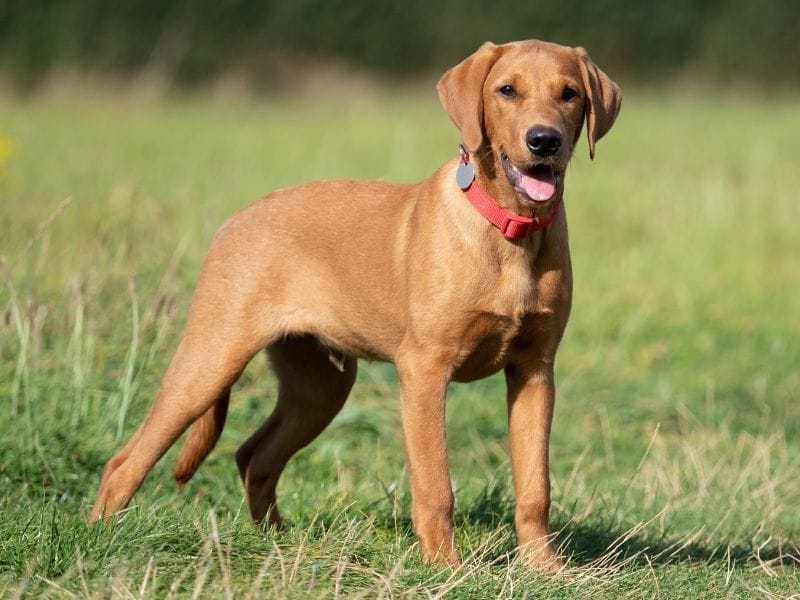
The Labrador Retriever is a friendly hunting dog breed known for water work, fetch drive, and family patience. This medium-to-large dog weighs 55 to 80 pounds. Labs are social, food-driven, and easy to train. They suit active families that want one dog for kids, field, and home.
Labs have a strong body and a short coat. Their thick tail can clear a low table fast.
Most people know Labs love water. What they may miss is their food focus. That focus makes training much easier.
“Our Lab learned the kids’ fetch rules before the kids did. He drops the ball, backs up, and waits.”
— Megan R., Labrador Retriever owner for 6 years
- Easy to train with food
- Loves water and fetch
- Strong family bond
- Young Labs jump often
- Can chew household items
- Gains weight without exercise
Best for: First-time owners · Active kids · Fetch-loving homes
Golden Retriever — Gentle Hunting Dog Breed for Kids
| Weight | 55 to 75 pounds |
| Height | 21.5 to 24 inches |
| Lifespan | 10 to 12 years |
| Energy Level | High |
| Grooming Need | Brush 3 times weekly |
| Shedding | Heavy seasonal shedding |
The Golden Retriever is a soft-mouthed hunting dog breed known for retrieving, patience, and gentle family life. This large dog weighs 55 to 75 pounds. Goldens are playful, kind, and eager to please. They suit families that want a warm, steady dog for kids and outdoor days.
Goldens have a dense coat with feathering. Their face often looks calm and bright.
You expect them to be sweet. But many Goldens also read moods well. They often slow down near small kids.
“Our Golden brings one toy to each child. Then he sits like he is counting heads.”
— Daniel K., Golden Retriever owner for 5 years
- Gentle with patient kids
- Learns family rules fast
- Great for outdoor play
- Heavy hair around home
- Needs daily active play
- Can become clingy indoors
Best for: Gentle kids · Suburban homes · First family dogs
→ Best family dog breeds for kids
Brittany — Compact Hunting Dog Breed for Active Families
| Weight | 30 to 40 pounds |
| Height | 17.5 to 20.5 inches |
| Lifespan | 12 to 14 years |
| Energy Level | Very high |
| Grooming Need | Weekly brushing |
| Shedding | Moderate |
The Brittany is a lively hunting dog breed known for bird work, speed, and close family bonds. This medium dog weighs 30 to 40 pounds. Brittanys are bright, eager, and intense outdoors. They suit families that run, hike, train, or play hard most days.
Brittanys have a lean frame and soft feathering. Their coat often shows orange and white patches.
Most people call them spaniels, but the breed works more like a pointer. That surprise matters. They need real field-style exercise.
“Our Brittany relaxes only after a trail walk. Then she curls beside my son.”
— Lisa M., Brittany owner for 4 years
- Great size for kids
- Very eager to learn
- Strong hiking partner
- Needs hard daily exercise
- Can bark when bored
- Not ideal for couch homes
Best for: Runners · Trail families · Older active kids
English Springer Spaniel — Weekend Hunting Dog Breed for Families
| Weight | 40 to 50 pounds |
| Height | 19 to 20 inches |
| Lifespan | 12 to 14 years |
| Energy Level | High |
| Grooming Need | Brush 3 times weekly |
| Shedding | Moderate |
The English Springer Spaniel is a cheerful hunting dog breed known for flushing birds, working close, and loving family life. This medium dog weighs 40 to 50 pounds. Springers are smart, busy, and people-focused. They suit families that want a playful dog with strong trainability.
Springers have soft ears and a feathered coat. Their face looks gentle, but their body is built for work.
You may expect a calm spaniel. Field Springers can be fast and intense. That energy needs games, scent work, and walks.
“Our Springer finds every hidden tennis ball. The kids now hide them before school.”
— Colin S., English Springer Spaniel owner for 7 years
- Works close to people
- Good size for homes
- Enjoys kids and games
- Ears need regular checks
- Can chase small pets
- Field lines need more work
Best for: Weekend hunters · Active families · Scent-game homes
German Shorthaired Pointer — Athletic Hunting Dog Breed for Big Energy Homes
| Weight | 45 to 70 pounds |
| Height | 21 to 25 inches |
| Lifespan | 10 to 12 years |
| Energy Level | Very high |
| Grooming Need | Low weekly brushing |
| Shedding | Moderate |
 Save
SaveThe German Shorthaired Pointer is a versatile hunting dog breed known for pointing, tracking, retrieving, and long outdoor work. This athletic dog weighs 45 to 70 pounds. GSPs are bold, smart, and tireless. They suit experienced active families that can train and run them daily.
GSPs have a sleek coat and lean muscle. Their liver or spotted pattern is easy to spot.
Most people admire their speed. Few expect how sensitive they can be. A harsh tone can set training back.
“Our GSP runs with me first. After that, she plays softly with the kids.”
— Aaron T., German Shorthaired Pointer owner for 5 years
- Brilliant field partner
- Low grooming needs
- Thrives with active teens
- Too much for quiet homes
- Needs off-leash outlets
- Can knock toddlers down
Best for: Experienced owners · Teen families · Rural homes
Vizsla — Velcro Hunting Dog Breed for Close Families
| Weight | 44 to 60 pounds |
| Height | 21 to 24 inches |
| Lifespan | 12 to 15 years |
| Energy Level | Very high |
| Grooming Need | Very low brushing |
| Shedding | Light to moderate |
The Vizsla is an affectionate hunting dog breed known for pointing, speed, and constant human closeness. This medium dog weighs 44 to 60 pounds. Vizslas are gentle, athletic, and sensitive. They suit families that want a true shadow dog and can avoid long lonely days.
Vizslas have a smooth rust-gold coat. Their thin frame looks elegant and fast.
You expect them to run. But the real surprise is clinginess. Many follow their family room to room.
“Our Vizsla waits outside the bathroom door. The kids call him our red shadow.”
— Priya N., Vizsla owner for 3 years
- Deep family attachment
- Low coat care needs
- Great running partner
- Hates long lonely hours
- Needs soft training methods
- Can be needy indoors
Best for: Work-from-home families · Runners · Gentle kids
Beagle — Small Hunting Dog Breed for Busy Family Life
| Weight | 20 to 30 pounds |
| Height | 13 to 15 inches |
| Lifespan | 10 to 15 years |
| Energy Level | High |
| Grooming Need | Weekly brushing |
| Shedding | Moderate |
The Beagle is a compact hunting dog breed known for scent work, pack spirit, and cheerful family life. This small-to-medium hound weighs 20 to 30 pounds. Beagles are sturdy, social, and curious. They suit families that enjoy walks, scent games, and secure fences.
Beagles have soft ears and bright eyes. Their white tail tip helps hunters track them.
Most people know Beagles sniff. The wow is their voice. A Beagle bay can cross the street.
“Our Beagle follows snack trails from the kids. We turned it into a game.”
— Owen P., Beagle owner for 8 years
- Sturdy size for children
- Social pack nature
- Fun scent-game dog
- Can bay loudly
- Follows scent outdoors
- Needs secure fencing
Best for: Smaller homes · Scent games · Multi-child families
→ Best dog breeds for families with cats
Cocker Spaniel — Small Bird Dog Breed for Gentle Families
| Weight | 20 to 30 pounds |
| Height | 13.5 to 15.5 inches |
| Lifespan | 10 to 14 years |
| Energy Level | Moderate to high |
| Grooming Need | Brush 3 times weekly |
| Shedding | Moderate |
The Cocker Spaniel is a merry hunting dog breed known for flushing birds, soft manners, and close family bonds. This small sporting dog weighs 20 to 30 pounds. Cockers are sweet, playful, and people-focused. They suit gentle families that want a smaller bird dog.
Cockers have long ears and a silky coat. Their eyes look soft and full of feeling.
You expect a lap dog look. But the Cocker is still a true hunting breed. It loves nose work.
“Our Cocker hunts socks, toys, and dropped crayons. The kids call her detective.”
— Sarah L., Cocker Spaniel owner for 4 years
- Smaller size for homes
- Warm family nature
- Enjoys scent games
- Coat mats without brushing
- Ears need frequent care
- Can be sensitive to shouting
Best for: Gentle kids · Smaller yards · First spaniel homes
Irish Setter — Red-Coated Hunting Dog Breed for Outdoor Kids
| Weight | 60 to 70 pounds |
| Height | 25 to 27 inches |
| Lifespan | 12 to 15 years |
| Energy Level | Very high |
| Grooming Need | Brush 3 times weekly |
| Shedding | Moderate |
The Irish Setter is a joyful hunting dog breed known for bird work, red coat, and social charm. This large dog weighs 60 to 70 pounds. Irish Setters are playful, fast, and people-loving. They suit families with outdoor kids and space for daily running.
Irish Setters have a rich red coat. Their feathered ears and tail move with style.
Most people notice the coat first. But the real trait is joy. This breed greets life at full speed.
“Our Setter treats every kid like a best friend. He makes school pickup chaotic.”
— Rachel B., Irish Setter owner for 5 years
- Very social with people
- Great for outdoor play
- Long lifespan for size
- Slow to mature mentally
- Needs long daily exercise
- Can overwhelm toddlers
Best for: Outdoor kids · Large yards · Social homes
Boykin Spaniel — Family Hunting Dog Breed for Water and Woods
| Weight | 25 to 40 pounds |
| Height | 14 to 18 inches |
| Lifespan | 10 to 15 years |
| Energy Level | High |
| Grooming Need | Weekly brushing |
| Shedding | Moderate |
 Save
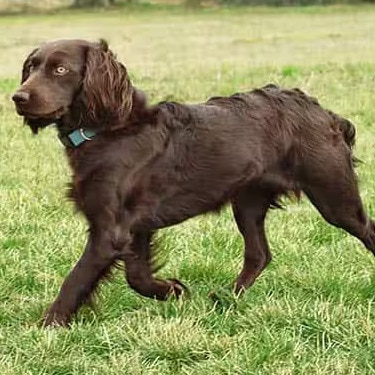
SaveThe Boykin Spaniel is a compact hunting dog breed known for flushing, retrieving, swimming, and family warmth. This medium-small dog weighs 25 to 40 pounds. Boykins are eager, bright, and cheerful. They suit active families that want a smaller sporting dog with real field drive.
Boykins have a rich brown coat and soft eyes. Their webbed feet help them swim well.
You may not know this breed yet. But in the South, Boykins are prized boat dogs. They pack big work into a small body.
“Our Boykin swims until we call time. Then she naps under the kids’ picnic table.”
— Hunter J., Boykin Spaniel owner for 6 years
- Great size for families
- Strong swimmer and retriever
- Trainable and eager
- Needs daily mental work
- Can dislike long solitude
- May chase backyard wildlife
Best for: Lake homes · Active kids · Smaller sporting homes
Which Hunting Dog Breed Is Right for Your Family?
The right hunting dog breed depends on your daily life, not just your favorite photo. Choose a Labrador or Golden if you want the easiest family fit. Choose a Brittany, Vizsla, or German Shorthaired Pointer if you already live outdoors. Choose a Cocker, Beagle, or Boykin if size matters more.
Here’s why that matters. A high-energy breed needs a real job, even without hunting.
When families choose by looks alone, problems start fast. That taught me to match energy before coat color.
If you are a first-time dog family, choose a Labrador first. If you have toddlers, choose a Golden or Cocker. If you hike most weekends, choose a Brittany, Springer, or Vizsla. If you want a smaller nose-work dog, choose a Beagle or Boykin.
You might be thinking a puppy will adapt to anything. Here’s why that can fail. Breed drive shows up when the dog grows.
For very young kids, compare this with best dog breeds for families with toddlers.
Now let’s cover the care rules that make these dogs work.
How Do You Care for a Hunting Dog in a Family Home?
You care for a family hunting dog by giving daily exercise, short training, safe child rules, grooming, and mental games. Most hunting breeds need more than a slow walk. They need fetch, scent work, swimming, field play, or structured training. Without that, chewing, barking, digging, and jumping often grow fast.
The good news is simple. You do not need to hunt to meet hunting-dog needs.
When I see these dogs thrive, the family uses small daily routines. That taught me that 20 focused minutes can beat 2 dull hours.
- Walk before school or work.
- Train 5 minutes before meals.
- Use fetch with clear start and stop cues.
- Hide treats for scent games.
- Brush ears, coat, and paws weekly.
For safety, teach kids dog body language early. The AVMA dog bite prevention tips stress child supervision around dogs.
You might be thinking your dog is too sweet to bite. Here’s why supervision still matters. Any dog can react when scared or hurt.
Next, let’s fix the most common myths.
What Most People Get Wrong About Hunting Dog Breeds for Families
Most people get 3 ideas wrong about family hunting dogs. They think hunting dogs are always aggressive, always hard to train, or always safe because they are friendly. The truth is more useful. These breeds are often people-focused, but they still need exercise, control, and clear family rules.
But here’s the thing. Hunting drive is not the same as human aggression.
When a Beagle chases scent, that is instinct. When a Springer flushes birds, that is work. That taught me not to punish drive, but to guide it.
Never leave young kids alone with any dog. Breed does not replace adult care.
You might be thinking a big yard solves it. Here’s why it does not. Dogs need shared work, not just space.
For manners, the AKC Canine Good Citizen test gives a clear training goal.
Now you can choose with less doubt.
Conclusion: What Should You Do Right Now?
The best hunting dog breed for your family is the one your life can support.
Choose the breed by energy, size, training need, and child fit.
One thing to do right now: pick your top 3 breeds, then cross off any breed you cannot exercise daily.
I’m Thomas Cutter, and that one step can save you years of stress.
Frequently Asked Questions
Are hunting dog breeds good with children?
Yes, many hunting dog breeds are good with children when trained and matched well. Retrievers, spaniels, and some pointers often love family life. Still, young children need adult supervision around every dog, even a calm one.
What is the easiest hunting dog breed for a family?
The Labrador Retriever is often the easiest hunting dog breed for families. Labs train well, love people, and enjoy games with children. They still need exercise, food control, and early manners to prevent jumping and chewing.
Which hunting dog breed is best for small homes?
Cocker Spaniels, Beagles, and Boykin Spaniels can fit smaller homes better than large pointers. They still need daily walks, training, and scent games. A small home works best when the family gives outdoor time every day.
Can a hunting dog live without hunting?
Yes, a hunting dog can live well without hunting if you replace field work. Use fetch, swimming, scent games, hikes, and reward-based training. Without these outlets, many hunting breeds become loud, restless, or destructive.
Which hunting dog breed should first-time owners avoid?
First-time owners should be careful with very intense breeds like German Shorthaired Pointers and some Vizslas. These dogs are wonderful in active homes, but they need time, training, and exercise. A Lab, Golden, or Cocker may feel easier.

Thomas Cutter is a lifelong dog owner and the founder of FindOutAboutDogs.com. With over 10 years of hands-on experience owning multiple breeds, Thomas created this site to provide honest, research-based dog advice that real owners can actually trust.
