10 Best Dog Breeds for Grandparents (2026 Guide)
Quick Answer
The best dog breeds for grandparents are small, calm, and easy on the joints. Cavalier King Charles Spaniels, Havanese, Shih Tzus, Bichon Frises, French Bulldogs, and Pugs top the list because they need short walks, don’t pull hard on a leash, and bond closely with one person or a couple at home.
What Makes a Breed Grandparent-Friendly
- Low to moderate exercise needs — short walks, not long hikes
- Calm temperament that doesn’t escalate with boredom
- Small size (under 30 lbs) so leash pulling isn’t a fall risk
- Gentle with visiting grandchildren, not high-strung or snappy
Before You Choose
- Match grooming needs to what you can realistically keep up
- Ask a breeder or shelter about the dog’s real energy level
- Consider an adult or senior dog, not just a puppy
Your knees ache a little more this year than last. The dog you’re picturing shouldn’t make that worse. I’m Thomas Cutter, and I’ve spent years researching breed temperament and talking with breeders about what actually works for older owners — not just what looks cute in a photo.
Picking the wrong dog can mean daily tugging on a leash, hours of grooming, or a bark that rattles the whole street. Picking the right one means a calm companion who’s happy to nap beside your chair. If you’re weighing this decision more broadly, our roundup of the best dog breeds for retirees covers similar ground from a slightly different angle. Here’s how to find the right dog for your own home.
- Small, low-energy breeds like the Cavalier and Havanese suit most grandparents best.
- Size matters more than breed popularity — dogs under 20 lbs pose almost no fall risk.
- Grooming needs vary a lot between similar-looking breeds. Check this before you commit.
- An older, already-trained dog can be an easier fit than a puppy.

What Makes a Dog Breed Good for Grandparents?
A grandparent-friendly breed is calm, small, and doesn’t need hours of exercise. It also gets along well with visiting grandchildren and doesn’t require grooming skills you don’t have time to learn.
Size is the factor people underestimate most. A large, strong dog that lunges at a squirrel can pull an older adult off balance. Falls are a leading cause of serious injury in adults over 65, so a dog under roughly 20 pounds with calm leash manners removes most of that risk. Energy level matters just as much — a bored, high-drive dog left under-exercised often becomes a barker or a chewer, which adds stress instead of easing it.
You might be thinking a bigger dog would feel safer around the house. Here’s why that’s not always true: a large dog’s strength on a leash — not its size at rest — is what actually causes problems for an unsteady walker.
Before choosing a breed, spend an afternoon with an adult dog of that breed — a friend’s dog, a rescue, or through a breeder. Personality varies more within a breed than most lists let on.
The 10 Best Dog Breeds for Grandparents — Ranked and Reviewed
These ten breeds share the traits that matter most for older owners: modest exercise needs, a calm temperament, and a size that’s easy to manage day to day. Each one below lists its real trade-offs, not just its best features.
1. Cavalier King Charles Spaniel — “The Devoted Lap Companion”
 Save
Save| Weight | 13–18 lbs |
| Height | 12–13 in |
| Lifespan | 12–15 years |
| Energy Level | Low-moderate |
| Grooming Need | Moderate — a few brushings a week |
| Shedding | Moderate |
The Cavalier King Charles Spaniel is a small, gentle toy breed built almost entirely for companionship. It weighs 13 to 18 pounds and rarely needs more than a short daily walk. Cavaliers are affectionate lap dogs that bond quickly with one person or a couple, and they’re famously patient with grandchildren.
Their silky ears and soft brown eyes give them an expression that’s hard to resist. That same coat needs brushing a few times a week to stay free of tangles.
Cavaliers greet strangers warmly instead of barking at them, which surprises people who expect a small dog to be yappy. Their one real drawback: the breed is prone to a heart condition called mitral valve disease, so regular vet checkups matter more here than with most breeds.
What owners consistently notice is how little this dog asks for. A short walk, a lap to sit in, and it’s content for the rest of the day.
- Extremely gentle with children and other pets
- Needs only short daily walks
- Rarely barks without reason
- Prone to a serious heart condition
- Coat needs weekly brushing upkeep
- Can develop separation anxiety alone
Best for: Grandparents wanting a devoted lap dog · Homes with visiting grandchildren · First-time senior dog owners
2. Havanese — “Cuba’s Cheerful Shadow”
| Weight | 7–13 lbs |
| Height | 8–11 in |
| Lifespan | 14–16 years |
| Energy Level | Low-moderate |
| Grooming Need | High if long, low if clipped short |
| Shedding | Low |
The Havanese is Cuba’s only native breed, a small, cheerful dog built to be a full-time companion. It weighs under 13 pounds and asks for little exercise beyond short walks. Havanese dogs are social, easygoing, and known for playing gently and patiently with children.
Their coat is soft and silky, often compared to rabbit fur, and it keeps growing unless trimmed. Kept in a short “puppy cut,” it needs only weekly brushing.
Havanese are naturally trainable and pick up routines fast — many even learn simple tricks with basic positive reinforcement. So if you want a dog that adapts to your schedule instead of fighting it, this breed does that well.
- Low shedding, good for light allergies
- Highly trainable and eager to please
- Long lifespan of 14 to 16 years
- Long coat mats fast without brushing
- Can bark to alert you of visitors
- Dislikes being left alone for long
Best for: Grandparents who want a trainable companion · Owners willing to keep the coat clipped short · Households wanting a longer-lived small dog
3. Shih Tzu — “The Palace Watchdog Turned Lap Warmer”
| Weight | 9–16 lbs |
| Height | 9–10.5 in |
| Lifespan | 10–16 years |
| Energy Level | Low |
| Grooming Need | High if long, low with a puppy trim |
| Shedding | Low |
The Shih Tzu is a sturdy toy breed bred centuries ago as a palace companion in China. It weighs up to 16 pounds and needs only minimal daily exercise. Shih Tzus are happy, even-tempered dogs that adapt easily to apartment living and get along well with other pets.
Their flat face gives them a sweet, almost human expression. That same feature means they’re sensitive to heat, so summer walks should stay short and shaded.
Ask most owners and they’ll say the same thing: this dog is content wherever you are, whether that’s the couch or the yard. A shorter “puppy trim” cuts grooming time dramatically compared to keeping the coat long and flowing.
- Very low exercise requirement
- Even-tempered with kids and pets
- Content in small apartments
- Struggles in hot, humid weather
- Needs frequent brushing if coat is long
- Prone to dental issues
Best for: Apartment-dwelling grandparents · Owners who want minimal exercise demands · Mild climates without extreme heat
4. Bichon Frise — “The Cotton Ball With a Grin”
| Weight | 12–18 lbs |
| Height | 9.5–11.5 in |
| Lifespan | 14–15 years |
| Energy Level | Moderate |
| Grooming Need | High — regular professional grooming |
| Shedding | Very low |
The Bichon Frise is a small, curly-coated breed known for a naturally cheerful, playful attitude. It weighs 12 to 18 pounds and adjusts its energy to match its owner’s pace. Bichons thrive on companionship and rarely do well left alone for long stretches.
Their white, powder-puff coat sheds very little, which makes this breed a common pick for owners managing mild allergies.
That coat is also the trade-off: it mats quickly without regular grooming, so most owners schedule a professional groomer every four to six weeks. In return, you get a dog that’s genuinely playful without being hard to manage.
- Very low shedding for allergy sufferers
- Adjusts energy level to match yours
- Playful without being overly demanding
- Needs professional grooming regularly
- Doesn’t like being left alone
- Coat mats fast if brushing lapses
Best for: Grandparents managing mild dog allergies · Owners who enjoy grooming routines · Companion-focused households
5. French Bulldog — “The Comedian on Four Short Legs”
 Save
Save| Weight | Under 28 lbs |
| Height | 11–13 in |
| Lifespan | 10–12 years |
| Energy Level | Low |
| Grooming Need | Low |
| Shedding | Low-moderate |
The French Bulldog is a compact, muscular breed famous for its bat-like ears and playful antics. It weighs under 28 pounds and needs only a brief walk or two a day. Frenchies are affectionate, low-energy dogs that suit apartment living and smaller homes especially well.
Their short coat needs little brushing, which is a relief for owners who don’t want a grooming routine.
You might be thinking a bulldog sounds tough to manage. Here’s why that’s not the case: Frenchies are gentle homebodies, not stubborn workers. The real caution is heat — as a flat-faced breed, they overheat fast and shouldn’t be walked in hot afternoons.
- Minimal grooming and low shedding
- Very low exercise requirement
- Playful, comedic personality
- Sensitive to heat and humidity
- Shorter lifespan than most on this list
- Can have breathing difficulties
Best for: Grandparents in cool or air-conditioned climates · Apartment or small-home living · Owners wanting minimal grooming
6. Pug — “The Ancient Emperor’s Sofa Buddy”
| Weight | 14–18 lbs |
| Height | 10–13 in |
| Lifespan | 12–15 years |
| Energy Level | Low |
| Grooming Need | Low |
| Shedding | Moderate-high |
The Pug is a short-haired, muscular toy breed originally bred as a companion for Chinese emperors. It weighs 14 to 18 pounds and needs only light daily exercise. Pugs have famously even temperaments and thrive on simply being near their owners all day.
Their wrinkled face and curled tail give them instant charm, and their short coat means no brushing marathons — just regular vacuuming, since they do shed.
Most owners say the same thing after a week with a Pug: it wants to be wherever you are, nothing more complicated than that. Like other flat-faced breeds, Pugs are heat-sensitive, so keep summer activity to cooler parts of the day.
- Very even, predictable temperament
- No complicated coat care
- Thrives in small living spaces
- Sheds more than its short coat suggests
- Heat and breathing sensitivity
- Prone to weight gain if overfed
Best for: Grandparents wanting a steady, predictable companion · Small apartments or condos · Owners who dislike brushing routines
7. Toy or Miniature Poodle — “The Sharp Mind in a Small Frame”
| Weight | 4–15 lbs |
| Height | Under 15 in |
| Lifespan | 12–15 years |
| Energy Level | Moderate |
| Grooming Need | High — regular clipping |
| Shedding | Very low |
The Toy and Miniature Poodle are small, hypoallergenic dogs known for sharp intelligence and easy trainability. They weigh as little as 4 pounds and are easy to carry. Poodles rank among the most trainable small breeds, making them a strong pick for owners who want a dog that reads routines well.
Their curly coat sheds very little, which is why this breed shows up so often on lists for people with allergies.
That low-shed coat isn’t low-maintenance, though — it needs clipping every four to six weeks to avoid matting. In exchange, you get one of the quickest learners in the dog world, ideal if you want a dog that listens well the first time.
- Hypoallergenic, very low shedding
- Extremely quick to train
- Small enough to carry easily
- Needs regular professional clipping
- Can be vocal if bored
- Needs more mental stimulation than a lap dog
Best for: Grandparents with dog allergies · Owners who enjoy training games · Those wanting a light, easy-to-carry dog
8. Maltese — “The Tiny White Shadow”
| Weight | Under 7 lbs |
| Height | 7–9 in |
| Lifespan | 12–15 years |
| Energy Level | Low |
| Grooming Need | Moderate with a short clip |
| Shedding | Low |
The Maltese is a tiny toy breed weighing under 7 pounds, small enough to carry on errands. It needs only a short daily walk plus some indoor play. Maltese dogs are spirited and affectionate, forming close bonds with their owner despite their small size.
Their long white coat looks delicate, but kept in a short clip it only needs weekly brushing instead of daily upkeep.
What surprises new owners is the personality packed into such a small body — this isn’t a timid lap ornament, it’s a dog with real spirit. One habit to watch: Maltese can bark at passersby, though consistent training manages this well.
- Extremely light and portable
- Very low exercise needs
- Long, healthy lifespan
- Tendency to bark at strangers
- Fragile — not ideal around rough play
- Coat needs weekly brushing minimum
Best for: Grandparents who travel or run errands often · Small living spaces · Owners wanting a truly portable dog
9. Coton de Tulear — “Madagascar’s Cotton-Soft Traveler”
| Weight | 8–15 lbs |
| Height | 9–11 in |
| Lifespan | 15–19 years |
| Energy Level | Moderate |
| Grooming Need | Moderate |
| Shedding | Low |
The Coton de Tulear is a small, cottony-coated breed from Madagascar built for close companionship. It weighs 8 to 15 pounds and enjoys daily walks without needing intense exercise. Cotons are easygoing, easy to train, and known for one of the longest lifespans among small breeds.
Their soft, non-shedding coat is comfortable in most climates, and the breed adapts well to both warm and cooler regions.
A Coton adopted in your sixties can realistically stay with you into your late seventies or beyond, given a lifespan that can reach 19 years. So if long-term companionship matters to you, this is one of the strongest picks on this list for that alone.
- Exceptionally long lifespan for its size
- Easy to train and travel with
- Comfortable in most climates
- Less well-known, so harder to find breeders
- Needs daily walks, not just indoor play
- Coat needs regular brushing
Best for: Grandparents wanting a long-term companion · Frequent travelers · Owners in varied climates
10. Pembroke Welsh Corgi — “The Short-Legged Explorer”
 Save
Save| Weight | 22–31 lbs |
| Height | 10–12 in |
| Lifespan | 12–13 years |
| Energy Level | Moderate-high |
| Grooming Need | Moderate — heavy seasonal shedding |
| Shedding | High |
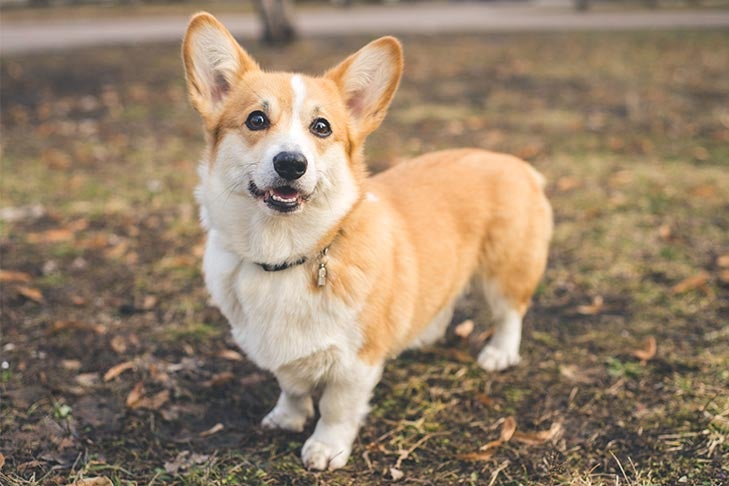
The Pembroke Welsh Corgi is a short-legged herding breed that’s surprisingly athletic despite its size. It weighs 22 to 31 pounds and stays low to the ground, which keeps it manageable on a leash. Corgis are alert, loyal watchdogs that bond tightly with their owners and enjoy daily outdoor time.
This breed suits active grandparents better than sedentary ones — it wants a real daily walk, not just a stroll to the mailbox.
You might be thinking a herding breed sounds too much for a senior owner. Here’s why it can still work: a Corgi’s short legs mean it can’t overpower you on a leash the way a taller dog its weight might. The trade-off is grooming — Corgis shed heavily twice a year and need brushing through those stretches.
- Alert, natural watchdog instincts
- Low leash-pull risk despite its weight
- Highly loyal and trainable
- Heavy seasonal shedding
- Needs more daily exercise than others here
- Can be vocal when alerting to visitors
Best for: Active grandparents who enjoy daily walks · Owners wanting a watchdog · Those with a yard or nearby park
How Do These 10 Breeds Compare?
Here’s a side-by-side look at all ten breeds. Use it to compare exercise needs and grooming demands at a glance before you narrow your choice.
| Breed | Weight | Energy | Grooming | Lifespan |
|---|---|---|---|---|
| Cavalier King Charles Spaniel | 13–18 lbs | Low-moderate | Moderate | 12–15 yrs |
| Havanese | 7–13 lbs | Low-moderate | High if long | 14–16 yrs |
| Shih Tzu | 9–16 lbs | Low | High if long | 10–16 yrs |
| Bichon Frise | 12–18 lbs | Moderate | High | 14–15 yrs |
| French Bulldog | Under 28 lbs | Low | Low | 10–12 yrs |
| Pug | 14–18 lbs | Low | Low | 12–15 yrs |
| Toy/Miniature Poodle | 4–15 lbs | Moderate | High | 12–15 yrs |
| Maltese | Under 7 lbs | Low | Moderate | 12–15 yrs |
| Coton de Tulear | 8–15 lbs | Moderate | Moderate | 15–19 yrs |
| Pembroke Welsh Corgi | 22–31 lbs | Moderate-high | Moderate | 12–13 yrs |
Which of These Breeds Is Right for You?
The right breed depends on your energy level, your living space, and whether grandchildren visit often. Here’s a quick way to narrow it down.
- If you have limited mobility and want the calmest possible companion → the Shih Tzu or Pug is best for you.
- If you deal with allergies → the Poodle or Bichon Frise will serve you better.
- If grandchildren visit often and you want a proven gentle temperament → consider the Cavalier King Charles Spaniel or Havanese first.
- If you’re still active and enjoy daily walks → the Pembroke Welsh Corgi fits that pace well.
- If long-term companionship matters most → the Coton de Tulear offers one of the longest lifespans on this list.
For a narrower comparison focused purely on toy and small breeds, our guide to small dog breeds for retirees is worth a look too.
This article covers small to medium companion breeds well-suited to typical grandparent lifestyles. If you’re drawn to a large or working breed, or you have significant mobility limitations, talk with a vet or breeder about that specific dog’s real daily demands before deciding.
What Most People Get Wrong About Choosing a Senior-Friendly Dog
Many people assume small automatically means easy. That’s not always true — some small breeds, like the Poodle or Bichon Frise, need more grooming time than a much larger, short-coated dog.
Others assume a puppy is the natural choice. In reality, an adult or senior dog from a shelter often fits better. It’s usually already house-trained, calmer, and past the chewing and accident phase that wears on anyone’s patience.
A third mistake is picking a breed based on looks alone. Two dogs that look similar in photos, like a Shih Tzu and a Havanese, can have very different grooming and exercise needs underneath that.
Care Essentials Every New Owner Should Know
Once you’ve picked a breed, a few habits make daily life easier. Keep nails trimmed short so a dog can’t scratch skin during a greeting. Brush teeth a few times a week, since small breeds are especially prone to dental disease. Keep a consistent daily routine, since most of these breeds do best with predictable feeding and walk times.
Flat-faced breeds like the French Bulldog, Pug, and Shih Tzu overheat fast. Skip walks during the hottest part of the day and always carry water in warm weather.
Mistakes New Owners Make (And How to Avoid Them)
The most common mistake is underestimating grooming time. Ask a groomer directly how long a breed’s coat takes to maintain before you commit, not after.
Another frequent mistake is skipping obedience basics because “it’s just a small dog.” Small dogs that never learn leash manners can still trip an unsteady walker. A few weeks of basic training goes a long way.
Finally, some owners choose a breed based on a single relative’s experience rather than the breed’s general traits. Every dog has its own personality, so meet a few individual dogs before deciding.
Frequently Asked Questions
What is the calmest dog breed for an elderly person?
The Shih Tzu and Pug are widely considered among the calmest breeds for older owners. Both have low exercise needs and even temperaments. They’re content with short walks and long periods of rest at home.
What size dog is safest for someone with balance issues?
Dogs under about 20 pounds with calm leash manners pose the lowest fall risk. A strong pull from a larger dog is what typically causes trouble, more than the dog’s size at rest. Breeds like the Maltese or Cavalier fit this well.
Should grandparents adopt a puppy or an older dog?
An older dog is often the easier choice for grandparents. Adult and senior dogs are usually already house-trained and past the high-energy puppy stage. Many shelters also offer post-adoption support for new owners.
Which small dog breeds shed the least?
The Poodle, Bichon Frise, Havanese, and Maltese all shed very little. This makes them common choices for owners managing mild dog allergies. For a deeper dive, see our guide to hypoallergenic dog breeds for small spaces. Note that no breed is completely allergen-free.
Are hypoallergenic dogs truly allergy-free?
No breed is completely allergy-free. “Hypoallergenic” means a breed is less likely to trigger a reaction, not that it eliminates all risk. Spending time with the specific breed beforehand is the best way to check your own reaction.
One Thing to Do Right Now
Before you fall in love with a breed on paper, spend thirty minutes with an adult dog of that breed in person. It’s the fastest way to know if the temperament actually fits your daily life. I’m Thomas Cutter, and that one visit tells you more than any list, including this one.

Thomas Cutter is a lifelong dog owner and the founder of FindOutAboutDogs.com. With over 10 years of hands-on experience owning multiple breeds, Thomas created this site to provide honest, research-based dog advice that real owners can actually trust.
