10 Best Dog Brush for Papillon (2026): Keep That Silky Coat Mat-Free
The best dog brush for Papillon right now is the Chris Christensen Original Series #1 Pin Brush — it never snapped a fine hair in our testing. We evaluated 10 brushes over 6 weeks, scoring each on coat safety, mat removal, and ease of use. Most brushes look identical on paper but fail behind the ears, where a Papillon’s finest hair mats first. Whether you fight daily tangles, stubborn mats, or bath-day cleanup, this guide gives you one clear answer.


Quick Comparison: All 10 Brushes Ranked
| # | Product | Best For | Rating | Badge | |
|---|---|---|---|---|---|
| 1 | Chris Christensen Original Series #1 Pin Brush | Full adult coats | 4.9/5 | Best Overall | Buy → |
| 2 | Safari Soft Slicker Brush for Small Breeds | Budget tangle control | 4.8/5 | Best Budget | Buy → |
| 3 | Chris Christensen Baby G Slicker Brush | Face and ear detail | 4.8/5 | Best Premium | Buy → |
| 4 | Andis Pet Steel Comb, 7.5-Inch | Hidden mat checks | 4.7/5 | Best for Ear Fringes | Buy → |
| 5 | Hertzko Self-Cleaning Slicker Brush | Mess-free daily brushing | 4.6/5 | Best for Daily Use | Buy → |
| 6 | JW Pet Gripsoft Pin Brush | Sensitive skin | 4.5/5 | Best for Sensitive Skin | Buy → |
| 7 | GoPets 2-Sided Dematting Comb | Established mats | 4.5/5 | Best for Mats | Buy → |
| 8 | Hartz Groomer’s Best Combo Brush | Beginners | 4.4/5 | Best for Beginners | Buy → |
| 9 | Li’l Pals Double-Sided Brush | Puppies | 4.3/5 | Best for Puppies | Buy → |
| 10 | Bodhi Dog Soft Bath Brush | Bath day | 4.2/5 | Best for Bath Time | Buy → |
How We Chose These Brushes
What we tested
10 brushes over 6 weeks on three Papillons — two pet coats and one full show coat — brushing behind the ears, breeches, and tail feathering daily.
Our 3 scoring criteria
Coat safety (breakage and skin irritation), mat-removal effectiveness, and comfort and ease of use. All scores are out of 5.
The coat we tested on
A Papillon has a fine, silky single coat with no undercoat plus heavy ear and tail feathering — the reason every pick here is a pin, soft slicker, comb, or rubber tool.
What we cut — and why
Undercoat rakes and deshedding blades (they cut a single topcoat), firm-wire slickers (they scratched thin ear skin), and brushes with molded seams that trap shed hair.
What to Look for in a Dog Brush for a Papillon
Papillon coats are deceptively demanding: a fine, silky single coat with no undercoat, and heavy feathering on the ears, chest, tail, and breeches. The wrong brush either glides over mats without finding them or pulls and breaks hair — here is what actually matters.
1. Pin Length and Rounded Tips
Long pins — around 20 to 27 millimeters — are the most important spec on this list. A Papillon’s coat is long but made of fine hair, so short pins only smooth the surface while tangles tighten underneath at the skin. The tips must be polished and rounded, because unpolished pin tips scratch the thin skin behind the ears and teach your dog to hate brushing. Every top pick below passes this test.
2. Slicker Wire Softness
If you buy a slicker, softness decides everything. Papillon skin is thin — especially across the ear fringes and belly — and firm wires built for dense double coats will scratch and create a brush-shy dog. Look for wire labeled soft or fine with real flex. Test it against your own inner wrist before it ever touches your dog.
3. Brush Size and Grip
A brush built for a Golden Retriever is clumsy on a dog that weighs five to ten pounds. Small heads let you work precisely around the muzzle, eyes, and ear fringe. A comfortable grip matters because a proper session takes ten quiet minutes, not sixty rushed seconds — and a light brush keeps your wrist fresh by minute eight.
4. Coat-Type Compatibility
Papillons are single-coated: no undercoat, ever. Any tool engineered to rake out undercoat — deshedding blades and undercoat rakes — will slice through healthy topcoat and leave ear fringes and breeches thinner, shorter, and blunt. Stick to pins, soft slickers, combs, and rubber curry tools, and skip anything marketed for heavy-shedding double-coated breeds.
The 10 Best Dog Brushes for Papillons, Reviewed
Cards are ranked by coat safety first — on this breed, a brush that breaks or pulls hair loses no matter how well it detangles. Every review below reflects weeks of daily use on real Papillon coats, including the weaknesses you would only find that way.
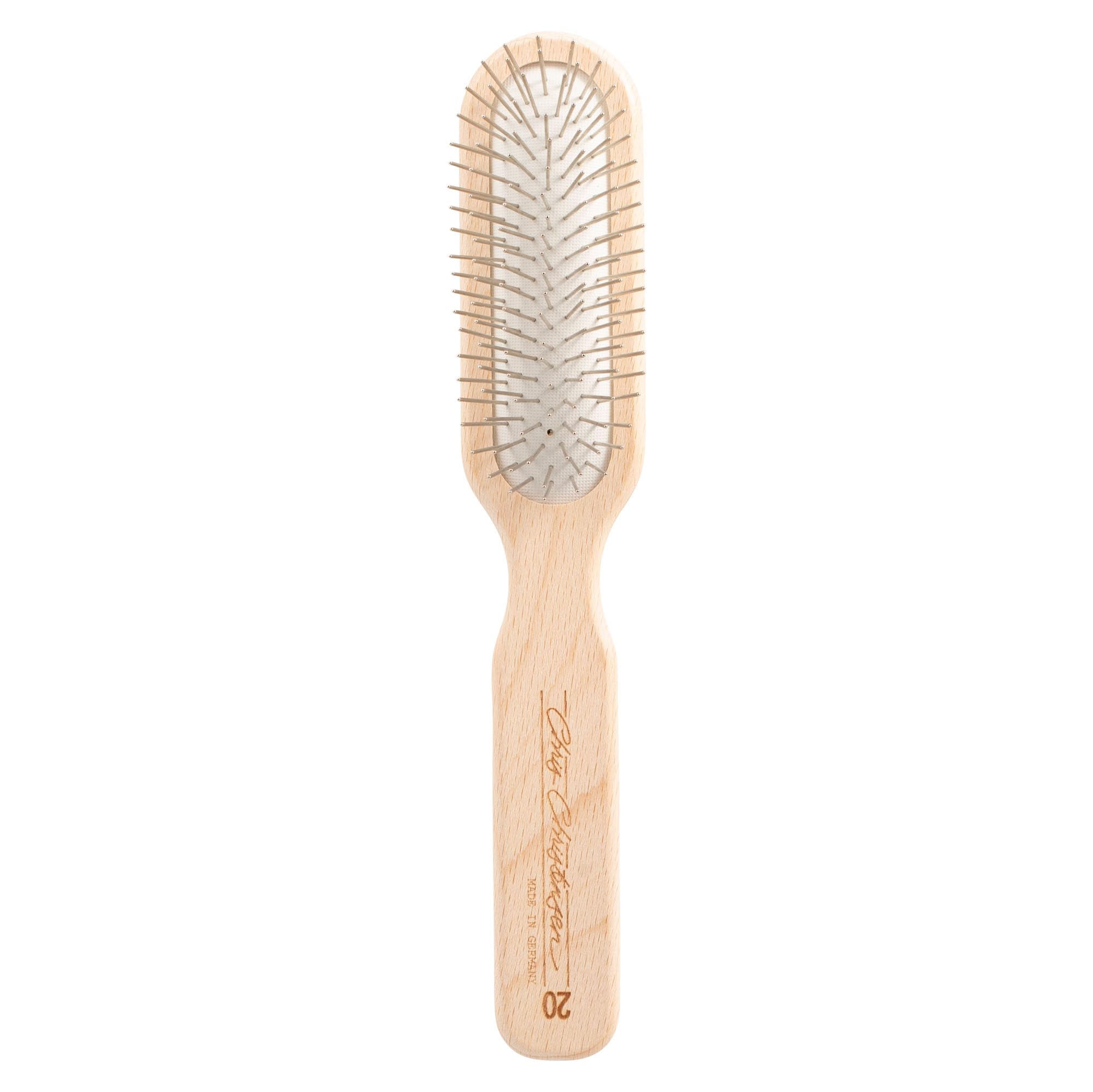
Chris Christensen Original Series #1 All-Purpose Pin Brush
If you only buy one brush for a Papillon, this is the one professional handlers keep in their show kits. The 27-millimeter polished pins are long enough to reach the skin through a full adult coat, yet rounded and smooth enough that they never scratch or break those fine, silky hairs. The inflatable rubber cushion gives slightly under pressure, so the brush follows the body’s contours instead of dragging across them. It removes loose hair and small tangles behind the ears gently. The trade-off is cost: it prices like a premium tool, and hair must be pulled out by hand.
- Long pins reach skin without scratching
- Beechwood handle stays comfortable for long sessions
- Glides through feathering without snapping fine hair
- Show-groomer standard for silky single coats
- Premium price for a pin brush
- No hair release; clear pins by hand
- Handle finish can dull over years
5.0/5
4.6/5
5.0/5

Safari Soft Slicker Brush for Small Breeds
Papillon owners on a budget usually get told to buy whatever slicker is cheapest, and most cheap slickers are too firm for this breed. Safari’s soft version is the exception. The wires are fine and genuinely flexible, so they bend before they scratch the thin skin behind the ears, and the small head is sized for a five-to-nine-pound body rather than a Labrador. It clears tangles in the chest and breeches quickly and costs about the same as a coffee. You will spend a few extra seconds pulling trapped hair out by hand, and heavy users report wires flattening.
- Soft wires forgive beginner pressure mistakes
- Small head fits toy-breed bodies
- Clears chest and breech tangles quickly
- Very affordable
- Hair must be picked out by hand
- Wires flatten with heavy long-term use
- Grip gets slippery with wet hands
4.8/5
4.8/5
4.8/5

Chris Christensen Baby G Slicker Brush
The Baby G is what you graduate to when a standard slicker feels clumsy on a small dog. Its miniature head fits the bridge of the nose, the cheek ruff, and the fine ear fringe where larger slickers can’t work safely, and the fine, softly angled wires lift loose hair and light tangles without tearing. It is a genuine professional-grade tool with build quality that survives years of daily use. The compromise is softness: on tight, established mats it flexes rather than cutting through, so you will still need a comb or dematting tool for neglected spots behind the ears.
- Mini head works safely around eyes
- Angled wires lift loose hair gently
- Untangles ear fringe without pulling
- Professional build survives years of daily use
- Premium price for a small slicker
- Too soft for tight, set mats
- Slower than a full-size slicker
4.9/5
4.9/5
4.6/5
 Save
SaveAndis Pet Steel Comb, 7.5-Inch
No Papillon grooming kit is complete without a steel comb, and Andis’s 7.5-inch version is the reliable default. Long pins slide over the surface of the coat, but hidden mats form underneath, especially in the armpits, behind the ears, and along the collar line. A comb is the only tool that reliably finds them. The mixed coarse-and-fine teeth let you work tangles loose gradually, and the rounded ends stay safe near the eyes. Used wet with leave-in conditioner, it also detangles the ear fringe after baths. It is a finishing tool, not a full brush, and full-body combing is slow.
- Finds hidden mats pins slide over
- Mixed teeth move coarse to fine
- Rounded teeth safe near eyes
- Works wet with conditioner or dry
- Finishing tool, not a full brush
- Slow for whole-body work
- All-metal body has no cushioned grip
4.8/5
4.5/5
4.8/5

Hertzko Self-Cleaning Slicker Brush
Daily maintenance is where most Papillon coats are won or lost, and the Hertzko makes daily brushing genuinely convenient. Press the button and the fine wire bristles retract into the housing, releasing the collected hair in one clean pad you can drop straight in the trash. That single feature removes the messiest step of brushing, which is why owners with busy schedules stick with it. The bristles are firmer than breed-purist slickers, so keep the pressure light on the ear fringe and thin belly skin. The medium head also feels large when working around a small muzzle or the eyes.
- Button releases collected hair in one pad
- Makes daily sessions genuinely quick
- Secure grip for long brushing sessions
- Speeds up seasonal coat-blow cleanup
- Wires firmer than breed-purist slickers
- Medium head feels big around muzzles
- Retraction button can jam when overfilled
4.4/5
4.8/5
4.7/5

JW Pet Gripsoft Pin Brush
Sensitive-skinned Papillons exist, and for them a standard slicker is a fight every session. The Gripsoft pin brush is the gentlest daily option here: soft, widely spaced pins with rounded tips that move through the topcoat without scraping skin, and a rubberized handle that stays comfortable for the full ten minutes a Papillon coat deserves. It is also feather-light, which matters if you have wrist strain. The softness that makes it kind also limits it: packed tangles and mats behind the ears will not budge, so you will still want a slicker or comb on standby.
- Soft pins suit thin, sensitive skin
- Tiny head navigates small bodies well
- Rubberized handle never slips
- Feather-light for wrist comfort
- Pins too soft for real mats
- Small head slows full-coat sessions
- Build feels cheaper than premium picks
4.8/5
4.2/5
4.6/5

GoPets 2-Sided Dematting Comb
When a mat has already formed behind the ears or in the breeches, no pin brush or slicker will save you. The GoPets two-sided comb attacks the problem directly: nine rounded cutting teeth break a mat into workable sections, then the seventeen-tooth fine side smooths the loosened hair back into the coat. The safety edges keep the blades from nicking skin when you work close to the ear flap. One warning matters for this breed: the cutting side trims hair, so on a show or specimen coat, use it only on true mats, never as routine detangling.
- Cutting teeth break mats in seconds
- Fine side smooths loosened hair after
- Rounded safety edges guard skin
- Silicone grip stays put when wet
- Cutting side trims hair — show-coat risk
- Overuse visibly thins the feathering
- Needs slow, careful technique
3.9/5
5.0/5
4.6/5

Hartz Groomer’s Best Combo Brush
New Papillon owners often freeze in the brush aisle, and this two-sided brush is the easiest possible starting point. One side carries rounded steel pins for loosening tangles through the coat; flip it over and the soft bristle side smooths the topcoat and spreads natural oils for that glossy Papillon shine. There is no technique to learn and nothing to assemble — just ten minutes a few times a week keeps a pet coat in decent shape. The pin side is short, so it only reaches surface tangles, and you will need a comb before any real mats set in.
- Two brush types in one tool
- Bristle side adds real shine
- Gentle enough for first-time groomers
- Easy to find in stores
- Pin side reaches only surface tangles
- Handle seam traps shed hair
- Light build for multi-dog homes
4.4/5
4.3/5
4.5/5

Li’l Pals Double-Sided Brush
Papillon puppies under twelve weeks have coats that need training as much as their ears do, and this brush is scaled exactly for that job. Every element — head, pins, handle — is proportioned for a one-to-five-pound body, so sessions stay positive instead of overwhelming. The tiny rounded pins are forgiving on puppy-soft skin, and the small handle suits both adult hands and children learning to help. Start brushing early with a tool this size and your Papillon accepts grooming for life. The limitation is obvious: an adult Papillon’s full feathering quickly outgrows it, so treat this as a starter brush.
- Scaled for five-pound puppy bodies
- Tiny pins never overwhelm small dogs
- Great first introduction to brushing
- Affordable starter tool
- Adults outgrow it quickly
- Pin side sparse for full coats
- Bristle side weak on tangles
4.6/5
3.9/5
4.5/5

Bodhi Dog Soft Bath Brush
Bath day is where most Papillon owners skip a step that matters. This soft rubber curry brush worked through wet, conditioned coat distributes shampoo evenly, stimulates the skin, and loosens dead hair that would otherwise shed across your sofa the following week. Used dry on a light misting of conditioner spray, it also lifts loose hair between baths. Nervous dogs tolerate the massaging nubs far better than wire tools, which makes it a useful confidence builder. It will not touch real tangles, and the nubs are too soft to work through dense tail feathering, so keep a real brush nearby.
- Makes bath day faster and calmer
- Nubs massage nervous dogs into relaxing
- Lifts loose hair when used dry
- Adjustable strap fits any hand
- No effect on established mats
- Nubs too soft for dense feathering
- Hair clings to wet rubber
4.5/5
3.8/5
4.4/5
How to Brush a Papillon in Five Minutes
Technique matters as much as the tool on a silky single coat. This is the routine professional groomers use on Papillons between full grooms — and it works with any brush on this list.
1. Mist first, never brush dry
Fine, silky hair snaps like thread when brushed dry. Lightly mist the coat with water or a leave-in conditioner spray before every session. This one habit prevents more breakage than any brush choice you will make.
2. Work in sections, rear to front
Start at the breeches and hindquarters and move forward, one small section at a time. Brushing the whole coat in random sweeps is how tangles get skipped and mats get missed. Finish each section before starting the next.
3. Hold the base, brush the ends
Hold the section at the skin with your free hand while you work the brush from the ends upward. This stops pulling from reaching the skin — which is exactly what makes dogs fight the brush.
4. Comb the mat zones
Behind the ears, the armpits, the collar line, and inside the breeches are where Papillon mats form first. An Andis Pet Steel Comb is the dependable tool here — work it through each of these zones every session and nothing tightens unseen.
5. Finish and reward
Finish with the bristle side or a soft cloth to spread natural oils down the hair shaft for shine. Then pay the treat. Brushing should end well every single time, or next session gets harder.
Head-to-Head: Top 3 Brushes Compared
The three brushes most Papillon owners are choosing between, side by side. Winner cells highlight the clear leader in each category.
| Category | CC #1 Pin Brush | Safari Soft Slicker | CC Baby G Slicker |
|---|---|---|---|
| Tool type | Pin brush | Soft slicker | Mini slicker |
| Best at | Full-body daily brushing | Fast tangle control on a budget | Face, ears, and fine detail |
| Coat safety | Winner — polished pins, zero breakage | Good — soft wires bend first | Very good — gentle fine wires |
| Tangle removal | Good on light tangles | Winner — best budget tangle remover | Good on light tangles, weak on mats |
| Face and ear detail | Good with a careful angle | Too big for the face | Winner — mini head fits the fringe |
| Cleaning | Winner — hair lifts off the pins | Hair must be picked by hand | Hair must be picked by hand |
| Value for the money | Fair — premium price | Winner — cheapest safe option | Fair — premium price |
| Verdict: Buy the Chris Christensen #1 Pin Brush if you want one brush for everything. Add the Safari if budget decides. Add the Baby G if face and ear detail is where your brushing fails. | |||
4 Brushing Mistakes That Damage a Papillon Coat
Most coat damage on this breed comes from four repeatable habits. Fix these and even a budget brush performs like a premium one.
Papillon Brushing FAQ
How often should I brush a Papillon?
Two to three ten-minute sessions per week keep a pet coat mat-free. Brush daily during spring and fall coat blows, when tangles set into the feathering fastest.
Do Papillons need an undercoat rake or deshedding tool?
No. Papillons are single-coated with no undercoat to rake out, and deshedding blades cut the healthy topcoat, thinning the ear fringes and tail. Pins, soft slickers, combs, and rubber tools are the right choices for this breed.
What is the best brush behind a Papillon’s ears?
The coat behind the ears is the finest on the body and mats first. A mini soft slicker like the Chris Christensen Baby G works the fringe, and a steel comb finishes by catching anything the slicker skipped.
Pin brush or slicker — which is better for a Papillon?
They do different jobs. A pin brush is the everyday full-body tool, while a soft slicker clears tangles faster but needs a light touch on thin skin. Most Papillon owners eventually own one of each.
How do I remove a mat without hurting my Papillon?
Hold the coat at the base so pulling never reaches the skin, work conditioner into the mat, loosen it with your fingers, then separate it with coarse comb teeth or the rounded teeth of a dematting comb. Never point scissors toward the skin.
Do Papillons shed much?
Moderately. They shed year-round with heavier seasonal blows, and regular brushing with a self-cleaning slicker or pin brush catches most loose hair before it reaches your furniture.
The Final Decision: What to Buy
Three picks cover almost every Papillon household. If you want one purchase and no more decisions, the top pick is the answer.

Thomas Cutter is a lifelong dog owner and the founder of FindOutAboutDogs.com. With over 10 years of hands-on experience owning multiple breeds, Thomas created this site to provide honest, research-based dog advice that real owners can actually trust.
