What Is a Rubber Curry Brush Used For? Dog Guide
Quick Answer
A rubber curry brush is mainly used to loosen and collect shed hair, dirt, and dead skin from short-coated dogs. Its soft rubber teeth also massage the skin and work well during bathing. If your dog has a thick double coat, compare it with the tools in this guide to brushes for dense coats.
What a rubber curry brush does
- Removes loose hair: Flexible rubber teeth catch shed fur sitting near the coat surface.
- Lifts dirt: The brushing action loosens dried mud, dust, and small surface debris.
- Massages skin: Soft rubber nubs provide gentle stimulation without sharp metal pins.
- Helps during baths: Many rubber brushes can work shampoo through a short coat.
- Polishes the coat: A final pass can leave a smooth short coat looking cleaner and tidier.
Best match
- Use one mainly on short, smooth, or moderately dense coats. Choose another grooming tool if you need to reach deep tangles or heavy undercoat.
A rubber curry brush looks simple, but it solves several everyday grooming jobs surprisingly well. I reach for this style when the goal is loose surface hair, light dirt, or a comfortable massage rather than deep detangling.
The key is knowing what it can and cannot do. This guide explains where a rubber curry brush shines, which dogs benefit most, and when another brush makes more sense.


What Exactly Is a Rubber Curry Brush?
A rubber curry brush is a grooming tool with short, flexible rubber or silicone-like teeth designed to move through the outer part of a dog’s coat. It is sometimes called a rubber curry comb, rubber grooming brush, or curry mitt.
Unlike a slicker brush, it has no thin metal pins. That makes the brushing sensation softer and more massage-like.
- Material: Flexible rubber or similar soft synthetic material.
- Teeth: Short, rounded nubs or fingers rather than metal pins.
- Main target: Loose surface hair, dirt, and debris.
- Typical coats: Short and smooth coats.
- Wet use: Many models can also be used during bathing.
The American Kennel Club’s dog brush guidance describes rubber brushes as particularly useful for short-coated dogs because their short flexible bristles work near the surface.
What Is a Rubber Curry Brush Used For on Dogs?
A rubber curry brush is used for removing loose fur, lifting surface dirt, massaging the skin, and helping clean short coats during bathing. Think of it as a surface-grooming and massage tool rather than a deep detangler.
Here are the jobs where I find this brush style most practical.
1. Removing Loose Short Hair
Rubber teeth create gentle friction against the coat. That friction catches loose hairs that would otherwise land on your furniture or clothes.
This works particularly well on dogs whose short hair seems to shed constantly despite looking easy to maintain.
- Labrador Retrievers
- Beagles
- Boxers
- Pugs
- French Bulldogs
- Great Danes
- Boston Terriers
- Many short-haired mixed breeds
The brush will not stop natural shedding. It simply catches some hair before it drops around your home.
2. Loosening Dirt and Dried Debris
Short-coated dogs still collect dust, dried mud, pollen, and fine debris. A rubber curry brush can loosen much of that material before it becomes ground into the coat.
I like this use after a dry walk or play session. Brush gently, then wipe the coat if needed.
3. Massaging the Skin
The flexible nubs press against the coat without the sharp feel of metal pins. Many dogs therefore tolerate rubber brushes better than more aggressive grooming tools.
The AKC also describes curry combs as useful for massaging short-haired dogs. That is one reason they are popular for dogs that enjoy physical contact but dislike traditional brushes.
4. Working Shampoo Through the Coat
A rubber curry brush can be especially handy during bath time. The flexible teeth help spread dog shampoo through short fur while your hand works in small controlled movements.
The AKC’s dog bathing guidance also notes that rubber washing brushes can work well on short-haired dogs.
Rinse both your dog and the brush thoroughly afterward. Shampoo residue should not remain against the skin.
5. Giving a Short Coat a Finished Look
A final gentle pass can remove the last loose hairs sitting on top of a smooth coat. The result often looks cleaner and more polished.
This is different from detangling. You’re tidying the surface rather than restructuring a long or matted coat.
Which Dogs Are Rubber Curry Brushes Best For?
Rubber curry brushes work best on short-haired and smooth-coated dogs. Their teeth are usually too short to penetrate deeply through long, thick, or heavily tangled fur.
That distinction matters more than the dog’s size.
| Coat Type | Rubber Curry Brush? | Best Use | Possible Alternative |
|---|---|---|---|
| Short, smooth | Excellent | Loose hair, dirt, massage | Bristle brush |
| Short, dense | Good | Surface shedding | Undercoat tool when needed |
| Medium | Sometimes | Surface hair and bathing | Bristle or slicker brush |
| Long or silky | Limited | Bath massage only | Pin brush and comb |
| Thick double coat | Limited | Surface finishing | Undercoat rake and slicker |
| Curly or matted | Poor choice | Limited surface use | Slicker and metal comb |
Veterinary guidance from VCA Animal Hospitals similarly recommends flexible grooming gloves or short-bristled brushes for smooth-coated dogs.
How Do You Use a Rubber Curry Brush Correctly?
 Save
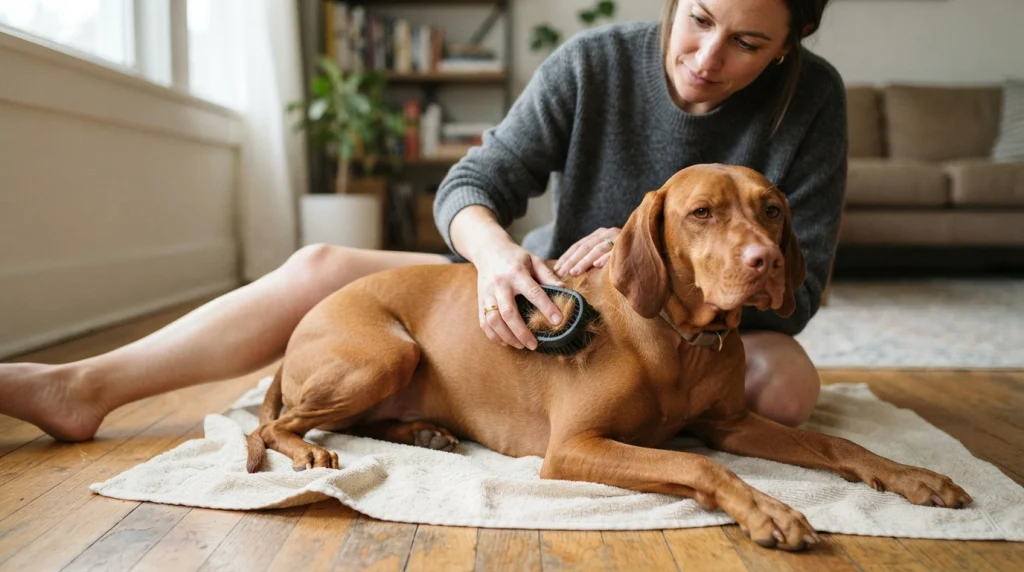
SaveUse a rubber curry brush with light pressure and controlled strokes. You want the rubber teeth to move loose hair, not scrub the skin aggressively.
- Inspect the skin first. Look for sores, redness, cuts, lumps, or sensitive areas.
- Start gently. Let your dog feel the brush before using firmer contact.
- Work small sections. Start near the shoulders and move along the body.
- Follow the coat. Use smooth strokes with the direction of hair growth for routine grooming.
- Remove collected hair. Clear fur from the brush whenever it begins building up.
- Watch your dog. Reduce pressure or stop if you see discomfort or skin redness.
I would rather make two gentle passes than scrub one area hard. More pressure does not automatically mean more effective grooming.
Can You Use Circular Motions?
Some rubber brushes are specifically designed for gentle circular movements. For example, KONG’s ZoomGroom instructions allow circular brushing.
Follow the directions for your particular tool. On sensitive skin, keep the movements light and avoid repeated friction in one spot.
Can You Use a Rubber Curry Brush on a Wet Dog?
Yes, many rubber curry brushes are designed for both dry grooming and wet bathing. Their rubber construction can make them especially useful for spreading shampoo through a short coat.
Check the manufacturer’s instructions first because designs vary.
- Dry use: Collect loose hair and surface debris.
- Wet use: Massage shampoo through the coat.
- After bathing: Clean the brush and allow it to dry fully.
- Avoid damaged skin: Do not scrub sores, rashes, or inflamed areas.
I find bath use particularly helpful with short-coated dogs because my fingers alone can slide over the coat without moving much loose fur. Rubber teeth give you more contact without needing sharp pins.
Rubber Curry Brush vs Slicker Brush: What’s the Difference?
 Save
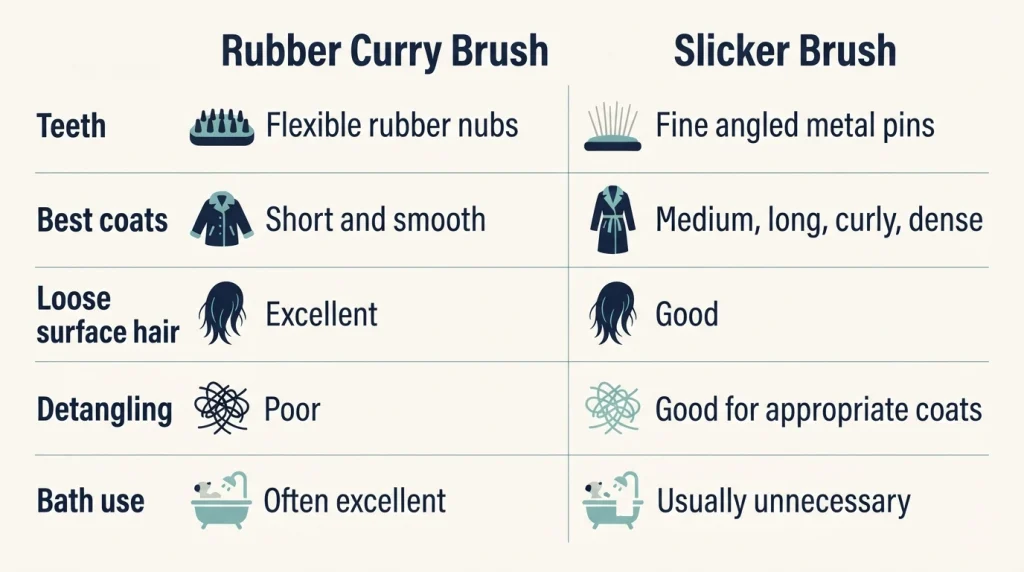
SaveA rubber curry brush mainly removes surface hair and dirt, while a slicker brush reaches farther into many medium, curly, or dense coats. The tools are built for different jobs.
| Feature | Rubber Curry Brush | Slicker Brush |
|---|---|---|
| Teeth | Flexible rubber nubs | Fine angled metal pins |
| Best coats | Short and smooth | Medium, long, curly, dense |
| Loose surface hair | Excellent | Good |
| Detangling | Poor | Good for appropriate coats |
| Bath use | Often excellent | Usually unnecessary |
If you own a heavily shedding double-coated breed, a rubber brush may only be one small part of the grooming routine. Our guide to managing shedding in a Siberian Husky shows why deeper-reaching tools are often necessary.
What Can’t a Rubber Curry Brush Do?
A rubber curry brush cannot replace every grooming tool. Its biggest limitation is the short depth of its flexible teeth.
- It won’t remove serious mats: Tight mats need more specialized handling.
- It won’t reach deep undercoat well: Dense double coats usually require a rake or suitable de-shedding tool.
- It won’t detangle long hair: Pin brushes and combs are more appropriate.
- It shouldn’t treat skin disease: Redness, sores, unusual hair loss, or severe itching need veterinary attention.
- It doesn’t stop shedding: Grooming removes already-loose fur rather than switching off the natural shedding cycle.
The VCA coat and skin guidance notes that changes in a dog’s skin or coat can sometimes accompany health problems. Don’t assume harder brushing is the answer to unusual hair loss.
How Often Should You Use a Rubber Curry Brush?
There is no single schedule that suits every dog. Coat density, shedding level, skin sensitivity, and season all matter.
For a healthy short-coated dog, brief regular sessions are usually more sensible than aggressive marathon grooming.
- Light shedding: Use as needed for loose surface hair.
- Heavier shedding: Short, more frequent sessions may collect hair more efficiently.
- Bath day: Use the brush while shampooing if the manufacturer permits wet use.
- Sensitive skin: Use less pressure and stop if the skin becomes red.
As of 2026, the basic rule has not changed: choose grooming frequency around your individual dog’s coat rather than chasing a rigid number.
How Do You Know If You’re Brushing Too Hard?
 Save
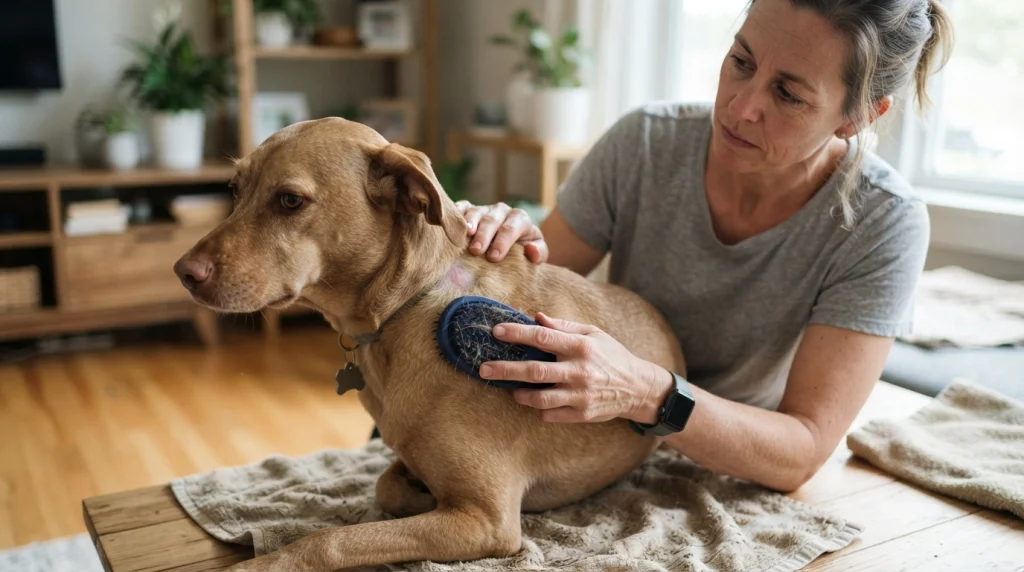
SaveYour dog should not need to endure grooming. Stop or lighten your pressure when you see signs that the session is becoming uncomfortable.
- Skin becoming noticeably red
- Repeated flinching
- Turning toward the brush
- Trying to move away
- Sudden scratching after brushing
- Whining or obvious sensitivity
I use the same rule with any grooming tool: comfortable strokes beat force. A brush should help maintain the coat without making the dog dread the next session.
Rubber Curry Brushes I Would Consider
If a rubber brush suits your dog’s coat, these are practical options I’d consider for different grooming needs:
🏆 Best Overall
KONG ZoomGroom Dog Brush
★★★★½
This flexible rubber brush is designed for both dry grooming and shampooing. I like the simple one-piece design for short-haired dogs because there are no metal pins to manage during bath time.
🐕 Best With Handle
FURminator Curry Comb
★★★★½
The molded rubber teeth target short and medium coats, while the handle and hand strap give you more control. I’d consider this design when a palm-style brush feels slippery or tiring.
🛁 Best for Bath Time
FURminator Bathing Brush
★★★★☆
This model uses flexible rubber bristles and is designed specifically for wet grooming. I’d choose it when shampoo distribution is the main job rather than everyday dry brushing.
Frequently Asked Questions
Does a rubber curry brush remove undercoat?
A rubber curry brush can catch some loose hair from a short or moderately dense coat, but it does not penetrate deeply like an undercoat rake. For thick double-coated dogs, use it mainly for surface hair, massage, or bathing rather than relying on it as your primary undercoat tool.
Can I use a rubber curry brush every day?
You can use some rubber curry brushes frequently if your dog’s skin remains comfortable and the manufacturer allows it. Keep sessions short and gentle. Daily aggressive rubbing is unnecessary, and you should stop if you see redness, irritation, or avoidance behavior.
Is a rubber curry brush good for Labradors?
Yes. A rubber curry brush can work well on a Labrador’s short coat for collecting loose surface hair and massaging the skin. However, Labs have dense double coats, so heavier seasonal shedding may require another tool that reaches loose undercoat more effectively.
Can a rubber curry brush remove mats?
No, it is not a good tool for removing tight mats. Its flexible teeth are designed primarily for surface grooming. Serious tangles or mats may require a slicker brush, comb, clippers, or professional grooming depending on their location and severity.
Is a rubber curry brush safe for sensitive skin?
Its flexible teeth can feel gentler than metal pins, but any brush can irritate skin when used too aggressively. Start with light pressure, inspect the skin beforehand, and stop if your dog shows pain, redness, sores, or unusual sensitivity.
Final Takeaway: What Is a Rubber Curry Brush Used For?
A rubber curry brush is best used for loose hair, surface dirt, gentle skin massage, and bathing short-coated dogs. It is simple, comfortable, and especially useful when a metal brush would be more tool than you need.
Just don’t expect it to solve deep undercoat, tangles, or mats. Match the brush to the coat, use light pressure, and grooming becomes much easier for both you and your dog.

Thomas Cutter is a lifelong dog owner and the founder of FindOutAboutDogs.com. With over 10 years of hands-on experience owning multiple breeds, Thomas created this site to provide honest, research-based dog advice that real owners can actually trust.
