Which Brush Is Best for Soft Dog Fur? 2026 Guide
Quick Answer
For most dogs with soft, smooth, short fur, a soft bristle brush or flexible rubber grooming brush is the safest starting point. If the soft coat is longer, curly, or has a dense undercoat, you may also need a pin brush, slicker, comb, or undercoat tool. Coat structure matters more than softness alone, which is why a double-coated dog needs different brushing tools from a smooth-coated dog.
What works best
- Short soft fur: Use a soft bristle brush or flexible rubber brush for loose hair, dirt, and surface grooming.
- Long silky fur: Try a pin brush or gentle slicker, followed by a comb to check for hidden tangles.
- Soft curly fur: A slicker brush can separate curls and help prevent small tangles from becoming mats.
- Soft undercoat: Use a suitable undercoat rake only when the dog actually has a dense double coat.
- Sensitive skin: Choose smooth, rounded, flexible, or soft-contact grooming surfaces and use light pressure.
My simplest rule
- Choose the gentlest tool that reaches through your dog’s particular coat without scraping, snagging, or repeatedly pulling the skin.
Soft dog fur can be surprisingly confusing to brush. Two dogs may both feel silky to your hand while needing completely different grooming tools.
I choose a brush by looking at coat length, density, curl, shedding, and tangles first. That approach is far more useful than buying something simply labeled “for soft coats.”


What does “soft dog fur” actually mean?
Soft dog fur describes how the coat feels, not one specific coat type. A dog’s soft coat can be short and smooth, long and silky, curly, or part of a dense double coat.
That distinction matters because a brush only works when its teeth or bristles suit the structure underneath your hand.
- Short and smooth: Fine hair lies close to the body and usually has few serious tangles.
- Long and silky: Fine strands can knot around ears, legs, tails, and friction points.
- Curly: Loose hairs can remain trapped inside curls instead of falling onto the floor.
- Double-coated: A softer insulating undercoat sits beneath protective outer hair.
- Fine and sensitive: Thin coats may offer less padding between a metal grooming tool and the skin.
This is why there isn’t one universal “soft-fur brush.” The right answer changes with the coat beneath the softness.
Which brush is best for short, soft dog fur?
A soft bristle brush or flexible rubber grooming brush is usually the best starting point for short, soft fur. These tools can collect loose surface hair and dirt without requiring long pins to penetrate the coat.
Veterinary guidance from VCA Animal Hospitals recommends short-bristled brushes or flexible grooming gloves for smooth-coated dogs.
- Soft bristle brush: Good for smoothing the coat and removing surface debris.
- Rubber grooming brush: Useful for lifting loose hair while giving the skin a gentle massage.
- Grooming mitt: Helpful for dogs that dislike a traditional handled brush.
- Fine comb: Usually optional unless you need to inspect a particular area closely.
The ASPCA’s grooming guidance similarly suggests a rubber brush followed by a bristle brush for smooth, short coats.
My preference is to start softer rather than more aggressive. If a basic rubber or bristle tool removes loose fur comfortably, there is little reason to reach immediately for sharp or deep-reaching teeth.
Is a bristle brush good for soft dog hair?
Yes, especially when the soft coat is short or relatively smooth. A bristle brush is designed more for surface grooming and finishing than for cutting through heavy mats or dense undercoat.
The American Kennel Club describes bristle brushes as particularly useful for short-coated dogs, including dogs with short silky coats.
- Best for: Short, smooth, silky, or lightly shedding coats.
- Useful for: Loose surface hair, dust, dander, and general finishing.
- Less useful for: Thick undercoat, deep tangles, or tightly matted curls.
- Pressure: Use gentle strokes in the direction the coat grows.
A practical example is the Safari by Coastal Bristle Dog Brush. Its manufacturer describes it as a soft-bristled everyday grooming brush designed to remove dirt and help distribute natural coat oils.
That type of tool makes more sense to me for a soft Boxer-like coat than an aggressive de-shedding edge.
What should you use on long, soft, silky dog fur?
 Save
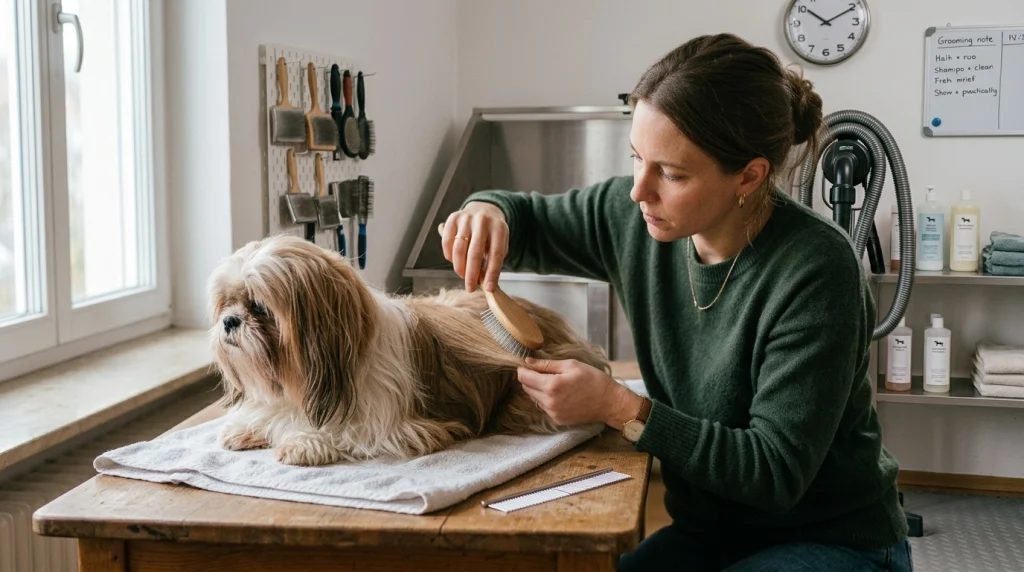
SaveLong soft fur usually needs a pin brush, gentle slicker, or both, followed by a comb. The goal shifts from simple surface cleaning to preventing knots and checking that the coat is separated down toward the skin.
A bristle brush can still add a smooth finish, but it may pass over deeper tangles.
- Separate the coat: Work in small sections instead of brushing only across the surface.
- Use a pin or slicker brush: Make short, controlled strokes without forcing resistance.
- Support tangled hair: Hold the coat closer to the skin when gently working a small knot.
- Check with a comb: A comb helps reveal tangles the brush did not fully remove.
- Stop at painful resistance: Do not repeatedly pull a tight mat against the skin.
The American Kennel Club’s dog brush guide notes that brush selection should depend on coat type, breed, and dog size.
I use that principle whenever a product claims to work for “every coat.” A tool may technically touch every coat, but that does not make it equally useful for every grooming job.
Is a slicker brush safe for soft fur?
A slicker can be appropriate for soft fur when the coat is long, curly, tangled, or dense enough to need one. It should be used with light pressure because the metal pins can irritate skin when pressed too hard.
Slickers are especially useful when loose hair remains trapped inside a coat or fine tangles begin forming.
- Good match: Curly coats, longer coats, feathering, light tangles, and some double coats.
- Poor match: An ultra-short coat that only needs gentle surface grooming.
- Technique: Use short strokes rather than dragging the brush heavily across the body.
- Skin check: Inspect for redness during longer grooming sessions.
Some slickers are gentler than others. Pin length, tip finish, pad flexibility, head shape, and the pressure in your hand all change how the brush feels.
Soft slicker vs firm slicker
A softer, more flexible slicker generally gives you more forgiveness on fine or delicate coats. A firmer design can provide more control in thicker or more difficult coats.
Neither should be chosen just because it removes the largest pile of hair. Comfort and coat condition matter too.
What if the soft fur is actually an undercoat?
A soft undercoat needs a tool capable of reaching below the outer coat. This commonly applies to double-coated breeds rather than ordinary short silky coats.
An undercoat rake, longer-pin slicker, and metal comb may each have a role depending on coat density and shedding.
| Coat Type | Good Starting Tool | Main Job | Main Caution |
|---|---|---|---|
| Short, soft, smooth | Soft bristle or rubber brush | Surface hair and dirt | Deep metal tools may be unnecessary |
| Long and silky | Pin brush or gentle slicker | Separate hair and prevent tangles | Do not yank through knots |
| Soft and curly | Slicker plus comb | Remove trapped loose hair and tangles | Watch skin pressure |
| Dense soft undercoat | Undercoat rake plus slicker | Reach seasonal loose undercoat | Remove loose hair, not healthy coat |
If you have a heavy double-coated breed, the technique becomes just as important as the tool. This guide to managing shedding in a Siberian Husky shows how section-by-section brushing differs from surface brushing.
How can you brush soft fur without damaging it?
 Save
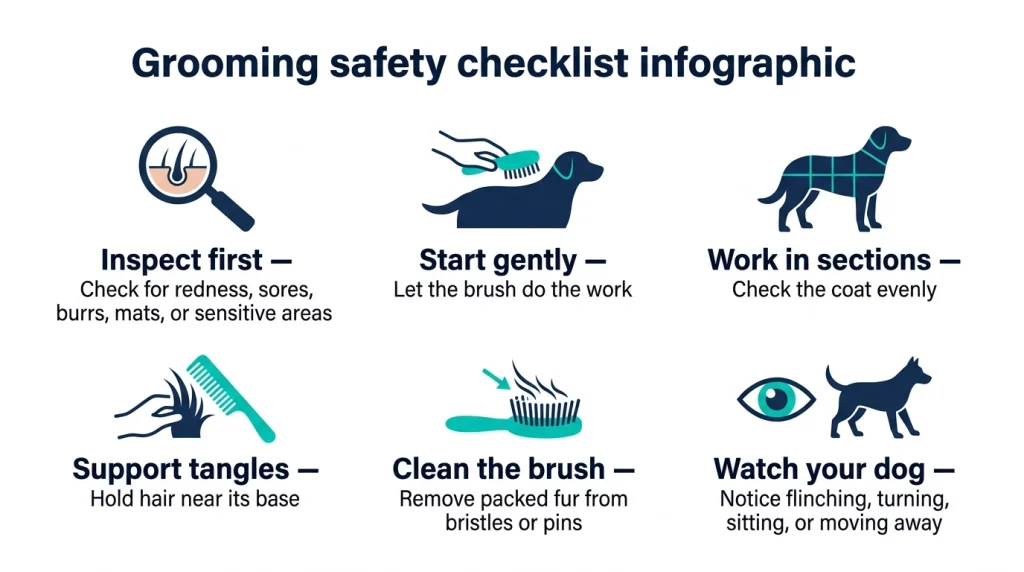
SaveUse light pressure, work in the direction of hair growth, and stop when the brush catches instead of pulling harder. Soft or fine hair can still break, and the skin beneath it can become irritated.
I would rather spend another five minutes working gently than save time by forcing a snag.
- Inspect first: Check for redness, sores, burrs, mats, or sensitive areas.
- Start gently: Let the brush do the work rather than pressing into the skin.
- Work in sections: This helps you see whether you are reaching the coat evenly.
- Support tangles: Hold the hair near its base when working a small knot.
- Clean the brush: Packed bristles or pins become less effective.
- Watch your dog: Flinching, turning, sitting, or repeatedly moving away can indicate discomfort.
According to AKC at-home grooming guidance, brushing should reach through the coat with gentle strokes while giving you a chance to notice mats, debris, and skin abnormalities.
How often should you brush a soft-coated dog?
Brushing frequency depends on coat length, tangling, shedding, and daily activity. A short smooth coat may need only routine weekly grooming, while long silky or curly coats can need much more frequent attention.
There is no useful schedule that fits every soft-coated dog.
- Short smooth coat: About weekly can be enough for many dogs.
- Long silky coat: Check frequently because friction areas can tangle quickly.
- Curly coat: Brush regularly enough to prevent trapped hair from tightening into mats.
- Seasonally shedding double coat: Increase grooming when loose undercoat becomes obvious.
- After outdoor activity: Check for burrs, dirt, twigs, and moisture regardless of schedule.
As of 2026, the same basic advice still holds across veterinary and major canine grooming guidance: match frequency and tools to the individual coat.
How do you choose a brush for a dog with sensitive skin?
Look for smooth contact surfaces, flexible construction, and enough control to keep pressure light. Avoid assuming a coated or rounded tip automatically makes rough brushing safe.
Technique can turn a gentle-looking brush into an uncomfortable one.
- Flexible rubber: A good option for many short-haired dogs that dislike harder tools.
- Soft bristles: Useful when you mainly need surface grooming.
- Flexible slicker pad: Can provide more give for coats that still need wire pins.
- Comfortable handle: Better control makes it easier to maintain light pressure.
- Correct pin length: Pins should suit the coat instead of scraping exposed skin.
If your dog’s skin is already red, sore, itchy, scabby, or painful, changing brushes may not solve the underlying problem. Veterinary assessment is appropriate when grooming reveals abnormal skin or unexplained hair loss.
Which dog brushes would I consider for soft fur?
 Save
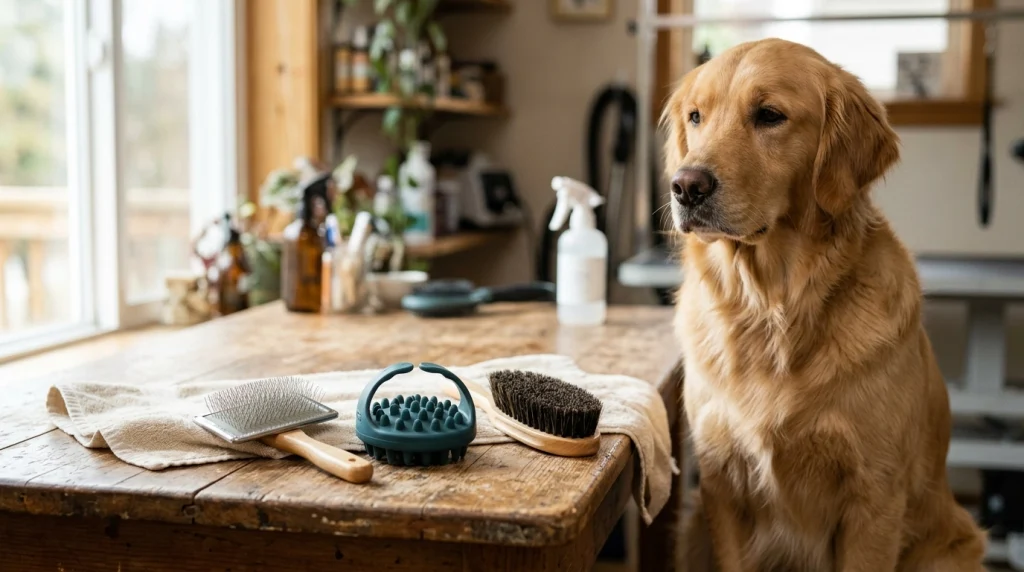
SaveIf you’re ready to choose one, I would match the product to the type of soft coat rather than looking for one brush to do everything.
🏆 Best for Soft Short Coats
Safari by Coastal Bristle Dog Brush
★★★★½
This brush uses soft bristles for everyday grooming, surface debris removal, and coat finishing. I would pick this style for a soft short coat that doesn’t need deep detangling or undercoat removal.
🐾 Best Gentle Rubber Option
Safari by Coastal Dog Massage Brush
★★★★☆
Its rounded rubberized tips are designed for dirt removal and gentle massage, and the brush can be used wet or dry. I like this type for short soft coats when comfort matters more than deep detangling.
✨ Best for Soft Tangle-Prone Coats
Chris Christensen Mark Slicker Brush
★★★★½
The Mark series uses 12 mm stainless-steel pins with a flexible cushioned pad, and several head sizes are available. I would consider it when soft hair needs actual separation or detangling rather than simple surface brushing.
Frequently Asked Questions
Can I use a human hairbrush on soft dog fur?
A human hairbrush may smooth some surface hair, but it is not designed around canine coat structure. A dog-specific bristle, rubber, pin, or slicker brush gives you better control and lets you choose a design suited to your dog’s coat length and density.
Is a rubber brush better than a bristle brush for soft fur?
Neither is automatically better. A rubber brush is useful for loosening surface hair and massaging short smooth coats, while a bristle brush works well for finishing and removing light debris. Some owners use the rubber brush first and the bristle brush afterward.
Can a slicker brush damage soft dog fur?
It can cause discomfort or irritation if you press too hard, repeatedly brush one spot, or use an unsuitable slicker on an extremely short coat. On longer, curly, or tangle-prone soft coats, a properly chosen slicker used gently can be very useful.
Why does my dog’s soft coat tangle so easily?
Fine hair can twist together around areas of friction such as the ears, collar, legs, armpits, and tail. Long or curly coats may also trap loose hair. Frequent gentle brushing helps remove those loose strands before they tighten into larger mats.
Should I use a de-shedding tool on soft fur?
Only when the dog’s coat structure calls for one. A dense shedding undercoat may benefit from an appropriate undercoat or de-shedding tool, while a short single coat often does not. Avoid aggressive repeated passes simply because a tool continues collecting hair.
Final Takeaway: Match the Brush to the Coat Beneath the Softness
For a short, soft coat, I would start with a soft bristle brush or flexible rubber grooming brush. Those tools handle everyday loose hair and debris without adding unnecessary aggression.
Long, curly, silky, or double-coated soft fur changes the answer. Those coats may need a pin brush, slicker, comb, or undercoat tool to reach the hair that a surface brush misses.
The simplest test is comfort plus effectiveness. A good brush should move through the coat without scraping the skin, repeatedly snagging, or making your dog dread grooming time.
Start gently, pay attention to the coat in front of you, and adjust the tool when the grooming job changes.

Thomas Cutter is a lifelong dog owner and the founder of FindOutAboutDogs.com. With over 10 years of hands-on experience owning multiple breeds, Thomas created this site to provide honest, research-based dog advice that real owners can actually trust.
