Brush vs Comb for Long-Haired Dogs: Which Should You Use?
Quick Answer
For most long-haired dogs, you should use both a brush and a comb rather than choosing only one. A brush removes loose coat and opens larger tangles, while a comb checks whether you have reached through the full coat and catches smaller knots near the skin. The ASPCA dog grooming guidance also recommends regular brushing and combing for long coats.
Brush vs. comb at a glance
- Brush first: Use it to separate the coat, collect loose hair, and work through light tangles.
- Comb second: Use a metal comb to find small knots that the brush passed over.
- Long silky coats: A pin or slicker brush followed by a long-toothed comb works well for many dogs.
- Double coats: You may also need an undercoat rake during heavy shedding periods.
- Never force knots: Pulling hard can hurt the dog and damage the coat.
My simple rule
- If a comb moves from the skin outward without catching, that section is usually thoroughly detangled.
When someone asks me whether a brush or comb is better for a long-haired dog, my answer is usually “both.” They solve different grooming problems.
I also find that using them in the right order makes grooming faster and much more comfortable for the dog.


What Is the Difference Between a Dog Brush and a Dog Comb?
A dog brush works across a larger section of coat, while a comb gives you more precise control between individual hairs. That difference matters when you’re dealing with several inches of fur.
A brush is usually my first-pass tool. I use it to separate the coat and remove loose hair before checking my work with a comb.
- Slicker brush: Uses many fine, angled pins to separate hair and work through light tangles.
- Pin brush: Uses longer pins and works well for many flowing or silky coats.
- Bristle brush: Helps smooth the surface and distribute natural coat oils.
- Metal comb: Uses rigid teeth to check for tangles and work through smaller sections.
- Undercoat rake: Reaches loose undercoat in suitable double-coated dogs.
The American Kennel Club lists pin brushes among common tools for long-haired dogs. It also describes slickers as useful for mats and dead hair.
You can review its broader dog grooming guidance when choosing tools for a particular coat.
Brush vs Comb for Long-Haired Dogs: Which Is Better?
 Save
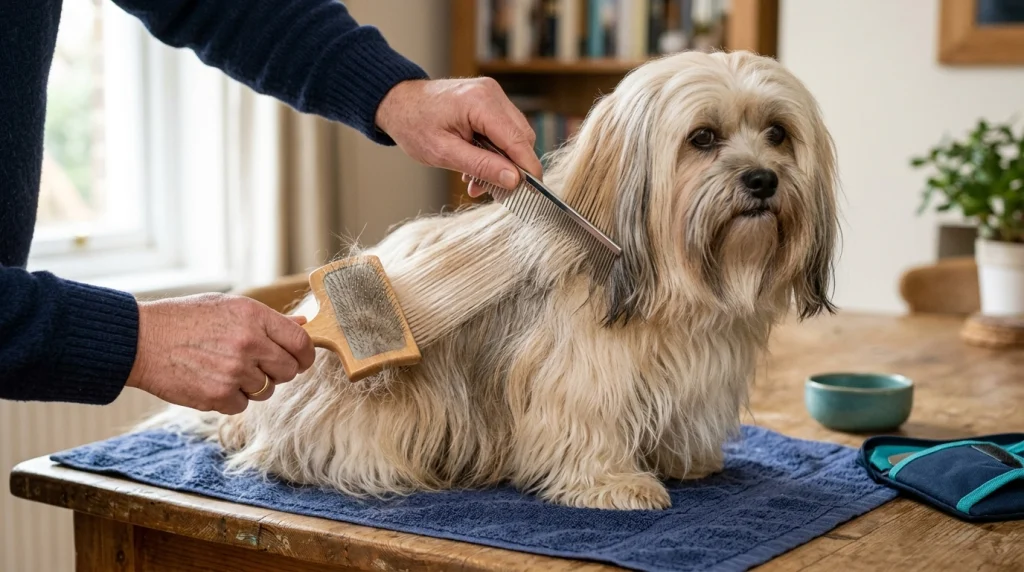
SaveNeither tool is better in every situation. For routine long-coat maintenance, the brush usually does the bulk of the work and the comb provides the final check.
| Task | Brush | Comb |
|---|---|---|
| Covering large coat areas | Excellent | Slower |
| Removing loose surface hair | Excellent | Good |
| Finding hidden tangles | Good | Excellent |
| Checking down to the skin | Varies by brush | Excellent |
| Finishing and checking coat | Good | Excellent |
VCA Animal Hospitals specifically notes that long-toothed combs are useful for long-haired dogs. They can also help with tangled clumps and loose undercoat.
That matches what I look for when finishing a grooming session: no hidden resistance as the comb moves through each section.
Should You Brush or Comb a Long-Haired Dog First?
In most routine grooming sessions, brush first and comb afterward. Starting with the brush lets you remove loose hair and open tangles without immediately concentrating force on a tiny area.
I divide the coat into sections instead of sweeping only across the visible top layer.
- Separate a small section. Part enough hair so you can see how dense the coat is underneath.
- Brush gently from the ends. Work toward the body as the tangles loosen.
- Support tangled hair. Hold the hair above a knot when possible so pulling doesn’t transfer directly to the skin.
- Follow with a comb. Start with wider-spaced teeth if your comb has two tooth widths.
- Check from roots to tips. Don’t assume the coat is finished because the surface looks smooth.
Think of the comb as your quality-control tool. It often reveals small knots behind the ears, under the legs, or in feathering that looked fine from above.
What if the comb keeps getting stuck?
Stop rather than dragging it through the knot. Repeated pulling causes discomfort and can break otherwise healthy coat.
Go back to a smaller section and work the tangle gently from its outer edge.
VCA recommends avoiding excessive pulling and seeking professional care when tangles are severe or extensive. Its coat-care guidance also warns against using scissors close to matted skin.
Which Brush Is Best for Long-Haired Dogs?
The right brush depends on whether the coat is silky, curly, dense, or double-coated. “Long-haired” describes length, but it doesn’t tell you everything about coat structure.
Here are the main options I consider.
- Pin brush: A useful everyday choice for many long, flowing coats.
- Slicker brush: Helpful for separating dense hair, collecting loose coat, and handling light tangles.
- Long-pin slicker: Often easier to use on thick coats because the pins can reach deeper than short slicker pins.
- Undercoat rake: Useful for suitable long-haired double coats during shedding.
- Bristle brush: Better as a finishing tool than as the main detangler for a thick long coat.
The AKC notes that longer and denser coats generally need more frequent brushing. It also recommends matching the grooming tool to the dog’s coat type.
For heavy double coats, its grooming challenge guide discusses slicker brushes, combs, and undercoat tools.
Why Doesn’t a Brush Alone Remove Every Tangle?
A brush can glide over the surface while a knot remains underneath. This happens especially with thick coats and friction areas.
It’s one reason a dog may look beautifully brushed yet still have hidden matting close to the skin.
Common trouble spots include:
- Behind the ears
- Under the collar or harness
- Inside the front legs
- Behind the rear legs
- Along the tail and feathering
- Around areas that stay damp
I like to run a metal comb through each finished section. When the teeth meet resistance, I know the brushing stage isn’t complete.
That doesn’t mean forcing the comb through. It tells me exactly where I need to slow down.
How Often Should You Brush and Comb a Long-Haired Dog?
Many long-haired dogs benefit from grooming several times per week, and some need daily coat care. The correct frequency depends on coat density, lifestyle, shedding, and how quickly tangles develop.
The ASPCA advises daily attention for long, luxurious coats such as a Yorkshire Terrier’s. It also recommends a regular routine for long-haired dogs prone to mats.
In practice, I adjust the schedule around four things:
- Coat texture: Fine, soft hair can knot faster than coarser hair.
- Undercoat: Dense double coats may need extra work during seasonal shedding.
- Activity: Outdoor dogs collect more dirt, burrs, moisture, and plant material.
- Friction: Harnesses, collars, clothing, and normal movement can encourage tangles.
Short, frequent sessions are easier than dealing with an entire matted coat later.
Can You Comb Mats Out of a Long-Haired Dog?
Small, loose tangles can often be worked out gently, but tight mats need more caution. A comb isn’t a tool for ripping through dense matting.
Never keep pulling because you feel you should be able to “finish” the knot yourself.
- Work from the end of the tangle rather than attacking its center.
- Keep sessions short if your dog becomes uncomfortable.
- Avoid cutting tight mats with scissors near the skin.
- Ask a professional groomer or veterinarian for help with severe matting.
- Seek veterinary advice if you find sores, redness, swelling, or irritated skin underneath.
The ASPCA recommends removing mats before bathing. Wetting an already tangled coat can make grooming more difficult.
Does a Long-Haired Double-Coated Dog Need a Different Routine?
 Save
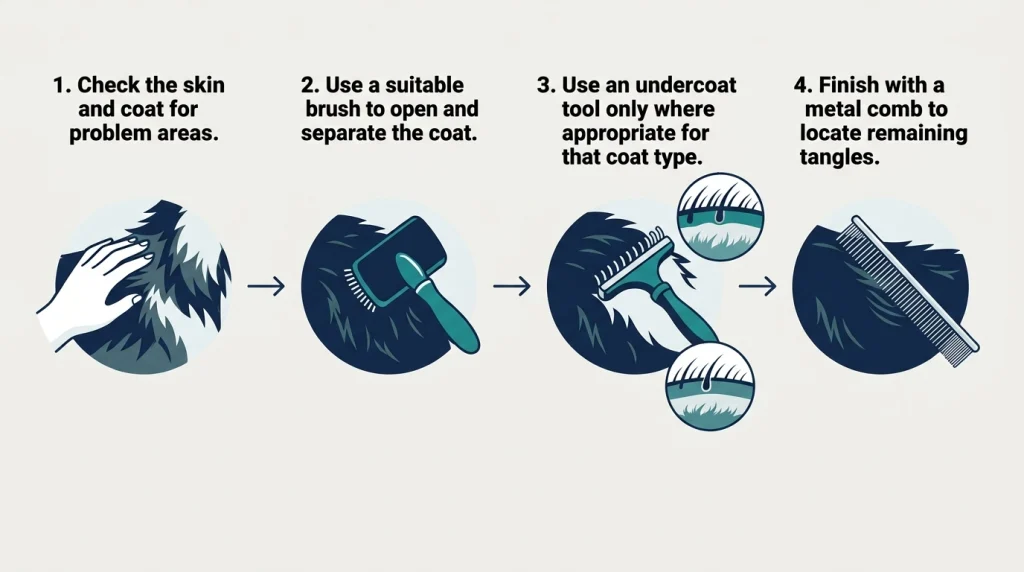
SaveYes, because you’re managing both the outer coat and the softer undercoat. A surface brush may leave large amounts of loose undercoat behind.
During heavier shedding, I may add an undercoat rake after carefully opening the coat with a brush.
The basic sequence is:
- Check the skin and coat for problem areas.
- Use a suitable brush to open and separate the coat.
- Use an undercoat tool only where appropriate for that coat type.
- Finish with a metal comb to locate remaining tangles.
Don’t assume every long-haired dog needs aggressive deshedding. Coat type should decide the tool, not hair length alone.
Common Brush and Comb Mistakes to Avoid
Most grooming problems come from technique rather than owning the wrong number of tools. Gentle, systematic grooming matters more than rushing through the coat.
- Brushing only the top: A smooth surface can hide knots closer to the skin.
- Using too much pressure: Metal pins and teeth should not scrape repeatedly against skin.
- Pulling through resistance: Stop and loosen the tangle instead.
- Ignoring friction zones: Check behind ears, under legs, and around harness areas.
- Waiting for visible mats: Preventive grooming is easier than dematting.
- Bathing before detangling: Remove knots first whenever practical.
As of 2026, my basic approach hasn’t changed: choose tools by coat type and use the comb as the final test.
That simple two-tool routine prevents a lot of unnecessary pulling.
A Simple Long-Haired Dog Grooming Routine
 Save
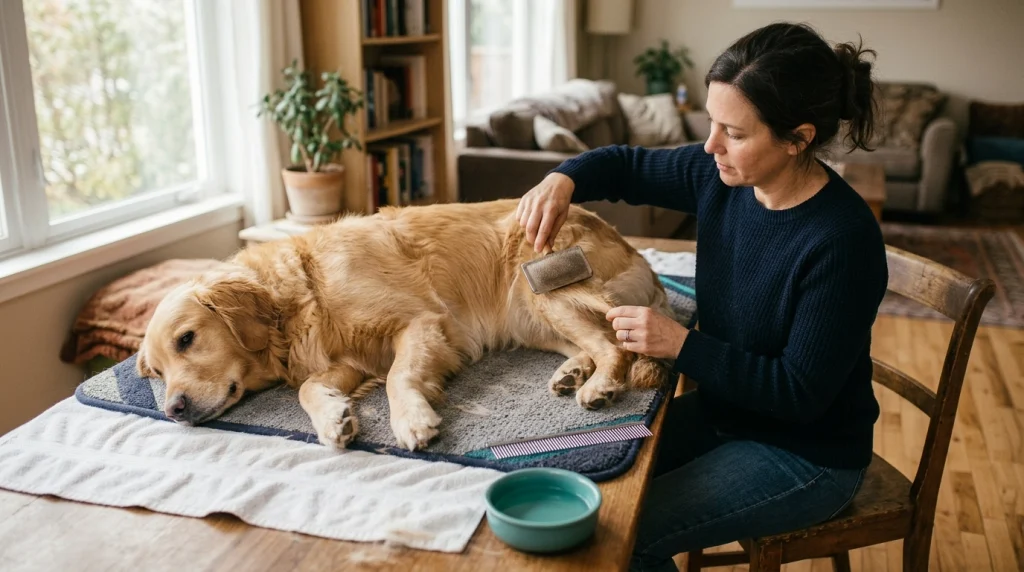
SaveYou don’t need a complicated kit to maintain many long coats. A suitable brush, a metal comb, and an undercoat tool when appropriate cover most routine needs.
- Let your dog settle somewhere stable and comfortable.
- Run your hands over the coat to locate knots or sensitive areas.
- Separate the coat into manageable sections.
- Brush from the tips toward the roots using light strokes.
- Pay extra attention to ears, legs, chest, tail, and friction areas.
- Check each section with a metal comb.
- Stop if you find painful or tightly matted areas you cannot safely loosen.
Regular grooming also gives you a chance to notice skin changes, parasites, lumps, cuts, or sore spots hidden beneath long hair.
The ASPCA notes that brushing can help keep the coat clean while giving owners an opportunity to check for fleas and skin problems.
Tools I Would Use for a Long-Haired Dog
If you’re ready to build a simple grooming kit, these are three practical tool types I’d consider.
🏆 Best everyday brush
Hertzko Self-Cleaning Slicker Brush
★★★★☆
Hertzko describes this slicker as suitable for long and short hair, with retractable bristles for easier cleanup. I’d use it as a first-pass brush for loose coat and everyday tangles rather than as my final coat check.
🔎 Best finishing check
Andis 10-Inch Steel Comb
★★★★☆
This 10-inch steel comb uses coarse and fine tooth sections and is designed for tangles, loose hair, debris, and finishing. I like this style for checking whether a long coat is truly tangle-free after brushing.
🐕 Best for heavy undercoat
Maxpower Planet Original Pet Grooming Rake
★★★★☆
The dual-sided design has 9 teeth on one side and 17 on the other, with the manufacturer positioning it for long, wiry, and double coats. I’d reserve this type of tool for dogs that genuinely need undercoat management.
Frequently Asked Questions
Is a brush or comb better for a Golden Retriever?
A Golden Retriever usually benefits from more than one tool. A brush can manage loose hair and the outer coat, while a comb helps detect remaining tangles. Because Goldens have double coats, an appropriate undercoat tool may also be useful during heavier shedding periods.
Can I use only a comb on my long-haired dog?
You can, but grooming a large coat with only a comb may be slow and uncomfortable if tangles are widespread. I prefer using a suitable brush first, then a comb for detailed checking and small knots.
Should a comb touch my dog’s skin?
A comb needs to reach through the full coat to check for hidden tangles, but it shouldn’t scrape or press painfully against the skin. Use light pressure, small sections, and stop whenever your dog shows discomfort.
What type of comb is best for long-haired dogs?
A sturdy metal comb with longer teeth is a useful general choice for many long coats. A model with both coarse and fine tooth spacing gives you more flexibility for initial checking and detailed finishing.
How do I know when my dog’s coat is fully brushed?
After brushing, gently pass a comb from near the roots toward the ends in small sections. If it moves through the coat without repeatedly catching on knots, you’ve probably removed most routine tangles from that section.
Final Takeaway
For the brush vs comb for long-haired dogs debate, I wouldn’t choose one and abandon the other. The brush handles the larger job, while the comb tells you whether that job is truly finished.
Start gently, work in sections, and let coat type guide your tool choice. If you encounter tight matting or irritated skin, getting professional help is safer than forcing your way through it.

Thomas Cutter is a lifelong dog owner and the founder of FindOutAboutDogs.com. With over 10 years of hands-on experience owning multiple breeds, Thomas created this site to provide honest, research-based dog advice that real owners can actually trust.
