What Does a Dog Brush Do That a Comb Cannot?
Quick Answer
Using a dog brush and comb together gives you a more complete groom because they do different jobs. A brush lifts loose hair, separates the coat, and removes surface debris, while a comb checks deeper layers for tangles the brush may have missed. The American Kennel Club’s dog brush guide also recommends choosing grooming tools according to coat type.
Why the two-tool method works
- Brush first: Loosens shed hair, dirt, and small surface tangles across a larger area.
- Comb second: Finds knots close to the skin that can hide beneath a smooth-looking topcoat.
- Better checking: A comb that passes smoothly through the coat is a useful sign that the section is properly detangled.
- Less pulling: Removing loose hair with a brush first usually makes the final comb-through easier.
- Coat-specific: Long, curly, feathered, and dense coats usually benefit most from using both tools.
Simple rule
- Brush in small sections, then follow with a metal comb. If the comb catches, return to the brush instead of forcing the comb through.
It is easy to assume a brush and comb are interchangeable. They are not, especially once a dog’s coat becomes longer, thicker, curly, or heavily feathered.
My practical rule is simple: I treat the brush as the main cleaning tool and the comb as the final quality check. That one habit makes home grooming much easier to understand.


Why Use a Dog Brush and Comb Together?
 Save
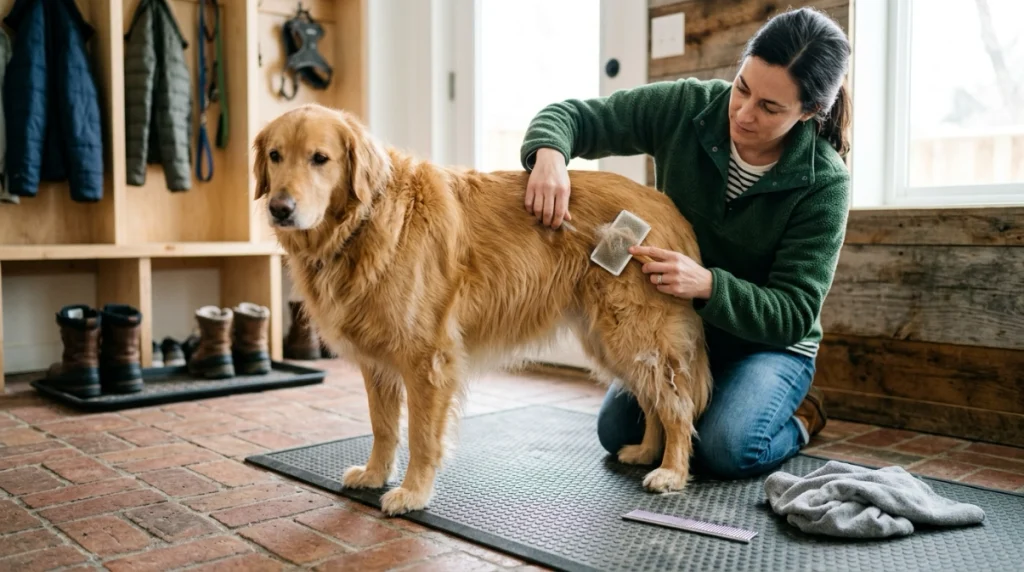
SaveA dog brush and comb work together because each tool reaches the coat differently. The brush handles larger areas efficiently, while the comb gives you more precise feedback about what remains underneath.
That matters because a coat can look smooth on top while still hiding small knots near the skin. Behind the ears, under the legs, around collars, and through feathering are common places to check carefully.
The goal is not to drag two tools through the coat for the sake of doing more work. The goal is to let each tool handle the task it performs best.
What Does a Dog Brush Do That a Comb Cannot?
A brush covers more coat with each stroke. Depending on the brush type, it can lift loose hair, remove debris, separate strands, smooth the surface, and work through light tangling.
The correct brush depends heavily on coat type. Slicker, pin, bristle, rubber, and undercoat-style tools are designed for different jobs.
- Slicker brush: Fine wire pins help separate medium, long, curly, and dense coats while collecting loose hair.
- Pin brush: Longer pins move through flowing or feathered coats with less compression of the coat.
- Bristle brush: Best suited to many short, smooth coats where deep penetration is unnecessary.
- Rubber grooming brush: Helps loosen dead hair from short coats while providing gentle surface contact.
- Undercoat tool: Designed to reach loose undercoat in dogs with dense double coats.
According to VCA Animal Hospitals’ grooming guidance, regular brushing also removes loose hair and dead skin cells while helping keep dirt and debris out of the coat.
A brush is therefore the faster tool for the first stage. What it cannot always tell you is whether every deeper tangle has disappeared.
What Does a Comb Catch After Brushing?
A comb acts like a close inspection tool. Its teeth travel through a narrower section of coat, making resistance easier to feel.
That resistance is useful information. If a metal comb stops halfway through a supposedly finished section, there may still be a knot, compacted undercoat, or tangled hair underneath.
- Behind the ears: Fine hair can tangle where the ear rubs against the neck.
- Armpits: Movement creates friction and can twist longer hair together.
- Chest and collar area: Harnesses and collars can contribute to tangling.
- Rear legs: Feathering can collect debris and form small knots.
- Tail: Long tail hair can look smooth while remaining tangled deeper down.
This is why I think of the comb as the grooming session’s final inspection. If it moves comfortably from near the skin toward the ends, you have much better evidence that the coat is properly separated.
Should You Brush or Comb a Dog First?
For most routine grooming, brush first and comb second. The brush removes loose material and begins detangling before the more precise comb-through.
Trying to force a fine comb through an untouched tangled coat can cause unnecessary pulling. Starting with the brush lets you loosen the coat in smaller, more comfortable stages.
- Inspect the coat. Look for mats, burrs, irritated skin, or areas your dog dislikes having touched.
- Work in small sections. Part longer hair so you can reach beneath the outer layer.
- Brush gently. Start near the ends of tangled hair and gradually work closer to the body.
- Follow with the comb. Use the wider-spaced teeth first if your comb has coarse and fine sections.
- Rework any resistance. If the comb catches, stop and loosen that small area with the brush.
- Finish only when comfortable. The comb should pass without repeated tugging.
The AKC’s grooming-tool guidance similarly recommends brushes and sturdy metal combs for dogs that need more involved coat maintenance.
Do All Dogs Need Both a Brush and Comb?
No. Coat type should decide your grooming kit rather than a rule that every dog must use the same tools.
A short-coated Boxer may get plenty of benefit from a rubber grooming tool or short-bristle brush. A long-coated Collie, Shih Tzu, Havanese, or heavily feathered Spaniel benefits much more from a second combing step.
| Coat Type | Useful Brush | Comb Value | Typical Routine |
|---|---|---|---|
| Short, smooth | Rubber or bristle brush | Usually limited | Brush for loose hair and surface debris |
| Medium shedding coat | Slicker, pin, or suitable undercoat tool | Useful for checking tangles | Brush, then comb high-friction areas |
| Long or feathered | Pin or slicker brush | High | Section brushing followed by full comb check |
| Curly or continuously growing | Slicker brush | Very high | Brush thoroughly, then comb to the skin |
| Dense double coat | Coat-appropriate slicker or undercoat tool | Helpful for detecting compacted areas | Work section by section without scraping the skin |
The main lesson is simple. More coat usually means you need a more precise way to confirm that brushing reached all the way through.
Which Brush and Comb Combination Is Best?
 Save
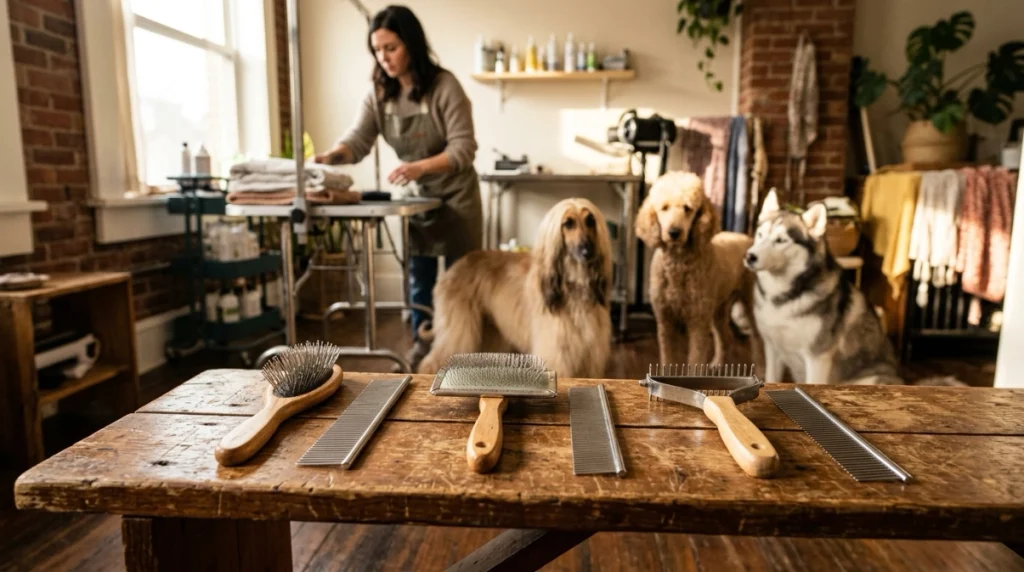
SaveThe best combination is the one that matches your dog’s coat rather than whichever grooming kit contains the most pieces. A metal comb with both coarse and fine teeth is especially versatile as a finishing tool.
- Long silky coat: Try a pin brush plus a coarse/fine metal comb.
- Curly coat: A suitable slicker brush followed by a metal comb is a common combination.
- Feathered coat: Use a pin or slicker brush, then check ears, legs, chest, and tail with the comb.
- Dense double coat: Use a coat-appropriate brush or undercoat tool first, then a longer-toothed comb where appropriate.
- Short smooth coat: A rubber or bristle brush may be enough for normal maintenance.
Do not choose the harshest-looking tool because your dog sheds heavily. A tool that cannot match the coat length or your handling skill can turn grooming into an uncomfortable experience.
How Do You Brush and Comb Without Pulling?
Gentle technique matters more than speed. Holding the hair closer to the skin while working on the ends can reduce how much tension reaches the skin.
Do not repeatedly rake over the same spot. Several light passes are usually easier on the dog than one forceful stroke.
- Keep brush pressure light enough that pins are not scraping the skin.
- Start with the ends of longer hair before moving toward the roots.
- Use short grooming sessions if your dog becomes restless.
- Give extra attention to friction areas instead of repeatedly brushing easy areas.
- Stop if you see redness, sores, swelling, or obvious pain.
I also prefer checking a small section with the comb immediately after brushing it. That exposes problems while you still know exactly which area needs more work.
What Should You Do If the Comb Gets Stuck?
Do not pull harder. A stopped comb is telling you that the section needs more preparation.
Back the comb out, isolate the tangle with your fingers, and use the brush gently on a smaller portion. Severe or skin-tight matting may need a professional groomer rather than aggressive home detangling.
Watch your dog’s behavior as well. Flinching, turning toward the tool, trying to escape, or sudden sensitivity can mean you are pulling too hard or working over a painful area.
How Often Should You Brush and Comb Your Dog?
There is no single schedule for every dog. Coat length, density, shedding, outdoor activity, and tendency to mat all change the answer.
As a practical 2026 rule, dogs with long, silky, or curly coats may need attention every day. Many short-coated dogs can be maintained with much less frequent brushing.
- Long or curly coat: Check daily, especially around ears, legs, and friction areas.
- Feathered coat: Groom several times weekly and check for burrs after outdoor activity.
- Double coat: Increase grooming during heavy seasonal shedding.
- Short smooth coat: Weekly brushing is often enough for routine loose-hair removal.
Frequency should increase whenever you notice small tangles forming between sessions. Preventing a knot is easier than removing a mature mat.
Dog Brush and Comb Tools I Would Consider
 Save
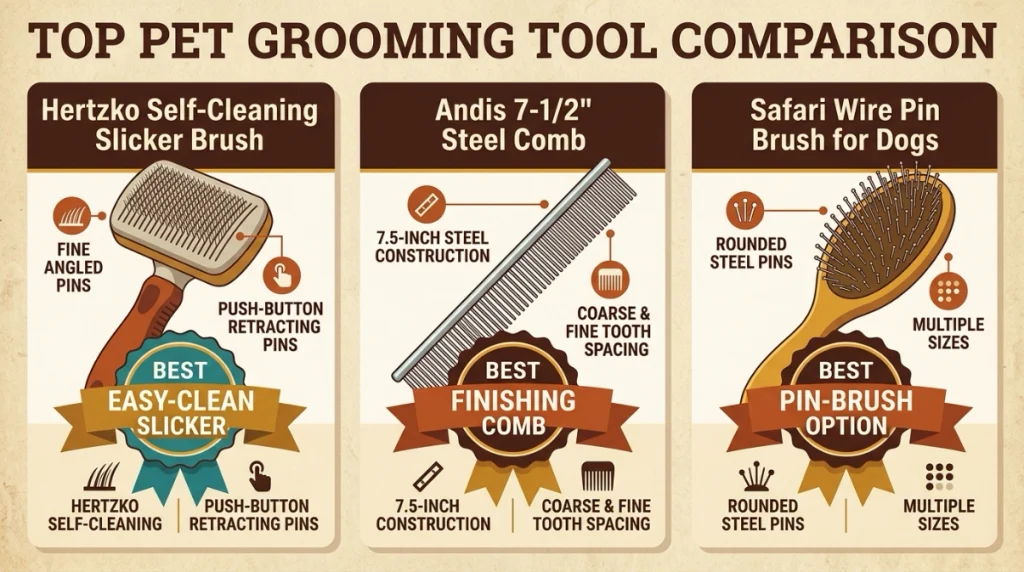
SaveIf you are building a simple grooming kit, I would start with one coat-appropriate brush and one dependable metal comb. You do not need a drawer full of tools to use this method correctly.
🏆 Best Easy-Clean Slicker
Hertzko Self-Cleaning Slicker Brush
★★★★☆ 4.4/5
Fine angled pins collect loose fur, while the push-button mechanism retracts the pins for faster cleanup. I like this style for owners who want a straightforward brush before doing their final comb check.
🔎 Best Finishing Comb
Andis 7-1/2″ Steel Comb
★★★★★ 4.8/5
This 7.5-inch steel comb uses both coarse and fine tooth spacing for detangling and finishing. It fits the brush-then-comb method well because the wider side can check thicker sections before the finer teeth handle detail work.
🐕 Best Pin-Brush Option
Safari Wire Pin Brush for Dogs
★★★★☆ 4.4/5
The Safari uses rounded steel pins and comes in different sizes for easier handling. I would consider it for flowing or feathered coats where you want a gentler first pass before checking the coat with a metal comb.
Frequently Asked Questions
Can I use only a comb on my dog?
You can use only a comb on some coats, but it may be inefficient for removing larger amounts of loose hair. For longer or denser coats, brushing first usually prepares the coat and makes the final comb-through easier and more comfortable.
Does a comb remove dog undercoat?
Some long-toothed combs can lift loose undercoat, but they are not always the best primary deshedding tool. Dense double coats may need a suitable undercoat rake, slicker, or other coat-specific tool before the comb is used for checking and finishing.
How do I know when my dog’s coat is fully brushed out?
A useful practical test is whether an appropriate metal comb can pass through the groomed section without repeatedly catching. Check from near the skin toward the ends, especially behind the ears, under the legs, and through longer feathering.
Should I comb my dog before or after a bath?
Remove obvious tangles and loose debris before bathing because water can make existing knots harder to manage. After the coat is properly dried, brushing and combing can help you check the finished coat again.
Can brushing and combing prevent all mats?
Regular coat care greatly reduces matting risk, but no routine guarantees that mats will never form. Coat texture, moisture, collars, harnesses, friction, activity level, and missed areas can still create tangles between grooming sessions.
The Bottom Line
Using a dog brush and comb together is worthwhile because the tools solve different parts of the same grooming problem. The brush handles loose hair and broad detangling, while the comb checks whether the deeper coat is truly clear.
Start gently, match the tools to your dog’s coat, and never force a comb through resistance. When the comb glides comfortably through the finished section, your grooming session has done more than make the surface look tidy.

Thomas Cutter is a lifelong dog owner and the founder of FindOutAboutDogs.com. With over 10 years of hands-on experience owning multiple breeds, Thomas created this site to provide honest, research-based dog advice that real owners can actually trust.
