Flat Brush vs Curved Brush for Dogs: Which Is Better?
Quick Answer
A flat dog brush is a practical choice for straightforward grooming across broad, relatively even areas, while a curved brush can make it easier to follow the contours of the body and work through certain coats. The best choice depends on your dog’s coat length, density, sensitivity, and the brush’s pin design rather than its shape alone.
Which brush should you choose?
- Flat brush: Consider it for controlled strokes across broad areas and routine coat maintenance.
- Curved brush: Consider it when a shaped head helps you follow rounded body areas or lift and separate longer coat.
- Short, smooth coats: A rubber grooming brush or soft bristle brush may work better than either type of pin brush.
- Long or curly coats: Choose a suitable slicker or pin brush and check the finished section with a metal comb.
- Dense double coats: Match the tool to the undercoat and use gentle, section-by-section strokes.
- Sensitive skin: Prioritize smooth pin tips, light pressure, and a brush that doesn’t scratch or pull.
The easiest way to decide
- Test a few gentle strokes on an untangled shoulder section and watch your dog’s response.
- Stop if the brush catches, causes redness, or makes your dog flinch or pull away.
Choosing a dog brush sounds simple until you find flat and curved heads that look almost identical apart from their shape. I’ve found that the useful question isn’t which design looks more professional, but which one makes your dog’s regular grooming easier and more comfortable.
In this guide, I’ll explain how flat and curved brushes differ, where each design can help, and how to choose one for your dog’s coat without buying unnecessary grooming tools.


What Is the Difference Between a Flat and Curved Dog Brush?
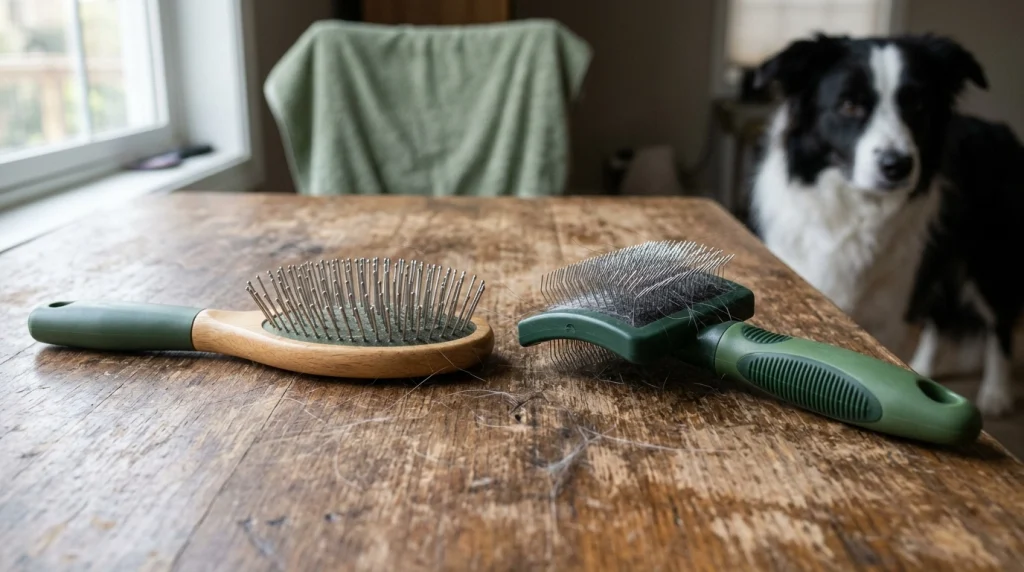
A flat dog brush has a relatively level brushing surface, while a curved dog brush has a head that bends or arches rather than remaining completely flat. Both shapes can carry pins or bristles, so the head’s shape is only one part of the design.
The distinction matters most when you consider how the brush contacts the coat. Pin length, spacing, flexibility, head size, and handle control can change the brushing experience as much as curvature does.
How a flat brush works
A flat brush gives you a relatively even contact surface for controlled strokes across broad sections of the body. Depending on its construction, it can help smooth the coat, collect loose hair, or separate tangles.
Its simple geometry can make it easy to understand how much of the head contacts the coat. However, a flat head isn’t automatically gentler, and pressing harder to increase contact can irritate the skin.
How a curved brush works
A curved brush has a shaped head that may follow rounded areas of the dog’s body more naturally. Many curved slicker brushes also use closely spaced wire pins designed to separate hair and collect loose coat.
That doesn’t mean every curved brush penetrates deeper or removes more hair. Those results depend on pin length, spacing, flexibility, coat condition, and technique.
Key distinction: Flat versus curved describes the brush-head shape, not a complete grooming category. Compare the pin or bristle design as well as the shape before choosing.
Flat Brush vs Curved Brush for Dogs: Side-by-Side Comparison
 Save
A flat brush is a sensible starting point for broad, controlled strokes, while a curved brush may be more convenient when its shape fits the body area and coat. Neither has a universal advantage in comfort, shedding removal, or detangling.
| Feature | Flat brush | Curved brush |
|---|---|---|
| Head shape | Relatively level surface | Arched or contoured surface |
| Broad body areas | Offers a straightforward brushing surface | Can work well when the curve matches the area |
| Rounded contours | May need more adjustment in hand angle | May follow the contour more naturally |
| Detangling | Depends on pin design and technique | Depends on pin design and technique |
| Loose-hair removal | Depends on the bristles, pins, and coat | Depends on the bristles, pins, and coat |
| Sensitive skin | Needs suitable pin tips and gentle pressure | Needs suitable pin tips and gentle pressure |
| Best buying criterion | Control, size, and coat compatibility | Contour, control, and coat compatibility |
These are design-based comparisons, not laboratory performance scores. Two brushes with different head shapes can perform similarly when their pins, dimensions, and intended uses are alike.
Which Brush Is Better for Different Dog Coat Types?
Your dog’s coat should guide the decision before brush shape does. A flat brush with unsuitable pins can be less useful than a well-designed curved brush, and the reverse is equally true.
Short, smooth coats
For a Boxer, Beagle, or similar short-coated dog, a rubber grooming brush or soft bristle brush is often a better starting point than a wire-pin slicker. These tools can lift surface hair and loose debris without needing to work deeply into the coat.
If you’re choosing strictly between flat and curved pin brushes, select the one that moves comfortably across the body without scratching. You may not need either shape for routine grooming.
Long and silky coats
Long-coated dogs, including Yorkshire Terriers and many Collies, need tools that separate the hair and help prevent knots from tightening. A suitable pin brush or slicker can work, but pin length and the ability to brush in small sections matter more than curvature alone.
A curved head may feel convenient on rounded areas, while a flat head may offer predictable contact on larger sections. For more guidance, see this guide to brushing a long dog coat without pulling.
Curly and mat-prone coats
Poodles and other curly-coated dogs often need frequent brushing because loose hairs can become trapped within the coat. A suitable slicker brush can help separate the curls, while a metal comb checks for tangles that the brush may miss.
Choose a brush that can work through the coat gently without scraping the skin. If the comb catches repeatedly or you find tight mats close to the skin, stop rather than forcing either brush through them.
Dense double coats
Dogs such as Huskies and Golden Retrievers have coats that may require attention to both the outer coat and the undercoat. A brush’s curvature alone won’t determine whether it reaches the loose undercoat effectively.
Use a tool suited to the coat’s density and length, and avoid repeatedly scraping one patch to remove every loose hair. This double-coat brushing guide explains how to work through the coat in manageable sections.
Wire and coarse coats
Wire-haired breeds may need a coat-specific grooming routine rather than a standard brush alone. A suitable pin brush or slicker can help with routine maintenance, but some coats also need professional techniques such as hand-stripping.
Ask a knowledgeable groomer which tools suit your dog’s coat before trying to remove substantial amounts of hair. A curved head won’t replace a technique designed for the coat’s structure.
Does a Curved Brush Remove More Shedding Hair?
Not necessarily. A curved brush may collect loose hair effectively when its pins suit the coat, but curvature by itself doesn’t guarantee better shedding removal.
The amount of loose hair you collect depends on several factors:
- Coat structure: Short, smooth coats behave differently from dense double coats.
- Pin length: Pins need to suit the depth and density of the coat.
- Pin spacing: The spacing affects how the brush engages with the hair.
- Technique: Short, gentle strokes can be more useful than repeatedly brushing the same spot.
- Shedding stage: Seasonal coat changes can increase the amount of loose hair available to remove.
For example, a curved slicker with suitable pins may collect loose undercoat from a dense coat, while a flat brush with short bristles may mainly smooth the surface. That difference comes from their construction and intended use, not simply from the head shape.
If shedding is your main concern, start by identifying your dog’s coat type. The dog brushing schedule by coat type can help you plan a routine around normal shedding and coat maintenance.
Is a Flat or Curved Brush Safer for Sensitive Skin?
Neither shape is inherently safer for sensitive skin. The safest brush is one with suitable, well-finished pins or bristles that you can control without scratching or pulling.
Wire-pin brushes deserve particular care because excessive pressure can irritate the skin even when the tool is appropriate for the coat. A curved head isn’t permission to press harder, and a flat head isn’t automatically gentler.
Use these checks before choosing a brush:
- Inspect the tips: Look for damaged, sharp, bent, or rough pins.
- Check the size: Choose a head you can control around smaller or sensitive areas.
- Use light pressure: Let the tool work through loose hair instead of pushing it into the skin.
- Watch your dog: Flinching, freezing, turning away, or repeatedly trying to leave means you should pause.
- Check the skin: Stop if you notice redness, scratches, sores, or new tenderness.
A dog that reacts to brushing may have more than a tool preference. Tangles, irritated skin, wounds, or existing pain can make grooming uncomfortable, so don’t assume a different brush will solve every problem.
Safety tip: Never force a brush through a tight mat or repeatedly brush irritated skin. Seek veterinary advice for unexplained pain, sores, swelling, or persistent sensitivity.
How Can You Test Which Brush Works Better for Your Dog?
 Save
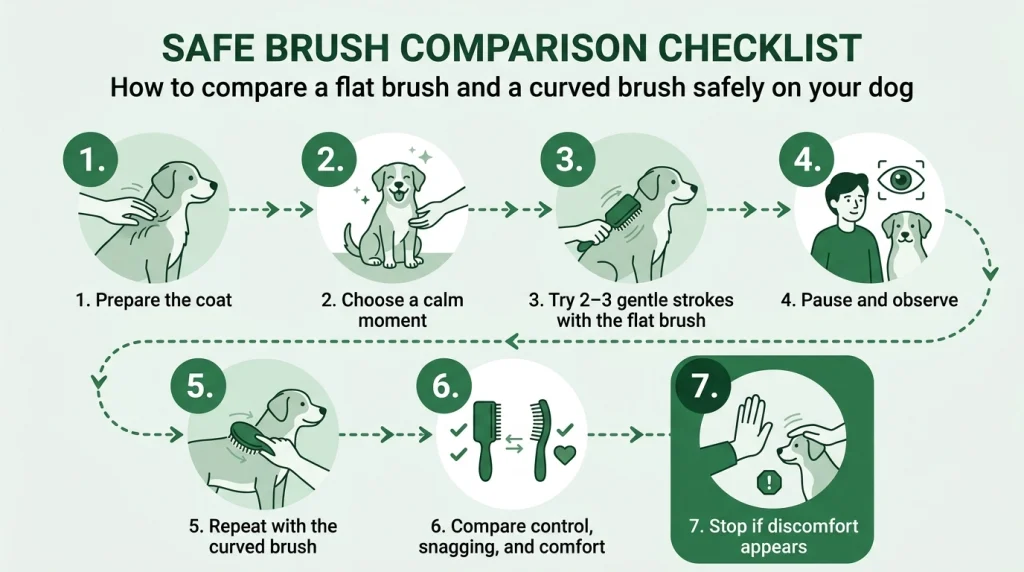
A short, controlled comparison can help you assess comfort and handling without turning grooming into a long experiment. Test only on a clean, untangled area of healthy skin.
- Prepare the coat: Check for mats, burrs, debris, and irritated areas before brushing.
- Choose a calm moment: Let your dog settle in a comfortable, nonslip space.
- Start with the flat brush: Make two or three gentle strokes over the shoulder or another easy-to-reach area.
- Pause and observe: Look for relaxed body language, snagging, and any change in the skin.
- Repeat with the curved brush: Use comparable light strokes on a nearby untangled area.
- Compare the experience: Consider control, snagging, comfort, and how easily you can keep the strokes gentle.
- Stop if discomfort appears: Don’t continue testing when your dog shows pain or growing stress.
This isn’t a scientific performance test, and two body areas may not have identical coat density. Its purpose is to help you identify which brush feels easier to handle and better suits your dog’s needs.
What Other Brush Features Matter More Than Shape?
 Save
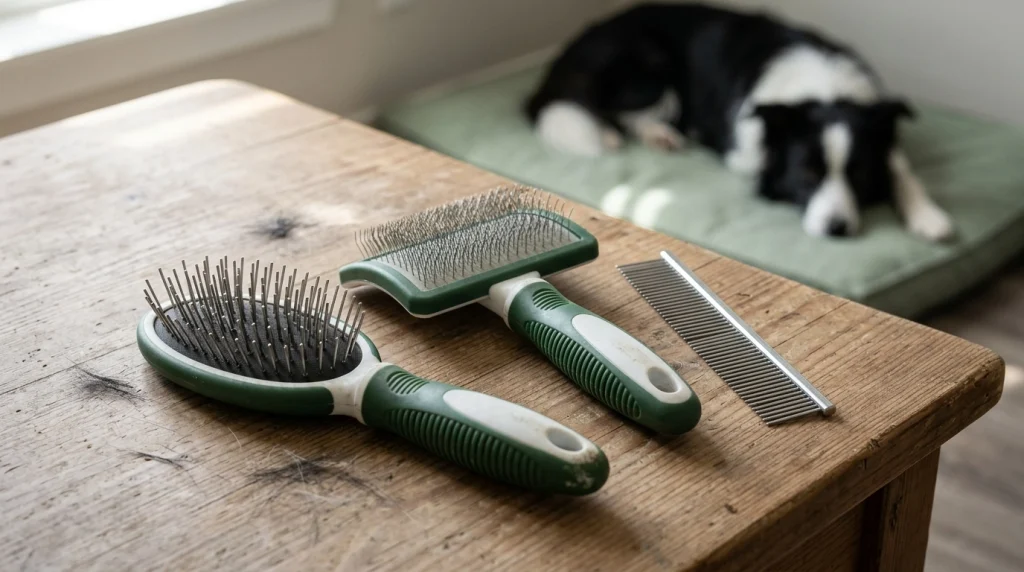
When two brushes look similar, their construction can make the deciding difference. Before buying, compare the details that affect contact with the coat and control in your hand.
| Feature | What to look for |
|---|---|
| Pin length | Pins appropriate for the depth and density of the coat. |
| Pin spacing | Spacing that works with the coat without excessive snagging. |
| Pin flexibility | A suitable level of flexibility for the coat and your technique. |
| Head size | A manageable head that fits your dog’s body and grooming areas. |
| Handle grip | A secure, comfortable grip that allows light, controlled strokes. |
| Build quality | Secure pins, a sturdy head, and no rough or damaged edges. |
Think about the task you need the brush to perform. Surface smoothing, detangling, and removing loose undercoat aren’t identical jobs, and one brush may not handle all three well.
For a longer coat, pairing a suitable brush with a metal comb can reveal tangles that remain underneath the surface. For a short coat, a simpler rubber or bristle tool may be enough.
Which Flat or Curved Dog Brushes Are Worth Considering?
If you’re ready to shop, compare established grooming tools by their design and intended coat use rather than choosing a model solely because it has a curved head. The following options represent different approaches to brushing, and the best fit still depends on your dog.
CURVED SLICKER OPTION
Chris Christensen Big G Slicker Brush
A professional-style slicker designed for grooming fuller, longer, and curly coats. Consider it when coat separation and controlled detangling matter more than simple surface smoothing.
Check: Choose an appropriate size and use gentle strokes to avoid irritating the skin.
EVERYDAY PIN BRUSH
Andis Premium Pin Brush
A pin-brush option to consider for routine grooming and longer coats. It provides a useful contrast to a dense wire-pin slicker when you’re comparing everyday coat maintenance with more focused detangling.
Check: Verify the current model’s pin construction and dimensions before ordering.
EASY-CLEAN ALTERNATIVE
Hertzko Self-Cleaning Slicker Brush
A slicker-style option with a mechanism designed to help release collected hair for cleanup. It may suit owners who want a convenient way to empty the brush after grooming.
Check: Confirm the exact version, pin design, and suitability for your dog’s coat.
These are product options to investigate, not the results of a hands-on performance test. Check current listings, dimensions, construction, and recent customer feedback before deciding which brush suits your dog.
Frequently Asked Questions
Is a curved slicker brush better than a flat slicker brush?
Not in every situation. A curved slicker may follow the dog’s contours conveniently, while a flat slicker offers a relatively level brushing surface. Pin length, spacing, flexibility, and technique influence detangling and comfort, so choose according to your dog’s coat and how the brush feels in use.
Can I use a flat brush on a long-haired dog?
Yes, if its design suits the coat and you can reach through the hair without pulling. Long coats often benefit from a suitable pin brush or slicker and a metal comb to check for hidden tangles. Brush in small sections and stop if the tool catches on a knot.
Does a curved dog brush remove more undercoat?
Curvature alone doesn’t determine undercoat removal. Pin length, spacing, coat density, and the tool’s intended purpose matter more. Choose a suitable grooming tool for double-coated breeds, work gently through manageable sections, and avoid excessive brushing that irritates the skin or removes hair unnecessarily.
Which brush is best for a dog with sensitive skin?
Neither flat nor curved brushes are automatically best for sensitive skin. Choose smooth, undamaged pins or soft bristles suited to the coat, and use minimal pressure. If your dog flinches, develops redness, or shows pain during grooming, stop and check for tangles or a possible skin problem.
Do I need both a flat and curved dog brush?
Usually not just because the shapes differ. One well-matched brush may handle routine grooming, while a second tool can help with a distinct job such as checking tangles or removing loose undercoat. Buy another brush only when it fills a genuine gap in your dog’s grooming routine.
Final Takeaway: Flat Brush vs Curved Brush for Dogs
A flat brush is a good option when you want a straightforward surface for controlled strokes, while a curved brush may be convenient for following rounded body areas. Neither shape guarantees better shedding removal, gentler contact, or easier detangling.
Start with your dog’s coat type, then compare the pins, head size, grip, and overall comfort. A brush that works smoothly without pulling is more useful than one chosen simply because its shape looks right.
If you’re still unsure, test a suitable brush gently on an untangled area and observe your dog’s response. Keep the routine comfortable, and ask a professional groomer for help with difficult mats or specialized coat care.
Thomas Cutter is a lifelong dog owner and the founder of FindOutAboutDogs.com. With over 10 years of hands-on experience owning multiple breeds, Thomas created this site to provide honest, research-based dog advice that real owners can actually trust.
