How to Brush a Double Coat: Step-by-Step Guide for Dog Owners
Quick Answer
To brush a double coat, work in small sections and reach beneath the outer guard hairs without scraping the skin. Start with an undercoat rake or suitable double-coat brush, follow with a slicker brush, then use a metal comb to check that each section is free of loose undercoat and tangles.
Quick brushing steps
- Check the coat: Look for tangles, mats, sore skin, burrs, or sensitive areas before brushing.
- Divide into sections: Lift the outer hair so you can work through the undercoat instead of skimming the surface.
- Remove loose undercoat: Use short, gentle strokes in the direction the hair grows.
- Finish with a slicker: Collect loosened fur and separate the remaining coat.
- Check with a comb: A metal comb should move through comfortably without snagging.
- Stop before irritation: Don’t keep brushing one spot simply because a few hairs still come out.
Most important rule
- Remove loose, dead undercoat rather than trying to strip healthy attached hair from your dog.
Brushing a double-coated dog can feel confusing because the coat that looks tidy on top may still be packed underneath.
I get better results when I slow down and work section by section. That approach removes more loose fur while making the session much more comfortable for the dog.


What Is a Double Coat on a Dog?
A double coat has two distinct layers: a protective outer coat and a softer, denser undercoat. Both layers serve different jobs, so brushing should preserve healthy hair while removing loose material.
The outer hairs are often called guard hairs. They help protect the skin from dirt, moisture, sunlight, and everyday environmental exposure.
- Topcoat or guard coat: Longer, firmer hairs forming the visible outer layer.
- Undercoat: Shorter, softer hair sitting closer to the skin.
- Loose undercoat: Dead hair that releases naturally and can become packed inside the coat.
- Coat blow: A period of heavier undercoat shedding common in many double-coated breeds.
Examples include Siberian Huskies, Golden Retrievers, German Shepherds, Labrador Retrievers, Border Collies, Newfoundlands, and many northern breeds.
The American Kennel Club’s double-coat guidance explains how the two layers work together and why coat type matters when grooming.
What Tools Do You Need to Brush a Double Coat?
 Save
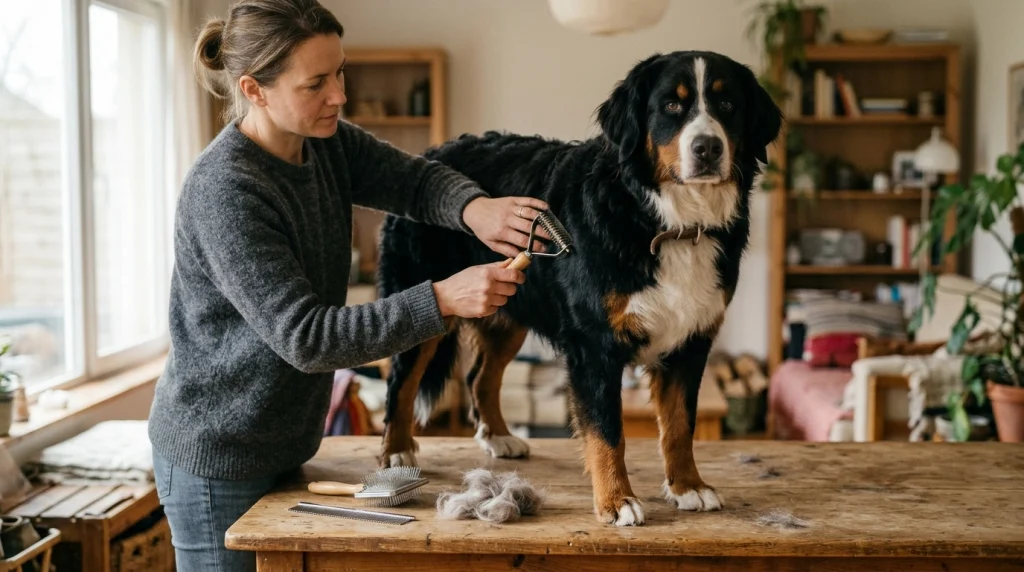
SaveYou don’t need a drawer full of grooming equipment. For most double coats, three tools can cover the main jobs.
I normally think of them as the loosening tool, the finishing tool, and the checking tool.
| Tool | Best Job | Undercoat Reach | Main Caution |
|---|---|---|---|
| Undercoat rake | Removing loose undercoat | High | Don’t press into the skin |
| Long-pin slicker | Separating hair and finishing | Medium to high | Repeated hard strokes may irritate skin |
| Metal comb | Checking completed sections | Medium | Never yank through a snag |
| Rubber brush | Surface hair on shorter coats | Low | Usually not enough for dense undercoat |
The AKC’s guide to choosing dog brushes also describes undercoat rakes as tools designed to reach beneath the outer coat.
How Do You Brush a Double-Coated Dog Properly?
The safest method is to brush in layers instead of dragging a tool over the whole dog. You want to reach loose undercoat while keeping pressure light.
Here’s the routine I use when a dense coat needs a thorough session.
- Inspect the skin and coat. Check for redness, sores, burrs, ticks, tight mats, or areas your dog does not want touched.
- Choose a comfortable starting area. The shoulder or side is often easier than starting near feet, ears, or the tail.
- Lift a small section of fur. Use one hand to separate the coat so you can see closer to the base.
- Brush the exposed section. Use short strokes in the direction of hair growth rather than pulling against the coat.
- Move gradually upward. Release a little more hair and repeat the same controlled motion.
- Empty the brush often. A rake packed with fur cannot move through the coat efficiently.
- Follow with a slicker brush. This picks up loosened fur and smooths the section.
- Check with a metal comb. The comb should pass through without hard resistance.
This section-by-section technique is often called line brushing. It takes longer than surface brushing, but it reaches hair that a quick pass misses.
My practical stopping rule is simple. When the comb moves comfortably and obvious clumps have stopped releasing, I move to the next area.
How Much Pressure Should You Use?
Use enough pressure to move through the hair, not enough to scrape the skin. Metal grooming tools should work because of their shape and spacing rather than brute force.
- If the tool catches: Stop and separate the hair with your fingers.
- If your dog flinches: Reduce pressure or change tools.
- If the skin turns red: Stop working that area.
- If a mat feels tight: Don’t pull harder to force through it.
The ASPCA’s dog grooming guidance also recommends regular brushing while checking the skin and coat for problems.
How Often Should You Brush a Double-Coated Dog?
 Save
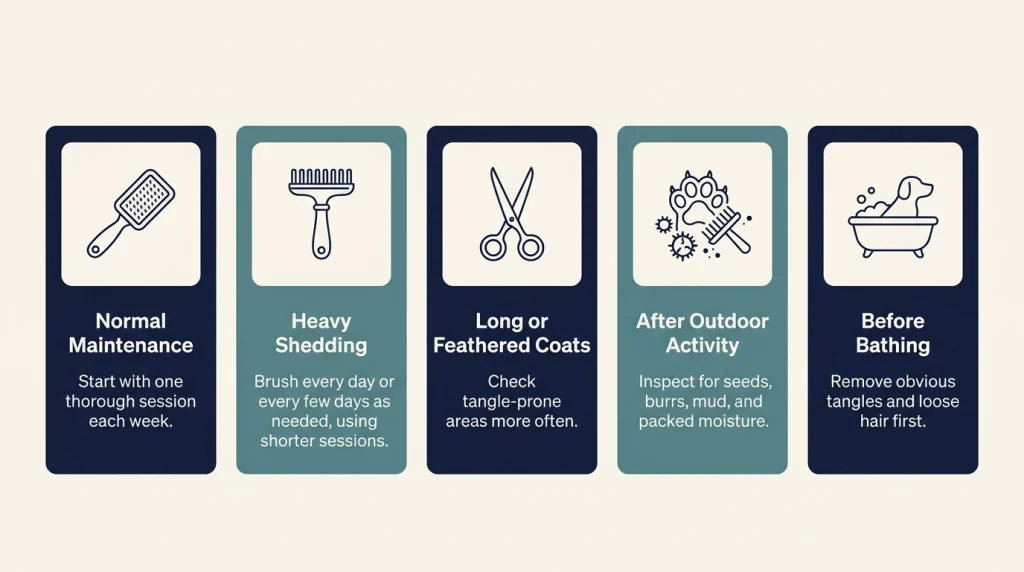
SaveMany double-coated dogs benefit from at least weekly brushing. Heavy seasonal shedding usually calls for shorter, more frequent sessions.
The right schedule depends on coat length, density, climate, activity, and how quickly your individual dog’s undercoat becomes loose.
- Normal maintenance: Start with one thorough session each week.
- Heavy shedding: Brush every day or every few days as needed, using shorter sessions.
- Long or feathered coats: Check tangle-prone areas more often.
- After outdoor activity: Inspect for seeds, burrs, mud, and packed moisture.
- Before bathing: Remove obvious tangles and loose hair first.
If you have a Husky, the site’s guide to managing Siberian Husky shedding goes deeper into seasonal coat-blow routines.
Which Areas Need Extra Attention When Brushing?
Some parts of a double-coated dog trap loose hair faster than others. These spots also tend to be more sensitive.
- Behind the ears: Fine hair can tangle quickly.
- Neck and ruff: Thick coat may hide packed undercoat.
- Armpits: Friction can create tangles.
- Behind the front legs: Longer hair may knot where the leg moves.
- Rear trousers: Dense feathering can hold large amounts of loose hair.
- Tail: Brush gently and support the hair instead of pulling from the tip.
I slow down around these places. A smaller slicker or comb usually gives me better control than a large undercoat rake.
Should You Brush Against the Direction of Hair Growth?
For routine home grooming, I usually work with the direction of growth. Lifting sections with my hand gives me access to the undercoat without repeatedly dragging tools backward across the skin.
You may see groomers use different techniques based on coat type. At home, gentle control matters more than trying to copy a fast professional method.
Can You Overbrush a Double-Coated Dog?
Yes. Repeated brushing with too much pressure can irritate the skin and unnecessarily pull healthy coat.
A productive grooming session does not require an empty brush at the end. Double-coated dogs may continue releasing some hair even after you have removed plenty of loose undercoat.
- Don’t chase every hair: Normal shedding continues after grooming.
- Don’t scrape one spot: Move on when the coat feels free and the comb passes.
- Don’t force tangles: Hard resistance is a reason to stop and investigate.
- Watch body language: Turning away, sitting down, lip licking, or repeated flinching can signal discomfort.
Short, calm sessions often work better than trying to finish the entire dog in one sitting.
Should You Shave a Double-Coated Dog Instead of Brushing?
Routine shaving is generally not the normal solution for shedding in a healthy double coat. Brushing removes loose hair while leaving the coat’s natural layers intact.
The AKC’s double-coated dog grooming guidance recommends regular brushing and notes concerns with routine shaving.
- Don’t shave for convenience: Shedding is better managed through appropriate grooming.
- Don’t cut tight mats with scissors: Dog skin can sit surprisingly close to a mat.
- Get professional help: Severe matting may require a groomer or veterinarian.
- Follow medical instructions: Veterinary clipping for treatment or surgery is a separate situation.
Should You Brush a Double Coat Before or After a Bath?
Do both when the coat needs a thorough grooming session. I remove obvious tangles and loose fur before bathing, then brush again once the coat is properly dried.
- Brush out loose hair and easy tangles.
- Bathe with shampoo formulated for dogs.
- Rinse the dense coat thoroughly.
- Dry the undercoat completely and gently.
- Brush out fur loosened during washing and drying.
Don’t assume the coat is dry because the surface feels dry. Dense undercoat can hold moisture underneath the visible top layer.
Common Double-Coat Brushing Mistakes to Avoid
 Save
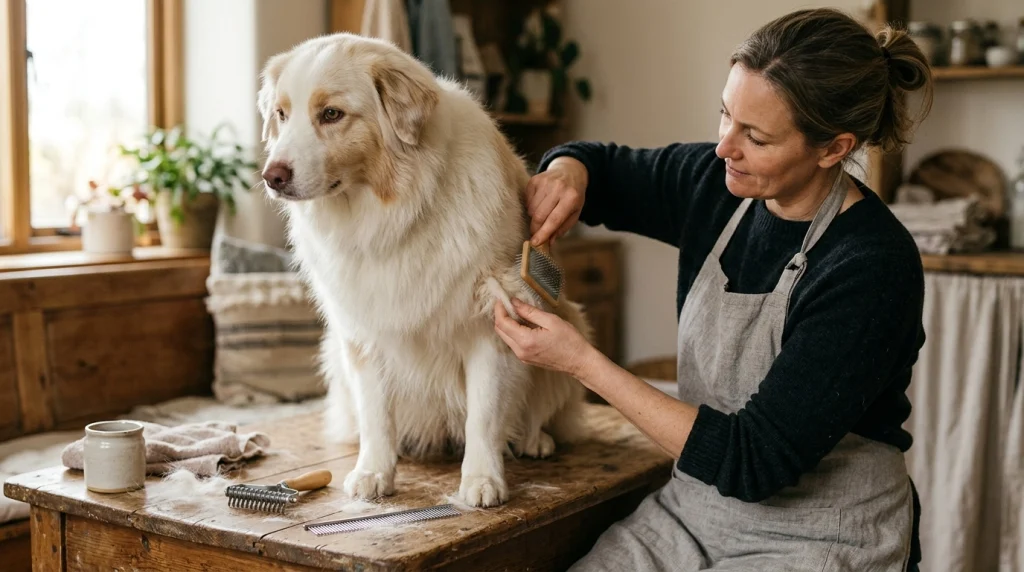
SaveMost home-grooming problems come from rushing, using too much force, or selecting a tool that cannot reach the coat properly.
- Only brushing the surface: The topcoat looks smooth while loose undercoat remains packed below.
- Using short pins on a thick coat: The brush never reaches the layer you need to remove.
- Pressing harder when a tool fails: More pressure increases irritation without fixing the tool mismatch.
- Pulling through mats: This hurts and can damage hair or skin.
- Ignoring the comb check: A fluffy appearance does not prove the coat is brushed through.
- Brushing too long: Repeated passes over the same area may create redness.
- Waiting until shedding becomes extreme: Regular maintenance makes heavy coat changes easier.
As of 2026, I still prefer a simple three-tool setup over aggressive shortcuts. A good rake, slicker, and comb give you control without turning grooming into a battle.
Double-Coat Grooming Tools I Would Consider
If you’re ready to build a basic grooming kit, these are three practical options I would consider for different priorities.
🏆 Best Overall Undercoat Tool
Maxpower Planet Double-Sided Undercoat Rake
★★★★½
Its dual-sided design gives you two tooth spacings for working through loose undercoat. I like this type of rake when I want more control before finishing with a slicker brush.
✨ Best Premium Finisher
Chris Christensen Big G Slicker Brush
★★★★½
The long-pin design is useful for dense or longer coats where short slicker pins barely reach beneath the surface. I see it as a finishing and line-brushing tool rather than a replacement for every undercoat rake.
💰 Best Simple Rake
Safari Double Row Undercoat Rake
★★★★☆
This straightforward double-row style focuses on reaching loose undercoat without adding complicated features. I would consider it when I want a dedicated rake for routine seasonal shedding.
Frequently Asked Questions
What is the best brush for a double-coated dog?
An undercoat rake paired with a long-pin slicker works well for many double-coated dogs. The rake targets loose undercoat, while the slicker separates and finishes the coat. A metal comb is useful afterward to check whether dense sections have been brushed through completely.
Should I brush a double-coated dog every day?
Daily brushing can be useful during heavy seasonal shedding if sessions stay gentle and the skin remains comfortable. During normal periods, many dogs need less frequent grooming. Adjust the schedule to your dog’s coat density, tangles, shedding level, and tolerance.
How do I know when I am finished brushing?
Stop when obvious loose clumps have reduced, the coat feels freer, and a suitable metal comb passes comfortably through the section. Don’t keep scraping the same area simply because a few loose hairs still appear on the brush.
Can an undercoat rake damage a dog’s coat?
Any grooming tool can cause irritation when used with too much force or for too long. Choose a rake suited to your dog’s coat length, use light pressure, work with the hair growth, and stop if the skin becomes red or your dog shows discomfort.
What should I do if my dog’s double coat is badly matted?
Don’t force a rake through tight mats or blindly cut them with scissors. Severe mats can sit close to the skin and may be painful. A professional groomer or veterinarian can assess the safest removal method, especially when matting covers large areas.
Final Takeaway: Brush the Undercoat, Not Just the Surface
Learning how to brush a double coat comes down to patience, proper tools, and working in sections. Reach the loose undercoat gently, finish the outer coat, then check your work with a comb.
Don’t aim to remove every possible hair. Aim for a comfortable dog, a freely moving coat, healthy skin, and a routine you can repeat consistently.

Thomas Cutter is a lifelong dog owner and the founder of FindOutAboutDogs.com. With over 10 years of hands-on experience owning multiple breeds, Thomas created this site to provide honest, research-based dog advice that real owners can actually trust.
