How to Brush a Long Dog Coat: A Gentle Step-by-Step Guide
Quick Answer
To brush a long dog coat, work in small sections from the lower body upward, gently separate the hair, brush from the ends toward the roots, and finish each section with a metal comb. Use light pressure and match the tool to the coat; double-coated dogs may also need an undercoat rake, as explained in this Husky brush guide.
Quick brushing steps
- Inspect first: Check for mats, burrs, redness, tender skin, or debris before brushing.
- Divide the coat: Lift the long hair into small sections instead of brushing only across the surface.
- Start at the ends: Loosen tangles near the tips before moving closer to the skin.
- Brush gently: Use controlled strokes in the direction the coat naturally grows.
- Comb to check: Run a metal comb through each finished section without forcing it.
- Stop at resistance: Work stubborn tangles separately rather than pulling harder.
The finishing check
- Your comb should move comfortably from the outer hair toward the skin without snagging or making your dog flinch.
Long coats look beautiful, but they hide tangles better than most owners expect. A coat can appear smooth on top while small knots are developing underneath.
I prefer a slow section-by-section approach because it shows exactly where the brush is working. It also makes grooming much easier on a dog that dislikes pulling.


What Does Brushing a Long Dog Coat Actually Mean?
Brushing a long dog coat means separating and grooming the hair from the outer ends down toward the base instead of simply smoothing the visible surface. The goal is to remove loose hair, debris, and developing tangles without repeatedly scraping the skin.
The American Kennel Club recommends choosing grooming tools according to coat type and working gently down toward the skin.
Definition: Line brushing is a grooming technique where you lift part of the coat, expose a narrow section underneath, brush that section thoroughly, then move the part and repeat.
- Long silky coats: Usually benefit from frequent detangling, pin brushing, and combing.
- Long double coats: May need a pin brush, slicker, comb, and an undercoat tool during shedding.
- Long curly coats: Need careful brushing to prevent tight mats from forming close to the skin.
- Feathered coats: Need extra attention behind the ears, legs, chest, tail, and rear feathering.
What Tools Do You Need to Brush a Long-Haired Dog?
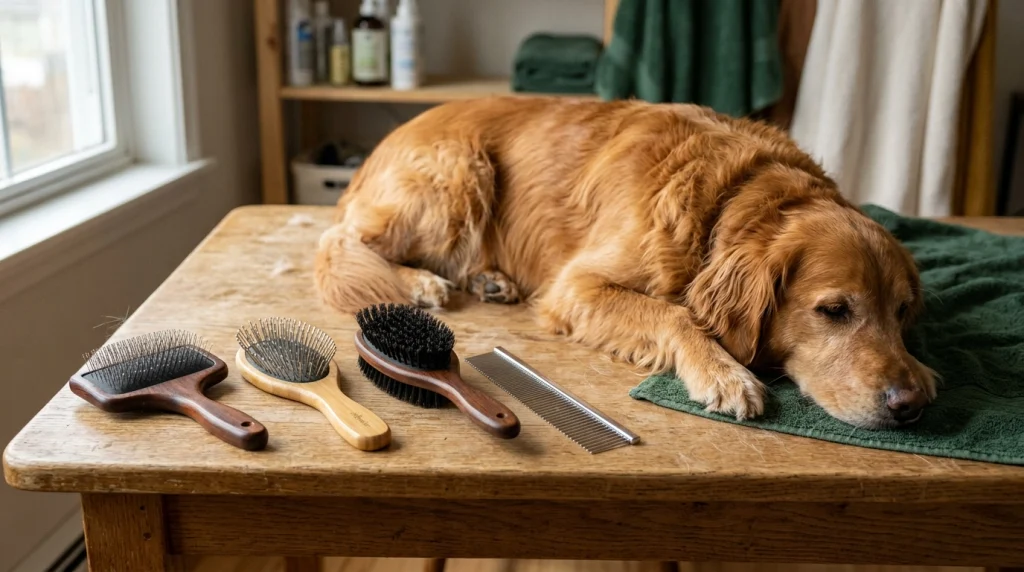
Most long-coated dogs need two or three grooming tools rather than one all-purpose brush. I would start with a pin brush or suitable slicker and use a metal comb as the final check.
The VCA Animal Hospitals grooming guide notes that long-toothed combs are useful for long-haired dogs, while different coat types need different brush styles.
| Tool | Best Use | Long-Coat Role | Main Caution |
|---|---|---|---|
| Pin brush | Routine brushing | Separates long hair and removes loose debris | Short pins may skim over thick coats |
| Long-pin slicker | Tangles and dense areas | Reaches deeper than many basic brushes | Heavy pressure can irritate skin |
| Metal comb | Final checking | Finds hidden tangles a brush can miss | Never pull through resistance |
| Undercoat rake | Loose undercoat | Useful on suitable double coats | Not necessary for every long coat |
I treat the comb as the quality-control tool. A coat may look finished after brushing, but the comb quickly exposes any section I have missed.
How Do You Brush a Long Dog Coat Step by Step?
 Save
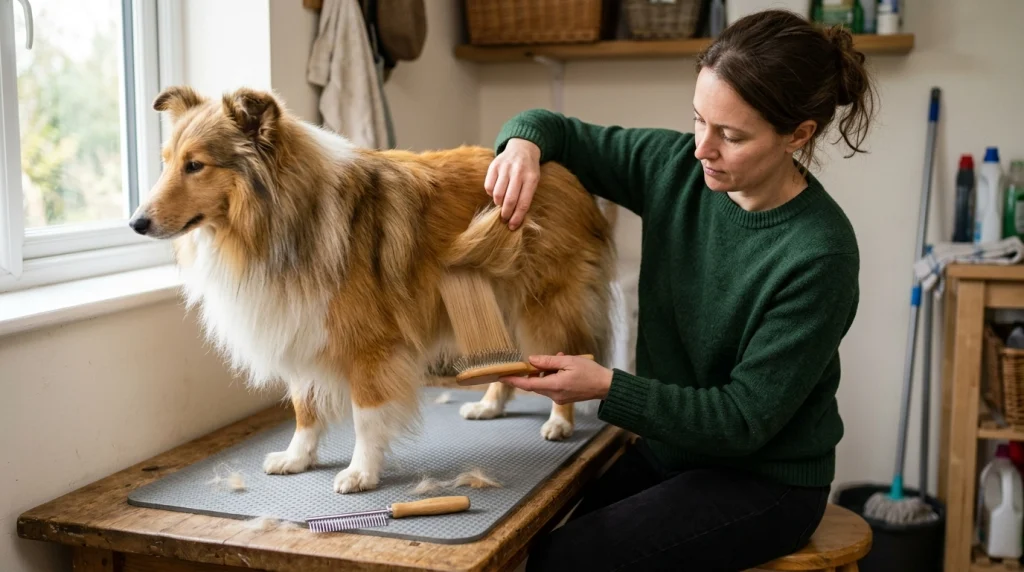
SaveThe safest method is to inspect first, divide the coat into manageable sections, detangle from the ends, and gradually work toward the skin. Finish each section with a comb before moving on.
- Choose a calm grooming area. Use good lighting and a stable, nonslip surface.
- Inspect the skin and coat. Look for burrs, twigs, sores, redness, ticks, tender spots, or tight mats.
- Separate a small section. Lift the upper hair so you can see the lower layer instead of brushing over everything at once.
- Hold longer hair near its base. This reduces how much tugging reaches the skin when you meet a small knot.
- Begin near the ends. Loosen the lower portion before moving the brush closer to the roots.
- Brush with the direction of growth. Use short, controlled movements instead of long, forceful strokes.
- Move the part slightly upward. Continue section by section until you have covered the area.
- Check with a metal comb. Stop immediately if the comb catches rather than forcing it through.
- Repeat around the body. Pay extra attention to common friction areas.
- Finish before your dog loses patience. Several comfortable sessions are better than one stressful marathon.
The ASPCA’s dog grooming guidance also recommends regular brushing for long coats and gentle removal of tangles before they develop into heavier mats.
Which areas should you brush most carefully?
Behind the ears, under the front legs, around the collar, along the belly, and behind the rear legs deserve extra attention. Friction and movement make these areas easy places for small tangles to tighten.
- Behind the ears: Fine hair can knot quickly where the ear rubs the neck.
- Armpits: Leg movement creates constant friction.
- Collar area: Check underneath collars and harness straps regularly.
- Chest feathering: Long hair can collect moisture, food, and outdoor debris.
- Rear feathering: Dense hair behind the thighs can hide tangles.
- Tail: Work from the ends inward and avoid yanking through knots.
Should You Brush From the Skin Out or From the Ends In?
Detangle from the ends toward the roots, but inspect and separate the coat all the way down toward the skin. These ideas work together rather than contradicting each other.
If you find a knot halfway down a long section of hair, starting above it and pulling outward can tighten the knot. I prefer loosening the lowest tangled part first.
- For loose hair: Separate the coat and brush through the full length gently.
- For a small tangle: Support the hair near the skin and work on the ends first.
- For dense undercoat: Work in narrow sections so the tool reaches beneath the surface.
- For a finished section: Use a comb to confirm there is no hidden resistance.
How Often Should You Brush a Long-Haired Dog?
Some long, silky, or curly coats need daily attention, while other long coats can stay manageable with several thorough sessions each week. Coat density, lifestyle, shedding, and matting tendency matter more than coat length alone.
VCA notes that long, silky, and curly coats often require daily brushing to prevent tangles and mats. The ASPCA also recommends daily attention for many long-haired dogs.
- Mat-prone silky coat: Check and brush daily.
- Curly continuously growing coat: Brush frequently and follow the groomer’s maintenance schedule.
- Long double coat: Brush regularly and increase grooming when loose undercoat becomes heavier.
- Outdoor dog: Inspect the coat after walks through brush, grass, woods, or wet areas.
- Heavy shedding period: Shorter, more frequent sessions are often easier.
Owners of dense double-coated dogs may also find the site’s guide to managing heavy Husky shedding useful for understanding undercoat removal.
How Do You Remove Tangles Without Hurting Your Dog?
 Save
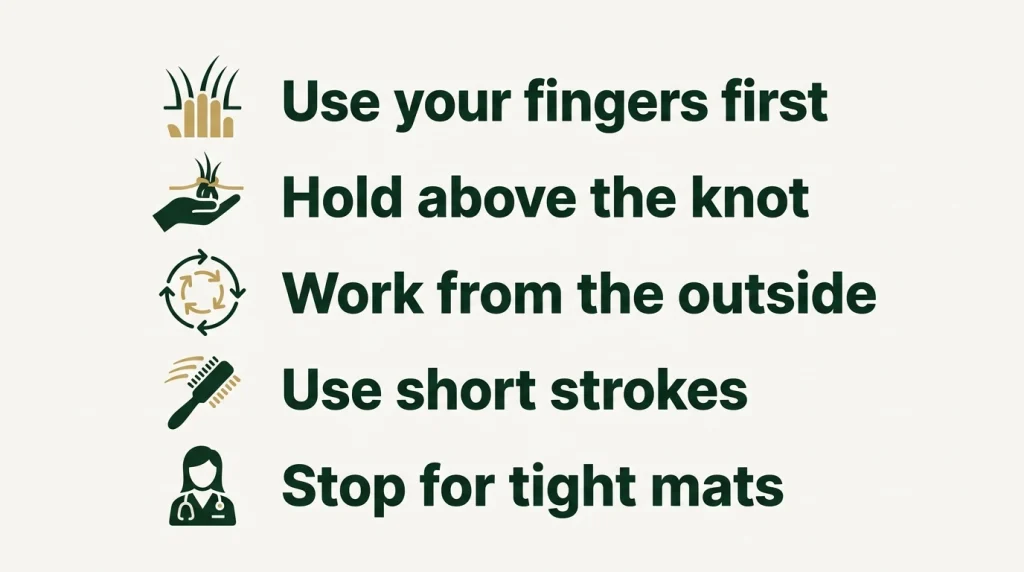
SaveSupport the hair near the skin, loosen the outer edge of the tangle first, and use small controlled strokes. Stop if the knot is pulling the skin or your dog becomes uncomfortable.
More force is rarely the answer. A brush catching hard usually means you need to reduce the section size or deal with the tangle separately.
- Use your fingers first: Gently separate loose strands when possible.
- Hold above the knot: This limits pulling against the skin.
- Work from the outside: Loosen the edge before approaching the tight center.
- Use short strokes: Avoid repeatedly dragging a brush through resistance.
- Stop for tight mats: Dense mats close to the skin may need a professional groomer.
I never treat a painful mat like an ordinary tangle. Dog skin can sit surprisingly close to tightly packed hair, making careless cutting risky.
What Are the Most Common Long-Coat Brushing Mistakes?
The biggest mistakes are brushing only the surface, using too much pressure, ignoring friction areas, and trying to finish the entire dog after patience has disappeared. Technique matters more than the number of brush strokes.
- Surface brushing only: The top looks smooth while knots remain underneath.
- Using one tool for everything: A pin brush, slicker, comb, and undercoat rake perform different jobs.
- Pulling through knots: This hurts and can make future grooming harder.
- Pressing a slicker into the skin: Fine metal pins still need a light touch.
- Skipping the comb check: Hidden resistance often remains after brushing.
- Ignoring body language: Turning away, sitting down, flinching, or repeatedly licking can signal discomfort.
- Waiting until matting is severe: Frequent short sessions are easier than emergency detangling.
Can you brush a long coat when it is wet?
A soaking-wet tangled coat is harder to evaluate and can be more difficult to work through safely. Remove obvious tangles before bathing unless your groomer recommends a coat-specific wet-grooming method.
After bathing, dry the coat thoroughly according to the dog’s coat type. Dampness hidden beneath a dense coat can make grooming harder.
How Can You Make Brushing Easier for a Dog That Hates It?
Use shorter sessions, begin on easier areas, reward calm behavior, and stop before the dog becomes overwhelmed. Building tolerance gradually usually works better than restraining a dog through a long struggle.
- Show the tool first: Allow the dog to investigate it calmly.
- Start briefly: Groom one small area instead of attempting the entire coat.
- Choose easy sections: Begin where the coat is loose and comfortable.
- Reward cooperation: Pair calm brushing with small treats or praise.
- Avoid painful pulling: One rough session can make the next one harder.
- End calmly: Finish while your dog can still succeed.
A calm five-minute session can accomplish more than thirty minutes with a frustrated dog. Consistency builds both coat condition and grooming confidence.
Long-Coat Grooming Tools I Would Consider
 Save
SaveIf you’re ready to build a simple grooming kit, I would choose tools that handle different stages of the job rather than buying several brushes that do the same thing.
🏆 Best for Deep Long Coats
Chris Christensen Big G Slicker Brush
★★★★½
The Big G uses long pins intended for dense and longer coats. I like this style when a shallow slicker keeps gliding over the surface instead of separating deeper hair.
🐕 Best Everyday Pin Brush
Andis Premium Large Pin Pet Brush
★★★★☆
This large pin brush is designed to lift loose hair, dirt, and tangles from longer coats. I would use it for routine maintenance before reaching for a more aggressive detangling tool.
💰 Best Simple Two-in-One
Safari Pin and Bristle Combo Dog Brush
★★★★☆
The pin side lifts loose hair and debris, while the bristle side provides a finishing pass. I like the format for owners who want a compact everyday tool for lighter long coats.
Frequently Asked Questions
Should I brush my long-haired dog every day?
Many long, silky, curly, or easily tangled coats benefit from daily checking and brushing. A less mat-prone long coat may need several thorough sessions each week instead. Adjust the routine according to coat density, shedding, outdoor activity, and how quickly tangles appear.
What brush is best for a long-haired dog?
A pin brush or long-pin slicker works well for many long coats, but no single tool suits every dog. A metal comb is useful for checking your work, while suitable double coats may also need an undercoat rake during periods of heavy shedding.
Why does my dog’s coat still have knots after brushing?
You may be brushing mainly over the surface. Separate the coat into narrow sections and work deeper layers individually, then run a metal comb through each finished section. If the comb stops, there is probably still a tangle or packed hair underneath.
Can I cut a tight mat out with scissors?
Cutting a tight mat with scissors can injure skin hidden inside or directly beneath the mat. If a mat is dense, painful, or close to the skin, a professional groomer or veterinary team is safer than attempting to cut it blindly.
How do I know when I am finished brushing?
The coat should separate comfortably and your comb should move through the finished sections without snagging. You do not need to keep brushing until no loose hair appears, especially on shedding dogs. Stop before repeated strokes begin irritating the skin.
Final Takeaway: Work in Sections and Let the Comb Be Your Test
The easiest way to brush a long dog coat is to slow down. Separate the coat, loosen tangles from the ends, brush each small section gently, and check your work with a metal comb.
As of 2026, the basic principle has not changed: good grooming depends more on consistent technique than aggressive tools. Make each session comfortable, and long-coat maintenance becomes far easier for both you and your dog.

Thomas Cutter is a lifelong dog owner and the founder of FindOutAboutDogs.com. With over 10 years of hands-on experience owning multiple breeds, Thomas created this site to provide honest, research-based dog advice that real owners can actually trust.
