How Do Dog De-Shedding Tools Work? 2026 Guide
Quick Answer
Dog de-shedding tools work by catching and removing loose hair that is already dead or ready to release from the coat. They don’t stop the natural shedding cycle; they collect that loose hair before it lands around your home. The AKC’s dog shedding guidance also emphasizes matching the grooming tool to your dog’s coat type.
How a de-shedding tool works
- Finds loose hair: The teeth, pins, rubber fingers, or grooming edge move through the coat and contact hair that is ready to shed.
- Reaches the right layer: Undercoat tools reach beneath the protective topcoat, while rubber tools mainly work loose surface hair.
- Grabs the hair: Friction or closely spaced teeth hold loose strands as the tool moves through the coat.
- Pulls hair outward: Gentle strokes lift released hair away without needing to shave the coat.
- Collects the shed: Hair gathers in the tool, falls into removable piles, or can be released with a cleaning button.
Most important rule
- Use light pressure: A de-shedding tool should remove loose coat without repeatedly scraping the same patch of skin.
When people first see a pile of fur coming from a de-shedding tool, it can look as though the tool is cutting the coat. In most cases, a correctly chosen tool is doing something simpler: collecting hair the dog was already preparing to shed.
In this 2026 guide, I’ll explain the different mechanisms, which coats they suit, and how to use them without overworking your dog’s skin.


What Is a Dog De-Shedding Tool?
A dog de-shedding tool is a grooming tool designed to remove loose, dead, or ready-to-release hair from a dog’s coat. Some designs concentrate on surface hair, while others reach deeper into a dense undercoat.
That distinction matters. A Labrador’s compact double coat needs different contact than a Poodle’s continuously growing curly coat.
- Rubber curry tools create friction that loosens and lifts short shed hair.
- Undercoat rakes use longer metal pins to reach loose undercoat beneath the top layer.
- Edge-style de-shedders use closely spaced metal teeth to collect released undercoat efficiently.
- Slicker brushes use fine angled pins to remove dead hair while also handling tangles.
- Wave-edge tools catch loose hair with small patterned teeth rather than long pins.
The important point is that “de-shedding tool” describes a job, not one universal brush design. The right mechanism depends on coat length, density, texture, and skin sensitivity.
How Do Dog De-Shedding Tools Actually Remove Hair?
 Save
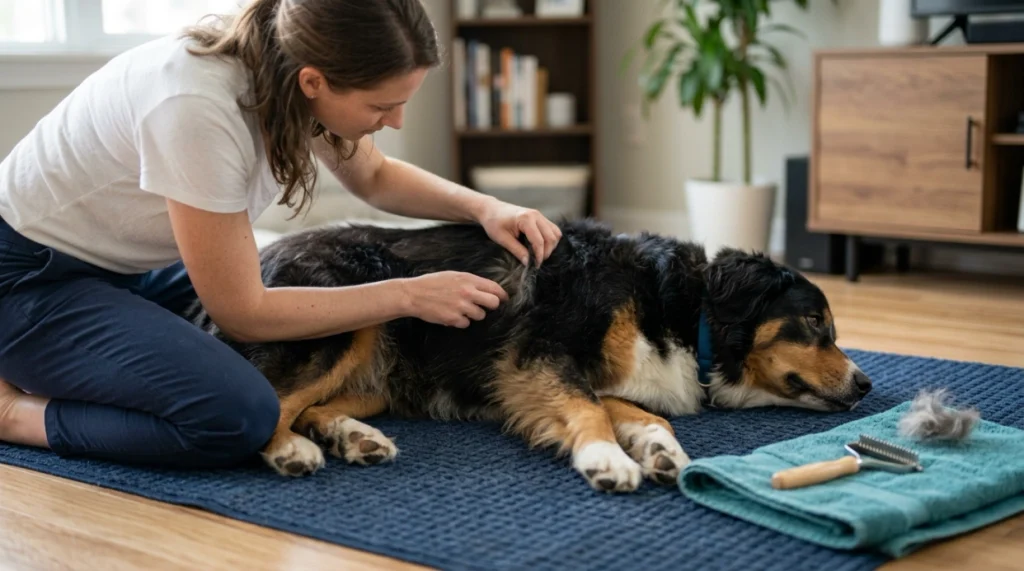
SaveDe-shedding tools remove hair through controlled contact and friction. Their teeth or grooming surfaces separate the coat enough to catch strands that are no longer firmly anchored.
The tool then carries that loose hair outward as you move it through the coat. It shouldn’t require force.
Rubber tools loosen surface hair
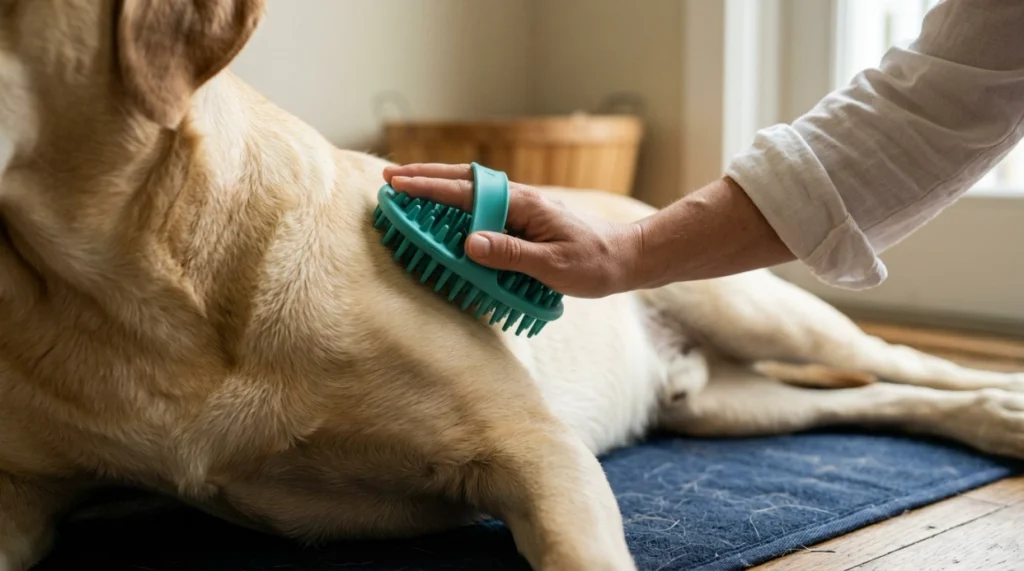
Rubber curry brushes use flexible fingers rather than sharp metal pins. The rubber drags gently against short hairs, helping loose strands separate from surrounding coat.
This design is one reason rubber tools work well on many short-coated dogs. KONG’s ZoomGroom, for example, uses 3/4-inch flexible fingers and is designed for both dry grooming and shampooing.
Undercoat tools reach below the topcoat
Double-coated dogs have a softer insulating layer beneath their outer coat. During heavy shedding, large amounts of that undercoat can loosen while remaining trapped between surrounding hairs.
An undercoat rake uses longer teeth to enter that deeper layer. The AKC’s guide to dog brushes describes undercoat rakes as tools with one or two rows of metal pins designed to remove loose undercoat.
Metal-edge de-shedders concentrate hair removal
Edge-style tools use closely spaced metal teeth along a relatively narrow grooming edge. They can pull a surprising amount of loose undercoat from one section.
That efficiency is useful during shedding season. It also means pressure control matters more.
Slicker brushes use many fine contact points
A slicker has numerous fine wire pins across a broad brush head. Those pins separate hair, collect loose strands, and help work through small tangles.
I think of a slicker as a maintenance and detangling tool first. A dedicated undercoat tool usually goes deeper when a heavy double coat is actively releasing fur.
Do De-Shedding Tools Cut a Dog’s Hair?
A properly designed de-shedding tool should primarily remove loose hair rather than shave a healthy coat. However, different designs interact with hair differently, so correct technique matters.
FURminator says its stainless-steel edge reaches through the topcoat to remove loose undercoat without cutting the topcoat when used as directed. SleekEZ likewise states that its Original grooming tool does not clip or shave hair.
| Tool type | How it contacts hair | Best fit | Main caution |
|---|---|---|---|
| Rubber curry | Flexible rubber fingers create friction and lift loose surface hair. | Short and smooth shedding coats | Limited reach into dense undercoat |
| Undercoat rake | One or two rows of longer metal pins reach beneath the topcoat. | Medium-to-long double coats | Pin length must suit coat depth |
| Edge-style deshedder | Closely spaced metal teeth collect released undercoat. | Heavy seasonal shedding | Easy to overwork one area |
| Slicker brush | Short, tightly packed angled wire pins separate and collect hair. | Medium, long, curly, or tangle-prone coats | Hard pressure can irritate skin |
| Wave-edge shedder | Tiny patterned teeth catch shedding hair near its exposed length. | Loose surface coat and short-to-medium shedding coats | Not a substitute for dematting |
If you see intact healthy hair being aggressively pulled out, slow down. More pressure doesn’t make a grooming session better.
Why Does So Much Fur Come Out With a De-Shedding Tool?
A large pile of fur usually appears because the tool is gathering loose hair from many small areas into one visible place. Without grooming, much of that hair would release gradually onto flooring, bedding, clothing, and furniture.
Double-coated dogs can make the effect look dramatic. Loose undercoat remains hidden beneath the topcoat until a suitable tool reaches it.
- Season matters: Some dogs release much more coat during seasonal changes.
- Coat density matters: Dense double coats can hold loose fur below the visible surface.
- Grooming frequency matters: Several missed sessions allow more loose hair to accumulate.
- Tool depth matters: A deeper-reaching rake can collect hair a surface brush leaves behind.
Normal shedding shouldn’t create bald patches or inflamed skin. The ASPCA’s dog grooming guidance recommends veterinary attention when hair loss appears with signs such as bald spots, sores, redness, or persistent scratching.
Are Dog De-Shedding Tools Safe?
Yes, a suitable de-shedding tool can be safe when you match it to the coat and use light, controlled strokes. Problems usually start when an aggressive tool is overused or pushed repeatedly against the skin.
I use one simple rule when judging technique: if the tool needs heavy pressure to keep removing hair, I would stop rather than press harder.
Inspect the coat and skin first
Look for sores, redness, bumps, scabs, painful areas, or bald patches. Don’t drag a metal grooming edge across irritated skin.
Remove mats before aggressive de-shedding
A mat is a compact tangle, not ordinary loose undercoat. Catching one with a de-shedding edge can tug the skin and make the dog resist future grooming.
The manufacturer’s FURminator usage directions specifically advise checking the skin and removing tangles or mats before using its undercoat tool.
Follow the direction of hair growth
For most metal de-shedding tools, long gentle strokes in the direction of growth give you better control. Clear collected hair frequently so you can see how much coat is coming out.
Don’t repeatedly scrape one spot
Move from section to section. Areas with thin skin, including the belly and lower legs, deserve extra care.
Practical check: After several strokes, part the coat and inspect the skin. Fresh redness, flinching, repeated turning toward the tool, or sudden restlessness means it’s time to reduce pressure or stop.
How Often Should You Use a Dog De-Shedding Tool?
Frequency depends on the tool, coat, and current shedding level. A gentle rubber curry may suit frequent short sessions, while a concentrated metal edge usually needs more restraint.
For its own undercoat de-shedding tools, FURminator recommends roughly one or two sessions weekly for 10 to 20 minutes, depending on the dog’s coat. That shouldn’t be treated as a universal schedule for every design.
- Light everyday shedding: Start with a rubber, bristle, or suitable maintenance brush.
- Seasonal double-coat shedding: Add an undercoat rake or dedicated de-shedding tool as needed.
- Sensitive skin: Use shorter sessions and softer contact surfaces.
- Heavy loose coat: Work in sections rather than extending one intense session.
The coat should guide you. When the tool stops collecting much loose hair, continuing to scrape usually adds skin contact without much benefit.
Which De-Shedding Tool Works Best for Each Coat?
 Save
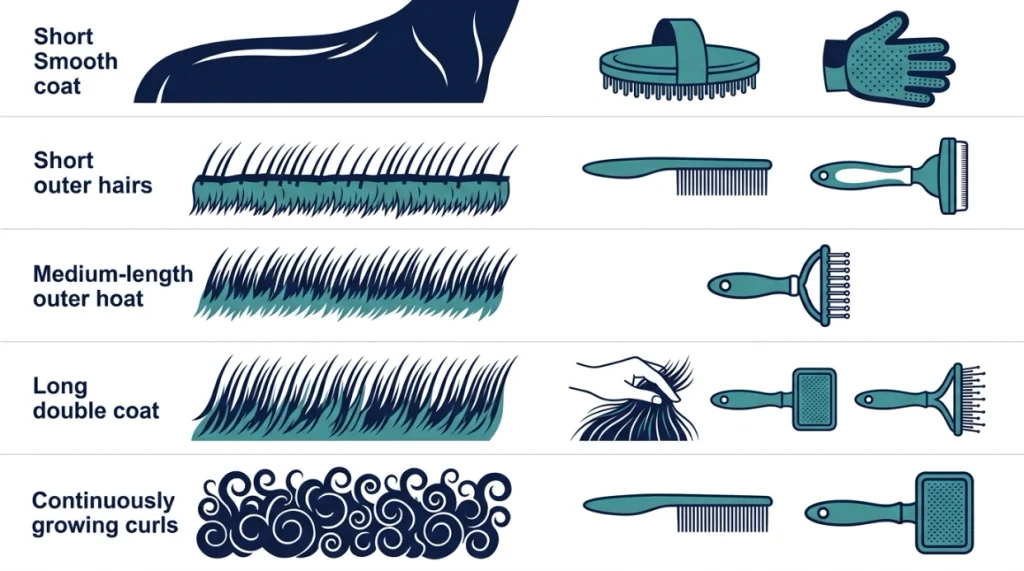
SaveChoose based on coat structure rather than the amount of fur on your floor. A powerful metal tool isn’t automatically the best choice for every dog that sheds.
- Short, smooth coats: Rubber curry brushes and grooming gloves are often comfortable starting points.
- Short double coats: Use a gentle surface brush regularly, then a correctly sized de-shedder during heavier coat release.
- Medium double coats: Undercoat rakes can reach loose insulating hair efficiently.
- Long double coats: Combine careful line brushing, slicker work, and an undercoat tool suited to coat depth.
- Curly or continuously growing coats: Detangling and mat prevention often matter more than aggressive undercoat removal.
Some edge-style tools are specifically designed for shedding breeds with undercoat. Always check the manufacturer’s coat recommendations before using one on a low-shedding breed.
De-Shedding Tool vs Regular Dog Brush: What’s the Difference?
A regular dog brush often handles routine coat maintenance, surface debris, smoothing, or tangles. A dedicated de-shedding tool focuses more heavily on extracting loose coat.
That is why owning two tools can make more sense than searching for one brush to do everything.
| Task | Regular brush | De-shedding tool |
|---|---|---|
| Routine surface grooming | Excellent | Depends on design |
| Deep loose undercoat | Limited with many brush types | Main strength of rakes and edge tools |
| Detangling | Often useful | Usually not the main job |
| Heavy seasonal shedding | Helpful | Usually more efficient |
My preferred routine is simple: use the gentlest tool that solves the current problem. Bring out the stronger de-shedder only when the coat gives you a reason.
How to Use a De-Shedding Tool Correctly
A good session should feel controlled and repetitive, not forceful. Work slowly enough to notice how both the coat and your dog respond.
- Inspect the skin first. Check for sores, bumps, redness, scabs, bald areas, or tender spots.
- Remove tangles. Don’t use a de-shedding edge as a shortcut through mats.
- Choose a comfortable area. Make sure your dog can stand or lie without slipping.
- Start with light pressure. Let the tool’s teeth or rubber surface do the work.
- Follow the coat direction. Use smooth strokes unless your tool’s instructions specify another technique.
- Work in sections. Move across the shoulders, back, sides, chest, hindquarters, and tail.
- Clear the tool frequently. Packed hair reduces efficiency and hides how much coat you’ve removed.
- Check the skin again. Stop if you see redness or irritation.
Short sessions are easier to evaluate. You can always groom another section later.
Dog De-Shedding Tools I Would Consider
 Save
SaveIf you’re ready to pick a tool, I would start by matching the design to the coat instead of buying whichever brush promises the most hair removal.
🏆 Best for heavy undercoat
FURminator Undercoat deShedding Tool
★★★★★ 4.8/5 fit
Its stainless-steel grooming edge is designed to reach through the topcoat and collect loose undercoat. I would choose the size and hair-length version carefully, then reserve it for controlled de-shedding rather than mindless daily scraping.
🐕 Best for short coats
KONG ZoomGroom
★★★★★ 4.7/5 fit
The large ZoomGroom uses flexible 3/4-inch TPE fingers and works wet or dry. I like this design as a lower-pressure starting point for short-coated dogs because it loosens hair through flexible contact rather than rigid wire pins.
🪮 Best simple design
SleekEZ Original Medium 5-Inch
★★★★★ 4.6/5 fit
This five-inch tool uses a patterned toothed edge and has no moving cleaning mechanism. I would consider it for straightforward loose-hair removal on broad body areas, but not for cutting through mats or tangles.
Frequently Asked Questions
Do dog de-shedding tools stop shedding?
No. De-shedding tools manage shedding by removing loose hair before it naturally drops around your home. They don’t switch off the dog’s hair-growth cycle, so regular grooming may still be necessary throughout the year.
Can a de-shedding tool hurt a dog?
Yes, if the wrong tool is used with excessive pressure or repeated strokes over one spot. Choose a design suited to the coat, avoid irritated skin, and stop when your dog shows discomfort or the skin becomes red.
Can I use a de-shedding tool every day?
That depends on the design. A soft rubber grooming tool may suit frequent use, while concentrated metal-edge tools usually need more restraint. Follow the manufacturer’s instructions and let your dog’s coat and skin determine whether another session is necessary.
Should I de-shed my dog before or after a bath?
It depends on the tool. Rubber curry brushes often work well during bathing, while many metal undercoat tools are designed for a clean, completely dry coat. Always follow the directions for your specific tool rather than applying one rule to every design.
Why is my dog’s de-shedding tool pulling out so much hair?
The tool may be collecting loose undercoat that would otherwise shed gradually over several days. Heavy seasonal coat release can create large piles quickly. Stop and inspect the skin if hair removal causes redness, bald-looking patches, pain, or unusual thinning.
Can de-shedding tools remove mats?
Most dedicated de-shedding tools should not be treated as mat removers. Mats need careful detangling with an appropriate comb, slicker, dematting tool, or professional grooming help before deeper de-shedding begins.
Final Takeaway
Dog de-shedding tools work by finding and collecting hair that is already loose within the coat. Rubber fingers, undercoat pins, slicker wires, and metal grooming edges simply reach that hair in different ways.
Start with the gentlest tool that works for your dog’s coat. Good de-shedding should leave the coat lighter and tidier without leaving the skin red, sore, or overworked.

Thomas Cutter is a lifelong dog owner and the founder of FindOutAboutDogs.com. With over 10 years of hands-on experience owning multiple breeds, Thomas created this site to provide honest, research-based dog advice that real owners can actually trust.
