How Often Should You Brush a Dog? A Simple Guide by Coat Type
Quick Answer
Most dogs should be brushed anywhere from once a week to every day, depending mainly on their coat type. Short-haired dogs often need weekly brushing, medium or double-coated dogs usually benefit from several sessions per week, and long, curly, or easily tangled coats may need daily care. Regular grooming also helps remove loose hair and prevent tangles, while giving you a chance to inspect your dog’s skin and coat.
A quick brushing schedule
- Short smooth coats: Start with about once a week and increase during heavy shedding.
- Medium or double coats: Brush several times a week to manage loose undercoat and debris.
- Long coats: Daily or near-daily brushing helps stop tangles from becoming mats.
- Curly coats: Brush frequently because shed hair can stay trapped and form knots.
- Heavy shedding periods: Add extra sessions when seasonal shedding noticeably increases.
The best rule to remember
- Watch the coat, not just the calendar: If you find tangles, loose undercoat, debris, or increasing shedding, your dog may need brushing more often.
If you’ve ever wondered whether you’re brushing your dog too much or not nearly enough, you’re not alone. The right answer isn’t one fixed number because a sleek-coated Beagle and a long-haired Collie simply don’t have the same grooming needs.
In this guide, I’ll break the decision down by coat type, shedding, lifestyle, and warning signs. By the end, you’ll have a practical brushing routine that makes sense for your individual dog.


How often should you brush a dog?
Most dogs need brushing from once a week to daily. Coat length, coat texture, shedding level, and how easily the fur tangles are more important than a single universal schedule.
As of 2026, major veterinary and canine-care guidance still follows that same basic principle: short coats generally need less frequent brushing, while long, silky, curly, or tangle-prone coats need more attention.
Brushing a dog isn’t only about making the coat look neat. A regular session can remove loose hair and debris, spread natural oils through the coat, and help you notice problems hidden beneath the fur.
- Loose hair: Regular brushing removes hair before more of it ends up on furniture and floors.
- Tangles: Frequent brushing can catch small knots before they tighten into uncomfortable mats.
- Skin checks: Grooming gives you a chance to notice bumps, irritation, parasites, or unusual changes.
- Coat condition: The right brush can help distribute natural oils and remove surface debris.
What is the right brushing schedule for your dog’s coat?
 Save
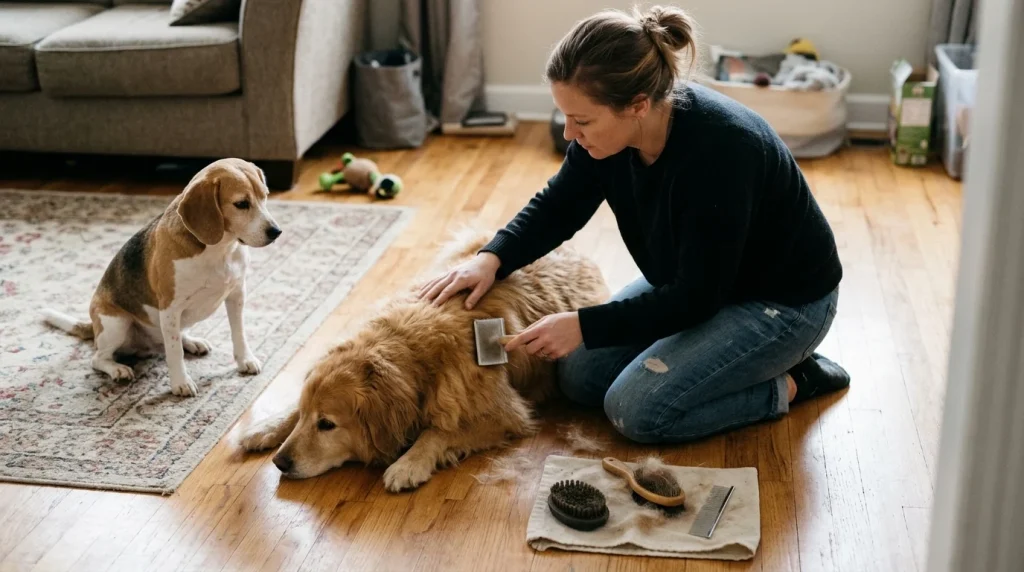
Your dog’s coat is the best starting point for deciding how often to brush. Breed names can offer clues, but the actual coat on the dog in front of you matters more.
| Coat type | Typical brushing frequency | Common tools | Main goal |
|---|---|---|---|
| Short and smooth | About once a week | Rubber brush or bristle brush | Remove loose hair and dirt |
| Medium or double coat | Several times a week | Slicker, pin brush, comb | Manage shedding and undercoat |
| Long and silky | Daily | Slicker, pin brush, metal comb | Prevent tangles and mats |
| Curly or low-shedding | Several times weekly to daily | Slicker and comb | Stop trapped shed hair from knotting |
Short-haired and smooth-coated dogs
Many short-haired dogs do well with a thorough brushing about once a week. A rubber curry-style brush or soft bristle brush can usually handle loose hair and surface dirt without overcomplicating the routine.
That said, short hair doesn’t always mean low shedding. Some smooth-coated dogs can leave plenty of hair around the house, so adding an extra brushing session during shedding periods can make sense.
Medium-haired and double-coated dogs
Dogs with thicker coats often benefit from brushing several times a week. Their coat can hold more loose undercoat, especially during seasonal coat changes.
Consistency matters here. Waiting until the coat looks messy can mean you have much more loose fur to work through in one session.
Long-haired dogs
Long coats usually need daily or near-daily attention because tangles can form quickly. Areas behind the ears, under the front legs, around the collar, and along the rear legs often deserve extra attention.
I think of daily brushing for a long-coated dog as short maintenance rather than one huge grooming project. Ten calm minutes done regularly is often easier than trying to untangle a neglected coat later.
Curly and easily tangled coats
Curly coats can create a misleading impression because loose hair may stay caught inside the coat instead of falling onto the floor. That trapped hair can contribute to knots and matting if the coat isn’t brushed through regularly.
A slicker brush may help open the coat, while a suitable comb can help check whether you have actually reached through the hair. Always work gently rather than pulling through resistance.
Does shedding season mean you should brush your dog more often?
Usually, yes. When your dog is shedding more heavily than usual, increasing brushing frequency can help remove loose hair before it spreads through your home or becomes trapped in the coat.
Many double-coated dogs shed heavily during seasonal coat changes. Indoor living, climate, and individual differences can also affect how consistently a dog sheds throughout the year.
- Normal weeks: Follow your usual coat-based schedule.
- Heavy shedding: Add short sessions as needed to remove loose fur.
- After outdoor activity: Brush out burrs, dirt, and plant material promptly.
- After getting wet: Check long or curly fur for developing tangles once the coat is dry enough to groom appropriately.
More brushing isn’t automatically better if the technique is rough. The goal is to remove loose hair and tangles without scraping the skin or repeatedly irritating the same sensitive area.
Can you brush your dog too often?
Yes, excessive or aggressive brushing can irritate a dog’s skin. The problem is often less about the number of sessions and more about using the wrong tool, too much pressure, or repeatedly dragging a brush across sensitive skin.
Watch your dog’s reaction during grooming. Flinching, pulling away, yelping, visible redness, or sudden sensitivity means it’s worth stopping and checking what is causing the discomfort.
Signs your brushing routine may be too aggressive
- Red skin: Stop using pressure on the affected area and inspect the skin.
- Brush marks: These can indicate that a tool is being used too firmly or too repeatedly.
- Fear of the brush: A dog that suddenly avoids grooming may associate the process with discomfort.
- Repeated scratching: Skin irritation should be taken seriously, particularly when it persists.
For me, a good rule is simple: the brush should work through the coat, not scrape the dog. Use gentle strokes and choose a tool designed for the coat you’re grooming.
How do you know when your dog needs brushing?
Your dog’s coat often gives you clearer answers than a calendar. If you can see loose fur collecting, feel small tangles, or find debris after a walk, it’s probably time for a grooming session.
A quick daily inspection is especially useful for long-haired dogs. You don’t always need to complete a full brushing session, but catching a small knot early can save your dog a lot of discomfort.
Check these areas first
- Behind the ears: Fine hair and friction can make tangles easy to miss.
- Under the collar: Constant rubbing can compact hair and create knots.
- Armpits: Movement and friction make this a common trouble spot.
- Groin and rear legs: Longer hair can tangle or collect debris here.
- Tail: Feathers and longer tail hair may need separate attention.
Use your fingers before reaching for a brush if you’re checking a sensitive area. A gentle hand check can help you find a knot without immediately pulling on it.
What type of dog brush should you use?
 Save
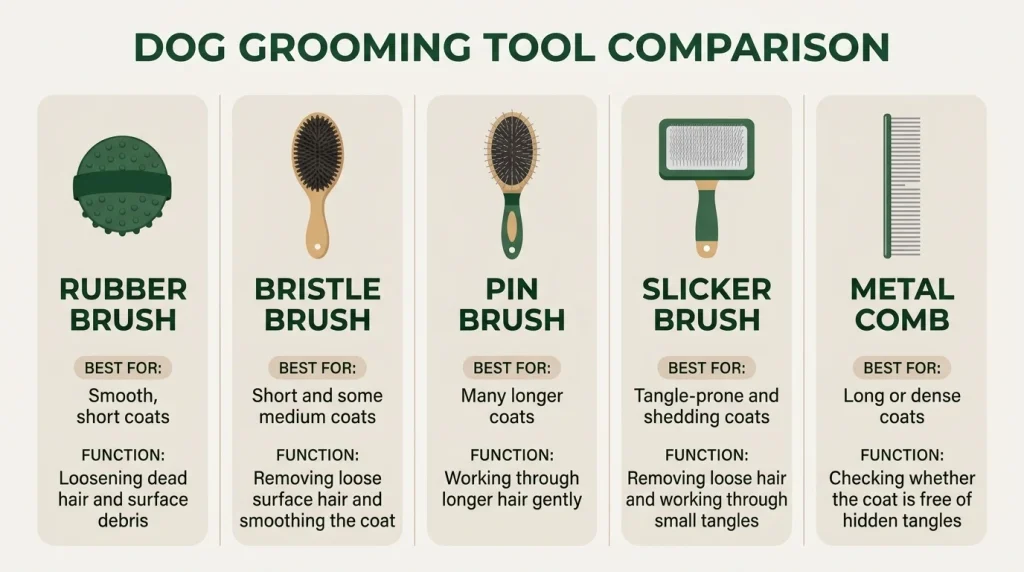
The best brushing schedule only works if you’re using a tool that suits the coat. One brush does not fit every dog, and the wrong choice can make grooming less effective or uncomfortable.
Common tools include rubber brushes for smooth coats, bristle brushes for many short and medium coats, pin brushes for some longer hair, slicker brushes for tangles and loose hair, and combs for checking through longer coats.
| Tool | Often useful for | What it helps with |
|---|---|---|
| Rubber brush | Smooth, short coats | Loosening dead hair and surface debris |
| Bristle brush | Short and some medium coats | Removing loose surface hair and smoothing the coat |
| Pin brush | Many longer coats | Working through longer hair gently |
| Slicker brush | Tangle-prone and shedding coats | Removing loose hair and working through small tangles |
| Metal comb | Long or dense coats | Checking whether the coat is free of hidden tangles |
If you’re unsure which tool is right, ask your veterinarian, groomer, or breeder for guidance based on your dog’s specific coat. Coat texture can vary even among dogs of the same breed.
How should you brush your dog properly?
Start gently and work methodically rather than rushing across the top of the coat. For longer or thicker fur, you need to check through the coat instead of only brushing the visible surface.
- Choose a calm time: A relaxed dog is easier to groom safely.
- Inspect the coat first: Look for debris, tangles, irritated skin, or sensitive areas.
- Start with gentle strokes: Let the dog become comfortable with the tool.
- Work in manageable sections: This is especially important for dense or long coats.
- Check common trouble spots: Pay attention behind the ears, under the legs, and around friction points.
- Reward calm behavior: Praise or an appropriate treat can help make grooming positive.
Don’t force a brush through a tight mat. Severe matting can pull painfully on the skin, and difficult cases may need professional grooming help.
How often should you brush a puppy?
Brush a puppy regularly enough to build a positive grooming habit, even before the coat requires intensive maintenance. Short, gentle sessions can help your puppy learn that brushes and combs are normal parts of life.
The exact frequency still depends on coat type. The early goal, however, is also behavioral: teach the puppy to stand or sit calmly while you touch different parts of the body and inspect the coat.
Keep early sessions brief. A calm two-minute experience can be more useful than a long session that leaves a puppy frustrated or frightened.
When should you call a groomer or veterinarian?
 Save
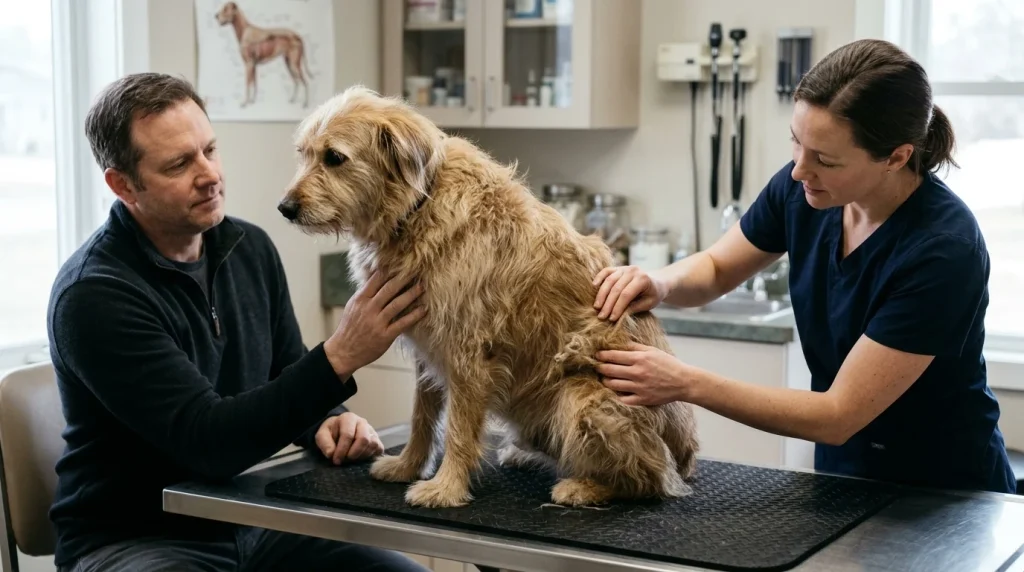
Brushing is routine care, but some coat and skin problems need professional attention. Don’t assume every patch of hair loss, irritation, or matting can be solved by changing your brushing schedule.
- Severe mats: Tight mats close to the skin can be painful and difficult to remove safely at home.
- Bald patches: Unexpected hair loss deserves professional advice.
- Red or inflamed skin: Persistent irritation should not be brushed over.
- Open sores: Avoid aggressive grooming around damaged skin and contact a veterinarian.
- Sudden excessive shedding: A major unexplained change can have causes beyond normal grooming needs.
Regular brushing can help you spot these changes earlier because you become familiar with what your dog’s normal coat and skin look like. That makes grooming useful beyond simple shed-hair control.
If you’re ready to choose a grooming tool, here’s the kind of setup I’d recommend based on the job you need it to do:
🏆 Best for smooth coats
KONG ZoomGroom
★★★★☆
A rubber grooming tool designed to help loosen hair from short, smooth coats. I’d consider this type of brush a simple starting point for owners who want an easy weekly grooming routine.
💰 Best for everyday grooming
Hertzko Self-Cleaning Slicker Brush
★★★★☆
A slicker-style option aimed at removing loose hair and working through light tangles. I’d reserve a tool like this for coats that need more than a quick surface brushing.
🚛 Best for coat checks
Andis Steel Pet Comb
★★★★☆
A metal comb can help check longer or denser coats after brushing. I’d choose a comb like this as a finishing tool when I want to find tangles hiding deeper in the fur.
Frequently asked questions
Should I brush my dog every day?
Daily brushing is useful for many long-haired, silky, curly, or easily tangled coats. Short-haired dogs usually don’t need daily brushing, although extra sessions can help during periods of heavier shedding.
How often should I brush a short-haired dog?
Many short-haired dogs do well with brushing about once a week. If your dog sheds heavily or gets dirty outdoors, you may choose to brush more often using a gentle tool suited to a smooth coat.
How often should I brush a double-coated dog?
Several brushing sessions per week are often helpful for double-coated dogs, especially when loose undercoat is building up. During heavier seasonal shedding, shorter and more frequent sessions may be easier than one long grooming session.
Can I brush my dog too much?
You can irritate the skin by brushing too aggressively or using the wrong tool, even if your schedule itself is reasonable. Use gentle pressure, stop if your dog appears uncomfortable, and check for redness or sensitivity.
Should I brush my dog before or after a bath?
Brushing before a bath can help remove loose hair and identify tangles or mats. Long-haired dogs may also need gentle grooming after drying because the coat can shift and form new tangles.
The bottom line
The simplest answer to how often you should brush a dog is this: match the schedule to the coat. Start around once a week for many short coats, increase to several times weekly for thicker coats, and move toward daily care for long or easily tangled fur.
Then let your dog’s coat guide you. Regular checks for loose hair, tangles, debris, and skin changes will tell you far more than following a calendar blindly.
A good brushing routine should be consistent, gentle, and realistic enough to maintain. If you build that habit around your dog’s actual coat needs, grooming becomes easier for both of you.

Thomas Cutter is a lifelong dog owner and the founder of FindOutAboutDogs.com. With over 10 years of hands-on experience owning multiple breeds, Thomas created this site to provide honest, research-based dog advice that real owners can actually trust.
