How Often Should You Brush a Poodle? 2026 Guide
Quick Answer
Most Poodles should be brushed at least every other day, while Poodles with medium or long coats often need daily brushing. Frequent brushing stops loose hair from becoming trapped inside the curls and forming mats, which is why Poodle grooming guidance from the AKC stresses building a regular brushing routine.
A simple Poodle brushing schedule
- Long coat: Brush daily because longer curls tangle and mat faster.
- Typical pet trim: Use every-other-day brushing as a reliable starting routine.
- Problem areas: Check the ears, legs, armpits, collar area, and tail carefully.
- After moisture: Check the coat after swimming, bathing, rain, or muddy outdoor play.
- Final check: Run a metal comb from the skin outward after brushing.
The easiest rule to remember
- If a comb cannot glide through the coat without catching, that section needs more brushing.
If you have ever skipped a few Poodle brushing sessions, you already know how quickly soft curls can turn into stubborn tangles. The outside can look fluffy while small mats hide close to the skin.
I prefer a simple routine instead of waiting until the coat looks messy. Below, I’ll show you how often to brush, which areas need extra attention, and how to tell when you’re truly finished.


How Often Should You Brush a Poodle to Prevent Mats?
Every other day is a practical baseline for many Poodles, while longer coats usually need daily brushing. The correct schedule depends more on coat length and condition than on whether your dog is Toy, Miniature, or Standard.
Poodles have dense, curly coats that hold loose hairs instead of dropping much of that hair around the house. Those trapped hairs can twist into neighboring curls and help form tangles.
- Daily: Long coats, fluffy styles, growing coats, or dogs that mat easily.
- Every other day: A useful baseline for a maintained pet coat.
- Extra checks: After swimming, rain, baths, harness wear, or active outdoor play.
- Professional grooming: Often scheduled every four to eight weeks depending on coat length and style.
VCA’s Standard Poodle guidance recommends brushing and combing every other day to help prevent matting. The AKC also notes that owners keeping a Poodle’s coat long should learn to brush it daily.
That distinction matters. A freshly clipped Poodle needs less brushing time per session, but a long fluffy coat gives you much less room to skip days.
Why Do Poodles Need Such Frequent Brushing?
Poodles need frequent brushing because their dense curls can trap loose hair and create mats near the skin. Brushing also removes debris and gives you a regular chance to examine the coat and skin.
What is line brushing?
Line brushing is a grooming method where you separate the coat into small sections and brush each section from near the skin outward. You move through the coat gradually instead of brushing only across the fluffy surface.
Surface brushing is one of the biggest mistakes I see in Poodle grooming routines. The dog looks brushed, yet a comb catches immediately underneath.
My practical rule is simple: the comb decides whether a section is finished. If it glides smoothly from near the skin through the ends, you can move on.
- Less matting: Small tangles get removed before they tighten together.
- Cleaner coat: Brushing lifts dirt, dry debris, and loose hair.
- Better skin checks: You can spot redness, sores, lumps, parasites, or tender areas sooner.
- Easier grooming visits: A maintained coat gives your groomer more styling options.
VCA’s coat-care guidance specifically identifies slicker brushes as useful for curly, non-shedding coats such as Poodles. It also recommends inspecting the coat after outdoor activity for trapped debris.
Does Coat Length Change How Often a Poodle Should Be Brushed?
Yes. The longer and fuller your Poodle’s coat becomes, the more frequently you should check and brush it. Short clips reduce tangling opportunities, while long curls create more places for neighboring hairs to catch.
| Coat situation | Suggested routine | Main concern | What to check |
|---|---|---|---|
| Long or fluffy coat | Daily | Fast-forming tangles | Comb reaches skin without catching |
| Maintained pet clip | Every other day baseline | Hidden knots in friction areas | Ears, legs, tail, armpits |
| Growing coat | Daily checks | Increasing coat density | Areas where curls start catching |
| After swimming or rain | Check after the coat is managed and dry | Moist curls tightening together | Chest, legs, belly, ears |
Toy and Miniature Poodles have less body surface to cover, so brushing may take less time. Their curly coat still needs the same careful attention.
Standard Poodles take longer because there is simply more coat to work through. Breaking the body into small sections makes the job much easier.
Which Parts of a Poodle Mat the Fastest?
 Save
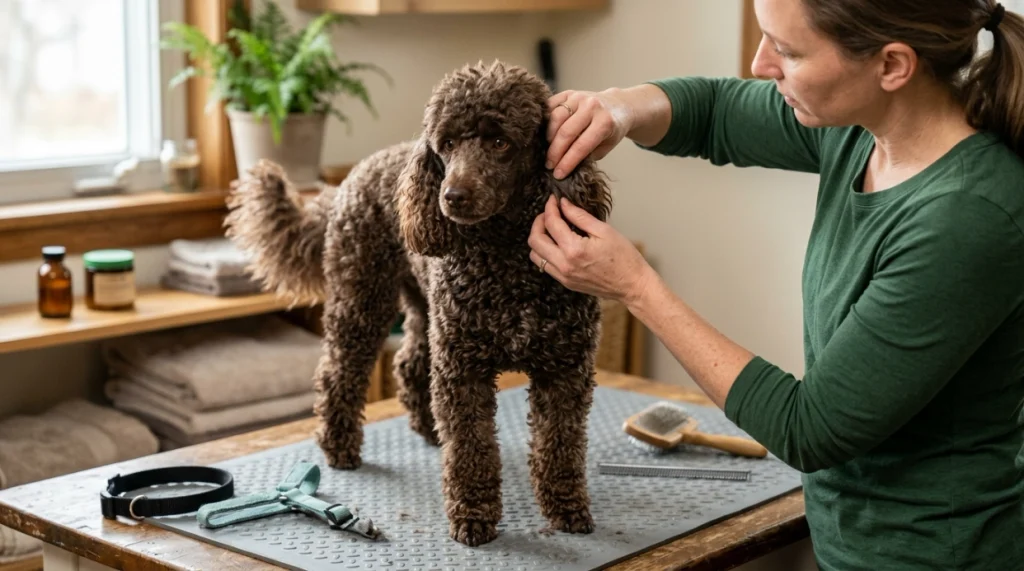
SaveFriction areas usually deserve the closest attention. Mats often develop where the coat rubs against itself, furniture, collars, harnesses, or moving joints.
- Behind the ears: Fine hair and ear movement can create tight tangles.
- Armpits: Leg movement creates constant friction.
- Collar area: Collars rub repeatedly against the curls.
- Harness area: Straps can compress and twist the coat.
- Legs and feet: Longer furnishings catch dirt and debris.
- Tail: A fluffy tail can hide knots underneath.
- Chest and belly: Movement and outdoor contact encourage tangles.
I would rather spend one extra minute checking these areas than discover a tight mat several days later. Small knots are usually much easier to handle than compacted mats.
What Brush Should You Use on a Poodle?
A slicker brush paired with a metal comb is one of the most useful combinations for a Poodle coat. The slicker works through curls and tangles, while the comb checks whether you reached through the full coat.
A good slicker should have pins long enough to work through your dog’s coat without forcing excessive pressure. Bigger brushes cover the body faster, while smaller heads give you control around legs and tighter areas.
- Slicker brush: Main tool for separating curls and working through light tangles.
- Metal comb: Final check for hidden knots close to the skin.
- Pin brush: Useful for some longer areas and gentle coat maintenance.
- Detangling spray: Can add slip when the product is suitable for dogs and used as directed.
Avoid treating every knot like a battle. Repeated hard scraping can irritate skin and make your Poodle dislike grooming.
How Do You Brush a Poodle Correctly?
 Save
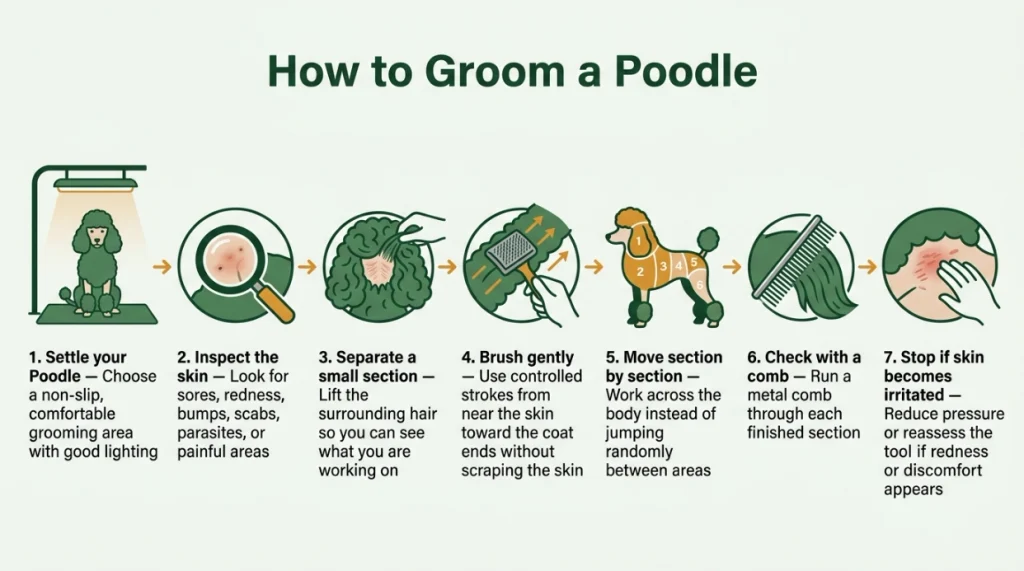
SaveWork in small sections and brush from near the skin toward the ends. Trying to finish the entire coat with quick surface strokes leaves hidden tangles behind.
- Settle your Poodle. Choose a non-slip, comfortable grooming area with good lighting.
- Inspect the skin. Look for sores, redness, bumps, scabs, parasites, or painful areas before brushing.
- Separate a small section. Lift the surrounding hair so you can see what you are working on.
- Brush gently. Use controlled strokes from near the skin toward the coat ends without scraping the skin.
- Move section by section. Work across the body instead of jumping randomly between areas.
- Check with a comb. Run a metal comb through each finished section.
- Stop if skin becomes irritated. Redness or obvious discomfort means you need to reduce pressure or reassess the tool.
Short, calm sessions usually work better than wrestling through an entire tangled coat. Puppies especially benefit from learning that brushing ends before they become frustrated.
Reward calm standing, gentle handling, and successful short sessions. Grooming becomes much easier when your dog sees the tools as part of normal life.
What Happens If You Don’t Brush a Poodle Enough?
Skipped brushing allows tangles to tighten and join together into mats. Severe matting can pull at the skin and may eventually require professional clipping rather than painful home detangling.
Mats are more than a cosmetic problem. They can make it harder to inspect the skin and can trap moisture or debris against the body.
- Small knots become larger and tighter.
- Brushing becomes more uncomfortable.
- Home grooming sessions take longer.
- Your groomer may have fewer safe styling options.
- Skin underneath dense matting becomes harder to inspect.
The Poodle Club of America notes that Poodles require regular clipping and grooming. Keeping up with home brushing makes that larger grooming routine easier to manage.
How Often Should a Poodle Be Professionally Groomed?
Many Poodles are professionally clipped roughly every four to eight weeks, depending on coat length and the style you want. Home brushing still continues between appointments.
Professional grooming and home brushing solve different problems. A groomer handles clipping, shaping, bathing, drying, nails, and other maintenance, while your brushing routine prevents tangles from building between visits.
- Short practical trim: Usually easier to maintain between grooming appointments.
- Longer styled coat: Requires more frequent brushing at home.
- Active outdoor Poodle: Needs additional coat checks for dirt and debris.
- Mat-prone dog: May benefit from discussing a shorter trim with the groomer.
If brushing suddenly becomes painful or the skin looks inflamed, stop and inspect the area. A veterinarian or professional groomer can help when the problem goes beyond ordinary tangles.
A Simple Weekly Poodle Brushing Routine
 Save
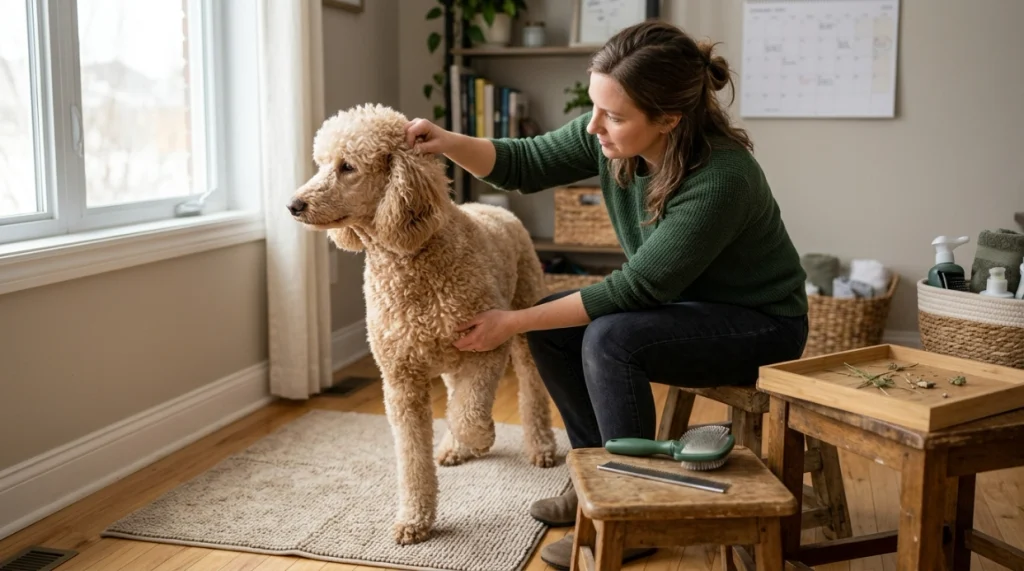
SaveConsistency matters more than marathon grooming sessions. A predictable routine helps you find small tangles before they become serious.
- Daily or every other day: Brush according to coat length and matting tendency.
- Every session: Check behind ears, armpits, collar areas, legs, and tail.
- After brushing: Follow with a metal comb.
- After outdoor mess: Remove burrs, mud, or debris before they tighten into curls.
- Before grooming appointments: Keep following the same routine rather than stopping because a haircut is coming.
The routine does not need to feel complicated. Ten focused minutes on a manageable coat can be more useful than an exhausting session after weeks of neglect.
Poodle Grooming Tools I Would Consider
If you’re ready to build a practical Poodle brushing kit, these are three tool types I would consider first. You do not need a drawer full of gadgets to maintain a healthy coat.
🏆 Best Overall
Chris Christensen Big G Slicker Brush
★★★★★ 4.8/5
This premium slicker uses long, densely spaced pins designed for thick and curly coats. I like the concept for longer Poodle coats because the pin length helps you work through more than the fluffy surface layer.
💰 Easier-Cleanup Pick
Hertzko Self-Cleaning Slicker Brush
★★★★☆ 4.4/5
The retractable-pin design makes collected hair easier to remove after a session. I would consider it for owners who prioritize simple cleanup, though dense or longer Poodle coats may benefit from a longer-pin professional-style slicker.
🔍 Best Finishing Check
Andis 7.5-Inch Steel Pet Comb
★★★★★ 4.7/5
A steel comb gives you a simple way to test whether your slicker reached through the coat. I consider this type of comb essential because hidden snags show up immediately when you comb from near the skin outward.
Frequently Asked Questions
Can I brush my Poodle every day?
Yes. Daily brushing is appropriate for many Poodles, especially dogs with longer coats or coats that tangle easily. Use light pressure, work in sections, and stop if the skin becomes red or your dog shows discomfort.
Is brushing a Poodle once a week enough?
Once-weekly brushing is often too infrequent for a medium or long Poodle coat. Curly hair can develop hidden tangles quickly, so every-other-day brushing is a safer baseline and daily maintenance is often better for longer styles.
Should I brush my Poodle wet or dry?
Avoid aggressively dragging a brush through tangled wet curls. Follow the directions for any grooming or detangling product you use, dry the coat appropriately after bathing, and brush gently rather than forcing a tool through resistance.
How do I know if my Poodle is fully brushed?
Use a metal comb as your final check. If the comb moves smoothly from near the skin through the ends without catching, that section is generally free of obvious tangles.
Do Toy Poodles need less brushing than Standard Poodles?
Toy Poodles have less coat area, so a full session can take less time. Their curly coat can still mat, which means brushing frequency should depend on coat length, texture, activity, and tangling rather than body size alone.
Should I cut out a tight mat myself?
Be cautious with tight mats because skin can be pulled up inside them and become difficult to see. If a mat is close to the skin, painful, extensive, or difficult to separate safely, ask a professional groomer or veterinarian for help.
Final Takeaway
For most Poodles, every-other-day brushing is a sensible minimum routine, while longer coats often need daily attention. The goal is not simply to make the outside look fluffy.
Brush in small sections, pay extra attention to friction areas, and finish with a metal comb. That simple habit catches tangles while they are still manageable and makes the rest of your Poodle’s grooming routine much easier.
Start with one small step today: check behind your Poodle’s ears, under the front legs, and around the collar area. If your comb glides through those spots, you’re already ahead of the mats.

Thomas Cutter is a lifelong dog owner and the founder of FindOutAboutDogs.com. With over 10 years of hands-on experience owning multiple breeds, Thomas created this site to provide honest, research-based dog advice that real owners can actually trust.
