How to Brush a Poodle: Step-by-Step Guide for a Tangle-Free Coat
Quick Answer
To brush a Poodle, work through the coat in small sections with a slicker brush, brushing from near the skin toward the ends. Finish each section with a metal comb to catch hidden tangles, and follow the Poodle grooming guidance from the American Kennel Club if you want a useful professional reference.
How to brush a Poodle quickly
- Prepare the coat: Make sure your Poodle is comfortable and the coat is clean enough to work through gently.
- Divide into sections: Lift the curls so you can see a narrow line of coat close to the skin.
- Use a slicker: Brush each small section outward with light, controlled strokes instead of scraping the skin.
- Check with a comb: Run a steel comb from the roots through the ends after brushing each area.
- Rework snags: If the comb catches, return to that spot with the slicker rather than pulling harder.
- Check friction areas: Pay extra attention behind the ears, under the collar, armpits, legs, tail, and chest.
One rule that prevents most problems
- Don’t stop at the surface: A fluffy-looking coat can still hide tangles close to the skin, so always finish with a comb check.
Poodle brushing gets easier once you stop treating the coat like ordinary dog fur. I prefer a slow section-by-section routine because it finds small tangles before they become painful mats.


Why Is Brushing a Poodle Different From Brushing Other Dogs?
A Poodle has a dense, curly coat that can trap loose hairs instead of dropping them freely around your home. Those trapped hairs can wrap around neighboring curls and form tangles.
That is why a Poodle can look clean and fluffy on top while hiding knots underneath. Regular brushing needs to reach through the curls rather than simply smoothing their surface.
Definition: Line brushing is a grooming method where you expose a narrow row of coat, brush that row from near the skin outward, then move gradually to the next row.
The ASPCA also notes that regular brushing helps remove dirt and tangles while giving you a chance to inspect your dog’s skin. Its dog grooming guidance recommends matching your grooming routine to coat type.
If you’re still deciding whether Poodle-level grooming fits your household, our guide to friendly family dog breeds compares Poodles with lower-maintenance breeds.
What Tools Do You Need to Brush a Poodle?
For most pet Poodles, you need two core tools: a good slicker brush and a sturdy metal comb. A detangling spray can help with minor knots, but it does not replace correct brushing.
I treat the comb as the final inspection tool. If the comb cannot travel through the coat, the section is not finished yet.
| Tool | Best Use | How to Use It | Main Limitation |
|---|---|---|---|
| Slicker brush | Separating curls and removing small tangles | Use light strokes through small coat sections | Can skim over deeper knots if used only on the surface |
| Steel comb | Checking the coat after brushing | Comb from near the skin through the ends | Should not be forced through tight mats |
| Pin brush | Light maintenance and longer loose coat | Use gentle strokes through already manageable hair | Usually not enough for hidden mats alone |
| Detangling spray | Adding slip to minor tangles | Mist lightly before gently separating the area | Cannot safely fix severe matting |
AKC grooming guidance specifically recommends slicker brushes for curly coats and warns against pressing hard enough to cause discomfort. That light hand matters more than how expensive your brush is.
How Do You Brush a Poodle Correctly?
 Save
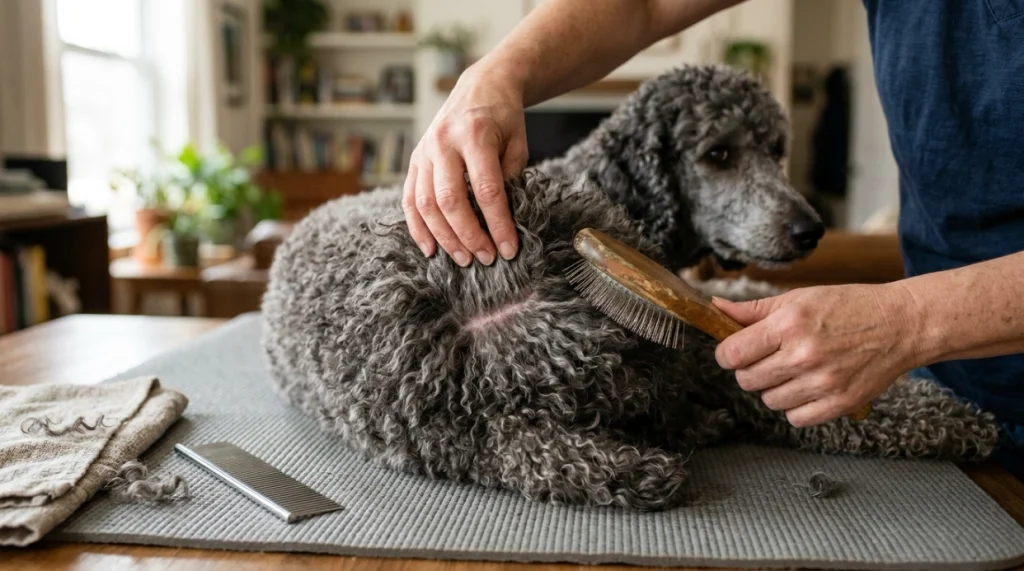
SaveThe best method is to work systematically from one small section to the next. Random brushing makes it easy to miss the coat beneath the visible curls.
- Choose a calm grooming spot. Use a stable, non-slip surface where your Poodle can stand or lie comfortably.
- Start with an easy area. The shoulder or side of the body is often simpler than beginning around sensitive feet or ears.
- Lift the coat. Use one hand to push the hair upward until you can see a narrow line close to the skin.
- Brush the exposed line. Place the slicker into the hair and pull outward gently, following the coat rather than scraping the skin.
- Move a little at a time. Drop another narrow layer of hair and repeat until the full area is brushed.
- Use the comb test. Run a metal comb through the section from near the roots to the tips.
- Fix anything the comb finds. If it catches, stop and work the snag with your slicker instead of yanking the comb through.
This is the basic line-brushing method. PetMD’s guidance on preventing matted dog hair also describes working through small sections rather than brushing only the outer coat.
Where Should You Brush First?
Start somewhere your dog already tolerates well. A calm beginning can make the ears, legs, paws, and tail easier later.
I also avoid jumping from one body part to another. Following the same order every time makes it easier to notice when you accidentally skip an area.
- Body: Work along the sides, shoulders, back, and chest.
- Legs: Lift the hair in rows because curls can hide knots close to the skin.
- Armpits: Use extra care because movement and friction encourage tangles.
- Behind the ears: Check carefully where soft hair rubs against itself.
- Tail: Support the hair instead of pulling directly against the skin.
- Topknot: Work gently and keep the brush away from the eyes.
How Often Should You Brush a Poodle?
Brushing frequency depends on coat length, activity, moisture, and how easily your individual dog’s hair tangles. Longer coats usually require attention more often than closely clipped coats.
As of 2026, I still prefer condition-based grooming over a rigid calendar. Check the coat with your fingers and comb instead of waiting for a scheduled day when tangles are already forming.
| Coat Situation | Practical Brushing Routine | Watch Closely |
|---|---|---|
| Short pet clip | Several thorough checks each week may be manageable | Ears, armpits, collar area |
| Medium fluffy coat | Frequent brushing, often every day or two | Legs, chest, tail, friction points |
| Long coat or growing coat | Daily coat checks are often the safest routine | Full coat from roots to tips |
| After swimming or active outdoor play | Inspect once the coat is safely dried and manageable | Debris, compacted curls, damp friction areas |
Poodles can work well in busy homes, but grooming time needs to be part of that decision. Our guide to dog breeds for families with babies includes the Poodle and explains the maintenance trade-off.
How Do You Brush Mats Out of a Poodle?
 Save
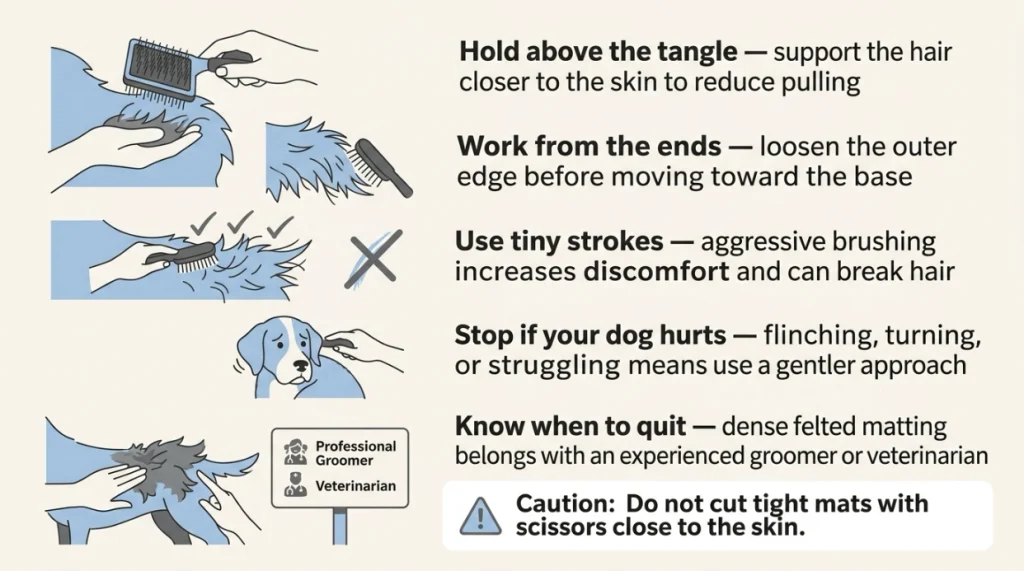
SaveSmall tangles may be gently separated, but a tight mat against the skin is different. Do not turn brushing into a painful tug-of-war just to preserve coat length.
Severe mats can pull on the skin and may be safer for a professional groomer to clip. The ASPCA specifically warns owners not to cut tight mats out with scissors because skin can be caught accidentally.
- Hold above the tangle: Support the hair closer to the skin to reduce pulling.
- Work from the ends: Loosen the outer edge before moving toward the base.
- Use tiny strokes: Aggressive brushing increases discomfort and can break hair.
- Stop if your dog hurts: Repeated flinching, turning, or struggling means you need a gentler approach.
- Know when to quit: Dense felted matting belongs with an experienced groomer or veterinarian.
Don’t bathe a badly matted Poodle hoping the knots will disappear. Wetting compacted mats can make the grooming job harder once that hair tightens together.
What Are the Most Common Poodle Brushing Mistakes?
Most home-grooming problems come from technique rather than laziness. Owners often brush regularly but still miss the part of the coat where mats actually develop.
- Brushing only the top: The coat looks fluffy, but knots remain underneath.
- Skipping the comb: You lose your best way to check whether a section is fully detangled.
- Pressing the slicker hard: More pressure does not mean better grooming.
- Pulling through resistance: A snag is a signal to stop, not pull harder.
- Ignoring friction zones: Ears, armpits, collars, legs, and tail areas deserve extra checks.
- Waiting for visible mats: Early tangles are much easier to deal with than compacted matting.
If children help with grooming, an adult should still supervise pressure and technique. You can also compare the Poodle’s care needs in our guide to dog breeds for 9- to 12-year-olds.
Should You Use a Slicker Brush or a Comb on a Poodle?
 Save
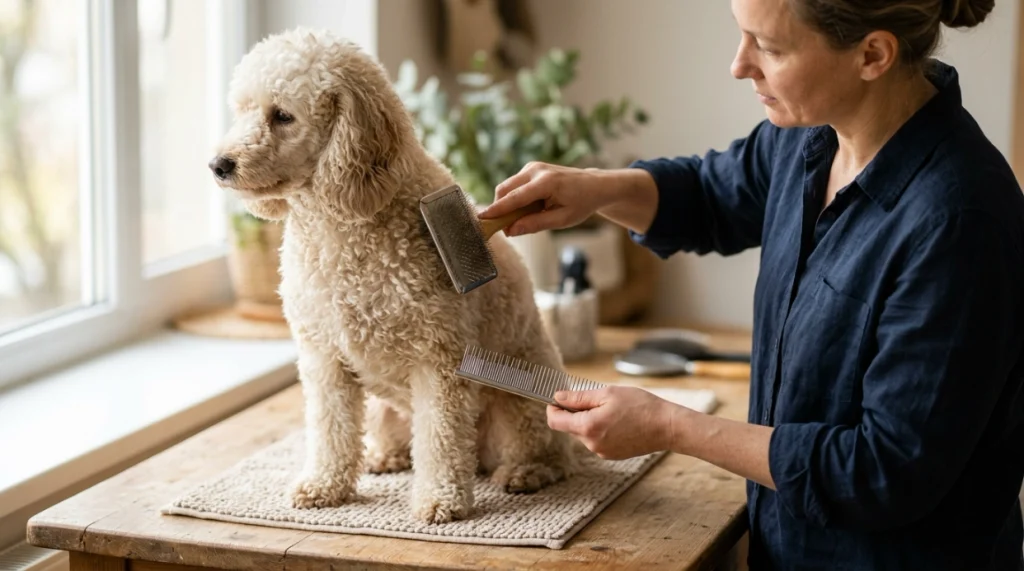
SaveUse both because they do different jobs. The slicker does most of the detangling, while the comb reveals what the brush missed.
A comb that glides cleanly from near the skin to the ends is a much better finishing test than appearance alone. That one habit prevents the classic problem of a fluffy surface hiding a tangled base.
The Poodle Club of America also emphasizes that Poodles require regular clipping and grooming. Whether your dog is Toy, Miniature, or Standard changes the amount of coat you handle, but not the need for consistent maintenance.
Which Poodle Brushing Tools Are Worth Buying?
If you’re ready to build a simple grooming kit, I would start with one capable slicker and one metal comb. You do not need a drawer full of specialty brushes to improve your routine.
🏆 Best Overall
Chris Christensen Big G Slicker Brush
★★★★★ Editorial fit: 4.8/5
The Big G uses long, dense pins designed for curly and dense coats, including Poodles. I like it most for medium or longer coats where a shallow brush can struggle to reach through the curl.
💰 Best Value Slicker
Andis Premium Large Firm Slicker Brush
★★★★☆ Editorial fit: 4.4/5
This large firm slicker is built for dense coats and mat-prone areas without the premium price of some professional brushes. I would choose it for owners who want a straightforward full-size slicker before spending more.
🔎 Best Finishing Check
Andis 7.5-Inch Steel Pet Comb
★★★★★ Editorial fit: 4.7/5
This steel comb combines wider and finer spacing in one simple tool, making it useful for checking your work after slicker brushing. I consider a comb like this essential because it exposes small snags your eyes can miss.
Frequently Asked Questions
Should you brush a Poodle every day?
A Poodle with a medium or long coat may benefit from daily checks, especially around the ears, legs, armpits, and other friction points. A short pet clip can be easier to maintain, but you should still comb through the coat regularly rather than relying only on appearance.
Can you brush a Poodle with a regular hairbrush?
A human hairbrush usually isn’t the best main tool for dense Poodle curls. A slicker brush can separate and detangle the coat more effectively, while a metal comb helps confirm that you reached through to the base instead of smoothing only the visible outer hair.
Should you brush a Poodle wet or dry?
A soaking-wet coat is not the ideal time to attack existing mats. For routine grooming, follow the product and groomer guidance suited to your dog’s coat, and avoid aggressively brushing compacted wet tangles. Severe mats should be handled by an experienced professional rather than forced apart.
Why does my Poodle still get mats even though I brush?
The most common reason is surface brushing. A slicker may make the outer curls look fluffy while leaving knots closer to the skin, especially behind the ears and under the legs. Use line brushing and finish every section with a metal comb to locate hidden resistance.
What should I do if brushing hurts my Poodle?
Stop pulling and inspect the area. Reduce pressure, support the hair near the skin, and work only on small tangles that loosen comfortably. If the coat is tightly matted or your dog remains painful, a professional groomer or veterinarian can choose a safer removal method.
Final Takeaway
Learning how to brush a Poodle comes down to one habit: reach the entire coat, not just the fluffy surface. Work in small lines with a slicker, then let a metal comb tell you whether each section is truly tangle-free.
Keep sessions calm and consistent, and stop before grooming becomes painful. Ten careful minutes done regularly can be far more useful than one exhausting session after mats have already formed.

Thomas Cutter is a lifelong dog owner and the founder of FindOutAboutDogs.com. With over 10 years of hands-on experience owning multiple breeds, Thomas created this site to provide honest, research-based dog advice that real owners can actually trust.
