How to Avoid Damaging a Double Coat When Brushing Your Dog
Quick Answer
To avoid damaging a double coat, use a brush designed for your dog’s coat type, apply light pressure, and work through small sections in the direction of hair growth. Remove loose undercoat gradually rather than repeatedly scraping the same area, and never force a brush through tight mats. Follow a gentle routine based on safe double-coat grooming practices and consult a professional groomer when tangles sit close to the skin.
Steps to protect your dog’s coat
- Choose suitable tools: Match the brush, undercoat rake, and comb to your dog’s coat length and density.
- Use light strokes: Avoid pressing hard, digging into the skin, or repeatedly brushing one patch.
- Work in sections: Separate the fur so you can reach loose undercoat without pulling healthy outer hairs.
- Check for tangles: Use your fingers and a suitable metal comb to find knots beneath the surface.
- Stop when uncomfortable: Pause if your dog flinches, repeatedly turns toward the brush, or develops redness.
- Avoid routine shaving: Preserve the protective coat unless a veterinarian or qualified groomer identifies a specific reason for clipping.
A simple safety check
- The coat should separate without force, and the skin should remain free from new irritation. If a comb catches repeatedly or a mat feels tight, stop rather than pulling harder.
A thick, fluffy coat can hide a surprising amount of loose hair, and removing it isn’t simply a matter of brushing harder. The goal is to keep your dog’s coat clean and comfortable while preserving the protective hairs that help shield the skin.
In this guide, I’ll explain how to choose the right dog brush, remove loose undercoat safely, recognize early signs of brush damage, and know when professional grooming is the better option.


What Does It Mean to Damage a Double Coat?
A double coat is a two-layer coat made up of protective outer guard hairs and a softer, insulating undercoat. Coat damage occurs when grooming removes or breaks healthy hairs, irritates the skin, or disrupts the coat’s natural structure.
Golden Retrievers, German Shepherds, Border Collies, Siberian Huskies, and many other breeds have double coats, although their coat lengths and densities differ.
The two layers serve different purposes. Guard hairs help protect the skin from moisture, debris, and sunlight, while the undercoat provides insulation and changes with the dog’s shedding cycle.
- Broken guard hairs: Excessive friction, unsuitable tools, or forceful brushing can snap healthy hair shafts.
- Skin irritation: Repeated scraping or excessive pressure can leave the skin sore and inflamed.
- Uneven coat removal: Aggressive deshedding may remove more hair than necessary or damage healthy outer hairs.
- Persistent matting: Inadequate grooming can allow loose hair and moisture to form tight tangles near the skin.
Not every change in coat texture means brushing caused damage. Seasonal shedding, age, underlying skin conditions, nutrition, and normal coat regrowth can also affect appearance.
How Can You Brush a Double Coat Without Causing Damage?
 Save
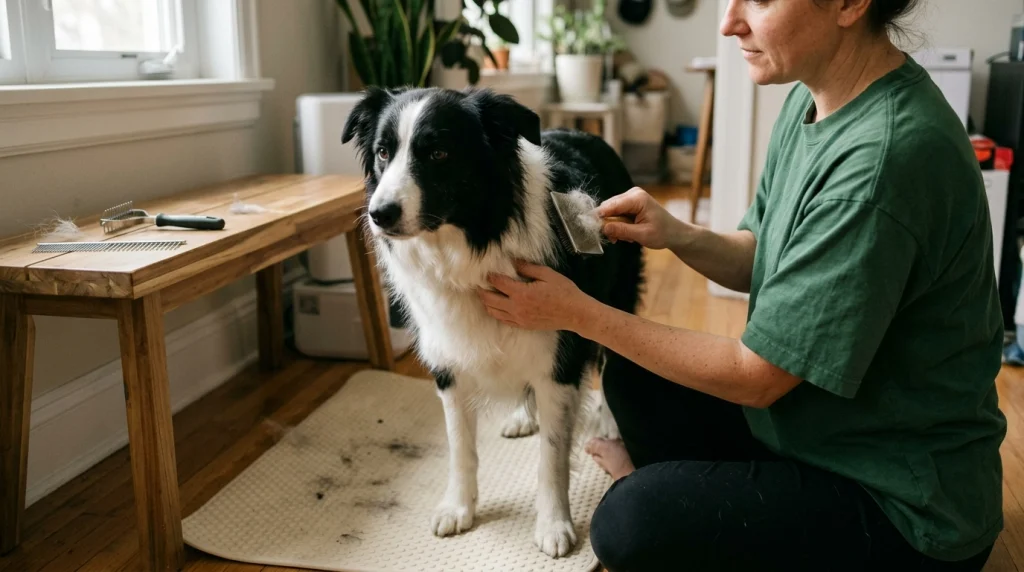
SaveThe safest approach is to brush gently, work in small sections, and remove only the loose hair that releases without excessive force. Use a suitable tool and check the skin regularly instead of concentrating on how much fur you collect.
- Inspect the coat first. Run your hands over the dog and look for mats, sore areas, debris, or unusual hair loss.
- Separate the fur. Use your fingers to expose a manageable section rather than brushing only the visible surface.
- Start with gentle strokes. Follow the natural direction of hair growth and keep your wrist relaxed.
- Work through loose undercoat. Use an appropriate rake or brush without digging its teeth into the skin.
- Check your progress. A suitable metal comb can reveal tangles that a surface brush misses.
- Finish before your dog becomes uncomfortable. Several short sessions are better than forcing a long grooming session.
Don’t expect every loose hair to disappear in one sitting. During seasonal shedding, a healthy double coat may continue releasing undercoat even after careful grooming.
Practical tip: If your brush repeatedly catches the same spot, investigate the cause before continuing. A hidden mat, sensitive skin, or an unsuitable tool may be responsible.
Which Dog Brushes Are Safest for a Double Coat?
The best dog brush depends on coat length, undercoat density, and the grooming task. A tool that works well on a thick Husky coat may be unnecessarily harsh for a short-coated dog with a lighter undercoat.
| Tool | Best use | Main precaution |
|---|---|---|
| Soft or suitable slicker brush | Light detangling and collecting loose hair | Avoid repeated scraping and excessive pressure. |
| Undercoat rake | Removing loose undercoat from dense coats | Use smooth, controlled strokes without digging into the skin. |
| Wide-tooth metal comb | Checking dense areas and identifying tangles | Never yank through resistance or tight mats. |
| Rubber grooming brush | Surface grooming on many short-coated dogs | It may not reach the dense undercoat of longer-coated breeds. |
| Aggressive blade-style deshedding tool | Limited, coat-appropriate removal of loose hair | Excessive or repeated use can damage healthy hairs. |
For a dense, long double coat, an undercoat rake and a suitable slicker brush may complement each other. A metal comb helps verify that you haven’t missed a tangle.
For shorter double coats, a gentler brush or rubber grooming tool may be sufficient for routine maintenance. Choose tools based on the individual dog’s coat rather than assuming every double-coated breed needs the same kit.
For a closer look at tool selection, see this guide to what a slicker brush is used for.
How Do You Remove Undercoat Without Pulling Out Healthy Hair?
Remove undercoat gradually with a tool designed for your dog’s coat, using light strokes and stopping when the hair no longer releases easily. The aim is to collect loose, shedding hair rather than strip away healthy coat simply to reduce shedding.
Undercoat removal can feel especially satisfying during a seasonal coat blow, when large amounts of soft fur come away. However, the volume of collected hair alone doesn’t tell you whether the technique is safe.
Use a section-by-section method
- Start at the shoulders or back. Choose a comfortable area with no visible tangles or skin irritation.
- Move to the sides and chest. Use shorter strokes and adjust pressure as the coat becomes denser.
- Approach sensitive areas carefully. Around the ears, armpits, belly, tail, and hindquarters, use a gentler tool or your fingers when appropriate.
- Check the coat between passes. Remove collected hair from the tool and inspect the skin before continuing.
Never repeatedly rake a patch because a small amount of hair keeps appearing. Some loose hairs will remain, and trying to remove every last strand can increase friction and irritation.
The American Kennel Club’s double-coated dog grooming guidance discusses coat differences and the use of grooming rakes, steel combs, and slicker brushes.
What Brushing Mistakes Can Damage a Double Coat?
Most avoidable grooming damage comes from using too much force, choosing the wrong tool, or continuing when the coat resists. Changing these habits can make grooming more comfortable while preserving healthy hair.
- Pressing too hard: The tool should move through the coat without scraping the skin.
- Brushing the same patch repeatedly: Repeated friction can break hairs and irritate skin.
- Forcing knots apart: Pulling a tight mat can hurt the dog and damage surrounding hair.
- Using a tool on the wrong coat: Aggressive teeth or blades may be unsuitable for the dog’s hair length and density.
- Ignoring the dog’s signals: Flinching, turning toward the brush, licking the area, or trying to leave can indicate discomfort.
- Assuming more fur means better grooming: A large pile of collected hair doesn’t prove the technique is appropriate.
One useful habit is to check the skin after each small section instead of waiting until the entire dog is brushed. This makes it easier to spot irritation early and change your technique.
Should You Shave a Double-Coated Dog to Prevent Damage?
Routine shaving is generally not recommended for a healthy double coat simply to reduce shedding or help the dog cope with warm weather. Shaving removes protective outer hairs and can interfere with normal coat regrowth.
The coat helps shield the skin from sunlight and environmental exposure while its layers contribute to insulation. Removing it doesn’t stop the underlying shedding cycle.
There are exceptions. A veterinarian may recommend clipping for surgery or a medical reason, and a professional groomer may determine that severe matting cannot be removed safely without clipping.
For warm weather, focus on regular coat maintenance, shade, fresh water, suitable exercise times, and monitoring for overheating. Seek veterinary advice if your dog seems unusually uncomfortable in the heat.
The American Kennel Club explains the risks and exceptions in its guide to shaving dogs during summer.
How Often Should You Brush a Double Coat?
 Save
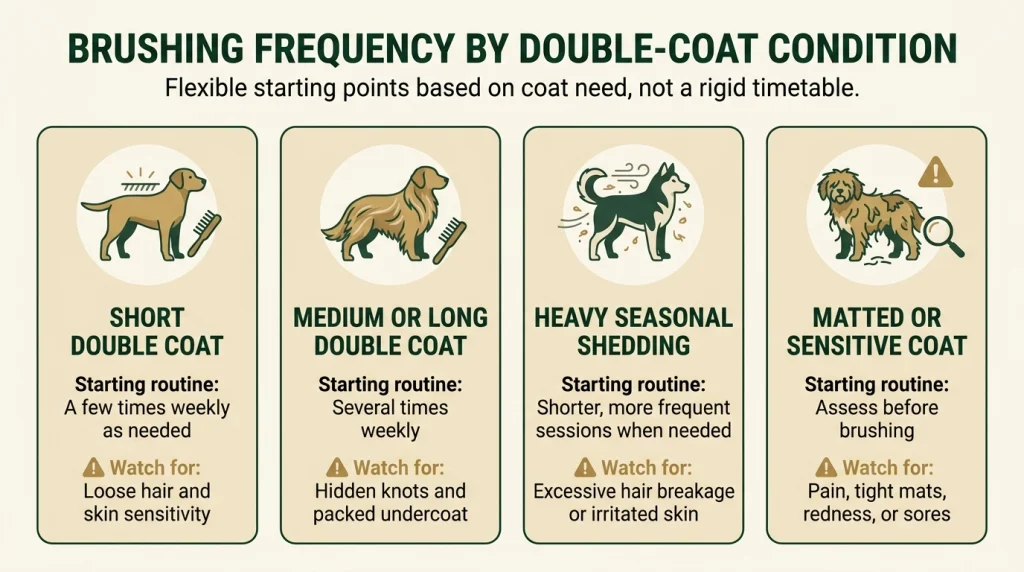
SaveMany double-coated dogs benefit from brushing several times a week, but the right schedule depends on coat density, length, shedding, and matting risk. Increase attention when loose undercoat builds up, rather than automatically increasing brushing pressure.
| Coat situation | Starting routine | What to watch for |
|---|---|---|
| Short double coat | A few times weekly as needed | Loose hair and skin sensitivity |
| Medium or long double coat | Several times weekly | Hidden knots and packed undercoat |
| Heavy seasonal shedding | Shorter, more frequent sessions when needed | Excessive hair breakage or irritated skin |
| Matted or sensitive coat | Assess before brushing | Pain, tight mats, redness, or sores |
These are starting points, not strict rules for every breed. A dog with a dense coat that tangles behind the ears or under the legs may need more frequent checks than a short-coated dog with little feathering.
For a more detailed routine, use this dog brushing schedule by coat type as a starting reference and adjust it to your dog’s needs.
How Can You Tell If Your Brushing Technique Is Too Harsh?
Watch both your dog’s behavior and the condition of the skin and hair. Repeated flinching, new redness, broken hairs, or unexplained thinning are reasons to stop and reassess the grooming routine.
- Behavior changes: Your dog pulls away, growls, repeatedly looks at the brush, or avoids grooming.
- Skin changes: You notice redness, scratches, scabs, or tender areas after brushing.
- Coat changes: Hair looks uneven, feels unusually brittle, or develops new thin patches.
- Persistent tangles: The comb catches repeatedly despite gentle brushing and careful sectioning.
Stop brushing an irritated area and avoid applying pressure to it. Contact your veterinarian if you notice sores, bleeding, significant hair loss, persistent itching, or skin changes that don’t settle.
Not all coat problems are caused by grooming. Parasites, allergies, infection, and other health conditions can affect the skin and hair, so a veterinary examination may be necessary.
What Should You Do If Your Dog Already Has Mats?
 Save
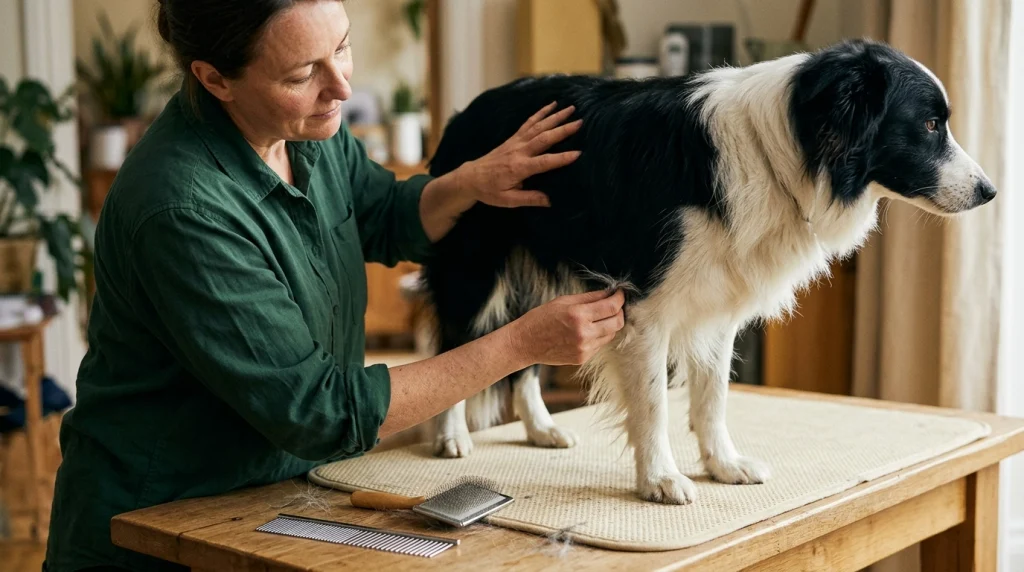
SaveDon’t pull a tight mat apart with a brush or comb, particularly when it sits close to the skin. Mats can tighten around the hair and skin, making forceful removal painful and potentially causing injury.
- Check the mat gently. Determine whether it is a loose tangle or a compact knot close to the skin.
- Try only safe, gentle separation. If the knot releases easily with your fingers, work slowly without pulling the skin.
- Stop when resistance remains. Do not cut close to the skin with household scissors, since skin can become trapped inside the mat.
- Get professional help. A qualified groomer or veterinarian can decide whether careful detangling or clipping is the safest option.
Severely matted coats may require clipping even when preserving the coat is normally preferable. Comfort and skin safety come first when mats have become too tight to remove without pain.
How Do You Choose a Safe Grooming Routine for Your Dog?
A safe routine uses the fewest tools needed to keep the coat manageable, with a quick skin check before and after grooming. The right combination should remove loose hair without repeated force or distress.
- For dense, shedding coats: Consider a suitable undercoat rake and a metal comb for checking completed sections.
- For longer coats: A coat-appropriate slicker may help with light tangles and surface hair.
- For short coats: A rubber brush or gentle bristle brush may provide sufficient maintenance.
- For difficult mats: Seek professional help instead of trying progressively harsher tools.
When choosing a brush, check the pin length, tooth spacing, finish, grip, and manufacturer’s intended coat type. Smooth, well-finished teeth and a comfortable handle make controlled grooming easier, but technique still matters most.
As of 2026, the central principle remains straightforward: remove loose hair while protecting healthy hair and skin. A bigger brush, a sharper blade, or a longer session isn’t automatically better.
Recommended Brushes and Tools for Double-Coated Dogs
If you’re building a small grooming kit, prioritize tools that perform different jobs rather than buying several aggressive deshedding products. These established options are worth comparing by coat compatibility, design, and ease of use; the ratings below are editorial assessments, not verified customer ratings or personal hands-on test results.
BEST FOR DENSE COATS
Safari De-Shedding Tool for Dogs
★★★★☆
Designed to collect loose shedding hair, this style of tool may help with appropriate double coats. Use it sparingly, follow the manufacturer’s instructions, and stop if it catches healthy hair or irritates the skin.
BEST FOR GENTLE FINISHING
Chris Christensen Big G Slicker Brush
★★★★☆
This professional-style slicker is intended for coat separation and grooming, particularly on suitable longer or fuller coats. Choose the appropriate size and pin style, and use light strokes instead of pressing the pins into the skin.
BEST FOR FINAL CHECKS
Andis Steel Pet Comb
★★★★★
A steel grooming comb can help reveal hidden tangles that a brush leaves behind. Work through accessible sections gently, and never force the teeth through a tight knot or a mat sitting against the skin.
Before buying, confirm that the tool suits your dog’s coat and size. Product designs and available versions can change, so check the current listing details rather than assuming every version is identical.
Frequently Asked Questions
Can brushing damage a double-coated dog’s fur?
Yes. Excessive pressure, repeated scraping, unsuitable deshedding tools, and forceful detangling can break healthy hairs or irritate the skin. Use gentle strokes, choose tools for your dog’s coat, and stop if grooming causes discomfort or visible irritation.
Is it bad to use an undercoat rake every day?
Not every dog needs daily undercoat raking. Frequency depends on the coat, shedding level, and tool design. During heavy shedding, short sessions may help, but repeated raking over the same area can damage hair or irritate skin.
How can I tell if I’m brushing too hard?
Watch for flinching, pulling away, repeated attention toward the brush, new redness, or broken hairs. Reduce pressure and reassess the tool immediately. If your dog shows pain or the skin looks damaged, stop grooming that area and seek veterinary advice when appropriate.
Should I brush a double coat when it is wet?
Wet grooming depends on coat type, product instructions, and the condition of the hair. Avoid forceful brushing through wet tangles, since they can become harder to manage. Remove obvious knots gently before bathing, and ask a groomer for advice on drying and brushing a dense coat safely.
Will shaving stop my double-coated dog from shedding?
No. Shaving does not stop the natural hair cycle or eliminate shedding. It removes protective coat layers and may lead to uneven regrowth or expose the skin to greater sun damage. Regular, gentle grooming is generally preferable for a healthy double coat.
Final Takeaway: Protect the Coat, Not Just the Appearance
The safest way to avoid damaging a double coat is to use the right tool, work in small sections, and remove loose hair without forcing the brush through resistance. Regular checks help you catch hidden mats and skin irritation before they become bigger problems.
Remember that grooming should leave your dog comfortable, not simply make the coat look thinner or smoother. When a mat is tight, the skin is irritated, or you’re unsure which tool is appropriate, stop and ask a qualified groomer or veterinarian for help.
Ready for your next grooming session? Start gently, check the coat as you go, and let your dog’s comfort guide the routine.

Thomas Cutter is a lifelong dog owner and the founder of FindOutAboutDogs.com. With over 10 years of hands-on experience owning multiple breeds, Thomas created this site to provide honest, research-based dog advice that real owners can actually trust.
