How to Brush a Border Collie: 7 Easy Steps for a Healthy Coat
Quick Answer
To brush a Border Collie, start with a pin brush and work in the direction the coat grows. Brush in small sections, reach through the outer coat without scraping the skin, check feathered areas for tangles, and finish with a metal comb. Most Border Collies need brushing once or twice weekly, while heavy shedding may call for daily sessions. If you’re still learning the breed, this Border Collie family-fit guide gives useful background on its activity and care needs.
Quick Brushing Steps
- Check the coat: Feel for mats, burrs, damp patches, or sensitive areas before brushing.
- Start gently: Use a pin brush on the back, shoulders, sides, and chest.
- Work in sections: Part thicker fur so the brush reaches loose undercoat instead of skimming the surface.
- Brush feathering: Carefully work through the tail, belly, legs, and behind the ears.
- Remove loose undercoat: Use an undercoat rake lightly during heavy shedding periods.
- Finish with a comb: A metal comb helps reveal small tangles the brush missed.
One Rule I Always Follow
- If the comb still catches after brushing, that section is not finished yet. Slow down instead of pulling harder.
A Border Collie can look easy to brush until you part the coat and find loose undercoat hiding below the surface. The trick is reaching that layer gently without scraping the skin or tearing healthy hair.
This guide shows the routine I recommend for both rough-coated and smooth-coated Border Collies. You’ll also learn which tools help, which areas mat first, and what changes during shedding season.


What Kind of Coat Does a Border Collie Have?
A Border Collie has a double coat, meaning it carries a protective outer layer plus a softer undercoat beneath it. Both rough-coated and smooth-coated Border Collies have this basic two-layer structure.
The American Kennel Club’s Border Collie guidance recommends regular brushing and notes that more frequent grooming is useful during shedding periods.
Definition: A double coat combines an outer coat of guard hairs with a denser undercoat. Brushing needs to manage both layers rather than only smoothing the visible surface.
- Rough coat: Medium-length or longer hair with noticeable feathering around the chest, legs, belly, and tail.
- Smooth coat: Shorter and closer to the body, but still double-coated and capable of substantial shedding.
- Undercoat: Soft, dense hair that can loosen quickly during seasonal coat changes.
What Brush Should You Use for a Border Collie?
The best Border Collie grooming setup usually includes a pin brush, undercoat rake, and metal comb. You do not need to use every tool during every session.
My rule is simple: use the gentlest tool that completes the job. More aggressive brushing is not automatically better brushing.
| Tool | Best Use | When to Use It | Main Caution |
|---|---|---|---|
| Pin brush | Routine coat brushing | About 1–2 times weekly | Do not press hard against skin |
| Undercoat rake | Loose seasonal undercoat | During heavier shedding | Use light, controlled strokes |
| Metal comb | Finding leftover tangles | At the end of brushing | Never force it through a knot |
| Soft slicker brush | Light tangles and feathering | As needed | Avoid repeated scraping strokes |
If you’re comparing how much coat maintenance different dogs require, our guide to easy-going dog breeds and their grooming needs gives useful context.
How Do You Brush a Border Collie Step by Step?
 Save
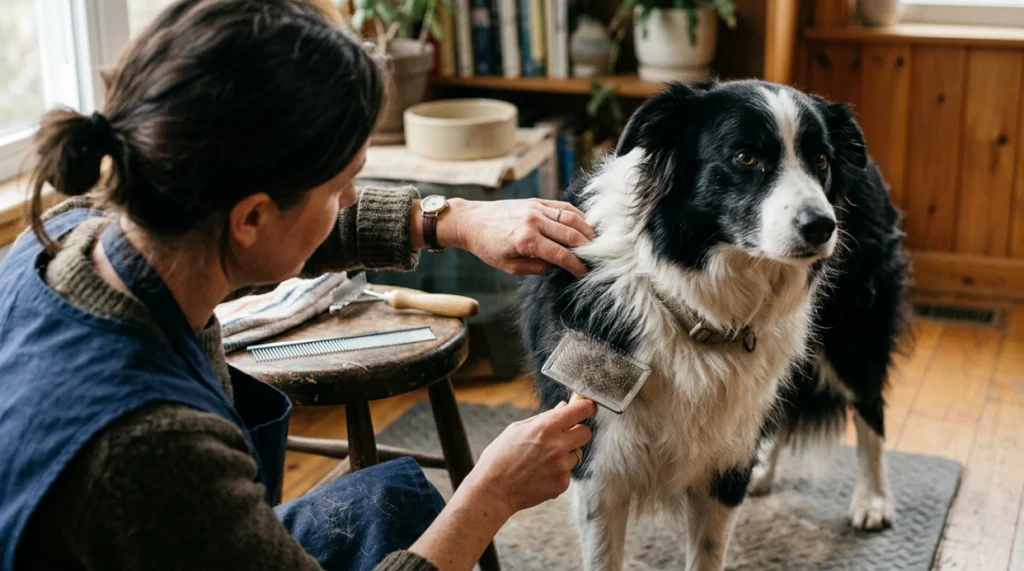
SaveBrush your Border Collie in small sections, starting where the dog is comfortable and saving sensitive areas for later. Keep each stroke controlled and follow the natural direction of hair growth.
Let your dog inspect the grooming tools. Give your Border Collie a moment to sniff the brush before you begin. A calm start matters more than rushing into the coat.
Check the coat with your hands. Feel behind the ears, under the front legs, around the collar, along the belly, and beneath the tail. These areas can hide knots that are difficult to see.
Begin with the back and shoulders. Use long, gentle pin-brush strokes in the direction of hair growth. These areas are usually easier for a dog to tolerate.
Part thick sections with your free hand. Lift a small layer of coat and brush the hair below it before moving upward. This prevents you from polishing the top while leaving loose undercoat underneath.
Brush the chest, legs, belly, and tail carefully. Shorten your strokes around feathered areas. Hold longer hair near the base when working through a small tangle so you reduce pulling on the skin.
Add an undercoat rake only when needed. During a coat blow, run the rake lightly through sections where loose undercoat releases easily. Stop if the tool drags, scratches, or repeatedly catches.
Finish with a metal comb. Run it through the feathering and other tangle-prone spots. If it moves smoothly from near the skin toward the ends, the section is usually well brushed.
Practical tip: Ten calm minutes often accomplish more than one long session with an impatient dog. You can divide the body into two or three short sessions if needed.
How Often Should You Brush a Border Collie?
For routine care, brushing once or twice per week is a practical starting point for many Border Collies. During a heavy shed, daily light brushing may make coat management easier.
The ASPCA’s dog grooming guidance explains that brushing frequency should match coat type and that regular brushing helps manage dirt, tangles, and loose hair.
- Normal weeks: Aim for one or two thorough sessions.
- Heavy shedding: Use shorter daily sessions while loose undercoat is releasing.
- After outdoor adventures: Check immediately for burrs, seeds, twigs, mud, and tangles.
- Rough-coated dogs: Give extra attention to feathering and friction areas.
How Should You Brush a Border Collie During Shedding Season?
During shedding season, concentrate on removing loose undercoat instead of trying to pull out as much hair as possible in one sitting. Gentle repetition protects the coat better than aggressive pressure.
A common mistake is repeatedly scraping the same area because hair keeps coming out. Loose fur can keep releasing for several sessions during a coat change.
- Start with the regular pin brush.
- Use an undercoat rake on sections with obvious loose undercoat.
- Work from shoulders toward the rear in manageable sections.
- Reduce pressure around the belly, legs, and bony areas.
- Finish with the comb to check your work.
As of 2026, the basic approach has not changed: consistent coat maintenance beats waiting until the undercoat becomes packed. A few minutes each day during a shed can make the next full grooming session much easier.
How Do You Remove Tangles and Mats Safely?
 Save
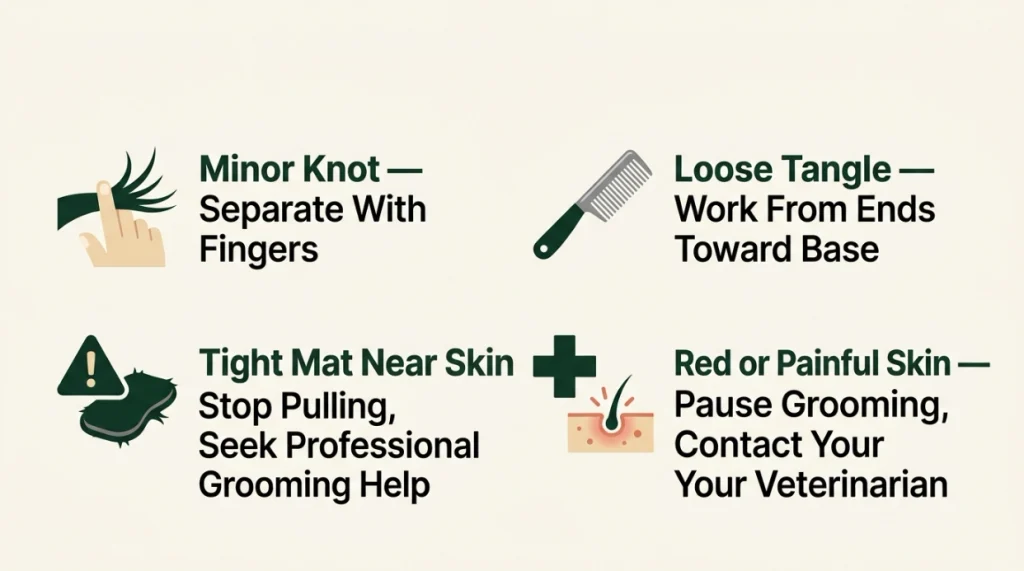
SaveSmall tangles should be loosened gradually from the ends rather than attacked from the root. Hold the hair near the skin, then work outward with your fingers, a comb, or an appropriate brush.
The VCA grooming and coat-care guide advises gentle handling and recommends professional help when matting becomes severe or extensive.
- Minor knot: Separate it with your fingers before combing.
- Loose tangle: Work from the ends toward the base.
- Tight mat near skin: Stop pulling and seek professional grooming help.
- Red or painful skin: Pause grooming and contact your veterinarian.
Safety warning: Do not slide ordinary scissors beneath a tight mat. Dog skin can pull upward into the mat, making accidental cuts much easier than they appear.
Should You Shave a Border Collie to Stop Shedding?
Do not shave a healthy Border Collie’s double coat simply to reduce normal shedding. Brushing out loose undercoat is the safer routine approach.
The AKC’s double-coat grooming guidance cautions against routine shaving and explains the protective role of the outer and undercoat layers.
There can be medical or severe-matting situations where clipping is necessary. Let a veterinarian or experienced professional groomer decide how those cases should be handled.
What Brushing Mistakes Should You Avoid?
Most home-grooming problems come from pressure, speed, or using the wrong tool for the job. A good brushing session should not feel like a battle.
- Brushing only the surface: Smooth-looking outer hair can hide loose undercoat below.
- Pressing too hard: Metal pins should move through hair, not scrape along skin.
- Pulling through knots: Hard pulling makes grooming painful and can make the dog resist future sessions.
- Overusing deshedding tools: More passes are not automatically better.
- Ignoring sensitive zones: Behind the ears, armpits, belly, tail, and rear feathering deserve separate checks.
- Brushing a stressed dog endlessly: End on a calm note and continue later.
Does a Smooth-Coated Border Collie Need the Same Routine?
A smooth-coated Border Collie still needs regular brushing because the coat remains double-layered. The biggest difference is that there is usually less long feathering to detangle.
For a smooth coat, spend more time managing loose hair and less time separating long sections. A pin brush, appropriate undercoat tool, and finishing comb can still cover most home grooming needs.
If your dog spends much of the day inside, our guide to indoor dog breeds and everyday coat-care needs also explains why regular home routines matter.
Border Collie Grooming Tools I Would Choose
 Save
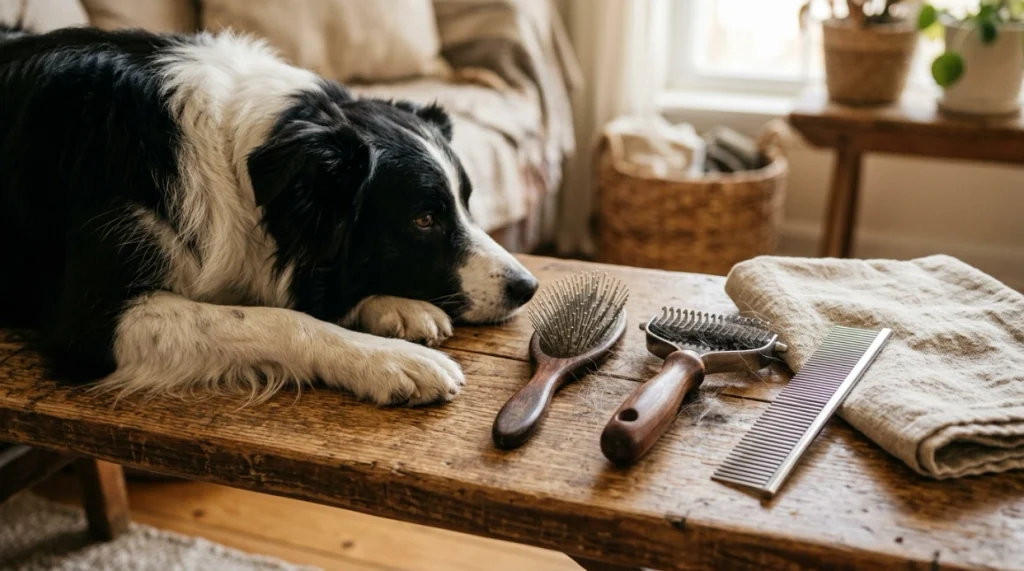
SaveIf you’re building a simple grooming kit, I would start with three tools that each perform a different job. There is little value in buying five brushes that all do the same thing.
🏆 Best for Routine Brushing
Chris Christensen Original Series 27mm Oval Pin Brush
★★★★★
The rounded stainless-steel pins and flexible cushion make this a strong everyday option for working through medium-length coat. I would make a good pin brush the first purchase because it handles most routine Border Collie brushing.
🍂 Best for Heavy Shedding
Safari by Coastal Dog Double Row Undercoat Rake
★★★★☆
The double-row design is intended for thicker undercoats and seasonal loose hair. I would keep this for shedding periods rather than treating it as the everyday brush.
🔎 Best Finishing Tool
Andis 10-Inch Steel Comb
★★★★☆
A steel comb gives you a simple final check after brushing and helps locate small tangles in feathered areas. I like the comb test because it tells you where more gentle brushing is needed without guessing.
Frequently Asked Questions
How often should I brush my Border Collie?
Brush most Border Collies about once or twice per week as a normal starting routine. Increase to short daily sessions when the undercoat is shedding heavily or after outdoor activity that leaves debris in the coat.
What is the best brush for a Border Collie?
A quality pin brush is a practical everyday choice for many Border Collies. Add an undercoat rake for heavier shedding and use a metal comb afterward to locate small knots or sections that still need work.
Can I use a slicker brush on a Border Collie?
Yes, a suitable slicker can help with light tangles and feathered coat, especially on rough-coated dogs. Use gentle strokes and avoid repeatedly scraping the same area, since the goal is to move through hair rather than drag pins across skin.
Why is my Border Collie shedding so much?
Border Collies have double coats, so periods of heavier undercoat shedding are normal. If shedding becomes unusual and comes with bald patches, sore skin, heavy dandruff, odor, or other changes, arrange a veterinary examination rather than assuming it is normal coat loss.
Should I brush my Border Collie before or after a bath?
Brush obvious loose coat, tangles, and debris before bathing so water does not make existing knots harder to manage. Once the coat is completely dry, brush and comb again to remove remaining loose hair and check the finished coat.
Final Takeaway
Learning how to brush a Border Collie comes down to three things: the right tools, light pressure, and consistency. A pin brush handles regular maintenance, an undercoat rake helps during coat changes, and a metal comb confirms you did not leave tangles behind.
Start with one calm ten-minute session this week. Check the coat with your hands first, brush in sections, and stop pulling whenever a knot refuses to release easily.

Thomas Cutter is a lifelong dog owner and the founder of FindOutAboutDogs.com. With over 10 years of hands-on experience owning multiple breeds, Thomas created this site to provide honest, research-based dog advice that real owners can actually trust.
