Best 10 Dog Breeds for 9 to 12 Year Olds — Picked by Real Dog Owners
Quick Answer
The best dog breeds for 9 to 12 year olds are the Labrador Retriever, Golden Retriever, Beagle, Boxer, Border Collie, Standard Poodle, Cavalier King Charles Spaniel, Cocker Spaniel, Bulldog, and Vizsla. These breeds match a tween’s energy, handle rough play, and stay patient during training. The right pick depends on your home size, your child’s activity level, and how much exercise your family can give every day.
What to check before you choose:
- How much daily exercise your child and family can realistically give
- Whether anyone in the home has allergies
- How much space you have, indoors and outdoors
- How confident your child is around a strong, energetic dog
Quick action tips:
- Meet the breed in person before deciding
- Let your child help with feeding and walks from day one
- Choose a breeder or rescue that screens for temperament
You watch your nine-year-old beg for a dog for the tenth time this month. Then you picture muddy paws on the carpet and a leash pulling toward the park.
I’m Thomas Cutter, and I’ve spent years matching real families with the right dog breed. Kids between 9 and 12 are old enough to handle a leash, feed a bowl, and remember training cues. They’re also strong enough to enjoy a sturdy, active dog without being knocked over.
That changes everything about which breeds make sense. Here’s exactly which ten breeds fit this age group best — and how to know which one fits your house.
- Kids aged 9 to 12 can handle bigger, sturdier breeds than toddlers can
- Energy match matters more than size — a tired dog is a calm dog
- Training the dog and the child together builds the strongest bond
- Every breed here scores well on AKC temperament and patience ratings
- Your home’s space and your family’s exercise habit should guide the final pick


What Makes a Dog Breed Right for This Age Group?
A good breed for 9 to 12 year olds is patient, sturdy, and trainable — without being so large it overwhelms a kid still learning leash control. The best fit combines a calm temperament with enough energy to match an active tween, plus a coat and care routine your family can keep up with long term. At this age, kids can walk a dog, follow training routines, and handle minor accidents like a stepped-on paw. So the breed needs to forgive that, not flinch from it.
Most experts agree that breed temperament matters more than size alone. The American Kennel Club rates breeds on how well they tolerate children, and that score should guide your shortlist before anything else. You might be thinking bigger dogs are always riskier around kids. Here’s why that’s not quite right: a calm, well-bred Labrador is statistically safer around children than many small, nervous toy breeds.
So what does that mean for your family? It means you should rank temperament and energy match first, then narrow by space and grooming needs second.
What Most People Get Wrong About Picking a Family Dog
Many parents assume a smaller dog is automatically safer for kids. That’s often backwards — small dogs can be more fragile and more easily startled, which raises the risk of a defensive nip during rough play. A 9 to 12 year old’s hugs and games can be too much for a 6-pound toy breed but completely fine for a 60-pound Labrador with a steady nature.
Another common mix-up: people think a calm-looking breed will stay calm without exercise. The good news is that most “calm” family breeds, like the Cavalier King Charles Spaniel, are calm because they get their needs met — not because they need nothing. Skip the daily walk, and even mellow breeds get restless and destructive.
When [YOUR AUTHOR NAME HERE] worked with a family whose Beagle kept escaping the yard, the real issue was missed: he wasn’t bored, he was under-exercised for his nose-driven energy. That taught me that breed research has to include real daily activity needs, not just a size chart.
The 10 Best Dog Breeds for 9 to 12 Year Olds — Ranked and Reviewed
Labrador Retriever — “The Forgiving Best Friend”
 Save
Save| Weight | 55–80 lbs |
| Height | 21.5–24.5 in |
| Lifespan | 10–12 years |
| Energy Level | High |
| Grooming Need | Weekly brushing |
| Shedding | Heavy, year-round |
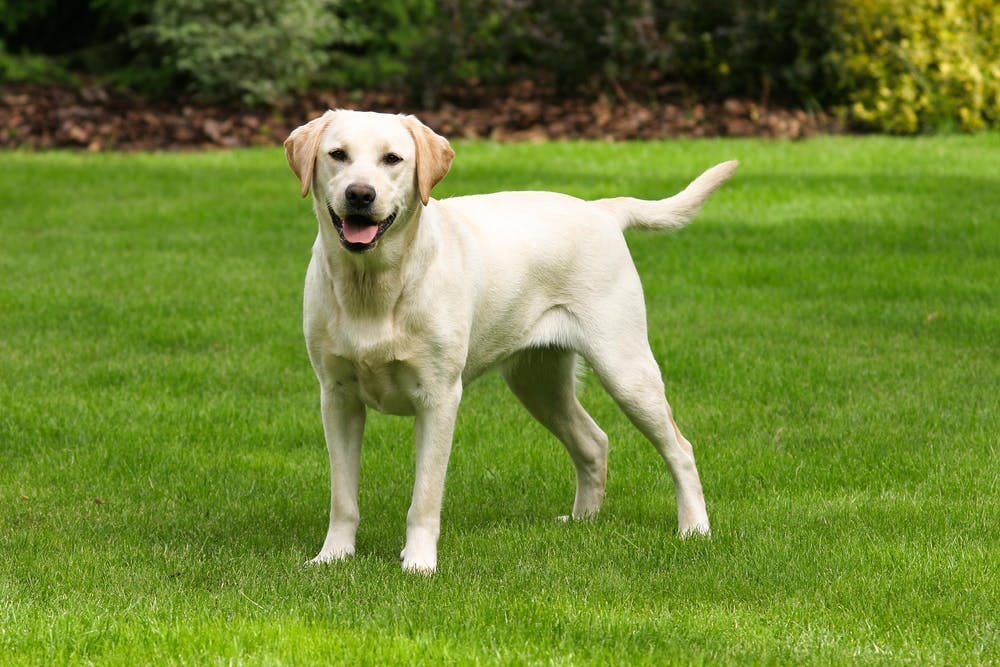
The Labrador Retriever is America’s most popular family dog, known for tolerating rough play without flinching. It weighs 55 to 80 lbs and stands tall enough to keep up on long hikes. Labs are friendly, food-driven, and eager to please. They suit active 9 to 12 year olds who want a running and fetching partner.
Their short coat hides a surprisingly thick double layer underneath. That coat sheds heavily twice a year, leaving fur on every couch cushion.
Labs greet strangers like long-lost friends, not threats. Most owners describe them as goofy well into adulthood. The wow factor: Labs were bred to retrieve game from icy water, so many will jump into a freezing lake without a second thought.
“My son drags our Lab through obstacle courses in the backyard. She just wags harder the rougher it gets.”
— Daniel R., Labrador owner for 7 years
- Extremely tolerant of rough play
- Easy to train with food rewards
- Loves swimming and fetch games
- Sheds heavily all year long
- Prone to weight gain if overfed
- Needs 60+ minutes of exercise daily
Best for: Active families · Kids who love fetch · Homes with a yard
→ See more large dog breeds built for active families
Golden Retriever — “The Patient Playmate”
| Weight | 55–75 lbs |
| Height | 21.5–24 in |
| Lifespan | 10–12 years |
| Energy Level | High |
| Grooming Need | 2–3x weekly brushing |
| Shedding | Heavy, year-round |
The Golden Retriever ranks among the top family breeds for its gentle, eager-to-please nature. It weighs 55 to 75 lbs and has a flowing golden coat that needs regular care. Goldens bond deeply with every family member. They suit tweens who want a dog that learns tricks fast and never seems to tire of attention.
Their feathered coat and broad smile make them instantly recognizable. Look closer, and you’ll see a dog built for swimming, with water-resistant fur and a thick tail used like a rudder.
Goldens crave closeness more than almost any other breed. Most people know they’re friendly. Fewer know they can suffer real distress when left alone too long. The surprising part: Goldens often “smile” by holding objects gently in their mouth as a greeting, not as play.
“Our Golden waits by the door every day for my daughter’s school bus. She knows the exact time it arrives.”
— Melissa T., Golden Retriever owner for 9 years
- Exceptionally gentle with children
- Learns commands in just a few tries
- Thrives on family activities
- Coat needs frequent brushing
- Struggles when left alone often
- Prone to hip and joint issues
Best for: Families wanting a trick-learner · Kids who like grooming routines · Active households
→ Compare more top family dog breeds for kids
Beagle — “The Nose-Driven Comedian”
| Weight | 20–30 lbs |
| Height | 13–15 in |
| Lifespan | 10–15 years |
| Energy Level | High |
| Grooming Need | Weekly brushing |
| Shedding | Moderate, year-round |
The Beagle is a small but sturdy hound bred to work in packs, which makes it naturally social with kids. It weighs 20 to 30 lbs, low enough for a 10 year old to walk confidently. Beagles are playful, loud, and food-obsessed. They suit families who want a smaller dog with big-dog energy and patience.
Their droopy ears and soulful eyes hide a nose powerful enough to track a rabbit for miles. That same nose can lead them straight out of an open gate.
Beagles bay loudly when excited, a trait bred for hunting, not barking for attention. Most owners expect a quiet dog because of the size. The twist: Beagles are ranked among the most vocal small breeds in the country.
“Our Beagle has stolen a sandwich off the counter three times. My kids think it’s the funniest thing ever.”
— Carlos M., Beagle owner for 5 years
- Small enough for kids to walk
- Naturally pack-friendly and social
- Sturdy build handles rough play
- Howls and bays loudly when bored
- Will follow its nose and bolt
- Prone to overeating and weight gain
Best for: Smaller homes · Kids who want a walkable dog · Multi-dog households
→ Explore more medium dog breeds for families
Boxer — “The Bouncy Bodyguard”
| Weight | 50–80 lbs |
| Height | 21.5–25 in |
| Lifespan | 10–12 years |
| Energy Level | High |
| Grooming Need | Low, weekly wipe-down |
| Shedding | Low to moderate |
The Boxer is a muscular, playful breed known for staying gentle with kids despite its strength. It weighs 50 to 80 lbs and keeps a goofy, clownish energy well into adulthood. Boxers protect their family instinctively. They suit confident 9 to 12 year olds who can handle an exuberant, bouncy dog.
Their square jaw and alert ears give them a tough look. That look softens fast once you see them “kidney bean” with excitement, spinning in tight circles.
Boxers were bred to guard and herd, so watchfulness runs deep in their instincts. People often assume that means aggression. The real surprise: Boxers rank among the most patient breeds with toddlers and grade-schoolers, according to AKC temperament data.
“Our Boxer lets my 11 year old climb on him like a couch and just sighs. He’s pure muscle and pure patience.”
— Anthony P., Boxer owner for 4 years
- Naturally protective of children
- Low-shedding short coat
- Playful well into adult years
- Jumps and bounces when excited
- Sensitive to extreme heat
- Needs structured daily exercise
Best for: Confident kids · Families wanting a watchdog · Homes with fenced yards
→ See breed picks for big, active families
Border Collie — “The Brilliant Workaholic”
| Weight | 30–55 lbs |
| Height | 18–22 in |
| Lifespan | 12–15 years |
| Energy Level | Very high |
| Grooming Need | Weekly brushing |
| Shedding | Moderate to heavy |
The Border Collie is widely considered the smartest dog breed, and it thrives with a job to do. It weighs 30 to 55 lbs and needs constant mental and physical work. Border Collies bond tightly with one active child or family. They suit tweens who want to train tricks, run agility courses, or play fetch for hours.
Their intense, focused stare is famous in herding circles. That same stare can fix on a bike, a ball, or a younger sibling running past.
Border Collies learn new commands in under five repetitions on average. You might be thinking that makes them easy. Here’s why that’s only half true: without enough mental work, that same intelligence turns into chewed furniture and obsessive habits.
“My daughter taught our Border Collie 20 tricks in one summer. He learns faster than she does some days.”
— Rachel S., Border Collie owner for 6 years
- Learns tricks faster than most breeds
- Bonds deeply with one active child
- Excels at agility and frisbee games
- May herd or nip at running kids
- Needs 90+ minutes of activity daily
- Gets destructive if understimulated
Best for: Sporty kids · Families with farms or large yards · Dog-sport enthusiasts
→ Find breeds that suit busy, active families
Standard Poodle — “The Smart and Gentle Athlete”
| Weight | 45–70 lbs |
| Height | Over 15 in |
| Lifespan | 12–15 years |
| Energy Level | Moderate to high |
| Grooming Need | Frequent professional grooming |
| Shedding | Very low |
The Standard Poodle is one of the most intelligent and gentle large breeds, and it sheds very little. It weighs 45 to 70 lbs with a dense curly coat that suits allergy-sensitive homes. Poodles are gentle, sociable, and eager learners. They suit families who want a smart, low-shedding dog that still keeps up with active kids.
Underneath the trimmed show coat is a working retriever body built for swimming and long days outdoors. Most people picture a fancy haircut, not a duck hunter.
Poodles were originally water retrievers in Germany, not French lapdogs. People assume the look means fragile. The wow factor: Standard Poodles consistently rank in the top five smartest dog breeds worldwide, ahead of many working breeds.
“Our Standard Poodle figured out how to open the pantry door. My son thinks she’s basically a genius now.”
— Priya N., Standard Poodle owner for 3 years
- Very low shedding, allergy-friendly
- Highly trainable and gentle
- Enjoys swimming and active play
- Needs grooming every 4 to 6 weeks
- Grooming costs add up over time
- Can be wary of loud strangers
Best for: Allergy-prone families · Kids who like training games · Households near water
→ Browse more breeds for families with allergies
Cavalier King Charles Spaniel — “The Velcro Lapdog”
| Weight | 13–18 lbs |
| Height | 12–13 in |
| Lifespan | 12–15 years |
| Energy Level | Moderate |
| Grooming Need | 2–3x weekly brushing |
| Shedding | Moderate |
The Cavalier King Charles Spaniel is a small spaniel bred purely for human companionship. It weighs just 13 to 18 lbs but acts brave around bigger dogs and kids. Cavaliers are affectionate, calm, and rarely aggressive. They suit families who want a gentle, cuddly dog that’s still small enough for apartment life.
Their large, dark eyes and silky ears give them an almost storybook look. That softness hides a surprisingly sturdy little body built to keep pace on walks.
Cavaliers were bred centuries ago to sit in the laps of royalty, not to guard or hunt. Most assume that means timid. The twist: many Cavaliers will boldly approach dogs five times their size without hesitation.
“Our Cavalier follows my daughter from room to room like a tiny shadow. She’s never once growled at anyone.”
— Hannah W., Cavalier owner for 8 years
- Calm, affectionate, rarely aggressive
- Adapts well to apartments
- Gets along with most other pets
- Prone to heart and ear issues
- Can get hurt by very rough play
- Hates being left alone for long
Best for: Apartment living · Gentle, calmer kids · First-time small-dog owners
→ Discover more small dog breeds for families
Cocker Spaniel — “The Cheerful Tail-Wagger”
| Weight | 20–30 lbs |
| Height | 13.5–15.5 in |
| Lifespan | 12–15 years |
| Energy Level | Moderate to high |
| Grooming Need | Frequent brushing and trims |
| Shedding | Moderate |
The Cocker Spaniel is a cheerful, mid-sized gun dog known for its soulful eyes and eager nature. It weighs 20 to 30 lbs, light enough for a tween to manage on a leash. Cocker Spaniels love attention and routine. They suit families who want a sociable, affectionate dog that fits indoor and outdoor life equally well.
Their long, silky ears nearly brush the ground, a trait that once helped stir up scent while hunting. Today, those ears just collect leaves on every walk.
Cocker Spaniels were bred to flush birds from thick brush, so chasing instincts run strong. Most people see the soft eyes and assume total calm. The surprising part: Cockers can develop sudden mood shifts known as “rage syndrome” in rare, poorly bred lines, which is why breeder screening matters here more than most breeds.
“Our Cocker greets my kids at the bus stop window every single afternoon, tail going a hundred miles an hour.”
— Linda F., Cocker Spaniel owner for 6 years
- Friendly, eager, and easy to train
- Manageable size for most kids
- Adapts to apartments or houses
- Ears need regular cleaning checks
- Requires frequent professional grooming
- Buy only from a screened breeder
Best for: First-time dog families · Kids who enjoy grooming time · Mixed indoor-outdoor homes
→ See gentle breed picks across all family ages
Bulldog — “The Low-Key Cuddler”
| Weight | 40–50 lbs |
| Height | 14–15 in |
| Lifespan | 8–10 years |
| Energy Level | Low |
| Grooming Need | Low, wrinkle cleaning needed |
| Shedding | Moderate |
The Bulldog is a calm, low-energy breed that adapts well to relaxed households. It weighs 40 to 50 lbs and rarely needs more than short walks. Bulldogs are loyal, courageous, and content lounging near their family. They suit kids who want a steady companion more than an active running partner.
Their wrinkled face and stocky build give them a tough, comical look. That same wrinkled skin needs regular wiping to avoid irritation in the folds.
Bulldogs were bred originally for bull-baiting, a brutal sport long banned. Most people only know the gentle modern version. The wow factor: today’s Bulldog is one of the calmest breeds around toddlers and tweens, a complete personality shift from its history.
“Our Bulldog snores louder than my husband, and my kids think it’s the funniest sound in the house.”
— Greg D., Bulldog owner for 5 years
- Calm temperament, low exercise need
- Great for apartments or small yards
- Loyal and protective of kids
- Overheats easily in hot weather
- Shorter lifespan than most breeds
- Snores and breathes loudly
Best for: Calmer kids · Apartment dwellers · Families wanting low exercise needs
→ See more low-energy breeds for relaxed families
Vizsla — “The Velcro Athlete”
 Save
Save| Weight | 45–65 lbs |
| Height | 21–24 in |
| Lifespan | 12–14 years |
| Energy Level | Very high |
| Grooming Need | Minimal, occasional wipe-down |
| Shedding | Low |
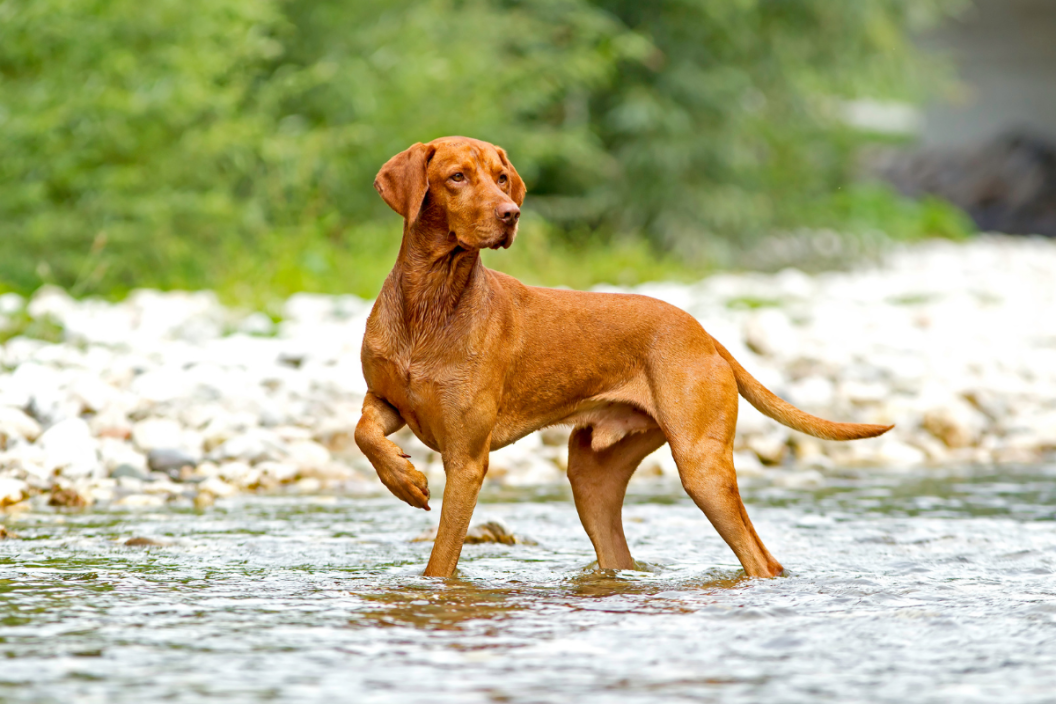
The Vizsla is a sleek Hungarian pointer bred to hunt all day and stay glued to its owner afterward. It weighs 45 to 65 lbs with a short, easy-care coat. Vizslas are affectionate, athletic, and need real daily exercise. They suit highly active 9 to 12 year olds who enjoy running, biking, or sports with their dog.
Their rust-gold coat and lean frame make them look built for speed. They are. A Vizsla can run for hours without slowing down.
Vizslas earned the nickname “velcro dog” for following owners from room to room nonstop. Most people see the energy and assume it fades with age. The surprising part: Vizslas often stay just as clingy and active well into their senior years.
“Our Vizsla runs beside my son’s bike for five miles and still wants to play fetch when they get home.”
— Mark V., Vizsla owner for 4 years
- Minimal shedding and grooming needs
- Extremely affectionate with family
- Ideal for running and biking kids
- Needs 90+ minutes of exercise daily
- Suffers badly from separation anxiety
- Not suited to low-activity homes
Best for: Highly active kids · Running or biking families · Homes with large yards
→ Compare more breed picks by family size and lifestyle
How Do These 10 Breeds Compare Side by Side?
You need a quick way to compare these breeds without rereading every entry. The table below lines up size, energy, grooming, and shedding for all ten breeds in one place. Use it to shortlist two or three breeds before you start meeting dogs in person, since size and energy level rule out more options than coat color ever will.
| Breed | Weight | Energy | Shedding | Best For |
|---|---|---|---|---|
| Labrador Retriever | 55–80 lbs | High | Heavy | Active outdoor families |
| Golden Retriever | 55–75 lbs | High | Heavy | Trick-training families |
| Beagle | 20–30 lbs | High | Moderate | Smaller homes |
| Boxer | 50–80 lbs | High | Low | Confident, sporty kids |
| Border Collie | 30–55 lbs | Very High | Moderate | Dog-sport families |
| Standard Poodle | 45–70 lbs | Moderate-High | Very Low | Allergy-prone homes |
| Cavalier King Charles | 13–18 lbs | Moderate | Moderate | Apartments, gentler kids |
| Cocker Spaniel | 20–30 lbs | Moderate-High | Moderate | First-time owners |
| Bulldog | 40–50 lbs | Low | Moderate | Low-activity households |
| Vizsla | 45–65 lbs | Very High | Low | Running and biking families |
Which Breed Is Right for Your Family?
Picking the right breed comes down to matching your real daily life, not your dream version of dog ownership. The fastest way to choose is to match your family’s exercise habit and home size to one of four common situations below. This removes the guesswork and points you straight to two or three honest options instead of all ten.
- If your family runs, hikes, or bikes most days → the Labrador, Vizsla, or Border Collie will keep up and thrive.
- If you live in an apartment with limited outdoor time → the Cavalier King Charles Spaniel or Bulldog fits better.
- If someone in your home has allergies → the Standard Poodle sheds the least of all ten breeds here.
- If your child wants to train tricks and compete in dog sports → the Border Collie or Standard Poodle will reward that effort fastest.
This article covers the ten breeds that consistently score well with 9 to 12 year olds on temperament and energy match. If your child has a severe dog allergy or your home bans pets over a certain weight, you may need to start with hypoallergenic toy breeds instead.
Mistakes Families Make When Choosing a Dog for This Age Group
Even great breed research can fail if a family skips a few key steps. The most common mistake is picking a breed for its looks instead of its energy needs, which leaves both the dog and the child frustrated within months. Avoiding this takes just a little planning before you ever meet a breeder or shelter dog.
Never leave a 9 to 12 year old alone full-time with a new dog during the first few weeks. Even gentle breeds need supervised introductions.
Here’s why that matters: most bite incidents involving kids happen with unfamiliar dogs or during unsupervised rough play, not with calm, well-matched family breeds. So if you adopt a high-energy breed like a Border Collie or Vizsla, plan for daily exercise from day one, not eventually.
Another mistake is skipping breeder or rescue screening for temperament. Research consistently shows that early socialization and parent-dog temperament predict behavior far better than breed alone. Ask to meet the dog’s parents whenever possible.
Let your child sit quietly near a potential dog for 10 minutes before any play. Watch how the dog reacts.
Frequently Asked Questions
What is the easiest dog breed for a 9 to 12 year old to handle alone?
The Beagle and Cavalier King Charles Spaniel are easiest for a tween to walk and handle solo. Both stay under 30 lbs, pull less on the leash, and rarely show aggression. Still, an adult should supervise walks near roads or other dogs.
Are big dogs safe for a 10 year old to walk?
Yes, if the dog has solid leash training and a calm temperament. Labradors and Golden Retrievers are common choices because they rarely lunge or pull hard. A harness, not just a collar, gives a 10 year old more control on walks.
What dog breed is best for a child with allergies?
The Standard Poodle is the top pick for allergy-prone families on this list. Its curly coat sheds very little and produces less dander than double-coated breeds. No breed is fully hypoallergenic, so a trial visit before adopting is still smart.
How much exercise does a family dog need with a 9 to 12 year old?
Most active breeds need 60 to 90 minutes of exercise daily, often split into two walks plus playtime. High-energy breeds like the Border Collie and Vizsla need closer to 90 minutes. Calmer breeds like the Bulldog need far less, often just 20 to 30 minutes.
Should I get a puppy or an older dog for a tween?
Either can work, but an older, already-trained dog often suits busy families better. Puppies need heavy supervision and consistent training that a 9 to 12 year old usually can’t handle alone. A calm adult rescue dog gives instant companionship with fewer surprises.
Choosing a dog for this age group comes down to matching real energy levels, not picking the cutest face in a photo. The Labrador, Golden Retriever, and Beagle remain the safest starting points for most families, while the Border Collie and Vizsla reward kids who truly want an active partner. One thing to do right now: write down your family’s actual daily exercise time, then circle the two breeds above that match it. I’m Thomas Cutter, and that one honest step prevents most of the regret families feel six months after bringing a new dog home.
Meta Title: Best Dog Breeds for 9 to 12 Year Olds (2026 Guide)
Meta Description: Discover the 10 best dog breeds for 9 to 12 year olds, with size, energy, and care details to help your family pick the right match.
URL: best-dog-breeds-for-9-to-12-year-olds
Tags: dog breeds for kids, family dogs, best dogs for tweens, dog breeds 2026, kid friendly dogs

Thomas Cutter is a lifelong dog owner and the founder of FindOutAboutDogs.com. With over 10 years of hands-on experience owning multiple breeds, Thomas created this site to provide honest, research-based dog advice that real owners can actually trust.
