How to Brush a Dog After Bathing: Step-by-Step Guide
Quick Answer
To brush a dog after bathing, first blot away excess water with a towel, then let the coat become damp rather than dripping wet. Use a brush suited to your dog’s coat, work in small sections from the ends toward the roots, and finish with a comb check on longer coats. Regular dog coat grooming also helps remove loose hair and debris.
Quick Post-Bath Brushing Steps
- Blot first: Press a towel into the coat instead of rubbing it into new tangles.
- Check the coat: Separate obvious tangles gently with your fingers before brushing.
- Choose correctly: Use a rubber brush, slicker, pin brush, or comb based on coat type.
- Work in sections: Brush small areas instead of pulling through the entire coat at once.
- Use light pressure: The brush should move through hair without scraping or pulling the skin.
- Comb-check: On long or curly coats, finish with a metal comb to find hidden tangles.
One Important Rule
- Do not force a brush through a tight mat. Stop and use a safer detangling method or ask a professional groomer for help.
A clean dog can still come out of the bath looking messy if the drying and brushing stages go wrong. Wet fur sticks together easily, and rough towel drying can turn small tangles into stubborn knots.
I treat brushing after a bath as part of the drying process, not a separate chore. The right timing and tool make the biggest difference.
- Short coats usually need simple loose-hair removal.
- Long coats need section-by-section detangling.
- Curly coats need careful brushing to stop curls from tightening into mats.
- Double coats need thorough drying before heavy undercoat work.


Should You Brush a Dog Immediately After a Bath?
 Save
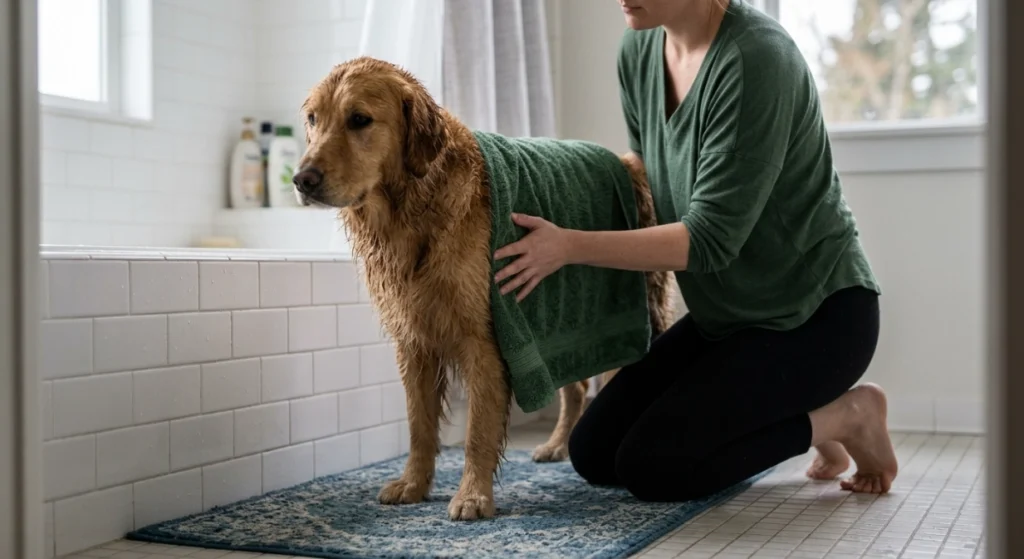
SaveYou can brush many dogs after bathing, but you should not attack a soaking-wet coat with a stiff brush. First remove excess water and judge the dog’s coat type.
For many dogs, a towel-damp coat is easier to organize and detangle gently. However, dense double coats often need more drying before you start serious undercoat brushing.
Definition: Post-bath brushing is the process of separating, detangling, smoothing, and removing loose hair while a freshly washed dog’s coat dries.
The American Kennel Club’s guide to dog brushes notes that rubber grooming brushes can work during bathing and on dry coats. Other brush types have different jobs.
How Do You Brush a Dog After Bathing Step by Step?
The safest method is to remove water first, then brush small sections with light pressure. Do not start by dragging a brush from your dog’s shoulders to tail in one long stroke.
- Rinse the coat completely. Leftover shampoo can irritate skin and make the coat feel sticky.
- Squeeze out excess water gently. Use your hands on longer fur without twisting it.
- Blot with an absorbent towel. Press and lift instead of rubbing rapidly.
- Look for tangles. Check behind the ears, under the front legs, around the collar area, tail, belly, and back legs.
- Separate small knots with your fingers. Hold the hair close to the skin to reduce pulling.
- Start brushing in small sections. Work through the outer ends before moving closer to the skin on long coats.
- Follow the natural direction of hair growth. Keep each stroke controlled and gentle.
- Dry as you continue. If using a dryer, choose a pet-safe setting and avoid concentrating hot air on one area.
- Finish with a comb check. A metal comb should move through long or curly hair without repeatedly catching.
The ASPCA dog grooming guidance recommends brushing out dead hair and mats before bathing. That pre-bath step makes your post-bath job much easier.
How Dry Should Your Dog Be Before Brushing?
Your dog does not always need to be completely dry before light brushing. The ideal stage depends on coat structure and the brush you plan to use.
| Coat Type | Best Post-Bath Stage | Useful Tool | Main Goal |
|---|---|---|---|
| Smooth, short | Towel-damp to mostly dry | Rubber curry or grooming brush | Lift loose hair and smooth coat |
| Long, silky | Damp, then while drying | Pin or slicker brush plus comb | Prevent knots and separate strands |
| Curly or woolly | Damp through drying | Long-pin slicker plus metal comb | Separate curls and detect tangles |
| Dense double coat | Mostly or fully dry for deep work | Slicker or pin brush; suitable undercoat tool when dry | Separate dense coat and remove loose undercoat |
In 2026, my advice is still to ignore one-size-fits-all brushing rules. A Labrador’s coat does not behave like a Maltese, Poodle, or Golden Retriever coat.
What Brush Should You Use After Bathing a Dog?
Choose the brush by coat type rather than by package claims alone. A tool that works beautifully on one dog can be uncomfortable or ineffective on another.
- Rubber curry brush: Useful for many smooth, short-coated dogs and for lifting loose hair.
- Slicker brush: Useful for separating longer, curly, woolly, or dense coats when used gently.
- Pin brush: Helpful for longer coats where you want controlled separation with less aggressive pulling.
- Metal comb: Best as a finishing tool for locating small tangles a brush missed.
- Undercoat tool: Useful for appropriate double-coated dogs, usually after the coat is well dried.
I like using two tools on long-coated dogs instead of expecting one brush to do everything. The brush handles the larger sections, while the comb exposes the spots I missed.
Practical check: If your dog repeatedly flinches, turns toward the brush, tries to escape, or the skin becomes red, stop and reassess your pressure and tool choice.
How Do You Brush a Long-Haired or Curly Dog After a Bath?
 Save
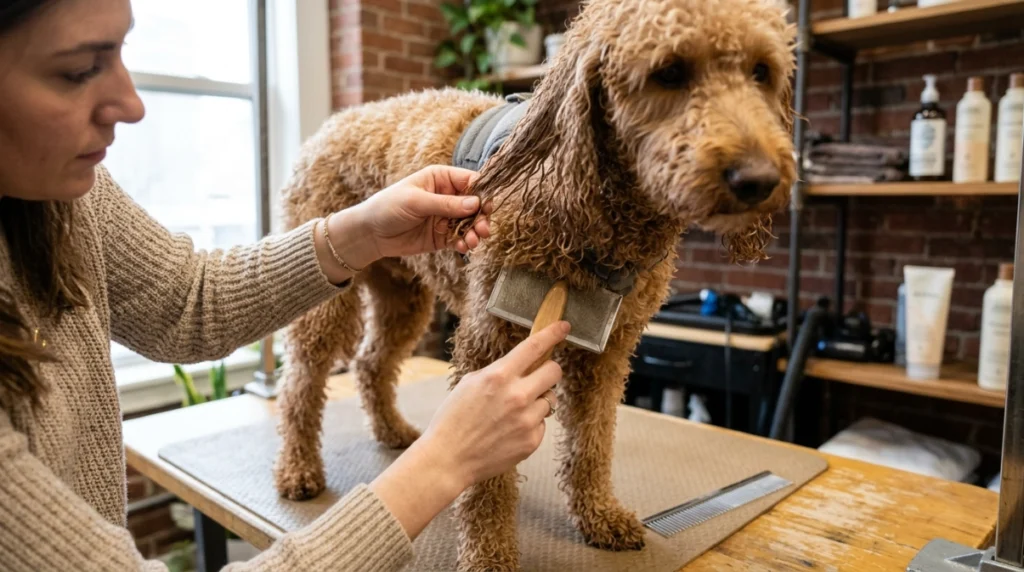
SaveLong and curly coats are easiest to manage in sections. Trying to brush only the visible surface can leave tangles hidden near the skin.
I use a simple line-brushing pattern. It makes missed areas easier to spot.
- Choose one small area, such as the lower back leg.
- Lift the hair above that section with one hand.
- Brush a thin layer gently from the ends toward the base.
- Release another thin layer and repeat.
- Run a metal comb through the finished section.
- Move to the next area only when the comb passes smoothly.
Pay special attention behind the ears, around the harness area, armpits, tail base, and feathering on the legs. Friction makes these areas common trouble spots.
How Should You Brush a Double-Coated Dog After Bathing?
Give a double coat enough time to dry before aggressive deshedding. A damp, dense undercoat can clump together and make it harder to judge what the brush is doing.
Start by drying down toward the skin instead of stopping when the surface looks dry. Thick-coated dogs can hold moisture deep inside the coat.
- Blot the coat thoroughly with towels.
- Separate dense fur with your fingers.
- Use moving air to help dry the undercoat if your dog tolerates it.
- Brush gently with a suitable pin or slicker brush.
- Use an undercoat tool only when appropriate for that dog’s coat.
The AKC’s dog bathing preparation guide also emphasizes thorough pre-bath brushing. Removing loose hair before water enters the coat reduces the amount you must manage afterward.
What Mistakes Should You Avoid When Brushing After a Bath?
The biggest mistakes involve excess force, wrong timing, and the wrong grooming tool. More pressure rarely solves a tangled coat.
- Rubbing hard with a towel: This can twist long hair together and create fresh tangles.
- Pulling through mats: Tight knots can tug painfully on the skin.
- Brushing huge sections: Small sections give you more control and reduce repeated pulling.
- Using heavy pressure: Slicker pins should work through the coat, not scrape the skin.
- Ignoring damp undercoat: Dense dogs may still be wet near the skin even when the topcoat feels dry.
- Skipping the comb check: Surface brushing can leave small tangles underneath long or curly hair.
Do not reach for household scissors when a mat sits close to the skin. Dog skin can pull up into a mat, making accidental cuts easier than many owners expect.
What If You Find Mats After Bathing?
Stop brushing aggressively if you find a tight mat. Bathing can make existing mats harder to manage because wet tangled hair can tighten as it dries.
Small, loose tangles may separate with patient finger work and an appropriate detangling product. Tight mats, large felted areas, or mats close to skin are better handled by a professional groomer.
Safety warning: Stop home brushing if you see sores, bleeding, strong odor, significant redness, or a mat that pulls tightly on the skin. A veterinarian or professional groomer can help determine the safest next step.
VCA also advises using grooming tools rather than scissors for difficult burrs and tangles because scissors can injure the skin. That is a rule worth taking seriously.
How Can You Make Post-Bath Brushing Easier Next Time?
 Save
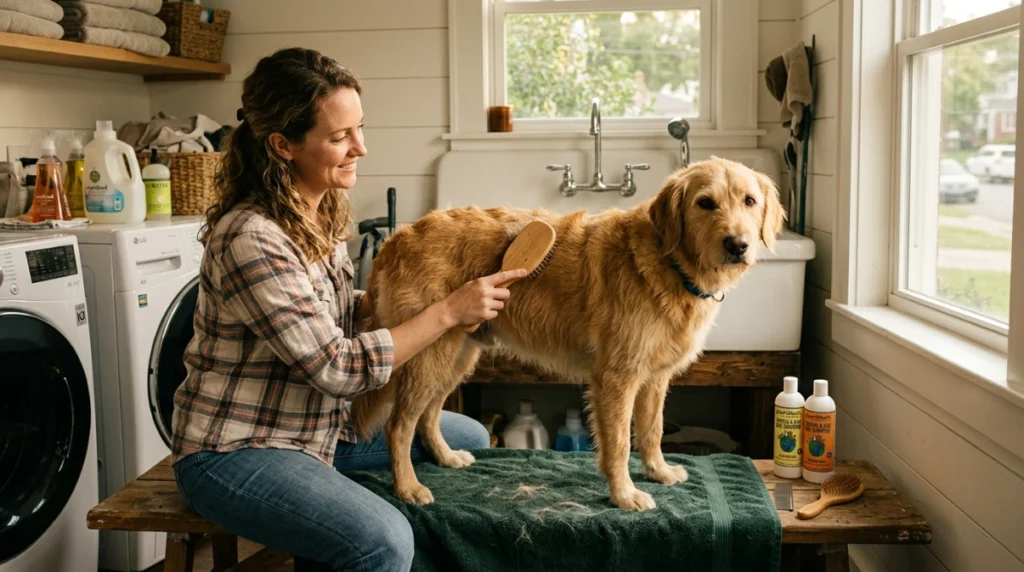
SaveThe easiest post-bath brushing session starts before your dog gets wet. Remove loose hair and obvious tangles first.
- Brush thoroughly before the bath.
- Use a shampoo intended for dogs.
- Rinse until no slippery product remains.
- Blot instead of rubbing with the towel.
- Keep the correct brush and comb within reach.
- Work before small tangles become tight mats.
I also keep grooming sessions short when a dog becomes restless. Five calm minutes can be more productive than twenty minutes of wrestling with a frustrated dog.
Helpful Brushes for Post-Bath Dog Grooming
If you’re building a simple home grooming kit, I would match the brush to the coat instead of buying the most aggressive tool available.
🏆 Best for Short Coats
KONG ZoomGroom
★★★★★ 4.8/5 use-case rating
The flexible rubber-style grooming fingers are designed for shampooing and dry grooming. I like this type of brush for short-coated dogs because it lifts loose hair without relying on sharp metal pins.
💰 Easy-Clean Slicker Pick
Hertzko Self Cleaning Slicker Brush
★★★★☆ 4.6/5 use-case rating
Its retractable-bristle design makes captured hair easier to remove after grooming. I would use it gently on suitable medium or longer coats rather than pressing the pins firmly against the skin.
🐩 Best for Dense Curly Coats
Chris Christensen Big G Slicker Brush
★★★★★ 4.7/5 use-case rating
The Big G uses long, dense pins and is designed for dense, curly, and cottony coats. It is my specialist-style choice when deeper coat separation matters more than low purchase cost.
Frequently Asked Questions
Can I brush my dog while the fur is still wet?
Yes, light brushing can be appropriate for some coat types while the fur is damp. Avoid forceful brushing of soaking-wet hair, and use the tool and timing that suit your dog’s coat.
Should I brush my dog before or after a bath?
Ideally, do both. Brush before bathing to remove loose hair and tangles, then brush again during the drying stage to organize the clean coat and catch remaining loose hair.
Why is my dog’s fur tangled after bathing?
Tangles can form when loose hairs twist together during washing or rough towel drying. Existing knots may also become tighter once wet, especially in long, curly, or friction-prone areas.
Can I use a slicker brush on a wet dog?
A slicker can be useful on some damp long or curly coats, but it must be used gently and correctly. Never press hard enough for the pins to scrape the skin, and stop if the brush catches repeatedly.
How often should I brush my dog between baths?
Brushing frequency depends on coat type. Long, curly, silky, and mat-prone coats may need frequent or daily attention, while many short coats can be maintained with less frequent brushing.
Final Takeaway
Learning how to brush a dog after bathing comes down to three things: remove excess water, choose the right grooming tool, and work gently in small sections. The coat should look separated and comfortable, not merely brushed on the surface.
Before your dog’s next bath, spend a few minutes removing loose hair and checking for tangles. That small step can make the entire wash, dry, and post-bath brushing routine much easier.

Thomas Cutter is a lifelong dog owner and the founder of FindOutAboutDogs.com. With over 10 years of hands-on experience owning multiple breeds, Thomas created this site to provide honest, research-based dog advice that real owners can actually trust.
