How to Tell If a Brush Is Causing Discomfort in Your Dog
Quick Answer
A dog brush may be causing discomfort if your dog flinches, pulls away, freezes, turns toward the brush, tries to escape, growls, or suddenly refuses grooming. Stop brushing and check the tool, your pressure, mats, and the skin before continuing; if fear has developed, use a gradual dog brushing desensitization routine rather than forcing the session.
Signs the brush may be uncomfortable
- Flinching: Your dog jerks or tenses when the brush touches one particular area.
- Pulling away: Your dog repeatedly moves away when brushing starts.
- Skin reaction: You notice redness, scratches, sore spots, or irritation after brushing.
- Defensive behavior: Your dog turns toward the brush, growls, snaps, or guards a body area.
- Sudden avoidance: A dog that previously tolerated grooming suddenly hides when the brush appears.
- Repeated licking: Your dog keeps licking or chewing an area immediately after grooming.
How to verify it
- Pause, inspect the skin and coat, then test one gentle stroke on an easy, untangled area. If your dog remains uncomfortable, stop and investigate before brushing again.
Most dogs can’t tell us that a grooming tool hurts, so their body language becomes the warning system. Small reactions during brushing deserve attention before they become fear, skin irritation, or defensive behavior.
I use a simple rule during grooming: the dog should look at least as comfortable after several strokes as before I started. If tension keeps increasing, I stop instead of trying to finish the whole coat.


What Does Brush Discomfort Mean in Dogs?
 Save
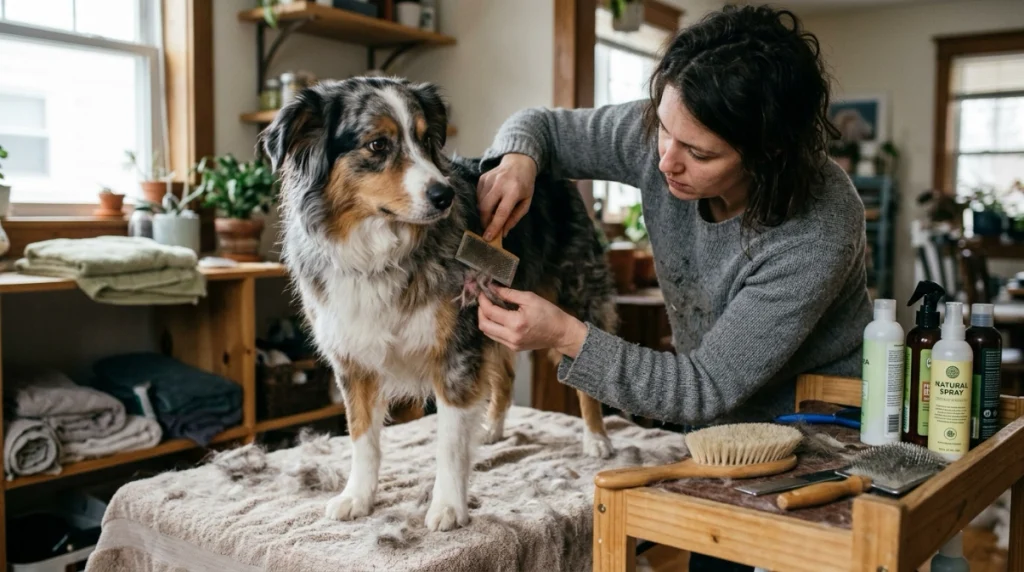
SaveBrush discomfort is any unpleasant physical or emotional response caused or triggered during brushing. It can come from the brush itself, excessive pressure, tangled hair, sensitive skin, or pain that was already present.
That distinction matters. A dog reacting to a brush doesn’t automatically mean the brush is defective.
- Tool discomfort: Pins, teeth, edges, or stiffness don’t suit the coat or skin.
- Technique discomfort: Too much downward pressure or repeated strokes irritate the same area.
- Coat discomfort: The tool catches knots, packed undercoat, burrs, or mats.
- Medical discomfort: Skin disease, wounds, inflammation, joint pain, or another problem makes handling painful.
- Emotional discomfort: Previous painful grooming creates fear before the brush even touches the dog.
The American Kennel Club notes that dogs may resist brushing because of previous painful experiences, sensitive skin, or hard brushing. Their guidance on dogs that dislike brushing also recommends paying attention to reactions during individual grooming motions.
How Can You Tell If the Brush Is Hurting Your Dog?
The clearest clue is a repeatable reaction connected to brushing. If your dog reacts when the brush reaches the same spot or when you apply the same movement, investigate it.
Watch for immediate body-language changes
Don’t wait for yelping. Dogs can show discomfort long before they vocalize.
- Suddenly freezing or becoming stiff
- Moving the body away from the brush
- Looking sharply toward your hand
- Lowering the head or crouching
- Tucking the tail
- Repeated lip licking or nervous panting
- Trying to leave the grooming area
- Growling, snapping, or attempting to bite
A dog may tolerate ten strokes on the shoulder but react when you reach the hip. That pattern can tell you more than a general dislike of grooming.
Check what happens after brushing
Look at both the skin and your dog’s behavior when the session ends. A grooming session shouldn’t leave obvious soreness.
- New redness or irritated patches
- Scratches or small abrasions
- Persistent licking of one area
- Chewing or scratching after grooming
- Hair broken close to the skin
- Increased sensitivity when the area is touched
PetMD lists behavioral changes, excessive licking, altered posture, and sensitivity to handling among possible signs of pain. See their overview of pain signs in dogs when brushing discomfort seems part of a larger change.
Is the Brush Causing the Problem or Is Something Else Hurting?
You can often narrow down the cause by changing one factor at a time. Start with the easiest coat area and use minimal pressure.
| What You Observe | More Likely Cause | What to Check |
|---|---|---|
| Dog reacts almost everywhere the brush touches | Tool, pressure, fear, or widespread sensitivity | Pin stiffness, hand pressure, skin condition, previous grooming experience |
| Dog reacts only where hair is tangled | Pulling on knots or mats | Hidden tangles close to the skin |
| Dog reacts in one body area with several tools | Local tenderness or pain | Skin, wound, swelling, joint movement, veterinary evaluation |
| Dog relaxes when you switch to a softer tool | Original brush may be too harsh | Brush type and coat compatibility |
| Dog panics before brushing begins | Fear or learned association | Previous painful sessions and gradual retraining |
One common hidden cause is matting. A brush can tug the skin even when the knot isn’t obvious from the surface.
Before repeatedly brushing a resistant area, learn how to check a dog coat for hidden mats. Parting the coat and inspecting close to the skin can prevent painful pulling.
How Do You Test a Dog Brush for Comfort?
Test the brush with a few controlled strokes rather than starting a full grooming session. Your goal is to see whether your dog stays relaxed as the tool moves through the coat.
- Inspect the brush. Look for bent pins, rough edges, damaged teeth, trapped debris, or anything sharp.
- Choose an easy area. Start on the shoulder or upper back instead of the paws, ears, belly, tail, or tangled areas.
- Use one light stroke. Let the brush work through the coat without pushing it toward the skin.
- Pause and watch. Look for freezing, turning, pulling away, or sudden tension.
- Try two more strokes. Continue only if your dog remains relaxed.
- Inspect the skin. Part the coat and look for redness, scratches, dandruff, bumps, or sore areas.
I call this my three-stroke comfort check. It prevents me from assuming a dog will become comfortable if I simply keep brushing.
VCA Animal Hospitals recommends selecting grooming tools according to coat type and using them gently without excessive pulling. Their dog grooming and coat-care guidance also recommends checking the coat for sensitive areas.
Can the Wrong Type of Brush Cause Discomfort?
Yes. A brush that works well on one coat may be irritating or ineffective on another.
As of 2026, I still prefer choosing tools by coat structure rather than buying whichever brush promises the most shedding removal.
| Brush Type | Common Use | Possible Comfort Problem |
|---|---|---|
| Slicker brush | Long, curly, wire, and tangle-prone coats | Wire pins may irritate skin when pressed too firmly |
| Rubber curry or grooming mitt | Short, smooth coats | Usually gentle, but aggressive rubbing can still irritate skin |
| Undercoat rake | Suitable dense and double coats | Wrong coat type or excessive pressure can pull hair and skin |
| Pin brush | Longer coats and feathering | Damaged or overly stiff pins can scratch sensitive skin |
| Metal comb | Checking longer coats after brushing | Forcing it through knots can create painful pulling |
The AKC’s guide to choosing dog brushes specifically warns that pressing too hard with a slicker brush can cause discomfort.
Your dog’s normal schedule also changes with coat type. My guide to how dog breed affects grooming frequency explains why short, curly, long, and double coats need different routines.
Could Mats Make a Comfortable Brush Suddenly Hurt?
 Save
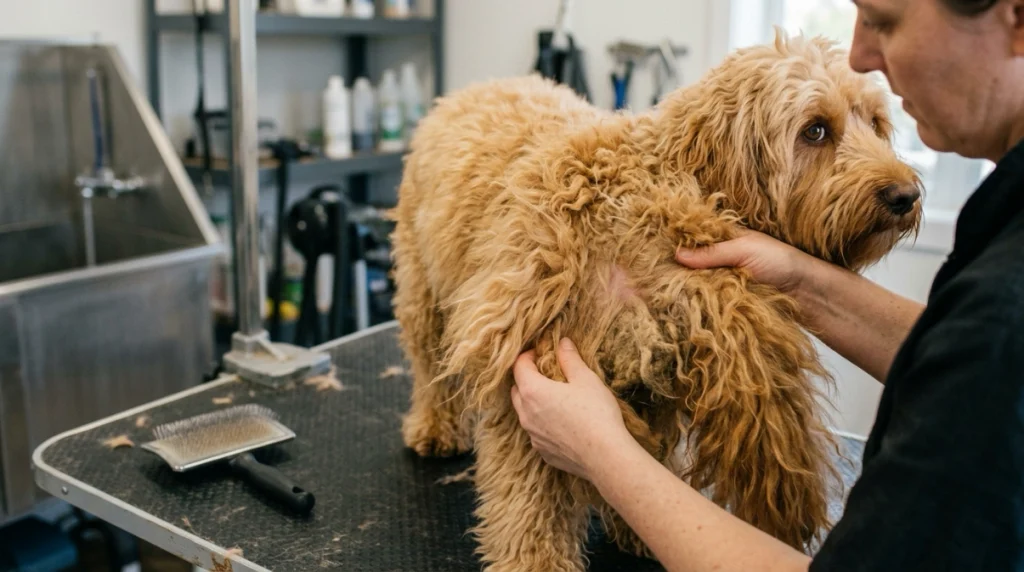
SaveYes. Mats tighten hair against the skin, so brushing can pull the skin even when the tool itself is appropriate.
Don’t repeatedly drag a brush through a stubborn knot. Each pass can increase tension and teach your dog to expect pain.
- Hold loose hair close to the skin when working on a minor tangle.
- Work from the outer end of the tangle instead of pulling from the root.
- Use short, controlled strokes.
- Stop if the mat is tight against the skin.
- Ask a professional groomer for help with severe matting.
Outdoor debris can create the same problem. If seeds or burrs become trapped, remove them carefully before regular brushing; this guide on removing burrs from dog fur safely covers that process.
When Should You Stop Brushing Immediately?
Stop when your dog shows escalating pain, panic, or defensive behavior. Finishing the coat isn’t worth turning a small problem into an injury or grooming phobia.
- Your dog yelps or cries during a stroke.
- The skin is bleeding, raw, swollen, or obviously inflamed.
- Your dog repeatedly snaps or tries to bite.
- Touching one area causes a strong pain reaction.
- Your dog suddenly cannot tolerate grooming that was previously easy.
- You discover a wound, lump, hot spot, severe mat, or other abnormality.
Sudden grooming sensitivity can come from more than coat care. Joint pain, skin problems, ear problems, wounds, and other conditions can make normal handling uncomfortable.
When should a veterinarian check the problem?
Contact your veterinarian when discomfort persists without an obvious grooming cause or when you see skin damage, swelling, significant itching, limping, behavioral changes, or sensitivity outside grooming sessions.
A brush should never become a way to test how much pain your dog can tolerate. When you’re unsure, stop using the painful area as an experiment.
How Can You Make Brushing More Comfortable?
Comfort usually improves when you combine the right tool with lighter pressure and shorter sessions. Start before your dog becomes restless.
- Brush small sections: Finish one comfortable area before moving on.
- Use light pressure: Let the pins or teeth move through hair instead of pressing into the skin.
- Support tangled hair: Reduce pulling at the skin while working minor tangles.
- Reward calm behavior: Pair comfortable strokes with treats or praise.
- Use secure footing: A non-slip surface can make handling feel safer.
- Stop early: Several calm minutes are better than a long struggle.
My favorite endpoint is a dog that still willingly stays beside me when the brush goes away. That tells me I probably stopped before the session became too much.
Dog Brushes I Would Choose for Different Comfort Needs
If your current brush seems too harsh, don’t automatically replace it with another version of the same tool. Match the alternative to your dog’s coat and the job you need to perform.
🐕 Gentle Pick
KONG ZoomGroom
★★★★☆
Flexible rubber fingers make this style useful for collecting loose hair from many short, smooth coats. I would start here when a stiff brush feels unnecessary and gentle surface grooming is the priority.
🏆 Long & Curly Coats
Chris Christensen Big G Slicker Brush
★★★★☆
This slicker is designed for reaching through dense, curly, and longer coats. I would choose it when coat separation matters, while still using a light hand and avoiding repeated pressure against the skin.
🐾 Dense Double Coats
FURminator Grooming Rake
★★★★☆
The rotating metal teeth are intended to work through suitable dense coats and loose undercoat. I would reserve this type of tool for dogs that genuinely have the coat structure for it rather than using it as a universal brush.
Frequently Asked Questions
Is it normal for a dog to dislike being brushed?
Some dogs dislike brushing because of sensitivity, fear, previous painful grooming, tangles, or unfamiliar handling. Mild uncertainty can improve with gradual positive exposure, but repeated flinching, pain, skin changes, or defensive behavior should be investigated rather than dismissed as stubbornness.
Should a slicker brush touch a dog’s skin?
A slicker needs to work through the coat, but you shouldn’t press the wire pins forcefully against the skin. Use light controlled strokes and regularly inspect the skin, especially on thin-coated areas where excessive pressure can cause irritation.
Why does my dog suddenly hate being brushed?
A sudden change can point to a new mat, tender skin, injury, infection, joint discomfort, or another painful condition. Stop forcing grooming and check the affected area carefully, especially when a previously relaxed dog begins flinching or avoiding touch.
Why does my dog turn around when I brush them?
Turning toward the brush can simply mean curiosity, but repeated sharp turns may signal discomfort or concern. Pause and see whether the behavior occurs with a particular body area, brush movement, knot, or amount of pressure.
Can brushing too hard damage a dog’s skin?
Yes. Repeated hard strokes can irritate the skin, especially with stiff pins or tools designed to reach through dense coat. Use the least pressure needed, avoid repeatedly scraping one area, and stop if redness, tenderness, or scratches appear.
Final Takeaway
Learning how to tell if a brush is causing discomfort comes down to watching your dog, checking the coat, and changing one variable at a time. Flinching, pulling away, freezing, skin irritation, repeated licking, or defensive behavior are signals worth respecting.
Use the right brush for the coat, keep your pressure light, and stop before discomfort turns into fear. When brushing suddenly becomes painful without an obvious grooming reason, let your veterinarian help identify what’s underneath the reaction.

Thomas Cutter is a lifelong dog owner and the founder of FindOutAboutDogs.com. With over 10 years of hands-on experience owning multiple breeds, Thomas created this site to provide honest, research-based dog advice that real owners can actually trust.
