How to Brush a Golden Retriever: Step-by-Step Coat Guide
Quick Answer
To brush a Golden Retriever, first loosen small tangles, then brush the coat in sections from the skin outward. Follow with an undercoat rake during shedding, then finish with a metal comb to find anything you missed. Regular coat care is part of responsible Golden Retriever ownership.
Brush your Golden Retriever in this order
- Check the coat: Feel for mats, burrs, damp spots, lumps, or sore skin before brushing.
- Start gently: Use a pin or slicker brush to loosen surface hair and minor tangles.
- Work in sections: Part the coat and brush from near the skin toward the hair ends.
- Brush feathering: Give extra attention behind the ears, chest, legs, belly, and tail.
- Remove loose undercoat: Use an undercoat rake gently when your Golden is shedding heavily.
- Finish with a comb: A metal comb should glide through the coat without catching.
One rule that matters most
- Never force a brush through a mat: Stop, separate the tangle with your fingers, and work slowly from the ends toward the skin.
If you’ve ever brushed a Golden and still found hair all over the floor an hour later, you’re not alone. Their beautiful coat has two layers, so a quick surface brushing often misses the loose hair underneath.
I prefer a simple system: loosen, section, remove undercoat, then check with a comb. That routine is easier on the dog and makes it much harder to overlook hidden tangles.


Why Does a Golden Retriever Need a Special Brushing Routine?
A Golden Retriever has a medium-length double coat with a protective outer layer and a softer undercoat. Brushing needs to reach both layers without scratching the skin or repeatedly scraping healthy coat.
Brushing a Golden Retriever means systematically removing loose hair, debris, and developing tangles while checking the skin underneath. It is different from simply smoothing the visible topcoat.
- The outer coat: Protects the body and gives the Golden its familiar flowing appearance.
- The undercoat: Provides insulation and releases substantial loose hair during shedding cycles.
- The feathering: Longer hair around the chest, legs, belly, ears, and tail can tangle faster.
The Golden Retriever Club of America notes that weekly brushing may be enough through much of the year, while major shedding periods can require daily attention.
What Brush Should You Use on a Golden Retriever?
For most Goldens, one brush cannot do every job well. A pin brush or slicker handles routine coat work, while an undercoat rake helps when loose undercoat becomes heavy.
A metal comb is the finishing tool I would not skip. If the comb catches after brushing, there is still a tangle or packed coat hiding underneath.
| Tool | Best Job | Best Areas | When to Use |
|---|---|---|---|
| Pin brush | Routine coat maintenance | Back, sides, chest, tail | Regular brushing sessions |
| Slicker brush | Loose hair and small tangles | Feathering, legs, chest | As needed, using light pressure |
| Undercoat rake | Loose undercoat | Body, shoulders, rear quarters | Especially during heavy shedding |
| Metal comb | Final tangle check | Behind ears, legs, feathering | End of a thorough session |
The AKC’s guide to dog brushes also stresses matching the tool to the coat and reaching the undercoat on double-coated dogs.
How Do You Brush a Golden Retriever Step by Step?
 Save
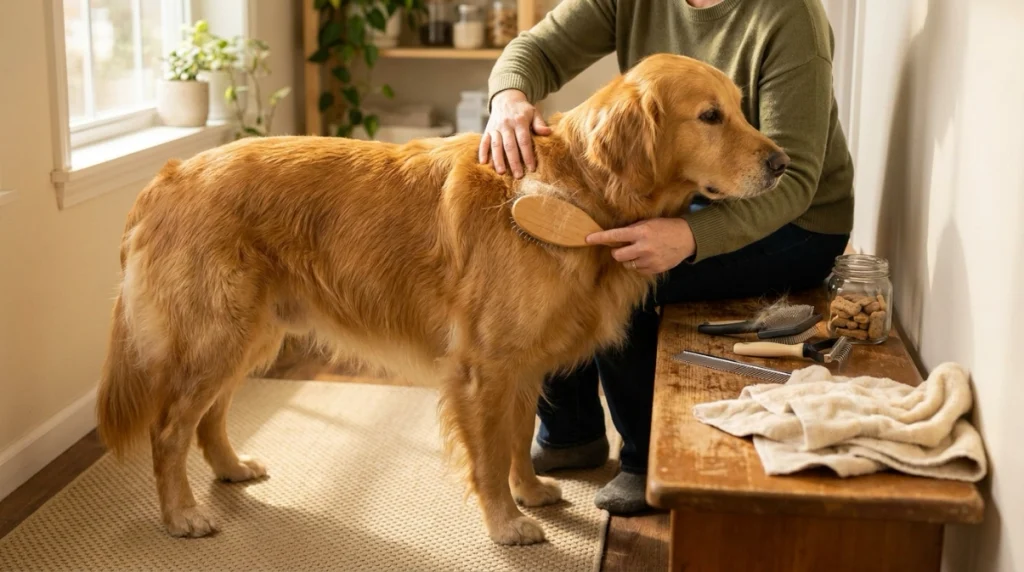
SaveThe easiest method is to work in a predictable order instead of brushing random areas. Your Golden learns what to expect, and you are less likely to miss the belly, ears, or back legs.
1. Let Your Golden See and Smell the Tools
Start with your dog standing, sitting, or lying comfortably on a nonslip surface. Let a puppy or nervous dog investigate the brush before you touch the coat.
Reward calm behavior with praise or a small treat. Short positive sessions are better than wrestling through one long grooming session.
2. Check the Coat With Your Hands First
Run your fingers through the coat before using a brush. Feel behind the ears, around the collar area, beneath the front legs, through the rear feathering, and along the tail.
- Look for tangles: Small knots are easier to handle before brushing.
- Check the skin: Watch for redness, sores, ticks, scabs, or unusual lumps.
- Remove debris: Pick out leaves, burrs, or twigs carefully.
Regular grooming gives you a useful chance to notice skin or body changes early. The AKC’s home grooming guidance recommends checking for mats, debris, cuts, and scrapes while brushing.
3. Brush the Coat in Small Sections
Begin around the shoulders or neck and move toward the rear. Lift a small section of hair so you can brush deeper than the shiny outer layer.
Brush in the direction the hair naturally grows. Use controlled strokes instead of pressing hard against the skin.
- Part a small section of coat.
- Brush from near the skin toward the ends.
- Check that the brush moves without snagging.
- Move to the next section.
- Continue down the body and legs.
4. Give Extra Attention to the Feathering
The long hair behind the legs, around the chest, beneath the belly, and on the tail deserves extra time. These areas rub against the body and collect outdoor debris.
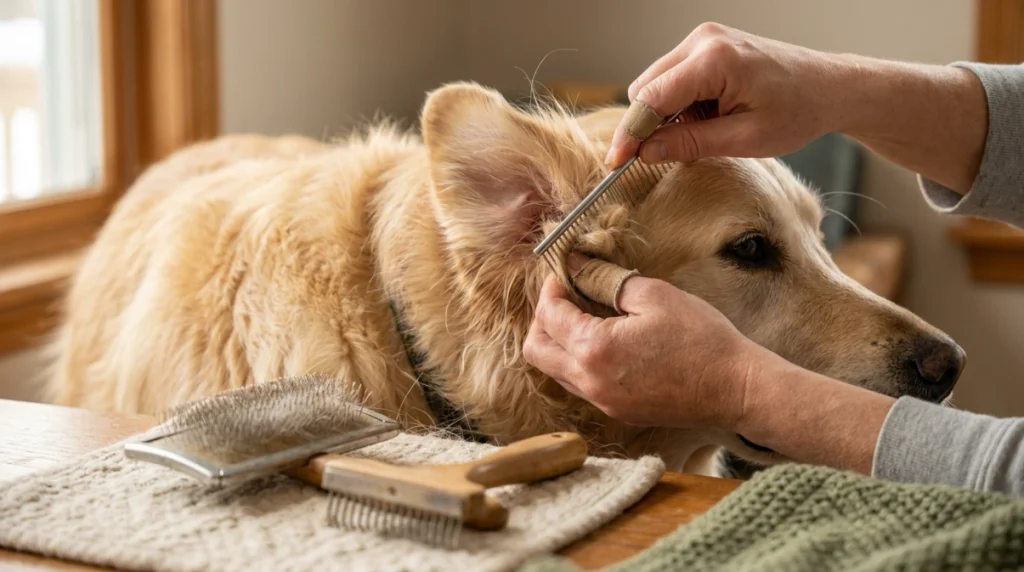
Behind the ears is another important checkpoint. Small tangles can tighten quickly because the hair is soft and constantly moving.
- Behind the ears: Hold hair near the skin so you do not pull the ear.
- Front armpits: Lift the leg gently and use short strokes.
- Rear feathering: Separate thick sections with your fingers first.
- Tail: Support it rather than pulling while brushing long feathering.
5. Use an Undercoat Rake When Loose Coat Builds Up
An undercoat rake can remove soft dead coat that a surface brush leaves behind. It is most useful when tufts begin lifting from the body during seasonal shedding.
Use gentle strokes in the direction of coat growth. Stop if the rake repeatedly catches or your dog shows discomfort.
6. Finish With a Metal Comb
Run a metal comb through the areas you just brushed. It should travel through the coat smoothly without stopping at hidden knots.
This is my favorite quality-control step because the comb tells you whether the coat is truly clear. A fluffy-looking coat can still hide tangles close to the skin.
7. End Before Your Dog Gets Frustrated
Finish with praise, a treat, or a favorite activity. You want brushing to predict something pleasant, especially with a puppy.
If your Golden becomes restless, split grooming into two short sessions. There is no prize for finishing the entire dog in one sitting.
How Often Should You Brush a Golden Retriever?
Most Golden Retrievers do well with thorough brushing several times each week, although individual coats differ. During a major shed, daily brushing can be useful because loose undercoat accumulates much faster.
As of 2026, breed-club guidance still treats coat care as an ongoing part of Golden ownership rather than an occasional grooming job. Your dog’s coat density, activity, swimming, and season should determine the exact schedule.
- Normal weeks: Aim for one to three thorough brushing sessions.
- Heavy shedding: Check and brush the coat daily if loose undercoat is building quickly.
- After outdoor adventures: Inspect for burrs, twigs, mud, and tangles.
- After swimming: Let the coat dry properly and check feathering for knots.
If you’re choosing a Golden for family life, remember that grooming time is part of the commitment. Our guide to friendly family dog breeds can help you compare that maintenance with other popular breeds.
How Should You Brush a Golden Retriever During Shedding Season?
 Save
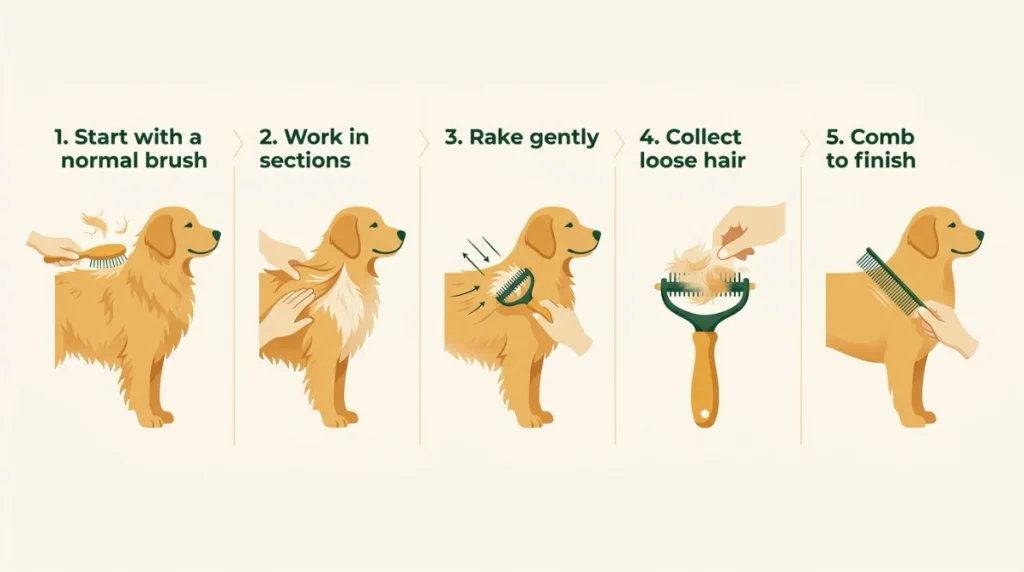
SaveDuring a heavy shed, focus on removing loose undercoat gradually rather than trying to strip everything in one session. Frequent gentle sessions are kinder to the skin and easier for the dog.
- Start with a normal brush: Remove surface tangles before reaching for a rake.
- Work in sections: Separate the coat so you can see where loose undercoat is collecting.
- Rake gently: Make a few controlled passes instead of repeatedly scraping the same area.
- Collect loose hair: Remove hair from the tool often so it keeps working properly.
- Comb to finish: Check that the coat is open and free of hidden tangles.
Bathing can also loosen dead coat, but a wet Golden should be dried properly before a normal brushing session. The Golden Retriever Club of America notes that baths and thorough drying can help release dead coat during shedding periods.
Where Do Golden Retrievers Mat Most Easily?
Mats tend to develop where soft hair rubs, bends, or stays damp. Behind the ears and under the legs deserve a quick check even when the rest of the coat looks perfect.
| Area | Why It Tangles | Best Check |
|---|---|---|
| Behind ears | Fine hair plus constant movement | Finger check and metal comb |
| Armpits | Friction while walking and running | Lift leg gently and comb |
| Rear feathering | Long dense hair rubbing together | Section brushing |
| Tail | Long feathering collects debris | Pin brush followed by comb |
What Brushing Mistakes Should You Avoid?
 Save
SaveThe most common mistake is brushing only the visible surface. The coat can look smooth while loose undercoat and tangles remain underneath.
- Do not brush with force: Hard pressure can irritate skin and make grooming unpleasant.
- Do not rip through mats: Work from the ends or get professional help with tight mats.
- Do not ignore hidden areas: Check behind ears, armpits, legs, belly, and tail.
- Do not overuse deshedding tools: More passes are not always better.
- Do not shave a healthy double coat for convenience: Golden coat care should preserve the breed’s natural coat.
AKC Golden Retriever grooming guidance specifically advises against shaving the breed’s double coat. If coat care feels overwhelming, a qualified groomer can help while you learn the routine.
Families with children can also turn grooming into a calm shared responsibility. If that is your situation, see our guide to dog breeds for 9- to 12-year-olds for a broader look at Golden Retriever care and family fit.
Can You Overbrush a Golden Retriever?
Yes, especially if you repeatedly use aggressive pressure or a heavy deshedding tool on the same area. The goal is to remove loose coat and tangles, not keep scraping until no hair appears in the brush.
Watch your dog’s skin and behavior. Redness, flinching, repeated turning toward the brush, or sudden avoidance means you should stop and reassess your technique.
- Use light, controlled pressure.
- Do not repeatedly rake the same patch.
- Check tool tips for bent or sharp pins.
- Stop if skin becomes irritated.
- Ask a groomer or veterinarian about persistent coat or skin problems.
If you’re ready to build a simple Golden Retriever grooming kit, these are the three tools I would consider first:
🏆 Best for routine brushing
Chris Christensen Original Series Pin Brush
★★★★★
A quality pin brush is useful for routine work through a Golden’s longer outer coat and feathering. I like this type as the starting brush because it keeps everyday coat care simple.
🍂 Best for shedding season
Andis Fine-Tooth Deshedding Rake
★★★★½
This rake is designed to reach loose coat below the surface and makes the most sense during heavier shedding. I would use it as a targeted tool rather than the only brush in your kit.
💰 Best easy-clean slicker
Hertzko Self-Cleaning Slicker Brush
★★★★☆
A slicker is handy for loose hair and light tangles around feathering. The self-cleaning design is especially convenient when a Golden is releasing enough hair to fill a brush quickly.
Frequently Asked Questions
Should I brush my Golden Retriever every day?
You do not always need to brush a Golden Retriever every day. One to three thorough sessions per week works for many dogs, while daily brushing becomes more useful during heavy seasonal shedding or when your dog collects debris outdoors.
Should I brush a Golden Retriever before or after a bath?
Brush out obvious tangles before bathing because water can tighten existing knots. After the coat has been rinsed and dried thoroughly, another gentle brushing can remove loose hair released during the bath and leave the coat easier to inspect.
What is the best brush for a Golden Retriever?
A pin brush is a strong choice for routine brushing, while a slicker helps with loose hair and light tangles. During heavy shedding, an undercoat rake can reach loose undercoat, and a metal comb works well as the final tangle check.
How do I brush a Golden Retriever that hates being brushed?
Start with sessions lasting only a few minutes and reward calm behavior before your dog becomes frustrated. Use light pressure, avoid painful tangles at first, and gradually increase the amount of coat you brush as your dog becomes comfortable.
Do Golden Retrievers need professional grooming?
Many owners can handle regular brushing at home, but professional grooming can help with heavy shedding, difficult mats, bathing, drying, nail care, and trimming. A groomer is also useful if you are unsure how to work safely around sensitive areas.
The Simple Golden Retriever Brushing Routine to Remember
A good brushing routine does not need to be complicated. Check the coat, work in sections, treat feathering carefully, remove loose undercoat when needed, and finish with a comb.
Consistency matters more than one marathon grooming session. Make brushing calm and predictable, and both you and your Golden will have a much easier time keeping that famous coat clean, comfortable, and manageable.

Thomas Cutter is a lifelong dog owner and the founder of FindOutAboutDogs.com. With over 10 years of hands-on experience owning multiple breeds, Thomas created this site to provide honest, research-based dog advice that real owners can actually trust.
