How to Brush a Labrador Retriever: A Simple Step-by-Step Guide
Quick Answer
To brush a Labrador Retriever, start with a rubber curry brush or short-coat brush and work in the direction the hair grows. Brush the back, sides, chest, shoulders, legs, and tail with light pressure, then remove extra undercoat during heavy shedding. The American Kennel Club’s Labrador grooming guidance also recommends regular coat care, with more frequent combing during heavy shedding.
Quick brushing steps
- Step 1 — Check the skin: Look for sores, bumps, ticks, redness, or tender spots before brushing.
- Step 2 — Start gently: Use a rubber curry brush or suitable short-coat brush with light pressure.
- Step 3 — Follow the coat: Work from the neck toward the tail in the direction of hair growth.
- Step 4 — Cover the whole body: Brush the shoulders, sides, chest, legs, belly edge, and tail.
- Step 5 — Manage undercoat: Use a suitable de-shedding tool carefully when your Lab is shedding heavily.
- Step 6 — Finish gently: Stop if the skin becomes red or your dog shows discomfort.
A useful routine
- Brush several times a week for routine coat care, then increase the frequency when loose undercoat starts coming out heavily.
Labradors look easy to groom because their hair is short. Then shedding season arrives, and suddenly the floor, sofa, clothes, and car seem covered in fur.
I prefer a simple approach: use the right brush, keep the pressure light, and brush often enough that loose hair never gets a chance to build up. This guide shows exactly how I recommend doing that in 2026.


What kind of coat does a Labrador Retriever have?
A Labrador Retriever has a short double coat. That means there is a tougher outer layer of guard hairs over a softer, dense undercoat.
The undercoat helps insulate the dog, while the outer coat helps protect the skin from moisture, dirt, and the environment. The AKC’s double-coat guide specifically lists Labrador Retrievers among short double-coated breeds.
This coat explains why a Lab can look smooth while still releasing surprising amounts of hair. Short hair does not automatically mean low shedding.
How often should you brush a Labrador Retriever?
For most healthy Labradors, I recommend brushing two or three times each week as a practical starting routine. During a heavy seasonal shed, you may need to brush daily or close to daily for a short period.
PetMD also recommends brushing Labradors several times weekly because their thick double coats shed heavily. Your individual dog’s coat, lifestyle, and skin condition should still guide the final schedule.
- Normal weeks: Brush two or three times weekly.
- Heavy shedding: Check the coat daily and remove loose hair as needed.
- After muddy outdoor time: Brush away dried dirt and debris.
- Before bathing: Remove as much loose hair as practical first.
- After swimming: Check the coat and skin once your Lab is clean and dry.
The goal is not to remove every hair. You are trying to catch dead, loose coat before it spreads around the house.
If you’re comparing Labs with other relatively straightforward companions, this guide to easy-going dog breeds gives useful breed-level context.
What is the best brush for a Labrador Retriever?
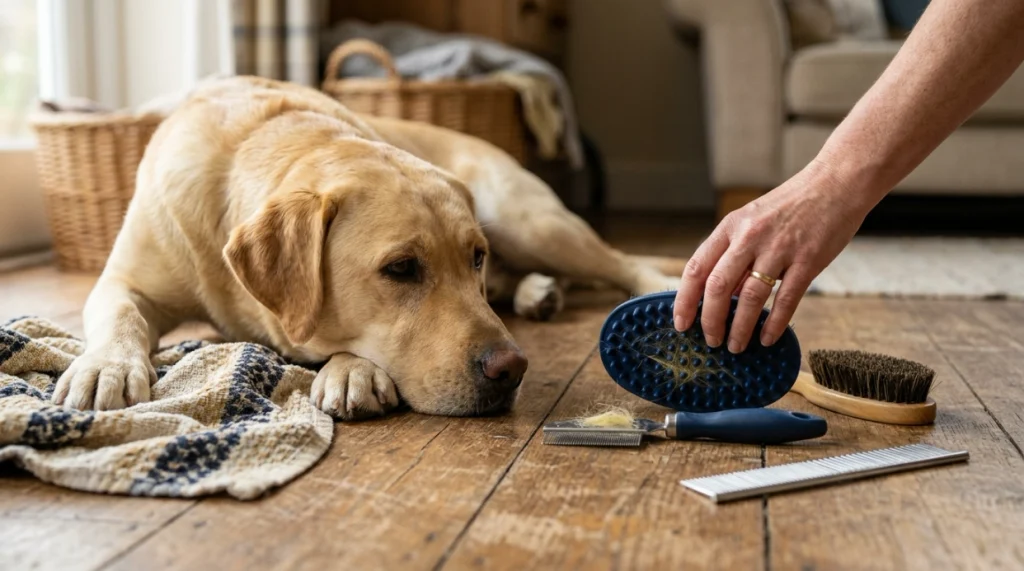 Save
SaveA rubber curry brush is one of my favorite starting tools for routine Labrador grooming. Its flexible teeth can loosen short dead hair while remaining comfortable for many dogs.
A bristle brush works well as a finishing tool. An undercoat de-shedding tool can help during heavier shedding, but it requires more care and lighter pressure.
| Brush type | Best use | How I would use it | Main caution |
|---|---|---|---|
| Rubber curry brush | Routine loose-hair removal | Short, gentle passes over the back, shoulders, and sides | Avoid rubbing irritated skin |
| Bristle brush | Finishing and surface debris | Long strokes from head toward tail | Does not remove deep loose undercoat as efficiently |
| Undercoat de-shedding tool | Heavy shedding periods | A few long, gentle strokes at a time | Too much pressure or repetition can irritate skin |
| Metal comb | Checking dense areas and loose coat | Use slowly around the chest, tail base, and thicker areas | Never force it through resistance |
VCA Animal Hospitals notes that regular grooming removes loose hair and dead skin cells while helping keep dirt and debris out of the coat. Their dog grooming and coat-care guidance also stresses choosing tools that match the coat type.
One specialized product, the FURminator large short-hair tool, is designed for dogs over 50 pounds. Its manufacturer recommends sessions of about 10 to 20 minutes, one or two times weekly, depending on the individual coat.
How do you brush a Labrador Retriever step by step?
The best technique is controlled and gentle. You should be able to groom the coat without repeatedly scraping the same patch of skin.
Choose a calm place. Pick an area where your dog feels secure and where loose hair is easy to clean.
Inspect the skin first. Run your hands over the body and look for lumps, redness, cuts, ticks, sore areas, or unusual hair loss.
Begin at the shoulders. Start with a gentle rubber curry brush or short-coat grooming tool and work toward the back.
Brush with the hair growth. Move from the neck toward the tail using steady strokes rather than aggressive scraping.
Work around the body. Cover the shoulders, sides, back, chest, upper legs, tail base, and tail.
Use lighter pressure on sensitive areas. Be especially careful around the belly, legs, armpit area, tail, and bony points.
Remove heavy undercoat carefully. If your Lab is blowing coat, use a suitable undercoat tool on dry, healthy fur without repeatedly working one spot.
Finish and inspect again. Check the skin for redness, then reward your dog and end before grooming becomes frustrating.
My practical rule is simple: stop while the dog is still comfortable. A calm five-minute session is more useful than forcing a long session that makes the next brushing difficult.
That matters with Labs because they are powerful dogs. Building a cooperative grooming routine is much easier than wrestling with a dog that has learned to avoid the brush.
Should you brush a Labrador against the grain?
For routine grooming, I would keep most strokes in the natural direction of the coat. This feels more comfortable and makes it easier to watch how the skin responds.
A rubber curry tool may be moved in small circular motions when appropriate, but vigorous back-and-forth scrubbing is unnecessary. Keep the pressure controlled.
How do you brush a Labrador during shedding season?
During a heavy shed, your Labrador’s softer undercoat may loosen much faster than normal. This is when consistent grooming makes the biggest difference inside the home.
Increase coat checks and focus on removing hair that is already loose. Do not try to pull out healthy, firmly attached coat.
- Brush more often: Short daily sessions can be easier than one marathon session.
- Start gently: Loosen surface hair with a rubber curry brush.
- De-shed carefully: Use an undercoat tool only as directed for that tool.
- Clear the brush often: A hair-packed brush becomes less effective.
- Watch the skin: Stop if you see redness or irritation.
- Clean outdoors when practical: Heavy shedding can produce a surprising pile of loose coat.
The Lab’s manageable grooming routine is one reason the breed remains popular with households that want an active companion. You can compare that family fit in our guide to friendly dog breeds for families.
What brushing mistakes should Labrador owners avoid?
Most Labrador brushing problems come from doing too much rather than too little. More pressure does not automatically remove more useful hair.
- Scraping the same spot repeatedly: This can make healthy skin sore.
- Using excessive pressure: Let the grooming tool do the work.
- Brushing over sores: Avoid damaged or inflamed skin.
- Trying to remove every hair: Some shedding is normal and unavoidable.
- Using the wrong tool: A brush designed for a long or curly coat may be inefficient on a Lab.
- Ignoring your dog’s reaction: Flinching, turning away, growling, or trying to escape deserves attention.
- Shaving the coat to stop shedding: A Labrador’s double coat should not be routinely shaved simply to reduce loose hair.
A Lab can still be calm and cooperative during grooming when the routine is introduced gradually. If temperament and home life are part of your breed research, see our guide to calm dog breeds for families.
Should you brush a Labrador before or after a bath?
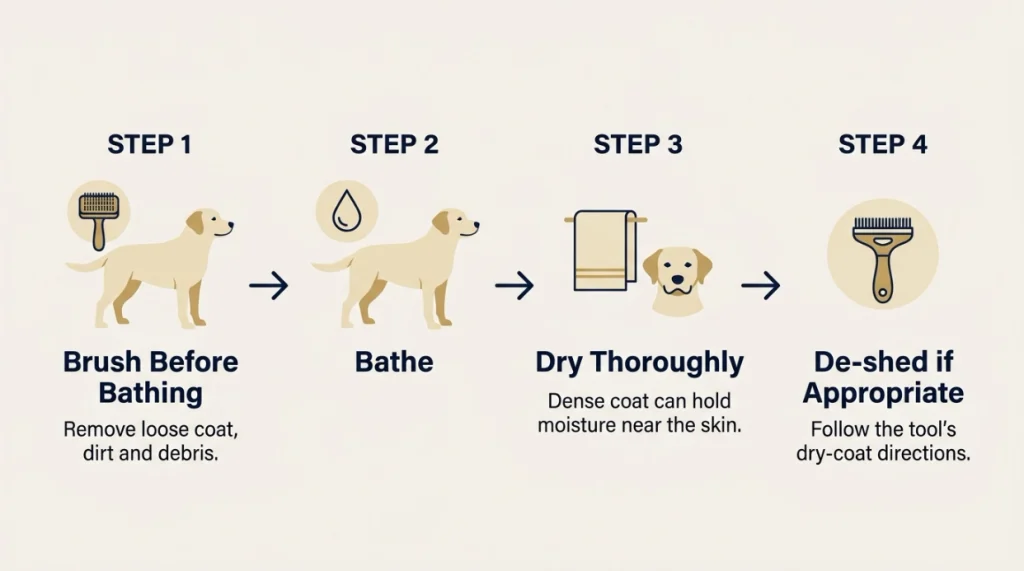 Save
SaveBrush before bathing whenever possible. Removing loose coat, dirt, and minor debris first keeps the bathing process simpler.
After the bath, dry the coat thoroughly before using a de-shedding tool that specifies dry-coat use. Always follow the directions supplied with the exact grooming tool you own.
When can Labrador shedding signal a problem?
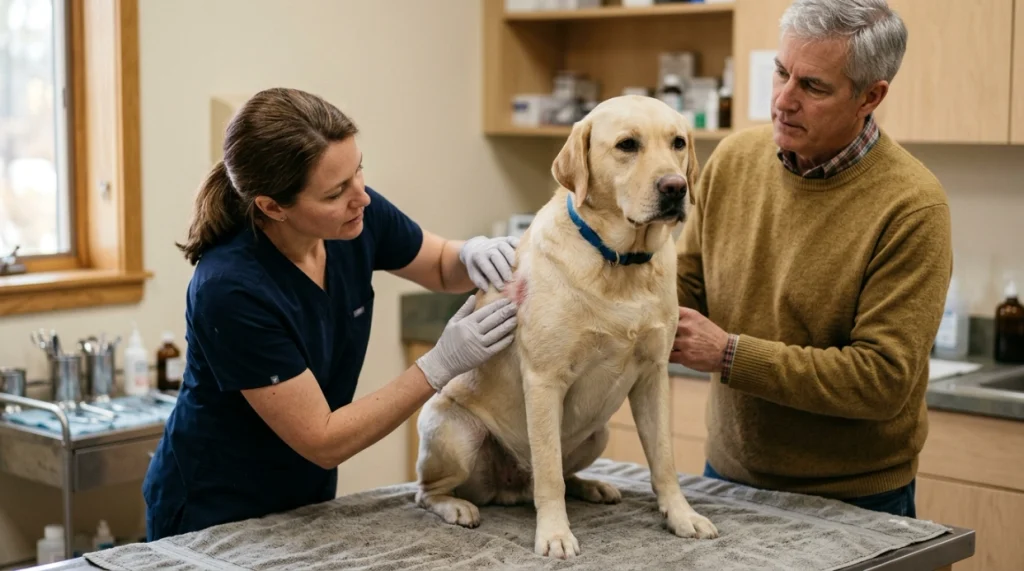 Save
SaveNormal shedding should still leave the coat looking generally even and the skin comfortable. Sudden bald patches, sores, strong odor, persistent redness, heavy dandruff, or intense itching deserve closer attention.
Do not assume every coat problem needs a stronger brush. Skin infections, parasites, allergies, nutrition problems, and other health issues can change a dog’s coat.
- Contact your veterinarian if hair loss appears suddenly.
- Get advice if your dog repeatedly scratches, bites, or licks one area.
- Have painful, wet, crusty, bleeding, or strongly inflamed skin checked.
- Stop using a grooming tool that consistently creates redness or discomfort.
Brushing is useful partly because it gives you regular chances to notice changes. That benefit matters just as much as having less hair on the furniture.
Dog brushes I would choose for a Labrador Retriever
If you’re ready to choose a brush, these are three practical options that match different parts of a Labrador grooming routine.
🏆 Best For Routine Brushing
KONG ZoomGroom Dog Brush
★★★★★ 4.8/5
Flexible rubber fingers loosen short dead hair and can be used on a dry coat or during bathing. I like this style for frequent grooming because it is simple and less aggressive than a metal de-shedding edge.
🐕 Best For Heavy Shedding
FURminator Undercoat deShedding Tool — Large Dog, Short Hair
★★★★☆ 4.6/5
This model is made for large, short-haired dogs and reaches loose undercoat beneath the topcoat. I would reserve it for controlled de-shedding sessions and use fewer gentle strokes rather than repeatedly scraping one area.
💰 Best Simple Finishing Brush
Safari by Coastal Bristle Dog Brush
★★★★☆ 4.4/5
Soft bristles help remove surface dirt and finish a short coat while distributing natural oils. I see it as a useful second brush after the heavier loose hair has already been removed.
Frequently asked questions
Can I brush my Labrador every day?
Yes, gentle daily brushing can be useful during heavy shedding if your Labrador’s skin stays comfortable. Use a mild tool and light pressure rather than performing an aggressive de-shedding session every day.
Why does my Labrador shed so much even after brushing?
Labradors naturally have dense double coats, so brushing removes loose hair without stopping the normal shedding cycle. Consistent brushing can reduce the amount of loose fur around your home, but it will not eliminate shedding completely.
Is a slicker brush good for a Labrador Retriever?
A slicker brush can remove loose hair, but it is not always my first choice for a short-coated Labrador. A rubber curry brush, suitable bristle brush, or carefully used undercoat tool usually matches the coat more naturally.
Should I shave my Labrador to reduce shedding?
No. Labrador Retrievers have protective double coats, and routine shaving is not recommended simply to control shedding. Regular brushing, bathing when needed, and careful undercoat removal are better ways to manage loose hair.
How long should I brush my Labrador?
There is no single required session length. A short, calm session that covers the whole coat is enough for routine maintenance, while heavy shedding may require longer or more frequent sessions depending on the dog and grooming tool.
Final takeaway
Learning how to brush a Labrador Retriever is mostly about consistency. Use a brush suited to the short double coat, work gently with the direction of hair growth, and pay extra attention during heavy shedding.
Keep the sessions comfortable and use grooming time to inspect the skin as well as remove loose fur. A few calm brushing sessions each week can make Labrador coat care much easier for both you and your dog.

Thomas Cutter is a lifelong dog owner and the founder of FindOutAboutDogs.com. With over 10 years of hands-on experience owning multiple breeds, Thomas created this site to provide honest, research-based dog advice that real owners can actually trust.
