How to Brush a Wire Coat: Easy Guide for Wire-Haired Dogs
Quick Answer
To brush a wire coat, start with a pin brush to loosen dirt and dead hair. Follow with a metal comb to find tangles, then use a gentle slicker brush for finishing. Work in the direction of hair growth with light pressure, and remember that brushing does not replace proper wire-coat maintenance when hand-stripping is needed.
Five simple brushing steps
- Check the coat: Look for knots, burrs, sore skin, and loose hair.
- Start with pins: Brush gently along the natural direction of hair growth.
- Use a comb: Work through small tangles without pulling the skin.
- Finish with slicker: Remove remaining loose hair using short, light strokes.
- Check sensitive areas: Inspect the beard, legs, belly, and behind the ears.
My most important rule
- Never force a brush: If a tool catches, stop and examine the area before continuing.
Wire-haired dogs have a wonderful, rugged look, but their coats need the right care. I find it helps to think about removing loose hair rather than trying to make every strand perfectly smooth.
In this guide, I’ll explain which brushes work, how to use them, and when a professional groomer may need to help.


What Is a Wire Coat on a Dog?
A wire coat is a dog coat with coarse, stiff outer hairs that feel rough or bristly. Many wire-coated dogs also have a softer undercoat beneath those protective hairs.
Unlike a silky coat, a healthy wiry coat isn’t meant to feel fluffy. Its texture helps protect the dog during outdoor activity.
You commonly see wire coats on these breeds:
- Wire Fox Terrier: Has a dense, harsh outer coat with a softer undercoat.
- Border Terrier: Has a close-fitting, weather-resistant coat.
- Wirehaired Dachshund: Has a coarse body coat with longer facial furnishings.
- Standard Schnauzer: Has a wiry outer coat with a distinctive beard and eyebrows.
- Brussels Griffon: The rough-coated variety has a coarse coat needing suitable grooming.
- German Wirehaired Pointer: Has a protective, harsh coat suited to outdoor work.
Coat type matters more than the breed name alone. One dog’s coat may be short and tight, while another has longer hair that tangles easily.
I always consider both texture and length before choosing a tool.
What Brush Is Best for a Wire-Haired Dog?
A pin brush, metal comb, and suitable slicker brush make a useful wire-coat grooming kit. Each tool handles a different part of the job.
I wouldn’t choose an aggressive shedding blade as my first tool. It may remove more hair than intended and can disturb the coarse outer coat.
Wire-Coat Grooming Tool Comparison
| Tool | Main Purpose | Best Use |
|---|---|---|
| Pin brush | Loosens debris and surface hair | Starting the routine |
| Steel comb | Finds and separates small tangles | Beard, legs, and final checks |
| Slicker brush | Collects loose hair and light tangles | Gentle finishing |
| Soft bristle brush | Removes light surface debris | Sensitive or short areas |
| Stripping knife | Helps remove dead coat | Trained hand-stripping work |
Brush size should also match the dog’s body and coat depth. My guide to choosing brushes by length explains why one brush cannot suit every coat.
For most owners, a pin brush and steel comb are sensible starting tools. Add a slicker only if it helps with loose hair and light tangles.
How Do You Brush a Wire Coat Step by Step?
 Save
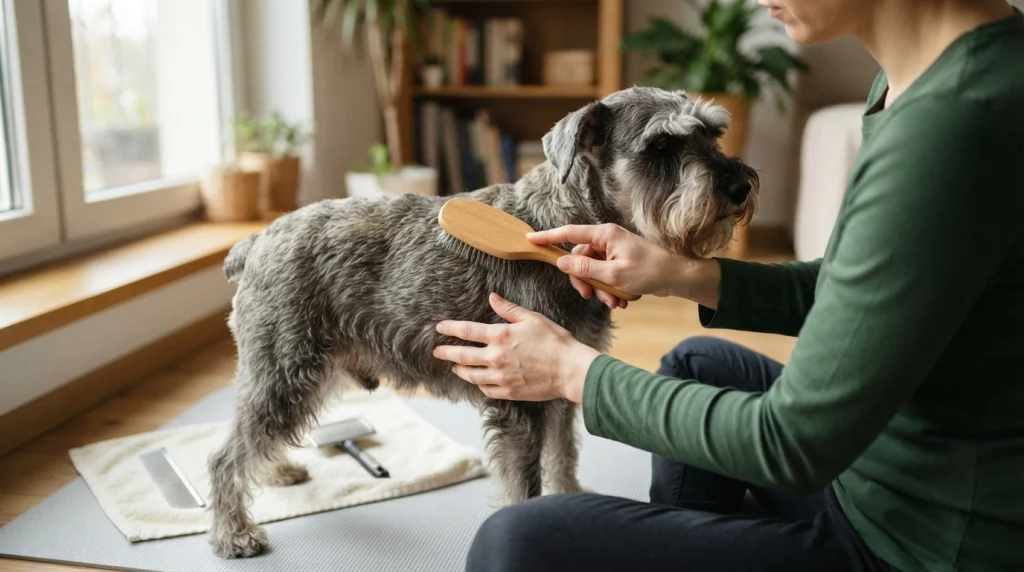
SaveThe safest approach is to work in small sections using gentle, controlled strokes. Brushing should remove loose material without damaging healthy hair or irritating the skin.
I prefer a calm routine over a long session that tires the dog. Here is the order I recommend.
Step 1: Check the Coat Before Brushing
Run your fingers over the coat before you pick up a brush. Feel for knots, trapped dirt, sensitive spots, and thick patches of loose undercoat.
Pay close attention to these areas:
- Behind the ears, where friction can create tangles.
- Under the collar, where hair gets pressed together.
- Inside the front legs, where movement causes rubbing.
- Around the beard, where food and moisture collect.
- Along the belly and rear legs, where the skin can be sensitive.
If you find redness, swelling, or painful skin, leave that area alone. Ask your veterinarian to check anything unusual.
Step 2: Make Your Dog Comfortable
Choose a quiet place with secure footing. A non-slip mat can help your dog remain steady during brushing.
Let your dog sniff the brush before you begin. I prefer to start with a few easy strokes along the shoulders or back.
Keep rewards nearby and allow breaks. A comfortable dog is easier to groom.
Step 3: Brush With a Pin Brush
Start along the back or shoulders, following the natural direction of hair growth. Use short, gentle strokes rather than dragging the brush across large areas.
Work gradually toward the sides and legs. Lift the coat slightly with your free hand when you need to see beneath longer hair.
Try this simple method:
- Place the brush lightly against the coat.
- Move in the direction the hair naturally lies.
- Brush a small section several times without applying extra pressure.
- Remove collected hair from the brush.
- Move to the next section.
The brush should move without scraping the skin. If you hear scratching or notice discomfort, lighten your touch.
Step 4: Use a Metal Comb to Find Tangles
After the first brushing pass, use a medium-toothed metal comb. It can reveal tangles that the pin brush missed.
Begin at the outer ends of longer hair, then work closer to the skin when the section is free of knots.
For a small tangle, follow these steps:
- Hold the hair near its base to reduce pulling on the skin.
- Separate loose strands carefully with your fingers.
- Use the wider comb teeth to work through the outer ends.
- Move toward the base only as the tangle loosens.
- Stop if the knot stays tight or causes discomfort.
A finer comb can help check completed sections, but don’t force it through dense hair. The goal is a comfortable, loose coat.
Step 5: Finish With a Slicker Brush
A suitable slicker brush can collect loose hairs left behind by the comb. Use it lightly, especially over areas with thinner skin.
I avoid repeated strokes over the same spot. Too much brushing can cause irritation even when the tool looks harmless.
Keep the brush moving and check the skin often. You don’t need to turn a naturally rough coat into a fluffy one.
Step 6: Groom the Beard, Legs, and Other Sensitive Areas
The beard and eyebrows often need different care from the body coat. These longer furnishings can collect moisture, food, and small tangles.
I would use a comb or softer brush instead of a firm slicker around delicate facial areas.
- Beard: Remove food debris, gently comb the hair, and dry damp sections.
- Eyebrows: Keep tools away from the eyes and avoid pulling delicate hair.
- Legs: Separate longer hair in small sections before combing.
- Armpits: Check carefully for tight knots without scraping the skin.
- Belly: Use the lightest practical pressure on sensitive skin.
Professional help is safer for trimming hair close to the eyes. An unexpected movement can make home trimming risky.
Step 7: Check Your Work and Reward Your Dog
Finish by running your fingers through the coat and checking longer areas with a comb. The hair should separate comfortably without sharp resistance.
Offer praise or a treat after the session. Positive endings can make the next brushing easier.
If you want to learn more about tool order, my guide to combining grooming tools explains how brushes and combs complement each other.
How Often Should You Brush a Wire-Haired Dog?
Many wire-coated dogs benefit from a thorough weekly brushing, with shorter checks between sessions. Dogs with longer furnishings or active outdoor routines may need more frequent care.
The exact schedule depends on coat density, activity, grooming style, and how quickly tangles develop.
A Simple Weekly Grooming Schedule
- Daily quick check: Look for debris, burrs, and damp hair around the face.
- Two or three short sessions: Brush areas that collect loose hair or develop tangles.
- Weekly thorough session: Brush the body, comb longer areas, and inspect the skin.
- After outdoor walks: Check the paws, legs, belly, and coat for trapped plant material.
- As needed: Arrange professional grooming based on coat growth and condition.
I wouldn’t follow a fixed schedule when the dog clearly needs less or more attention. A quick coat check usually tells you where to focus.
The most useful routine is one your dog can tolerate without stress.
Does Brushing a Wire Coat Replace Hand-Stripping?
 Save
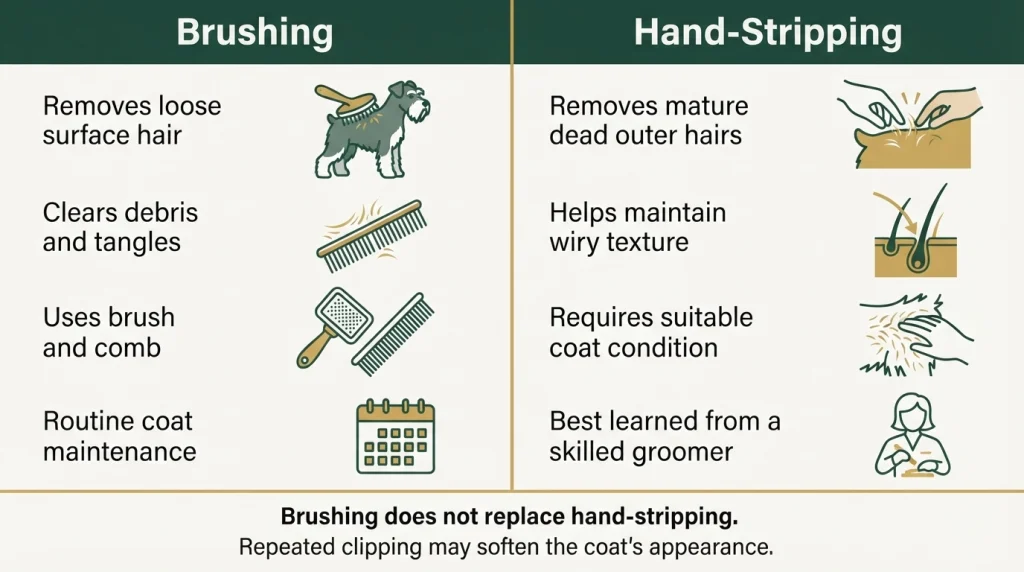
SaveNo. Brushing and hand-stripping do different jobs, and one does not fully replace the other.
Brushing removes loose surface hair, debris, and tangles. Hand-stripping removes mature, dead outer hairs to help maintain the characteristic wiry texture of certain coats.
Why Is Hand-Stripping Different?
In a suitable wire coat, dead hairs eventually loosen as the coat grows. Trained groomers remove those hairs carefully rather than cutting every strand to the same length.
The AKC hand-stripping guidance explains how this specialized process supports traditional wire-coat texture.
Improper stripping can hurt a dog or irritate the skin. I wouldn’t attempt it on a tightly attached coat without instruction from an experienced groomer.
Can You Clip a Wire-Haired Dog Instead?
Clipping is a common grooming choice for companion dogs, especially when comfort or easier upkeep is the priority. However, repeated clipping can change how a wire coat looks and feels.
Some dogs develop a softer appearance after clipping. A groomer can help you weigh coat texture against your dog’s comfort and practical needs.
Show grooming and pet grooming do not always have the same goals. Your dog’s welfare should come first.
What Mistakes Should You Avoid When Brushing a Wire Coat?
The biggest mistake is trying to remove as much hair as possible. Healthy wiry hair does not need to come out simply because a tool can catch it.
These habits are worth avoiding:
- Brushing too hard: Firm pressure can scratch the skin and make the dog dislike grooming.
- Using aggressive shedding blades: Some tools may cut or pull healthy outer hairs.
- Ignoring the undercoat: Loose hair can remain hidden beneath the rough surface.
- Pulling tight knots: Force can cause pain and damage the coat.
- Overusing the slicker: Repeated strokes can irritate delicate skin.
- Skipping facial furnishings: Beards and longer leg hair can still become tangled.
- Using scissors on mats: Tight mats may sit close to the skin and are unsafe to cut blindly.
Another mistake is relying only on a grooming glove. Gloves can collect light surface hair, but they may not reach tangles in longer wire-coat furnishings.
My grooming glove comparison explains when gloves help and when a regular brush is more useful.
How Do You Remove Mats From a Wire Coat?
Small, loose tangles may separate with your fingers and a suitable comb. Tight mats close to the skin are different and may require professional removal.
The safest approach depends on how firmly the hair is tangled.
For Small, Loose Tangles
- Check that the skin beneath the tangle looks healthy.
- Support the hair near its base with your fingers.
- Gently separate loose strands by hand.
- Use a wide-toothed comb on the outer ends.
- Stop when the hair resists or the dog becomes uncomfortable.
For Tight or Painful Mats
Don’t tug, scrape, or cut into the tangled hair. A mat may pull tightly against the skin and hide irritation underneath.
Veterinary advice on grooming and coat care recommends professional help for severe matting and warns against using scissors near mats.
If you notice sores, strong odor, redness, or pain, contact your veterinarian. These signs deserve attention before normal grooming continues.
Can You Brush a Wire-Haired Puppy the Same Way?
A puppy needs a gentler introduction than an adult dog with an established grooming routine. The first goal is teaching the puppy that brushes and combs are safe.
Start with a few soft strokes and reward calm behavior. Increase the session slowly as your puppy becomes comfortable.
My Preferred Puppy-Grooming Routine
- Introduce the brush without immediately using it.
- Begin with a soft, suitable tool.
- Groom a small area for a short period.
- Reward calm behavior before the puppy becomes restless.
- Practice gentle handling of paws, ears, and legs.
- Ask a breed-aware groomer when specialized coat care should begin.
Puppy coats can change as dogs mature. Don’t assume the adult coat’s grooming method is suitable for every young puppy.
How Can You Keep a Wire Coat Healthy Between Brushing Sessions?
 Save
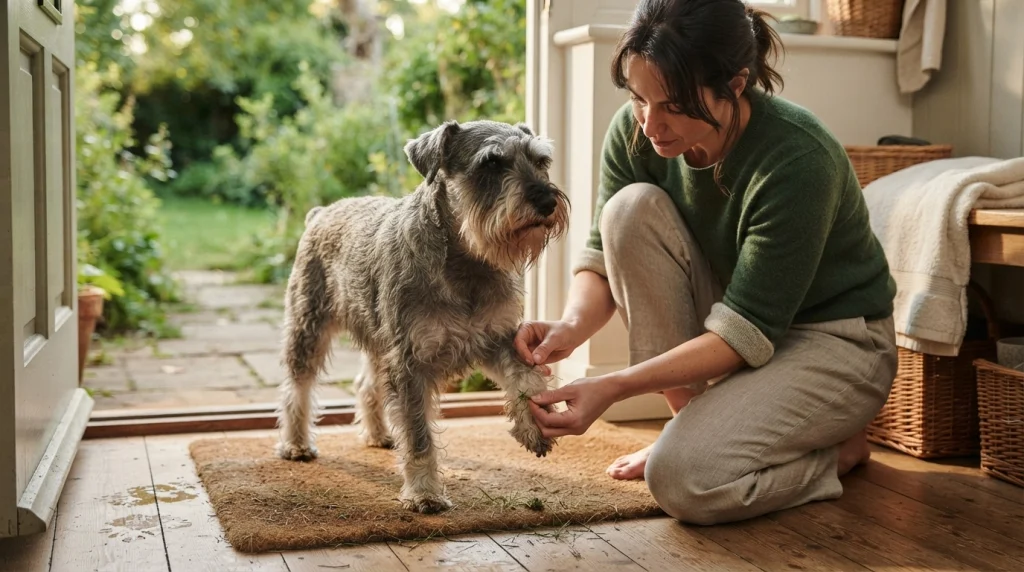
SaveGood coat care includes more than brushing. Keeping the skin healthy and removing dirt promptly can make routine grooming easier.
The AKC home grooming advice also emphasizes regular coat checks and appropriate tools.
Simple Maintenance Habits
- Check after walks: Look for burrs, seeds, mud, and hidden debris.
- Keep the beard clean: Remove food particles and dry damp facial hair.
- Use dog-safe shampoo: Bathe when needed without washing away natural oils too often.
- Dry the coat: Avoid leaving thick or longer areas persistently damp.
- Inspect the skin: Watch for redness, flakes, lumps, or new sensitivity.
- Follow breed-specific advice: Ask a groomer about clipping, carding, or hand-stripping.
As of 2026, my basic advice remains simple: use the least aggressive tool that does the job. Better technique often matters more than buying another brush.
Which Grooming Tools Would I Choose for a Wire Coat?
For a basic home setup, I’d start with a pin brush and metal comb, then add a slicker when needed. These three real products offer different functions without making the routine complicated.
The ratings below reflect my editorial assessment of their suitability for this routine, not verified customer review averages.
🏆 Best for Routine Brushing
Andis Medium Pin Brush
★★★★½ 4.5/5 editor fit
This brush has medium-length pins and a controlled handle design for regular coat maintenance. I would choose it for gentle body brushing before moving on to a comb.
🪮 Best for Tangle Checks
Andis 7-1/2 Inch Steel Comb
★★★★½ 4.5/5 editor fit
This 7.5-inch steel comb has coarse and fine tooth spacing for detangling and finishing. I consider a comb especially useful for checking longer hair around the beard and legs.
✨ Best for Finishing
Andis Medium Firm Slicker Brush
★★★★☆ 4/5 editor fit
This medium-firm slicker uses metal pins to collect loose hair and work through moderate tangles. I would reserve it for light, controlled finishing passes rather than vigorous brushing.
Frequently Asked Questions
Can you use a slicker brush on a wire-haired dog?
Yes, a suitable slicker brush can help remove loose hair and light tangles from many wire coats. Use short, gentle strokes and avoid scraping the skin. It should complement a pin brush and comb rather than become an aggressive shedding tool.
Should you brush a wire coat when it is wet?
It is usually easier to check and loosen tangles before bathing. Avoid pulling through wet knots, since damp hair may stretch and the skin can be sensitive. After bathing, dry the coat appropriately before doing a gentle final check.
Why does my wire-haired dog’s coat feel soft?
A wire coat may feel softer because of natural coat variation, age, or grooming history. Repeated clipping can also change the coat’s texture in some breeds. A groomer familiar with wire coats can assess whether hand-stripping or another maintenance method is suitable.
Do wire-haired dogs need an undercoat rake?
Not every wire-haired dog needs an undercoat rake. Some have soft undercoats that benefit from careful removal, while others need little additional work. Ask a knowledgeable groomer before using aggressive rakes or shedding blades, especially when maintaining a traditional harsh coat.
How do I know if I am brushing my dog too hard?
Watch for flinching, repeated turning toward the brush, attempts to escape, or visible redness. The brush should move through the coat without dragging the skin. If your dog seems uncomfortable, reduce pressure, change tools, or stop the session.
Final Takeaway: Keep Wire-Coat Brushing Gentle
Learning how to brush a wire coat becomes easier once you understand what each tool does. Start with a pin brush, check tangles with a comb, and use a slicker gently when it adds value.
Remember that some wire coats also need professional hand-stripping or other specialized care. Keep your dog’s comfort first, and build a simple grooming routine you can follow each week.
Try a short brushing session today, then check the coat again after your next walk. Small, consistent efforts can make coat maintenance much easier.

Thomas Cutter is a lifelong dog owner and the founder of FindOutAboutDogs.com. With over 10 years of hands-on experience owning multiple breeds, Thomas created this site to provide honest, research-based dog advice that real owners can actually trust.
