How to Combine Dog Grooming Tools for Better Coat Care
Quick Answer
To combine dog grooming tools effectively, start with a brush suited to your dog’s coat, add a specialized tool for tangles or loose undercoat, and finish with a comb to check your work. Use gentle pressure and follow the direction of hair growth. For thick-coated breeds, our Husky brush guide explains why combining tools works better than relying on one brush.
Five steps for combining grooming tools
- Inspect the coat: Check for mats, debris, redness, and sensitive areas before brushing.
- Choose your first brush: Match the brush to your dog’s coat length, density, and texture.
- Target problem areas: Use a suitable rake or detangling tool only where needed.
- Check with a comb: Gently test whether the coat is free of manageable tangles.
- Finish comfortably: Smooth the coat, reward your dog, and clean your tools.
The most important rule
- Never force a tool: Stop when brushing pulls the skin, catches in a mat, or causes discomfort.
Using several grooming tools might sound complicated, but each one should have a clear purpose. The trick is choosing combinations that complement your dog’s coat rather than repeating the same job.
I’ll walk through practical tool combinations, the order to use them, and common mistakes. You’ll also learn when fewer tools are the better choice.


Why Should You Combine Dog Grooming Tools?
Combining grooming tools helps you care for different coat layers without making one brush do everything. A slicker brush, undercoat rake, and metal comb perform different tasks.
A grooming tool combination is a planned sequence of brushes and combs chosen for a dog’s specific coat. It isn’t simply using every tool in your grooming kit.
- Slicker brush: Separates medium, long, or curly hair and collects loose fur.
- Undercoat rake: Removes loosened undercoat from suitable double-coated breeds.
- Metal comb: Checks for remaining tangles and catches in the coat.
- Rubber curry brush: Lifts surface hair from many short, smooth coats.
- Bristle brush: Smooths short coats and provides a gentle finishing pass.
- Pin brush: Helps maintain longer coats and smooth the outer hair.
The American Kennel Club’s brush guide explains why coat type matters when selecting these tools. A brush that suits a Boxer might barely penetrate a Golden Retriever’s coat.
Which Grooming Tools Work Best Together?
The best combination depends on whether your dog has a short, curly, silky, or double coat. Start with the simplest effective pairing, then add another tool when it solves a specific problem.
| Coat Type | First Tool | Second Tool | Main Goal |
|---|---|---|---|
| Short, smooth | Rubber curry | Soft bristle brush | Lift and collect loose hair |
| Medium double coat | Slicker brush | Undercoat rake when needed | Remove loose undercoat |
| Long, silky | Pin or gentle slicker | Metal comb | Prevent and find tangles |
| Curly or woolly | Long-pin slicker | Metal comb | Keep hair separated |
| Dense double coat | Undercoat rake when shedding | Long-pin slicker and comb | Clear loose undercoat gently |
These are starting combinations, not fixed rules for every breed. Coat density, skin condition, and your dog’s tolerance should guide your choices.
How Do You Use Multiple Dog Grooming Tools in the Right Order?
 Save
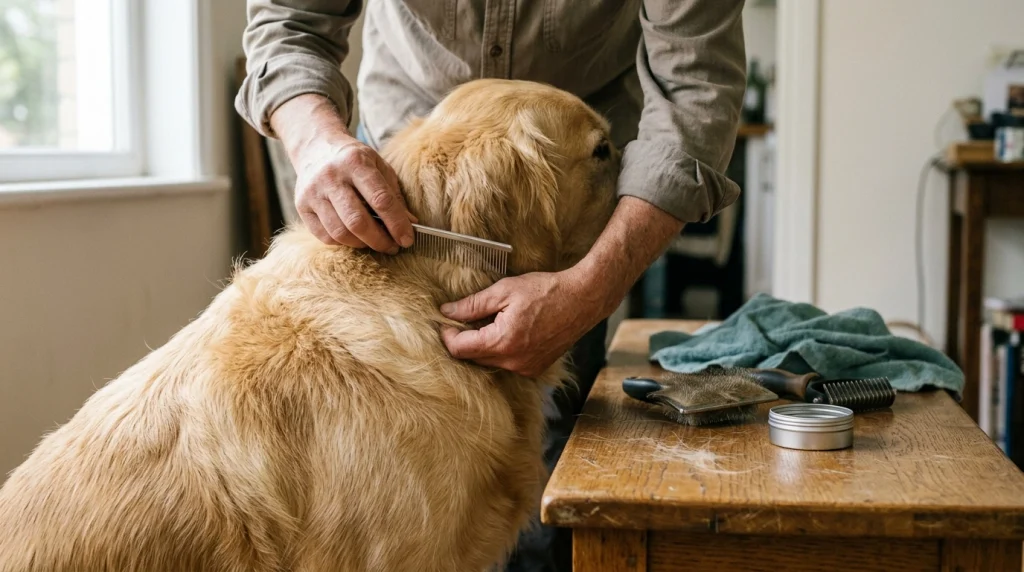
SaveBegin with inspection, handle loose hair and manageable tangles, then use a comb to confirm your progress. The exact brushing order can change for dense double coats during shedding season.
Step 1: Inspect Your Dog’s Skin and Coat
Run your hands through the coat before picking up a brush. Pay attention to the neck, armpits, belly, tail, and behind the ears.
- Look for compacted fur or tight mats.
- Check for redness, sores, or unusual bumps.
- Remove loose leaves or debris by hand when safe.
- Notice areas your dog dislikes having touched.
Don’t pull tight tangles with a metal tool. Severe matting or painful skin needs help from a qualified groomer or veterinarian.
Step 2: Start With the Main Brush
Choose a brush suited to the coat’s outer layer. For curly coats, this often means a slicker; for smooth short coats, a rubber curry works well.
Brush in small sections with controlled strokes. Avoid pressing the brush hard against the skin.
Step 3: Add a Specialized Tool When Needed
An undercoat rake helps when a double-coated dog is releasing substantial loose undercoat. It should not become an automatic second step for every dog.
Move gently with the direction of hair growth. Stop if the rake catches or scratches.
Step 4: Check Your Work With a Comb
A metal comb helps reveal tangles that a brush leaves behind. This is especially useful for curly or long coats.
Guide the comb through small sections without yanking. If it catches, investigate the area instead of increasing pressure.
Step 5: Finish and Reward Your Dog
Use a soft finishing brush if it adds value for your dog’s coat. Then remove collected hair from every grooming tool.
End the session with praise or a suitable treat. Calm, positive experiences make future grooming easier.
How Should You Combine Brushes for Different Dog Breeds?
Breed gives you useful clues, but actual coat texture matters more than the breed name alone. Two dogs of the same breed may need different brushing routines.
Golden Retrievers and Other Medium Double Coats
A slicker brush and appropriate undercoat rake can work together for a Golden Retriever. Use the rake mainly when loose undercoat needs removal.
- Inspect feathering behind the ears, legs, and tail.
- Brush the coat in sections with a slicker.
- Use a suitable rake gently on loose undercoat.
- Check feathered areas with a metal comb.
Don’t assume every pass needs the rake. Routine brushing may be enough when shedding is light.
Huskies and Other Dense Double Coats
Huskies often benefit from an undercoat rake followed by a long-pin slicker and metal comb. During heavy shedding, loose fur can collect below the visible outer coat.
Our guide to managing Husky shedding covers seasonal coat changes and safe brushing frequency in more detail.
Focus on removing hair that’s ready to shed. Healthy attached coat should remain intact.
Poodles and Curly-Coated Dogs
Curly coats often need a slicker brush paired with a sturdy metal comb. The slicker separates hair, while the comb checks for hidden tangles.
- Divide the coat into manageable sections.
- Gently line-brush with a suitable slicker.
- Pass a comb through each completed section.
- Address resistance carefully before moving on.
Line brushing means separating the coat into small layers and brushing each exposed section. It helps prevent the surface from appearing smooth while tangles remain underneath.
Beagles, Boxers, and Short-Coated Dogs
Many smooth-coated dogs don’t need a complicated kit. A rubber curry followed by a soft bristle brush is often sufficient.
Use gentle strokes to lift loose fur, then smooth the coat. A dense undercoat rake is usually unnecessary for these coat types.
Should You Brush Your Dog Before or After Bathing?
 Save
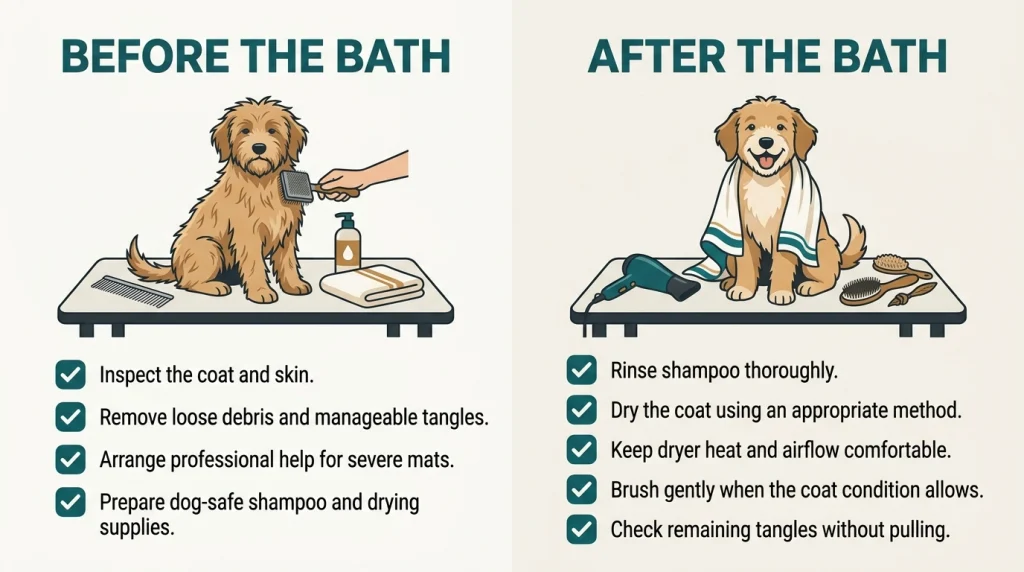
SaveBrush before bathing to check for mats and remove manageable loose hair. After bathing, dry the coat appropriately and use suitable grooming tools again if needed.
The AKC’s home grooming guidance emphasizes selecting suitable tools and adjusting grooming routines to each dog.
Before the Bath
- Inspect the coat and skin.
- Remove loose debris and manageable tangles.
- Arrange professional help for severe mats.
- Prepare dog-safe shampoo and drying supplies.
After the Bath
- Rinse shampoo thoroughly.
- Dry the coat using an appropriate method.
- Keep dryer heat and airflow comfortable.
- Brush gently when the coat condition allows.
- Check remaining tangles without pulling.
Avoid aggressively brushing wet, tangled hair. Ask a professional groomer for guidance when working with a coat that mats easily.
How Often Should You Use Different Grooming Tools?
Frequency depends on hair length, shedding, daily activity, and skin sensitivity. One dog may need brief daily attention, while another needs only occasional brushing.
| Coat Situation | Starting Frequency | Priority |
|---|---|---|
| Short, smooth coat | About weekly | Loose surface hair |
| Long or curly coat | Often daily or every other day | Tangle prevention |
| Normal double-coat shedding | Several times weekly as needed | Loose undercoat |
| Heavy seasonal shedding | Brief daily checks; rake only as needed | Comfortable fur removal |
These are practical starting points, not medical prescriptions. Adjust frequency based on the coat and your dog’s response.
The VCA Animal Hospitals’ coat-care guidance also recommends gentle tool use and avoiding excessive pulling on tangles.
What Mistakes Should You Avoid When Combining Grooming Tools?
The biggest mistake is assuming more tools automatically produce better results. Overbrushing can irritate skin even when the coat looks clean.
- Using every tool: Choose equipment for a specific coat problem rather than following a fixed checklist.
- Applying too much pressure: Metal pins and teeth can cause discomfort when pushed against the skin.
- Repeating the same pass: Excessive strokes over one area increase irritation risk.
- Ignoring coat type: An undercoat rake isn’t suitable for every short-haired or single-coated dog.
- Pulling tight mats: Painful tangles require careful assessment and sometimes professional removal.
- Ignoring warning signs: Redness, pain, sores, and unusual hair loss deserve attention.
My preferred approach is to assign each tool one job and stop when that job is finished. There’s no benefit in chasing every last loose hair.
How Can You Make Grooming Easier for a Nervous Dog?
Short, positive sessions often work better than trying to finish everything at once. Start with a comfortable area and a gentle tool.
- Let your dog inspect the brush.
- Reward calm behavior before brushing.
- Use a few light strokes on a comfortable area.
- Pause and check your dog’s body language.
- Increase the session gradually if your dog remains relaxed.
Watch for stiff posture, repeated turning away, flinching, or attempts to escape. Those signals mean it’s time to pause or change your approach.
If handling causes significant fear or pain, seek advice from your veterinarian or a qualified fear-free grooming professional.
How Do You Keep a Dog Grooming Tool Kit Organized?
 Save
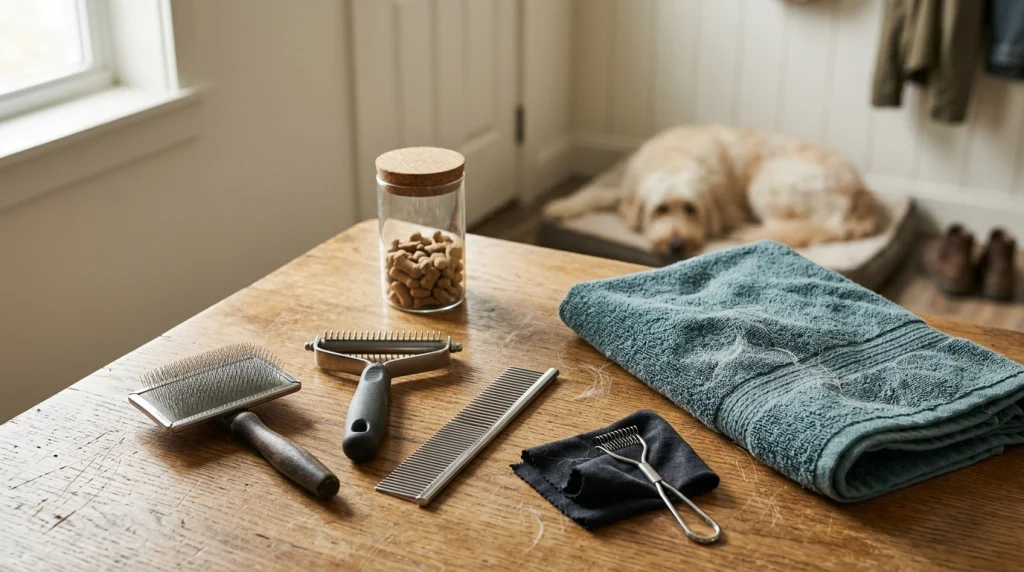
SaveA small, well-maintained grooming kit is easier to use than a collection of overlapping tools. Keep only what your dog’s coat genuinely requires.
- Main brush: Your regular grooming tool.
- Secondary tool: A rake, pin brush, or finishing brush when appropriate.
- Metal comb: For checking suitable long and curly coats.
- Cleaning supplies: For removing hair and cleaning tools according to their instructions.
- Reward container: Holds treats for positive grooming sessions.
Check brush pins and comb teeth for damage. Replace tools that develop sharp edges, bent components, or loose handles.
Which Dog Grooming Tools Are Worth Combining?
As of 2026, a practical grooming kit still starts with coat compatibility rather than the number of accessories. These three established products represent different grooming jobs.
The ratings below are editorial suitability estimates for their intended uses, not Amazon customer ratings or results of hands-on product testing.
🏆 Best for curly coats
Chris Christensen Big G Slicker Brush
★★★★½ 4.5/5 editorial
This long-pin slicker is designed for demanding coat maintenance. I’d pair it with a metal comb for suitable curly or dense coats, focusing on gentle section-by-section brushing.
🐾 Best for double coats
Safari Double Row Undercoat Rake
★★★★☆ 4/5 editorial
The double-row pin design helps remove loose undercoat from suitable breeds. I’d combine it with a slicker for finishing rather than repeatedly raking the same area.
💰 Best convenient slicker
Hertzko Self-Cleaning Slicker Brush
★★★★☆ 4/5 editorial
Its retractable-pin cleaning mechanism makes collected hair easier to remove. I’d consider it for routine brushing when the pin length suits the dog’s coat, followed by a comb if needed.
Frequently Asked Questions About Combining Dog Grooming Tools
Can I use a slicker brush and an undercoat rake together?
Yes, if your dog has a coat suited to both tools. An undercoat rake removes loose undercoat, while a slicker helps separate hair and collect remaining loose fur. Use gentle strokes and avoid repeatedly brushing one area. Not every dog needs an undercoat rake.
Should I use a comb before or after brushing my dog?
A comb is especially useful after brushing because it reveals tangles the brush missed. For long or curly coats, a gentle comb check helps confirm progress. You can also use a wide-tooth comb early to assess loose tangles, but never pull through resistance.
Can I combine grooming tools on a puppy?
Yes, but use age-appropriate, gentle tools and keep sessions short. A soft brush is often a better introduction than a specialized rake. Reward calm behavior and let your puppy become comfortable with handling before introducing more demanding grooming routines.
Can using too many dog grooming tools damage the coat?
Yes. Excessive brushing, unsuitable metal tools, and repeated pressure can irritate skin or damage hair. Choose tools based on coat type and use each for a clear purpose. Stop if your dog becomes uncomfortable, develops redness, or shows signs of pain.
Do I need professional grooming if I already own several brushes?
Sometimes. Home brushing supports routine coat maintenance, but severe matting, breed-specific trimming, skin conditions, and difficult handling may require professional assistance. A groomer can also demonstrate suitable brush techniques for your dog’s coat and help you build a manageable routine.
Final Takeaway: Build a Simple Grooming Routine
Learning how to combine dog grooming tools means understanding what each brush does and choosing the right sequence. For many dogs, one main brush and one suitable supporting tool are enough.
Start with your dog’s actual coat, work gently, and use a comb when appropriate to check your progress. Consistency, comfort, and good technique matter more than owning a large grooming kit.
Choose one small section of your dog’s coat today and practice a calm, gentle routine. You’ll soon learn which tool combinations genuinely help.

Thomas Cutter is a lifelong dog owner and the founder of FindOutAboutDogs.com. With over 10 years of hands-on experience owning multiple breeds, Thomas created this site to provide honest, research-based dog advice that real owners can actually trust.
