How to Prevent Breakage in Fine Dog Hair | Brush Guide
Quick Answer
Fine dog hair breaks when you brush dry, use the wrong tool, or pull through tangles instead of working them out. The fix is simple: mist the coat with a light conditioner first, use a pin brush with polished tips, and work in small sections from the ends up.
What Actually Prevents Breakage
- Moisture first: Dry hair snaps. A leave-in spray adds slip and flexibility.
- Right tool: Fine hair needs soft pins or boar bristles, not stiff slickers.
- Low pressure: You’re guiding the brush, not scraping the skin.
- Section by section: Small partings beat broad strokes every time.
- Ends first: Work from tip to root so tangles release instead of tightening.
One Habit That Changes Everything
- Brush for three minutes daily instead of twenty minutes once a week. Short, frequent sessions keep small tangles from becoming mats.
My first Maltese, Sophie, had hair so fine you could see light through it. I brushed her every night with a stiff slicker brush because that’s what the pet store sold me. Within a month, her coat looked thinner and duller.
A groomer friend took one look and said, “You’re snapping her hair.” That moment sent me down a rabbit hole of learning everything I could about brushing fine coats correctly. This guide shares what I found, so you don’t repeat my mistake.


Why Does Fine Dog Hair Break So Easily?
Fine hair has a smaller diameter than normal or coarse hair. Each strand bends more easily, but it also breaks under less tension.
Think of the difference between a thick rope and a thin thread. The thread snaps with far less pull. Fine dog hair works the same way.
Three forces cause most breakage:
- Mechanical friction — Stiff brush pins drag across fine strands and shear them.
- Dryness — Hair without enough moisture loses elasticity and cracks instead of stretching.
- Mat tension — Pulling a brush through a tangle concentrates force on the weakest strands.
Dr. Jerry Klein, chief veterinary officer at the American Kennel Club, notes that proper brushing “removes dead hair, spreads natural oils, prevents skin infections, and stimulates new hair growth” — but only when done with the right technique and tools[reference:0].
What’s the Best Brush for Fine Dog Hair?
A pin brush with polished tips is the safest choice for most fine-coated dogs. Boar bristle brushes work well for very short fine coats and finishing touches.
Here’s how the main brush types compare for fine hair:
| Brush Type | Best For | Breakage Risk | Key Feature |
|---|---|---|---|
| Pin Brush | Medium to long fine coats | Low | Polished, rounded tips |
| Boar Bristle | Short fine coats, finishing | Very Low | Natural bristles distribute oils |
| Soft Slicker | Detangling, removing loose hair | Medium | Flexible pins with coated tips |
| Stiff Slicker | Thick, matted coats | High | Firm wire pins |
| Undercoat Rake | Double coats (not fine single coats) | Medium-High | Reaches deep into undercoat |
The Purdue University College of Veterinary Medicine’s canine welfare center specifically recommends pin brushes for “medium to long coats, fine hair,” noting the pins should always have coated tips[reference:1].
If you’re currently using a stiff slicker on your fine-coated dog, that alone might be causing the breakage you’re seeing.
How Do You Brush Fine Dog Hair Without Breaking It?
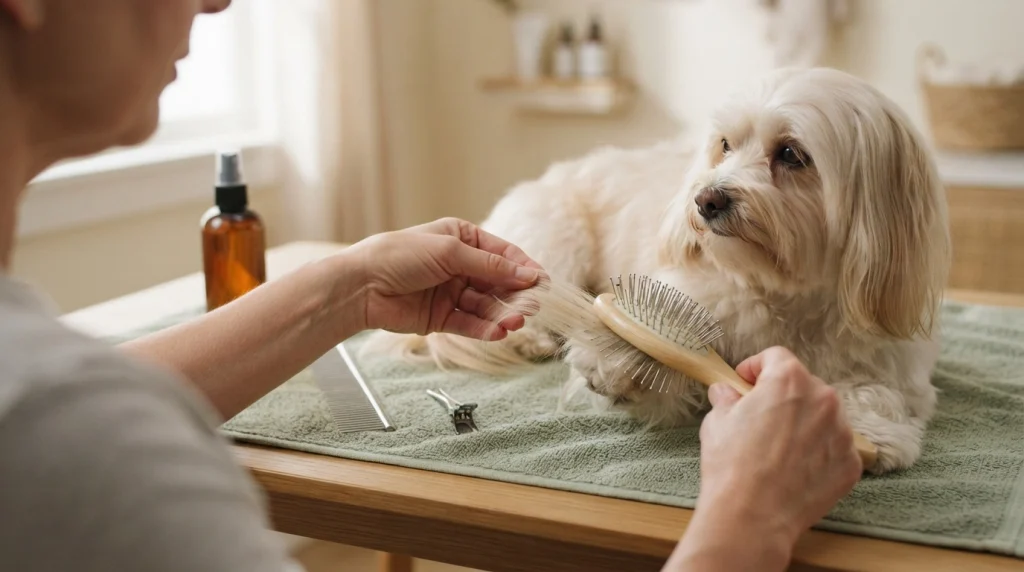 Save
SaveFollow these steps in order. Each one builds on the last.
Step 1: Mist the Coat Before You Brush
Never brush fine hair dry. Dry hair has less elasticity and snaps under light pressure.
Use a leave-in conditioner or detangling spray made for dogs. Lightly mist the section you’re about to brush, not the whole dog at once.
The Chris Christensen Ice on Ice spray is a popular choice among show groomers because it “adds elasticity and strength to prevent breakage when brushing”[reference:2].
Step 2: Work in Small Sections
Divide the coat into sections about two inches wide. Clip the rest out of the way if your dog tolerates it.
Brushing the whole body in broad strokes creates drag and missed tangles. Small sections let you control the brush and apply even, light pressure.
Step 3: Start at the Ends, Not the Roots
This is the single most important technique change for fine hair.
Place your brush near the tip of the hair, not the skin. Brush downward through just the last inch. Once that’s smooth, move up another inch and repeat.
Working from ends to roots means tangles release gradually instead of tightening into knots. A dog grooming guide from Simpsons Grooming Supplies advises “smooth, downward strokes to avoid discomfort and tugging”[reference:3].
Step 4: Use Almost No Pressure
Let the brush do the work. Your hand should guide, not press.
If you feel resistance, stop. Back up and work the tangle loose with your fingers first. Pulling through resistance is how fine hair breaks.
Over-brushing also causes problems. Excessive brushing can lead to “brush burn” — irritation that damages both skin and hair[reference:4].
Step 5: Finish with a Comb Check
After brushing a section, run a metal comb through it. If the comb glides through without catching, you’re done.
A comb catches tangles that a brush skims over. The AKC recommends following brushing with a comb to ensure you’ve removed all dead hair and tangles[reference:5].
What Causes Breakage Beyond Brushing?
Brushing mistakes are the main culprit for most owners. But other factors weaken fine hair from the inside.
- Nutritional gaps — A lack of protein, omega-3 fatty acids, or certain vitamins weakens the hair structure. Fine hair shows these deficiencies faster than thick coats.
- Over-bathing — Frequent baths strip natural oils that keep fine hair flexible. The ASPCA suggests bathing at least every three months, but some dogs need less frequent washing.[reference:6]
- Tight collars or harnesses — Constant friction from gear rubs fine hair and causes it to break near the skin.
- Dry indoor air — Low humidity in winter pulls moisture from hair, making it brittle and prone to snapping.
- Harsh chemicals — Some shampoos and household cleaners irritate the skin and weaken hair follicles.
Which Fine-Coated Breeds Are Most at Risk?
Any dog with a single, fine coat needs careful brushing. These breeds are especially prone to breakage:
- Maltese — Extremely fine, silky hair with no undercoat.
- Yorkie (Yorkshire Terrier) — Fine hair that mats easily around the legs and chest.
- Shih Tzu — Long, fine hair that tangles behind the ears and under the belly.
- Bichon Frise — Curly fine hair that traps tangles close to the skin.
- Havanese — Soft, fine coat that breaks when brushed with stiff tools.
- Papillon — Fine silky hair on the ears and body.
- Chinese Crested (Powderpuff) — Very fine, sparse hair that tears easily.
- Japanese Chin — Silky fine coat with minimal undercoat.
If you have one of these breeds, your brush choice matters more than it does for a Labrador or a Husky.
Comparison: Best Tools for Fine Hair vs. Other Coat Types
Not every brush in your grooming kit belongs on a fine-coated dog. Here’s a quick reference:
| Tool | Fine Coat | Double Coat | Curly Coat | Short Coat |
|---|---|---|---|---|
| Pin Brush (soft) | ✅ Best choice | ✅ Good | ⚠️ Use gently | ❌ Too soft |
| Boar Bristle | ✅ Finishing | ⚠️ Surface only | ❌ Not enough | ✅ Good |
| Soft Slicker | ⚠️ With care | ✅ Good | ✅ Good | ✅ Good |
| Undercoat Rake | ❌ Avoid | ✅ Essential | ❌ Avoid | ❌ Not needed |
| Metal Comb | ✅ Check work | ✅ Check work | ✅ Check work | ⚠️ Limited use |
The key takeaway: fine coats need softer tools than almost any other coat type.
How Often Should You Brush Fine Dog Hair?
Daily, but briefly. Three to five minutes a day beats a marathon session once a week.
Fine hair tangles fast. A tangle left overnight tightens into a mat. Mats require more force to remove, and force is what breaks hair.
For puppies and nervous dogs, start with one-minute sessions and build up. The AKC advises getting puppies used to “gentle brushing” from the day you bring them home[reference:7].
If you’re short on time, prioritize the friction zones: behind the ears, under the front legs, around the collar area, and the belly. These spots mat first.
Can Diet Help Prevent Fine Hair Breakage?
Yes. Hair is mostly protein, and fine hair has less structural margin for error than thick hair.
A diet rich in omega-3 fatty acids supports coat health from the inside. Fish oil, flaxseed, and certain commercial dog foods include these nutrients.
Protein matters too. Fine hair that lacks enough protein grows in weak and breaks easily.
Talk to your vet before adding supplements. They can check for underlying issues like thyroid problems or allergies that also cause hair breakage.
What About Bathing Fine-Coated Dogs?
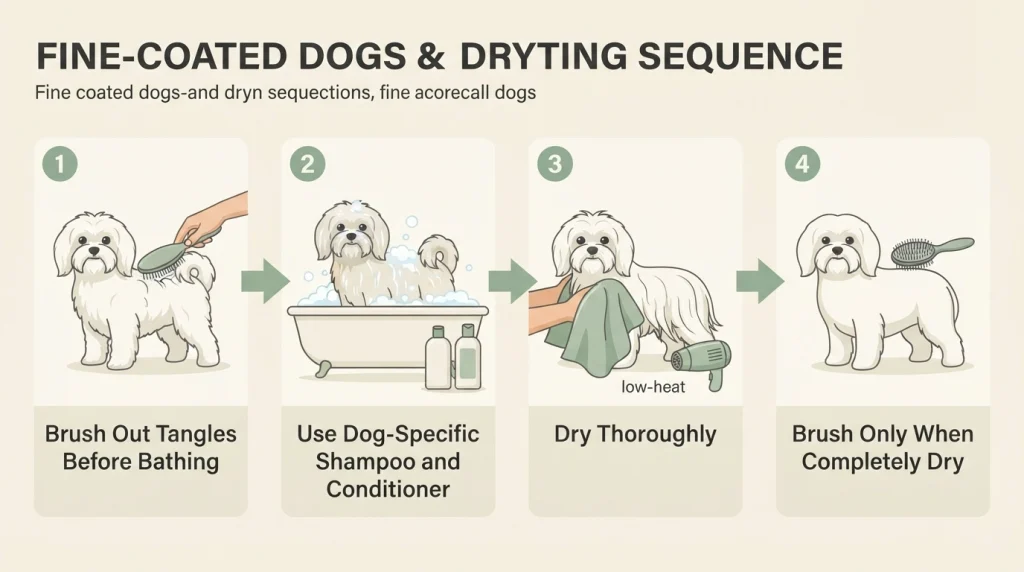 Save
SaveBathe less often than you think. Over-bathing strips the oils that keep fine hair flexible.
Always brush out all tangles before the bath. Water tightens mats, making them nearly impossible to remove without cutting.
Use a dog-specific shampoo and conditioner. Human products are pH-balanced for human hair and can leave dog hair dry and brittle.
After the bath, dry thoroughly with a towel or low-heat dryer. Damp hair is more fragile than dry hair, so avoid brushing until the coat is completely dry.
My Personal Grooming Routine for a Fine-Coated Dog
Here’s exactly what I do now with my current Maltese, Ollie:
- Every evening, 4 minutes. I mist a small section with leave-in conditioner and brush from ends to roots with a soft pin brush.
- Comb check every other day. I run a fine-toothed metal comb through the legs and belly to catch anything the brush missed.
- Bath every 3-4 weeks. I use a moisturizing dog shampoo and conditioner, then towel dry completely.
- Omega-3 supplement daily. Our vet recommended fish oil, and Ollie’s coat is noticeably shinier and stronger.
- Trim friction areas every 2 weeks. A small trim around the sanitary area and paw pads reduces tangles in those spots.
Since switching to this routine, I haven’t found a single broken hair on Ollie’s brush. His coat is longer and fuller than it ever was with my old stiff slicker approach.
Product Recommendations
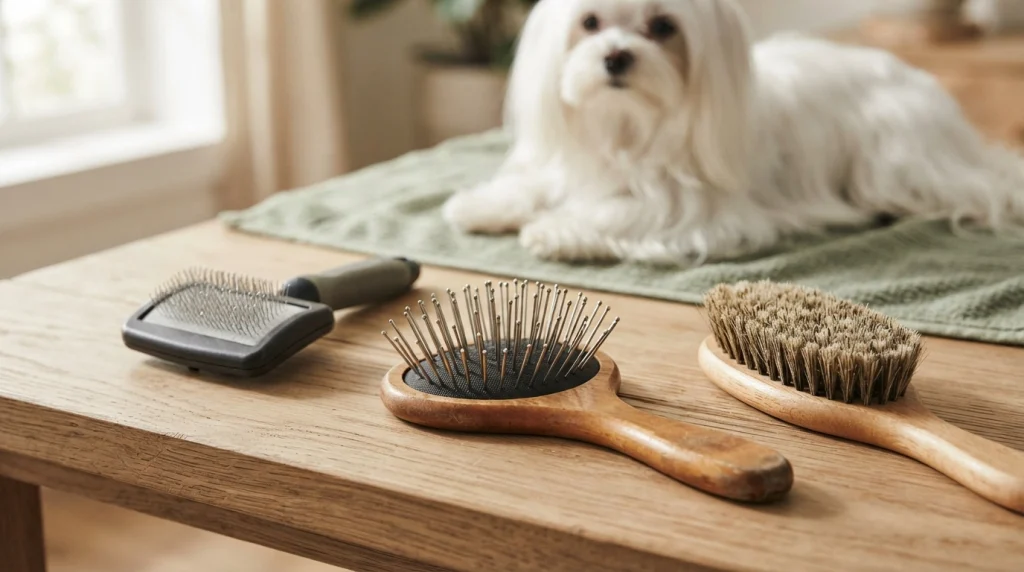 Save
SaveIf you’re ready to upgrade your fine-hair grooming kit, here’s what I’d actually recommend:
🏆 Best Overall for Fine Hair
Chris Christensen Oval Pin Brush
★★★★★
Stainless steel pins with polished tips glide through fine hair without catching. Beech wood body is lightweight and comfortable for long sessions. I’ve used mine for three years and it still looks new.
💰 Best Budget Pick
Hertzko Self-Cleaning Slicker Brush
★★★★☆
Retractable bristles make cleanup fast, and the fine wire pins with coated tips work well for light detangling on fine coats. Under $20, it’s a solid starter brush if you’re not ready for a premium pin brush.
🚛 Best for Sensitive Skin
Artero NOVA Boar Bristle Brush
★★★★☆
Extra-soft boar bristles are ideal for dogs with sensitive skin or very fine, brittle hair. It distributes natural oils for shine and doesn’t scratch. I use this as a finishing brush after the pin brush.
Frequently Asked Questions
Can I use a human hairbrush on my dog’s fine hair?
No. Human brushes have different pin spacing and stiffness designed for human hair density. They can pull and break fine dog hair. Dog-specific pin brushes have polished tips and spacing suited to canine coat structure.
How do I know if my dog’s hair is breaking or just shedding?
Broken hair looks shorter and has uneven, jagged ends. Shed hair has a natural bulb at the root. If you see short, blunt strands on the brush, that’s breakage.
What if my dog already has mats in fine hair?
Don’t brush through mats. Use your fingers to gently separate the mat into smaller pieces, then work a detangling spray into it. If the mat won’t release with light finger work, a professional groomer should remove it safely.
Does brushing wet hair cause breakage?
Yes. Wet hair is more fragile than dry hair. Always wait until the coat is completely dry before brushing, and use a leave-in conditioner spray to add slip.
How long does it take to see less breakage after changing my routine?
You should notice less hair on the brush within one to two weeks. Fuller coat recovery takes longer — fine hair grows slowly, so visible improvement in thickness may take six to eight weeks.
The Bottom Line
Fine dog hair breaks because we treat it like thicker coat types. Stiff brushes, dry brushing, and pulling through tangles all snap fine strands.
Switch to a soft pin brush. Mist before you brush. Work from ends to roots in small sections. Use almost no pressure.
Your dog’s coat will tell you it’s working. Less hair on the brush, more shine, and fewer mats to fight. That’s the sign you’ve finally figured out how to brush fine hair without breaking it.
Start with the tools and technique, and the results follow faster than you’d expect.

Thomas Cutter is a lifelong dog owner and the founder of FindOutAboutDogs.com. With over 10 years of hands-on experience owning multiple breeds, Thomas created this site to provide honest, research-based dog advice that real owners can actually trust.
