How to Remove Loose Undercoat From Your Dog Safely
Quick Answer
To remove loose undercoat, use a suitable undercoat rake or slicker brush, work through your dog’s dry coat in small sections, and apply gentle strokes in the direction of hair growth. Finish with a metal comb to check for trapped fur and tangles. Never scrape the skin, force a brush through mats, or shave a healthy double coat simply to control shedding.
Steps for removing loose undercoat
- Choose the right brush: Match the rake’s tooth length and spacing to your dog’s coat.
- Check for tangles: Separate loose knots gently before brushing the surrounding fur.
- Work in sections: Brush small areas instead of repeatedly dragging a tool over the entire body.
- Use light pressure: Lift away loose hairs without scratching or pulling the skin.
- Check your progress: Use a metal comb to find remaining tangles and trapped undercoat.
- Stop when needed: Take breaks if your dog becomes uncomfortable or the skin looks irritated.
One important tip
- If you notice bald patches, sores, persistent itching, or unusual hair loss, contact your veterinarian instead of increasing brushing pressure.
Finding loose clumps of fur on your sofa, clothes, and floors can make dog shedding feel endless. The right dog brush can help you remove that loose undercoat without damaging the healthy hair protecting your pet’s skin.
In this guide, I’ll explain how to choose a suitable grooming tool, brush different coat types, manage seasonal shedding, and recognize when professional help is a better option. The goal is a cleaner home and a comfortable dog, not removing every last loose hair in one session.


What Is a Dog’s Undercoat?
 Save
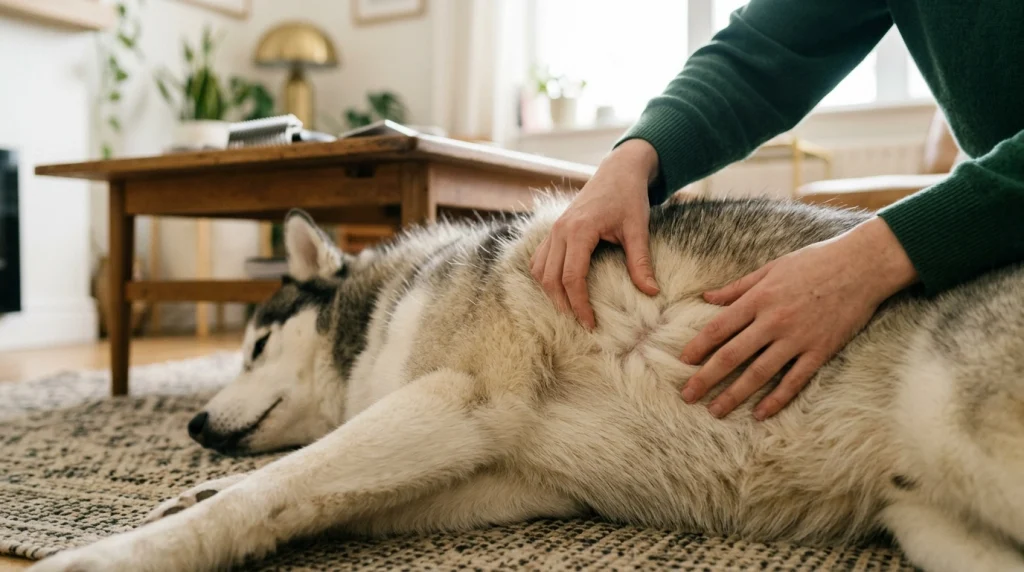
SaveA dog’s undercoat is the softer, often denser layer of fur that grows beneath the outer coat. In double-coated breeds, this layer provides insulation while the longer outer hairs help protect the skin from moisture, dirt, and environmental exposure.
Dogs naturally shed old hairs as part of their hair-growth cycle. During seasonal shedding, some dogs release large amounts of undercoat at once, a process commonly called blowing coat.
Breeds such as Siberian Huskies, German Shepherds, Golden Retrievers, and Pomeranians can shed substantial amounts of undercoat. However, the amount and grooming needs vary with breed, coat type, season, and individual dog.
The important distinction is that loose undercoat is not the same as healthy outer hair. Your goal is to remove fur that’s ready to shed while preserving the coat’s protective structure.
How Do You Remove Loose Undercoat From a Dog?
The safest approach combines the correct brush, gentle technique, and regular grooming. Start with a manageable section and stop if your dog shows signs of pain or skin irritation.
1. Choose a Suitable Dog Brush
Pick a grooming tool designed for your dog’s coat length and thickness. An undercoat rake can reach loose hair beneath the outer coat, while a slicker brush can help with surface fur and small tangles.
- Short double coat: Try a rubber grooming brush or a suitable shedding tool.
- Medium double coat: Use an appropriately sized undercoat rake or slicker brush.
- Long, dense coat: Choose a rake with suitable tooth length and keep a metal comb nearby.
- Sensitive skin: Use a gentle tool with smooth, well-finished teeth and minimal pressure.
Don’t assume that a brush advertised for heavy shedding is suitable for every dog. The wrong tooth length or excessive pressure can cause discomfort and damage the coat.
2. Inspect the Coat Before Brushing
Run your hands gently over your dog’s body and look for knots, compacted fur, redness, scabs, or sore spots. Pay particular attention to areas where friction commonly creates tangles.
- Behind the ears
- Under the collar
- Behind the front legs
- Around the hindquarters and tail
- Along feathered areas on longer-coated dogs
If you find a small, loose tangle, separate it gently with your fingers or a suitable comb. Don’t pull hard, and don’t force a rake through a tight mat.
3. Brush in Small Sections
Divide the coat into manageable sections instead of repeatedly brushing the same large area. Move the tool in the direction of hair growth, using short, controlled strokes and light pressure.
For a dense coat, gently lift the outer hair so the tool can reach loose undercoat. Avoid digging the teeth into the skin or scraping repeatedly over one spot.
Work gradually. If your dog shifts away, flinches, turns toward the brush, or tries to leave, pause and check the area.
4. Use the Right Technique for Each Body Area
Some areas need a lighter touch because the skin is delicate or the hair is shorter. Adjust the tool and technique rather than using the same pressure everywhere.
- Back and sides: Use gentle, overlapping strokes and check how much loose hair comes away.
- Chest and belly: Work carefully because the skin can be sensitive.
- Legs: Use light strokes and avoid catching the joints or pulling the hair.
- Tail and feathering: Separate the hair into small sections and gently work through loose tangles.
- Behind the ears: Use a suitable comb or soft brush rather than a forceful rake.
Never brush directly over irritated skin, open wounds, or painful lumps. Ask a veterinarian about those areas before continuing.
5. Finish With a Metal Comb
A metal grooming comb can help reveal trapped undercoat and tangles that a brush misses. Gently pass it through the coat, checking that it moves without snagging or pulling.
If the comb catches, stop and investigate instead of forcing it through. A snag may indicate a knot, compacted undercoat, or a section that needs a gentler approach.
6. Clean the Brush and Check the Skin
Remove accumulated fur from the brush as you work so the teeth remain effective. When you’re finished, inspect the skin for redness, scratches, or other signs of irritation.
Some loose hair may remain after grooming, and that’s normal. You don’t need to remove every undercoat hair to maintain a healthy coat.
Which Dog Brush Is Best for Removing Loose Undercoat?
 Save
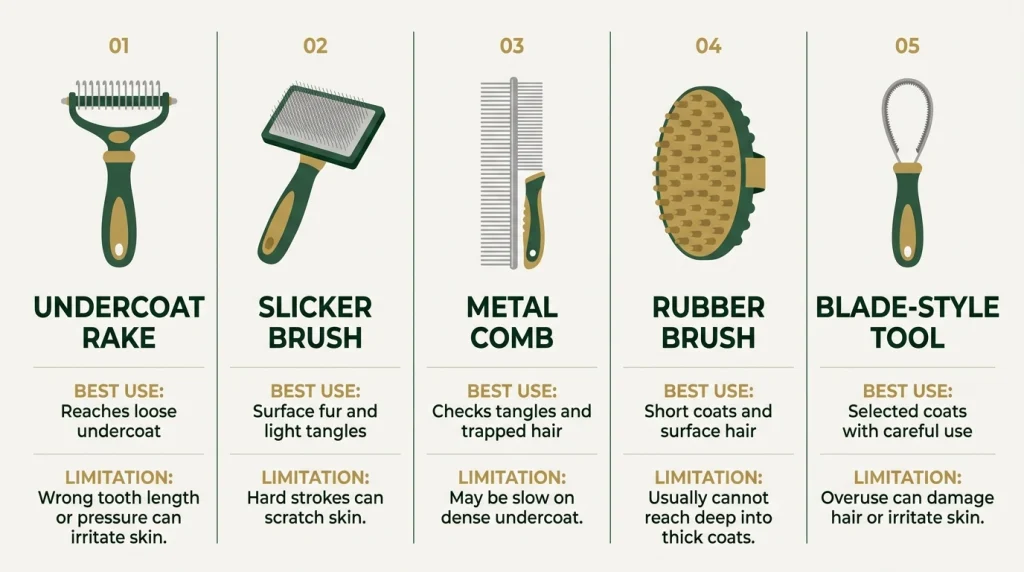
SaveThe best brush depends on the coat you’re grooming. An undercoat rake is useful for reaching loose fur beneath a dense outer coat, while a slicker brush helps manage surface hair and some tangles.
| Grooming tool | Best use | Main limitation |
|---|---|---|
| Undercoat rake | Removing loose undercoat from suitable double coats | Incorrect tooth length or pressure can irritate skin |
| Slicker brush | Surface fur, light tangles, and longer coats | Repeated hard strokes may scratch the skin |
| Metal comb | Checking tangles and trapped hair | May not remove dense undercoat quickly on its own |
| Rubber grooming brush | Short coats and loose surface hair | Usually cannot reach deep into a thick coat |
| Blade-style de-shedding tool | Selected coats when used according to the manufacturer’s guidance | Excessive use can damage hair or irritate skin |
For many double-coated dogs, an undercoat rake and a metal comb make a practical starting combination. A slicker brush can complement them when the coat length and texture make it suitable.
For more help choosing equipment, see the American Kennel Club’s guide to different types of dog brushes.
How Often Should You Brush Out Loose Undercoat?
Brushing frequency depends on your dog’s coat, shedding pattern, and tolerance for grooming. Weekly brushing may be enough for some dogs, while dense-coated breeds may need more frequent sessions during heavy shedding.
Use the following schedule as a starting point, not a strict rule.
- Normal shedding: Begin with one or two short sessions each week and adjust as needed.
- Heavy seasonal shedding: Brush more frequently if loose hair builds up quickly and your dog remains comfortable.
- Long or easily tangled coats: Check the coat regularly and brush often enough to prevent mats.
- Short coats: Use a suitable rubber brush or grooming mitt when loose surface hair becomes noticeable.
Long sessions aren’t always better. Several gentle sessions can be easier on your dog than one exhausting attempt to remove a large amount of fur.
Should You Bathe Your Dog Before Removing Loose Undercoat?
A bath can help release some loose hair, but it isn’t a substitute for brushing. The most useful routine depends on your dog’s coat, skin condition, and the type of grooming you plan to do.
For a dog with a healthy, manageable coat, begin by checking and gently brushing out loose fur and tangles. If you bathe your dog, use a dog-specific shampoo and rinse thoroughly.
Dry the coat completely and gently before finishing the grooming process. A dense coat that stays damp can be difficult to maintain, particularly if the fur is already compacted.
For severe tangles or impacted undercoat, don’t improvise with powerful dryers, excessive heat, or prolonged conditioner treatments. Ask a professional groomer or veterinarian for a suitable plan.
What Mistakes Should You Avoid When Removing Undercoat?
 Save
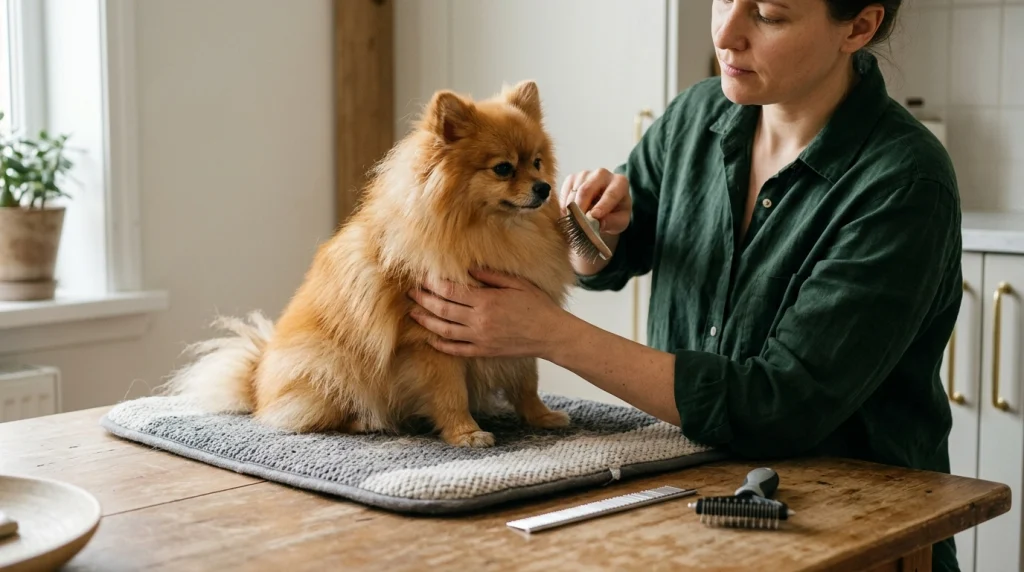
SaveThe biggest mistake is treating all loose hair as something that must be removed immediately. Your dog needs a comfortable, healthy coat, not an aggressive de-shedding session.
- Brushing too hard: Heavy pressure can scratch the skin and pull healthy hair.
- Using the wrong tool: A rake designed for a thick coat may be unsuitable for short or delicate fur.
- Forcing knots apart: Tight mats can pull painfully on the skin and may require professional removal.
- Overusing blade-style tools: Repeated passes can damage hair and irritate the skin.
- Ignoring warning signs: Persistent itching, redness, sores, and bald patches need attention.
- Shaving a double coat for convenience: Shaving can interfere with the coat’s protective functions and may affect regrowth.
The American Kennel Club explains why a dog’s double coat should generally be maintained rather than shaved for routine shedding control. Read its guidance on whether it’s appropriate to shave a dog.
How Can You Tell Normal Shedding From a Skin Problem?
Normal shedding usually leaves loose hair throughout the coat without causing obvious bald patches or persistent skin discomfort. Unusual hair loss may look different and can have causes that brushing won’t fix.
Contact your veterinarian if you notice any of these signs:
- New bald spots or visibly thinning areas
- Persistent scratching, licking, or chewing
- Red, swollen, crusted, or painful skin
- Sudden or uneven hair loss
- Unusual odor or discharge from affected skin
Don’t try to solve these problems by brushing more aggressively or using a stronger shedding tool. Your veterinarian can assess whether an underlying skin condition or another health issue needs treatment.
The American Kennel Club’s overview of hair loss in dogs explains how abnormal hair loss differs from ordinary shedding.
Can You Remove Loose Undercoat Without a Professional Groomer?
Yes. Many dogs can be groomed at home with a suitable brush, a metal comb, and a patient approach. The key is to work within your dog’s comfort level and recognize when the coat needs expert attention.
Home grooming is usually manageable when the fur comes away easily, the skin looks healthy, and the dog tolerates gentle brushing. You can gradually build a routine that suits your dog’s coat and shedding pattern.
Professional help is a better choice when the coat contains tight mats, the undercoat is severely compacted, or your dog becomes distressed during grooming. A groomer can assess the coat and use appropriate techniques without forcing the brush through painful tangles.
If skin disease, unexplained hair loss, or persistent irritation is present, consult a veterinarian rather than relying on grooming alone.
Recommended Dog Brushes for Removing Loose Undercoat
If you’re ready to choose a tool, focus on your dog’s coat type rather than buying the most aggressive de-shedding product. These options cover three common grooming needs, but the right choice still depends on your dog’s size, coat, and skin sensitivity.
🏆 Best for Dense Undercoat
Safari Dual-Sided Shedding Blade
★★★★☆
A shedding blade is an option for suitable coats when used gently and according to its instructions. It isn’t the best default for every double-coated dog, especially one with sensitive skin or delicate hair.
💰 Everyday Grooming
Hertzko Self-Cleaning Slicker Brush
★★★★☆
This style of slicker brush helps collect loose fur and work through some surface tangles. Use light strokes, particularly on areas with short hair or sensitive skin.
🧰 Best for Undercoat Raking
FURminator Undercoat Rake
★★★★☆
An undercoat rake is designed to reach loose fur beneath the outer coat. Choose a version appropriate for your dog’s coat length and use short, gentle strokes instead of pulling through resistance.
Before buying: Product designs and availability can change, and these are suggestions by tool category rather than independently tested rankings. Check the current product specifications and manufacturer instructions before using a tool on your dog.
Frequently Asked Questions
How do I remove loose undercoat from my dog quickly?
Use an undercoat rake suited to your dog’s coat, work in small sections, and brush with gentle strokes. Remove loose fur from the tool as needed and finish with a metal comb. Don’t rush by increasing pressure, because that can irritate the skin or damage healthy hair.
Is an undercoat rake better than a slicker brush?
An undercoat rake is generally more useful for reaching loose fur beneath a dense double coat. A slicker brush is helpful for surface hair and some tangles, particularly on longer coats. Many owners benefit from both, provided the tools match their dog’s coat and are used gently.
Can I remove my dog’s undercoat every day?
Some heavily shedding dogs benefit from frequent brushing, including daily sessions during peak shedding. However, the ideal schedule depends on the coat and the dog’s skin sensitivity. Reduce the frequency if brushing causes redness, breakage, discomfort, or irritation.
Should I shave my dog to stop undercoat shedding?
No, shaving is generally not recommended as a routine solution for double-coated dogs. The outer coat and undercoat have protective functions, and shaving can affect those functions and coat regrowth. Regular brushing is a safer starting point for managing loose fur.
Why is my dog still shedding after brushing?
Brushing removes loose hair but doesn’t stop the natural hair-growth cycle. Your dog may continue shedding after a grooming session, especially during seasonal changes. If hair loss becomes sudden, patchy, or associated with skin irritation, ask your veterinarian to investigate.
Final Takeaway: Keep Undercoat Removal Gentle and Consistent
Removing loose undercoat doesn’t require force or an expensive collection of grooming tools. Start with a brush suited to your dog’s coat, work in small sections, and stop whenever the process becomes uncomfortable.
For many double-coated dogs, an undercoat rake paired with a metal comb is a practical starting point. Add a suitable slicker brush when needed, maintain a regular schedule, and seek professional help for severe mats or unusual hair loss.
The best result is a clean, comfortable dog with a healthy coat—not a completely shed-free home. Gentle, consistent grooming makes that goal much more realistic.

Thomas Cutter is a lifelong dog owner and the founder of FindOutAboutDogs.com. With over 10 years of hands-on experience owning multiple breeds, Thomas created this site to provide honest, research-based dog advice that real owners can actually trust.
