Lightweight vs Heavy Dog Brushes: Which Is Better for Your Dog?
Quick Answer
A lightweight dog brush is usually easier to control and causes less hand fatigue during quick grooming sessions, while a heavier brush can feel more stable and durable during longer sessions. The better choice depends less on weight alone and more on your dog’s coat, the brush head, and how comfortably you can control the tool. For most owners, choosing the right brush type for the dog’s coat matters more than choosing the heaviest or lightest model.
The key differences
- Lightweight brushes: Easier to maneuver and usually better for short or frequent grooming sessions.
- Heavy brushes: Can feel steadier and more substantial when working through dense coats.
- Dog comfort: Brush pressure and pin design matter more than the brush’s overall weight.
- Owner comfort: A brush that tires your wrist can lead to poor control during longer sessions.
- Best overall rule: Match the brush type and size to your dog’s coat before worrying about weight.
Quick buying tip
- Test the balance: Hold the brush as if grooming your dog. If it feels awkward before you start, it probably won’t feel better after ten minutes.
When I compare lightweight vs heavy dog brushes, I don’t start by assuming that lighter is better. I’ve found that brush weight changes how the tool feels in your hand, but the wrong brush can still be uncomfortable no matter how little it weighs.
The best choice comes down to control, coat type, session length, and your own comfort. Here’s how I think through the decision in 2026.


Does a dog brush’s weight really matter?
Yes, but weight is usually a secondary factor. The brush head, handle shape, pin style, and balance often have a bigger effect on how well you can groom your dog.
A dog brush is a hand tool, so poor balance can make even a light model feel awkward. Meanwhile, a slightly heavier brush with a comfortable handle may feel surprisingly easy to use.
What is a lightweight dog brush?
A lightweight dog brush is simply a grooming tool designed with relatively little overall mass. Plastic-backed brushes, rubber grooming tools, and compact models often fall into this category.
They usually feel quick and easy to move. That can be useful when brushing smaller dogs or working around sensitive areas.
What is a heavy dog brush?
A heavier dog brush generally uses more substantial materials or has a larger brush head. Dense construction, metal components, and thicker handles can all increase its weight.
Extra weight does not automatically mean better grooming performance. It may simply change how stable the brush feels in your hand.
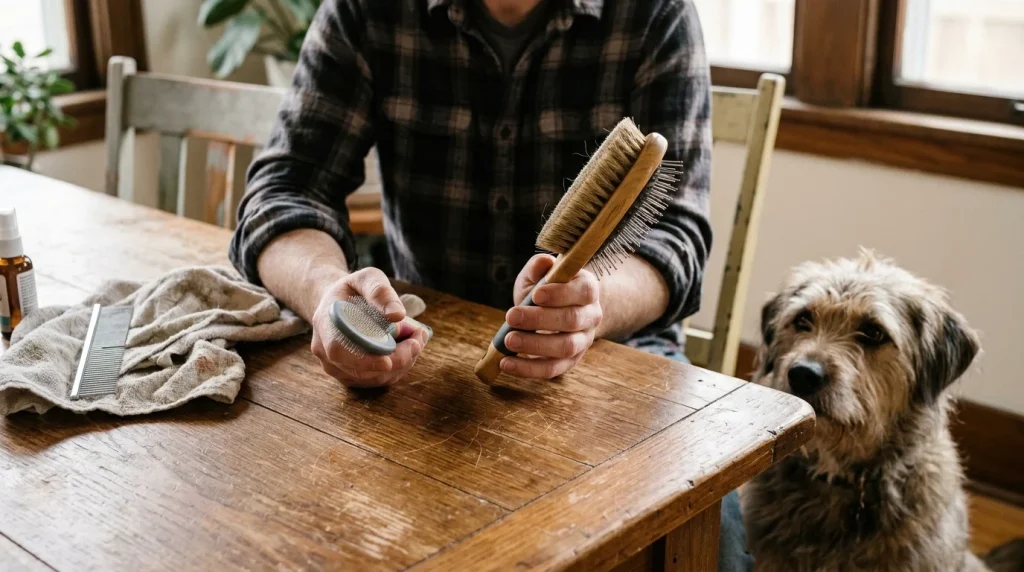
Lightweight vs heavy dog brushes at a glance
 Save
| Factor | Lightweight Brush | Heavy Brush |
|---|---|---|
| Hand fatigue | Usually lower during longer sessions | Can increase fatigue if poorly balanced |
| Maneuverability | Often easier around legs, ears, and smaller areas | May feel slower in tight areas |
| Stability | Depends heavily on handle and construction | Can feel more planted and substantial |
| Travel use | Usually easier to pack and carry | Less convenient in a grooming bag |
| Long grooming sessions | Often easier on the wrist | Can work well if the grip and balance are excellent |
| Best reason to choose it | Comfort and easy handling | Personal preference for a solid, stable feel |
Are lightweight dog brushes easier to use?
For many owners, yes. A lighter brush requires less effort to lift, reposition, and move repeatedly across the coat.
I especially see the advantage during routine grooming. Small movements become easier when you’re brushing legs, the chest, or other areas that require careful control.
Why lighter can be better for frequent brushing
- Less wrist strain: Repeated strokes can feel easier when the tool doesn’t pull heavily on your hand.
- Faster repositioning: Lightweight brushes are often easier to turn and angle.
- Better for smaller hands: A compact, lighter tool may be easier to grip securely.
- Useful for beginners: Easier handling can help owners focus on gentle technique.
That said, lightweight construction has a downside when manufacturers sacrifice handle quality. A brush that feels flimsy may twist or feel unstable during use.
When is a heavier dog brush the better choice?
A heavier brush can be a good choice when you prefer a more substantial, stable feel. Some owners simply control a solidly built tool better.
This can matter during longer grooming sessions, particularly if the brush has a well-designed ergonomic handle. Balance is the deciding factor here.
A heavier brush should not do the work for you
One mistake I would avoid is using the brush’s weight to create pressure. The weight of the tool should never encourage you to press harder into your dog’s skin.
Proper grooming relies on controlled strokes. If a brush feels heavy enough that you struggle to stay gentle, it’s probably not the right match for your routine.
Which brush weight is better for different dog coats?
 Save
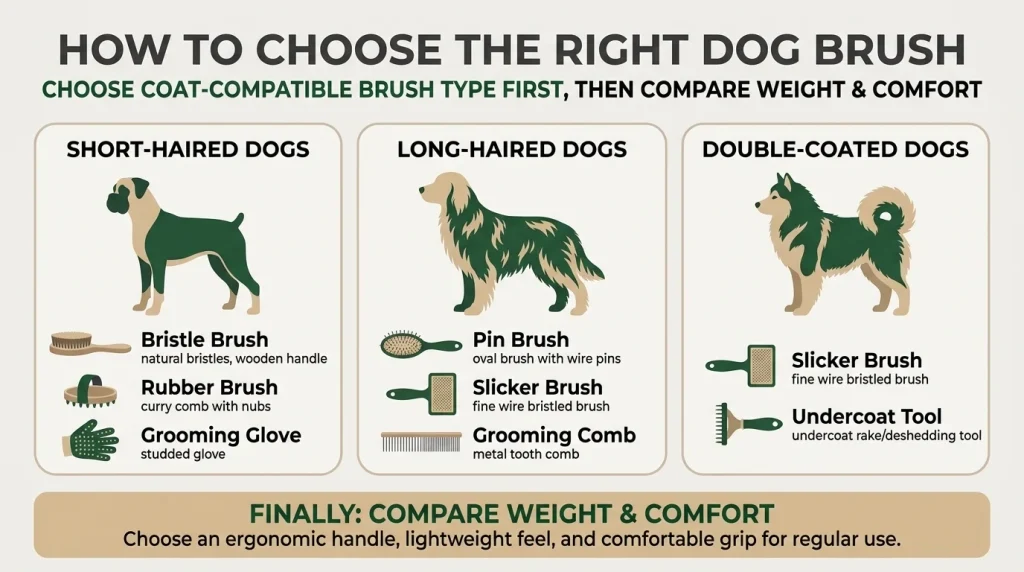
Coat type should come before brush weight. The American Kennel Club recommends choosing grooming tools based on the dog’s coat and the job you need the tool to perform.
For example, short coats, long coats, and double coats often need different brush styles. Once you’ve chosen the correct type, then compare weight and comfort.
Short-haired dogs
Short-coated dogs often do well with bristle brushes, rubber brushes, or grooming gloves. These tools can be relatively light and easy to control.
A heavy brush is not automatically more effective on a short coat. The goal is to loosen dead hair without making grooming uncomfortable.
Long-haired dogs
Long coats often require tools that can work through the hair without excessive pulling. Pin brushes, slicker brushes, and combs may all play a role depending on the coat.
For longer sessions, I would pay close attention to hand fatigue. A moderately weighted, well-balanced brush may be more comfortable than either extreme.
Double-coated dogs
Double-coated breeds may need grooming tools capable of reaching loose hair beneath the outer coat. Slicker brushes and appropriate undercoat tools are commonly used for this purpose.
Don’t choose a heavier tool simply because the coat is thick. Correct pin length, brush design, and gentle technique are more important.
Can a heavy brush hurt a dog’s skin?
The weight itself does not necessarily hurt the dog. Excessive pressure, sharp or unsuitable pins, and poor brushing technique create the bigger risk.
A heavier brush can make it easier to apply too much pressure if you’re tired or distracted. That’s why I recommend keeping your grip relaxed and checking how your dog responds.
- Watch body language: Pulling away or tensing up may indicate discomfort.
- Use light strokes: Let the brush work through the coat without forcing it.
- Check sensitive spots: Areas behind the ears and under the legs can tangle easily.
- Stop when needed: Don’t repeatedly drag a brush through a stubborn mat.
If you notice irritated skin, wounds, unusual lumps, or persistent discomfort during grooming, stop and speak with a veterinarian. Grooming is also a useful opportunity to notice changes in the skin and coat.
Does brush weight affect hand fatigue?
Yes, especially during longer grooming sessions. But total weight tells only part of the story.
A poorly balanced lightweight brush can still strain your wrist. A slightly heavier brush with a comfortable grip may distribute the effort more naturally.
What I look for before buying a brush
- Balance: The brush should not feel excessively head-heavy.
- Handle shape: Your fingers should wrap around it comfortably.
- Grip security: A slippery handle can force you to squeeze too tightly.
- Brush size: The head should suit your dog’s size and the areas you need to groom.
- Session length: Think about whether you brush for two minutes or twenty.
For me, this is where many comparisons go wrong. People compare the number on a scale instead of comparing how the brush actually feels after repeated strokes.
How do you choose the right weight for a dog brush?
 Save
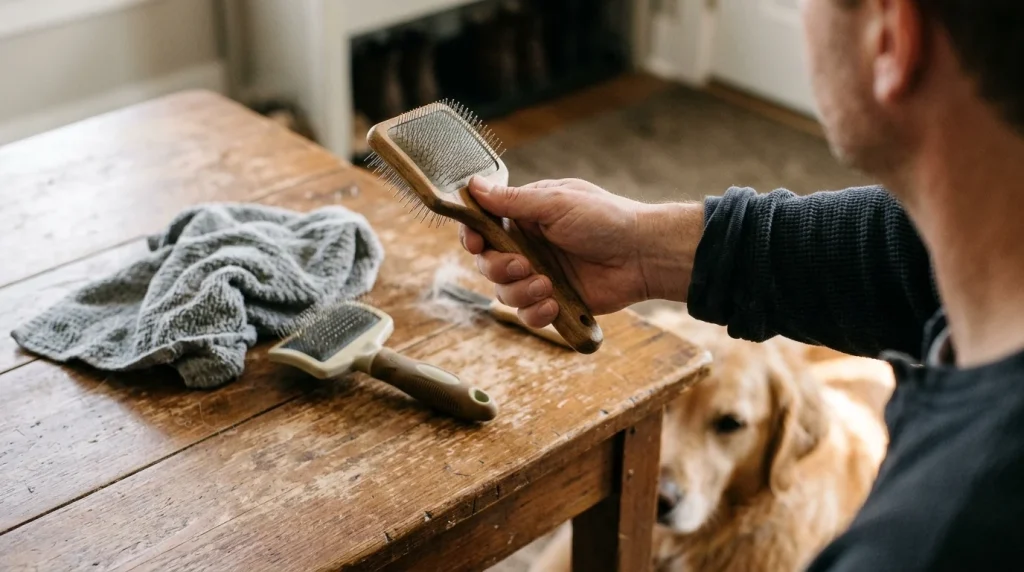
Start with the correct brush type for your dog’s coat, then choose the most comfortable weight and balance. You don’t need the lightest model or the heaviest model.
You need one that lets you stay gentle and in control.
Choose a lightweight brush if…
- You groom frequently and want to reduce wrist fatigue.
- You have a small dog or often work around detailed areas.
- You prefer quick, easy movements.
- You want a brush that is easier to carry when traveling.
Choose a heavier brush if…
- You genuinely prefer a more substantial feel in your hand.
- The brush remains comfortable and balanced during use.
- You can maintain gentle pressure without relying on the tool’s weight.
- The heavier construction comes with a grip and brush head that suit your dog’s coat.
My practical verdict on lightweight vs heavy dog brushes
For most dog owners, I would choose comfort and control over weight alone. A lightweight or medium-weight brush is often easier to use repeatedly without tiring your hand.
However, I wouldn’t reject a heavier brush if it feels balanced and suits the job. The correct grooming tool for your dog’s coat should always come first.
If you’re comparing two otherwise similar brushes, hold each one as you would during a real grooming session. The one that feels easier to control is usually the better starting point.
Dog brushes I would consider for different priorities
If you’re ready to compare actual tools, I would narrow the search by coat type and grooming goal first. These are useful starting points for different priorities.
🏆 BEST FOR EASY HANDLING
KONG ZoomGroom
★★★★☆
A compact rubber grooming tool designed around simple handling and loose-hair removal. I like this style for owners who want a light, uncomplicated tool for short-coated dogs.
🧥 BEST FOR LONGER COATS
Chris Christensen Pin Brush
★★★★☆
A pin-brush style option worth comparing when grooming longer coats where smooth, controlled strokes matter. I would focus on the size and pin design that best matches your dog.
🪮 BEST FOR DENSE COATS
Safari Self-Cleaning Slicker Brush
★★★★☆
A slicker-style option for owners comparing tools for loose hair and coat maintenance. I would choose the correct size and use gentle pressure rather than relying on force.
Frequently asked questions
Is a lightweight dog brush better for everyday grooming?
Often, yes, because a lightweight brush can be easier to maneuver during frequent sessions. Still, the brush must match your dog’s coat, because an unsuitable lightweight brush can perform worse than a properly designed, comfortable alternative.
Are heavier dog brushes more durable?
Not necessarily. Weight may come from thicker materials or a larger design, but durability depends on construction quality, joints, pins, handle attachment, and how the brush is used and stored.
Can brush weight make grooming uncomfortable for my dog?
Indirectly, yes. A heavy or poorly balanced brush may encourage excessive pressure when the owner becomes tired. The safest approach is gentle, controlled strokes and a brush designed for your dog’s specific coat type.
Should I choose a heavier brush for a thick coat?
No. Thick or double coats need an appropriate brush design that can reach and manage the coat effectively. Extra tool weight does not replace the need for correct pins, spacing, brush type, and grooming technique.
What matters more than dog brush weight?
Coat compatibility matters most. After that, consider brush size, pin or bristle design, handle comfort, balance, and how easily you can maintain gentle control throughout the grooming session.
The bottom line
The lightweight vs heavy dog brushes debate doesn’t have one universal winner. For most owners, the best brush is the one that matches the dog’s coat and lets you groom comfortably without losing control.
Start with brush type, then compare balance and handle comfort. Weight should be the final part of the decision, not the first.

Thomas Cutter is a lifelong dog owner and the founder of FindOutAboutDogs.com. With over 10 years of hands-on experience owning multiple breeds, Thomas created this site to provide honest, research-based dog advice that real owners can actually trust.
