Should You Brush a Dog Before or After Bathing?
Quick Answer
You should usually brush your dog before bathing. Pre-bath brushing removes loose hair, dirt, and tangles before water can tighten them into harder mats. After your dog is completely dry, a second gentle brushing can smooth the coat and remove loosened hair. This order also matches ASPCA dog grooming guidance.
Best brushing order
- Brush first: Remove loose fur, surface debris, knots, and small tangles.
- Check for mats: Deal with significant matting before the coat gets wet.
- Bathe gently: Use lukewarm water and a shampoo made for dogs.
- Rinse thoroughly: Shampoo residue can leave the coat uncomfortable and dull.
- Dry completely: Towel dry first, then use a dog-safe dryer if appropriate.
- Brush again: Give the dry coat a light finishing brush if the coat type benefits from it.
One important exception
- If your dog has tight, painful mats close to the skin, don’t soak them and pull harder. A professional groomer or veterinarian may be the safer choice.
If you’ve ever wondered whether the brush belongs before or after the bathtub, the safest routine is usually both—with the important work happening first.
I think of the pre-bath brush as preparation and the post-bath brush as finishing. That simple distinction makes the whole grooming routine easier to remember.


Why Should You Brush a Dog Before Bathing?
 Save
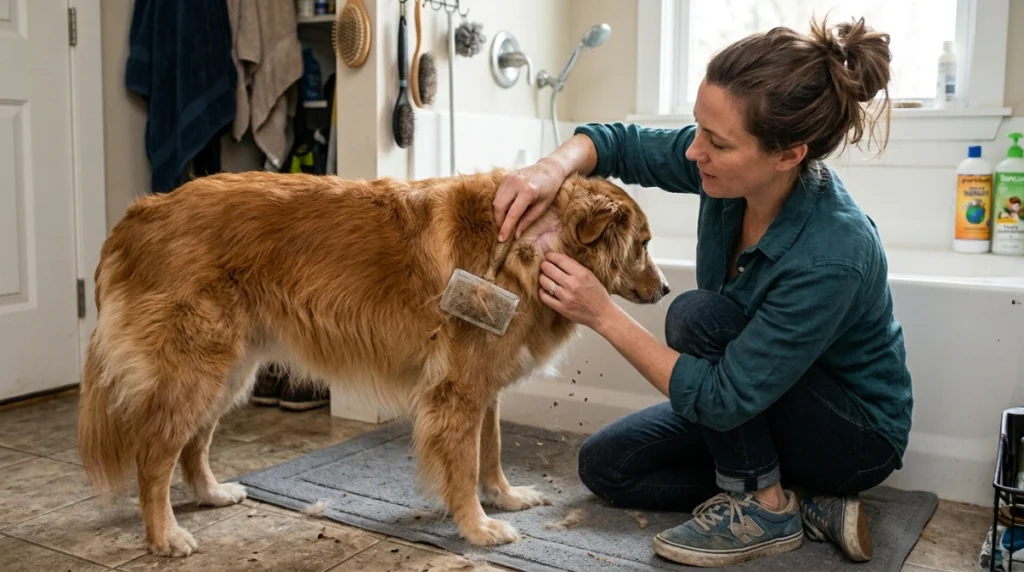
SaveBrushing before bathing removes loose fur, dirt, and tangles while the coat is still dry. It also lets you find mats, burrs, irritated skin, or other problems before shampoo and water hide them.
Water can make an existing tangle tighter. Once shampoo, rubbing, and drying are added, a small knot may become much harder to work through.
- Loose hair comes out first: Less dead fur ends up floating around the tub or clogging the drain.
- Dirt is loosened: Shampoo can reach the coat more evenly.
- Tangles are easier to spot: Dry fur is usually easier to separate carefully.
- Skin gets inspected: You may notice redness, bumps, scabs, fleas, ticks, or sore areas.
- Bathing becomes faster: You’re cleaning a prepared coat instead of fighting through knots.
The American Kennel Club’s home grooming guidance also recommends regular brushing to remove debris, control shedding, and prevent matting.
Does Bathing Make Dog Mats Worse?
Bathing can make existing mats tighter, especially when tangled hair gets wet and is rubbed during washing. That’s why I wouldn’t use the bathtub as the first attempt to solve a badly tangled coat.
A mat is a compact mass of tangled hair. Mats often form where friction is common, including behind the ears, under the legs, around collars, and near the tail.
Simple definition: Pre-bath brushing is the process of removing loose coat, debris, knots, and manageable tangles before the dog’s fur becomes wet.
Don’t repeatedly yank at a stubborn mat. Pulling can tug the skin and make a dog much less willing to cooperate next time.
- Hold loose skin gently near the tangle to reduce pulling.
- Work from the outside edge of a small tangle inward.
- Use short, controlled brush strokes.
- Stop if the dog shows pain or escalating stress.
- Get professional help for dense mats sitting close to the skin.
Never assume scissors are the easiest solution. Folded dog skin can sit surprisingly close inside a mat, making accidental cuts possible.
Should You Brush a Dog After a Bath Too?
Yes, many dogs benefit from a light brushing after bathing—but only after the coat is dry or mostly dry enough for the tool and coat type. This finishing pass removes loose hair and helps straighten the coat.
The second brushing should usually be gentler than the first. The goal is finishing, not aggressive detangling.
- Remove loosened coat: Washing and drying can free additional dead hairs.
- Separate the coat: A light brush restores a smoother appearance.
- Check your work: You can find tangles missed before the bath.
- Finish evenly: Longer coats often look neater after careful brushing.
My practical rule is simple: if I’m finding major tangles after the bath, the pre-bath preparation probably wasn’t complete enough.
What Is the Best Brush-Bath-Brush Routine?
 Save
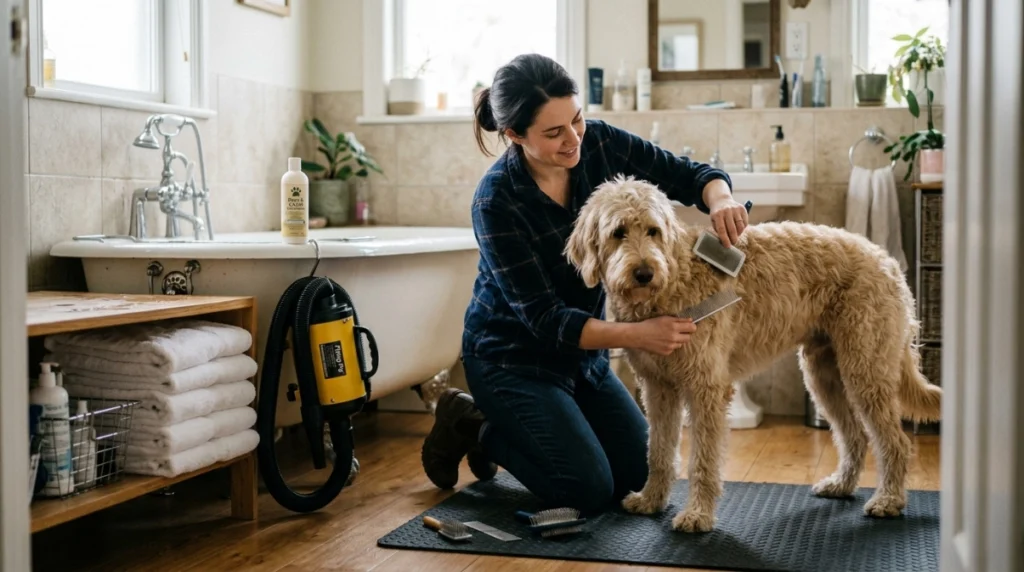
SaveThe best routine is dry preparation, bathing, complete rinsing, drying, and then a gentle finishing brush. Keep each stage calm instead of trying to rush through everything at once.
- Inspect the coat. Look for burrs, mats, irritated skin, parasites, or anything stuck in the fur.
- Choose the correct brush. Match the tool to your dog’s coat length and texture.
- Brush the dry coat. Work in small sections instead of dragging the brush through the whole body quickly.
- Resolve manageable tangles. Don’t continue pulling if a knot is painful or close to the skin.
- Use lukewarm water. Wet the coat gradually and avoid spraying directly into the eyes, nose, or ear canals.
- Apply dog shampoo. Human shampoo isn’t my first choice because dog-specific formulas are designed for canine skin and coat.
- Rinse thoroughly. Work until the water runs clear and the coat no longer feels soapy.
- Towel dry gently. Blot and squeeze instead of aggressively rubbing a long or tangle-prone coat.
- Dry the coat. Keep the dog comfortable and avoid excessive dryer heat.
- Brush lightly again. Finish with the appropriate brush or comb once the coat is ready.
The Cornell Riney Canine Health Center emphasizes gradual exposure, predictability, and positive reinforcement during grooming. That’s useful advice if brushing or baths already make your dog nervous.
How Does the Best Brushing Routine Change by Coat Type?
Coat type matters more than a one-size-fits-all brushing schedule. A smooth-coated Boxer and a long-coated Yorkshire Terrier don’t need the same tools or frequency.
| Coat Type | Typical Brushing | Useful Tool | Before Bath | After Bath |
|---|---|---|---|---|
| Smooth, short coat | About weekly | Rubber curry or bristle brush | Remove loose hair and dirt | Usually quick and light |
| Short, dense coat | About weekly | Slicker plus bristle brush | Important for loose undercoat | Helpful after drying |
| Long, silky coat | Often daily | Slicker, pin brush, and comb | Essential for tangles | Useful for a smooth finish |
| Long coat prone to mats | Daily attention | Slicker and comb | Critical | Gentle finishing only |
These are starting points rather than rigid rules. Breed, coat condition, lifestyle, shedding season, and skin problems can change the routine.
What Brush Should You Use Before Bathing a Dog?
The best brush depends on what you’re trying to remove. I wouldn’t use an aggressive de-shedding tool simply because it removes the most hair.
- Slicker brush: Useful for loose hair and small tangles in many medium and long coats.
- Pin brush: Useful for longer, flowing coats that need gentle separation.
- Bristle brush: Good for smoothing many short coats and picking up loose surface hair.
- Rubber curry brush: Excellent for many smooth, short-haired dogs.
- Undercoat tool: Useful for appropriate double-coated dogs during heavier shedding.
- Metal comb: Helpful as a final check because it reveals knots a brush may glide over.
Don’t judge success by the size of the hair pile. The right tool should remove what needs to come out without scraping skin or breaking healthy coat.
What If Your Dog Hates Brushing Before a Bath?
Don’t turn grooming into a wrestling match. A dog that learns the brush predicts restraint and discomfort may become harder to groom every time.
As of 2026, cooperative-care approaches continue to emphasize gradual exposure and rewards. Start below your dog’s stress threshold and build duration slowly.
- Place the brush nearby and reward calm investigation.
- Touch the dog briefly with the back of the brush.
- Reward calm behavior.
- Make one gentle brush stroke.
- Stop before the dog becomes overwhelmed.
- Increase the number of strokes across later sessions.
Short practice sessions on non-bath days are often easier than introducing every grooming step at once.
Common Brushing and Bathing Mistakes to Avoid
 Save
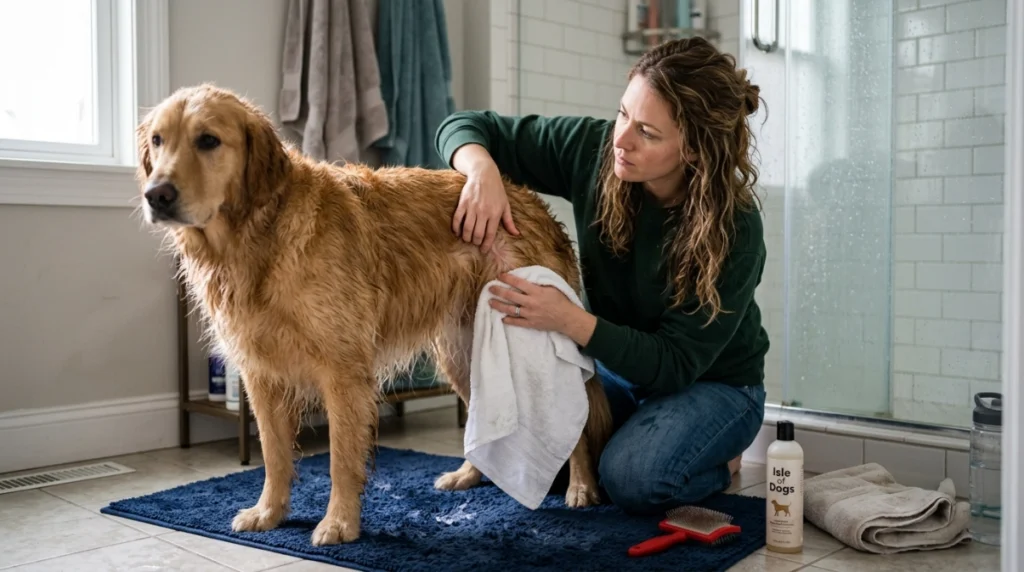
SaveThe biggest mistakes usually come from rushing. More force doesn’t make grooming faster when the dog or coat is already resisting.
- Bathing a badly matted coat: Water can tighten existing tangles.
- Brushing too aggressively: Repeated hard strokes can irritate skin and create grooming fear.
- Using the wrong brush: Coat type should determine the tool.
- Rubbing long hair roughly with towels: Friction can create fresh tangles.
- Leaving shampoo behind: Rinse thoroughly rather than stopping when the visible foam disappears.
- Ignoring wet ears: Keep water out of the ear canals and dry the outer ears carefully.
- Brushing painful skin: Redness, sores, discharge, bald patches, or persistent itching deserve veterinary attention.
If your dog’s ears get wet during a bath, Cornell’s canine ear-care guidance recommends paying attention to moisture, odor, redness, discharge, and discomfort.
Do You Need Special Grooming Products?
You don’t need a cabinet full of gadgets. A correct brush, a basic comb when appropriate, towels, and a dog-safe shampoo cover most routine home baths.
If you’re ready to pick grooming tools, these are three product types I’d consider based on coat needs:
🏆 Best Everyday Slicker
Hertzko Self-Cleaning Slicker Brush
★★★★☆ 4.5/5 fit rating
A practical slicker-style option for removing loose hair and manageable tangles from many medium and longer coats. I like the self-cleaning design when a pre-bath session releases a lot of fur.
🐕 Best for Heavy Shedding
FURminator Undercoat deShedding Tool
★★★★☆ 4.4/5 fit rating
Designed to remove loose undercoat on suitable shedding coats. I would use it as a specialized tool, not an all-purpose brush, and follow the size and coat-length guidance carefully.
✨ Best for Short Coats
KONG ZoomGroom Dog Brush
★★★★☆ 4.6/5 fit rating
The flexible rubber design suits many smooth, short coats and helps collect loose hair without metal pins. It’s also simple to use during routine grooming when a slicker brush would be unnecessary.
Frequently Asked Questions
Can I brush my dog while the coat is wet?
You can comb or brush some damp coats during a controlled grooming process, but don’t assume wet brushing is right for every dog. For routine home bathing, remove significant tangles while the coat is dry, then use a gentle finishing brush once the coat has dried appropriately.
Should I remove all loose hair before bathing my dog?
Remove as much loose coat as is practical without overworking the skin. You don’t need to chase every single hair. The goal is to clear dead fur, debris, and tangles so water and shampoo can move through the coat more easily.
Should I brush a short-haired dog before bathing?
Yes. Short-haired dogs still shed and collect dirt. A rubber curry or suitable bristle brush before bathing can loosen dead hair and surface debris, although the session may be much shorter than it would be for a long-haired or heavily shedding dog.
What should I do if I find a large mat before the bath?
Don’t soak it and don’t repeatedly pull at it. If the mat is dense, painful, or tight against the skin, contact a professional groomer. Veterinary help may be appropriate when you also see skin irritation, sores, odor, swelling, or other medical concerns.
How soon after bathing should I brush my dog?
Wait until the coat is dry enough for your dog’s coat type and grooming tool. Once dry, use a gentle finishing brush to remove loosened fur and check for tangles. Avoid turning the post-bath brush into another aggressive de-matting session.
The Bottom Line
If you’re deciding whether to brush a dog before or after bathing, make before the bath your priority. Removing loose hair and tangles first makes washing easier and reduces the chance of tightening existing knots.
Then dry your dog carefully and finish with a light brush if the coat needs it. Brush, bathe, dry, and brush again—that’s the grooming order I’d keep simple and consistent.
Most importantly, match the brush to your dog’s coat and stop when grooming becomes painful. A calm five-minute session is more useful than forcing your way through twenty stressful minutes.

Thomas Cutter is a lifelong dog owner and the founder of FindOutAboutDogs.com. With over 10 years of hands-on experience owning multiple breeds, Thomas created this site to provide honest, research-based dog advice that real owners can actually trust.
