What Brush Is Best for Curly Haired Dogs? A Complete Grooming Guide
Quick Answer
The best brush for most curly-haired dogs is a long-pin slicker brush with flexible, angled metal pins. It reaches through dense curls, removes loose hair, and helps prevent tangles. Pair it with a stainless-steel comb to check for hidden knots near the skin. The AKC dog brush guide also recommends slicker brushes for curly coats.
What to look for
- Long, angled pins: Help reach beneath thick curls without aggressive pulling.
- Flexible cushion: Supports controlled, gentle brushing.
- Correct brush size: Small heads work around legs, while larger heads suit the body.
- Metal finishing comb: Finds tangles that a slicker brush may miss.
- Comfortable handle: Makes regular grooming easier to manage.
Best routine: Brush gently in small sections, then check each section with a comb. Never force a brush through tight mats.
Curly-haired dogs look adorable, but their coats can hide tangles surprisingly well. What feels fluffy on the surface may already contain knots underneath.
Choosing the right brush makes daily coat care easier and more comfortable. I’ll explain which tools suit different curls, how to use them, and what to avoid.


Why Do Curly-Haired Dogs Need a Special Brush?
Curly coats often trap loose hair instead of letting it fall away. That trapped hair can intertwine with surrounding curls and gradually form mats.
A mat is a tight cluster of tangled hair. Unlike a simple knot, it can pull against the skin and become painful.
Curly coats also vary considerably between breeds and individual dogs. A Poodle’s dense curls may require different brushing pressure and pin length than a loosely wavy Doodle coat.
What makes curly coats difficult to brush?
- Dense hair: Brushes may skim the outer layer without reaching deeper tangles.
- Retained loose hair: Shed strands can remain caught in surrounding curls.
- Friction areas: Harnesses, collars, and regular movement encourage knots.
- Moisture: Damp, tangled hair can become harder to manage when it dries.
- Coat length: Longer hair generally requires more careful section-by-section grooming.
The goal isn’t simply removing visible loose hair. Effective brushing separates the coat gently from its outer surface toward the skin.
Which Type of Brush Is Best for Curly Dog Hair?
A slicker brush is usually the best primary tool for curly coats. However, a complete grooming routine benefits from both a brush and a comb.
1. Long-pin slicker brush
A slicker brush has closely arranged, angled metal pins mounted on a brush head. These pins separate curls, collect loose hair, and help loosen minor tangles.
Longer pins can be useful for thick or longer coats. A smaller, gentler slicker may be more appropriate for puppies and sensitive areas.
Best for: Poodles, many Doodle mixes, Bichon Frises, and other dogs with dense curly hair.
2. Stainless-steel grooming comb
A metal grooming comb has rigid teeth that help reveal knots hidden underneath the outer coat. Many models provide both widely spaced and closely spaced teeth.
The comb is especially valuable after brushing. If it cannot move comfortably through a section, that area needs further attention.
Best for: Checking coat condition, finding hidden tangles, and finishing a brushing session.
3. Pin brush
A pin brush resembles a conventional hairbrush with widely spaced pins. It can help maintain longer, looser curls and gently arrange the coat.
However, pin brushes aren’t always effective at removing dense tangles. They work better as supporting tools than replacements for slicker brushes.
Best for: Loose waves, longer feathering, and light finishing work.
4. Soft slicker brush
Soft slickers use more flexible teeth or gentler pin arrangements. They may suit dogs with sensitive skin or relatively short, well-maintained curls.
Choose a brush suited to the coat’s density. A brush that feels gentle but never reaches the deeper coat won’t prevent hidden matting.
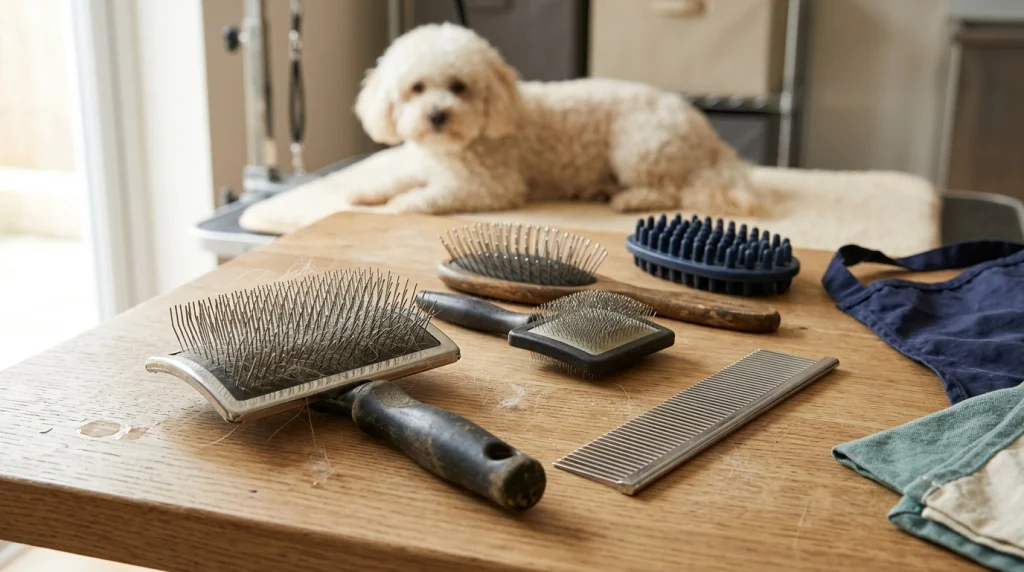
Curly Dog Brush Comparison: Which Tool Should You Choose?
 Save
SaveThe table below compares common grooming tools by their main purpose. It also highlights where each tool falls short.
| Brush Type | Best Use | Coat Suitability | Limitation |
|---|---|---|---|
| Long-pin slicker | Everyday detangling | Thick, long curls | Requires light pressure |
| Steel comb | Checking hidden knots | Most curly coats | Not ideal for forcing out mats |
| Pin brush | Light coat maintenance | Loose curls and waves | May miss deep tangles |
| Soft slicker | Gentle routine grooming | Sensitive, shorter coats | Less effective for dense knots |
| Rubber curry brush | Surface hair and massage | Short, smooth coats | Poor deep-curl detangling |
The practical combination: Choose a slicker suited to your dog’s coat, then use a steel comb to check your work.
This two-tool method is generally more dependable than buying several brushes that perform similar jobs.
How Do You Brush a Curly-Haired Dog Without Hurting Them?
 Save
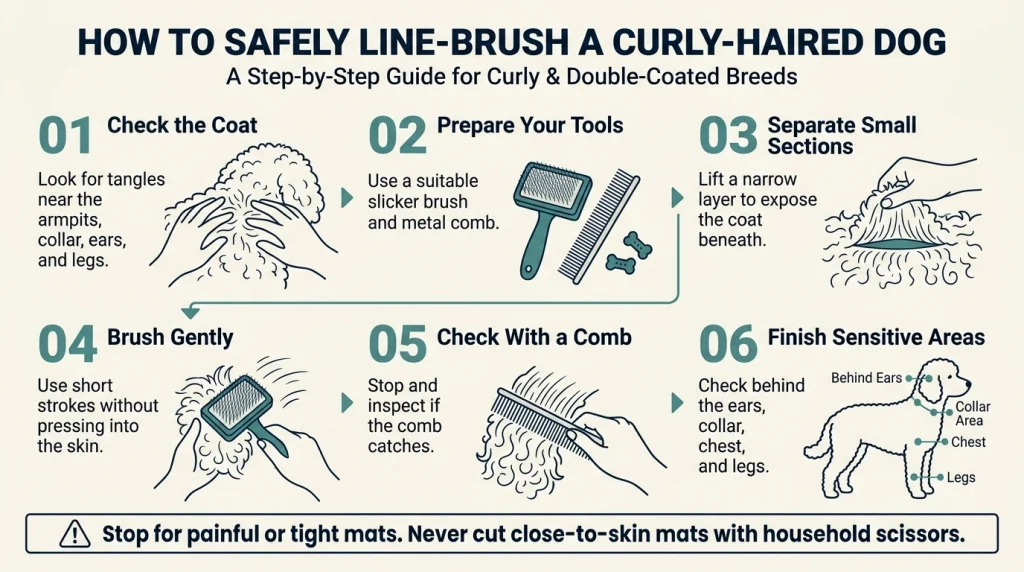
SaveThe safest approach is gentle line brushing. This method separates the coat into small sections so you can work through curls systematically.
It also reduces the temptation to drag a brush repeatedly over the same tangled area.
Step 1: Check the coat before brushing
Run your fingers gently through the coat and look for obvious tangles. Pay particular attention to the armpits, collar area, ears, and legs.
If you find tightly packed mats close to the skin, avoid pulling them apart. Ask a professional groomer for help.
Step 2: Prepare your tools
Choose a properly sized slicker brush and metal comb. Have small treats nearby if your dog needs encouragement.
If the coat feels dry or creates static, a dog-safe detangling spray may help. Follow the product instructions and avoid spraying the eyes.
Step 3: Separate the coat into small sections
Lift a layer of hair with one hand to expose the coat beneath it. Begin near a lower section of the body and gradually work upward.
Keep the sections narrow enough to see your progress. This makes hidden tangles easier to identify.
Step 4: Brush with short, gentle strokes
Move the slicker through the hair without pressing its pins into the skin. Let the brush separate the curls rather than forcing it through resistance.
Stop if your dog flinches, turns away repeatedly, or shows discomfort. Grooming should not become a struggle.
Step 5: Check each section with a metal comb
After brushing, pass the comb through the same section from near the roots toward the ends. Use gentle movements and watch for resistance.
If the comb catches, stop and inspect the area. Never pull hard to force the comb through a knot.
Step 6: Finish with sensitive areas
Check behind the ears, around the collar, under the chest, and along the legs. These areas often develop tangles from friction.
Use a smaller brush where necessary. Avoid aggressive brushing around the eyes, genitals, or other delicate skin.
Grooming safety tip
If a knot pulls the skin or your dog reacts painfully, stop. Tight mats may require professional clipping rather than additional brushing. Never cut close-to-skin mats with household scissors.
How Often Should You Brush a Curly-Haired Dog?
Many curly-coated dogs benefit from daily brushing, particularly when their coats are kept long. Shorter trims can reduce the workload, but they don’t eliminate grooming needs.
The ideal schedule depends on coat density, activity, length, and how readily your dog develops tangles.
- Long, dense curls: Check daily and brush thoroughly as needed, often every day.
- Medium-length curly coats: Brush frequently, often daily in friction-prone areas.
- Short, maintained trims: Check regularly and brush several times weekly when appropriate.
- After swimming or wet walks: Inspect for tangles and dry the coat carefully.
- During coat transitions: Increase checks when a puppy’s coat changes toward its adult texture.
According to Chewy’s professional grooming guidance, curly and wavy coats often need daily attention. A slicker brush followed by a comb is a useful routine.
What Brush Works Best for Poodles, Doodles, and Bichons?
These dogs share some grooming challenges, but their coat structures aren’t identical. Choose the brush according to the actual hair texture rather than the breed label alone.
Poodles
Poodles often have dense, curly coats that require careful detangling. A long-pin slicker is useful when the coat is sufficiently long and thick.
For practical guidance, the AKC’s Standard Poodle grooming guide emphasizes thorough, gentle brushing and early grooming habits.
Goldendoodles and Labradoodles
Doodle coats vary from loose waves to dense curls. Some dogs develop a particularly tangle-prone combination of coat textures.
For longer, thicker coats, choose a suitable long-pin slicker and follow with a comb. Short, loose coats may need a gentler brush.
Bichon Frises
Bichons have dense, soft coats that can tangle underneath their fluffy surface. A smaller slicker often makes grooming around their compact bodies easier.
Use controlled strokes and inspect the coat with a comb. Avoid brushing so aggressively that the skin becomes irritated.
Portuguese Water Dogs
Portuguese Water Dogs can have curly or wavy coats. Their grooming needs depend heavily on coat length and how the hair is trimmed.
Choose a brush capable of separating the hair without scratching the skin. Use a comb to identify any remaining tangles.
Can the Wrong Brush Damage a Curly Dog’s Coat?
Yes. An unsuitable brush or poor technique can cause discomfort, hair breakage, or skin irritation.
Even a high-quality grooming tool can hurt when used with excessive pressure.
Common brushing mistakes
- Brushing only the surface: Leaves hidden knots close to the skin.
- Pressing too hard: Can irritate or scratch sensitive areas.
- Using a small comb on large mats: May pull painfully against the coat.
- Rushing through tangles: Makes grooming uncomfortable and stressful.
- Ignoring friction areas: Allows knots behind ears and legs to worsen.
- Using cutting-style deshedding tools indiscriminately: May remove or damage hair you intended to preserve.
Curly dogs benefit most from steady maintenance rather than occasional aggressive detangling. A comfortable routine also helps dogs accept grooming more readily.
What Features Matter When Buying a Curly Dog Brush?
 Save
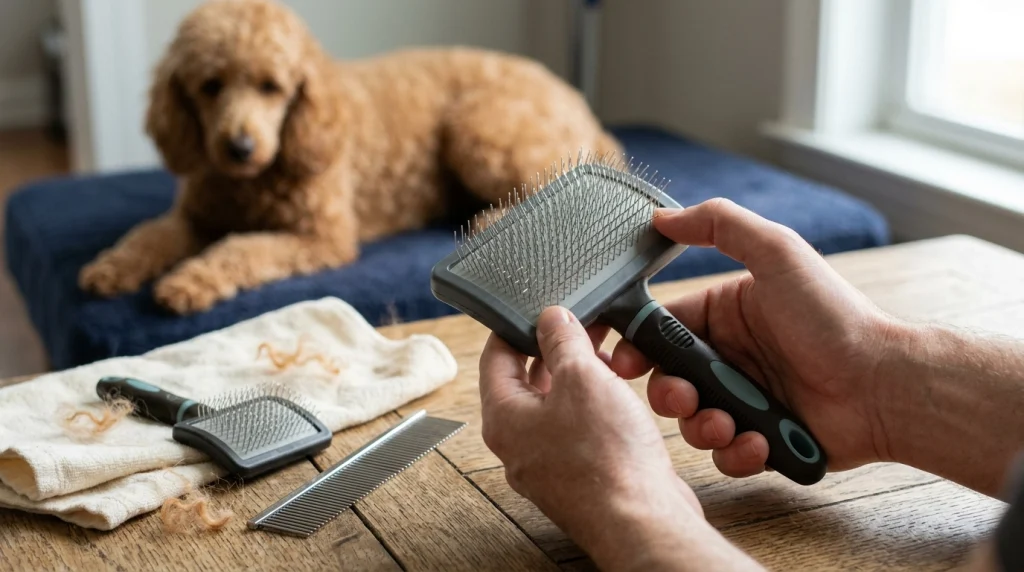
SaveA higher price does not automatically mean a better fit. Look for features that match your dog’s coat and your grooming routine.
Pin length and flexibility
Longer pins can reach farther into thicker coats. However, they must be used gently to avoid skin contact.
Flexible pin arrangements may offer better control, especially for owners learning to groom curly coats.
Brush head size
Large brush heads cover more body area per stroke. Smaller heads are easier to handle around legs and narrow spaces.
If your dog is small, avoid buying an oversized brush solely because it is marketed for curly coats.
Handle comfort
A comfortable, nonslip handle can reduce hand fatigue during grooming. This matters when you regularly maintain a large dog’s coat.
Cleaning and maintenance
Look for brushes that are easy to remove hair from and inspect for damaged pins. Bent or broken pins should not remain in regular use.
Clean your tools according to the manufacturer’s instructions. Keeping the brush free of debris supports a more pleasant grooming routine.
Best Brushes and Grooming Tools for Curly-Haired Dogs
If you’re choosing tools for home grooming, these three products cover different needs. The recommendations are based on documented features and intended uses, not personal product testing.
Disclosure: As an Amazon Associate, this site may earn from qualifying purchases.
🏆 Best for dense curls
Chris Christensen Big G Slicker Brush
★★★★☆ Editorial suitability: 4.5/5
Its 27 mm angled pins, flexible cushion, and ergonomic handle are designed for longer, dense coats. This is my feature-based premium pick for owners maintaining substantial Poodle or Doodle coats. Choose the appropriate head size and use gentle pressure.
💰 Practical starter option
Andis Self-Cleaning Slicker Brush
★★★★☆ Editorial suitability: 4/5
This brush uses fine slicker pins to collect loose hair and address light tangles. Its self-cleaning mechanism simplifies removing collected hair. I would consider it for routine maintenance, provided the pins suit the dog’s coat depth.
🐾 Essential finishing tool
Andis 7.5-Inch Steel Comb
★★★★★ Editorial suitability: 5/5
A steel finishing comb helps identify tangles a brush may leave behind. Its compact size makes it useful for checking legs, chest hair, and other manageable sections. I consider a comb an essential companion to a slicker brush, not a replacement.
Frequently Asked Questions
Is a slicker brush good for curly-haired dogs?
Yes. Slicker brushes are suitable for many curly-coated dogs because their angled pins help separate hair and collect loose strands. Choose a brush with appropriate pin length and use light pressure. Follow brushing with a steel comb to check for tangles hidden beneath the surface.
Should you brush curly dog hair wet or dry?
For routine maintenance, brush a dry or lightly misted coat using a dog-safe grooming spray when appropriate. Avoid forcefully brushing heavily tangled wet hair. After bathing, dry the coat carefully and check for knots. Ask your groomer about the best routine for your dog’s particular coat.
Can you use a human hairbrush on a curly dog?
A human hairbrush usually isn’t the best tool for dense curly dog coats. Its bristle spacing and design may not reach deeper tangles effectively. A properly selected canine slicker brush and metal comb offer more dependable coat maintenance for most Poodles, Bichons, and curly-coated Doodles.
Why does my dog’s curly fur mat so quickly?
Curly hair can trap loose strands that intertwine with surrounding hair. Friction from collars, harnesses, and movement increases the problem. Long coat length and irregular brushing also encourage mats. Regular section-by-section grooming helps prevent small tangles from developing into tight knots.
What should I do if my curly-haired dog has severe mats?
Stop brushing aggressively and contact an experienced professional groomer. Tight mats can pull the skin and make detangling painful. Some mats require careful clipping rather than brushing. If the skin looks inflamed, injured, or infected, consult a veterinarian before attempting further grooming.
Final Takeaway: Choose a Slicker Brush and Steel Comb
For most curly-haired dogs, a correctly sized slicker brush is the strongest starting point. Pairing it with a steel comb helps catch hidden tangles before they become serious mats.
Choose tools based on coat density, length, and comfort rather than price alone. Gentle, consistent grooming will do more for your dog’s coat than any brush used too aggressively.
Start with the right two tools, build a comfortable routine, and ask your groomer for help whenever mats become difficult or painful.
Thomas Cutter is a lifelong dog owner and the founder of FindOutAboutDogs.com. With over 10 years of hands-on experience owning multiple breeds, Thomas created this site to provide honest, research-based dog advice that real owners can actually trust.
