Which Brush Is Best for Curly-Coated Dogs?
Quick Answer
The best brush for most curly-coated dogs is a long-pin slicker brush, followed by a stainless-steel comb to check your work. The slicker separates curls and loosens small tangles, while the comb reveals knots hiding near the skin. The American Kennel Club’s brush guide also recommends slicker brushes for curly-coated dogs.
What works best for curly coats
- Long-pin slicker: Reaches through dense curls and separates hair before tangles tighten.
- Steel comb: Finds small knots that a brush can glide over without removing.
- Flexible pins: Give you better control around sensitive areas and tight curls.
- Light pressure: Prevents metal pins from scraping or irritating the skin.
- Section brushing: Helps you reach the roots instead of fluffing only the surface.
Simple setup
- Brush small sections with a slicker, then run a metal comb from the roots to the ends. If the comb moves through comfortably, that section is finished.
Curly coats can look perfectly fluffy while hiding tight tangles underneath. That is why choosing the right brush matters more than simply brushing more often.
Over the years, I have found that the best results come from pairing the right tool with a slow, section-by-section technique. This guide explains the setup I would use for Poodles, Bichons, Doodles, and similar curly coats in 2026.


Why Do Curly-Coated Dogs Need a Different Brush?
Curly-coated dogs need a brush that can separate dense hair without simply sliding over the surface. Their curls can trap loose hair, debris, and small tangles close to the skin.
A curly coat is hair that grows in bends, waves, spirals, or tight curls rather than lying flat. In many low-shedding breeds, loose hairs remain caught inside the coat instead of dropping onto the floor.
- Dense curls: Hair overlaps and twists around neighboring strands.
- Low shedding: Shed hairs may stay trapped inside the coat.
- Hidden tangles: Knots often form below the fluffy outer layer.
- High-friction areas: Ears, armpits, collars, legs, and tails can mat quickly.
Veterinary guidance from VCA Animal Hospitals notes that long, silky, and curly coats often need frequent brushing to prevent tangles and mats.
This is also why a soft bristle brush is rarely enough. It may make the outer coat look tidy while leaving deeper knots untouched.
Which Brush Is Best for Curly-Coated Dogs?
For most curly-coated dogs, I would start with a long-pin slicker brush. I would then use a stainless-steel comb as a final check.
Slicker brushes use many fine wire pins placed close together. Those pins can separate curls, collect trapped loose hair, and loosen early tangles when used gently.
| Tool | Best Job | Reach | My Use |
|---|---|---|---|
| Long-pin slicker | Separating curls and light tangles | High | Main brushing tool |
| Steel comb | Finding hidden knots | High | Final coat check |
| Pin brush | Light maintenance and longer waves | Medium | Optional for looser coats |
| Bristle brush | Surface smoothing | Low | Finishing only |
| Undercoat rake | Loose undercoat on double coats | High | Usually unnecessary for pure Poodle-type coats |
The AKC specifically lists slicker brushes as suitable for curly-coated dogs. It also warns owners to use a light touch because excessive pressure can cause discomfort.
If you are comparing this with a dense double coat, see my guide on what brush is best for a Husky. The tools differ because the coat structure is completely different.
Is a Slicker Brush Good for Poodles and Doodles?
Yes. A slicker brush is one of the most useful tools for Poodles and many Doodle-type coats because it can reach through curls and separate hair before it mats.
PetMD’s current Poodle guidance also recommends regular brushing and specifically mentions slicker brushes for Poodle coats. Dense curly hair can mat easily when grooming does not reach all the way toward the roots.
- Poodles: A long-pin slicker works well on medium or longer clips.
- Goldendoodles: Slickers help separate wavy or curly areas that tangle easily.
- Labradoodles: Coat texture varies, so adjust pin length to the individual dog.
- Cavapoos: A smaller slicker can be easier around compact bodies and legs.
- Bichon Frises: A slicker plus comb helps maintain the dense, fluffy coat.
I prefer longer pins when the coat has enough depth to justify them. Short pins can skim across the top of a thick coat and give a false sense that the dog is fully brushed.
That surface-only problem causes many mats. The coat looks beautiful until you try passing a comb through the hair near the skin.
Slicker Brush vs Pin Brush: Which Is Better for Curly Hair?
 Save
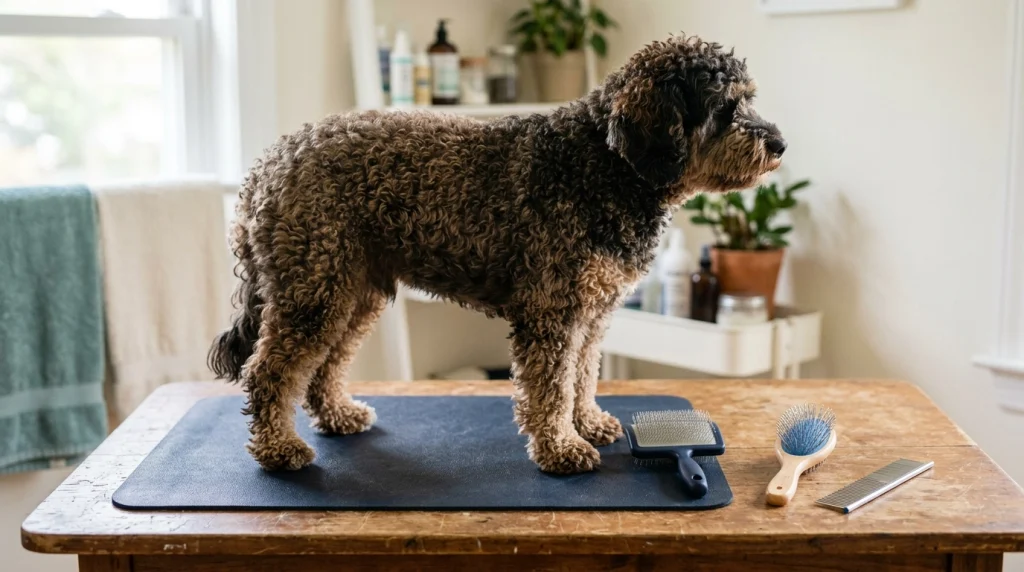
SaveA slicker brush is usually better for dense curls and tangle prevention. A pin brush can work well for looser waves, longer flowing hair, or gentle maintenance between deeper grooming sessions.
I do not see the two tools as exact replacements for each other. They feel different in the coat and solve slightly different problems.
- Choose a slicker: When the coat is thick, curly, fluffy, or prone to matting.
- Choose a pin brush: When curls are loose and the coat needs lighter daily maintenance.
- Use both: When you want gentle maintenance plus a more thorough weekly session.
A steel comb still matters with either setup. The comb tells you what the brush missed.
How Should You Brush a Curly-Coated Dog?
 Save
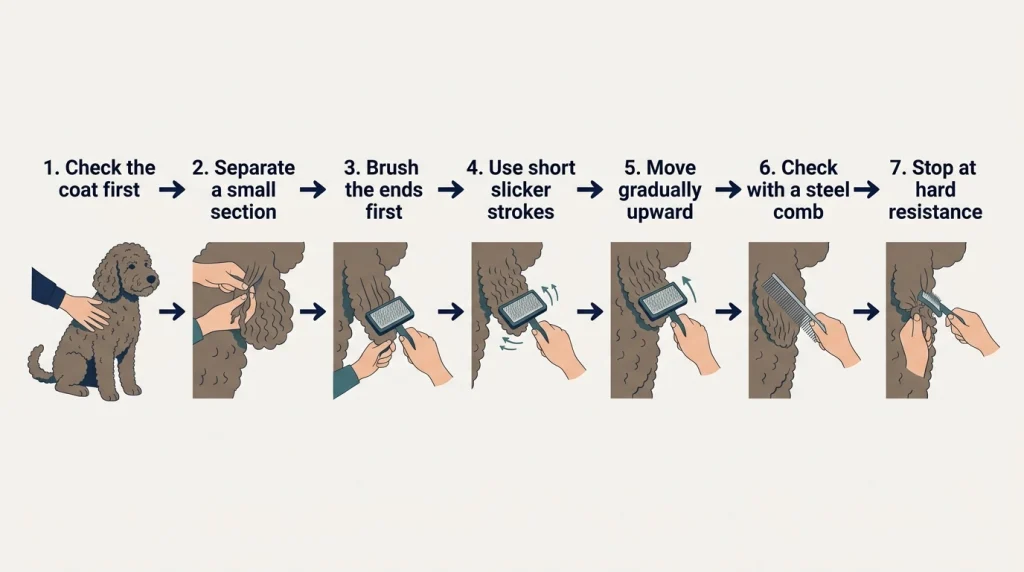
SaveThe most reliable method is to work in small sections and brush from near the skin outward. Groomers often call a similar approach line brushing.
Do not drag the brush repeatedly across the entire back. That usually reaches the top layer better than the hair underneath.
- Check the coat first. Feel for knots, mats, redness, sores, or sensitive areas.
- Separate a small section. Lift the surrounding hair so you can see where the next section begins.
- Brush the ends first. Loosen small tangles before working closer to the roots.
- Use short slicker strokes. Keep your wrist relaxed and avoid digging the pins into the skin.
- Move gradually upward. Continue section by section rather than jumping around the coat.
- Check with a steel comb. The comb should move from near the skin through the ends without catching.
- Stop at hard resistance. Do not force the brush or comb through a tight mat.
My favorite test is the final comb pass. If the comb catches, I know I have not finished that area yet.
That check is especially useful behind the ears, under the collar, around the legs, and near the armpits.
How Often Should You Brush a Curly-Coated Dog?
Many curly-coated dogs benefit from brushing several times per week, while longer or denser coats may need daily attention. Coat length, curl tightness, activity, and grooming style all affect the schedule.
VCA notes that curly coats often require daily brushing to stay free from mats. PetMD likewise recommends daily brushing for Poodles kept in longer coats.
- Short clipped coat: Check and brush several times each week.
- Medium curly coat: Brush every one to two days if tangles form easily.
- Long Poodle-style coat: Daily section brushing may be necessary.
- After outdoor play: Check immediately for burrs, twigs, moisture, and debris.
- Before bathing: Remove tangles first whenever possible.
The best schedule is the one that prevents tangles from becoming tight mats. Waiting until you can see a problem usually means the knot has already been developing underneath.
Can You Brush Out a Matted Curly Coat?
Small, loose tangles can often be worked apart gently. Tight, extensive, painful mats should usually be handled by an experienced groomer or veterinary professional.
Never keep pulling simply because a mat begins to loosen. Dog skin can become trapped and stretched inside tightly matted hair.
- Small tangle: Hold the hair near the skin and work from the ends inward.
- Several tight knots: Stop if brushing causes repeated pulling or discomfort.
- Large solid mat: Professional clipping may be safer than trying to brush it out.
- Red or damaged skin: Contact your veterinarian if irritation is visible underneath.
VCA’s grooming guidance recommends professional help for severe matting and warns against using scissors close to tight mats. Clippers are safer when hair must be removed because skin may be pulled into the matted area.
Bathing first can also make some tangles harder to manage. I prefer checking and detangling the coat before it gets wet.
What Should You Look for When Buying a Brush for Curly Dogs?
Choose the brush by the dog’s coat depth and density, not just the breed name printed on the package. Two dogs of the same breed can have surprisingly different grooming needs.
- Pin length: The pins need enough reach to move through the actual coat depth.
- Smooth pin finish: Rough metal edges can scratch sensitive skin.
- Flexible cushion: Some flex can make brushing easier to control.
- Brush size: Large heads cover the body quickly, while smaller brushes fit legs and faces better.
- Handle comfort: A secure grip matters during longer section-brushing sessions.
- Dog tolerance: The best brush is useless if your dog finds every stroke uncomfortable.
As of 2026, there are plenty of expensive grooming brushes available. I would still prioritize correct pin length and comfortable technique over price alone.
A premium brush cannot compensate for pressing too hard or brushing only the coat surface.
Common Mistakes When Brushing Curly-Coated Dogs
Most problems come from skipping the roots or letting small knots become large ones. Consistency is easier than repairing a badly tangled coat.
- Brushing only the top: A fluffy surface can hide knots directly underneath.
- Using too much pressure: Metal slicker pins can irritate the skin.
- Skipping the comb: You may miss small tangles that the slicker passes over.
- Ignoring friction zones: Collars, harnesses, ears, legs, and armpits tangle quickly.
- Forcing through mats: Pulling can hurt the dog and damage healthy hair.
- Waiting too long: A five-minute tangle today can become a difficult mat later.
The contrast is easy to see with double-coated breeds. My guide on managing Siberian Husky shedding focuses more on loose undercoat, while curly-coat grooming focuses heavily on preventing trapped hair from tangling.
Best Brushes I Would Consider for Curly-Coated Dogs
 Save
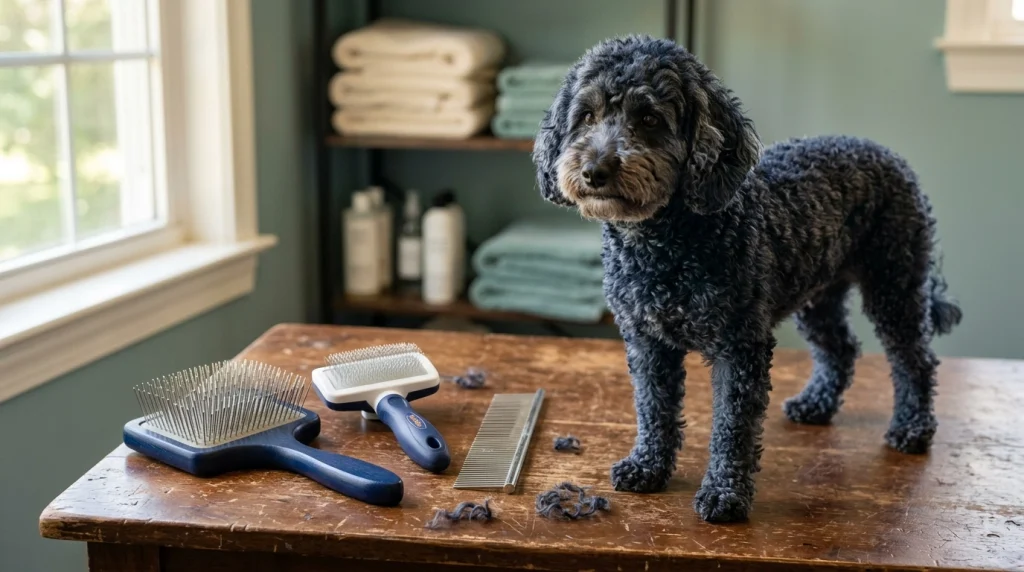
SaveIf you are ready to put together a simple grooming kit, I would start with one good slicker and one metal comb. You do not need a drawer full of tools.
🏆 Best Overall
Chris Christensen Big G Slicker Brush
★★★★½
The Big G is known for long pins designed to work through dense coats. I like this style for Poodles and thick Doodle coats because deeper reach makes section brushing easier than using a shallow slicker.
💰 Easy Everyday Pick
Hertzko Self-Cleaning Slicker Brush
★★★★☆
This self-cleaning slicker is convenient for routine home grooming and quick hair removal from the brush head. I would consider it for lighter curls or owners who prioritize simple cleanup after each session.
🐩 Best Finishing Tool
Andis Steel Pet Comb
★★★★½
A metal comb is not the main brush, but it is my favorite way to check whether a curly coat is truly tangle-free. I use it after the slicker because any hidden resistance becomes obvious immediately.
Frequently Asked Questions
Should I use a slicker brush on a curly-haired dog every day?
You can use a slicker frequently when the coat requires it, provided you use light pressure and the skin remains comfortable. Longer Poodle-type coats may need daily attention, while shorter clips may need less. Always adjust frequency to the individual dog’s coat and tendency to tangle.
Do curly dogs need a comb as well as a brush?
Yes, a steel comb is extremely useful because it can reveal tangles that a slicker brush misses. After brushing each section, run the comb from near the skin through the ends. Resistance tells you that more careful detangling is needed.
Are bristle brushes good for curly-coated dogs?
Bristle brushes are better for smoothing the surface than for reaching through a dense curly coat. I would not rely on one as the main grooming tool for a Poodle-type coat. A long-pin slicker and metal comb usually provide much better tangle control.
What brush is best for a curly Doodle?
A long-pin slicker brush is a strong starting point for a curly Doodle, followed by a metal comb. Doodle coats vary widely, so choose pin length according to coat depth and density. Looser, wavier coats may also respond well to a pin brush.
Why does my dog’s coat still mat even though I brush it?
The most common reason is surface brushing. The top layer looks neat, but small tangles remain near the roots and grow tighter. Brush in sections, reach toward the base of the coat gently, and use a metal comb afterward to check your work.
Final Takeaway: Start With a Slicker and Finish With a Comb
For most curly-coated dogs, the simplest reliable setup is a long-pin slicker brush plus a stainless-steel comb. The slicker separates the curls, while the comb confirms that hidden tangles are gone.
Keep your pressure light and work in small sections. If a tight mat will not loosen comfortably, stop pulling and ask a professional groomer or veterinarian for help.
The goal is not to brush harder. It is to reach the whole coat gently and consistently before small knots turn into painful mats.

Thomas Cutter is a lifelong dog owner and the founder of FindOutAboutDogs.com. With over 10 years of hands-on experience owning multiple breeds, Thomas created this site to provide honest, research-based dog advice that real owners can actually trust.
