What Brush Should You Use on a Golden Retriever?
Quick Answer
For most Golden Retrievers, I recommend a quality long-pin pin brush as the main everyday brush, backed up by a metal comb for feathering and hidden tangles. A long-pin slicker brush is also useful for dense areas and heavier shedding. The AKC’s Golden Retriever grooming guidance specifically includes a pin brush and metal comb in the basic grooming kit.
Best Golden Retriever brushing setup
- Everyday brushing: Use a long-pin pin brush to move through the outer coat and lift loose hair.
- Dense coat: Add a long-pin slicker when you need more reach through thick sections.
- Feathering: Use a medium-to-wide tooth steel comb behind the ears, chest, legs, and tail.
- Heavy shedding: Brush daily during major seasonal coat drops instead of pressing harder.
- Small tangles: Work slowly from the ends toward the skin without pulling.
One rule I would not ignore
- Don’t rely on a soft bristle brush alone. It may polish the surface, but it usually can’t reach through a Golden’s thick double coat.
If you’ve looked at the grooming aisle lately, choosing a brush for a Golden Retriever can feel harder than it should. Slickers, rakes, pin brushes, shedding blades, and combo brushes all claim to solve the same problem.
I prefer a simpler approach. Match the tool to the Golden’s double coat, then use gentle technique rather than buying the most aggressive deshedding tool available.


What Is the Best Brush for a Golden Retriever?
If I could buy only one brush for a Golden Retriever, I would start with a long-pin pin brush. It works well for routine coat maintenance without making every brushing session feel like heavy-duty deshedding.
For a more complete setup, pair that pin brush with a steel comb. Add a long-pin slicker when you need extra help reaching dense sections or loosening undercoat.
A Golden Retriever brushing kit is a small group of grooming tools designed to maintain both layers of the breed’s coat: the protective outer coat and the softer insulating undercoat.
The Golden Retriever Club of America describes the breed as having a dense, water-repellent coat with a good undercoat. That double-layer structure is why a surface-only brush isn’t enough.
Why Does a Golden Retriever Need a Different Type of Brush?
Golden Retrievers have a medium-length double coat that sheds throughout the year. They commonly shed much more heavily during seasonal coat changes.
The outer coat and undercoat do different jobs. Good brushing needs to remove loose hair without constantly scraping or stripping healthy coat.
| Tool | Best Use | How Often | My Verdict |
|---|---|---|---|
| Pin brush | Routine full-body brushing | 1–3 times weekly; daily during heavy shedding if needed | Best starting tool |
| Long-pin slicker | Dense areas, loose undercoat, light tangles | As needed | Excellent second brush |
| Steel comb | Ears, chest, legs, tail, final tangle check | After brushing | Essential companion tool |
| Undercoat rake | Heavy seasonal undercoat | Occasionally during shedding | Optional, use gently |
| Bristle brush | Surface finishing | Optional | Not enough by itself |
As of 2026, this basic approach still matches breed-specific grooming advice. The goal is regular maintenance, not removing as much fur as possible in one sitting.
Pin Brush vs. Slicker Brush: Which Is Better for a Golden Retriever?
 Save
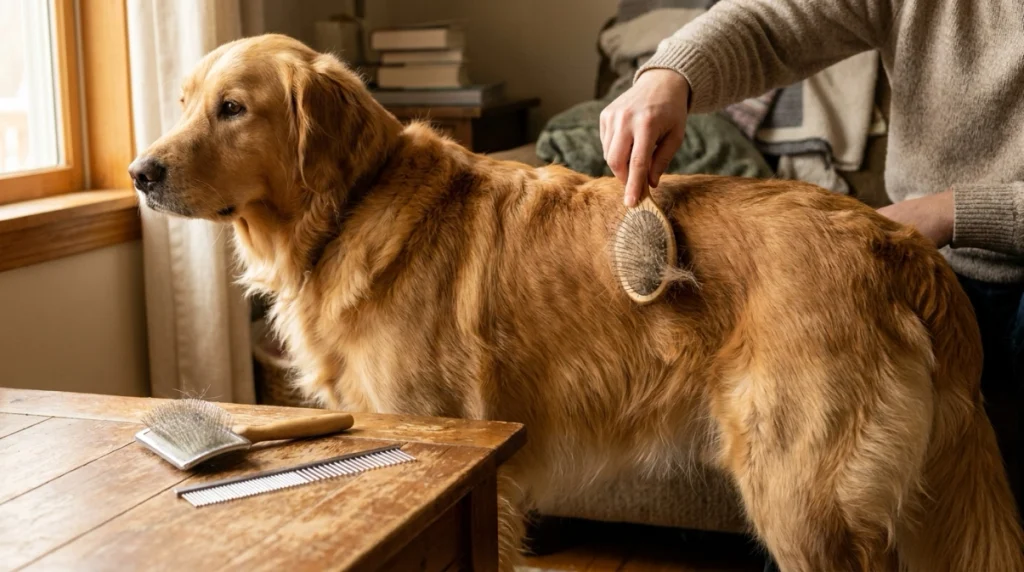
SaveA pin brush is my first choice for routine Golden Retriever grooming, while a slicker is better as a supporting tool. You don’t have to choose one forever.
When should you use a pin brush?
A pin brush works well across the back, sides, neck, shoulders, and other areas of normal coat. Long pins can move deeper than a soft finishing brush without feeling overly aggressive.
The Golden Retriever Club of America’s grooming tutorial includes both a slicker brush and a medium/fine steel comb among its grooming tools. That tells you why a small toolkit works better than expecting one brush to do everything.
When should you use a slicker brush?
A long-pin slicker is helpful when the coat is dense or packed with loose fur. I also like this style around feathered sections where a shorter brush may only skim the surface.
Pressure matters more than speed. Let the pins move through small sections instead of repeatedly scraping the same spot.
Why do you still need a steel comb?
A comb tells you whether the brush actually finished the job. If the comb catches behind an ear or through the tail feathering, there’s still a tangle hiding there.
Veterinary grooming guidance also recommends combs for longer coats and for working through loose undercoat. The VCA coat-care guide is a useful reference for matching grooming tools to different coat types.
How Often Should You Brush a Golden Retriever?
Most Golden Retrievers should be brushed at least once or twice each week, with more frequent sessions during heavy shedding. Some Goldens need three or more sessions because coat density, lifestyle, and feathering vary.
During a serious seasonal shed, daily brushing can be easier than one huge weekend session. Short sessions also tend to be more comfortable for the dog.
- Normal weeks: Give the full coat one or two thorough brushing sessions.
- Heavy shedding: Brush daily or every other day if loose undercoat keeps building.
- After hiking: Check feathering for burrs, seeds, twigs, and small tangles.
- After swimming: Dry the coat properly and check areas behind the ears and legs.
- Before bathing: Remove loose hair and tangles before soaking the coat.
AKC guidance notes that Goldens shed continuously and can shed heavily once or twice yearly. During those periods, routine brushing may become a daily job.
How Do You Brush a Golden Retriever Correctly?
Brush in small sections, use light pressure, and finish by checking the coat with a comb. Pulling harder isn’t a shortcut.
- Start with a dry, calm dog. Put your Golden on a secure non-slip surface.
- Check with your hands. Feel behind the ears, under the front legs, along the chest, and around the tail.
- Work in sections. Separate the coat enough to see whether you’re reaching beyond the surface.
- Use the pin brush first. Brush with controlled strokes and avoid digging into the skin.
- Use the slicker where needed. Focus on dense or tangled sections instead of repeatedly slicker-brushing the entire dog.
- Comb the feathering. Work through the ears, chest, legs, pants, and tail.
- Stop if the skin becomes irritated. Redness means your technique or tool may be too harsh.
I use the comb as the final quality check. A section that looks smooth can still hide a small knot close to the skin.
Where do Golden Retrievers mat most easily?
Pay special attention to places where long hair rubs against itself. These areas can tangle faster than the flatter body coat.
- Behind and below the ears
- Under the collar or harness
- Armpits
- Chest feathering
- Back of the front legs
- Rear-leg feathering
- Underside of the tail
Small tangles are much easier to handle early. Severe mats close to the skin are safer in the hands of a professional groomer or veterinarian than a pair of household scissors.
Should You Use an Undercoat Rake or Deshedding Tool?
An undercoat rake can help during a heavy seasonal shed, but I would not make an aggressive deshedding tool the everyday brush. The Golden’s coat is functional and deserves a gentler approach.
The Golden Retriever Club of America coat guidance explains that the outer coat protects against weather and debris while the undercoat provides insulation. That is a good reason to avoid treating healthy coat as something that must be stripped away.
- Use light pressure: Let the tool catch loose undercoat without scraping skin.
- Keep sessions short: Work one section rather than repeatedly passing over the whole body.
- Watch the coat: Stop if healthy topcoat appears to be breaking or thinning.
- Return to your pin brush: It should remain the routine maintenance tool.
Can You Use a Bristle Brush on a Golden Retriever?
You can use one for finishing, but I wouldn’t make it your main Golden Retriever brush. A soft bristle brush often fails to reach deep enough through the thick coat.
Golden-specific AKC grooming guidance warns that a bristle brush does not get through the thick coat effectively. Use it only if you like the surface-smoothing effect after the real brushing is done.
What Brush Should You Use on a Golden Retriever Puppy?
 Save
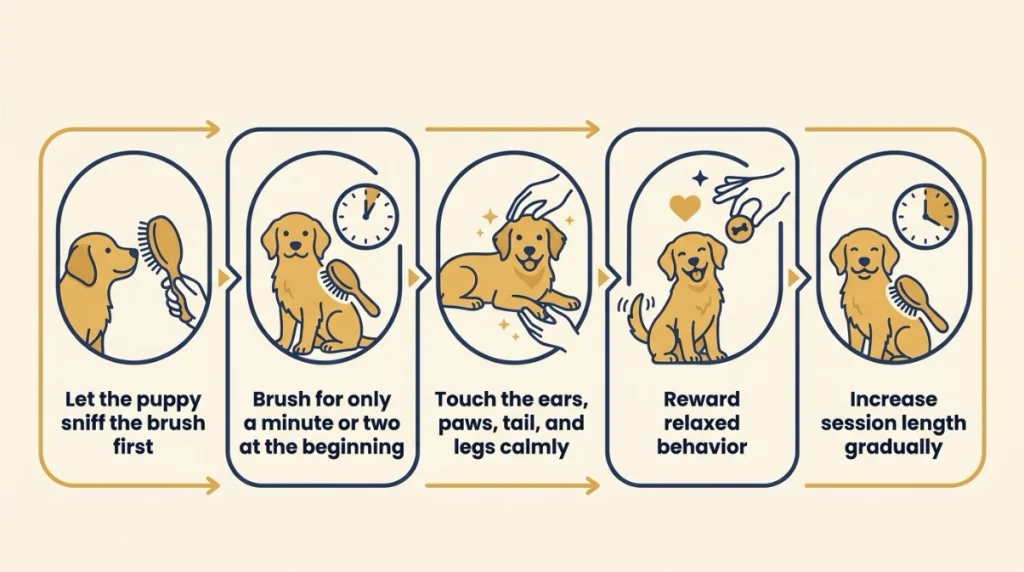
SaveStart a Golden Retriever puppy with a gentle brush that feels comfortable on the skin. Your first goal is teaching the puppy that brushing is normal, safe, and predictable.
Puppy coats can be softer than adult coats. Introduce grooming slowly instead of immediately using the most powerful undercoat tool you own.
- Let the puppy sniff the brush first.
- Brush for only a minute or two at the beginning.
- Touch the ears, paws, tail, and legs calmly.
- Reward relaxed behavior.
- Increase session length gradually.
This early handling becomes useful when the adult coat fills in. Goldens are often listed among easy-going dog breeds, but even a friendly dog needs practice standing calmly for grooming.
Can Kids Help Brush a Golden Retriever?
Older children can help with gentle brushing when an adult supervises technique. Start them with broad, easy body areas instead of mats behind the ears.
If you’re comparing Goldens with other breeds for a child who wants to participate in dog care, our guide to dog breeds for 9 to 12 year olds also covers grooming needs and family fit.
- Show the child how little pressure is needed.
- Teach them to stop if the dog moves away.
- Keep brushes away from eyes and ear openings.
- Let an adult handle mats and sensitive areas.
What Golden Retriever Brushing Mistakes Should You Avoid?
The most common mistake is trying to remove too much hair too quickly. Good grooming is regular and controlled.
- Using only a soft bristle brush: It may never reach the dense lower coat.
- Pushing a slicker into the skin: More pressure doesn’t create better grooming.
- Pulling through mats: Hold hair near the skin and work gently from the ends.
- Ignoring feathering: Ears, legs, chest, and tail can hide tangles.
- Brushing a soaking-wet coat: After a bath, dry the dog properly before your normal brushing session.
- Shaving to stop shedding: A Golden’s double coat has protective functions and should not be casually removed.
For tangles, light moisture or a canine coat-conditioning spray can sometimes make brushing easier. That’s different from dragging a brush through a saturated coat immediately after bathing.
What Should You Do During Heavy Golden Retriever Shedding?
 Save
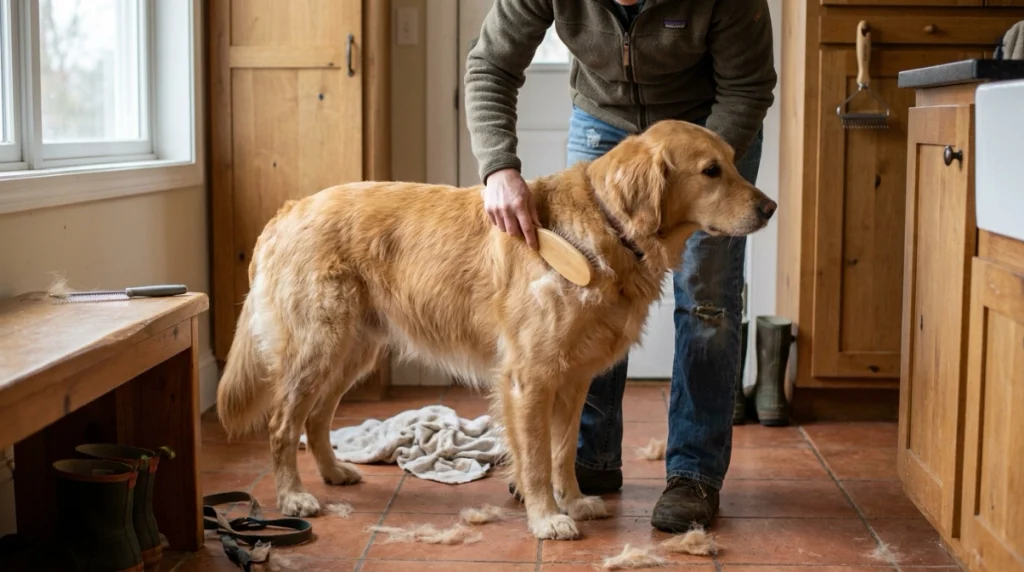
SaveIncrease brushing frequency before you increase tool aggression. Daily short sessions are often the simplest answer during a coat blow.
Brush out loose coat before bathing, then dry the dog thoroughly. Once dry, another gentle brushing can collect hair loosened by the bath.
- Brush daily during the heaviest period.
- Work systematically from front to back.
- Use your steel comb to check dense feathering.
- Keep an undercoat rake optional rather than automatic.
- Watch for redness, sores, bald patches, or unusual itching.
If hair loss looks patchy instead of like normal shedding, talk with your veterinarian. A grooming tool cannot fix skin disease, parasites, allergies, or other medical causes of abnormal hair loss.
If you’re also researching whether this breed fits your household beyond coat care, our roundup of friendly dog breeds for families gives the Golden Retriever more lifestyle context.
My Recommended Brushes and Grooming Tools for Golden Retrievers
If you’re ready to choose a brush, these are the three types I’d put at the top of the shopping list. They cover everyday brushing, denser coat work, and the final comb-through without turning your grooming kit into a drawer full of duplicate tools.
🏆 Best for Dense Coat
Chris Christensen Big G Slicker Brush
★★★★★ 4.8/5 editor fit
The Big G uses 27 mm stainless-steel pins and is designed for long, dense coats and undercoat removal. I like it as the higher-end option when a Golden’s dense feathering needs more reach than a basic brush provides.
💰 Best Everyday Value
Safari by Coastal Wire Pin Dog Brush
★★★★☆ 4.6/5 editor fit
Safari’s wire-pin brush is made for everyday grooming and comes in sizes up to roughly 9.75 inches long. This is the type I’d start with when you want a straightforward pin brush for routine Golden Retriever coat maintenance.
🪮 Best Companion Tool
Andis 10-Inch Steel Comb
★★★★☆ 4.7/5 editor fit
This 10-inch steel comb is designed to remove tangles, loose hair, and debris while finishing the coat. I wouldn’t replace the main brush with it, but it is excellent for checking Golden feathering after brushing.
Frequently Asked Questions
Is a slicker brush good for a Golden Retriever?
Yes. A long-pin slicker can be useful for a Golden Retriever’s dense coat, loose undercoat, and light tangles. Use gentle pressure and work in sections. I prefer pairing it with a pin brush and steel comb rather than using the slicker as the only grooming tool.
Is a pin brush or slicker brush better for a Golden Retriever?
A pin brush is my preferred everyday starting tool, while a slicker provides extra help with dense sections and shedding. Golden-specific grooming recommendations commonly include pin brushes, slickers, and metal combs, so the best setup uses the tools for different jobs.
How often should Golden Retrievers be brushed?
Brush most Golden Retrievers at least once or twice per week. Increase the frequency during heavy seasonal shedding, sometimes to daily sessions. Dogs with dense feathering, active outdoor lifestyles, or frequent tangles may also need more grooming between normal weekly sessions.
Can I use a human hairbrush on my Golden Retriever?
I wouldn’t use a human hairbrush as the main grooming tool. Golden Retrievers have a dense double coat that needs more reach than most human brushes provide. Choose a dog-specific pin brush, slicker, and metal comb designed to move through longer or thicker coats.
Should I use a deshedding brush every day?
No. Daily grooming during a heavy shed can help, but that doesn’t mean an aggressive deshedding tool should be used daily. Use a normal pin or slicker brush for routine work and reserve stronger undercoat tools for loose seasonal coat when they are genuinely needed.
The Bottom Line
If you’re asking what brush you should use on a Golden Retriever, start with a quality long-pin pin brush. Then add a steel comb, and keep a long-pin slicker available for dense coat and heavier shedding.
That simple setup covers almost everything most owners need. Brush regularly, stay gentle around feathering, and let consistency do more work than aggressive deshedding tools.

Thomas Cutter is a lifelong dog owner and the founder of FindOutAboutDogs.com. With over 10 years of hands-on experience owning multiple breeds, Thomas created this site to provide honest, research-based dog advice that real owners can actually trust.
