What Type of Coat Does a Labrador Retriever Have?
Quick Answer
A Labrador Retriever has a short, straight, dense double coat made of a firmer outer layer and a soft, weather-resistant undercoat. This protective coat helped Labs work around cold water, wet weather, and rough ground, which is why the official Labrador Retriever breed standard describes the coat as one of the breed’s distinctive features.
What a Labrador coat is like
- Double-coated: Labs have both protective outer hairs and a softer insulating undercoat.
- Short-haired: Their fur stays close to the body rather than growing long or feathered.
- Very dense: A Lab’s coat contains far more hair than its short appearance suggests.
- Weather-resistant: The undercoat helps protect the dog around water, cold conditions, and outdoor cover.
- Heavy shedding: Labs lose loose coat throughout the year and often shed much more during seasonal coat changes.
What owners should remember
- Brush regularly instead of shaving the coat, especially when the undercoat starts coming out heavily.
A Labrador may look like a simple short-haired dog, but that smooth coat hides a surprisingly thick second layer. Understanding those two layers makes shedding, brushing, bathing, and choosing grooming tools much easier.


What Type of Coat Does a Labrador Retriever Have Exactly?
A Labrador Retriever has a short double coat. That means two different types of hair grow together to protect the dog’s skin and body.
Definition: A double coat consists of an outer coat of stronger guard hairs and a softer undercoat growing closer to the skin.
The American Kennel Club’s guide to double-coated dogs lists Labrador Retrievers among breeds with short double coats.
Here’s the practical point I want Lab owners to remember: short-haired does not mean single-coated. That misunderstanding causes a lot of grooming mistakes.
| Coat Layer | Texture | Main Job | What Owners Notice |
|---|---|---|---|
| Outer coat | Short, straight, dense, fairly firm | Protects skin from moisture, dirt, and outdoor conditions | Creates the smooth, recognizable Labrador appearance |
| Undercoat | Soft and dense | Adds insulation and weather protection | Produces much of the loose fluff during heavy shedding periods |
Why Do Labrador Retrievers Have a Double Coat?
 Save
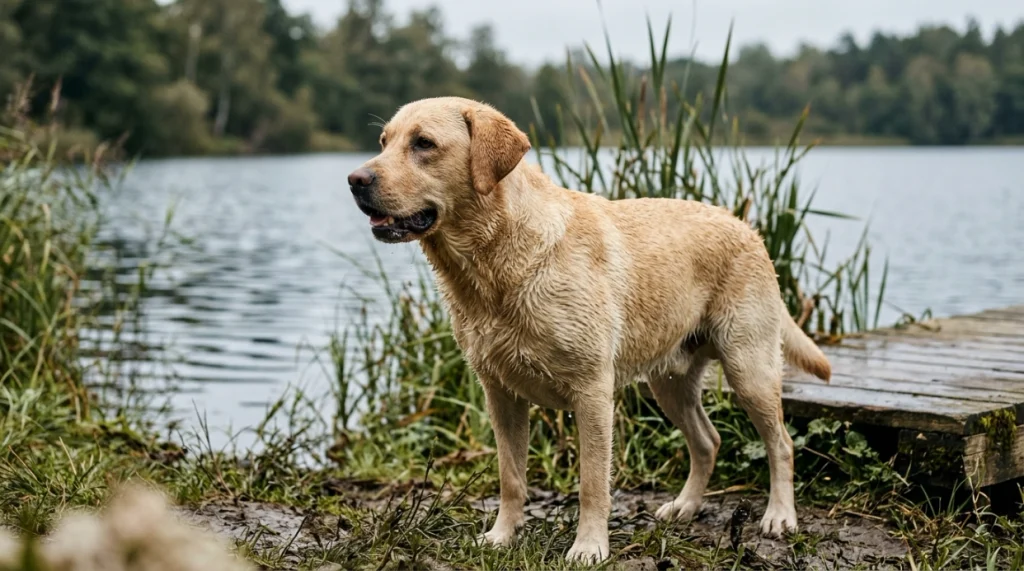
SaveThe Labrador’s coat is closely connected to the breed’s history as a working retriever around water and difficult outdoor conditions. A thin, delicate coat would offer much less protection in that environment.
The firmer outer hairs provide a protective surface. Beneath them, the soft undercoat helps insulate the body and adds weather resistance.
- Water protection: The coat helps shield the skin when the dog gets wet.
- Cold protection: The dense undercoat provides insulation in cooler conditions.
- Outdoor protection: The outer coat helps protect the skin while moving through vegetation and rough ground.
- Seasonal adaptation: Changes in undercoat density help the coat adapt through the year.
That functional coat is also one reason Labs are often described as relatively simple to groom despite shedding heavily. You aren’t maintaining long feathering or continually growing hair.
If you’re comparing Labrador care with other lower-maintenance family breeds, my guide to easy-going dog breeds gives useful context on grooming and shedding needs.
Do Labrador Retrievers Shed a Lot?
Yes. Labrador Retrievers can shed a surprising amount because their short coat contains a dense undercoat.
Loose hair may appear throughout the year. Many Labs also experience periods when noticeably more undercoat comes loose.
The AKC’s Labrador grooming guidance recommends more frequent combing during periods of heavy shedding.
What does normal Labrador shedding look like?
Normal shedding usually produces loose hair without leaving clear bald areas or inflamed skin. The coat underneath should still look reasonably even and healthy.
- Loose hair collecting on furniture and clothing
- Extra fur appearing during brushing
- Soft undercoat coming out more heavily at certain times
- A dense coat remaining underneath the loose hair
- No obvious sores, severe itching, or expanding bald patches
Color doesn’t change the basic coat type. Black, yellow, and chocolate Labradors all have the same characteristic short double-coat structure.
You can see how that coat fits into the Lab’s broader family-dog profile in my comparison of friendly dog breeds for families.
How Often Should You Brush a Labrador Retriever?
For routine coat care, brushing about once a week is a useful starting point for many Labs. During heavy shedding, increasing the frequency can capture loose undercoat before it spreads around the house.
The exact schedule depends on the individual dog’s coat, environment, season, and how much loose fur you’re seeing.
| Situation | Practical Brushing Approach | Main Goal |
|---|---|---|
| Normal shedding | About weekly | Remove loose surface hair and inspect the skin |
| Heavy seasonal shedding | Increase frequency, potentially to short daily sessions | Remove released undercoat gradually |
| After swimming or outdoor activity | Check and brush once the coat is appropriate to groom | Find debris, irritation, ticks, or damaged skin |
I prefer several comfortable, controlled grooming sessions over one aggressive session. More pressure doesn’t automatically remove more useful loose coat.
What Is the Best Brush for a Labrador Retriever Coat?
 Save
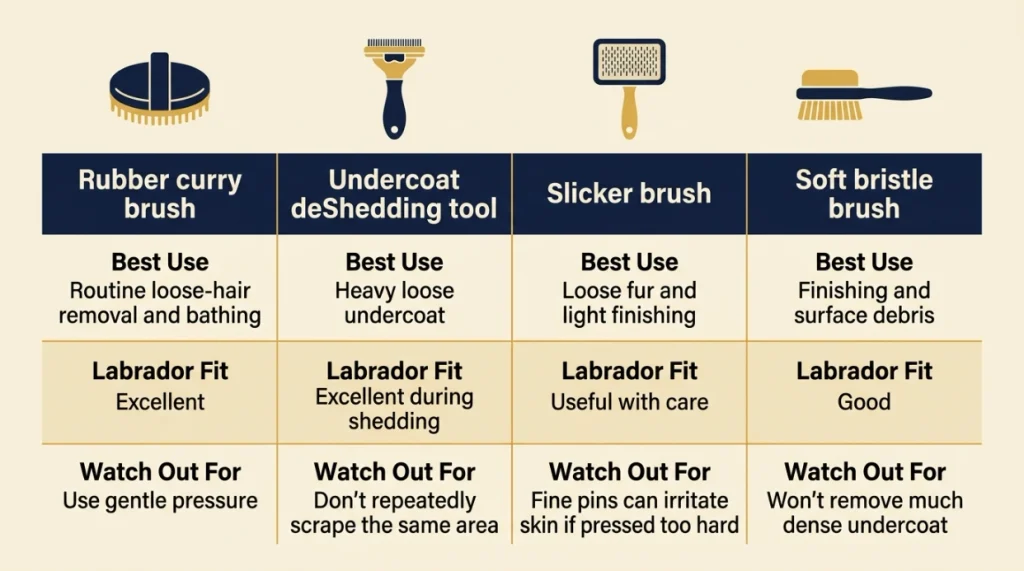
SaveA rubber curry-style brush is excellent for routine grooming, while a dedicated undercoat tool can help during heavier shedding. A slicker brush can also collect loose hair, but it should be used gently on a Lab’s short coat.
| Brush Type | Best Use | Labrador Fit | Watch Out For |
|---|---|---|---|
| Rubber curry brush | Routine loose-hair removal and bathing | Excellent | Still use gentle pressure on sensitive skin |
| Undercoat deShedding tool | Heavy loose undercoat | Excellent during shedding | Don’t repeatedly scrape the same area |
| Slicker brush | Loose fur and light finishing | Useful with care | Fine pins can irritate skin if pressed too hard |
| Soft bristle brush | Finishing and surface debris | Good | Won’t remove much dense undercoat |
How should you brush a Labrador’s double coat?
Work gently in the direction of normal hair growth and let the tool do the work. Stop if the skin becomes red or your dog shows discomfort.
- Check the coat first. Look for cuts, bumps, ticks, tender areas, or skin irritation.
- Start gently. Use a rubber grooming brush or another comfortable everyday tool.
- Work in sections. Brush the shoulders, back, sides, chest, rear area, and tail without repeatedly scraping one spot.
- Use deShedding tools selectively. Focus on released undercoat during heavier shedding periods.
- Check the skin afterward. Healthy grooming shouldn’t leave obvious redness or irritation.
The ASPCA’s dog grooming guidance also notes that normal shedding varies with breed, health, and season.
Should You Shave a Labrador Retriever’s Double Coat?
Routine shaving is generally not appropriate for a healthy Labrador coat. Removing the coat doesn’t address the normal shedding cycle and removes the protective hair that normally covers the skin.
Instead, manage loose hair through brushing, sensible bathing, and proper coat care. Medical clipping or shaving should follow veterinary needs rather than cosmetic convenience.
- Don’t shave just to stop shedding. The dog will still grow and cycle hair.
- Don’t aggressively strip the coat. Removing loose undercoat is different from damaging healthy coat.
- Don’t use excessive pressure. Metal grooming tools can irritate skin when overused.
- Don’t ignore sudden coat changes. Patchy hair loss isn’t the same thing as ordinary shedding.
Does a Labrador’s Coat Change With Age or Season?
Yes. A Labrador puppy’s coat develops as the dog matures, while adult coat density and shedding can change through the year.
Indoor living, climate, daylight, health, and the individual dog can affect how obvious those changes appear. Not every Labrador follows an identical shedding calendar.
Does Labrador coat color affect shedding?
No Labrador color eliminates the double coat. Black, yellow, and chocolate Labs can all shed significantly.
The hair may simply be more noticeable depending on your flooring, furniture, or clothing. Yellow fur stands out on dark fabric, while black hair becomes obvious on pale surfaces.
If temperament and family fit matter alongside coat maintenance, see my guide to calm dog breeds for families.
When Is Labrador Hair Loss More Than Normal Shedding?
 Save
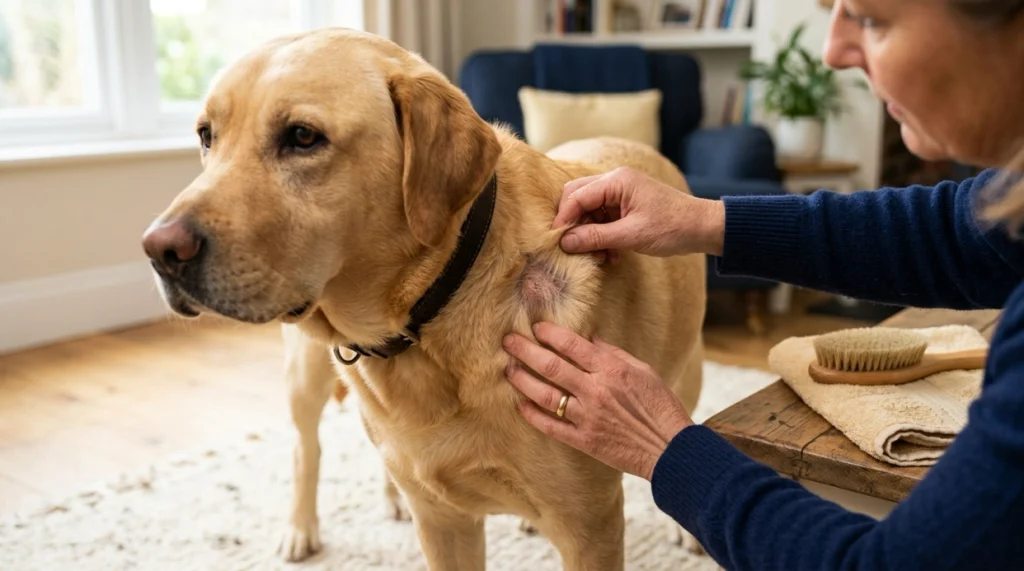
SaveNormal shedding usually leaves a reasonably even coat behind. Bald areas, damaged skin, strong odor, persistent scratching, or major coat thinning deserve closer attention.
- Clearly defined bald spots
- Red, inflamed, crusted, or bleeding skin
- Constant scratching or chewing
- Sudden major changes in coat density
- Strong odor or discharge from affected skin
- Hair loss concentrated around irritated areas
Those signs can have many causes, so a veterinarian is the right person to diagnose them. Don’t assume every pile of Labrador hair is simply normal seasonal shedding.
Which Grooming Tools Make Sense for a Labrador?
If you’re ready to choose a grooming tool, I’d match the brush to the job rather than expecting one tool to do everything.
🏆 Best Everyday Pick
KONG ZoomGroom Dog Brush
★★★★★
Its flexible 3/4-inch rubber fingers are designed for both dry grooming and shampooing while collecting loose hair. I’d make this my everyday starting point because a Lab’s short coat usually responds well to a simple rubber grooming tool.
🍂 Best for Heavy Shedding
FURminator Short Hair deShedding Tool for Large Dogs
★★★★☆
This version is designed for short-haired dogs over 50 pounds and uses a stainless deShedding edge to reach loose undercoat. I’d reserve it for heavier shedding rather than treating it like an aggressive daily brush.
✨ Best Self-Cleaning Option
Hertzko Self-Cleaning Slicker Brush
★★★★☆
The retractable bristles make collected fur easier to remove after grooming, and Hertzko lists it for both long- and short-haired pets. For a Labrador, I’d use light pressure and treat it as a loose-hair and finishing tool rather than digging deeply into the coat.
Frequently Asked Questions
Is a Labrador Retriever single-coated or double-coated?
A Labrador Retriever is double-coated. The breed has a short, firmer outer coat and a soft, dense, weather-resistant undercoat that provides additional insulation and protection.
Do Labs have hair or fur?
People commonly use both words, but Labrador coats behave like a typical shedding fur coat. Their hairs grow to a set length, shed, and are replaced rather than growing continuously like the coat of breeds that require regular haircuts.
Why does my Labrador shed so much if its hair is short?
Hair length doesn’t determine coat density. Labradors carry a dense undercoat beneath their short outer hairs, so a large amount of loose fur can come out even though the coat never looks long.
How often should I brush my Labrador?
Weekly brushing is a practical baseline for many Labradors. During periods of heavy shedding, shorter and more frequent grooming sessions can help remove loose undercoat before it ends up throughout the house.
Can I shave my Labrador in hot weather?
Routine shaving is generally not recommended for healthy double-coated Labs. Their outer coat and undercoat serve protective functions, so normal shedding is better managed with brushing, bathing when appropriate, shade, water, and sensible heat management.
The Takeaway
A Labrador Retriever has a short, straight, dense double coat, not a simple single layer of short hair. The firmer outer coat protects the skin while the soft undercoat adds insulation and weather resistance.
As of 2026, my practical grooming rule remains simple: brush routinely, increase grooming when loose undercoat builds up, and don’t shave a healthy Lab simply because it sheds. Once you understand the coat, Labrador grooming becomes far easier to manage.

Thomas Cutter is a lifelong dog owner and the founder of FindOutAboutDogs.com. With over 10 years of hands-on experience owning multiple breeds, Thomas created this site to provide honest, research-based dog advice that real owners can actually trust.
