Why Do Curly Dog Coats Mat Easily? Causes and Prevention
Quick Answer
Curly dog coats mat easily because loose hairs become trapped inside tight curls instead of falling away. Friction, moisture, coat length, and inadequate brushing turn these trapped hairs into painful knots, often close to the skin. Regular curly coat brushing helps prevent this buildup.
Five reasons curly coats mat quickly
- Trapped loose hair: Shed strands remain caught between surrounding curls.
- Constant friction: Collars, harnesses, and movement encourage small tangles.
- Moisture and bathing: Wet coats can develop tighter tangles when drying.
- Dense coat texture: Thick curls can hide knots near the skin.
- Surface-only brushing: A fluffy exterior may conceal deeper matting.
How to check
- Comb test: After gentle brushing, check small sections with a stainless-steel comb. Stop if the comb catches or pulls the skin.
Curly-coated dogs can look perfectly groomed while hiding tangles underneath their fluffy coats. That surprises many owners, especially when a groomer discovers knots they never noticed.
I focus on one practical goal: keeping the coat comfortable from the skin outward. Understanding how mats develop makes that goal much easier.


Why Does Curly Dog Hair Get Matted So Easily?
Curly dog hair mats because neighboring strands twist around one another and trap loose hair. Everyday movement gradually compresses those tangles into dense clumps.
This can happen with Poodles, Bichon Frises, Portuguese Water Dogs, and many Doodle mixes. However, individual coat textures and grooming needs vary considerably.
1. Curly hair traps loose strands
Dogs with curly coats still lose hair, even when they leave little visible fur around the home. Their curls often hold released strands within the surrounding coat.
Those loose hairs become tangled with growing hair. Without regular removal, they collect into increasingly difficult knots.
2. Tight curls naturally intertwine
A straight hair shaft follows a relatively direct path. Curly strands bend and overlap, creating more opportunities for neighboring hairs to catch.
Longer curls have more room to twist together. Dense coats can also conceal early tangles beneath an apparently tidy surface.
3. Friction repeatedly rubs the same areas
Friction is another major cause of dog coat matting. Harness straps, collars, bedding, and normal body movement continually disturb the same sections.
The Preventive Vet matting guide also identifies high-friction areas as common locations for knots.
- Behind the ears: Scratching and head movement encourage tangles.
- Under the collar: Constant contact compresses the hair.
- Armpits: Walking creates repeated rubbing.
- Inner thighs: Leg movement traps overlapping strands.
- Chest and shoulders: Harness straps increase friction.
- Tail base: Movement can bunch longer hair together.
4. Moisture makes existing tangles harder to manage
Swimming, rain, and bathing can complicate coat maintenance. Water changes how hair strands interact as they become wet and dry.
Existing knots may tighten during washing and drying. That’s why checking for tangles before bathing matters.
5. Incomplete brushing leaves hidden knots
A common grooming mistake is brushing only the visible surface. The upper curls become fluffy while trapped hair remains underneath.
I recommend checking brushing results with a comb rather than relying on appearance. A smooth-looking coat is not necessarily a tangle-free coat.
What Is the Difference Between a Tangle and a Mat?
A tangle is a small group of intertwined hairs that may separate with gentle grooming. A mat is a denser clump of tangled hair that can tighten against the skin.
Neither should be handled with force. Larger or painful mats need professional assessment.
How to recognize early matting
- The hair separates poorly when gently parted.
- A comb repeatedly catches in one location.
- A small clump feels denser than surrounding hair.
- The coat looks uneven or clumped near the roots.
- Your dog becomes sensitive when you touch the area.
Finding a problem early usually makes coat care simpler. Waiting until several knots join together can make removal much more uncomfortable.
Which Curly Dog Coat Conditions Increase Matting?
Coat density, length, moisture, and grooming habits affect how quickly tangles develop. The table below explains these differences and the appropriate responses.
| Coat condition | Matting concern | Recommended action |
|---|---|---|
| Short, maintained curls | Lower maintenance burden, but hidden knots remain possible | Check daily and brush regularly |
| Long, dense curls | More opportunities for trapped hair and tangling | Thorough daily line brushing |
| Curly puppy coat changing to adult coat | Different textures may overlap and tangle | Increase grooming checks |
| Damp, tangled coat | Existing knots may become more difficult to remove | Inspect before bathing and dry thoroughly |
| Tight mats against skin | Pain, irritation, and possible skin damage | Professional groomer or veterinarian |
These are practical care guidelines, not guaranteed matting rates. Two dogs of the same breed may need different routines.
Why Does My Curly Dog Mat After a Bath?
 Save
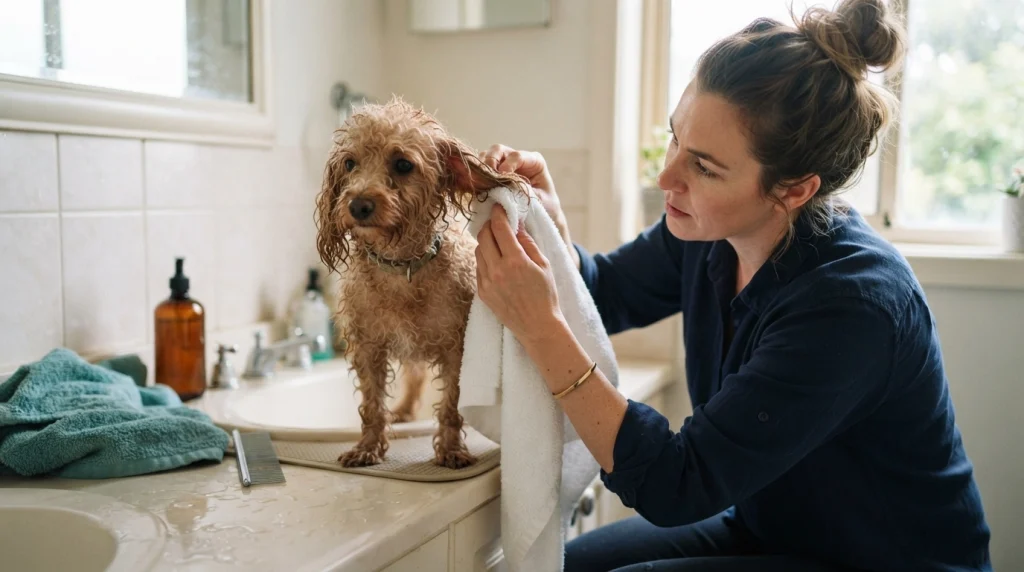
SaveBathing can make existing tangles harder to remove, particularly when shampooing and drying disturb already tangled hair. A wet coat also makes hidden knots difficult to identify.
Washing doesn’t replace brushing. In fact, beginning with a thoroughly tangled coat can create additional grooming problems.
A safer bathing routine
- Inspect the coat for tangles before turning on the water.
- Gently remove small, loose knots when appropriate.
- Arrange professional removal of tight or painful mats before routine bathing.
- Use a shampoo formulated for dogs.
- Rinse thoroughly and apply a suitable conditioner if needed.
- Dry carefully, following professional advice for dense coats.
- Complete a gentle brushing and comb check once appropriate.
A dog-specific conditioning product may make ordinary grooming easier. However, conditioner cannot safely dissolve a tightly felted mat.
How Do You Prevent Mats in Curly Dog Hair?
The most reliable prevention method combines regular grooming with a technique called line brushing. It involves separating the coat into small sections and brushing each layer carefully.
Unlike surface brushing, line brushing helps you reach hair near the roots. The goal is complete coverage without scraping or pulling the skin.
Step 1: Choose suitable grooming tools
Start with a slicker brush matched to your dog’s coat length and sensitivity. Keep a stainless-steel grooming comb nearby for checking your progress.
For a detailed breed-specific example, follow this Poodle brushing guide.
Step 2: Check the coat with your fingers
Feel gently through the coat before brushing. Look for knots, sore areas, debris, or clumps that appear attached to the skin.
Don’t pull on a suspected mat. Examine the area carefully before deciding whether home grooming is appropriate.
Step 3: Divide the hair into sections
Lift a small layer of hair and expose the section beneath it. Work systematically rather than brushing random areas.
Keep sections narrow enough to inspect. This is especially important around dense curls and hidden friction points.
Step 4: Brush using gentle movements
Use short, controlled strokes to separate loose hair. Avoid dragging slicker pins across the skin or repeatedly brushing one sensitive spot.
Follow the coat’s needs rather than increasing pressure. The professional guidance in Chewy’s dog brushing guide explains why different coat types need different techniques.
Step 5: Check with a metal comb
Pass the comb gently through the section you just brushed. If it catches, stop and inspect the location before continuing.
The comb is a checking tool, not something to force through resistance. It helps identify tangles hidden beneath the surface.
Step 6: Check the problem areas
Pay particular attention to the ears, armpits, collar line, and rear legs. These areas often need more frequent attention than the rest of the body.
Use a smaller grooming tool where appropriate. Avoid careless brushing around the eyes or other delicate areas.
Step 7: Finish before your dog becomes uncomfortable
Short, positive sessions are often more manageable than lengthy grooming struggles. Praise calm behavior and offer breaks when needed.
I would rather recommend two comfortable sessions than one rushed session involving repeated pulling. Grooming should protect your dog’s comfort.
How Often Should Curly-Haired Dogs Be Brushed?
Many long, curly coats benefit from daily brushing. Shorter, professionally maintained coats may need less intensive brushing, but still require regular checks.
Veterinary guidance from VCA Animal Hospitals recommends daily brushing for long, silky, or curly coats.
A practical weekly routine
- Every day: Inspect the ears, armpits, chest, and collar area.
- Daily for longer coats: Use gentle line brushing and follow with a comb.
- After wet activities: Check for tangled areas and ensure the coat dries properly.
- Every week: Review the complete coat for hidden knots and problem spots.
- At grooming appointments: Ask whether your dog’s trim and home routine remain manageable.
These intervals are a starting point. A groomer can suggest a more suitable schedule for your dog’s coat and lifestyle.
Why Does Puppy Curly Hair Suddenly Start Matting?
Matting can increase when a curly-coated puppy develops its adult coat. The changing coat may contain overlapping textures that tangle more readily.
This transition varies by breed and individual dog. It doesn’t necessarily mean anything is wrong with the coat.
How to manage a changing puppy coat
- Introduce a gentle brush and comb gradually.
- Practice handling the ears, feet, and legs with rewards.
- Increase brushing frequency when tangles appear.
- Keep grooming sessions short and positive.
- Ask a professional groomer about a manageable puppy trim.
Coat transitions are easier to manage when puppies already accept gentle handling. Building that habit matters more than rushing through a grooming session.
Can You Brush Mats Out of Curly Dog Hair?
Small, loose tangles may respond to careful brushing and finger separation. Tight mats, especially those attached to the skin, generally require professional removal.
According to PetMD’s veterinary matting guide, severe matting can cause discomfort and skin problems. The guidance also warns against cutting mats with household scissors.
When gentle home detangling may be appropriate
- The tangle is small and loose.
- The hair moves without pulling against the skin.
- The surrounding skin looks healthy.
- Your dog remains relaxed during gentle handling.
Use your fingers to examine the knot and support the hair near its base. A dog-safe detangling product may provide additional slip when used according to its instructions.
Work slowly from the loose ends, without forcing the comb. Stop if resistance remains or your dog shows discomfort.
When to stop brushing
- The mat lies tightly against the skin.
- Several mats connect into a larger sheet.
- Your dog cries, flinches, or avoids touch.
- The skin appears red, moist, irritated, or injured.
- The mat involves a particularly sensitive area.
Never cut a close-fitting mat with household scissors. Skin can become trapped within the hair, making accidental injury surprisingly easy.
Professional groomers can evaluate whether careful clipping is needed. A veterinarian should assess painful mats, wounds, or suspected infections.
Which Dog Brush Works Best for Preventing Mats?
 Save
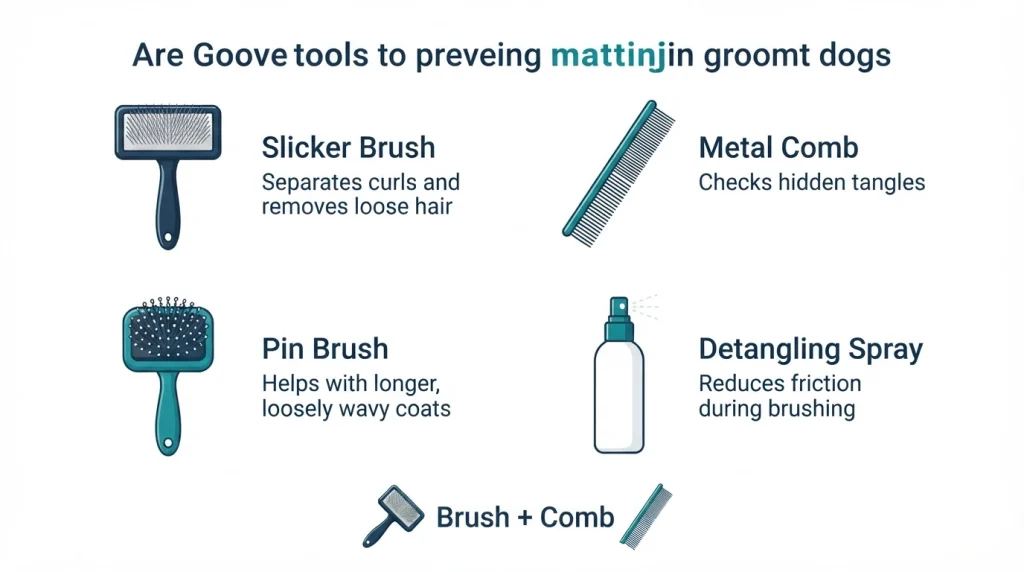
SaveFor many curly coats, a suitable slicker brush and a metal comb form the most useful grooming combination. They perform different jobs rather than replacing one another.
A slicker separates curls and collects loose hair. A comb helps identify remaining knots and confirms whether brushing reached deeper layers.
Slicker brush versus metal comb
- Slicker brush: Useful for gently separating curly hair and removing loose strands.
- Metal comb: Useful for checking hidden tangles and finishing a grooming session.
- Pin brush: Helpful for certain longer or loosely wavy coats, but may miss deeper knots.
- Detangling spray: May reduce friction during ordinary brushing, but cannot fix severe matting.
If you’re deciding between the main tools, this brush and comb comparison explains their different purposes.
What Grooming Mistakes Make Curly Coats Mat Faster?
Good grooming depends on technique, not simply how many tools you own. Several avoidable habits allow small knots to become larger problems.
- Brushing only the surface: Hidden tangles remain close to the skin.
- Skipping friction areas: Ears, armpits, and harness contact points become overlooked.
- Bathing over existing mats: Knots may tighten during washing and drying.
- Using excessive pressure: Aggressive brushing may irritate sensitive skin.
- Waiting too long between appointments: Coat length and trapped hair become harder to manage.
- Forcing a comb through knots: Pulling causes discomfort and possible injury.
- Relying on products alone: Sprays cannot replace proper brushing or professional grooming.
One useful adjustment is keeping the coat shorter when everyday maintenance becomes difficult. A manageable haircut is often more comfortable than a long coat that repeatedly develops mats.
When Does Matted Dog Hair Need Veterinary Attention?
 Save
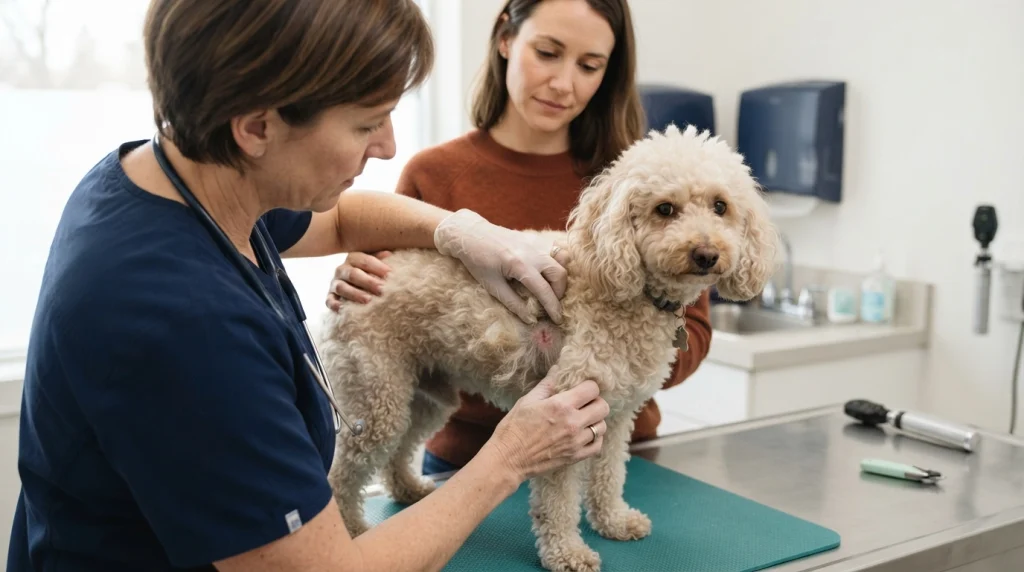
SaveMats require veterinary attention when they cause significant pain, skin damage, or signs of infection. Persistent scratching and sudden coat changes can also suggest problems beyond ordinary tangling.
Warning signs to watch for
- Red, swollen, bleeding, or broken skin.
- Unusual odor or discharge beneath tangled hair.
- Repeated licking, scratching, or biting.
- Visible parasites or irritated skin.
- Sudden coat deterioration or unexplained hair loss.
- Severe discomfort when moving or being touched.
Don’t repeatedly brush painful areas while waiting for help. A veterinarian can determine whether skin treatment or controlled mat removal is necessary.
Recommended Grooming Tools for Curly Dog Coats
If you’re building a simple curly-coat grooming kit, I recommend prioritizing tools with different functions. A slicker, metal comb, and suitable detangler cover most routine needs.
The scores below are editorial suitability assessments based on product features, not customer ratings or claims of hands-on testing. Always match each tool to your dog’s size, coat condition, and comfort.
🏆 Best for dense curls
Chris Christensen Big G Slicker Brush
★★★★★ 5/5 editorial suitability
Features 27 mm bent stainless-steel pins, a flexible cushion pad, and multiple brush sizes. My pick for longer, dense curly coats when used with light pressure and a finishing comb.
🔍 Best for checking hidden knots
Andis 10-Inch Steel Comb
★★★★★ 5/5 editorial suitability
This 10-inch steel grooming comb has coarse and fine tooth sections. I recommend it for checking whether a brushed section still contains tangles, without forcing the teeth through knots.
💧 Best for brushing support
TropiClean Island Bloom Tangle Remover Spray
★★★★☆ 4/5 editorial suitability
An 8-ounce, no-rinse conditioning spray designed to help ease ordinary tangles and reduce static. I see it as a supporting product for gentle grooming, not a solution for tight mats or irritated skin.
Frequently Asked Questions
Do curly-haired dogs mat more easily than straight-haired dogs?
Many curly-coated dogs are especially prone to matting because loose hairs can remain trapped among surrounding curls. Straight-haired dogs can also develop mats, particularly with long or thick coats. Coat density, length, friction, and grooming frequency all affect the risk.
Can you completely prevent mats in a curly dog coat?
Regular grooming can prevent many mats, but no routine guarantees that every tangle disappears. Check high-friction areas daily, brush carefully through the coat, and use a comb to find hidden knots. Choose a manageable haircut and professional grooming schedule.
Does shaving a curly dog stop matting?
A shorter trim can significantly reduce grooming difficulty because there is less hair available to tangle. However, hair can still form knots as it grows. Professional clipping is also a common solution for severe mats that cannot be removed comfortably with brushing.
Should you brush curly dog hair when it is wet or dry?
For routine coat maintenance, many owners find a dry or lightly conditioned coat easier to manage with controlled brushing. Use products according to their directions and avoid forcing a brush through wet knots. Check existing mats before bathing and dry dense coats thoroughly afterward.
Why does my Doodle mat even though I brush every day?
Daily brushing may still miss tangles if the brush only reaches the outer coat. Mixed coat textures, friction, and longer hair can also increase matting. Try careful section-by-section brushing, followed by a metal comb check, and ask your groomer to assess the technique.
Final Takeaway: Keep Curly Coats Comfortable
Curly dog coats mat easily because trapped loose hair, friction, moisture, and coat density allow tangles to build up. The best defense is regular, gentle grooming that reaches beneath the visible surface.
Start with a suitable slicker brush, check your work with a comb, and pay extra attention to friction-prone areas. For painful or tightly felted mats, choose professional help instead of forceful brushing.
For more specialized equipment choices, explore these Goldendoodle brush recommendations and choose tools that suit your dog’s individual coat.

Thomas Cutter is a lifelong dog owner and the founder of FindOutAboutDogs.com. With over 10 years of hands-on experience owning multiple breeds, Thomas created this site to provide honest, research-based dog advice that real owners can actually trust.
