Why Golden Retrievers Need Regular Brushing
Quick Answer
Golden Retrievers need regular brushing because their thick double coat continuously releases loose hair and can develop tangles or mats. Brushing once or twice a week works for many Goldens, while daily sessions often help during heavy shedding periods, according to this Golden Retriever grooming guide from the AKC. Regular coat care also lets you inspect the skin while removing dirt and dead hair.
Why regular brushing matters
- Controls loose hair: The brush catches shedding fur before much of it reaches floors, clothes, and furniture.
- Prevents mats: Feathering behind the ears, legs, chest, and tail can tangle surprisingly quickly.
- Reaches the undercoat: The right tools remove loose undercoat without shaving away the protective outer coat.
- Finds problems early: Grooming gives you a chance to notice sore skin, bumps, ticks, debris, or unusual irritation.
- Keeps grooming easier: Short, frequent sessions are usually simpler than tackling a neglected coat later.
Simple starting schedule
- Brush once or twice weekly during normal shedding, then increase toward daily grooming when loose undercoat becomes heavy.
Golden Retrievers look naturally polished, but that flowing coat needs steady maintenance. Skip brushing for long enough, and loose undercoat can hide beneath a surprisingly tidy-looking surface.
I prefer short, regular grooming sessions instead of waiting for the coat to become difficult. That approach is easier on both the dog and the person holding the brush.


Why Do Golden Retrievers Need Regular Brushing?
Golden Retrievers need regular brushing because they have a dense double coat that sheds throughout the year. Seasonal changes can make that shedding considerably heavier.
The outer coat and undercoat perform different jobs. Good brushing removes loose hair while leaving those functional coat layers intact.
Definition: Regular brushing means grooming often enough to remove loose coat and small tangles before they become packed shedding or mats. For a typical Golden Retriever, that usually means weekly brushing with increased frequency during heavy shedding.
The Golden Retriever Club of America notes that weekly brushing is sufficient for much of the year. During a major shed, daily brushing may become necessary.
What happens inside a Golden Retriever’s double coat?
A double coat has a longer outer layer and a softer, denser undercoat. Loose undercoat can remain trapped beneath the visible outer hair until brushing pulls it free.
- Outer coat: Longer guard hairs help protect the body from moisture, dirt, and outdoor debris.
- Undercoat: Softer, denser hair provides insulation and contributes much of the loose fur seen during shedding.
- Feathering: Longer hair around the ears, chest, legs, belly, and tail can collect tangles faster than flatter body coat.
This is one reason a Golden can look fine from across the room yet still need grooming underneath. Running your fingers through the coat often reveals loose fluff the eye misses.
How Often Should You Brush a Golden Retriever?
Most Golden Retrievers should be brushed at least once or twice a week. Increase brushing toward daily sessions when your dog enters a heavy shedding period.
There is no perfect calendar for every Golden. Coat density, activity, season, bathing, and time spent outdoors can change what your dog needs.
| Coat Situation | Starting Frequency | Main Goal | Areas to Check |
|---|---|---|---|
| Normal shedding | 1–2 times weekly | Remove routine loose hair | Body, chest, tail |
| Heavy seasonal shedding | Daily or near daily | Lift loose undercoat | Neck, shoulders, sides, hindquarters |
| After outdoor activity | Quick check as needed | Remove debris and early tangles | Legs, belly, feathering |
| Tangle-prone coat | Several short checks weekly | Stop small knots becoming mats | Behind ears, legs, tail |
My practical check is simple. I part the coat in several places and see whether a comb can move through the feathering without catching.
If loose undercoat keeps coming out in handfuls, I shorten the gap between sessions. The coat tells you more than the calendar.
Does Regular Brushing Reduce Golden Retriever Shedding?
Yes, regular brushing helps manage Golden Retriever shedding by collecting loose hair before it drops around the home. It does not stop the natural shedding cycle.
That distinction matters. A healthy Golden will still shed because coat replacement is normal.
- Brush before hair drops: Loose fur ends up in the brush instead of throughout the house.
- Increase frequency during major sheds: Waiting a full week may leave too much loose undercoat behind.
- Brush thoroughly, not aggressively: Repeated hard strokes can irritate skin without improving the result.
If coat maintenance is part of your breed-selection decision, see these friendly dog breeds for families. Golden Retrievers are wonderful companions, but their coat is not low-maintenance.
Can Brushing Prevent Mats on a Golden Retriever?
 Save
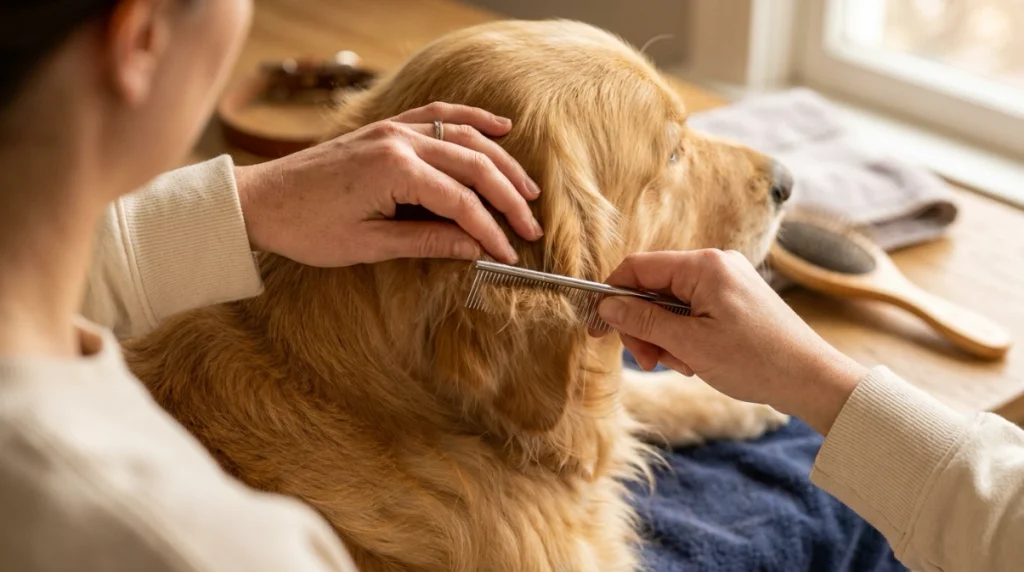
SaveRegular brushing can prevent many mats by separating tangles before they tighten. The highest-risk areas deserve attention during every grooming session.
PetMD’s Golden Retriever care guide specifically notes matting around the ears and hind limbs. Those are two places I never skip.
Where should you check for tangles first?
Start where hair rubs, bends, stays damp, or grows as long feathering. Small tangles in these locations can tighten quickly.
- Behind and below the ears
- Under the collar or harness
- Chest feathering
- Armpits and front-leg feathering
- Back of the hind legs
- Belly and groin feathering
- Base and feathering of the tail
Never attack a tight mat with hard pulling. If a mat sits close to the skin or your dog becomes uncomfortable, a professional groomer is the safer option.
The Merck Veterinary Manual also warns against cutting mats out with scissors because a dog’s skin can be accidentally cut.
What Brush Is Best for a Golden Retriever?
A pin brush is a strong everyday choice for a Golden Retriever, while a slicker brush, grooming rake, and metal comb can handle more specific jobs. You usually get better results from a small tool kit than one aggressive brush.
The AKC guide to dog brushes recommends choosing tools according to coat type. Double-coated dogs need attention below the visible topcoat.
| Tool | Best Use | When I Use It | Main Caution |
|---|---|---|---|
| Pin brush | Routine full-coat brushing | Most regular sessions | Do not scrape the skin |
| Slicker brush | Loose coat and feathering | Tangle-prone sections | Use light pressure |
| Grooming rake | Dense loose undercoat | Heavier shedding | Avoid repeated strokes in one spot |
| Metal comb | Finding hidden tangles | Final coat check | Never force through a knot |
A bristle brush alone is not my first choice for a thick Golden coat. It may smooth the surface without adequately reaching loose hair underneath.
How Do You Brush a Golden Retriever Correctly?
 Save
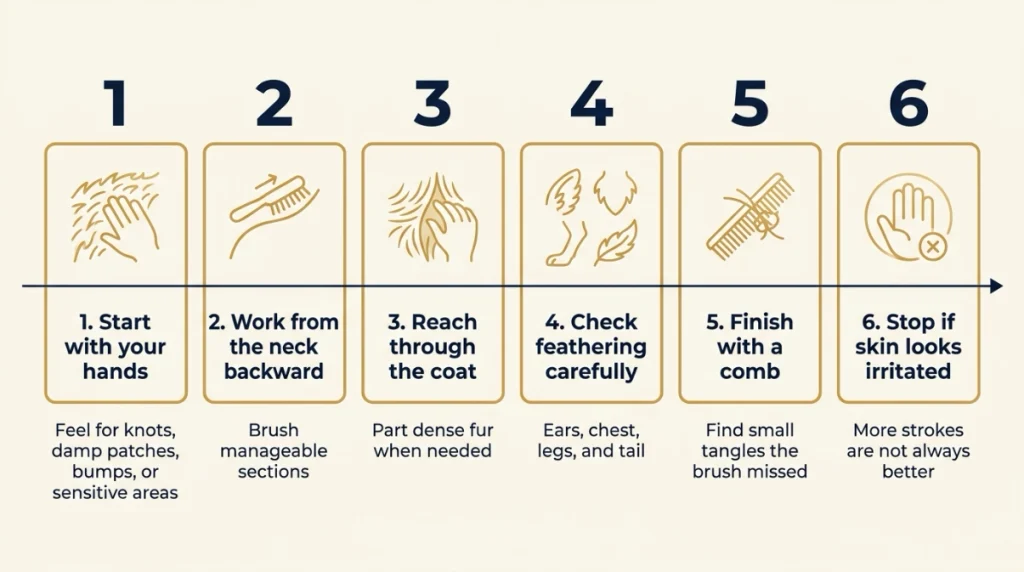
SaveBrush a Golden Retriever in sections using controlled strokes and light pressure. Work through the entire coat instead of repeatedly brushing only the easy areas along the back.
- Start with your hands. Feel the coat for knots, damp patches, bumps, or sensitive areas.
- Work from the neck backward. Brush manageable sections instead of rushing across the whole body.
- Reach through the coat. Part dense fur where needed so you are not only polishing the surface.
- Check feathering carefully. Spend extra time behind the ears, chest, legs, and tail.
- Finish with a comb. A metal comb can reveal small tangles that the brush missed.
- Stop if the skin looks irritated. More strokes are not always better.
I also keep grooming sessions calm and predictable. Five comfortable minutes repeated regularly can be more productive than one long struggle.
For families considering this breed, coat care is only one part of the routine. This guide to calm family dog breeds gives more context about Golden Retriever exercise, shedding, and home fit.
Why Is Brushing Also a Useful Health Check?
Brushing puts your hands and eyes over parts of your dog that may otherwise go unnoticed. That makes grooming a useful opportunity to spot changes early.
- Red or irritated skin
- Unusual lumps or bumps
- Ticks or fleas
- Scabs or sore areas
- Unexpected hair loss
- Strong odor or damp skin
- Pain when one area is touched
Brushing does not diagnose a skin problem. Contact your veterinarian when you find persistent redness, sores, unusual hair loss, swelling, pain, or significant itching.
Should You Shave a Golden Retriever Instead of Brushing?
Routine shaving is not a substitute for brushing a Golden Retriever’s double coat. Regular grooming should remove loose coat while preserving the outer coat and undercoat.
AKC grooming guidance advises against routinely shaving or clipping away the Golden’s protective coat. Medical procedures or severe neglected matting can create different circumstances.
That maintenance requirement is worth considering before bringing home the breed. Families with children can also compare the Golden’s overall needs in this guide to dog breeds for 9- to 12-year-olds.
Common Golden Retriever Brushing Mistakes
 Save
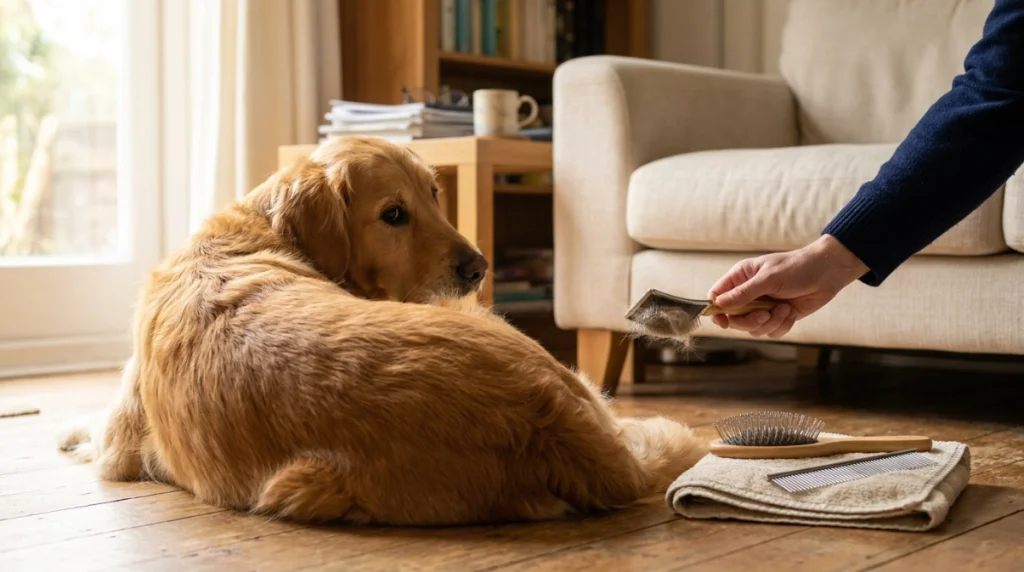
SaveMost brushing problems come from doing too little, using too much force, or focusing only on the visible coat. A few simple corrections make grooming safer and more productive.
- Brushing only the back: The ears, legs, chest, belly, and tail often need more attention.
- Waiting for visible mats: Small tangles are easier to handle before they tighten.
- Pressing too hard: Metal pins should move through hair without repeatedly scraping skin.
- Raking one spot repeatedly: Excessive passes can irritate the coat and skin.
- Ignoring discomfort: Sudden sensitivity may signal a knot, skin problem, or sore area.
- Trying to shave away shedding: Shedding management still requires proper coat maintenance.
Another mistake is expecting one tool to handle every job. I would rather own a good everyday brush and a separate comb than force one brush through every coat problem.
Golden Retriever Brushes I Would Consider
If you’re building a simple Golden Retriever grooming kit, these are three practical tool types I would consider. Each solves a different coat-care problem rather than duplicating the same job.
🏆 Best Everyday Brush
Safari Wire Pin Brush for Dogs
★★★★☆ 4.4/5
The large Safari pin brush uses rounded steel pins designed to penetrate coats with undercoat, and the manufacturer specifically lists Golden Retrievers among its suggested breeds. I like this type of brush for routine full-body maintenance because it is simple and easy to control.
✨ Best Premium Slicker
Chris Christensen Big G Slicker Brush
★★★★☆ 4.7/5 editor rating
The Big G uses 27 mm stainless-steel pins and is designed for longer, dense coats and thick undercoat. I would choose it when deeper coat work and feathering demand more reach than a basic surface brush provides.
🍂 Best for Heavy Undercoat
FURminator Grooming Rake
★★★★☆ 4.6/5 editor rating
Its rotating metal teeth are designed for thick fur and dense double coats, with the manufacturer suggesting roughly 5–10 minutes per session. I see it as a supporting tool for loose undercoat, not a reason to rake the same area repeatedly.
Frequently Asked Questions
Do Golden Retrievers need to be brushed every day?
Golden Retrievers do not always need daily brushing. Once or twice weekly is a reasonable starting schedule during ordinary shedding, while daily grooming can help when the undercoat is shedding heavily or your dog develops tangles quickly.
What happens if you don’t brush a Golden Retriever?
Without regular brushing, loose hair can remain trapped in the coat and feathering can develop tangles or mats. You also lose a useful opportunity to inspect the skin for irritation, parasites, debris, sore spots, or other changes.
Should I brush my Golden Retriever before or after a bath?
Brush out loose hair and tangles before bathing so water does not tighten existing knots. After bathing, dry the coat thoroughly before completing the normal brush-out, especially when working through a thick double coat.
Can I use a human hairbrush on a Golden Retriever?
A human hairbrush is not ideal for a Golden Retriever’s dense double coat. Dog-specific pin brushes, slickers, grooming rakes, and metal combs are designed to reach different coat layers more effectively and give you better control.
How do I know when I have brushed enough?
You do not need to keep brushing until absolutely no hair comes out. Stop when loose coat has decreased, the brush moves smoothly, feathering is free of tangles, and the skin remains comfortable without redness from repeated strokes.
The Takeaway
Golden Retrievers need regular brushing because their double coat sheds, traps loose undercoat, and develops tangles in longer feathering. A consistent routine keeps those small grooming jobs from becoming difficult ones.
Start with one or two thorough sessions each week and adjust to your dog’s coat. During a heavy shed, keep the brush nearby and make shorter grooming sessions part of the daily routine.
Your next step is simple: check behind your Golden’s ears, along the hind legs, and through the tail feathering today. If a comb catches there, your brushing schedule probably needs a little more attention.

Thomas Cutter is a lifelong dog owner and the founder of FindOutAboutDogs.com. With over 10 years of hands-on experience owning multiple breeds, Thomas created this site to provide honest, research-based dog advice that real owners can actually trust.
