Why Labrador Retrievers Need Regular Brushing
Quick Answer
Labrador Retrievers need regular brushing because their short coat hides a dense, shedding undercoat. Brushing removes loose hair, controls shedding, keeps dirt from building up, and gives you a chance to spot skin problems early. The American Kennel Club’s Labrador grooming guidance also recommends regular coat care, with more frequent grooming during heavy shedding.
Why brushing matters
- Removes loose undercoat: Brushing catches dead hair before much of it reaches your floors, clothes, and furniture.
- Manages heavy shedding: Labs shed throughout the year and can lose much more coat during seasonal changes.
- Checks the skin: Grooming helps you notice redness, bumps, parasites, cuts, or tender areas sooner.
- Removes surface dirt: A quick brushing can lift dried mud, dust, and debris from the short coat.
- Builds a routine: Gentle grooming helps your Lab become comfortable with handling around the body.
Simple schedule
- Brush at least once weekly, then increase the frequency when your Labrador is shedding heavily.
A Labrador’s coat looks easy because it’s short. That appearance can fool new owners into thinking brushing is optional.
The dense coat can release a surprising amount of loose hair. A simple grooming routine makes that shedding much easier to manage.
As of 2026, veterinary and breed-care guidance still supports weekly brushing for Labradors, with extra grooming during heavier shedding periods.


Why Do Labrador Retrievers Shed So Much?
 Save
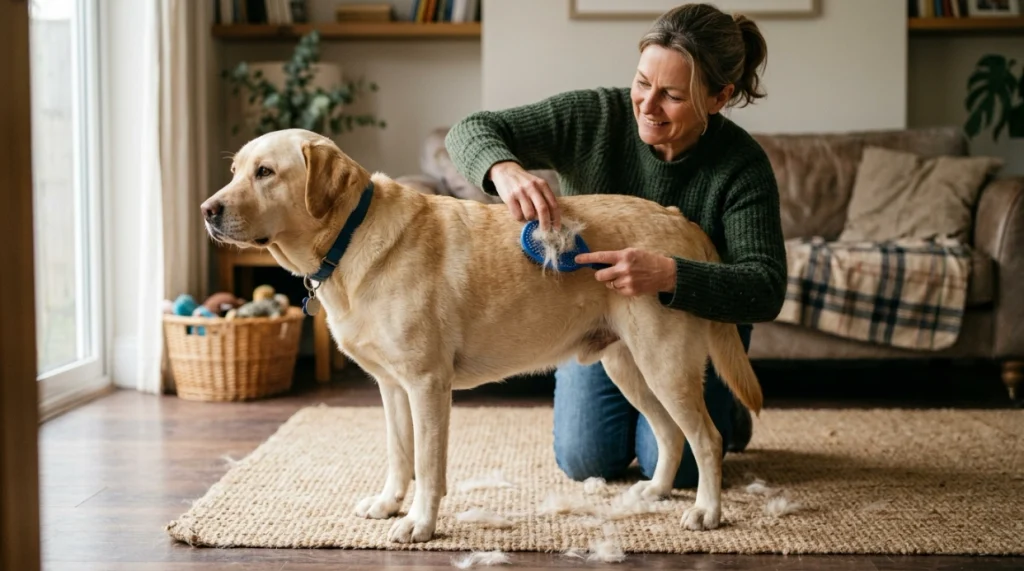
SaveLabrador Retrievers have a short double coat, not a single layer of hair. That double coat is one of the main reasons regular brushing matters.
A double coat has a protective outer layer and a softer, denser layer underneath. You can read more about how these layers work in the AKC guide to double-coated dogs.
Definition: Regular brushing is the routine removal of loose hair, dirt, and dead undercoat with a coat-appropriate grooming tool.
It doesn’t mean scraping the coat until no hair comes out. The goal is gentle maintenance, not aggressive hair removal.
- Outer coat: Shorter-looking guard hairs help protect the skin from weather and moisture.
- Undercoat: Dense softer hair provides insulation and sheds as the coat changes.
- Loose coat: Dead hairs can stay trapped until movement, bathing, or brushing releases them.
- Seasonal changes: Many Labs shed more heavily during periods of coat transition.
This is why a Labrador can look smooth while leaving hair across the sofa. Much of the shedding comes from beneath that tidy outer surface.
What Happens If You Don’t Brush a Labrador Regularly?
Skipping brushing usually won’t produce the dramatic mats seen on long-haired breeds. Instead, you tend to notice more loose hair, dirt, and dead undercoat around the home.
There is also a practical health benefit. Handling the coat regularly makes it easier to notice changes that deserve attention.
- More hair indoors: Loose coat falls onto floors, bedding, car seats, and clothing instead of into your brush.
- More dead undercoat: Seasonal coat can remain packed within the dense fur longer than necessary.
- Hidden skin changes: Bumps, scabs, ticks, irritation, or sore areas may be easier to miss.
- More dirt: Outdoor Labs can carry dust, dried mud, plant material, and other debris in their coat.
- Less handling practice: Dogs that rarely get groomed may be less comfortable when their paws, ears, and body need examination.
Regular brushing also gives you a predictable moment to inspect your dog. Slowly run your hands over the chest, shoulders, legs, tail base, and belly while you groom.
How Often Should You Brush a Labrador Retriever?
For most Labradors, weekly brushing is a sensible baseline. During heavy shedding, increase that frequency based on how much loose coat you’re removing.
VCA’s Labrador Retriever care guidance recommends weekly brushing and extra attention during seasonal shedding.
| Coat Situation | Suggested Frequency | Useful Tool | Main Goal |
|---|---|---|---|
| Normal weekly shedding | About once weekly | Rubber curry or suitable bristle brush | Remove surface hair and dirt |
| Noticeable seasonal shedding | Several times weekly | Rubber curry plus undercoat tool when needed | Lift loose undercoat gently |
| Peak heavy shedding | Daily gentle combing may help | Coat-appropriate shedding tool | Keep dead coat from accumulating |
| After muddy outdoor activity | As needed | Rubber curry brush | Lift dried dirt and loose hair |
Your Labrador’s individual coat matters more than a rigid calendar. Indoor temperature, season, activity, and coat density can all affect shedding.
Stop when you’ve removed the obvious loose coat. Longer and harder sessions aren’t automatically better.
Can Regular Brushing Reduce Labrador Shedding?
Brushing can reduce the amount of loose hair you find around the house. It cannot stop the natural shedding process.
Think of brushing as controlled hair removal. You collect dead hair in one place before it drops throughout your home.
- Brush outside when weather allows.
- Keep grooming sessions short and calm.
- Remove collected hair from the brush often.
- Use lighter pressure around the belly and legs.
- Check the skin as you work through each area.
If you’re deciding whether the Labrador’s grooming and shedding fit family life, this guide to dog breeds for 9 to 12 year olds includes a useful Labrador overview.
What Is the Best Way to Brush a Labrador?
 Save
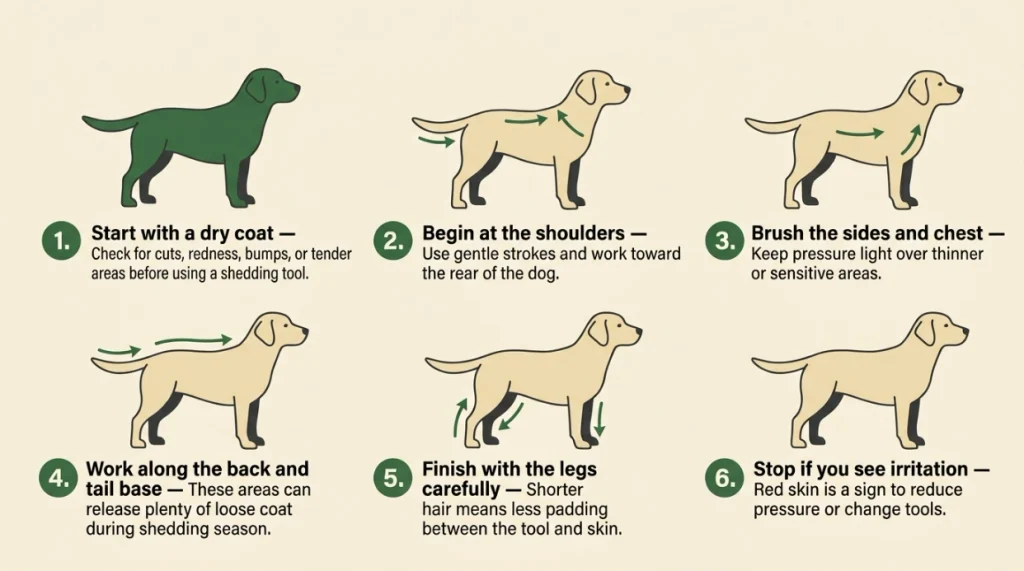
SaveThe best method is simple: work gently, follow a consistent order, and choose tools made for short or double coats.
The AKC’s overview of different dog brush types explains why coat type matters when selecting a grooming tool.
- Start with a dry coat. Check for cuts, redness, bumps, or tender areas before using a shedding tool.
- Begin at the shoulders. Use gentle strokes and work toward the rear of the dog.
- Brush the sides and chest. Keep pressure light over thinner or sensitive areas.
- Work along the back and tail base. These areas can release plenty of loose coat during shedding season.
- Finish with the legs carefully. Shorter hair means less padding between the tool and skin.
- Stop if you see irritation. Red skin is a sign to reduce pressure or change tools.
I prefer several gentle passes over one aggressive pass. You should feel like you’re grooming the coat, not scraping the skin.
Reward calm behavior as you work. This makes future grooming sessions easier, especially with young Labs.
Which Brush Is Best for a Labrador Retriever?
No single brush is perfect for every part of a Labrador’s grooming routine. I prefer matching the tool to the job.
- Rubber curry brush: Excellent for routine grooming, loose surface hair, dirt, and bath-time massage.
- Short-hair deShedding tool: Useful for removing loose undercoat during heavier shedding periods.
- Bristle brush: Helpful for light maintenance and finishing the coat.
- Grooming glove: A gentle option for dogs that dislike conventional brushes.
If your Lab shares the home with children, grooming can become part of a predictable care routine. You can also compare the breed’s wider care needs in this guide to dog breeds for families with babies.
Should You Shave a Labrador to Stop Shedding?
Shaving is not a good routine solution for Labrador shedding. Removing the coat doesn’t fix the natural shedding cycle.
Labs rely on their double coat as normal protective covering. Routine brushing is the safer everyday approach unless a veterinarian requires clipping for a medical reason.
- Don’t shave the coat simply because hair appears around the house.
- Don’t repeatedly scrape one area with a shedding blade.
- Don’t use human hair brushes as a substitute for coat-appropriate tools.
- Don’t ignore redness, sores, bald patches, or unusual itching.
If you’re still deciding whether a Lab suits your lifestyle, the breed also appears in this comparison of easy-going dog breeds.
Common Labrador Brushing Mistakes to Avoid
The biggest grooming mistake is assuming more pressure removes more hair. Heavy pressure can turn a helpful routine into an uncomfortable one.
- Brushing too hard: Let the tool do the work instead of pressing it into the skin.
- Overusing deShedding tools: These tools are designed for targeted loose-undercoat removal.
- Ignoring sensitive spots: Use less pressure around the belly, legs, joints, and tail.
- Only grooming during shedding season: A simple weekly routine makes coat changes easier to manage.
- Brushing damaged skin: Stop and seek veterinary advice if you find sores, swelling, or significant irritation.
Consistency usually works better than marathon grooming sessions. Ten calm minutes can be more useful than an uncomfortable half hour.
My Labrador Brush Picks for Regular Grooming
 Save
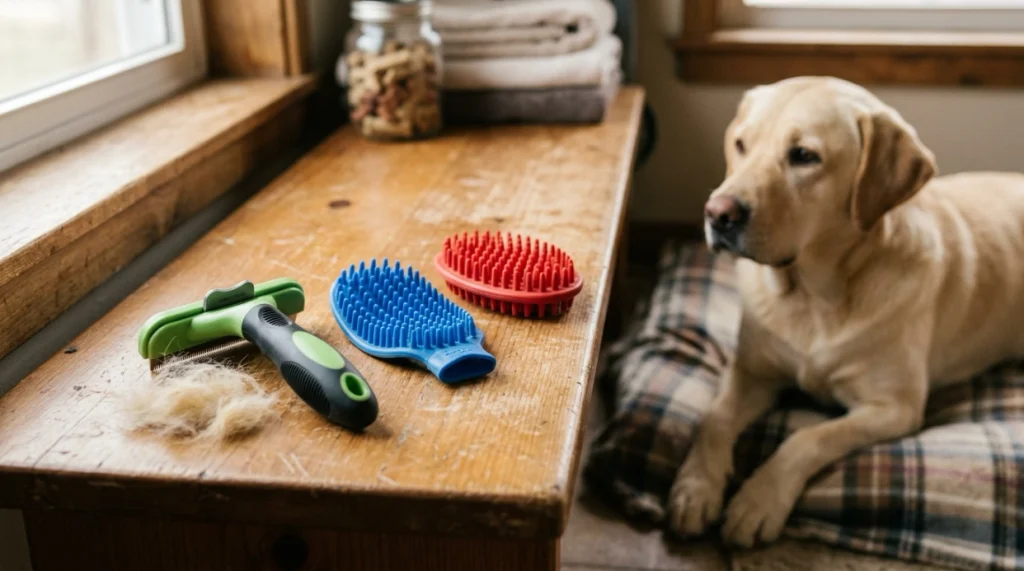
SaveIf you’re ready to choose a tool, these are the three types I’d prioritize for a Labrador’s short double coat.
🏆 Best for Heavy Shedding
FURminator Undercoat deShedding Tool — Large Dog, Short Hair
★★★★★ Lab coat fit: 4.8/5
The stainless-steel deShedding edge is made to reach loose undercoat beneath a short topcoat. I like it for peak shedding periods, but I’d keep it as a targeted tool rather than an everyday brush.
🐕 Best for Regular Brushing
KONG ZoomGroom Dog Brush
★★★★☆ Lab coat fit: 4.7/5
Soft rubber fingers loosen hair and can be used on a dry coat or while shampooing. I like this style for routine Labrador grooming because it stays gentle while lifting loose surface hair.
💰 Best Simple Option
Safari by Coastal Dog Rubber Curry Brush
★★★★☆ Lab coat fit: 4.5/5
This rubber curry style is designed for short hair and helps remove loose hair and dirt while massaging the skin. I like it for owners who want a straightforward tool for quick maintenance sessions.
Frequently Asked Questions
Do Labrador Retrievers need to be brushed every day?
Most Labradors don’t need daily brushing throughout the entire year. Weekly brushing is a useful baseline, but daily gentle combing can help during periods when large amounts of loose undercoat are coming out.
What type of brush works best for a Labrador?
A rubber curry brush works well for routine coat maintenance, while a short-hair undercoat tool can help during heavier shedding. The best choice depends on whether you’re removing surface hair, dried dirt, or loose seasonal undercoat.
Does brushing a Labrador stop shedding?
No. Brushing doesn’t stop the natural shedding cycle, but it collects loose hair before much of it lands around your home. Regular grooming can therefore make Labrador shedding much easier to manage.
How long should I brush my Labrador?
Keep the session long enough to remove obvious loose coat without repeatedly working the same area. Short, gentle sessions are usually better than aggressive brushing, especially when using a deShedding tool near sensitive skin.
When should I stop brushing and call a vet?
Stop if you find painful skin, significant redness, sores, swelling, unusual bald patches, or persistent itching. Grooming can reveal problems, but it shouldn’t be used to diagnose or treat a skin condition.
The Bottom Line
Labrador Retrievers need regular brushing because their short double coat sheds more than its smooth appearance suggests. Weekly coat care removes loose hair, keeps grooming manageable, and helps you inspect the skin.
Increase brushing when shedding becomes heavier, but stay gentle. Choose a rubber curry for routine care and a suitable undercoat tool when loose seasonal coat starts filling your home.
Make brushing a calm weekly habit instead of waiting for the fur to pile up. Your floors, furniture, and Labrador will all be easier to manage.

Thomas Cutter is a lifelong dog owner and the founder of FindOutAboutDogs.com. With over 10 years of hands-on experience owning multiple breeds, Thomas created this site to provide honest, research-based dog advice that real owners can actually trust.
