Best 10 Companion Dog Breeds for Elderly Owners (2026 Guide
Quick Answer
The best companion dogs for elderly owners are calm, small-to-medium breeds with low exercise needs and gentle temperaments. Top picks are the Cavalier King Charles Spaniel, Bichon Frise, French Bulldog, Pug, Havanese, Maltese, Shih Tzu, Pomeranian, Chihuahua, and Greyhound. The right choice depends on your energy level, grooming tolerance, and whether you live alone or with help nearby.
What to check before choosing a breed:
- How much daily exercise the breed truly needs
- How often the coat needs brushing or professional grooming
- Whether the breed is prone to costly health conditions
- How the breed handles being alone for part of the day
Choose if:
- You want a lap dog with almost no exercise needs → Pug or Cavalier
- You want a dog that barely sheds → Bichon Frise or Havanese
- You want a calm dog with a bigger presence → Greyhound
Your knees ache a little more this year. The house feels quieter than it used to. You’ve thought about a dog, but the idea of chasing a puppy around the yard sounds exhausting before you’ve even started.
I’m a dog breed researcher who has spent years matching breeds to real households, not idealized ones. Here’s the thing: most “best dogs for seniors” lists just repeat the same five breeds without explaining why they work. This guide goes further. It covers exercise needs, grooming costs, health risks, and the exact question you should ask yourself before bringing any dog home: can you handle this dog’s care on your worst day, not just your best one?
Let’s start with what actually makes a breed senior-friendly, then walk through the 10 breeds that consistently earn top marks from vets and senior-living communities alike.
- Low energy, small size, and a calm temperament matter more than breed popularity.
- Grooming needs vary a lot — some “easy” breeds need weekly professional grooming.
- Older adult pet owners report 36% lower odds of loneliness than non-owners.
- Adult and senior shelter dogs are often better matches than puppies.
- No breed is truly zero-maintenance — every dog needs daily food, water, and vet care.


What Makes a Dog Breed Good for Elderly Owners?
A dog breed works well for elderly owners when it needs only light daily exercise, has a calm and predictable temperament, and comes in a size that’s easy to lift, walk, and manage physically. Coat care matters too — a breed that needs daily brushing can become a burden. Health matters most of all, since some small breeds carry expensive, chronic conditions that need lifelong monitoring.
You might be thinking: isn’t any small dog automatically easy? Not quite. Some toy breeds bark constantly, resist house-training, or need daily brushing sessions that take real time and steady hands. Size alone doesn’t guarantee an easy dog. Temperament and coat type matter just as much as how many pounds the dog weighs.
So what does that mean for your search? Instead of asking “which breed is popular,” ask three narrower questions: How much walking can I commit to on a bad day? How much grooming can I afford or manage myself? And can I get to a vet quickly if something goes wrong? Those three answers narrow the list fast.
Foster a breed for a week before adopting. Many rescues allow trial fostering, and it’s the fastest way to know if a temperament truly fits your daily life.
What Most People Get Wrong About Senior Dog Breeds
Most articles treat “small” and “easy” as the same thing. They’re not. A Chihuahua is tiny but can be highly vocal and wary of strangers. A Pomeranian looks like a lap dog but sheds heavily twice a year. Meanwhile, a full-grown Greyhound looks intimidating on paper but is one of the calmest, laziest breeds you can own indoors.
Here’s another common mix-up: people assume a puppy is the safer choice because it can “grow up with you.” In practice, puppies need the most physical energy, the most training time, and the least predictable behavior of any life stage. A calm adult or senior dog, already house-trained and past the chewing phase, is usually the better fit for an elderly household. That single swap — adult over puppy — solves more problems than picking the “perfect” breed.
The 10 Best Companion Dog Breeds for Seniors — Ranked and Reviewed
Every breed below is ranked on real-world livability for an elderly owner: exercise load, grooming time, temperament, and health cost over the dog’s lifetime. Each entry gives you the honest pros and the honest cons, because a drawback you know about ahead of time is far easier to manage than one that surprises you later.
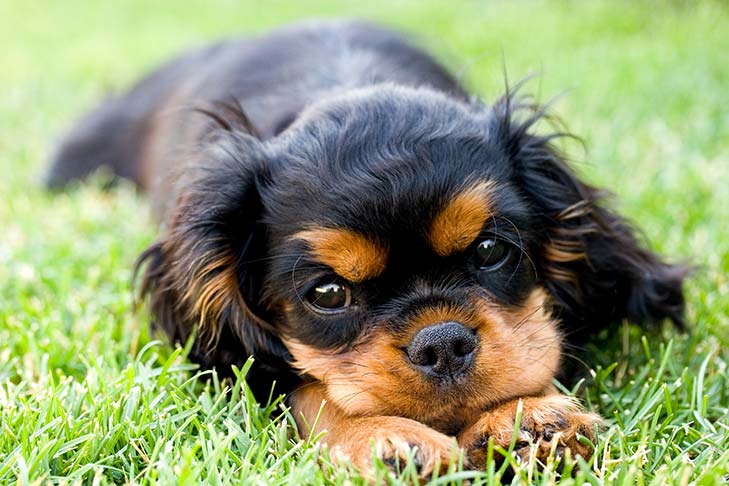
1. Cavalier King Charles Spaniel — “The Devoted Lap Companion”
 Save
Save| Weight | 12–18 lbs |
| Height | 12–13 in |
| Lifespan | 9–14 years |
| Energy Level | Low to moderate |
| Grooming Need | Weekly brushing |
| Shedding | Moderate |
The Cavalier King Charles Spaniel is a small toy spaniel known for its gentle, people-focused nature. Weighing 12 to 18 lbs, it’s light enough to carry and easy to walk on a leash. It’s calm indoors, content with short daily walks, and forms deep bonds with one main person. This makes it ideal for seniors who want a devoted lap dog.
Their silky, feathered ears and soft brown eyes give them an almost storybook look. They come in four coat colors, including the classic chestnut-and-white pattern.
Cavaliers greet strangers warmly instead of barking at them. Fewer people know they were originally bred to sit on the laps of British royalty during long carriage rides — which explains why they still hate being left alone for long stretches.
Pros and cons below reflect real ownership experience, not marketing copy.
- Gentle with strangers and other pets
- Satisfied with two short walks daily
- Rarely barks excessively
- Prone to costly heart disease by age 5
- Struggles when left alone too long
- Ears need regular checks for infection
Best for: Owners who want a devoted lap dog · Seniors who are home most of the day · Apartment or house living
→ See more lap dog breeds built for senior living
2. Bichon Frise — “The Cotton-Ball Cuddler”
| Weight | 7–12 lbs |
| Height | 9.5–11.5 in |
| Lifespan | 14–15 years |
| Energy Level | Moderate |
| Grooming Need | Professional, every 4–6 weeks |
| Shedding | Very low |
The Bichon Frise is a small, cheerful breed with a curly white coat that barely sheds. Weighing just 7 to 12 lbs, it’s easy to lift and carry. Bichons are playful, friendly with everyone, and adapt well to apartment life. Their low-shed coat makes them a strong choice for owners with mild allergies.
Under that puffball coat is a compact, sturdy body built for close cuddling, not running. Groomed correctly, the coat looks almost like a powder-white cloud.
Bichons greet every visitor like an old friend. What surprises new owners is how food-motivated they are — a few treats can turn training sessions into their favorite part of the day.
You might be thinking a curly coat means brushing every single day. It doesn’t have to — a solid monthly grooming schedule keeps mats away without daily upkeep.
- Low-shed coat, good for allergy sufferers
- Friendly with children and strangers
- Long, healthy 14-plus year lifespan
- Needs pro grooming every 4–6 weeks
- Prone to tear-staining around the eyes
- Dislikes being left alone all day
Best for: Owners with mild allergies · First-time senior dog owners · Anyone wanting a playful lap dog
→ Browse more low-shedding breeds for allergy-sensitive homes
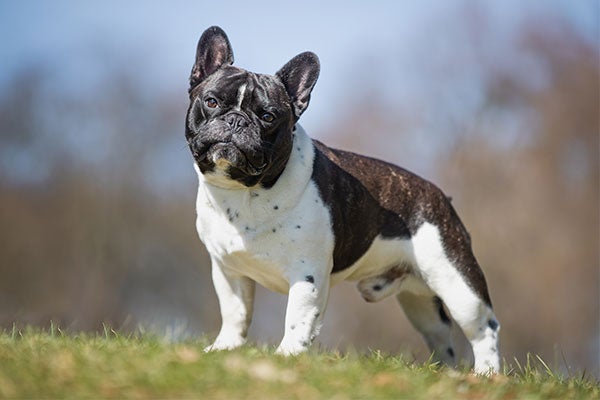
3. French Bulldog — “The Low-Bark Roommate”
 Save
Save| Weight | 16–28 lbs |
| Height | 11–13 in |
| Lifespan | 10–12 years |
| Energy Level | Low to moderate |
| Grooming Need | Minimal, wipe face folds daily |
| Shedding | Low to moderate |
The French Bulldog is a compact, muscular companion breed with a short, easy-care coat. It rarely barks, making it a good fit for apartments and shared walls. Frenchies enjoy short walks and long naps in equal measure. Their affectionate, easygoing nature makes them one of the most popular companion breeds among older adults today.
Their signature bat ears and short muzzle give them an instantly recognizable, almost comic charm. The compact build stays sturdy without becoming hard to handle on a leash.
Most people know Frenchies are quiet. Fewer know they’re also stubborn learners who need patient, food-based training rather than repetition alone.
You might be thinking a flat-faced dog can’t handle any activity. It can — just short, cool-weather walks instead of long runs.
- Barks rarely — great for thin walls
- Short coat needs almost no brushing
- Content with brief daily walks
- Struggles badly in heat and humidity
- Prone to breathing and spine issues
- Vet bills often run above average
Best for: Apartment dwellers · Owners near noise-sensitive neighbors · Mild-climate regions
→ Compare more top retiree-friendly dog breeds
4. Pug — “The Comedic Couch Companion”
| Weight | 14–18 lbs |
| Height | 10–13 in |
| Lifespan | 13–15 years |
| Energy Level | Low to moderate |
| Grooming Need | Weekly brushing, wipe face folds |
| Shedding | Heavy |
The Pug is a small, muscular companion dog known for its wrinkled face and playful charm. Weighing 14 to 18 lbs, it’s easy to handle physically. Pugs love human company, adapt to any living space, and are happy with moderate daily activity. Their goofy, affectionate personality makes them a favorite first dog for older adults.
Their deep facial wrinkles and curled tail give them a look that’s part clown, part royalty — Pugs were once companions to Chinese emperors.
Everyone expects a Pug to be lazy. What surprises new owners is how much they snore, snort, and grunt through the day — it’s simply part of their charm, not a health emergency.
- Easygoing with people of all ages
- Adapts well to small living spaces
- Moderate exercise needs only
- Heavy shedder despite short coat
- Poor heat tolerance, needs AC access
- Facial folds need daily cleaning
Best for: First-time dog owners · Indoor-focused lifestyles · Households with mild climates
5. Havanese — “The Playful Velcro Dog”
| Weight | 7–13 lbs |
| Height | 8.5–11.5 in |
| Lifespan | 14–16 years |
| Energy Level | Moderate |
| Grooming Need | Regular brushing |
| Shedding | Very low |
The Havanese is Cuba’s only native breed, prized for its silky coat and cheerful nature. Weighing 7 to 13 lbs, it’s light enough for seniors with limited strength. Havanese thrive indoors, enjoy short walks, and rarely act aggressively. Their low-shed coat and social nature make them one of the calmest true companion breeds available.
Their long, wavy coat can be kept short and low-fuss with a simple “puppy cut,” instead of the show-length flowing style.
Havanese are known for following their favorite person from room to room. Fewer people know they were bred specifically as lapdogs for Cuban aristocracy, which is exactly why they still hate being left alone.
- Long 14+ year healthy lifespan
- Gentle with kids, pets, and strangers
- Good travel companion, easy to carry
- Develops separation anxiety easily
- Coat mats without weekly brushing
- Can be vocal when bored
Best for: Seniors who are home often · Owners wanting a travel-friendly dog · Multi-pet households
6. Maltese — “The Gentle White Shadow”
| Weight | Under 7 lbs |
| Height | 7–9 in |
| Lifespan | 12–15 years |
| Energy Level | Low |
| Grooming Need | Daily brushing or short trim |
| Shedding | Very low |
The Maltese is a tiny toy breed with a flowing white coat and an affectionate, gentle temperament. Weighing under 7 lbs, it’s one of the easiest breeds to physically manage. Maltese need only light daily exercise and prefer relaxing beside their owner. Their low-shed coat makes them a solid choice for allergy-conscious seniors.
Their pure white, silky coat can reach the floor if left untrimmed, though most pet owners choose a shorter, easy-care cut instead.
Maltese are famously gentle lap dogs. Fewer people know they can be surprisingly bold barkers, alerting their owner to any sound at the door.
- Tiny size, easy to lift and carry
- Minimal exercise requirements
- Low-shed coat, allergy-friendlier
- Fragile, prone to injury from falls
- Needs daily brushing without a trim
- Can develop small-dog anxiety
Best for: Owners with limited grip strength · Quiet, low-traffic homes · Lap-dog lovers
7. Shih Tzu — “The Royal Palace Cuddler”
| Weight | 9–16 lbs |
| Height | 9–10.5 in |
| Lifespan | 10–16 years |
| Energy Level | Low |
| Grooming Need | Regular brushing or short trim |
| Shedding | Low |
The Shih Tzu is a sturdy toy breed bred for centuries as a royal companion in China. Weighing 9 to 16 lbs, it’s easy to handle and rarely needs vigorous exercise. Shih Tzus are calm, affectionate, and content spending most of the day close to their owner. This makes them one of the most home-friendly breeds for elderly households.
Their flowing double coat and round, dark eyes give them a distinct “little lion” look, which is where their name comes from in Mandarin.
Shih Tzus love lounging indoors. Fewer owners expect how heat-sensitive their flat face makes them — short walks in cool morning air work best.
- Very low exercise requirements
- Calm, steady indoor temperament
- Comfortable in small living spaces
- Poor heat tolerance, flat-faced breed
- Coat needs regular trims or brushing
- Prone to dental crowding issues
Best for: Quiet, home-based routines · Cooler climates · Owners wanting minimal walking
8. Pomeranian — “The Tiny Big-Dog Personality”
| Weight | 3–7 lbs |
| Height | 6–7 in |
| Lifespan | 12–16 years |
| Energy Level | Moderate |
| Grooming Need | Twice-weekly brushing |
| Shedding | Heavy, seasonal |
The Pomeranian is a tiny Spitz-type breed known for its thick double coat and bold personality. Weighing just 3 to 7 lbs, it’s easy to carry and perfect for apartment living. Despite its size, the Pomeranian is confident, playful, and highly alert. Indoor games or short walks fully satisfy its exercise needs.
Their fluffy double coat forms a lion-like mane around the neck and chest, framing a fox-like face that made them favorites of European royal courts.
Poms are known for their confidence. What surprises new owners is how loudly a 5-lb dog can bark at delivery trucks — early training curbs this fast.
- Extremely portable, under 7 lbs
- Smart and easy to house-train
- Long lifespan, often 14+ years
- Heavy seasonal coat blowout
- Can bark frequently if untrained
- Fragile around toddlers or falls
Best for: Apartment living · Owners wanting a portable, alert companion · Experienced small-dog handlers
9. Chihuahua — “The Fierce, Loyal Shadow”
| Weight | 2–6 lbs |
| Height | 5–8 in |
| Lifespan | 14–16 years |
| Energy Level | Low |
| Grooming Need | Minimal, smooth coat |
| Shedding | Low (smooth coat) |
The Chihuahua is the smallest recognized dog breed, weighing just 2 to 6 lbs. Its tiny size makes it the physically easiest breed to manage day to day. Chihuahuas form intense bonds with one primary owner and need only light indoor activity. Their long lifespan and low grooming needs make them a practical companion for seniors living alone.
Their large, expressive eyes and oversized ears give them a striking, alert expression that seems too big for their tiny frame.
Chihuahuas are famously loyal to one person. Fewer people know how protective this bond makes them — they’ll often growl at strangers approaching their favorite human, so early socializing matters.
- Smallest breed, easiest to physically manage
- Minimal exercise and grooming needs
- One of the longest average lifespans
- Can be reactive toward strangers
- Fragile — vulnerable to falls and cold
- Prone to dental crowding
Best for: Seniors living alone · Owners wanting a single-companion bond · Very small living spaces
→ Explore more tiny dog breeds suited to retirement living
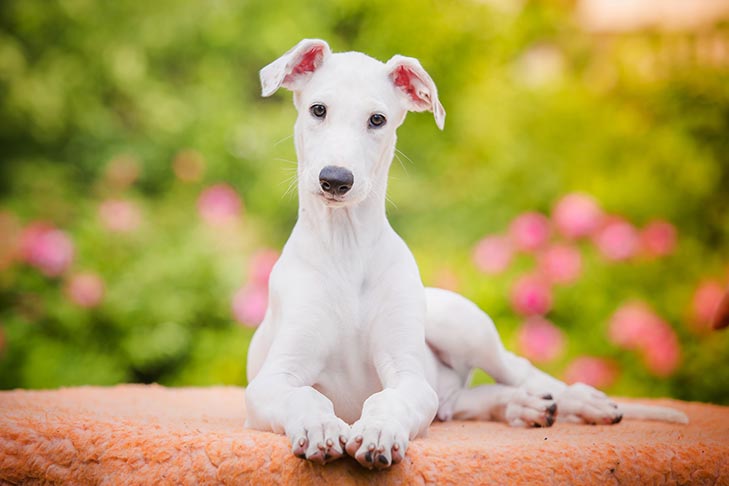
10. Greyhound — “The Gentle 45-MPH Couch Potato”
 Save
Save| Weight | 60–70 lbs |
| Height | 27–30 in |
| Lifespan | 10–13 years |
| Energy Level | Low indoors, bursts outdoors |
| Grooming Need | Minimal, short coat |
| Shedding | Low |
The Greyhound is a tall, athletic sighthound famous for speed, but surprisingly calm indoors. Weighing 60 to 70 lbs, it needs one daily walk, not constant activity. Greyhounds spend most of the day resting quietly on soft bedding. Many retired racing Greyhounds are already trained and settle in fast, making them a low-drama large-breed option.
Their lean, aerodynamic frame and deep chest look built for speed, yet they curl into a surprisingly small shape when napping on the couch.
Most people expect a Greyhound to need constant running. What surprises owners is how often shelters describe them as “45-mph couch potatoes” — short bursts of speed, then hours of rest.
- Calm, quiet indoor temperament
- Short coat, low grooming effort
- Adult rescues are already trained
- Too large to lift if injured
- Needs a securely fenced yard
- Thin coat means cold sensitivity
Best for: Seniors who want a large, gentle presence · Owners with a fenced yard · Adopting an adult, pre-trained dog
→ See more large dog breeds that suit a slower pace
How Do These 10 Companion Breeds Compare Side by Side?
The table below lines up all 10 breeds by weight, energy, grooming, and shedding, so you can scan for the closest match to your daily routine at a glance. Weight and grooming needs tend to matter most for physical ease, while energy level determines how much daily walking you’ll realistically commit to.
| Breed | Weight | Energy | Grooming | Shedding |
|---|---|---|---|---|
| Cavalier King Charles Spaniel | 12–18 lbs | Low-moderate | Weekly brush | Moderate |
| Bichon Frise | 7–12 lbs | Moderate | Pro every 4–6 wks | Very low |
| French Bulldog | 16–28 lbs | Low-moderate | Minimal | Low-moderate |
| Pug | 14–18 lbs | Low-moderate | Weekly brush | Heavy |
| Havanese | 7–13 lbs | Moderate | Regular brush | Very low |
| Maltese | Under 7 lbs | Low | Daily brush | Very low |
| Shih Tzu | 9–16 lbs | Low | Regular trim | Low |
| Pomeranian | 3–7 lbs | Moderate | 2x weekly brush | Heavy, seasonal |
| Chihuahua | 2–6 lbs | Low | Minimal | Low |
| Greyhound | 60–70 lbs | Low indoors | Minimal | Low |
Which Companion Dog Breed Is Right for You?
The right breed depends less on looks and more on your daily energy, living space, and support system. Use the scenarios below to narrow your choice fast, without second-guessing every option on the list above.
- If you live alone with limited mobility → a Maltese, Chihuahua, or Shih Tzu needs the least physical effort.
- If you have mild allergies → a Bichon Frise or Havanese sheds the least.
- If you want a dog with almost no bark → a French Bulldog or Pug fits noise-sensitive homes.
- If you have a fenced yard and want a calm larger dog → an adult, pre-trained Greyhound is worth considering.
- If you’re active and want daily walking motivation → a Pomeranian or Cavalier will happily join you.
Honest scope statement: This guide covers small-to-medium companion breeds well suited to typical retirement lifestyles. If you’re managing a health condition that limits bending, lifting, or fast reactions, talk with your doctor and a local rescue about matching you with an already-trained adult dog — regardless of breed, an older, settled dog is usually the safer starting point.
Care Essentials Every New Senior Dog Owner Should Know
Successful senior dog ownership comes down to four habits: a predictable feeding and walk schedule, a nearby vet relationship, a grooming plan you can actually keep up with, and a backup caregiver in case of illness or travel. Research consistently shows that dog ownership among older adults is linked to more consistent daily routines and increased physical activity.
Set up a veterinarian relationship before your dog even arrives home. Book the first wellness visit within 48 hours of adoption, and mention that you’re a senior owner so the clinic can flag any accessibility needs, like curbside drop-off.
Have a written backup plan for your dog’s care in case of a hospital stay. A family member, neighbor, or local pet-sitting service should know your dog’s routine in advance.
So what does that mean day to day? A predictable morning and evening routine — same walk time, same feeding time — keeps most companion breeds calm and reduces behavior problems tied to uncertainty.
Common Mistakes New Senior Dog Owners Make
The most common mistake is choosing a puppy instead of an adult dog. Puppies need more physical stamina, more training patience, and more supervision than most retirement routines can sustain. An adult or senior rescue dog, already house-trained, is almost always the easier and kinder choice.
The second mistake is underestimating grooming costs. A coat that needs professional trims every four to six weeks adds up fast — budget for it before you commit to a breed like the Bichon Frise or Shih Tzu.
The third mistake is skipping pet insurance or a health savings buffer. Small breeds like the Cavalier and Pug carry known, sometimes expensive, hereditary health risks. Planning for that cost ahead of time avoids a painful decision later.
Frequently Asked Questions
What is the easiest dog breed for an elderly person to care for?
The Chihuahua and Maltese are among the easiest, thanks to their tiny size, low exercise needs, and minimal grooming. Both are easy to physically lift, walk, and manage in a small home.
Should a senior adopt a puppy or an adult dog?
An adult dog is usually the better choice. Adult dogs are typically already house-trained, past the high-energy puppy stage, and easier to predict day to day than a young puppy.
What dog breeds shed the least for seniors with allergies?
The Bichon Frise, Havanese, and Maltese shed the least of the breeds covered here. No breed is fully hypoallergenic, but low-shedding coats reduce dander spread around the home.
How much exercise does a senior really need to give a companion dog?
Most breeds on this list are satisfied with two short walks a day, totaling 20 to 40 minutes. Toy breeds like the Shih Tzu and Maltese need even less, often just indoor play.
Are large dogs ever a good choice for elderly owners?
Yes, if the dog is calm indoors and already trained. The Greyhound is the clearest example — despite its size, it needs only one daily walk and spends most of its time resting quietly.
One Thing to Do Right Now
Pick your top two breeds from this list, then search Petfinder or your local shelter for adult dogs of those breeds within driving distance. An older, already-trained dog waiting in a shelter today could be a better match than any puppy you’d wait months to find.
Dog ownership brings real benefits at any age — older adults with pets report notably lower rates of loneliness than those without. Whichever breed you choose, match it honestly to your energy and routine, not just your favorite look. That’s the choice that keeps both of you happy for years to come.
Sources: American Kennel Club — Dog Breeds for Seniors · National Institutes of Health — Pet Ownership and Loneliness in Older Adults

Thomas Cutter is a lifelong dog owner and the founder of FindOutAboutDogs.com. With over 10 years of hands-on experience owning multiple breeds, Thomas created this site to provide honest, research-based dog advice that real owners can actually trust.
