Best 10 Dog Breeds for Kids with ADHD — Chosen by Families Who Live It
Quick Answer
The best dog breeds for kids with ADHD are calm, patient, and easy to bond with. Top choices include the Golden Retriever, Labrador Retriever, Cavalier King Charles Spaniel, Beagle, and Standard Poodle. Each one matches the high-energy, emotional needs of children with ADHD while helping build daily routine and responsibility.
Best dog breeds for kids with ADHD at a glance:
- Golden Retriever — patient, gentle, easy to train
- Labrador Retriever — energetic, loyal, therapy-tested
- Cavalier King Charles Spaniel — calm, cuddly, low-key
- Beagle — playful, sturdy, loves outdoor adventures
- Standard Poodle — smart, low-shedding, great for families with allergies
- Border Collie — best for very active kids with high energy
- Boxer — goofy, affectionate, bounces back from rough play
- Cocker Spaniel — gentle, adaptable, easy to manage
- Bernese Mountain Dog — calm, large, deeply bonding
- Irish Setter — joyful, active, matches boundless energy
Key traits to look for in a dog for a child with ADHD:
- Patient temperament — tolerates unpredictable behavior without reacting
- Balanced energy — active enough to play but calm enough to settle
- Low aggression — gentle with rough or clumsy handling
Your child is bursting with energy one minute. Then frustrated and overwhelmed the next. You’ve heard that a dog might help — but the wrong breed could make things harder, not easier. I’m Thomas Cutter, and I’ve spent years helping families find the right dog match for their child’s unique needs. This guide covers the 10 best dog breeds for kids with ADHD, what makes each one work, and how to choose the right fit for your family.
This article covers dog breed selection for children with ADHD. If your child has severe sensory sensitivities, explosive behavior, or co-occurring autism, speak with your child’s therapist before choosing a breed.
- About 1 in 9 U.S. children aged 3–17 has been diagnosed with ADHD — that’s 7 million kids in 2022, according to CDC data.
- Dogs help kids with ADHD build routine, burn energy, and develop emotional regulation.
- The right breed is patient, gentle, and balanced — not too high-strung, not too sleepy.
- Temperament matters more than breed alone — always meet the dog before committing.
- Never surprise a child with ADHD with a new pet — involve them in the whole process.


Why Dogs Can Be So Good for Kids with ADHD
Dogs are one of the most studied tools for supporting children with ADHD — and the results are consistently positive. Caring for a dog creates natural structure. Feeding, walking, and grooming at set times builds the daily routine that kids with ADHD desperately need.
Research published in the Journal of Attention Disorders found that children with ADHD performed better in therapy sessions when a trained dog was present. The dogs reduced stress and helped children focus. But you don’t need a therapy dog at home to see benefits. Even a well-matched family pet can help.
Here’s what most people don’t know: dogs are non-judgmental. A child with ADHD who struggles socially often connects with animals before they connect with peers. That bond builds self-esteem — which is one of the biggest challenges for kids with ADHD.
So what makes a dog a good match? A balanced energy level. A patient temperament. And a gentle nature that holds up when a child gets excited, clumsy, or emotional. The best family dog breeds for kids share many of these traits — but ADHD adds a few extra things to look for, which we’ll cover right here.
Involve your child in choosing the dog from day one. Kids with ADHD often struggle with transitions. Being part of the whole process — researching breeds, visiting dogs, setting up the home — builds buy-in and responsibility from the start.
What Makes a Dog Breed Right for a Child with ADHD?
Not every friendly breed is a good fit. A high-strung dog with an anxious temperament can mirror a child’s ADHD energy and make both worse. Here’s what most experts agree matters most when choosing a breed for a child with ADHD.
Patience. Kids with ADHD can be loud, unpredictable, and physically excitable. The right dog accepts all of this without snapping or withdrawing. Breeds with naturally calm reactions — even when startled — are essential.
Balanced energy. This is the trait people most often get wrong. You don’t want a couch potato dog who ignores your child. But you also don’t want a hyperactive dog who adds chaos to an already stimulating environment. The sweet spot is a breed that loves to play, then willingly settles when the energy winds down.
Trainability. A trainable dog gives your child something to succeed at. Teaching a dog a new command creates a focus task, a reward loop, and a confidence boost — all at once. Most experts recommend highly trainable breeds for ADHD households for exactly this reason.
Low aggression. Some kids with ADHD miss body language cues that a dog is getting uncomfortable. You need a breed with a long fuse. Gentle breeds that rarely bite — even when handled roughly — are a much safer choice.
You might be thinking: what about barky or nervous breeds? Here’s why they matter — excessive barking is especially distressing for children who are noise-sensitive. Many kids with ADHD also have sensory processing challenges. A dog that barks at everything can quickly become a source of anxiety rather than comfort.
The 10 Best Dog Breeds for Kids with ADHD — Ranked and Reviewed
Every breed below was chosen based on expert recommendations, real family experience, and the specific traits that help children with ADHD thrive. Let’s get into each one.
1. Golden Retriever — “The Golden Standard for ADHD Families”
 Save
Save| Weight | 55–75 lbs |
| Height | 21.5–24 inches |
| Lifespan | 10–12 years |
| Energy Level | High — needs 60 min daily exercise |
| Grooming Need | Moderate — brush 2–3x per week |
| Shedding | Heavy — especially seasonal |
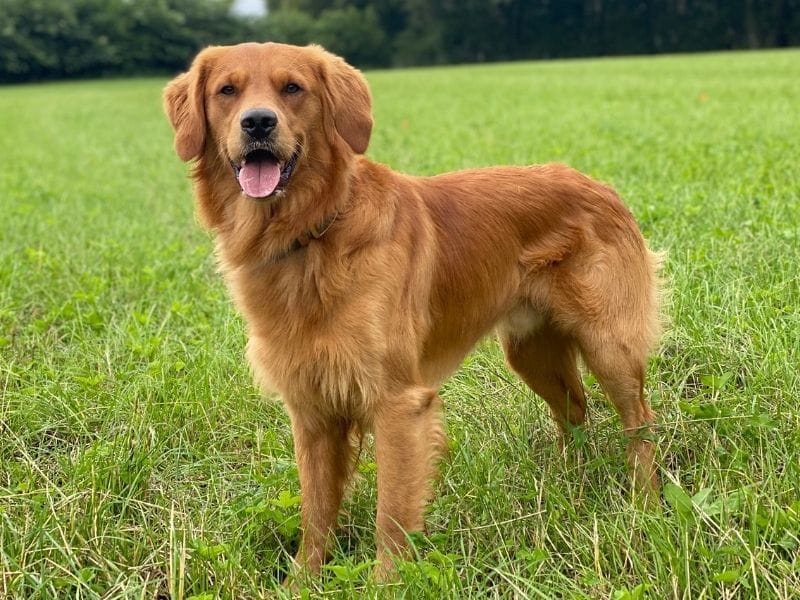
The Golden Retriever is one of the most widely recommended dog breeds for kids with ADHD, praised by therapists and pediatricians alike. Weighing 55 to 75 lbs, they are big enough to handle an energetic child but gentle enough never to react aggressively. Goldens are deeply attuned to human emotions and naturally adjust their energy to match the room.
Golden Retrievers have a dense, water-resistant double coat that forms a soft ruff around the neck. Their warm amber eyes and perpetual “smile” make them instantly disarming. Even their tail seems to wag with enthusiasm — it rarely stops.
Most people know Goldens are friendly. What they don’t know is just how emotionally intelligent these dogs are. A Golden will quietly press against an upset child without being asked. What’s surprising is that this breed was selectively developed for patience — they were bred to hold birds gently in their mouths without breaking the skin. That same softness translates to tolerating an excited child without complaint.
“My son had a meltdown every afternoon after school. Now he goes straight to Murphy. The dog just lies on him. Twenty minutes later, my kid is calm enough to do homework. Nothing else worked like that.”
— Rachel M., Golden Retriever owner for 4 years
- Naturally patient — rarely snaps or bites
- Highly trainable — great for confidence-building
- Emotionally attuned to children’s moods
- Sheds heavily — daily vacuuming required
- Needs 60+ min of daily exercise
- Can become destructive if under-exercised
Best for: Families with a yard · Kids who need emotional co-regulation · First-time dog owners
2. Labrador Retriever — “The Therapy Dog the World Already Knows”
| Weight | 55–80 lbs |
| Height | 21.5–24.5 inches |
| Lifespan | 10–12 years |
| Energy Level | High — needs vigorous daily exercise |
| Grooming Need | Low — weekly brushing sufficient |
| Shedding | Moderate to heavy year-round |
The Labrador Retriever is the most trusted therapy and service dog breed in the world — and one of the best dog breeds for kids with ADHD. Labs weigh 55 to 80 lbs and match a child’s active energy with ease. They are endlessly patient, respond brilliantly to training, and rarely show aggression even in chaotic family environments.
Labs come in three colors — black, yellow, and chocolate — all with the same short, dense coat that takes about five seconds to dry after a run through the sprinkler. Their build is sturdy and athletic. They genuinely look like they were made to play.
Most people know Labs are friendly. What surprises new owners is how well Labs handle chaos. A house full of noise, a child who forgets to feed them on time, a game of fetch that gets too rough — Labs take it all in stride. What’s genuinely remarkable is that they’re the number one breed used in psychiatric service dog programs for children with ADHD. That’s not a coincidence.
“Biscuit taught my daughter how to follow through. She feeds him every morning at 7. That’s the first time she’s been consistent with anything in 9 years.”
— James T., Labrador owner for 6 years
- World’s top therapy and service breed
- Handles rough play without reacting
- Easiest coat to maintain of any large breed
- Chews everything if bored
- Can knock over small children when excited
- Prone to weight gain without enough exercise
Best for: Active families · Kids who need a routine anchor · Households with multiple children
→ See how Labs and other gentle breeds rank for families with toddlers
3. Cavalier King Charles Spaniel — “The Calm in the Storm”
| Weight | 12–18 lbs |
| Height | 12–13 inches |
| Lifespan | 12–15 years |
| Energy Level | Moderate — 30–45 min daily walk |
| Grooming Need | Moderate — brush 3x per week |
| Shedding | Moderate — manageable with regular brushing |
The Cavalier King Charles Spaniel is a small, gentle breed consistently recommended for children with ADHD who need calm companionship over high-energy play. At 12 to 18 lbs, they are small enough for apartment living but sturdy enough for a child’s affection. Their signature trait is emotional attunement — they follow their person’s mood like a compass.
Cavaliers have silky, feathered coats in rich chestnut and white or tricolor patterns. Their large, dark eyes have a permanently warm expression. Physically, they look like a toy spaniel — but their personality is that of a deeply loyal companion.
People expect Cavaliers to be lap dogs. They are. But what people don’t expect is how socially skilled these dogs are. They read the room. A hyperactive child gets gentle play. An upset child gets quiet closeness. What’s surprising is that veterinary behaviorists frequently list the Cavalier as one of the few breeds that rarely ever snaps — even when startled.
“My daughter has sensory issues on top of ADHD. Charlie doesn’t startle her — he just quietly shows up. He’s like a furry weighted blanket.”
— Lisa K., Cavalier owner for 5 years
- Extremely low aggression — ideal for sensitive kids
- Works in small homes or apartments
- Thrives on cuddle time and closeness
- Prone to heart conditions after age 5
- Can’t keep up with very high-energy kids
- Ear grooming needed weekly to avoid infections
Best for: Apartment families · Kids with sensory sensitivities · Children who need gentle, quiet companionship
4. Beagle — “The Adventure Buddy Who Never Complains”
| Weight | 20–30 lbs |
| Height | 13–15 inches |
| Lifespan | 10–15 years |
| Energy Level | High — needs 45–60 min outdoor activity daily |
| Grooming Need | Low — weekly brush only |
| Shedding | Moderate — short coat, easy to manage |
The Beagle is a compact, sturdy dog breed loved by kids with ADHD for their relentless playfulness and total acceptance of wild energy. Weighing 20 to 30 lbs, Beagles are small enough to share a bed but tough enough to handle a full day of outdoor adventure. Their pack-dog instincts make them instantly loyal to every family member.
Beagles have short, smooth tricolor coats — typically black, white, and tan — with long, floppy ears that frame a wide-eyed, curious face. Their compact, muscular build means they bounce back fast from rough play.
People expect Beagles to be energetic. They are. What most people don’t expect is just how resilient and forgiving they are. A child with ADHD who accidentally grabs too hard or plays too rough rarely upsets a Beagle. What’s genuinely surprising is that Beagles have one of the lowest recorded bite rates of any medium-sized breed.
“Clover runs with my son every afternoon. He used to come home and fall apart. Now he just runs it out with the dog. I don’t know who tires the other one out first.”
— Mark D., Beagle owner for 7 years
- Extremely sturdy and forgiving with kids
- Low grooming demands — just brush weekly
- Natural energy outlet for hyperactive children
- Howls loudly — not ideal for apartments
- Strong nose drives them to escape backyards
- Can be stubborn during training sessions
Best for: Kids with high physical energy · Families with yards · Children who love outdoor play
5. Standard Poodle — “The Smart Dog for Allergy-Prone ADHD Families”
 Save
Save| Weight | 40–70 lbs |
| Height | Over 15 inches at shoulder |
| Lifespan | 10–18 years |
| Energy Level | High — needs 60 min of exercise daily |
| Grooming Need | High — professional grooming every 6–8 weeks |
| Shedding | Very low — considered hypoallergenic |
The Standard Poodle is the smartest large dog breed in the world and one of the top picks for children with ADHD who have allergy-prone family members. Weighing 40 to 70 lbs, Standard Poodles are athletic, trainable, and surprisingly gentle. Their low-shedding coat makes them a top choice for families who need both emotional support and a dog that won’t trigger allergies.
Poodles have a distinctive curly or corded coat that feels like dense wool. Their body is lean and athletic under all that fur. What strikes people first is their posture — Poodles carry themselves with an almost regal confidence that kids find magnetic.
People expect Poodles to be fancy show dogs. They’re not — they’re working retrievers at heart. What surprises most families is how well Poodles pick up on emotional shifts. A Standard Poodle will quietly position itself between a distressed child and a stressful situation — behavior more typical of trained therapy dogs than a family pet.
“We chose a Poodle because my husband has allergies. Best decision we ever made. Theo keeps my son engaged for hours — training games, fetch, tricks. It’s like he has a personal coach.”
— Natalie R., Standard Poodle owner for 3 years
- Low shedding — best for allergy-prone families
- Among the smartest dogs — thrives on training tasks
- Gentle and non-aggressive with children
- Professional grooming costs add up quickly
- Gets bored fast — needs mental stimulation daily
- Sensitive to harsh tone or chaotic households
Best for: Allergy-prone families · Kids who thrive on training games · Families who want a highly bonded companion
→ Compare the best hypoallergenic dog breeds for families
6. Border Collie — “The High-Energy Match for Turbo Kids”
| Weight | 30–55 lbs |
| Height | 18–22 inches |
| Lifespan | 10–17 years |
| Energy Level | Very high — needs 90+ min activity daily |
| Grooming Need | Moderate — brush 2–3x per week |
| Shedding | Moderate to heavy seasonally |
The Border Collie is the world’s most intelligent dog breed and one of the best dog breeds for kids with ADHD who have truly boundless physical energy. Weighing 30 to 55 lbs, Border Collies need a child who can match their drive. They are remarkable at channeling that shared energy into structured games — making daily routines genuinely fun rather than forced.
Border Collies have a striking, often black-and-white coat — either smooth or rough. Their eyes are famously intense, with a focused gaze that feels almost human. Their bodies are built for speed and endurance — lithe and quick.
People know Border Collies are smart. What they don’t know is that an understimulated Border Collie will redirect that intelligence into destructive behavior — fast. What’s genuinely surprising is that this same drive becomes a superpower when matched with a hyperactive child: both the dog and the kid wear each other out productively, creating the end-of-day calm that ADHD families dream about.
“Flynn needs a job every single day. So does my son. They invented their own agility course in the backyard out of pool noodles and hula hoops. I have never seen my kid focus that long.”
— Carla S., Border Collie owner for 5 years
- Best breed for channeling high ADHD energy
- Training sessions double as focus practice for kids
- Long lifespan — up to 17 years of companionship
- Too demanding for low-energy families
- May herd small children — needs training
- Not suited to apartment or small-yard homes
Best for: Very active kids · Families with large yards · Parents who enjoy dog training
7. Boxer — “The Clown With a Heart of Gold”
| Weight | 50–80 lbs |
| Height | 21.5–25 inches |
| Lifespan | 10–12 years |
| Energy Level | High — needs 60 min vigorous activity daily |
| Grooming Need | Very low — wipe down weekly |
| Shedding | Low — short coat sheds minimally |
The Boxer is a large, playful dog breed known for its goofy personality and deep loyalty to children — making it an excellent choice for kids with ADHD who need an energetic but affectionate companion. Weighing 50 to 80 lbs, Boxers are built for play and are notably tolerant of boisterous, unpredictable child behavior. Their short coat means near-zero grooming hassle.
Boxers have a square, muscular build with a distinctive wrinkled forehead and underbite that gives them a permanently comical expression. Their short, shiny coat comes in fawn or brindle. Despite their size, they move with surprising lightness and speed.
Most people know Boxers are playful. What surprises families is that Boxers are one of the most “puppy-like” breeds for life — they often maintain that same goofy, enthusiastic energy well into their senior years. What’s genuinely unexpected is how physically gentle they are with children despite their size. Boxers seem to instinctively regulate their strength.
“Bruno is 65 lbs and thinks he’s a lapdog. My son is 8 and thinks he’s a wrestling champion. Somehow it works perfectly.”
— Tom W., Boxer owner for 4 years
- Lowest grooming demand of large breeds
- Stays playful and puppy-like for years
- Protective — great family watchdog too
- Short snout causes breathing issues in heat
- Can knock over toddlers when excited
- Not ideal for very small living spaces
Best for: Kids who love rough-and-tumble play · Families wanting a low-grooming dog · Active households
8. Cocker Spaniel — “The Gentle Middle Ground”
| Weight | 20–30 lbs |
| Height | 13.5–15.5 inches |
| Lifespan | 10–14 years |
| Energy Level | Moderate — 30–45 min daily activity |
| Grooming Need | High — professional grooming every 6–8 weeks |
| Shedding | Moderate — manageable with brushing |
The Cocker Spaniel is a gentle, mid-sized breed that sits right in the sweet spot for families with a child with ADHD who wants an active but manageable dog. Weighing 20 to 30 lbs, Cocker Spaniels are cheerful, easy to train, and remarkably flexible in different environments. They match a child’s mood — ready to play or ready to cuddle — with equal enthusiasm.
Cocker Spaniels have long, silky ears and a well-rounded skull with a soft, expressive face. Their coat comes in a wide range of colors — black, golden, buff, and parti-color. When well-groomed, they are genuinely beautiful dogs.
People know Cocker Spaniels are sweet. What they often miss is how quietly adaptive these dogs are. They do not demand constant stimulation. They wait. They observe. They match. What surprises new owners is that the Cocker Spaniel’s patient demeanor often naturally mirrors back a calmer energy to an overstimulated child.
“Daisy is the one who tells my daughter to slow down. She just sits and waits until my kid stops running around. Then they both curl up on the couch. I didn’t teach Daisy that — she figured it out herself.”
— Jen P., Cocker Spaniel owner for 8 years
- Adapts easily to family schedule and energy
- Cheerful — brings consistent positive energy
- Good size — not too big, not too fragile
- High grooming cost — professional cuts needed
- Ear infections common — weekly ear checks required
- Can be sensitive to harsh voices or tension
Best for: Moderate-energy families · Kids who need a dog that self-regulates · Smaller homes with limited yard space
9. Bernese Mountain Dog — “The Gentle Giant Who Grounds Everyone”
| Weight | 70–115 lbs |
| Height | 23–27.5 inches |
| Lifespan | 7–10 years |
| Energy Level | Moderate — 30–60 min daily exercise |
| Grooming Need | Moderate — brush 2–3x weekly |
| Shedding | Heavy — year-round and seasonal bursts |
The Bernese Mountain Dog is a large, calm breed that provides natural deep-pressure comfort — making it one of the best dog breeds for children with ADHD who experience emotional dysregulation or anxiety. Weighing 70 to 115 lbs, a Berner who leans or lies against an upset child delivers the kind of grounding weight that behavioral therapists describe as calming. They are gentle giants in every sense.
Berners have a thick, tricolor coat of black, white, and rust. Their faces are broad and kind, framed by that distinctive white blaze and rust markings. Despite their size, they move slowly and deliberately — nothing about a Bernese Mountain Dog feels rushed.
Most people expect big dogs to be boisterous. Berners are the opposite. They have a quiet, watchful presence that brings calm into any room they enter. What genuinely surprises families is that children with ADHD often spontaneously lie on or against Berners for comfort — and the dog simply accepts it, staying perfectly still.
“Our son’s therapist calls Atlas our ‘secret co-therapist.’ He lies across my boy during hard moments. The weight just calms him instantly. We couldn’t believe it worked.”
— Diane H., Bernese Mountain Dog owner for 3 years
- Natural deep-pressure therapy for anxious kids
- Calm, quiet — doesn’t amplify household chaos
- Deeply loyal — bonds intensely with one child
- Shorter lifespan — 7 to 10 years only
- Heavy shedding — vacuuming is a daily reality
- Not suited to hot climates — overheats easily
Best for: Kids who experience emotional meltdowns · Families in cooler climates · Children who benefit from physical calming pressure
10. Irish Setter — “The Joyful Companion Who Matches Pure Energy”
 Save
Save| Weight | 60–70 lbs |
| Height | 25–27 inches |
| Lifespan | 12–15 years |
| Energy Level | Very high — needs 60–90 min daily running |
| Grooming Need | Moderate — brush 3x weekly to prevent mats |
| Shedding | Moderate — feathered coat sheds moderately |
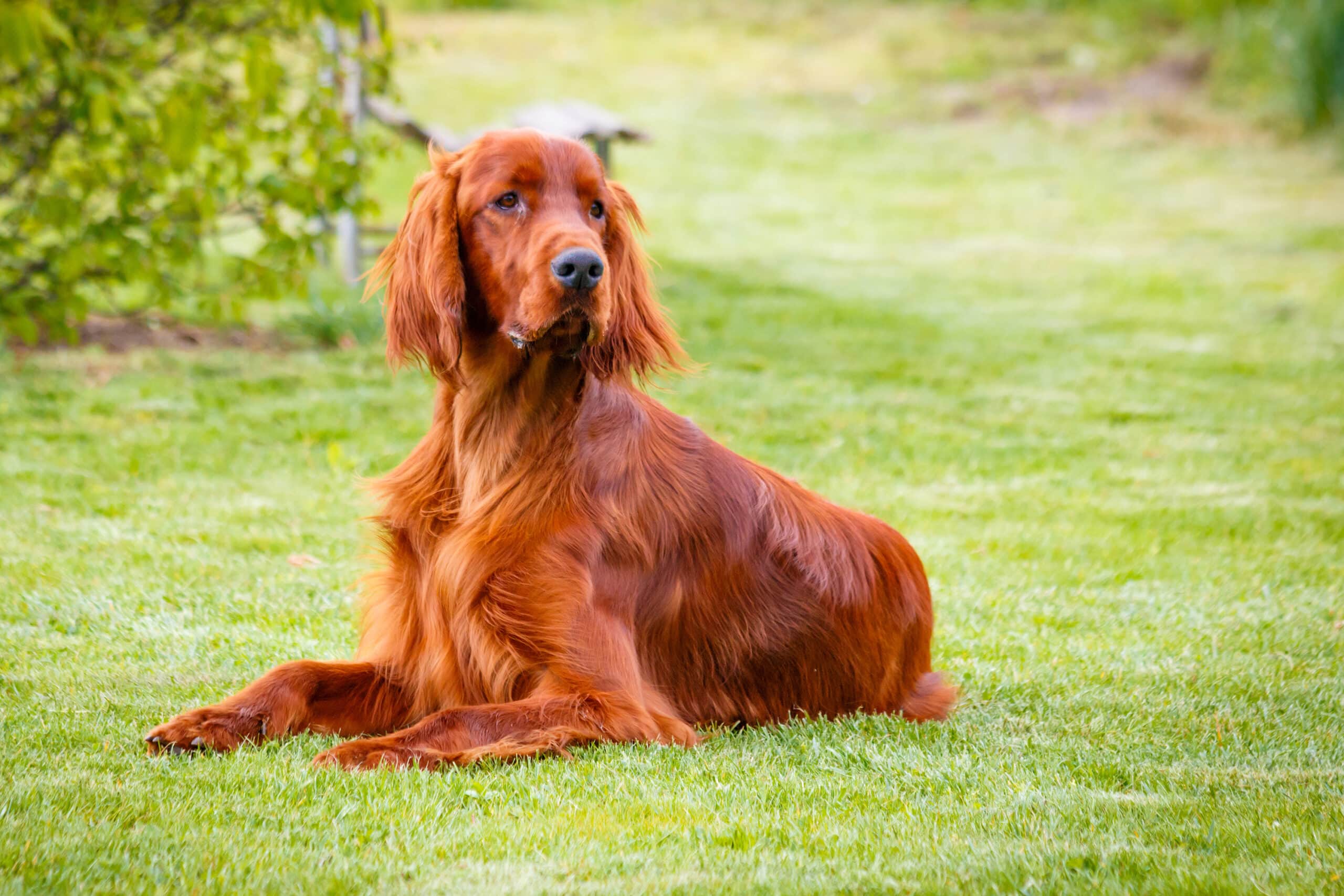
The Irish Setter is a strikingly beautiful, high-energy breed that is an ideal match for kids with ADHD who need a running partner and a joyful daily companion. Weighing 60 to 70 lbs, Irish Setters are enthusiastic, affectionate, and perpetually playful. Their long lifespan — up to 15 years — means a deep, lasting bond through a child’s most formative years.
Irish Setters have a mahogany to chestnut red coat with silky feathering on the legs, chest, and tail. Their heads are elegant and narrow. In motion, they are one of the most beautiful dogs alive — flowing and graceful at full gallop.
People know Irish Setters are active. What surprises families is how openly affectionate they are — they lean into people, make eye contact, and track their person’s emotions with striking awareness. What’s genuinely unexpected is that despite their size and energy, Irish Setters rarely knock children down. Their body awareness is unusually precise.
“Rudy runs with my son every single morning before school. My son’s teacher noticed the difference in the first week. He said it was like a different kid walked in.”
— Kevin B., Irish Setter owner for 6 years
- Long lifespan — grows up alongside the child
- Deeply joyful — lifts household mood daily
- Excellent running and outdoor adventure partner
- Needs 60–90 min of running — not a casual walk
- Gets separation anxiety if left alone too long
- Coat tangles without regular brushing
Best for: Highly active families · Kids who love running · Parents who can commit to daily outdoor exercise
Side-by-Side Comparison: All 10 Breeds at a Glance
| Breed | Size | Energy | Grooming | Best For |
|---|---|---|---|---|
| Golden Retriever | Large | High | Moderate | Emotional co-regulation |
| Labrador Retriever | Large | High | Low | Routine-building |
| Cavalier KCS | Small | Moderate | Moderate | Sensory-sensitive kids |
| Beagle | Medium | High | Low | Outdoor energy outlet |
| Standard Poodle | Large | High | High | Allergy-prone families |
| Border Collie | Medium | Very High | Moderate | Turbo-energy kids |
| Boxer | Large | High | Very Low | Rough-and-tumble play |
| Cocker Spaniel | Medium | Moderate | High | Self-regulating bond |
| Bernese Mountain Dog | Very Large | Moderate | Moderate | Deep-pressure calming |
| Irish Setter | Large | Very High | Moderate | Active running families |
Which Dog Breed Is Right for Your Child with ADHD?
Every family is different. The right dog breed for your child depends on your child’s energy level, your home size, and how much time you can commit to exercise and training. Here’s a simple guide.
- If your child has intense emotional swings and needs calming comfort → choose the Golden Retriever or Bernese Mountain Dog.
- If your child needs routine and structure → choose the Labrador Retriever — their feeding and walking schedule naturally creates daily anchors.
- If your child has sensory sensitivities and needs a quiet, gentle companion → choose the Cavalier King Charles Spaniel.
- If your child has boundless physical energy and needs a running partner → choose the Irish Setter or Border Collie.
- If someone in your family has allergies → choose the Standard Poodle.
- If you want a low-maintenance coat with high playfulness → choose the Boxer or Beagle.
You might be thinking: what if my child loses interest after a few months? Here’s the honest answer — that’s a real risk with any child, but especially with ADHD. The fix is preparation. Involve your child in choosing the breed, setting up the routine, and naming the dog. Ownership that begins before the dog arrives lasts much longer than a surprise.
Before committing to any breed, spend time with adult dogs of that breed — not just puppies. Puppies show very little of their future temperament. An adult dog lets you see exactly what you’re getting. Ask rescues or breeders to let your child spend 30 minutes with a few different dogs before you decide.
What Most People Get Wrong About Dogs and ADHD
The most common mistake? Choosing a breed based on looks alone. A dog’s appearance tells you almost nothing about whether it will help or overwhelm a child with ADHD. Breed temperament is what matters.
The second mistake is choosing a breed based on size alone. Small dogs are not automatically calmer. Some small breeds — like Jack Russell Terriers — are high-strung and reactive. Some large breeds — like the Bernese Mountain Dog — are naturally calm and quiet. Match the dog’s personality to your child’s needs, not the other way around.
Third — and this one matters a lot — many families assume the dog will automatically help. It won’t, on its own. A dog helps a child with ADHD when the child has responsibilities around that dog. Feeding, walking, brushing. These routines are what build focus and structure. The dog is the reason your child sticks to them.
Research consistently shows that pet ownership improves emotional regulation, empathy, and time management in children with ADHD — but only when the child has a real, active role in caring for the pet. If parents take over all the dog care, those benefits disappear fast. For more guidance on matching dog breeds to different family situations, check out our guide to the best dog breeds for families with cats if you already have other pets at home.
Never surprise a child with ADHD with a new dog. Kids with ADHD struggle with unexpected transitions. A surprise pet can backfire badly — the initial excitement fades fast, and the child may disengage entirely. Instead, make the whole process a shared project. The experts at Understood.org agree: involving your child in every step is essential for lasting success.
How to Introduce a New Dog to a Child with ADHD
Getting the right breed is step one. Step two is making sure the introduction goes well. Here’s what most experts agree works best.
Start with a calm, neutral meeting place — not your home. A pet store, a park, or the breeder’s yard. Your home carries sensory associations. A neutral space lets both the dog and your child start fresh.
Keep the first meeting short — 20 to 30 minutes maximum. Kids with ADHD can tip from excited to overwhelmed quickly. The same is true for a new dog. A brief, positive first meeting is better than a long, overstimulating one.
Before the dog comes home, build the routine on paper together. Who feeds the dog? When? Who walks the dog, and at what time? Write it out. Stick it on the fridge. Kids with ADHD do better with visible, concrete systems than with verbal reminders.
Finally — give the dog a quiet retreat. A crate or a designated bed in a low-traffic room. The dog needs a space where it can rest undisturbed. This protects the dog’s wellbeing and prevents situations where a cornered, tired dog reacts negatively to an overeager child. The CDC’s ADHD data shows nearly 1 in 9 children are diagnosed with ADHD — understanding their specific needs makes the dog-child bond far more successful.
In 2026, an estimated 7 million U.S. children ages 3–17 have an ADHD diagnosis. Families increasingly turn to dogs as a complementary support tool — not a replacement for therapy or medication, but a genuine, daily source of structure, movement, and emotional connection. The science consistently supports it.
This brings us to the next question families always ask: does the dog breed matter as much as the individual dog’s personality? The short answer is yes — and no. The breed sets the probability. An individual dog’s temperament narrows the guarantee. Meeting the actual dog before committing is the single most important step you can take.
Frequently Asked Questions
What is the number one dog breed recommended for kids with ADHD?
The Golden Retriever is most frequently recommended for kids with ADHD by therapists, pediatricians, and behavioral experts. Their patient temperament, emotional attunement, and tolerance for unpredictable child behavior make them a consistently excellent match. Labrador Retrievers are a close second, especially for very active families.
Can a dog actually help reduce ADHD symptoms in children?
Yes — research supports it. Studies show that children with ADHD focus better in therapy sessions when a trained dog is present. At home, the routine of caring for a dog helps build time management, responsibility, and emotional regulation. Dogs are not a cure or a replacement for treatment, but they are a meaningful daily support tool.
Are small dogs good for kids with ADHD?
Some small breeds work well — particularly the Cavalier King Charles Spaniel and the Beagle. Avoid very small, fragile breeds like Chihuahuas or Toy Poodles. Kids with ADHD can miss warning signs that a dog is uncomfortable, and a small, easily startled dog can react with a bite. Sturdiness and a calm temperament matter more than size.
How do I help my child with ADHD stay responsible for a dog long-term?
Make dog care visible and concrete. Create a chart that shows feeding times, walk times, and brush days. Build it into the daily schedule — not as an optional task but as a fixed routine. Pair the dog’s care routine with existing anchors like breakfast or after-school time. Dogs that are part of a rhythm stay the responsibility of a child far longer than dogs added loosely to an unstructured day.
Should I choose a puppy or an adult dog for a child with ADHD?
Most experts recommend an adult dog for families with children who have ADHD. Puppies require intense supervision, are easily overstimulated, and have not yet developed the patient temperament that makes a dog safe for a child who might handle them too roughly. An adult dog’s personality is already formed — what you see is what you get, which removes a lot of uncertainty.
The right dog won’t fix ADHD. But it will give your child a reason to get up at the same time every day, a reason to go outside, and something that loves them without condition — no matter how hard the day was. That’s not nothing. That’s everything. I’m Thomas Cutter, and if I could give every family with an ADHD child one gift, it would be the right dog.
t-dog-breeds-families-toddlers/ → placed in Labrador Retriever entry with anchor text “how Labs and other gentle breeds rank for families with toddlers”
— https://findoutaboutdogs.com/dog-breeds/best-dog-breeds-for-families-with-allergies/ → placed in Standard Poodle entry with anchor text “best hypoallergenic dog breeds for families”
— https://findoutaboutdogs.com/dog-breeds/best-dog-breeds-for-families-with-cats/ → placed in “What Most People Get Wrong About Dogs and ADHD” with anchor text “best dog breeds for families with cats”

Thomas Cutter is a lifelong dog owner and the founder of FindOutAboutDogs.com. With over 10 years of hands-on experience owning multiple breeds, Thomas created this site to provide honest, research-based dog advice that real owners can actually trust.
