Best 10 Dog Breeds for Mountain Hiking — Picked by Trail-Tested Owners (2026)
Quick Answer
The best dog breeds for mountain hiking are Australian Shepherds, Border Collies, Siberian Huskies, German Shorthaired Pointers, Vizslas, Rhodesian Ridgebacks, Standard Poodles, Alaskan Malamutes, Labrador Retrievers, and Bernese Mountain Dogs. Your pick depends on climate, trail length, and your own pace. Cold, snowy peaks favor thick-coated breeds like Huskies and Malamutes. Hot, dry trails suit short-coated athletes like Vizslas and Ridgebacks. All ten need daily exercise, trail training, and a vet check before serious elevation gain.
Which factor matters most for your hike?
- Cold or high-altitude trail → a double-coated breed like a Husky or Malamute
- Long summer distance days → a lean, short-coated breed like a Vizsla or Ridgeback
- First mountain hike ever → a biddable all-rounder like a Labrador or Standard Poodle
Your dog is dragging at mile two. You’re only a third of the way up, and the trail gets steeper from here. That’s not a training problem — it’s usually a breed problem.
I’m a longtime hiker who has taken dogs up everything from gentle foothill loops to rocky alpine scrambles, and I’ve watched the wrong breed turn a good trip into a rescue mission. The right breed turns it into the best part of your week.
This guide covers the 10 dog breeds that handle mountain terrain best in 2026, why each one works, and how to tell which one actually fits your trails, your climate, and your own hiking pace.
- Breed matters more than size. Some small dogs out-hike big ones on steep ground.
- Coat type should match your climate, not just how the dog looks in photos.
- Every breed on this list still needs conditioning before a real mountain hike.
- Paw health, water intake, and altitude limits matter more than raw stamina.
- A dog’s temperament on the trail matters as much as its energy level.


What Makes a Dog Breed Good for Mountain Hiking?
A great mountain hiking breed combines high stamina, sturdy joints, weather-ready coat, and a calm trail temperament. Working and sporting breeds built for all-day outdoor jobs — herding, pointing, sledding — tend to outperform companion breeds bred mainly for looks or lap time. Most experts agree that endurance and structure matter more than raw size when picking a hiking dog.
Four traits decide whether a breed thrives on mountain trails:
- Stamina: Can the dog sustain hours of movement, not just short bursts?
- Coat: Does the coat protect against cold, sun, brush, and bugs?
- Structure: Are the joints and paws built for uneven, rocky ground?
- Temperament: Does the dog stay focused around wildlife and other hikers?
Here’s why that matters: a Chihuahua and a Malamute can both be “energetic,” but only one is built for a 6-mile alpine climb. So what does that mean for you? Match the breed’s original job to your trail conditions, not just its energy label on a pet-store chart.
What Most People Get Wrong About Hiking Dog Breeds
Many owners assume any “athletic-looking” dog can handle a mountain trail. That’s usually wrong. A lean body doesn’t guarantee good joints, and a thick coat doesn’t guarantee cold tolerance in wet conditions — a soaked double coat can chill a dog fast.
Another common mistake: assuming young dogs are always hiking-ready. Growth plates in large breeds often don’t close until 12 to 18 months. The AKC’s own hiking training guide notes that hiking isn’t right for every dog and depends on age, breed, and health — always check with a vet first.
Honest scope statement: This article covers breed-level fit for mountain hiking. If your dog has a diagnosed joint, heart, or respiratory condition, your vet’s guidance always overrides any breed generalization here.
The 10 Best Dog Breeds for Mountain Hiking — Ranked and Reviewed
These 10 breeds were chosen for stamina, structure, coat performance, and trail temperament. Each one is reviewed for real strengths and honest drawbacks — no breed here is perfect for every trail.
Australian Shepherd — “The Tireless Switchback Machine”
 Save
Save| Weight | 40-65 lbs |
| Height | 18-23 in |
| Lifespan | 12-15 years |
| Energy Level | Very high |
| Grooming Need | Weekly brushing |
| Shedding | Moderate, heavier twice a year |
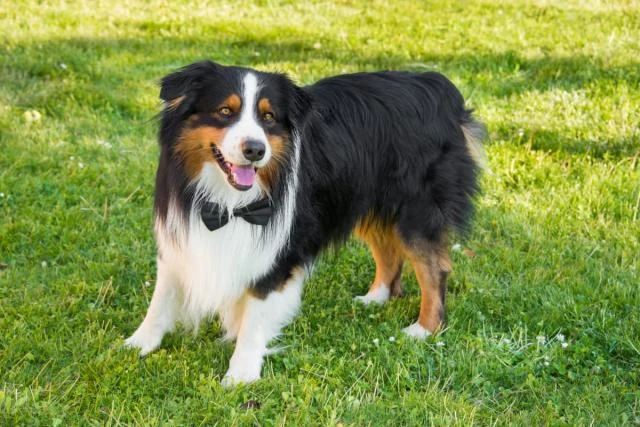
The Australian Shepherd is a medium-size herding dog known for tireless energy and sharp footwork on rough ground. Weighing 40 to 65 lbs, it reads terrain changes fast and rarely stumbles on scree or roots. Its herding instinct makes it watchful of you at all times. This makes it ideal for owners who want a dog that stays close without a leash tug.
An Aussie’s medium double coat sheds trail debris well and sheds seasonally at home. Their merle or solid coats often carry copper points that stand out against green trailside brush.
Most owners expect a friendly farm dog. What surprises new hikers is how much this breed reads your body language — it slows before you do when a trail gets technical. That instinct came from centuries of anticipating a shepherd’s next move on open range.
You might be thinking an Aussie sounds too intense for a casual hiker. Here’s why that’s not quite right: their intensity is aimed at working with you, not against you, so a few solid obedience sessions channel that drive into trail focus instead of chaos.
Pros and cons below.
- Reads uneven terrain quickly
- Naturally sticks close on the trail
- Handles full-day hikes with ease
- May try to herd other hikers or dogs
- Needs daily work, not just walks
- Prone to eye and joint issues
Best for: Active owners · Trail runners · Off-leash-trained hikers
See if an Aussie also fits a busy family’s schedule
Border Collie — “The Peak-Bagging Genius”
| Weight | 30-45 lbs |
| Height | 18-22 in |
| Lifespan | 12-15 years |
| Energy Level | Extremely high |
| Grooming Need | Weekly brushing |
| Shedding | Moderate |
The Border Collie is widely regarded as the most athletic and trainable herding breed, built for nonstop movement over open, uneven ground. At 30 to 45 lbs, it’s light enough for steep switchbacks yet strong enough for long days. Its problem-solving mind picks smart lines around rocks and roots. This makes it ideal for hikers tackling technical, multi-hour routes.
Their moderate double coat sits flat and sheds mud easily. Ears fold forward, framing an alert, focused expression common on working lines.
Everyone knows Border Collies are smart. What’s less known is how much they problem-solve terrain itself — picking the shortest safe line down a rocky descent almost like they’ve scouted it before. That’s not obedience. That’s raw spatial reasoning bred over generations of herding on Scottish hillsides.
So if you’re short on time but still want serious mileage, a Border Collie’s efficiency on the trail means you cover more ground with less wasted motion from your dog.
Give a Border Collie a “job” on the trail, like carrying a small pack, or its brain will invent one for you.
- Elite stamina on steep, long routes
- Learns trail commands almost instantly
- Compact size suits narrow ridgelines
- Bores fast without mental challenge
- Can fixate on wildlife or bikes
- Too much drive for casual walkers
Best for: Endurance hikers · Trail runners · Owners who love training
Read about Border Collies in working households
Siberian Husky — “The Snowline Specialist”
| Weight | 35-60 lbs |
| Height | 20-23.5 in |
| Lifespan | 12-14 years |
| Energy Level | High |
| Grooming Need | Weekly, daily during coat blow |
| Shedding | Heavy, seasonal “blowout” |
The Siberian Husky is a sled-dog breed built to move efficiently across cold, snowy terrain for hours. Weighing 35 to 60 lbs, it has a thick double coat that insulates against wind and freezing temperatures. Its endurance comes from generations of long-distance work, not sprinting. This makes it ideal for hikers who tackle snowy or high-elevation winter trails.
The Husky’s dense undercoat and guard hairs shed snow instead of soaking it in. Striking blue, brown, or bi-colored eyes are common and don’t affect vision or health.
People expect Huskies to struggle in heat, and that’s true. What surprises owners is how well they self-regulate pace on long climbs, settling into a steady trot instead of burning out with fast bursts like a sprinting breed.
You might think that thick coat means overheating risk on any warm day. Here’s why that’s mostly right: a Husky is the wrong pick for a summer desert trail, but it’s one of the best choices once snow or freezing wind is involved.
Huskies have a strong prey drive and a famous escape instinct. Keep them leashed near wildlife and cliff edges.
- Thrives in snow and freezing wind
- Paces itself well on long climbs
- Built-in cold weather insulation
- Overheats fast in warm weather
- Strong instinct to chase and roam
- Heavy seasonal coat blowout
Best for: Cold-climate hikers · Winter backpackers · Snowshoe adventurers
Compare large, active breeds against calmer options
German Shorthaired Pointer — “The All-Day Engine”
| Weight | 45-70 lbs |
| Height | 21-25 in |
| Lifespan | 10-12 years |
| Energy Level | Very high |
| Grooming Need | Low, occasional wipe-down |
| Shedding | Moderate, short hair |
The German Shorthaired Pointer is a hunting breed built for hours of nonstop field and forest work. Weighing 45 to 70 lbs, it has a short, low-maintenance coat and lean, muscular build. Its nose stays locked on scent even on rugged switchbacks. This makes it ideal for owners who hike long distances at a brisk, steady pace.
The GSP’s short liver or liver-and-white coat sheds burrs and mud with a quick shake. Its docked or natural tail whips constantly when the trail gets interesting.
Most people know GSPs as bird dogs. What they don’t expect is how much this breed treats a mountain trail like a hunting field, working every scent cone along the path with total focus and energy that rarely dips.
As a result, a tired GSP owner usually means a well-exercised one — this breed needs 60 to 90 minutes of real output daily, and a mountain trail is one of the few things that fully meets that need.
- Low-maintenance short coat
- Huge stamina for long distances
- Athletic build for steep, rocky terrain
- Scent-driven, easily distracted
- Thin coat struggles in deep cold
- Needs serious daily exercise
Best for: Distance hikers · Trail runners · Hunters who also hike
Vizsla — “The Velcro Trail Athlete”
:strip_icc()/HillaryKladkeGettyImages-964594770-505a264849384317a11e77259e8e5feb.jpg) Save
Save| Weight | 44-60 lbs |
| Height | 21-24 in |
| Lifespan | 12-14 years |
| Energy Level | Very high |
| Grooming Need | Very low |
| Shedding | Low to moderate |
The Vizsla is a Hungarian pointing breed known for its lean build and close bond with its owner. At 44 to 60 lbs, it’s light enough for fast climbs yet strong enough for full-day mileage. Its short, rust-colored coat sheds heat quickly on warm ascents. This makes it ideal for hikers who want a dog glued to their side, not ranging far ahead.
The Vizsla’s smooth golden-rust coat glows in direct sun and needs almost no brushing. Its lean, wedge-shaped head and amber eyes give it a constantly alert look.
Everyone calls Vizslas “velcro dogs,” and that’s accurate off-trail too. What surprises hikers is how literally that plays out on narrow paths — a Vizsla will brush against your leg on purpose, using contact as reassurance during exposed sections.
So if you hike alone often, a Vizsla’s constant closeness isn’t clinginess. It’s a built-in check-in system that keeps both of you aware of each other on tricky ground.
- Stays close without much training
- Minimal grooming or shedding upkeep
- Handles heat better than double coats
- Struggles with separation and solitude
- Thin coat, poor cold tolerance
- Needs 60+ minutes of exercise daily
Best for: Solo hikers · Warm-climate trails · Owners wanting a close bond
Rhodesian Ridgeback — “The Heat-Proof Marathoner”
| Weight | 70-85 lbs |
| Height | 24-27 in |
| Lifespan | 10-12 years |
| Energy Level | High |
| Grooming Need | Very low |
| Shedding | Low |
The Rhodesian Ridgeback is a large African hunting breed built to track game for miles under a hot sun. Weighing 70 to 85 lbs, it carries a short coat and lean, powerful frame. Its signature ridge of reverse-growing hair runs down its spine. This makes it ideal for hikers on exposed, sun-heavy trails with steady, moderate pace.
Its short, wheaten coat lies close and sheds heat efficiently in direct sun. The dorsal ridge, its most famous feature, has no effect on hiking ability.
People assume a dog this size needs constant activity. What’s less known is that Ridgebacks are famously efficient movers — they conserve energy on flat ground, then shift into a steady, ground-eating trot on long climbs.
You might be thinking a dog bred to hunt lions needs an experienced handler. Here’s why that’s mostly true: Ridgebacks are independent thinkers, so consistent leash training matters more here than with more eager-to-please breeds.
- Excellent heat and sun tolerance
- Efficient, ground-covering trail pace
- Low grooming, short coat
- Independent, can ignore recall
- Poor cold tolerance in winter
- Needs an experienced handler
Best for: Hot-climate hikers · Experienced dog owners · Long, flat approach trails
Standard Poodle — “The Underrated All-Rounder”
| Weight | 45-70 lbs |
| Height | Over 15 in, usually 22-27 |
| Lifespan | 12-15 years |
| Energy Level | High |
| Grooming Need | High, every 4-6 weeks |
| Shedding | Minimal |
The Standard Poodle is a large, water-bred retriever known for sharp intelligence and an athletic, muscular frame under its curly coat. Weighing 45 to 70 lbs, it handles distance, elevation, and creek crossings with ease. Its low-shed coat suits allergy-prone hikers. This makes it ideal for owners who want an intelligent, agile dog without heavy shedding at home.
The dense, curly coat protects against brush and cold water but mats fast without upkeep. Many trail owners keep it clipped short for hiking season.
People picture Poodles in show-ring haircuts, not on granite scrambles. What actually surprises hikers is how sure-footed and water-confident this breed is — it was originally bred to retrieve waterfowl in cold lakes, not to sit on a lap.
Even better, that same water confidence means Standard Poodles cross creeks and rocky stream beds with far less hesitation than many “tougher-looking” breeds.
- Minimal shedding, allergy-friendly
- Confident in water and creek crossings
- Sharp intelligence, trains quickly
- Coat mats fast without upkeep
- Frequent professional grooming needed
- Can be sensitive to rough handling
Best for: Allergy-conscious hikers · Creek and water trails · Owners wanting a trainable dog
Compare more minimal-shedding family dog breeds
Alaskan Malamute — “The Heavy-Duty Pack Hauler”
| Weight | 75-85 lbs |
| Height | 23-25 in |
| Lifespan | 10-14 years |
| Energy Level | High |
| Grooming Need | High, thick double coat |
| Shedding | Heavy, seasonal |
The Alaskan Malamute is a large sled-hauling breed built for strength over speed on cold, demanding terrain. Weighing 75 to 85 lbs, it can carry a loaded dog pack for miles without tiring. Its dense double coat handles snow, wind, and freezing temperatures well. This makes it ideal for winter backpackers who want a dog that can help share the load.
The plush double coat comes in gray, black, or red with white markings, and always sheds heavily twice a year. Its broad chest and heavy bone reflect generations of freight-hauling work.
Most people confuse Malamutes with Huskies. What owners quickly learn is the difference in job history — Malamutes were bred for hauling heavy loads slowly, not racing, so they favor strength and grit over blazing speed.
That strength has a real trail use: a fit Malamute can carry a well-fitted pack with your extra gear, food, and water, easing your own load on multi-day mountain routes.
Malamutes overheat easily. Avoid hard climbs in warm weather and always carry extra water.
- Can safely carry a loaded dog pack
- Excellent cold and snow tolerance
- Steady, tireless pace on long routes
- Overheats quickly in warm weather
- Heavy shedding twice a year
- Strong-willed, needs firm training
Best for: Winter backpackers · Cold-climate hikers · Owners wanting a pack dog
Labrador Retriever — “The Reliable Trail Companion”
| Weight | 55-80 lbs |
| Height | 21.5-24.5 in |
| Lifespan | 10-12 years |
| Energy Level | High |
| Grooming Need | Low, weekly brushing |
| Shedding | Moderate to heavy |
The Labrador Retriever is one of the most popular breeds in the world, known for its steady temperament and eager-to-please attitude on any trail. Weighing 55 to 80 lbs, it handles moderate mountain terrain with reliable stamina. Its friendly nature makes it easygoing around other hikers and dogs. This makes it ideal for first-time hikers who want a forgiving, adaptable trail dog.
The short, water-resistant coat sheds year-round and comes in black, yellow, or chocolate. Its thick “otter tail” acts almost like a rudder near water crossings.
Everyone knows Labs as friendly family dogs. What’s less obvious is how well that same easygoing nature translates to trail manners — Labs rarely panic around loud groups, other dogs, or sudden wildlife encounters.
So if your mountain hikes involve busy, popular trails rather than remote wilderness, a Lab’s calm social confidence beats a more reactive working breed almost every time.
- Calm, forgiving trail temperament
- Handles moderate elevation well
- Confident around crowds and water
- Prone to hip and elbow issues
- Can overeat and gain weight fast
- Less suited to extreme terrain
Best for: First-time hiking dogs · Family hikers · Popular, moderate trails
See other friendly breeds that suit busy trails and families
Bernese Mountain Dog — “The Born Mountaineer”
| Weight | 70-115 lbs |
| Height | 23-27.5 in |
| Lifespan | 7-10 years |
| Energy Level | Moderate |
| Grooming Need | Moderate, 2-3 times weekly |
| Shedding | Heavy, year-round plus seasonal |
The Bernese Mountain Dog is a large Swiss working breed developed to haul carts and herd on actual alpine slopes. Weighing 70 to 115 lbs, it moves calmly but confidently over rocky, steep ground. Its thick tricolor coat handles cold mountain air well. This makes it ideal for slower-paced hikers who want a steady, calm companion at altitude.
The long, silky black, rust, and white coat sheds heavily and needs regular brushing to avoid matting on the trail.
People expect a dog this large to be clumsy on rocky slopes. What actually happens is the opposite — Bernese Mountain Dogs were literally bred to work Swiss mountain farms, so their footing on uneven alpine ground is naturally sure and calm.
Here’s why that matters for older or heavier-set dogs like this one: their comfortable pace is naturally slower than a herding or sporting breed, which suits hikers who prefer a relaxed, scenic climb over a fast-paced push.
This breed has a shorter lifespan and a higher risk of joint and heart issues. Keep hikes moderate and get regular vet checks.
- Naturally sure-footed on steep slopes
- Calm, gentle trail temperament
- Built-in cold weather tolerance
- Shorter average lifespan
- Struggles in hot weather
- Heavy year-round shedding
Best for: Slower-paced hikers · Cool-climate trails · Owners wanting a calm giant breed
How Do These 10 Hiking Breeds Compare Side by Side?
No single breed wins on every trail condition. Herding breeds like Australian Shepherds and Border Collies lead on stamina and technical terrain. Double-coated breeds like Huskies and Malamutes dominate in snow and cold. Short-coated athletes like Vizslas and Ridgebacks handle heat best. Use the table below to match a breed to your climate and trail style.
| Breed | Best Climate | Best Trail Type | Grooming |
|---|---|---|---|
| Australian Shepherd | Mild to cool | Technical, switchback-heavy | Moderate |
| Border Collie | Mild to cool | Long, steep, technical | Moderate |
| Siberian Husky | Cold, snowy | Winter, high elevation | High, seasonal |
| German Shorthaired Pointer | Mild to warm | Long, brisk-paced trails | Low |
| Vizsla | Mild to warm | Solo, close-contact hikes | Very low |
| Rhodesian Ridgeback | Warm, dry | Long, exposed approaches | Very low |
| Standard Poodle | Mild, humid | Creek crossings, mixed terrain | High |
| Alaskan Malamute | Cold, snowy | Multi-day, pack-carrying trips | High, seasonal |
| Labrador Retriever | Mild, most climates | Moderate, busy trails | Low |
| Bernese Mountain Dog | Cool, mild | Slower-paced, steep alpine | Moderate to high |
Which Mountain Hiking Breed Is Right for You?
The right breed depends on your climate, pace, and experience level more than personal taste. A fast climber in a cold region needs a different dog than a relaxed weekend hiker in a warm valley. Use these scenarios to narrow your choice.
- If you hike mostly in snow or high elevation cold → a Siberian Husky or Alaskan Malamute will handle it best.
- If you tackle hot, dry, exposed trails → a Vizsla or Rhodesian Ridgeback suits the climate better.
- If you want fast, technical, all-day routes → a Border Collie or Australian Shepherd will keep pace.
- If this is your first hiking dog → a Labrador Retriever or Standard Poodle offers a gentler learning curve.
What Do New Mountain Hiking Dogs Need Before Their First Big Trail?
Every breed on this list still needs conditioning, gear, and a vet check before a real mountain hike. Build up distance gradually, protect paws on rocky ground, and always carry more water than you think you’ll need. Skipping this step causes most hiking injuries, not the breed itself.
- Build stamina slowly. Start with flat 2-mile walks, then add elevation over several weeks.
- Protect the paws. Hot rock, sharp scree, and ice all damage pads. Dog boots help on rough terrain.
- Watch for altitude effects. Dogs can get altitude sickness too — watch for lethargy, vomiting, or heavy panting.
- Pack for two. Bring double the water you expect to need, plus a collapsible bowl and dog-safe snacks.
The AKC’s hiking safety guide is a solid starting point for gear checklists and trail etiquette basics before your first serious climb.
Mistakes New Mountain Hiking Dog Owners Make
Skipping paw checks after rocky trails is one of the most common causes of limping the next day.
- Pushing distance too fast: increase mileage by no more than 10% a week.
- Ignoring heat signs: heavy panting and bright red gums mean stop and cool down now.
- Skipping the vet check: confirm joints and heart are cleared before steep, long hikes.
- Forgetting leash rules: many parks require leashes to protect wildlife and other hikers.
Frequently Asked Questions
What is the best dog breed for high-altitude hiking?
Siberian Huskies and Alaskan Malamutes handle high altitude and cold best, thanks to their sled-dog lung capacity and thick double coats. Both need a gradual buildup and plenty of water, since altitude affects dogs just as it affects people.
Can small dog breeds hike mountains too?
Some small breeds can handle short mountain trails, but most lack the stamina and paw toughness for long, steep climbs. Larger working and sporting breeds on this list generally outperform small breeds on true mountain terrain.
How far can a healthy hiking dog go in one day?
A well-conditioned breed like a Border Collie or GSP can often cover 8 to 12 miles with proper training. Always build up gradually and let your dog’s pace, not a mileage goal, guide the day.
Do dogs need special gear for mountain trails?
Yes. A well-fitted harness, dog boots for rocky terrain, a collapsible water bowl, and a basic pet first aid kit cover most situations. Cold-climate hikes also call for a dog coat if the breed lacks a thick undercoat.
Is it safe to bring a puppy on a mountain hike?
Wait until growth plates close, usually 12 to 18 months for large breeds, before attempting steep or long hikes. Short, flat walks are fine earlier, but real mountain terrain can strain still-developing joints.
Conclusion
The best mountain hiking dog is the one built for your climate, your pace, and your trail type — not just the breed with the most impressive photos. Match coat and stamina to your conditions first, then train steadily from there.
One thing to do right now: pick the breed from this list that matches your climate, then book a vet check before your next serious hike. I’m glad this guide helped you get closer to your next trailhead.
Thomas Cutter is a lifelong dog owner and the founder of FindOutAboutDogs.com. With over 10 years of hands-on experience owning multiple breeds, Thomas created this site to provide honest, research-based dog advice that real owners can actually trust.
