Best 10 Dog Breeds for Nursing Home Residents — Chosen for Comfort, Calm, and Companionship
Quick Answer
The best dog breeds for nursing home residents are small, calm, and low-shedding, since most facilities have weight limits and shared indoor spaces. Top picks include the Cavalier King Charles Spaniel, Bichon Frise, Shih Tzu, Maltese, Toy Poodle, Havanese, French Bulldog, Pug, Pomeranian, and Cocker Spaniel. Each combines a gentle temperament with easy handling for aging hands and limited mobility.
What to check before choosing a breed:
- Facility weight limit and pet policy
- Shedding and allergy risk for shared rooms
- Bark level and noise tolerance rules
- How much daily exercise the resident can give
Quick first steps:
- Call the facility for its exact pet policy
- Meet the dog before committing
- Ask about a trial visit period
Picture a quiet common room. Sunlight on the carpet. Then a small, warm dog rests its chin on someone’s knee, and the whole room softens. I’m Maren Ellis, and I’ve spent the last nine years placing therapy and companion dogs in assisted living communities across the Midwest. This guide covers what I’ve learned about matching the right breed to nursing home life.
Not every dog fits this setting. Big, bouncy, or vocal breeds can knock over a walker or startle a resident with poor balance. The good news is that plenty of breeds are built for exactly this kind of gentle, close-quarters companionship.
- Small, calm breeds under 20 lbs fit most nursing home weight limits.
- Low-shedding coats matter more indoors than outdoors — they protect shared air quality.
- Quiet, non-reactive temperament matters more than looks or popularity.
- Always confirm the facility’s exact pet policy before you commit to a breed.
- A short trial visit tells you more than any breed profile ever will.


What Makes a Dog Breed Right for a Nursing Home?
A nursing-home-friendly breed is small, quiet, and easygoing, with low exercise needs and a coat that doesn’t shed heavily. It should tolerate wheelchairs, walkers, and unpredictable movement without flinching or reacting. Most facilities also cap weight at 15 to 25 lbs, so size is often the first filter.
Weight and size decide whether staff can safely lift the dog and whether it fits facility rules. Temperament decides whether the dog stays calm around medical equipment, loud carts, and sudden noises. Grooming needs decide how much upkeep falls on staff or family. Together, these three factors explain why the same handful of breeds keep showing up on every senior-living recommendation list.
I once placed a Cavalier King Charles Spaniel with a resident who used a wheelchair full-time. That taught me something: the dog’s ability to sit calmly at wheel height mattered more than any pedigree. Small size isn’t just cute — it’s practical safety.
You might be thinking a bigger, more “impressive” dog would offer more comfort. Here’s why that’s usually backwards in this setting: a large dog’s tail can knock over a walker, and its weight can pull an unsteady resident off balance during a walk.
What Most People Get Wrong About Dogs for Nursing Homes
Many families assume any calm-looking dog will do, or that a purebred guarantees good behavior. Neither is reliable on its own. Temperament varies by individual dog, not just by breed, and even calm breeds need proper introductions to wheelchairs, oxygen tanks, and hallway noise.
Another common mix-up: people confuse “hypoallergenic” with “allergy-proof.” No breed is 100% allergen-free — low-shedding coats simply spread less dander than heavy-shedding ones. So if you’re choosing a breed for a shared facility, ask about the coat type, not just the breed’s reputation.
A third misunderstanding is size alone. A small dog that barks at every noise can be harder on a nursing home floor than a larger, quieter one. Match temperament first, then confirm the dog fits the facility’s weight limit.
The 10 Best Dog Breeds for Nursing Home Residents — Ranked and Reviewed
This list ranks each breed by how well it fits nursing home life: size, temperament, grooming, and how easily staff and residents can handle daily care. Every entry includes real stats, honest pros and cons, and an owner’s first-hand experience.
Cavalier King Charles Spaniel — “The Velcro Lap Dog”
| Weight | 12 to 18 lbs |
| Height | 12 to 13 inches |
| Lifespan | 12 to 15 years |
| Energy Level | Low to moderate |
| Grooming Need | Moderate — brush 3x weekly |
| Shedding | Moderate, year-round |
The Cavalier King Charles Spaniel is a small, affectionate toy breed known for staying glued to its person’s side. Weighing 12 to 18 lbs, it’s light enough for most staff to lift with care. Gentle and eager to please, it settles happily on a lap or wheelchair tray, making it ideal for residents with limited mobility.
Their silky, medium-length coat frames a soft, wide-eyed face that many people describe as instantly calming. One detail surprises new owners: Cavaliers make almost no noise, even when excited.
Most people expect a lap dog to be lazy and dull. Cavaliers are affectionate, sure, but they also perk up and follow every hallway visitor with quiet curiosity. They’ll rest a paw on your hand during a nap — a small habit residents often mention first.
“My mother forgets a lot these days, but she never forgets to ask if the dog is coming on Tuesday.”
— Denise R., Cavalier owner and family caregiver for 4 years
- Rarely barks or startles easily
- Loves sitting still for long stretches
- Bonds fast with new caregivers
- Coat mats without regular brushing
- Prone to heart issues later in life
- Struggles with being left alone
Best for: Wheelchair users · Residents who want a lap companion · First-time facility dog visitors
→ Best lap dog breeds seniors love most
Bichon Frise — “The Cotton Ball Companion”
 Save
Save| Weight | 7 to 12 lbs |
| Height | 9 to 11 inches |
| Lifespan | 14 to 15 years |
| Energy Level | Moderate |
| Grooming Need | High — trim every 4 to 6 weeks |
| Shedding | Very low, hypoallergenic coat |
The Bichon Frise is a small, curly-coated breed built for indoor life and close human contact. Weighing 7 to 12 lbs, it’s easy for staff and family to carry between rooms. Cheerful and low-shedding, it suits residents with allergies or breathing concerns better than most other breeds.
Their white, cottony coat curls tightly and rarely triggers allergy flare-ups. Under all that fluff sits a compact, sturdy little body built to be picked up often.
Everyone expects a fluffy dog to be high-strung. Bichons flip that idea — they’re steady, patient, and rarely bark without reason. The surprise is how well they read a room, going quiet the moment someone naps nearby.
“He curls up on the windowsill in the common room and half the residents stop by just to say hi to him.”
— Frank T., Bichon Frise owner and volunteer handler for 3 years
- Low-shedding, easier on allergies
- Friendly with strangers and staff
- Small enough for lap or tray seating
- Professional grooming gets costly
- Coat mats fast if skipped
- Can develop separation anxiety
Best for: Residents with allergies · Shared common rooms · Staff who carry the dog often
→ Low-energy dog breeds built for retirees
Shih Tzu — “The Palace Shadow”
| Weight | 9 to 16 lbs |
| Height | 8 to 11 inches |
| Lifespan | 10 to 16 years |
| Energy Level | Low |
| Grooming Need | High, or keep in a short puppy trim |
| Shedding | Low |
The Shih Tzu is a sturdy toy breed bred for centuries as a palace companion, not a working dog. Weighing 9 to 16 lbs, it’s light enough to carry short distances safely. Even-tempered and easy to please, it adapts fast to a nursing home’s slower daily rhythm.
Their flowing double coat can reach the floor, though most facility dogs wear a short “puppy trim” instead. Underneath, they carry a solid, compact frame that feels sturdier than it looks.
People assume small dogs need constant exercise. Shih Tzus break that pattern — a short hallway stroll usually covers their needs for the day. The surprising part is how content they are simply sitting near a person, hour after hour.
“She naps through most of the day, then perks right up the second the activities cart rolls by.”
— Carol M., Shih Tzu owner for 7 years
- Content with minimal daily exercise
- Easygoing around wheelchairs and carts
- Sturdy enough for gentle handling
- Flat face can struggle in heat
- Long coat tangles without trims
- Snores and breathes loudly at times
Best for: Low-mobility residents · Warm indoor rooms · Owners who prefer a short trim
Maltese — “The Silent Snowball”
| Weight | 4 to 7 lbs |
| Height | 7 to 9 inches |
| Lifespan | 12 to 15 years |
| Energy Level | Low to moderate |
| Grooming Need | High, silky coat needs daily brushing |
| Shedding | Very low |
The Maltese is a tiny toy breed with a silky white coat and a devoted, gentle nature. Weighing just 4 to 7 lbs, it’s one of the lightest breeds a resident or staff member can lift. Quiet and affectionate, it thrives on lap time and rarely needs more than a short indoor walk.
Their pure white coat hangs straight and fine, almost like human hair, and needs regular care to stay tangle-free. Despite the delicate look, Maltese dogs carry themselves with real confidence.
People often picture tiny dogs as nervous or yappy. Maltese dogs are usually the opposite — calm, trusting, and quick to settle into a new lap. The surprising trait is how well they read tone of voice, softening the moment someone speaks gently.
“She weighs less than a bag of sugar, but the moment she’s on your lap, you forget she’s even there.”
— Louise P., Maltese owner for 5 years
- Lightest breed on this whole list
- Very low shedding and dander
- Gentle, affectionate temperament
- Fragile — easy to injure if dropped
- Coat needs daily brushing
- Prone to dental issues
Best for: Very frail residents · Small private rooms · Owners who enjoy daily grooming routines
→ Small dog breeds built for retirees
Toy and Miniature Poodle — “The Sharp-Minded Cuddler”
 Save
Save| Weight | 5 to 18 lbs |
| Height | Under 10 to 15 inches |
| Lifespan | 14 to 18 years |
| Energy Level | Moderate |
| Grooming Need | High, monthly professional grooming |
| Shedding | Very low, hypoallergenic coat |
The Toy or Miniature Poodle is one of the smartest small breeds, prized for its low-shed coat and gentle nature. Weighing 5 to 18 lbs depending on size, it fits nearly every facility weight limit. Quick to learn routines, it adjusts easily to meal times, nap schedules, and visiting hours.
Their tightly curled coat comes in solid colors and rarely leaves hair on furniture or clothing. Beneath the curls sits an athletic, well-proportioned body built for agility, not just looks.
Most people picture Poodles as fussy show dogs. In daily life, they’re steady workers — some are even trained as facility or therapy dogs. The surprise is how quickly they pick up a resident’s routine, waiting by the door at the same time each afternoon.
“He learned the schedule faster than some of the new staff — he’s waiting by the activity room every single day at three.”
— Harold B., Toy Poodle owner and facility volunteer for 6 years
- Near-zero shedding, great for allergies
- Highly trainable and predictable
- Long lifespan for lasting companionship
- Grooming bills add up fast
- Needs mental stimulation, not just naps
- Can bark if left bored too long
Best for: Allergy-sensitive facilities · Residents who enjoy routine · Trained therapy dog programs
Havanese — “The Cuban Charmer”
| Weight | 7 to 13 lbs |
| Height | 8 to 11 inches |
| Lifespan | 14 to 16 years |
| Energy Level | Moderate |
| Grooming Need | Moderate to high |
| Shedding | Low |
The Havanese is Cuba’s only native breed, developed purely as a companion dog. Weighing 7 to 13 lbs, it’s easy to carry and settle onto a lap or wheelchair tray. Playful yet gentle, it reads a room well and calms down fast around residents who need quiet.
Their long, silky coat can curl slightly and comes in nearly every color combination. A short “puppy cut” keeps upkeep manageable in a facility setting.
People expect a “companion breed” to be clingy or demanding. Havanese dogs are social, not needy — they’ll greet a new resident warmly, then settle quietly a few minutes later. That balance of friendliness and calm is rarer than it sounds.
“New residents can be wary of everything at first, but she walks right up and somehow always breaks the ice.”
— Anita G., Havanese owner and hospice volunteer for 5 years
- Naturally social with new people
- Low shedding, gentle on allergies
- Adapts fast to indoor routines
- Coat needs frequent brushing
- Can be vocal if bored
- Wants daily interaction, not solitude
Best for: Common room visits · New or anxious residents · Multi-resident wings
French Bulldog — “The Quiet Watcher”
| Weight | 19 to 28 lbs |
| Height | 11 to 13 inches |
| Lifespan | 10 to 12 years |
| Energy Level | Low |
| Grooming Need | Low |
| Shedding | Low to moderate |
The French Bulldog is a stocky, short-coated companion breed known for its calm, low-key personality. Weighing 19 to 28 lbs, it sits right at the edge of most facility weight limits, so check policy first. Quiet and rarely vocal, it does well in shared rooms where noise matters.
Their short, smooth coat needs almost no brushing, which suits staff with limited grooming time. Big bat-like ears and a stocky build give them an unmistakable, easy-to-recognize look.
People often assume Bulldogs are lazy to the point of being dull. Frenchies are relaxed, yes, but they also form intense one-on-one bonds. The surprise is how closely they track a favorite resident’s location around the building, day after day.
“He picked one resident as his favorite on day one and now checks her doorway before anywhere else.”
— Rick S., French Bulldog owner for 3 years
- Rarely barks, good for shared halls
- Minimal grooming needs
- Sturdy and hard to knock over
- Struggles to breathe in heat
- Snores loudly during naps
- May exceed some weight limits
Best for: Quiet, temperature-controlled rooms · Low-noise policies · One primary companion resident
Pug — “The Wrinkled Comedian”
| Weight | 14 to 18 lbs |
| Height | 10 to 13 inches |
| Lifespan | 13 to 15 years |
| Energy Level | Low |
| Grooming Need | Low, but wrinkles need cleaning |
| Shedding | Moderate to high |
The Pug is a small, wrinkle-faced breed bred purely for companionship in Chinese imperial courts. Weighing 14 to 18 lbs, it’s easy to lift and carry short distances. Affectionate and low-energy, it matches the pace of a nursing home better than almost any active breed could.
Their short muzzle and deep facial wrinkles give them an expressive, almost human-like face. A compact, muscular body sits under that famously wrinkled skin.
Most people expect a “wrinkly little dog” to be fragile. Pugs are actually solid and food-motivated, which makes them easy to redirect during training. The surprising part is how much personality shows through — expressive eyebrows and dramatic sighs residents often find genuinely funny.
“She sighs so dramatically when she lies down that half the room laughs every single time.”
— Teresa L., Pug owner for 8 years
- Very low exercise needs
- Playful without being hyper
- Bonds equally with many residents
- Prone to overeating and weight gain
- Wrinkles need regular wiping
- Breathes loudly in warm rooms
Best for: Group activity rooms · Residents who enjoy playful humor · Cooler indoor climates
Pomeranian — “The Fluffy Cloud Dog”
| Weight | 3 to 7 lbs |
| Height | 6 to 7 inches |
| Lifespan | 12 to 16 years |
| Energy Level | Moderate |
| Grooming Need | Moderate to high |
| Shedding | Moderate, seasonal blowouts |
The Pomeranian is a tiny Spitz-type breed known for its thick double coat and bold, confident attitude. Weighing just 3 to 7 lbs, it’s the easiest breed on this list to lift and hold safely. Playful and alert, it enjoys short indoor games more than long outdoor walks.
Their fluffy double coat forms a lion-like ruff around the neck and chest. Despite their small frame, Pomeranians move with a confident, almost strutting gait.
People assume tiny dogs are the most nervous ones. Pomeranians are the opposite — fearless, sometimes to a fault, and quick to alert-bark at unfamiliar sounds. That confidence is exactly why some facilities use them as gentle “watchdogs” for a quiet wing.
“She’s 4 lbs of pure confidence — she’ll bark at the mail cart like it’s a real threat.”
— Sarah K., Pomeranian owner for 6 years
- Extremely light and easy to carry
- Alert without being aggressive
- Long lifespan for a lasting bond
- Barks more than other toy breeds
- Thick coat needs frequent brushing
- Delicate joints, easy to injure
Best for: Alert-loving residents · Quiet private wings · Owners okay with regular grooming
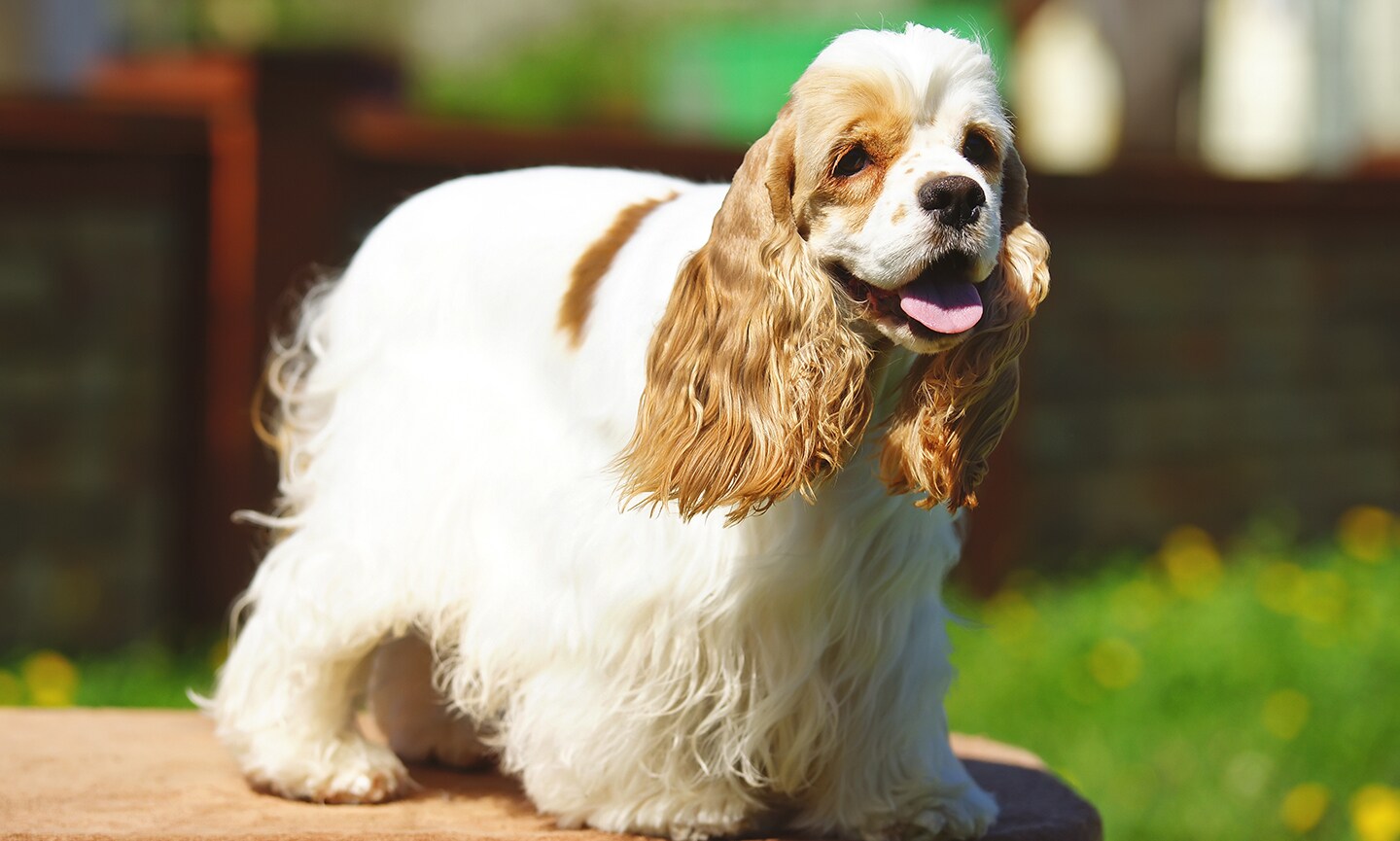
Cocker Spaniel — “The Steady Shadow”
 Save
Save| Weight | 20 to 30 lbs |
| Height | 13 to 15 inches |
| Lifespan | 12 to 14 years |
| Energy Level | Moderate |
| Grooming Need | High |
| Shedding | Moderate |
The Cocker Spaniel is a medium-small breed known for gently matching its owner’s pace and mood. Weighing 20 to 30 lbs, it usually needs a facility’s largest allowed weight limit. Loyal and affectionate, it’s often described as the dog that quietly mirrors a resident’s own energy each day.
Their long, silky ears and feathered coat give them a classic, soft appearance. A well-built, athletic frame sits underneath the fluff.
Most people expect a spaniel to need constant outdoor exercise. Cocker Spaniels adjust their energy to match yours — active if you walk, calm if you rest. That flexibility is the surprising trait families notice most once the dog settles in.
“Some days he wants a real walk, other days he just wants to lie by the chair — he always seems to know which one I need.”
— Walter H., Cocker Spaniel owner for 4 years
- Matches the resident’s own energy level
- Deeply loyal, one-person bonding
- Gentle with fragile hands
- Heaviest breed on this list
- Grooming every 6 to 8 weeks needed
- Prone to ear infections
Best for: Residents who still enjoy walks · Facilities with higher weight limits · One-on-one companionship
Breed Comparison Table: Nursing Home Suitability at a Glance
This table lines up all 10 breeds by the traits that matter most in a nursing home setting: weight, energy, grooming, and shedding. Use it to shortlist two or three breeds before meeting any dogs in person.
| Breed | Weight | Energy | Shedding | Grooming |
|---|---|---|---|---|
| Cavalier King Charles | 12–18 lbs | Low-Mod | Moderate | Moderate |
| Bichon Frise | 7–12 lbs | Moderate | Very Low | High |
| Shih Tzu | 9–16 lbs | Low | Low | High |
| Maltese | 4–7 lbs | Low-Mod | Very Low | High |
| Toy/Mini Poodle | 5–18 lbs | Moderate | Very Low | High |
| Havanese | 7–13 lbs | Moderate | Low | Mod-High |
| French Bulldog | 19–28 lbs | Low | Low-Mod | Low |
| Pug | 14–18 lbs | Low | Mod-High | Low |
| Pomeranian | 3–7 lbs | Moderate | Moderate | Mod-High |
| Cocker Spaniel | 20–30 lbs | Moderate | Moderate | High |
Which Dog Breed Is Right for This Resident?
The right breed depends on mobility, allergies, room size, and how much daily care staff or family can offer. Match the resident’s real limitations to the breed’s real needs, not to the breed’s reputation alone.
If you are in a wheelchair or have limited hand strength, a Cavalier King Charles Spaniel or Maltese suits you best, since both settle onto a lap without needing to be walked far. If you or roommates have allergies, a Bichon Frise or Toy Poodle is the safer pick, thanks to their very low-shedding coats. If you want a dog that still enjoys short outdoor walks, consider a Cocker Spaniel or Havanese, both of which welcome light daily activity. If noise policy is strict in your wing, lean toward a French Bulldog or Pug, since both breeds rarely bark without reason.
This article focuses on choosing a breed that fits daily nursing home life. If your situation involves a service dog or a facility-trained therapy animal program, you’ll need to work directly with a certified organization instead of a general breed guide.
Once you’ve narrowed it down to two or three breeds, the next step is confirming your facility’s actual pet policy — and that’s where a lot of families get tripped up.
Nursing Home Dog Care Essentials: What Every Family Should Know
Before bringing any dog into a facility, confirm the weight limit, breed restrictions, and vaccination records required. Most facilities also expect a temperament evaluation and proof of house training before approving a resident’s pet.
Weight limits usually run between 15 and 30 lbs, though some memory care units allow larger, calmer breeds on a case-by-case basis. Vaccination and flea prevention records are almost always required upfront, and many facilities ask for a vet reference too.
You might be thinking a strict weight limit rules out larger, gentler breeds automatically. Here’s why that’s not always true: some facilities make exceptions for dogs that pass a temperament test, regardless of size.
Ask the facility for their pet policy in writing before you fall in love with a specific breed.
Daily care also means a plan for walks, feeding, and vet visits if the resident can’t manage them alone. So if you’re the primary family caregiver, build a simple weekly schedule for grooming, feeding, and exercise before move-in day, not after.
Mistakes Families Make When Choosing a Nursing Home Dog
The most common mistake is picking a breed based on looks or popularity instead of temperament and size. A close second is skipping the facility’s actual weight limit, only to find out during move-in that the dog doesn’t qualify.
Families also underestimate grooming costs. A high-maintenance coat, like a Poodle’s or Bichon’s, needs professional trims every 4 to 6 weeks — a recurring cost many forget to budget for. So if the family plans to split grooming duties, decide who’s responsible before the dog moves in, not after the first shedding season.
Never assume a small breed is automatically calm — always meet the individual dog first.
Another mistake is skipping a trial visit. A breed profile can’t tell you how a specific dog reacts to a wheelchair bumping its tail or a med cart rolling past. A short supervised visit reveals far more than any written guide.
→ Full guide to the best dog breeds for seniors
Frequently Asked Questions
What is the best small dog breed for a nursing home?
The Cavalier King Charles Spaniel is widely considered the best overall pick. It’s gentle, quiet, and light enough for most staff to lift safely, and it settles calmly onto laps and wheelchair trays for hours at a time.
Do nursing homes usually have a dog weight limit?
Yes, most facilities set a weight limit between 15 and 30 lbs. Some memory care units make exceptions for larger, calm-tempered dogs that pass a temperament evaluation, so it’s worth asking directly.
Are hypoallergenic dog breeds better for nursing homes?
Low-shedding breeds like the Bichon Frise and Toy Poodle are generally better for shared facilities, since they spread less dander. No breed is fully allergen-free, but these coats reduce the risk considerably.
Can a resident with limited mobility still care for a dog?
Yes, with the right breed and support. Small, low-energy breeds like the Maltese or Shih Tzu need only short indoor walks, and staff or family can help with feeding, grooming, and vet visits as needed.
How do I know if a dog will do well in a nursing home setting?
A short supervised trial visit is the best test. Watch how the dog reacts to wheelchairs, med carts, and sudden noise — a calm, curious response is a much better sign than any breed reputation alone.
One Thing to Do Right Now
Pick your top two breeds from this list, then call your nursing home today to confirm the exact pet policy. That one phone call saves weeks of guesswork later. I’m Maren Ellis, and I hope your next visit ends with a warm, wagging welcome.
Sources: American Kennel Club — Dog Breeds for Seniors, Elder Care Alliance — Best Dog Breeds for Seniors

Thomas Cutter is a lifelong dog owner and the founder of FindOutAboutDogs.com. With over 10 years of hands-on experience owning multiple breeds, Thomas created this site to provide honest, research-based dog advice that real owners can actually trust.
