Best Dog Breeds for Preppers — 8 Breeds Built to Guard, Work, and Survive With You
Quick Answer
The best dog breeds for preppers depend on your land, climate, and daily routine. If you want raw protection and versatility, the German Shepherd is the top all-around pick. For 24/7 livestock guarding with little human input, the Anatolian Shepherd and Great Pyrenees lead the pack. Rottweilers, Belgian Malinois, Airedale Terriers, Australian Cattle Dogs, and Catahoula Leopard Dogs round out the list for smaller homesteads, ranch work, and high-drive protection needs.
Which breed fits your setup?
- Large property with livestock → Anatolian Shepherd or Great Pyrenees
- House and yard, single guardian dog → German Shepherd or Rottweiler
- Active ranch work plus herding chores → Australian Cattle Dog or Catahoula Leopard Dog
- Experienced handler, top-tier protection drive → Belgian Malinois
Fast facts to know before you choose:
- Guardian breeds need real acreage, not just a yard
- Working breeds fail without daily jobs to do
- Protection instinct still requires early socialization
Picture this: it’s 2 a.m., the power is out, and something is moving near the coop. Your flashlight beam catches two eyes at the fence line — and your dog is already between you and the dark. That’s the job. I’m Jess Carrow, and I’ve spent the last 12 years raising working dogs on a 40-acre homestead in eastern Kentucky. Choosing the wrong breed here doesn’t just mean a bad match — it means a security gap you feel every single night.
Most “best guard dog” lists get written by people who have never fed a livestock guardian dog through a Kentucky winter. This one is different. Every breed below earned its spot through real working ability, not looks.


What Makes a Dog Breed Good for Prepping?
A good prepper dog combines three things: independent judgment, physical toughness, and a genuine working drive. It doesn’t panic when the routine breaks. Most companion breeds were built for a couch, not a collapse.
Preppers usually need one or more of four jobs done: perimeter security, livestock guarding, predator deterrence, or search-and-alert work in rough terrain. A Chihuahua and an Anatolian Shepherd are both “dogs,” but they solve completely different problems. You might be thinking a big, scary-looking dog is the safest bet. Here’s why that’s not quite right: an untrained, over-bred “guard” breed with no off-switch is a liability, not an asset, in a real emergency.
Most experts agree that working ability, not appearance, predicts how a dog performs under stress. Herding, guarding, and terrier breeds developed for actual labor score highest on trainability tests. So if you’re weighing looks against function, function should win every time.
The 8 Best Dog Breeds for Preppers — Ranked and Reviewed
These eight breeds cover every major prepper need, from full-time livestock guarding to compact home protection. Each one is proven, not trendy — every breed here has a working history that goes back decades or centuries.
German Shepherd — “The All-Purpose Guardian”
 Save
Save| Weight | 50 to 90 lbs |
| Height | 22 to 26 inches |
| Lifespan | 9 to 13 years |
| Energy Level | High |
| Grooming Need | Moderate, weekly brushing |
| Shedding | Heavy, year-round with seasonal blowouts |
The German Shepherd is one of the most versatile working breeds, known for its trainability and steady confidence. Weighing 50 to 90 lbs, it handles obedience, tracking, and protection work with equal skill. Loyal but not clingy, it reads situations fast. It suits preppers who want one dog that can guard, patrol, and still live inside the home.
Their double coat sheds constantly, so expect fur on everything you own. A GSD’s ears stand fully erect by four to six months, giving them sharp, direct hearing for perimeter alerts.
Everyone expects a German Shepherd to bark at strangers. What most owners don’t realize is how selective that alert really is. They’ll size up a delivery driver calmly, then go rigid at a stranger lingering by the fence three nights in a row. That kind of pattern memory is the real wow factor — this breed tracks routines, not just faces.
“Our Shepherd started sleeping by the generator shed the week we lost power for four days. Nobody trained her to do that — she just decided it mattered.”
— Dana M., German Shepherd owner for 9 years
- Learns commands in under 5 repetitions
- Works well indoors and outdoors
- Strong bite inhibition with proper training
- Prone to hip dysplasia long-term
- Needs 60+ minutes of exercise daily
- Sheds heavily, twice a year worse
Best for: Single-dog households · First-time guardian dog owners · Suburban to rural properties
→ Best guard dog breeds if you’re working with limited space
Anatolian Shepherd — “The Homestead Sentinel”
| Weight | 80 to 150 lbs |
| Height | 27 to 29 inches |
| Lifespan | 11 to 13 years |
| Energy Level | Moderate, patrol-style |
| Grooming Need | Low, occasional brushing |
| Shedding | Moderate, heavier twice yearly |
The Anatolian Shepherd is a giant livestock guardian breed known for working independently without commands. Weighing up to 150 lbs, it patrols large territory on its own schedule. Calm and reserved, it rarely wastes energy on false alarms. It suits preppers with acreage and animals who need round-the-clock protection.
Their short, dense coat sheds surprisingly little for such a large dog. A grown Anatolian can cover several acres a night, moving in slow loops rather than sprinting like a herding breed.
People assume a guard dog this size must be aggressive to be effective. In reality, the Anatolian’s first move is almost always a visual stand-off, not a bite. That patience is the surprise: this breed would rather stare a threat down than fight it, and it usually works.
“He’s never once hurt a chicken, but a coyote came through our fence line and left without touching a single bird. He just showed up.”
— Wes T., Anatolian Shepherd owner for 5 years
- Works without daily human direction
- Tolerates extreme heat and cold
- Rarely barks without real cause
- Needs 5+ acres to do its job well
- Too independent for apartment living
- Wary of strangers without early exposure
Best for: Rural homesteads with livestock · Off-grid properties · Owners wanting minimal training upkeep
→ Best large dog breeds for owners who want a calm household presence
Great Pyrenees — “The Night Watch Giant”
| Weight | 85 to 115 lbs |
| Height | 25 to 32 inches |
| Lifespan | 10 to 12 years |
| Energy Level | Low by day, active at night |
| Grooming Need | High, thick double coat |
| Shedding | Heavy, year-round |
The Great Pyrenees is a livestock guardian breed built for cold climates and nighttime patrol. Weighing up to 115 lbs, it moves slowly by day and works hardest after dark. Gentle with family, wary of intruders, it rarely needs correction once mature. It suits preppers in cold regions who keep sheep, goats, or poultry.
Their thick, weather-shedding coat lets them sleep outside in snow without shelter. Double dewclaws on the back legs act almost like built-in traction spikes on icy ground.
New owners expect a giant white dog to be a slow, lazy pet. What surprises most people is the nighttime shift in behavior — the same dog that naps all afternoon patrols the fence line for hours after sunset. It’s essentially running two different schedules in one body.
“She sleeps through the whole afternoon like a rug, then barks off and on all night. I finally realized that bark schedule is the whole point.”
— Colleen R., Great Pyrenees owner for 7 years
- Excels in freezing temperatures
- Gentle default around children
- Low prey drive toward livestock
- Barks frequently through the night
- Heavy shedding needs weekly brushing
- Struggles badly in hot climates
Best for: Cold-climate homesteads · Poultry and small livestock owners · Families wanting a gentle giant
→ Best family guard dog breeds for households with young kids
Rottweiler — “The Steady Protector”
| Weight | 80 to 135 lbs |
| Height | 22 to 27 inches |
| Lifespan | 9 to 10 years |
| Energy Level | Moderate |
| Grooming Need | Low, short coat |
| Shedding | Moderate, year-round |
The Rottweiler is a powerful working breed known for calm confidence and strong bonding with one household. Weighing up to 135 lbs, it holds ground rather than chasing. Steady and even-tempered when trained early, it rarely startles. It suits preppers who want a dog equally comfortable inside the home and on watch.
Their broad chest and short coat make them naturally low-maintenance compared to most guardian breeds. A well-socialized Rottweiler often shows more patience with familiar children than with unfamiliar adults.
People picture Rottweilers as constantly on edge. The real pattern is closer to the opposite: a properly raised Rottweiler is often the calmest dog in the yard, right up until it isn’t. That contrast between total relaxation and instant readiness is what makes the breed so effective.
“He naps through the mail carrier every single day. The one time a stranger tried our gate at 1 a.m., he was up and at the door before I even heard anything.”
— Marcus L., Rottweiler owner for 6 years
- Low grooming needs year-round
- Bonds tightly with one household
- Naturally calm indoors when tired
- Short lifespan compared to similar breeds
- Needs firm, early training structure
- Prone to joint issues if overworked young
Best for: House-and-yard properties · Owners wanting an indoor-outdoor dog · Experienced first-time guardian dog owners
Australian Cattle Dog — “The Tireless Ranch Hand”
 Save
Save| Weight | 35 to 50 lbs |
| Height | 17 to 20 inches |
| Lifespan | 12 to 16 years |
| Energy Level | Very high |
| Grooming Need | Low |
| Shedding | Moderate, seasonal |
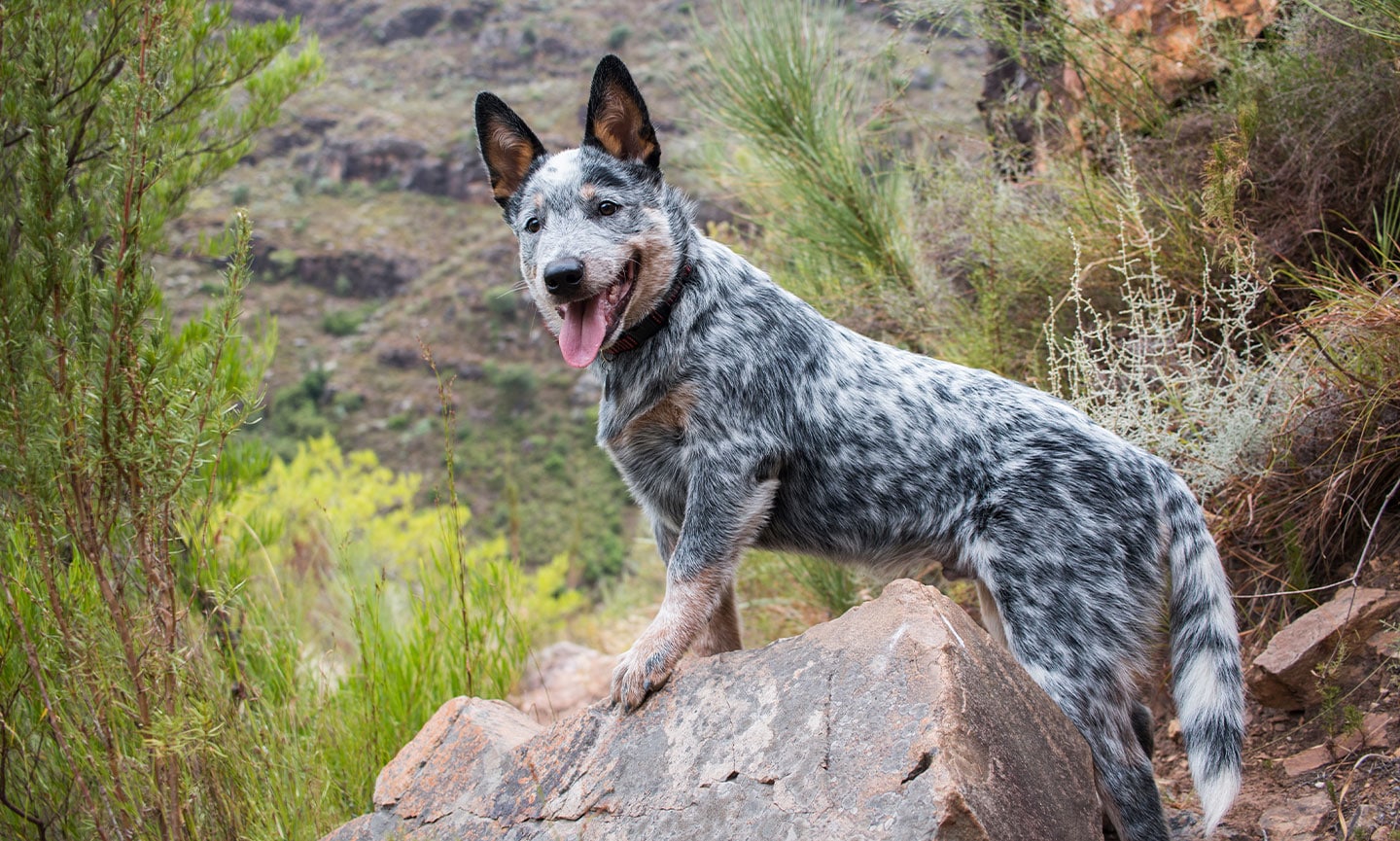
The Australian Cattle Dog is a compact herding breed built for all-day stamina and problem-solving. Weighing just 35 to 50 lbs, it outworks dogs twice its size. Smart and stubborn in equal measure, it needs a real job. It suits preppers running small livestock operations who also want an alert watchdog.
Their mottled blue or red coat isn’t just decorative — it developed for camouflage while working cattle in scrubland. This is one of the longest-lived medium breeds, with some individuals working well into their teens.
Most people expect a herding dog to be all business. What catches new owners off guard is how much this breed improvises. A bored Cattle Dog will invent its own “job,” like herding chickens or nipping at ankles, if you don’t give it one first.
“She moved our goats into the barn during a storm before I even got my boots on. Nobody trained her for that. She just took the job.”
— Renata P., Australian Cattle Dog owner for 8 years
- Exceptional stamina for its size
- Long lifespan, often 14+ years
- Doubles as herder and watchdog
- Nips heels without a proper job
- Needs 90+ minutes of activity daily
- Too small to deter large predators alone
Best for: Small livestock operations · Active outdoor households · Owners wanting a herding and alert combo
Airedale Terrier — “The Jack-of-All-Trades”
| Weight | 40 to 65 lbs |
| Height | 21 to 23 inches |
| Lifespan | 11 to 14 years |
| Energy Level | High |
| Grooming Need | High, needs hand-stripping |
| Shedding | Low, wiry coat |
The Airedale Terrier is the largest terrier breed, historically used for hunting, ratting, and military work. Weighing up to 65 lbs, it combines fearlessness with real intelligence. Bold and a little stubborn, it treats most tasks as a game. It suits preppers who want vermin control and protection in one dog.
Their wiry, curly coat sheds very little but mats fast without regular brushing. Airedales served as messenger and sentry dogs in both World Wars, carrying supplies across dangerous ground.
Owners expect a terrier to be small and yappy. This one flips that expectation entirely — it’s built more like a mid-size guard dog with a terrier’s nerve. The surprise is how willing an Airedale is to confront something much bigger than itself without hesitation.
“We got him for the rat problem in the barn. Two months later he chased a fox clean off the property. I did not expect either result.”
— Todd H., Airedale Terrier owner for 4 years
- Excellent at controlling rodents
- Low-shed coat, good for allergies
- Fearless without high aggression
- Grooming costs add up fast
- Stubborn without consistent training
- High prey drive around small pets
Best for: Farms with rodent problems · Owners wanting one multi-purpose dog · Allergy-sensitive households
Belgian Malinois — “The High-Drive Worker”
| Weight | 40 to 80 lbs |
| Height | 22 to 26 inches |
| Lifespan | 12 to 14 years |
| Energy Level | Very high |
| Grooming Need | Low |
| Shedding | Moderate, year-round |
The Belgian Malinois is a high-drive working breed favored by police and military units worldwide. Weighing up to 80 lbs, it moves faster and reacts quicker than most guardian breeds. Intense and focused, it needs constant engagement. It suits experienced preppers who want elite-level protection and can meet its demands.
Their build is leaner and more athletic than a German Shepherd’s, trading bulk for speed and endurance. Malinois are frequently chosen over Shepherds for demanding K9 work because they recover faster between tasks.
People assume this breed is simply a smaller, tougher Shepherd. The real difference shows up in intensity — a Malinois without a job doesn’t just get bored, it can become genuinely difficult to live with. That trade-off is the honest catch behind its reputation.
“People warned me she’d be too much dog. She is, if you don’t give her work. Give her a job and she’s the easiest dog I’ve owned.”
— Priya S., Belgian Malinois owner for 5 years
- Elite trainability and focus
- Fast, agile, and highly athletic
- Lower joint issues than larger breeds
- Wrong choice for inexperienced owners
- Needs 2+ hours of work daily
- Destructive when under-stimulated
Best for: Experienced handlers · High-security properties · Active preppers wanting a working partner
Catahoula Leopard Dog — “The Wild-Land Worker”
 Save
Save| Weight | 50 to 95 lbs |
| Height | 20 to 26 inches |
| Lifespan | 10 to 14 years |
| Energy Level | Very high |
| Grooming Need | Low |
| Shedding | Low to moderate |
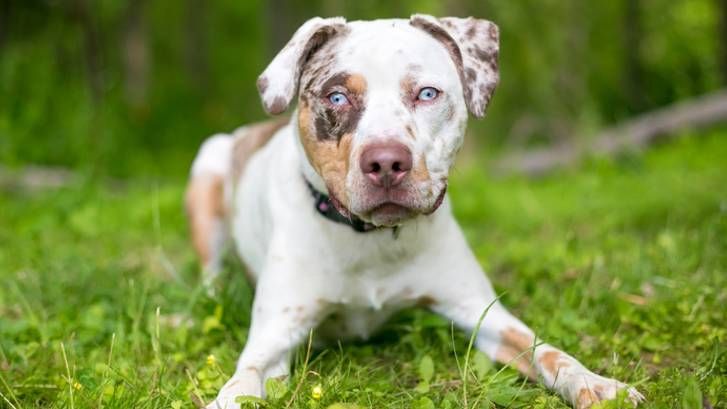
The Catahoula Leopard Dog is a rugged working breed developed in Louisiana for hog and cattle work in swampland. Weighing up to 95 lbs, it handles rough, wet terrain better than most breeds. Independent and tough, it thrives with a task. It suits preppers on large or wild-edge properties needing an all-terrain worker.
Their mottled “leopard” coat comes in an unusually wide range of colors and patterns, no two dogs look quite the same. Catahoulas were bred to herd semi-wild hogs by cornering and holding them, not by nipping like a Cattle Dog.
People expect a rare-looking breed like this to be mostly for show. In practice, Catahoulas are working dogs first, with looks as a side effect. The real surprise is how well they read wild terrain, moving through brush and mud with almost no hesitation.
“He tracked a wounded hog through a half-mile of swamp brush like it was nothing. I was the one struggling to keep up, not him.”
— Boyd F., Catahoula Leopard Dog owner for 10 years
- Handles wet, rough terrain easily
- Low grooming, easy-care coat
- Strong natural guarding instinct
- Harder to find from reputable breeders
- Not well suited to small yards
- Can be territorial with other dogs
Best for: Large or wooded properties · Owners raising hogs or cattle · Preppers in wet or swampy regions
→ Best hunting dog breeds for families who work rough terrain
Which Prepper Dog Breeds Compare Best Side by Side?
Comparing breeds side by side shows that no single dog covers every prepper need. Guardian breeds like the Anatolian Shepherd and Great Pyrenees suit large acreage with livestock, while versatile breeds like the German Shepherd or Rottweiler fit smaller properties. Herding and terrier breeds add speed, stamina, and rodent control that giant guardians lack.
| Breed | Weight | Best Role | Space Needed |
|---|---|---|---|
| German Shepherd | 50–90 lbs | All-purpose guard | Yard or small acreage |
| Anatolian Shepherd | 80–150 lbs | Livestock guarding | 5+ acres |
| Great Pyrenees | 85–115 lbs | Cold-climate guarding | 3+ acres |
| Rottweiler | 80–135 lbs | Home protection | Yard or small acreage |
| Australian Cattle Dog | 35–50 lbs | Herding and alert | Any size, active |
| Airedale Terrier | 40–65 lbs | Vermin control and guard | Yard or small acreage |
| Belgian Malinois | 40–80 lbs | High-drive protection | Any size, very active |
| Catahoula Leopard Dog | 50–95 lbs | Rough-terrain working dog | 5+ acres, rural |
Now that you can see how these breeds stack up, the next step is matching one to your actual daily routine, not just your wish list.
Which Prepper Dog Breed Is Right for You?
The right breed depends less on how tough a dog looks and more on your land, climate, and how much time you have for training and exercise. Here’s how to match your situation to a breed above.
- If you have a large rural property with livestock and want a dog that guards on its own → the Anatolian Shepherd is best for you.
- If you live somewhere cold with sheep, goats, or poultry → the Great Pyrenees will serve you better.
- If you have a smaller yard and want one dog for home and family protection → consider the German Shepherd or Rottweiler first.
- If you’re an experienced handler who wants elite protection and can commit serious daily training time → the Belgian Malinois fits, but only with that commitment.
You might be thinking a bigger dog is always a safer prepper dog. Here’s why that’s not the full picture: a mismatched giant breed on a quarter-acre lot is more likely to become a liability than a mid-size dog with real purpose. Size matters far less than fit.
What Most People Get Wrong About Prepper Dogs
Most people searching for a “prepper dog” picture one fearless animal that handles every threat alone. That’s the biggest misconception on this whole topic. A dog is one layer of security, not a full plan by itself.
A second common mistake is assuming size equals ability. A 150-lb guardian breed with no training is far less useful than a well-trained 50-lb herding dog that actually listens under stress. Training and structure matter more than raw mass.
So if you’re picking a breed based only on photos of big, intimidating dogs, that’s a sign to slow down. What actually determines success is daily structure, consistent training, and matching the breed’s original job to your real routine.
Guardian and protection breeds without early socialization can become overly reactive. Start exposure to people, animals, and sounds by 8 to 16 weeks old.
Prepper Dog Care Essentials Every New Owner Must Know
Caring for a working or guardian breed goes beyond food and water. These dogs need structure, space, and a real routine to stay balanced and effective.
Feed a high-protein diet suited to an active dog, and adjust portions with the seasons since outdoor guardian breeds burn more calories in winter. Fresh water access matters even more during a grid-down event, so store extra in food-safe containers ahead of time.
- Store 2 weeks of food in airtight containers
- Pack a pet first-aid kit with vet-approved supplies
- Keep vaccination records in a waterproof folder
- Add a spare leash, collar, and ID tag
- Include a crate or carrier for evacuation
The federal guidance on pet disaster preparedness recommends building two kits: one for sheltering in place and a lighter version for evacuation. That advice applies directly to working dogs, since guardian breeds often need larger food and water reserves than typical pets.
Veterinary access matters just as much as food storage. Build a relationship with a vet now, before an emergency, and ask about basic first-aid training so you can handle minor injuries yourself if care isn’t reachable.
Common Mistakes New Prepper Dog Owners Make
Even experienced homesteaders make avoidable mistakes with a new guardian or working dog. Catching these early saves months of frustration.
The most common mistake is skipping early socialization because “it’s a guard dog, it’s supposed to be wary.” Under-socialized dogs are more likely to react unpredictably, not more effective. Structured exposure to people and situations actually sharpens judgment rather than dulling it.
A second mistake is choosing a breed based on intimidation factor alone, without considering your actual acreage or daily schedule. A Belgian Malinois in a small yard with an inconsistent routine is a recipe for destructive behavior, not security.
Start guardian breed puppies on supervised livestock exposure by 8 weeks old. Early bonding with animals reduces prey drive later.
A third mistake is treating the dog as a stand-alone security system. So if you’re relying on one dog with no fencing, lighting, or alert plan, that’s a gap worth closing. A dog works best as one part of a layered setup, not the whole plan.
Honest Scope of This Guide
This article covers breed selection, temperament, and basic care for preppers choosing a working or guardian dog. If your situation involves specific medical training needs, service-dog certification, or protection-dog training beyond basic obedience, you’ll want to work directly with a certified trainer for that piece.
One Thing to Do Right Now
Every breed on this list can guard, work, or protect — but none of them can do it well without a routine you actually stick to. If you take one step today, make it this: write down your acreage, climate, and daily time budget, then match it against the comparison table above before you contact a single breeder.
I’m Jess Carrow, and after 12 years of raising working dogs on our own homestead, the breeds above are the ones I’d choose again without hesitation. Pick the one built for your land, not just your imagination, and you’ll have a partner that actually earns its keep.
Frequently Asked Questions
What is the best all-around dog breed for preppers?
The German Shepherd is the best all-around choice for most preppers. It combines trainability, protective instinct, and adaptability to both indoor and outdoor living, making it useful on small properties as well as larger homesteads.
Do livestock guardian dogs need training to protect animals?
Livestock guardian breeds like the Anatolian Shepherd and Great Pyrenees have strong natural instincts, but early exposure to livestock as puppies is still essential. Supervised bonding time between 8 and 16 weeks builds trust and reduces prey drive.
Can a smaller dog breed still be useful for prepping?
Yes. Smaller breeds like the Australian Cattle Dog offer stamina, herding skill, and alert barking that larger guardians can’t match. Size matters less than the dog’s working drive and how well it fits your daily routine.
How much land does a livestock guardian dog actually need?
Most livestock guardian breeds, including the Anatolian Shepherd and Great Pyrenees, need at least 3 to 5 acres to patrol effectively. On smaller lots, these breeds often become under-stimulated and harder to manage.
Is a Belgian Malinois too intense for the average homestead?
For most first-time owners, yes. The Belgian Malinois needs 2 or more hours of structured work daily and struggles without it. Experienced handlers with time to invest get outstanding results; casual owners often find it overwhelming.
Thomas Cutter is a lifelong dog owner and the founder of FindOutAboutDogs.com. With over 10 years of hands-on experience owning multiple breeds, Thomas created this site to provide honest, research-based dog advice that real owners can actually trust.
