10 Best Dog Breeds for Veterans — Chosen for Companionship, Security, and PTSD Support
Quick Answer
The best dog breeds for veterans are the Golden Retriever, Labrador Retriever, German Shepherd, Standard Poodle, Doberman Pinscher, Labradoodle, Cavalier King Charles Spaniel, Boxer, Great Dane, and Pomeranian. The right pick depends on your living space, your energy level, and whether you need calm companionship or an alert, security-minded partner.
What to weigh before you choose:
- Your home size and how much daily exercise you can give
- Whether you want a calm presence or an alert protector
- Grooming time and allergy concerns
- Whether you plan to train a task-trained service dog
Do this first:
- List your daily routine before you meet any dog
- Talk to your VA provider if you need a task-trained service dog
- Meet the breed in person, not just online
You walk into a crowded room and your shoulders lock up before you even notice. Your eyes go to every exit. That tightness in your chest? I’m Maria Torres, and I’ve spent 12 years matching veterans with dogs as a certified trainer for a nonprofit service-dog program. I’ve watched a Golden Retriever’s nose nudge a shaking hand still, and I’ve watched a German Shepherd’s steady presence let a combat vet finally sit with his back to a door.
Picking the right breed isn’t about looks. It’s about matching a dog’s real temperament to your real life. Let’s get you there.
- Golden Retrievers and Labradors top most service dog programs for their calm, trainable nature
- German Shepherds and Dobermans suit veterans who want an alert, security-minded partner
- A 2024 JAMA Network Open trial found veterans with trained service dogs had 66% lower odds of a clinician PTSD diagnosis
- Temperament testing matters more than pedigree — many top service dogs come from shelters
- The VA does not provide service dogs directly, but it covers veterinary care once a dog is placed through an accredited program


What Makes a Dog Breed a Good Fit for a Veteran?
A good fit for a veteran is a dog with a stable, people-focused temperament that stays calm under stress and bonds closely with one handler. This matters more than size, coat, or looks. The strongest matches share three traits: emotional steadiness, high trainability, and a genuine drive to stay close to their person.
You might be thinking breed alone decides everything. Here’s why that’s only half true: individual temperament testing predicts success better than pedigree does. Many accredited programs, including the country’s largest PTSD service dog provider, place well over half their dogs from shelters and rescues rather than breeders. Certain breeds simply pass temperament screening more often, thanks to generations of selective breeding for people-oriented work.
So what does that mean for you? Focus on temperament first, breed second — but breed still narrows the search fast.
Meet a breed’s adult dogs before you commit. Puppy energy fades but adult temperament does not.
What Most People Get Wrong About Dog Breeds for Veterans
Many veterans arrive already convinced a German Shepherd is the only “serious” choice, since it’s the classic military working dog. But here’s the thing. A German Shepherd’s high drive can overwhelm a handler who needs calm, not vigilance. In other words, the breed that looks toughest on paper isn’t always the one that helps most day to day.
Another common mix-up: people confuse an emotional support animal with a trained service dog. An emotional support animal offers comfort just by being present. A psychiatric service dog is trained to perform a specific task, like waking you from a nightmare or creating space in a crowd. The ADA’s service animal requirements only recognize the trained-task kind for public access rights.
The 10 Best Dog Breeds for Veterans — Ranked and Reviewed
Every breed below made this list for a specific reason — a documented strength in service dog programs, a temperament trait veterans consistently value, or a practical fit for a certain lifestyle. Here’s the lineup, from the most widely placed service breed to a small companion option for tight living spaces.
Golden Retriever — “The Steady Shoulder to Lean On”
| Weight | 55 to 75 lbs |
| Height | 21.5 to 24 inches |
| Lifespan | 10 to 12 years |
| Energy Level | Moderate to high |
| Grooming Need | Weekly brushing, more in shedding season |
| Shedding | Heavy, year-round with seasonal peaks |
The Golden Retriever is the most widely placed psychiatric service dog breed in the country, known for reading emotional shifts fast. Weighing 55 to 75 lbs, it has the size to brace for balance work but the softness for tactile comfort. Gentle, patient, and eager to please, it suits veterans who want steady emotional grounding over guard-style alertness.
A Golden’s coat forms a soft feathered fringe along the legs and tail that people can’t help but reach for. That fringe isn’t just pretty — it adds a warm weight when the dog leans into you.
You already know Goldens are friendly. What you might not know: many are trained to perform deep-pressure therapy, lying full weight across a handler’s lap during a panic spike. The wow part? Some learn to recognize a nightmare starting from breathing changes alone, and wake their handler before it peaks.
“The first time I woke up mid-nightmare, she was already pressing her whole body against my chest. I didn’t even feel the panic build — she caught it before I did.”
— James R., Golden Retriever owner for 4 years
- Easiest breed to train for public access work
- Non-threatening presence reduces social stigma
- Excels at deep-pressure and nightmare interruption
- Sheds heavily — not ideal for severe allergies
- Needs 45+ minutes of daily exercise
- Too friendly for veterans who want a deterrent
Best for: First-time handlers · Veterans needing nightmare or panic interruption · Households with kids
Labrador Retriever — “The All-Purpose Working Partner”
| Weight | 55 to 80 lbs |
| Height | 21.5 to 24.5 inches |
| Lifespan | 10 to 12 years |
| Energy Level | High |
| Grooming Need | Weekly brushing |
| Shedding | Heavy year-round |
The Labrador Retriever is the most versatile working breed in service dog work, prized for its calm focus under distraction. Weighing 55 to 80 lbs, it’s strong enough for mobility tasks like retrieving or bracing. Quiet, alert, and steady, it fits veterans who need a dog that stays composed in loud or crowded places.
A Lab’s short, dense coat gives it a sleek, low-maintenance look next to the Golden’s flowing fringe. That build helps it work outdoors in any weather without slowing down.
You probably know Labs as guide dogs. What surprises people: Labs are hyper-aware of subtle shifts in a room, and many are trained to scan crowds and alert their handler to rising stress before it’s consciously felt.
“He plants himself between me and the checkout line every single time without being told. I didn’t train that in — he just figured out what I needed.”
— Diane P., Labrador owner for 7 years
- Handles mobility tasks and emotional work both
- Quiet indoors, rarely barks without reason
- Most commonly placed breed by accredited programs
- Prone to weight gain without daily exercise
- Heavy shedder, sheds year-round
- Needs a securely fenced yard or long walks
Best for: Veterans needing mobility support · Active outdoor lifestyles · Anyone who wants a proven, low-drama breed
German Shepherd — “The Alert Guardian at Your Back”
| Weight | 50 to 90 lbs |
| Height | 22 to 26 inches |
| Lifespan | 9 to 13 years |
| Energy Level | High |
| Grooming Need | Brushing 2 to 3 times weekly |
| Shedding | Heavy, near-constant |
The German Shepherd is a top pick for veterans who need security-oriented tasks like room checks or perimeter awareness. Weighing up to 90 lbs, it combines strength with sharp intelligence. Loyal, watchful, and fiercely bonded to one handler, it fits veterans whose PTSD centers on hypervigilance and a need to feel physically secure.
A Shepherd’s upright ears and steady gaze read as confident from across a room. That same watchfulness is why it’s the classic military working dog breed.
Everyone knows Shepherds as protective. Less known: many are trained to check a room ahead of their handler on command, physically confirming a space is clear before the veteran enters.
“She clears the room before I sit down anywhere. It sounds small, but that one habit lets me breathe in restaurants again.”
— Marcus T., German Shepherd owner for 5 years
- Trainable for security-style tasks like room checks
- Deters unwanted approaches without aggression
- Bonds intensely with one primary handler
- Intimidating look can draw unwanted attention
- Needs consistent, experienced training
- High energy needs daily structured exercise
Best for: Veterans with combat-related hypervigilance · Handlers wanting security tasks · Experienced dog owners
Standard Poodle — “The Sharp Mind Behind the Curls”
| Weight | 45 to 70 lbs |
| Height | Over 15 inches |
| Lifespan | 12 to 15 years |
| Energy Level | Moderate to high |
| Grooming Need | Professional grooming every 4 to 6 weeks |
| Shedding | Low to none |
The Standard Poodle is one of the top-ranked breeds for emotional intelligence and complex task training. Weighing 45 to 70 lbs, it’s large enough for balance and mobility work. Highly intelligent and low-shedding, it suits veterans with allergies who still want a full-size, capable working dog.
Under the show-ring curls is a lean, athletic build most people never picture. Strip the fancy clip away and you’ll find a genuinely rugged working dog.
People laugh off Poodles as fussy lap dogs. The surprise: Poodles were originally bred as water retrievers and rank among the smartest breeds alive, able to learn complex multi-step tasks faster than most working breeds.
“People assume she’s decorative until they watch her open a door, flip a light switch, and back me into a chair during an attack. She’s sharper than half the dogs I trained with in the Army.”
— Angela W., Standard Poodle owner for 3 years
- Low-shed coat, good for allergy sufferers
- Learns multi-step tasks unusually fast
- Full-size strength for mobility work
- Grooming costs add up fast
- Needs mental stimulation or gets bored
- Some carry an outdated “fancy dog” stigma
Best for: Veterans with allergies · Anyone wanting complex task training · Owners who don’t mind grooming upkeep
Doberman Pinscher — “The Velcro Dog With a Sharp Edge”
 Save
Save Save
Save| Weight | 60 to 100 lbs |
| Height | 24 to 28 inches |
| Lifespan | 10 to 13 years |
| Energy Level | High |
| Grooming Need | Minimal, occasional wipe-down |
| Shedding | Low |
The Doberman Pinscher bonds so closely to one handler that owners call it a velcro dog. Weighing up to 100 lbs, it’s built for both stamina and a visible deterrent presence. Intelligent, loyal, and constantly close at hand, it suits veterans who want a dog physically near them in every room of the house.
A Doberman’s sleek, muscular lines and cropped alertness give it a sharper silhouette than the softer retrievers. That lean build hides real endurance underneath.
Movies cast Dobermans as menacing guard dogs. What that image misses: Dobermans crave closeness so strongly they’ll trail a handler from room to room all day, and they read emotional cues almost as fast as they read commands.
“He sleeps across my bedroom doorway every night without being told. I’ve never once woken up to a nightmare without him already awake beside me.”
— Robert L., Doberman owner for 6 years
- Extremely low shedding, minimal grooming
- Intense one-person loyalty and closeness
- Visible deterrent for security-focused veterans
- Can become destructive if under-stimulated
- Not ideal as a family-wide pet
- Needs an experienced, confident trainer
Best for: Veterans who want constant physical closeness · Security-minded handlers · Single-handler households
Labradoodle — “The Low-Shed Family Companion”
| Weight | 50 to 65 lbs |
| Height | 21 to 24 inches |
| Lifespan | 12 to 14 years |
| Energy Level | Moderate to high |
| Grooming Need | Brushing 2 to 3 times weekly |
| Shedding | Low to none |
The Labradoodle blends a Labrador’s easygoing nature with a Poodle’s low-shed coat. Weighing 50 to 65 lbs, it’s a mixed breed not officially recognized by the AKC, but it’s widely used in service work anyway. Friendly, easygoing, and hypoallergenic-leaning, it suits veterans with allergies who still want retriever-style warmth.
Its coat can range from loose waves to tight curls depending on the litter, giving each dog a slightly different, scruffy charm.
People assume mixed breeds are less predictable in temperament. The catch: reputable service dog breeding programs have bred Labradoodles specifically for generations now, so working lines are just as consistent as many purebreds.
“My wife is allergic to almost every dog we tried. He’s the first one she can hug without reaching for a tissue.”
— Kevin H., Labradoodle owner for 5 years
- Low-shed coat works well for allergy households
- Friendly, non-threatening public presence
- Bred by many programs specifically for service work
- Coat quality varies by litter
- Not AKC-recognized as a true breed
- Grooming costs similar to a Poodle
Best for: Allergy-prone households · Veterans with families · First-time service dog owners
Cavalier King Charles Spaniel — “The Velcro Lap Dog”
| Weight | 13 to 18 lbs |
| Height | 12 to 13 inches |
| Lifespan | 9 to 14 years |
| Energy Level | Moderate |
| Grooming Need | Brushing 2 to 3 times weekly |
| Shedding | Moderate |
The Cavalier King Charles Spaniel is a small companion breed built to stay close at all times. Weighing 13 to 18 lbs, it fits easily on a lap or under a desk. Calm, quiet, and deeply affectionate, it suits veterans who want gentle emotional support without a large dog’s space or exercise demands.
Its long, silky ears frame a soft, expressive face that seems built for comfort rather than work.
People peg small breeds as yappy and high-strung. The Cavalier bucks that pattern completely — it’s one of the quietest small breeds around, and it handles crowded or tense rooms with unusual calm for its size.
“She rides in my jacket at appointments. Nobody notices her, and that’s exactly the point — she calms me without drawing eyes.”
— Linda S., Cavalier owner for 8 years
- Quiet temperament handles crowds well
- Small enough for apartments or air travel
- Low exercise needs fit limited-mobility owners
- Too small for mobility or bracing tasks
- Prone to heart and joint health issues
- Separation anxiety if left alone often
Best for: Apartment dwellers · Veterans with limited mobility · Handlers who want a discreet companion
Boxer — “The Playful Watchdog”
| Weight | 50 to 80 lbs |
| Height | 21.5 to 25 inches |
| Lifespan | 10 to 12 years |
| Energy Level | High |
| Grooming Need | Minimal, occasional wipe-down |
| Shedding | Low to moderate |
The Boxer pairs a muscular, alert build with a genuinely playful, affectionate nature. Weighing 50 to 80 lbs, it’s sturdy enough for bracing and mobility support. Obedient, watchful, and warm with its handler, it suits veterans who want both a deterrent presence and a lighthearted companion.
Its short coat shows off a wall of muscle across the chest and shoulders, giving it a solidly built, square-jawed look.
People see the muscular frame and expect a serious, all-business dog. The surprise: Boxers keep a goofy, clownish streak well into adulthood, and that playfulness is often exactly what pulls a veteran out of a dark mood.
“He does this ridiculous full-body wiggle every time I walk in, even on my worst days. It’s stupid and it works every time.”
— Chris B., Boxer owner for 4 years
- Muscular build works for bracing tasks
- Playful energy helps lift low mood
- Naturally watchful without excess aggression
- Stays puppyish and boisterous for years
- Prone to heat sensitivity and joint strain
- Not the best fit for quiet, low-key homes
Best for: Active veterans · Handlers wanting both deterrence and playfulness · Households with a yard
Great Dane — “The Gentle Giant for Mobility Support”
| Weight | 110 to 175 lbs |
| Height | 28 to 32 inches |
| Lifespan | 8 to 10 years |
| Energy Level | Low to moderate |
| Grooming Need | Minimal, weekly wipe-down |
| Shedding | Low to moderate |
The Great Dane offers real physical bracing support thanks to its sheer size. Weighing up to 175 lbs, it can steady a handler during balance loss or a mobility episode. Calm, patient, and surprisingly gentle indoors, it suits veterans who need physical stability more than agility or speed.
Its towering frame and easy, loping stride make it look built for guard work, though most Danes would rather lean on you than bark at anyone.
People assume a dog this big must be a handful. In reality, Great Danes are often called the gentlest giants in the dog world, and many settle into a near-motionless calm for hours at a time once trained.
“My knee gives out without warning. He plants his whole body against my leg the second I start to wobble, every time.”
— Frank M., Great Dane owner for 3 years
- Strong enough for real physical bracing
- Calm, low-key temperament indoors
- Imposing size deters unwanted approaches
- Shorter lifespan than most breeds here
- Needs a large living space
- Food and vet costs run higher
Best for: Veterans with mobility or balance impairments · Larger homes · Handlers who want a calm, imposing presence
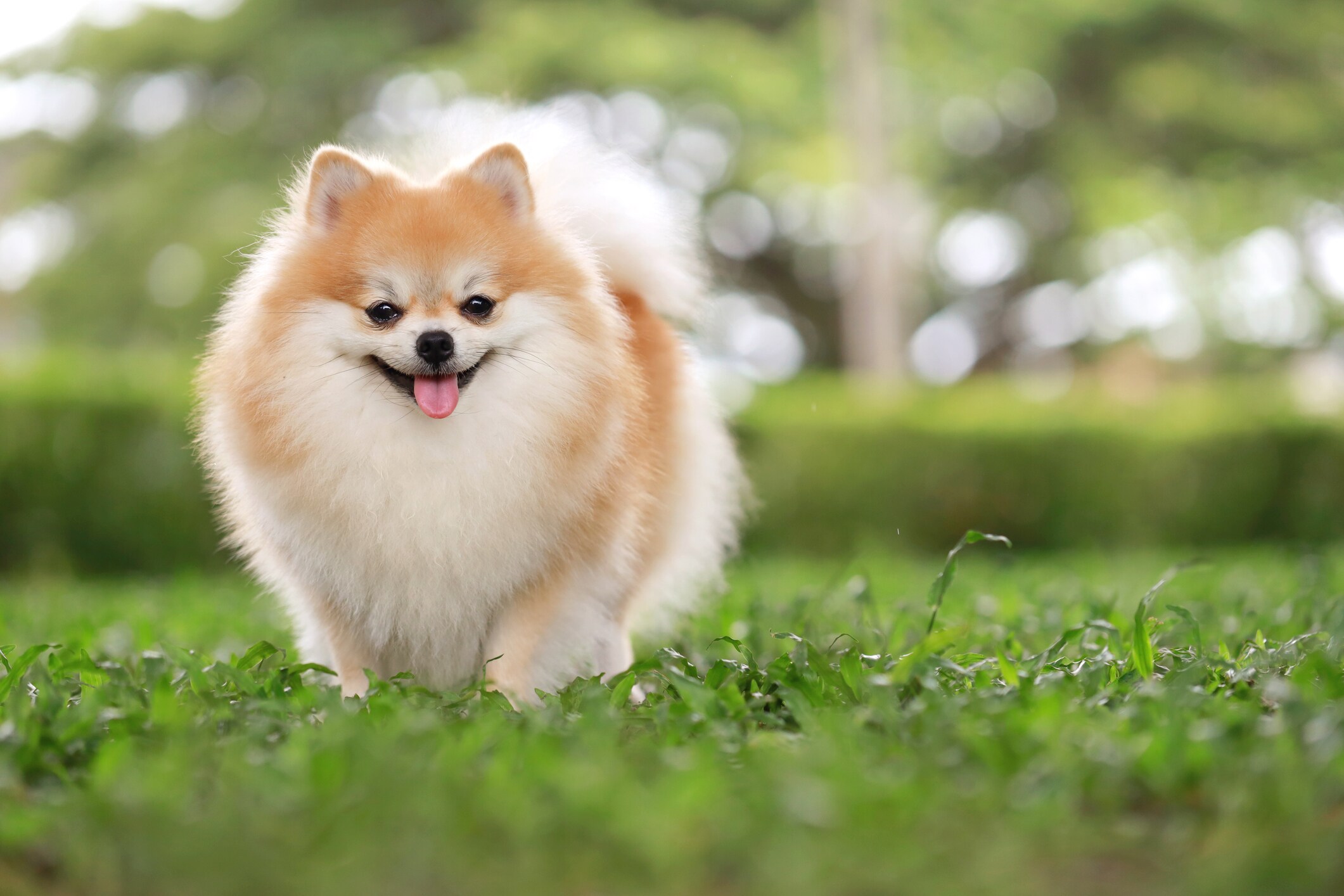
Pomeranian — “The Tiny Dog With a Fierce Alert System”
 Save
Save| Weight | 3 to 7 lbs |
| Height | 6 to 7 inches |
| Lifespan | 12 to 16 years |
| Energy Level | Moderate to high |
| Grooming Need | Brushing 2 to 3 times weekly |
| Shedding | Moderate, seasonal |
The Pomeranian is a tiny breed with an outsized ability to bond and alert. Weighing just 3 to 7 lbs, it fits into the smallest living spaces and travels easily. Confident, watchful, and highly attached, it suits veterans who want a portable companion with a genuine early-warning instinct.
Its thick double coat puffs out into a compact, fox-like ruff around the neck that makes it look bigger than it really is.
People expect small dogs to be purely decorative. Pomeranians break that stereotype fast — they’re alert to sound and movement well before larger dogs notice, and many will bark once, sharply, then check on their handler instead of continuing.
“She weighs 5 lbs and still puts herself between me and the door when someone knocks. Pure confidence in a tiny package.”
— Sarah K., Pomeranian owner for 6 years
- Fits any apartment or small living space
- Easy to bring almost anywhere
- Naturally alert to sounds and movement
- Too small for physical or mobility tasks
- Can bark more than larger, calmer breeds
- Fragile around rough handling or large dogs
Best for: Apartment or senior living · Veterans needing a medical alert companion · Handlers who travel often
Compare All 10 Breeds Side by Side
Here’s the fast comparison. Use it to shortlist two or three breeds before you meet any dogs in person.
| Breed | Size | Best Role | Grooming |
|---|---|---|---|
| Golden Retriever | Large | Emotional grounding | Moderate |
| Labrador Retriever | Large | Mobility and general work | Low |
| German Shepherd | Large | Security and hypervigilance | Moderate |
| Standard Poodle | Large | Complex tasks, allergies | High |
| Doberman Pinscher | Large | Closeness and security | Low |
| Labradoodle | Medium-large | Allergy-friendly companion | High |
| Cavalier King Charles Spaniel | Small | Discreet emotional support | Moderate |
| Boxer | Large | Bracing plus mood lift | Low |
| Great Dane | Giant | Physical bracing | Low |
| Pomeranian | Small | Portable, alert companion | Moderate |
Which Dog Breed Is Right for You?
The right breed depends on what your body and your symptoms actually need, not what looks impressive. Match your situation to the option below before you decide.
- If you deal with hypervigilance and need to feel physically secure → a German Shepherd or Doberman Pinscher gives you an alert, protective presence.
- If you need nightmare interruption or deep-pressure calming → a Golden Retriever or Labrador Retriever is trained most often for exactly this.
- If you have allergies but still want a full working dog → a Standard Poodle or Labradoodle keeps shedding low without sacrificing capability.
- If you live in a small apartment or need portability → a Cavalier King Charles Spaniel or Pomeranian fits your space.
- If you have real mobility or balance limitations → a Great Dane offers the size to physically brace you.
This article covers breed selection and general temperament. If you need a fully task-trained psychiatric service dog with public access rights, that requires a program accredited by Assistance Dogs International or the International Guide Dog Federation — not a pet-store puppy or a DIY vest.
Dog Care Essentials Every Veteran Should Know
Owning any dog on this list means more than picking the right breed. So if you’re serious about this partnership, plan for real time and money, not just affection.
Budget for veterinary care, food, and training from day one. If you go the accredited service dog route, the VA’s service dog benefit program covers veterinary care once your dog is placed through an accredited organization, but it does not cover the dog itself, food, grooming, or boarding.
Also plan daily structure. Most breeds on this list need real exercise, not just a backyard to wander. As a result, a dog that isn’t getting enough activity often develops the exact behaviors — restlessness, destructiveness, excess barking — that undercut the calm you’re trying to build.
Mistakes New Veteran Dog Owners Make
The good news is these mistakes are easy to avoid once you know them.
- Skipping temperament testing. A calm-looking puppy can grow into a high-strung adult. Meet adult dogs from the same line when possible.
- Assuming a pet is the same as a service dog. A well-loved pet offers comfort. Only a task-trained dog gets ADA public access protection.
- Underestimating grooming costs. Poodle-mix coats especially can run $75 to $120 every 4 to 6 weeks.
- Rushing the bonding period. Even the best-matched dog needs weeks to settle into a new handler’s routine.
Match the breed to your real daily life, not to an image of strength or toughness. A calm Labrador can do more for a veteran with panic symptoms than an intense guard breed ever will, and a tiny Pomeranian can be a genuine early-warning partner for someone who can’t manage a large dog.
One Thing to Do Right Now
Golden Retrievers, Labradors, and German Shepherds top most service dog programs for good reason, but the honest answer is that your daily routine decides the right breed, not a ranked list. Pick two breeds from this guide that match your living space and energy level, then contact one accredited program this week to ask about meeting adult dogs in person. I’m Maria Torres, and that one phone call is the fastest way to move from reading about this to actually starting.
Frequently Asked Questions
What is the best dog breed for a veteran with PTSD?
Golden Retrievers and Labrador Retrievers are the most commonly placed breeds for PTSD, thanks to their calm, trainable temperament. German Shepherds work better for veterans who need an alert, security-focused partner instead of a purely calming one.
Does the VA pay for a service dog for veterans?
The VA does not provide or pay for the service dog itself. It covers veterinary care and equipment once a veteran is placed with a dog through an Assistance Dogs International or International Guide Dog Federation accredited organization.
Can any dog become a PTSD service dog?
Any dog with the right temperament can be trained, but breed still matters for consistency. Programs favor Golden Retrievers, Labradors, and German Shepherds because they pass temperament screening more reliably than most other breeds.
What is the difference between an emotional support dog and a PTSD service dog?
An emotional support dog offers comfort just by being present and has no public access rights under the ADA. A PTSD service dog is trained to perform a specific task tied to a disability, which grants it legal public access rights.
Are small dog breeds good for veterans?
Yes, small breeds like the Pomeranian and Cavalier King Charles Spaniel work well for veterans in apartments or with limited mobility. They can’t perform physical bracing tasks but often excel at alerting and emotional grounding.

Thomas Cutter is a lifelong dog owner and the founder of FindOutAboutDogs.com. With over 10 years of hands-on experience owning multiple breeds, Thomas created this site to provide honest, research-based dog advice that real owners can actually trust.
