10 Best Grizzle Color Dog Breeds — Beautiful Coats and Honest Breed Matches
Quick Answer
The best grizzle color dog breeds include Border Terriers, Salukis, Norwich Terriers, Norfolk Terriers, Otterhounds, Grand Basset Griffon Vendéens, Old English Sheepdogs, Lhasa Apsos, Welsh Terriers, and Airedale Terriers. Your best match depends on size, exercise needs, coat care, training style, and home life.
| Need | Strong Match |
|---|---|
| Small grizzle dog | Border, Norwich, or Norfolk Terrier |
| Elegant hound | Saluki |
| Large shaggy dog | Otterhound or Old English Sheepdog |
Choose a grizzle breed if:
- You love mixed gray, red, tan, and dark coat tones.
- You can meet the breed’s exercise and grooming needs.
- You value temperament more than coat color alone.
By Thomas Cutter
Gray hairs catch the light. Dark strands blend through tan, red, and cream.
That layered look can make a grizzle dog seem different from every angle. But color can’t tell you whether a breed fits your life.
I’m Thomas Cutter, and I study dog breeds for real home life. If you’re new to dogs, compare these choices with our best dog breeds for beginners.
This guide focuses on breeds with recognized grizzle coat colors or patterns. Your breeder, vet, and breed club should guide health questions.


What Does Grizzle Mean in a Dog Coat?
Grizzle describes a coat made from mixed hairs of different shades. The result often looks gray, red-gray, or iron-gray from normal distance. Some dogs show dark hair mixed through tan or red. Others show grizzle beside white, tan, or cream areas. Breed standards may use the same word differently. That difference matters when you compare puppies or adult dogs.
A Border Terrier’s grizzle may look earthy and dark. A Saluki can show a softer grizzle-and-tan pattern. An Old English Sheepdog may carry broad grizzle areas beside white. So don’t treat grizzle as one exact shade. The Royal Kennel Club canine color glossary also notes breed differences.
Here’s why that matters. Grizzle is not the same as merle, brindle, or simple gray.
Check the breed standard before judging a grizzle puppy’s color.
You might think coat color should stay fixed from puppyhood. Many coats deepen or soften as adult hairs develop.
Now let’s compare the breeds where grizzle becomes especially striking.
What Are the 10 Best Grizzle Color Dog Breeds?
The strongest grizzle color dog breeds cover several very different lifestyles. Border, Norwich, Norfolk, Welsh, and Airedale Terriers bring bold working-dog traits. Salukis add graceful sighthound movement and more independent behavior. Otterhounds and Grand Basset Griffon Vendéens bring scent-hound instincts. Old English Sheepdogs offer a large shaggy herding option. Lhasa Apsos give small-home owners a long-coated companion choice.
The list below ranks coat appeal beside real daily needs. I don’t rank a rare color above health or behavior. Some grizzle breeds need hand stripping. Others need extensive brushing or secure exercise areas. A beautiful coat becomes a poor bargain when the lifestyle match fails. So use each entry as a decision tool. Start with your routine, then enjoy the color.
1. Border Terrier — Classic Grizzle-and-Tan Working Terrier
 Save
Save| Weight | 11.5–15.5 pounds |
| Height | 12–15 inches |
| Lifespan | 12–15 years |
| Energy Level | High |
| Grooming Need | Weekly brushing and periodic stripping |
| Shedding | Low to moderate |
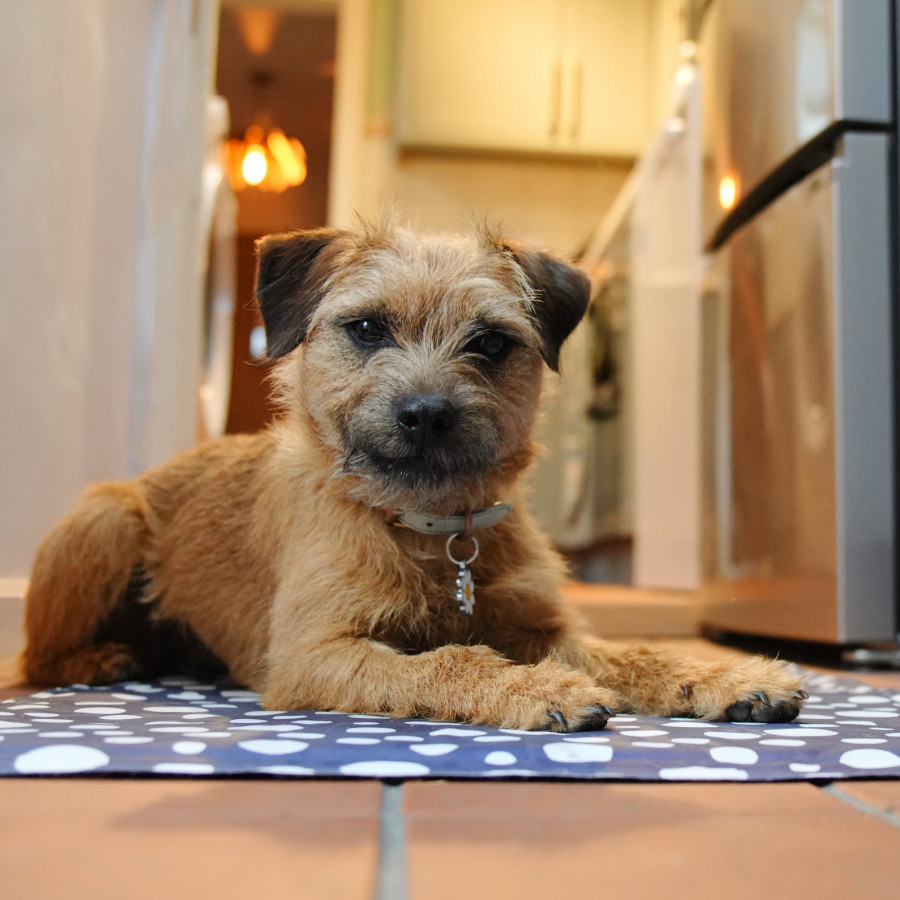
The Border Terrier is a small working terrier famous for grizzle-and-tan coats. Its rough jacket protects a compact, athletic body. Borders stay active, curious, and ready to chase. They suit owners wanting a portable dog with genuine outdoor drive and manageable coat care.
Dark-tipped hairs create a warm, weathered grizzle effect across the body. Tan often brightens the face and legs.
Borders enjoy people, but their hunting roots still shape daily behavior. A rabbit can make good recall disappear fast.
“Composite owner note: Ours sleeps beside us, then explodes into action outdoors.”
— Common owner scenario, Border Terrier home life
- Compact but sturdy
- Classic grizzle coat
- Strong outdoor partner
- Strong prey drive
- Needs daily exercise
- May dig enthusiastically
For official breed basics, see the AKC Border Terrier breed profile.
Border Terriers also appear in our guide to first-time dog breeds in the UK.
2. Saluki — Elegant Grizzle Hound With Ancient Roots
| Weight | 40–65 pounds |
| Height | 23–28 inches for males |
| Lifespan | 10–17 years |
| Energy Level | High outdoors |
| Grooming Need | Weekly brushing |
| Shedding | Low |
The Saluki is a tall sighthound with accepted grizzle and tan coloring. Its slim frame hides remarkable speed and endurance. Salukis often act calm indoors but chase hard outside. They suit patient owners who provide secure exercise and respect their independent nature.
Grizzle can soften the Saluki’s long lines with muted gray and warm tan. Feathered dogs add silky hair around ears and tails.
Salukis often bond quietly instead of demanding constant attention. Moving prey can still trigger a sudden chase.
“Composite owner note: She looks asleep until something moves across the yard.”
— Common owner scenario, Saluki home life
- Striking grizzle pattern
- Low coat upkeep
- Calm indoor presence
- Powerful chase instinct
- Needs secure exercise
- Can train independently
See the AKC Saluki breed profile for official size and breed details.
3. Norwich Terrier — Tiny Grizzle Dog With Huge Confidence
| Weight | About 12 pounds |
| Height | About 10 inches |
| Lifespan | 12–15 years |
| Energy Level | High |
| Grooming Need | Weekly brushing and stripping |
| Shedding | Low to moderate |
The Norwich Terrier is a tiny working terrier with recognized grizzle coloring. It stands near ten inches yet behaves like a much larger dog. Norwich Terriers stay alert, busy, and eager for action. They suit active owners wanting small size without lapdog behavior.
A hard outer coat gives grizzle Norwich Terriers a rough woodland look. Their upright ears create a bright, foxlike outline.
They enjoy close human contact but still think like hunters. Small size does not remove digging or chasing urges.
“Composite owner note: He fits under one arm but investigates every garden corner.”
— Common owner scenario, Norwich Terrier home life
- Excellent small size
- Distinct grizzle coat
- Playful training partner
- Needs daily activity
- May chase wildlife
- Can bark quickly
Compare it with other small dog breeds for first-time owners before choosing.
4. Norfolk Terrier — Grizzle Companion With Folded Ears
| Weight | 11–12 pounds |
| Height | 9–10 inches |
| Lifespan | 12–16 years |
| Energy Level | High |
| Grooming Need | Weekly brushing and stripping |
| Shedding | Low to moderate |
The Norfolk Terrier is a compact grizzle-colored terrier with folded ears and strong hunting roots. Adults stay small but need real daily activity. Norfolks often enjoy people and other dogs. They suit homes wanting terrier spark in an easy-to-carry body.
The wiry grizzle coat looks rough without appearing heavy. Folded ears separate the Norfolk visually from the Norwich.
Norfolks often work well around family activity. Their small-animal chase drive still deserves serious control.
“Composite owner note: She loves laps, then races outside after every rustling leaf.”
— Common owner scenario, Norfolk Terrier home life
- Small sturdy frame
- Appealing grizzle coat
- Enjoys active homes
- Strong prey instinct
- Needs coat stripping
- Can become noisy
5. Otterhound — Rare Large Hound With Shaggy Grizzle Color
 Save
Save| Weight | 80–115 pounds |
| Height | 24–27 inches |
| Lifespan | 10–13 years |
| Energy Level | High |
| Grooming Need | Several brushes weekly |
| Shedding | Moderate |
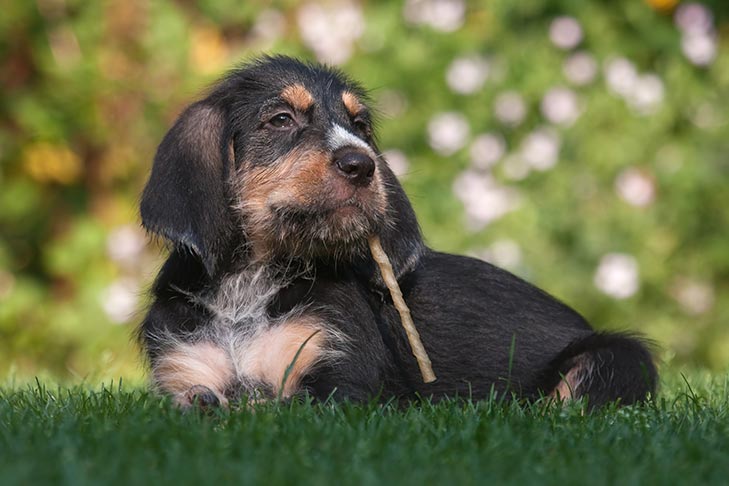
The Otterhound is a large scent hound that can carry striking grizzle coloring. Its rough double coat protects a strong swimming body. Otterhounds follow scent with determination and need space. They best suit experienced owners who enjoy large, active, independent dogs.
A shaggy coat covers the face, body, and long ears. Grizzle creates a weathered look that suits the breed’s rugged build.
An Otterhound’s nose can overpower your plans during walks. Secure fences and leash skills matter every day.
“Composite owner note: He notices a scent before he notices me holding the leash.”
— Common owner scenario, Otterhound home life
- Dramatic shaggy coat
- Strong swimming ability
- Memorable hound character
- Needs substantial space
- Strong scent drive
- Rare and hard finding
6. Grand Basset Griffon Vendéen — Grizzle-and-White French Scent Hound
| Weight | 40–45 pounds |
| Height | 15.5–18 inches |
| Lifespan | 13–15 years |
| Energy Level | Moderate to high |
| Grooming Need | Weekly brushing |
| Shedding | Moderate |
The Grand Basset Griffon Vendéen is a medium French scent hound with grizzle-and-white coloring available. Its long body and rough coat reflect working origins. GBGVs stay busy without constant intensity. They suit social homes that understand hound noses and independent decision making.
Its rough coat looks intentionally untidy around the face and legs. Grizzle-and-white markings give each dog a distinct pattern.
GBGVs often enjoy company because pack work shaped the breed. Once scent takes over, patient handling becomes essential.
“Composite owner note: Walks become scent tours, and he wants to inspect everything.”
— Common owner scenario, GBGV home life
- Unique grizzle pattern
- Social hound nature
- Useful medium size
- Scent can distract
- Needs secure fencing
- Coat collects debris
7. Old English Sheepdog — Big Grizzle-and-White Shaggy Dog
| Weight | 60–100 pounds |
| Height | 21–22 inches and up |
| Lifespan | 10–12 years |
| Energy Level | Moderate to high |
| Grooming Need | High |
| Shedding | Moderate to heavy |
The Old English Sheepdog is a large herding breed with accepted grizzle-and-white coloring. Its huge coat creates the famous shaggy outline. These dogs need exercise, training, and serious grooming. They suit owners who enjoy coat care and want an outgoing large companion.
Grizzle covers broad body areas while white brightens the front and head. Dense hair can hide the dog’s athletic build.
They often act playful far beyond puppyhood. Their size makes early manners essential around children and guests.
“Composite owner note: Brushing takes time, but he treats every session like attention.”
— Common owner scenario, Old English Sheepdog home life
- Iconic shaggy appearance
- Beautiful grizzle contrast
- Engaging family companion
- Heavy grooming commitment
- Large adult size
- Coat traps dirt
8. Lhasa Apso — Dark Grizzle Companion With a Flowing Coat
| Weight | 12–18 pounds |
| Height | 10–11 inches |
| Lifespan | 12–15 years |
| Energy Level | Moderate |
| Grooming Need | High for long coats |
| Shedding | Low to moderate |
The Lhasa Apso is a small companion breed that can carry dark grizzle coloring. Its long straight coat creates dramatic shading from nose to tail. Lhasas stay alert and self-assured despite their size. They suit homes wanting a small watchdog-like companion with moderate exercise needs.
Long hair lets grizzle shades blend across a flowing curtain of coat. A shorter clip makes daily upkeep much easier.
Lhasas watch their surroundings closely and may distrust strangers. They often prefer respect over constant handling.
“Composite owner note: She studies every visitor before deciding whether they deserve attention.”
— Common owner scenario, Lhasa Apso home life
- Small-home friendly
- Rich grizzle shading
- Moderate exercise needs
- Long coat mats
- Can distrust strangers
- Needs patient training
9. Welsh Terrier — Black Grizzle-and-Tan With a Square Terrier Look
| Weight | About 20 pounds |
| Height | About 15 inches |
| Lifespan | 12–15 years |
| Energy Level | High |
| Grooming Need | Regular brushing and stripping |
| Shedding | Low |
The Welsh Terrier is a compact working terrier with accepted black grizzle-and-tan coloring. Its square outline and wiry coat create a polished working-dog appearance. Welsh Terriers stay energetic and curious. They suit owners who enjoy active training and firm daily routines.
The darker grizzle jacket sits over rich tan legs and facial hair. A trimmed beard adds the classic terrier expression.
Welsh Terriers learn quickly when training stays fun and clear. Bored dogs can invent less useful jobs.
“Composite owner note: He finishes a game and immediately searches for the next challenge.”
— Common owner scenario, Welsh Terrier home life
- Smart compact build
- Low shedding coat
- Bold grizzle jacket
- Needs daily stimulation
- Terrier chase instinct
- Requires coat maintenance
10. Airedale Terrier — Large Grizzle-and-Tan “King of Terriers”
 Save
Save| Weight | 50–70 pounds |
| Height | About 23 inches |
| Lifespan | 11–14 years |
| Energy Level | High |
| Grooming Need | Regular brushing and trimming |
| Shedding | Low to moderate |
The Airedale Terrier is the largest terrier and can carry a grizzled dark saddle. Its strong frame supports serious activity and training. Airedales stay alert, clever, and independent. They suit active owners prepared for a powerful terrier rather than an easygoing large dog.
The grizzled saddle covers the back, neck, and upper tail area. Rich tan covers most remaining parts.
Airedales enjoy solving problems and testing rules. Consistent training works better than repeating dull drills.
“Composite owner note: He learns new rules fast, then checks whether they still apply.”
— Common owner scenario, Airedale Terrier home life
- Large athletic terrier
- Distinct grizzle saddle
- Highly versatile worker
- Needs extensive exercise
- Strong independent streak
- Requires skilled training
How Do These Grizzle Dog Breeds Compare Side by Side?
These breeds differ far more in lifestyle than coat color. Norwich and Norfolk Terriers offer the smallest bodies. Border Terriers add slightly more leg and outdoor stamina. Welsh Terriers move into a stronger medium-small build. Salukis bring speed instead of terrier intensity. Grand Basset Griffon Vendéens rely heavily on scent. Airedales bring much more size and power.
Otterhounds need space, secure control, and hound-ready owners. Old English Sheepdogs demand the greatest grooming commitment here. Lhasa Apsos need less exercise but still require coat care. So your easiest match won’t always be your favorite photograph. You might be thinking size predicts difficulty. Here’s why it doesn’t. A tiny Norwich can demand more daily action than a larger calm dog. Compare behavior first, then color and size.
| Breed | Size | Grizzle Style | Energy | Grooming |
|---|---|---|---|---|
| Border Terrier | Small | Grizzle and tan | High | Moderate |
| Saluki | Medium-large | Grizzle and tan | High outdoors | Low |
| Norwich Terrier | Small | Grizzle | High | Moderate |
| Norfolk Terrier | Small | Grizzle | High | Moderate |
| Otterhound | Large | Grizzle or red grizzle | High | Moderate-high |
| GBGV | Medium | Grizzle and white | Moderate-high | Moderate |
| Old English Sheepdog | Large | Grizzle and white | Moderate-high | Very high |
| Lhasa Apso | Small | Dark grizzle | Moderate | High |
| Welsh Terrier | Small-medium | Black grizzle and tan | High | Moderate |
| Airedale Terrier | Large | Grizzled saddle and tan | High | Moderate |
Now use those differences to choose a dog for your real routine.
Which Grizzle Color Dog Breed Is Right for You?
The right grizzle dog matches your worst normal day, not your best weekend. Choose a Border Terrier when you want compact size and outdoor energy. Pick Norwich or Norfolk Terriers when small size matters most. Consider a Saluki when your home stays quiet and secure exercise is possible. Choose a Lhasa Apso when you want lower exercise needs.
Large-dog owners have different choices. Otterhounds suit people comfortable with scent hounds and substantial space. Old English Sheepdogs suit homes ready for serious brushing. Airedales fit owners wanting a powerful, clever terrier. GBGVs suit people who enjoy social scent hounds. You might want the rarest coat. But rarity won’t make daily life easier. Match exercise, grooming, training, and temperament before choosing color.
Is this right for me?
- If you want small and rugged → choose a Border Terrier.
- If you want quiet elegance → consider a Saluki.
- If you want lower exercise → consider a Lhasa Apso.
- If you want a large shaggy dog → compare OES and Otterhound.
Families should also compare these choices with our friendly dog breeds for families.
Your next question should be simple. Can you maintain the coat correctly?
How Do You Care for a Grizzle Dog Coat?
Grizzle color itself needs no special shampoo or color treatment. Coat type determines the real grooming plan. Wiry terriers need brushing and dead-hair removal. Long-coated Lhasa Apsos need frequent detangling. Old English Sheepdogs need deep brushing through dense layers. Otterhounds need debris and moisture removed from rough coats.
Salukis have easier coats, though feathering still tangles. Hound ears also deserve routine checks. Grizzle does not make fur stronger or healthier. Nutrition, skin health, parasite control, and suitable grooming protect every coat. You might think frequent bathing keeps grizzle brighter. Too much washing can dry some coats and skin. Use dog-safe products and follow your vet’s advice. The goal is healthy hair, not artificially stronger color.
- Brush wiry terriers weekly.
- Ask groomers about hand stripping.
- Check long coats for hidden mats.
- Dry heavy coats well after bathing.
- Check ears after wet outdoor trips.
- Keep nails short for sound movement.
Good coat care lets the natural mix of hairs stay visible and clean.
What Do Most People Get Wrong About Grizzle Dog Breeds?
The biggest mistake is treating grizzle as one fixed color. Breed standards use the term in different ways. A terrier may show grizzle across a wiry jacket. A hound may pair grizzle with tan or white. An Old English Sheepdog can show broad grizzle areas. Coat length changes the visual effect again.
Another mistake is choosing a puppy for color alone. Temperament, health testing, adult size, and energy matter much more. Owners also confuse grizzle with sable, brindle, merle, or plain gray. Those terms describe different coat patterns. You might think rare coloring makes a puppy more valuable. Color does not guarantee health, quality, or good breeding. Responsible breeders should prioritize sound dogs first. A beautiful coat only matters when the dog fits your life.
Don’t choose a breeder only because they advertise rare grizzle puppies.
- Don’t confuse grizzle with merle.
- Don’t expect puppy shading to stay identical.
- Don’t clip every wiry coat automatically.
- Don’t rank coat color above health testing.
- Don’t assume small terriers need little exercise.
Once those errors disappear, choosing between the breeds becomes much easier.
Conclusion: Which Grizzle Dog Breed Should You Choose?
Grizzle is beautiful because no single shade defines it. The best breed still depends on your daily life.
Choose temperament, size, energy, and grooming before color. Then let the coat become the bonus.
One thing to do now: shortlist three breeds by lifestyle. I’m Thomas Cutter, and that simple filter prevents many poor matches.
Frequently Asked Questions
What is a grizzle color in dogs?
Grizzle is a blended coat effect created by differently colored hairs. It can look blue-gray, red-gray, iron-gray, or dark mixed brown. The exact appearance changes between breeds. Always check the specific breed standard before labeling a dog’s coat as grizzle.
Is grizzle the same as brindle?
No, grizzle and brindle are different coat descriptions. Brindle usually forms visible darker stripes over another base color. Grizzle creates a more blended mix of differently colored hairs. Some coats can look similar from a distance, so breed standards provide the best guide.
Are grizzle dogs rare?
Some grizzle coats are uncommon, but rarity depends heavily on breed. Grizzle is familiar in Border, Norwich, and Norfolk Terrier standards. It appears less often in some other breeds. Never pay a large premium without checking health, breeder quality, and the breed standard.
Do grizzle puppies change color as they grow?
Yes, some grizzle puppies change shade as the adult coat develops. Dark hairs can spread, fade, or blend differently over time. Grooming can also change how wiry coats appear. Ask the breeder how related adult dogs changed before expecting one fixed shade.
Which grizzle dog breed is easiest for most homes?
The Border Terrier offers one of the most manageable size-to-care balances here. However, it still needs daily exercise and prey-drive control. A Lhasa Apso suits quieter homes better. The easiest choice depends on exercise time, grooming comfort, space, and training experience.
Thomas Cutter is a lifelong dog owner and the founder of FindOutAboutDogs.com. With over 10 years of hands-on experience owning multiple breeds, Thomas created this site to provide honest, research-based dog advice that real owners can actually trust.
